Charles Koch and the Internal Economy
We assume massive corporate empires require rigid top down bureaucratic control to survive. In reality Charles Koch built one of the largest private companies in history by intentionally simulating a chaotic free market directly inside his own corporate hierarchy.
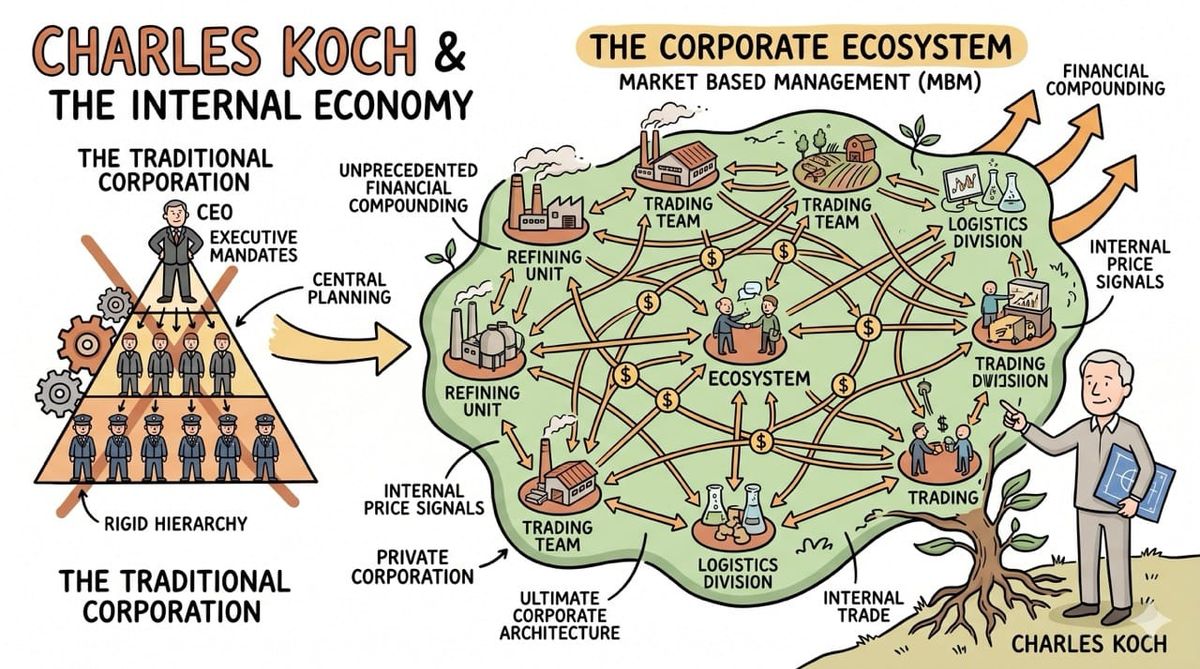
Most executives view a corporation as a rigid military hierarchy driven by central planning. Charles Koch achieved unprecedented financial compounding by forcing his massive industrial empire to operate exactly like a biological free market ecosystem.
Inspiration: Analyzing the extreme success of Market Based Management and the incredible structural advantages of remaining a private corporation. Realizing that the ultimate corporate architecture relies on internal price signals rather than executive mandates.
The Bureaucratic Trap
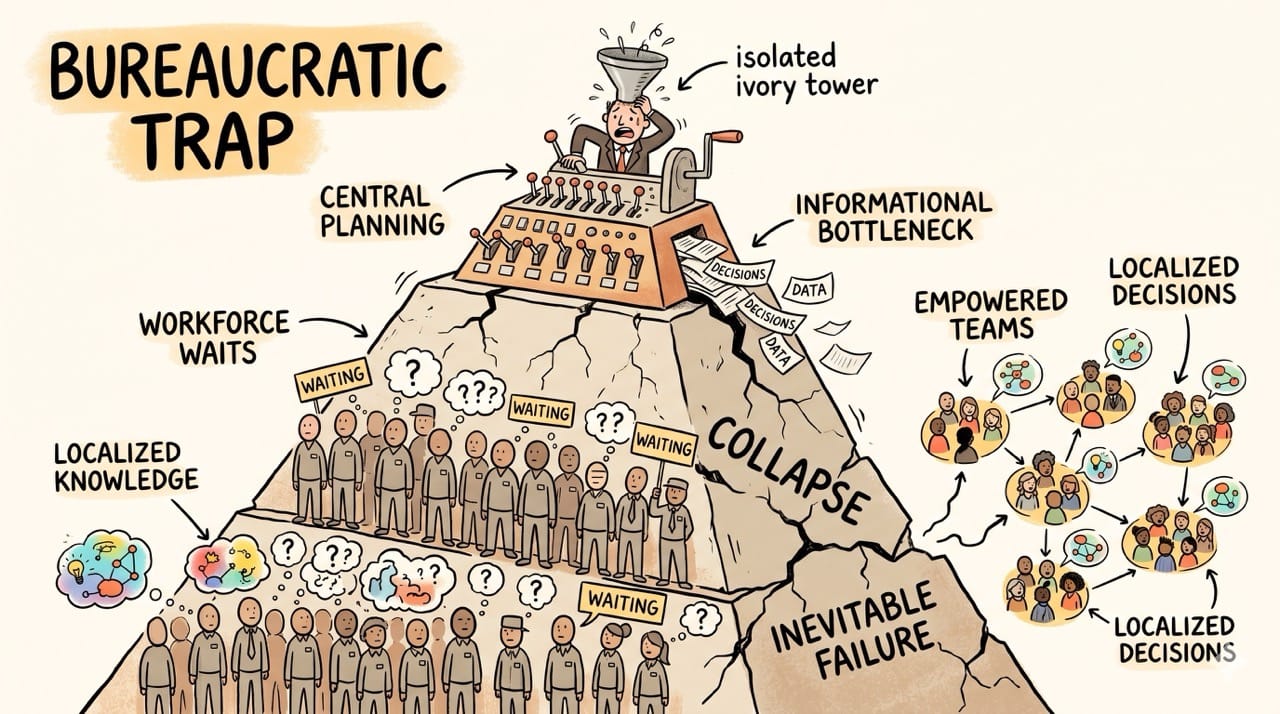
Traditional corporate structures inevitably collapse under their own weight because central planning completely destroys localized knowledge.
When a single executive attempts to dictate every operational decision they create a massive informational bottleneck.
The surrounding workforce simply stops thinking and waits passively for direct instructions from the isolated ivory tower.
The Internal Market
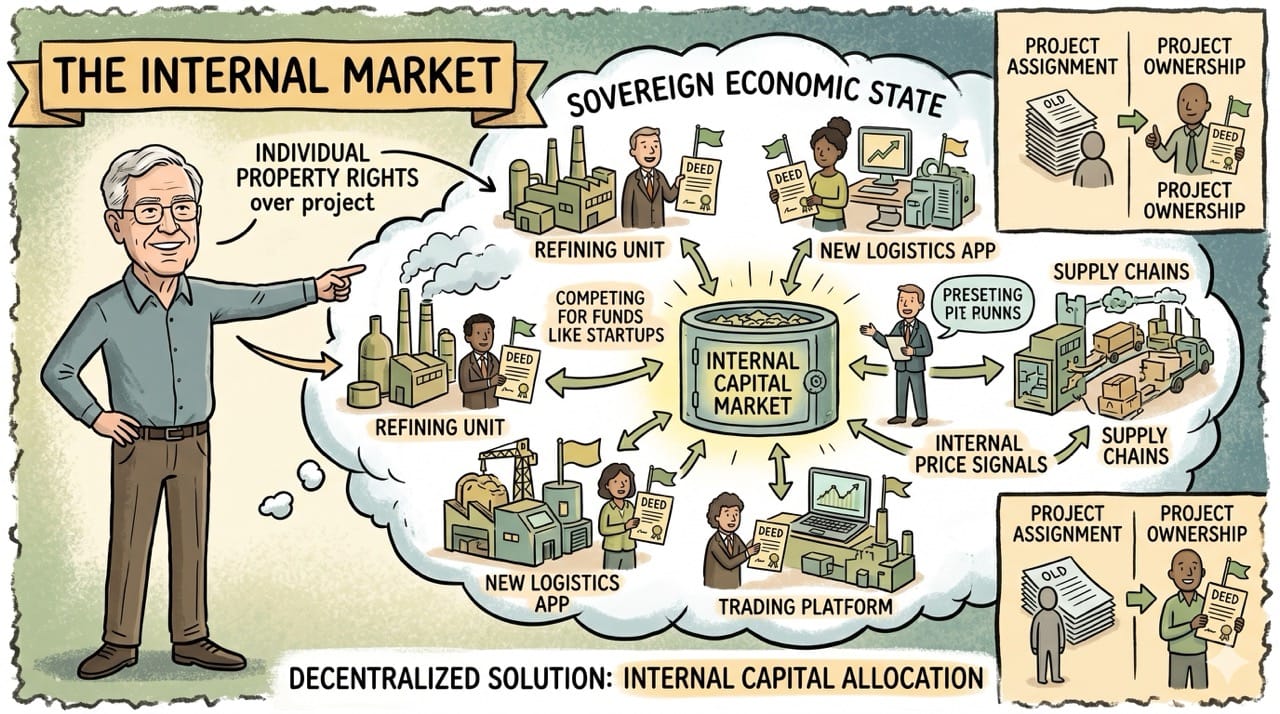
Charles Koch solved this biological friction by treating his massive industrial conglomerate like a sovereign economic state.
He implemented a completely decentralized framework where individual employees possess actual property rights over their specific projects.
This brilliant architecture forces every single division to aggressively compete for internal capital exactly like independent startup companies.
The Price Signal
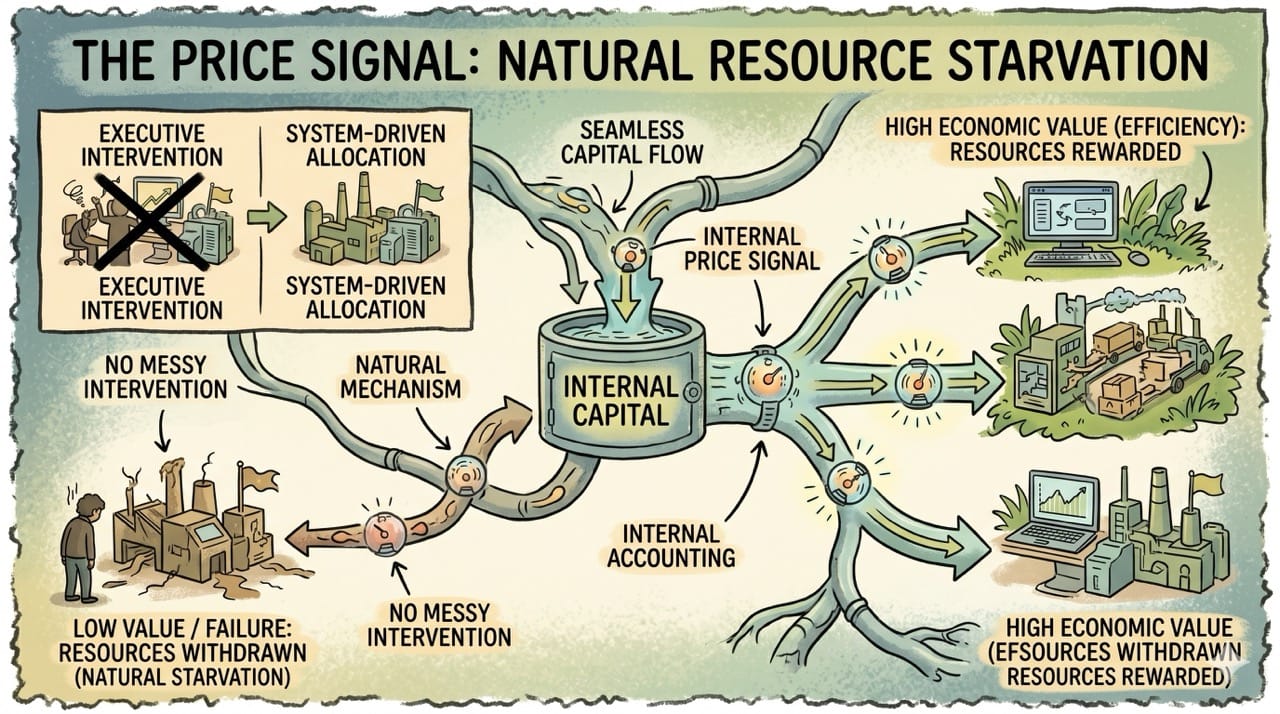
In a free economy independent price signals seamlessly direct capital toward its most efficient possible use.
Koch aggressively installed these exact same financial mechanisms deep inside his own corporate accounting systems.
When an internal department fails to generate actual economic value the system naturally starves them of resources without requiring a messy executive intervention.
The Private Advantage
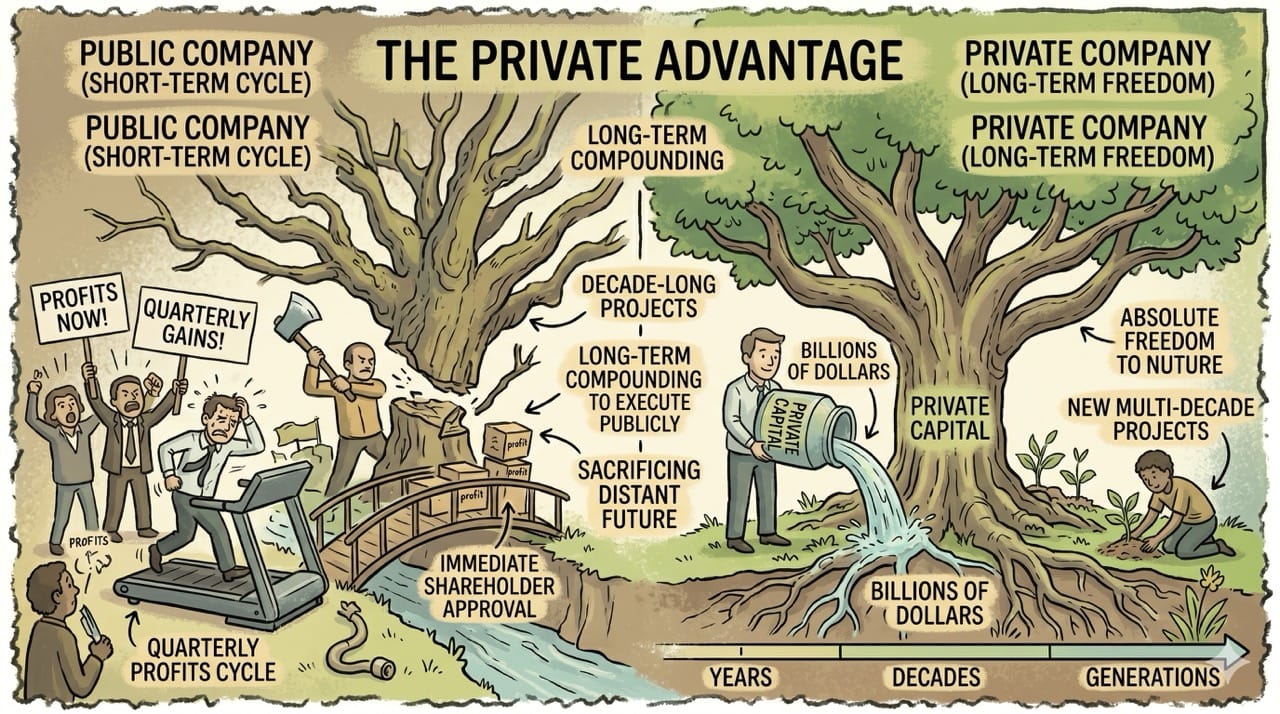
This incredible long term compounding is mathematically impossible to execute while operating as a publicly traded company.
Public markets demand massive quarterly profits which forces executives to constantly sacrifice their distant future for immediate shareholder approval.
By keeping his massive empire completely private Koch retained the absolute freedom to invest billions of dollars into projects that require decades to mature.
Principled Destruction
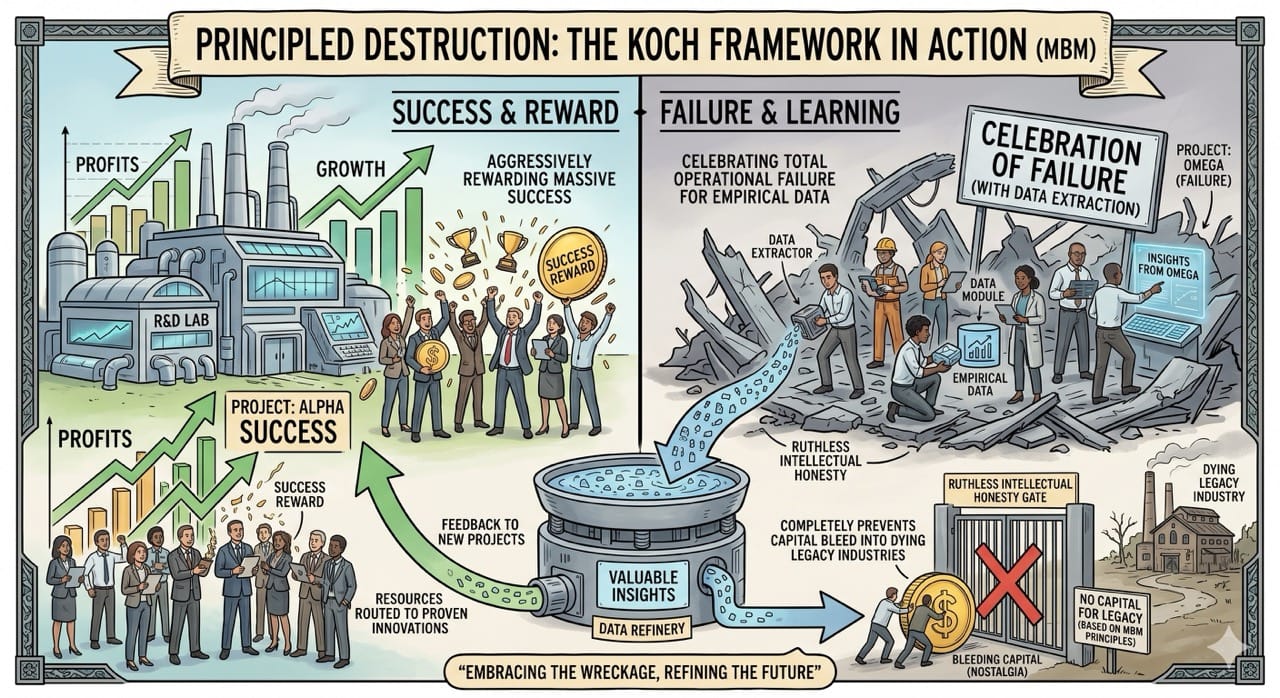
A functional market must aggressively reward massive success while simultaneously punishing absolute failure.
The Koch framework actually celebrates total operational failure as long as the organization extracts valuable empirical data from the wreckage.
This ruthless intellectual honesty completely prevents the company from slowly bleeding capital into dying legacy industries out of pure nostalgia.
The Talent Paradigm
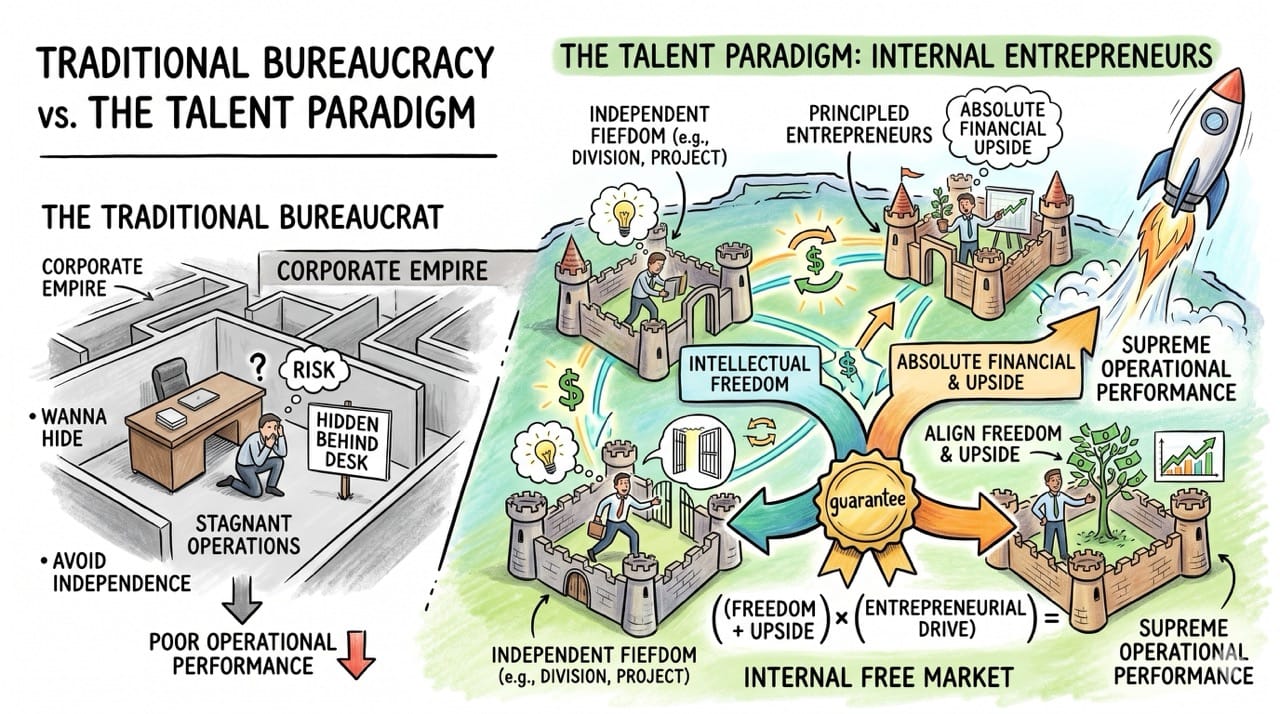
You cannot operate an internal free market using traditional corporate bureaucrats who simply want to hide behind a desk.
This aggressive system requires hiring deeply principled entrepreneurs who actually want to build independent fiefdoms within the larger empire.
When you align absolute financial upside with individual intellectual freedom you mathematically guarantee supreme operational performance.
Conclusion The Capital Machine
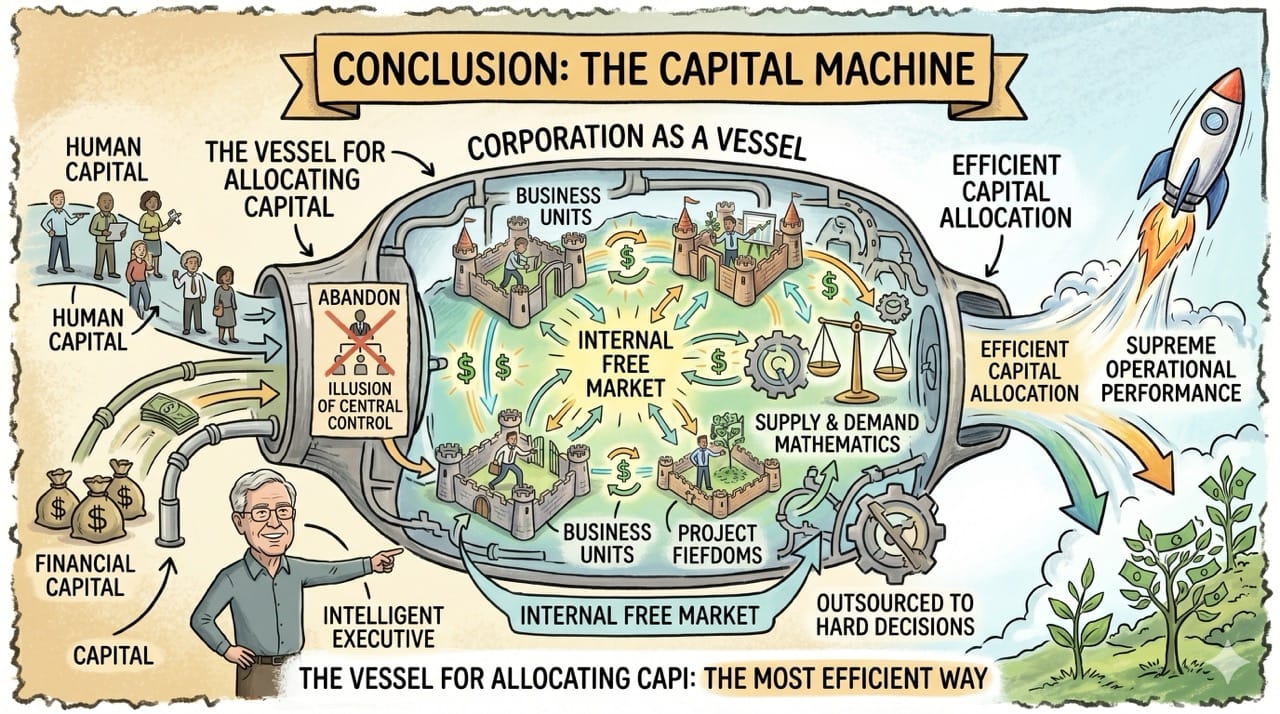
An intelligent executive must recognize that a corporation is simply a vessel for allocating human and financial capital.
The absolute most efficient way to process that capital is to completely abandon the illusion of central control.
By building an internal free market you successfully outsource your hardest executive decisions directly to the brutal mathematics of supply and demand.