Why Meta and Google Will Win the AI Ad War: It’s Not the Model, It’s the Inventory
OpenAI has the smartest chatbot. But Meta and Google have the smartest data. In the war for ad dollars, the company that knows who you are beats the company that just knows what you asked.

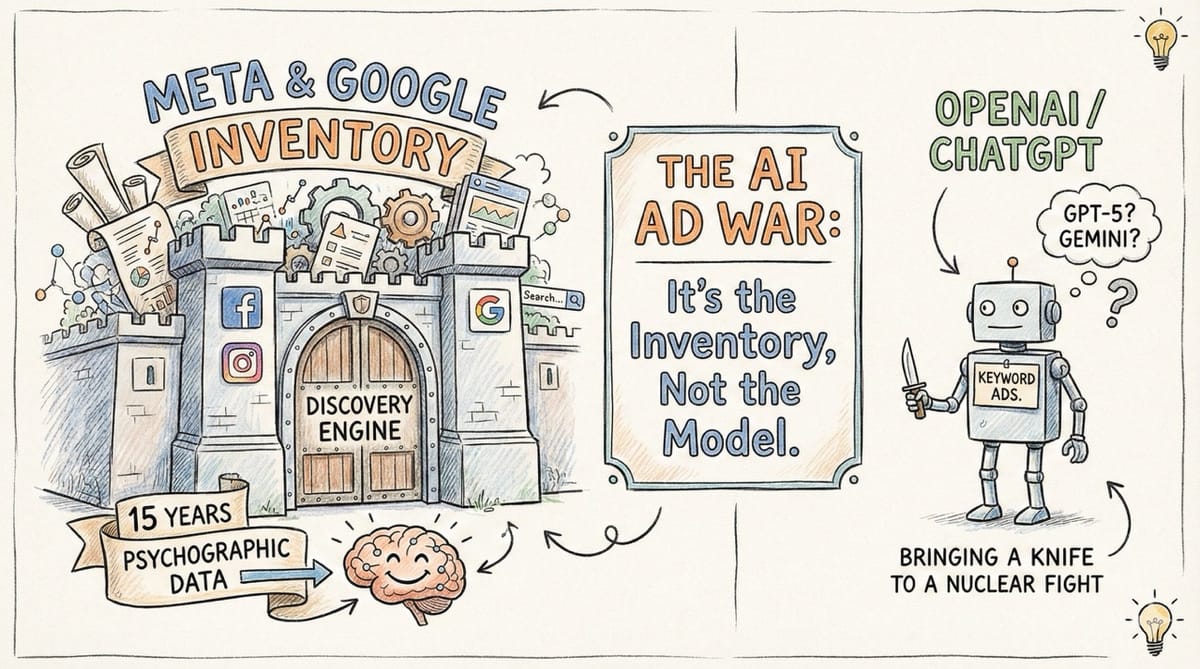
ChatGPT is trying to launch ads based on keywords. Meta has been building a psychographic profile of you for 15 years. It’s not a fair fight.
Inspiration: Watching Ben Thompson (Stratechery) dismantle the idea that "Search Ads" work for AI, and realizing that Meta’s "Discovery" engine is the ultimate AI moat.
OpenAI recently announced they are exploring ads. The industry reaction? "Finally." My reaction? "Good luck."
OpenAI is trying to compete with Meta and Google on their home turf. But they are bringing a knife to a nuclear fight.
The battle for AI ads won't be won by the smartest model (GPT-5 vs. Gemini).
It will be won by the deepest Inventory.
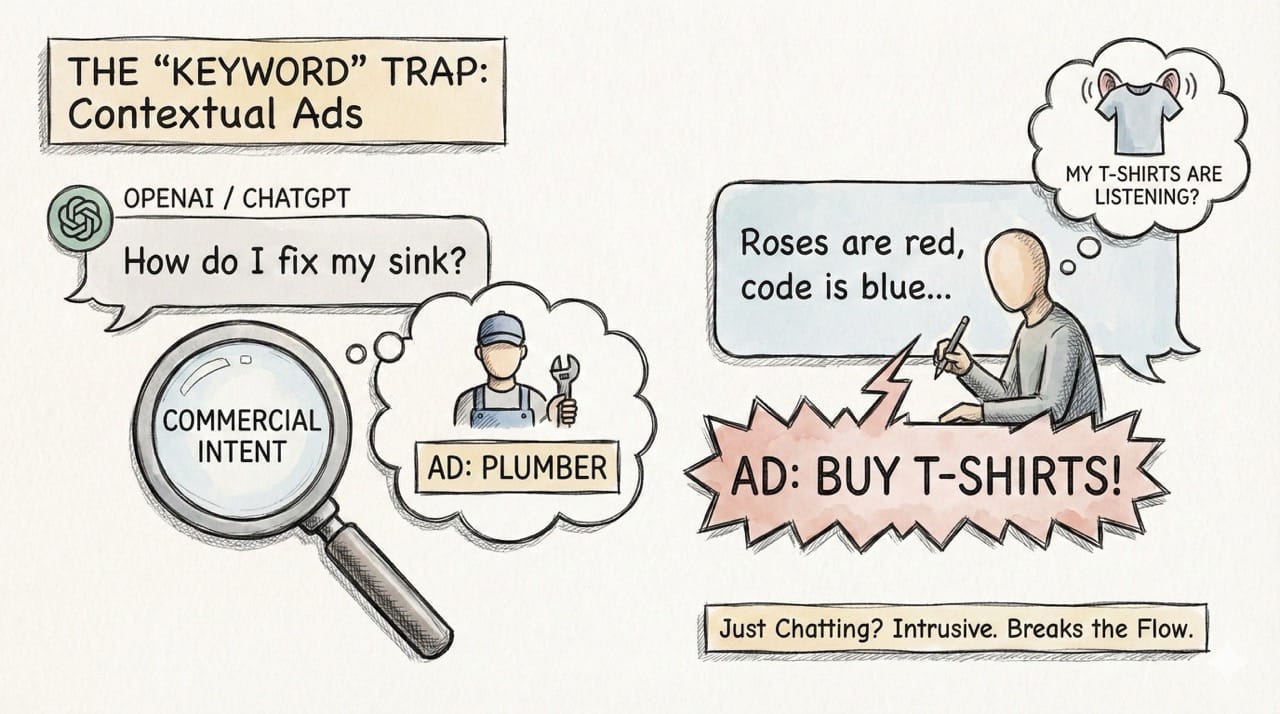
The "Keyword" Trap (OpenAI's Problem)
OpenAI’s ad model is likely Contextual.
- You ask: "How do I fix my sink?"
- ChatGPT shows: An ad for a plumber.
This is the "Search Ad" model. It works well when you have "Commercial Intent." But what if you are just chatting?
What if you are coding?
What if you are writing a poem?
Showing an ad there feels intrusive. It breaks the flow. It feels like the "My t-shirt is listening to me" problem.
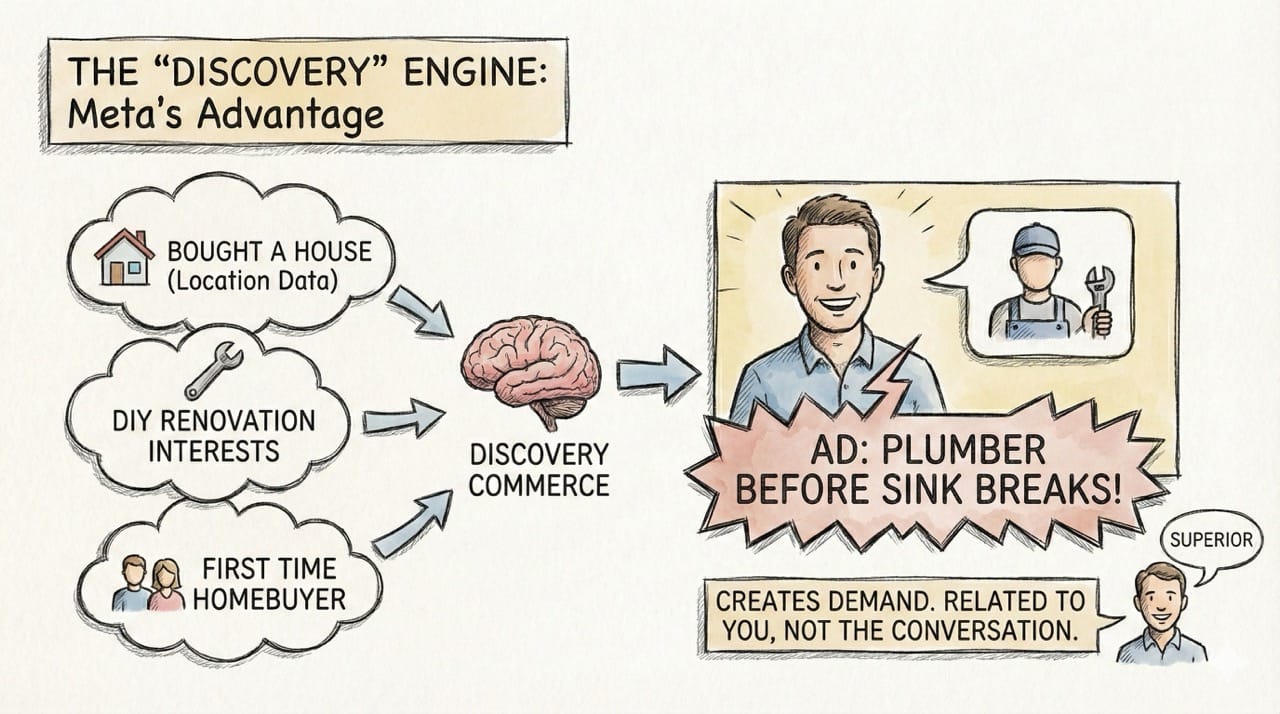
The "Discovery" Engine (Meta's Advantage)
Meta doesn't need you to ask for a plumber. Meta knows you just bought a house (Location Data). It knows you follow "DIY Renovation" accounts (Interest Graph). It knows your demographic matches "First Time Homebuyer."
The Result: Meta shows you an ad for a plumber before your sink breaks. This is Discovery Commerce.
It creates demand rather than just capturing it. Ben Thompson argues this is superior because the ad doesn't need to be related to your current conversation. It is related to You.
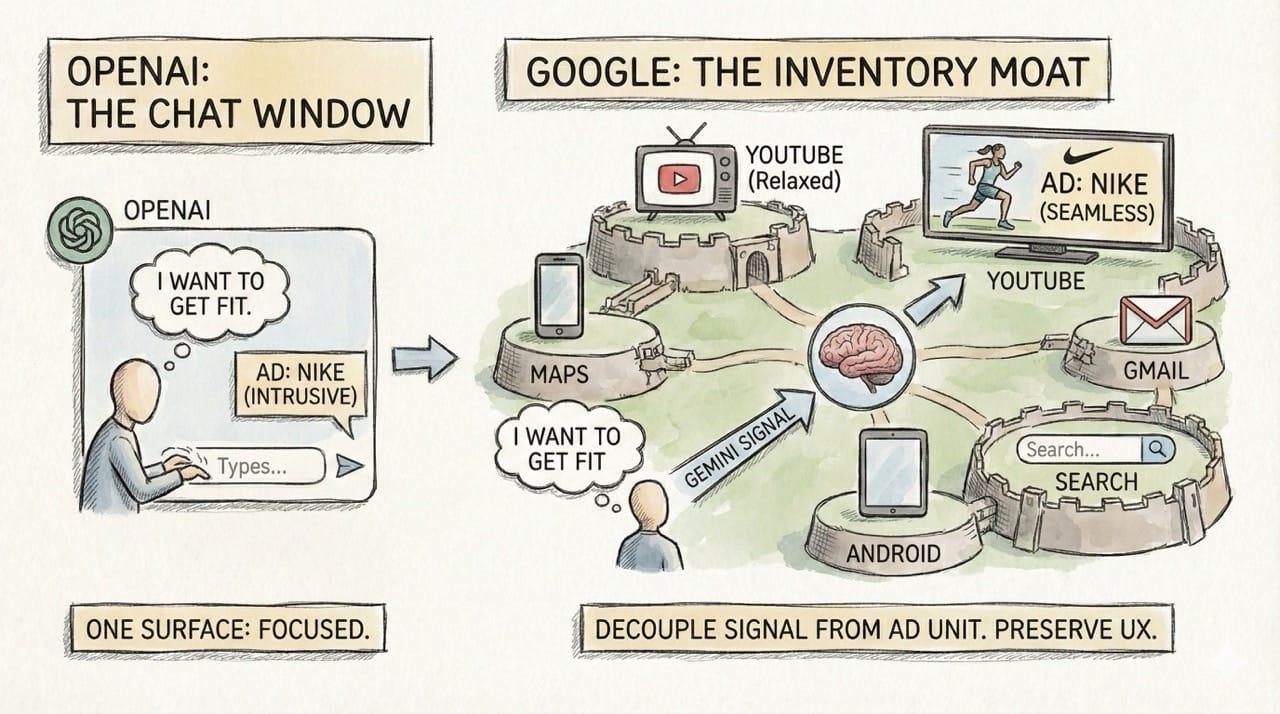
The "Inventory" Moat (Google's Advantage)
Google has a different weapon: Surface Area.
OpenAI has one surface: The Chat Window. Google has: YouTube, Maps, Search, Gmail, Android.
Google can use Gemini to understand your intent ("I want to get fit") and then show you Nike ads on YouTube (where you are relaxed) rather than inside the chat (where you are focused).
They can decouple the "Signal" (Gemini) from the "Ad Unit" (YouTube), preserving the user experience while monetizing the data.
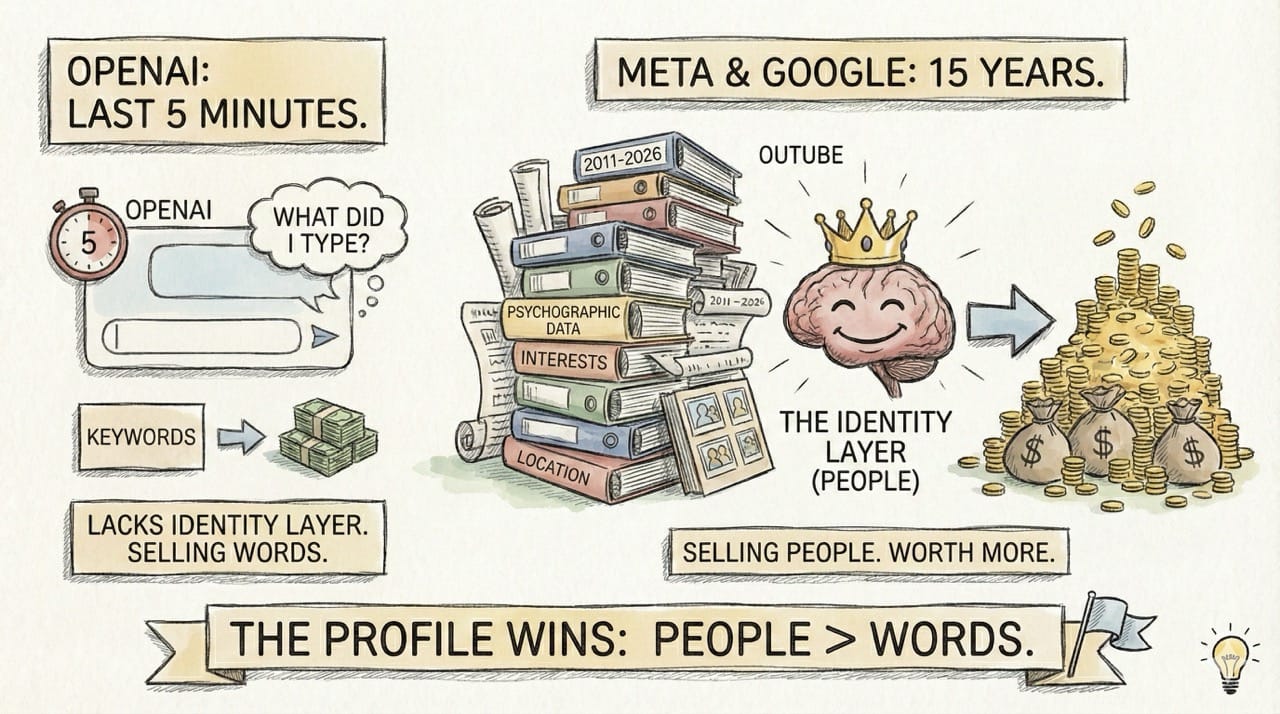
Conclusion: The Profile Wins
OpenAI knows what you typed in the last 5 minutes. Meta and Google know what you did for the last 15 years.
My Prediction: OpenAI will struggle to monetize via ads because they lack the "Identity Layer."
Unless they build a massive tracking network (unlikely given their privacy stance), they will always be selling "Keywords" while Meta sells "People." And in advertising, People are worth more than words.