
The Nuclear Deterrent Dilemma: Why the Middle East Conflict Changes Global Proliferation
The recent escalation in the Middle East has exposed a terrifying geopolitical reality. If the Iranian regime actually possessed a functional nuclear arsenal, the threshold for deploying it would have already been crossed.

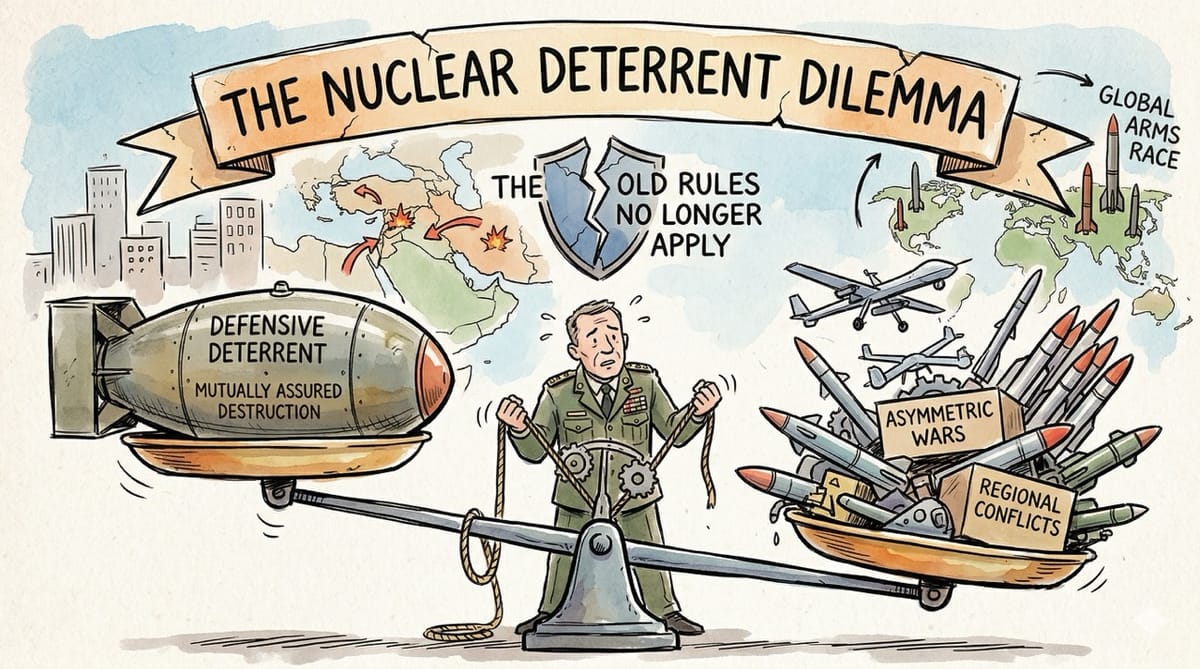
The traditional rules of mutually assured destruction no longer apply to asymmetric regional wars. The current conflict is triggering a massive global arms race.
Inspiration: Analyzing the unprecedented military exchanges between Israel and Iran. Realizing that the sheer volume of conventional retaliation proves that nuclear weapons are shifting from defensive deterrents to active tactical options.
The Current State of the Conflict
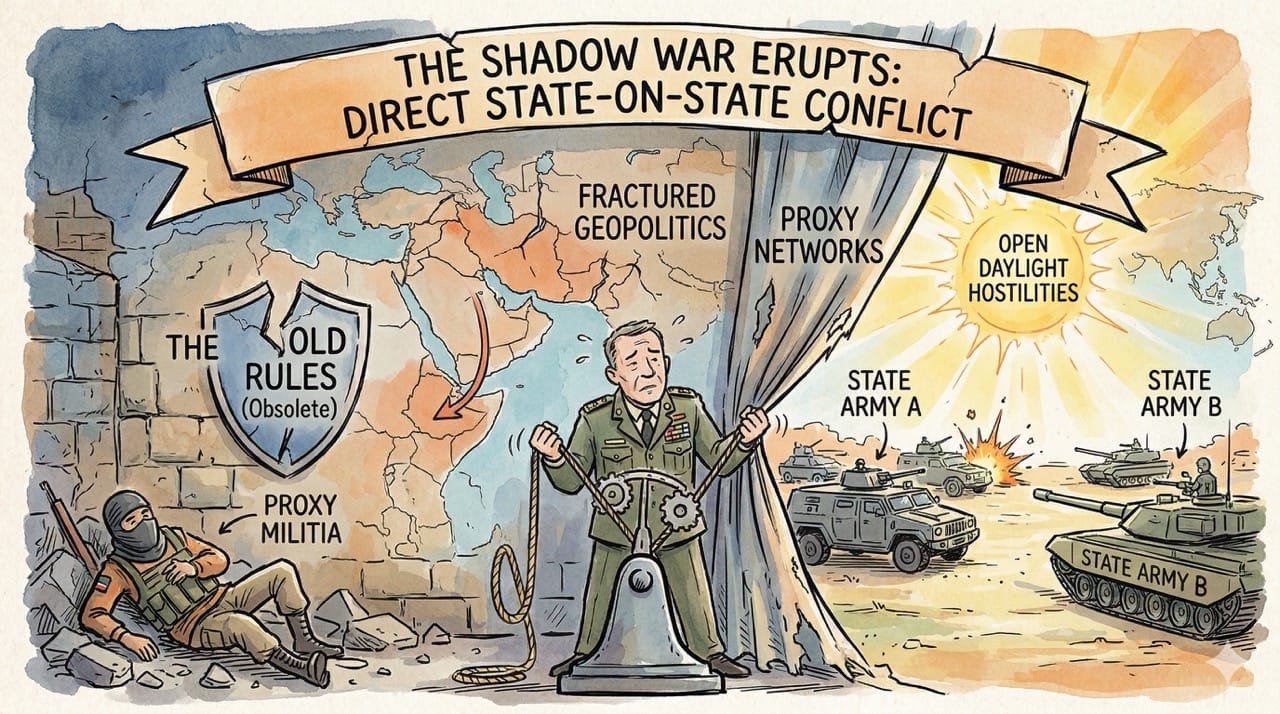
The geopolitical landscape of the Middle East has completely fractured.
We are witnessing direct, state-on-state military engagements that bypass the traditional use of proxy militias.
The historical shadow war has officially erupted into open, daylight hostilities.
The Multi-Front Retaliation
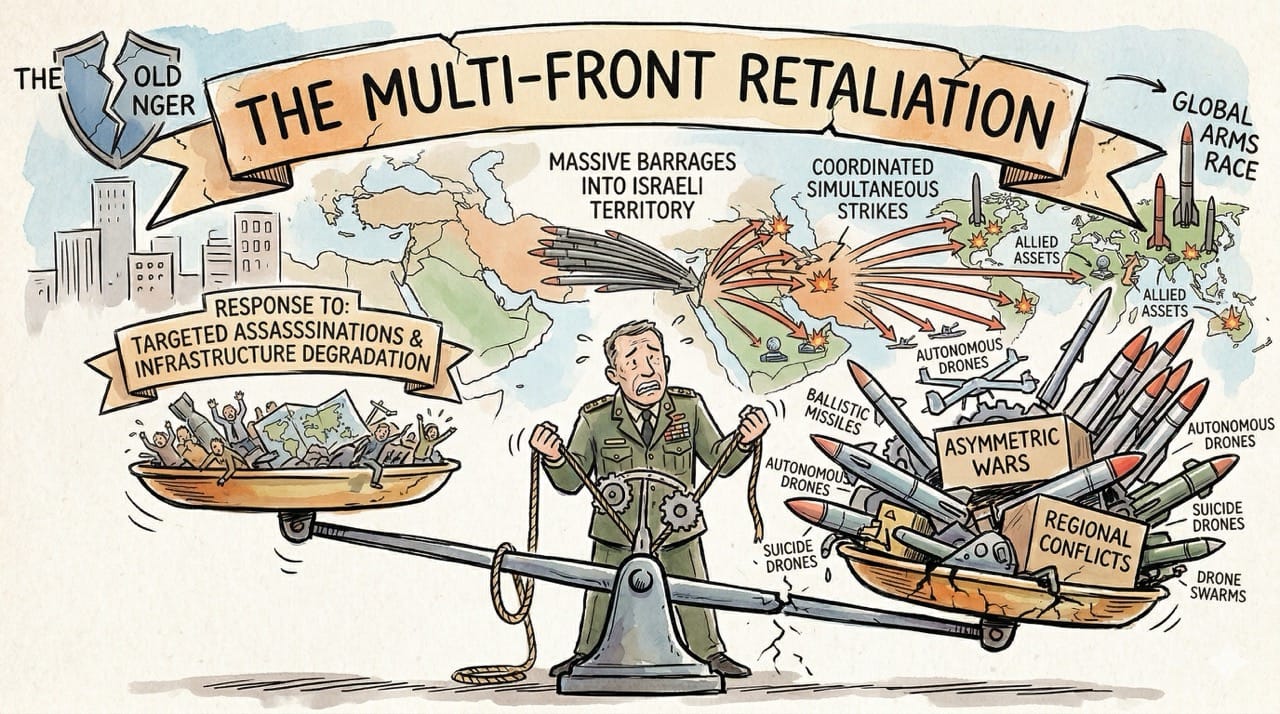
In response to targeted assassinations and infrastructure degradation, Iran has drastically escalated its kinetic responses.
They launched massive barrages of ballistic missiles and autonomous drones directly into Israeli territory. Furthermore, they coordinated simultaneous strikes against allied assets across several neighboring nations to overwhelm defensive grids.
The Nuclear Threshold
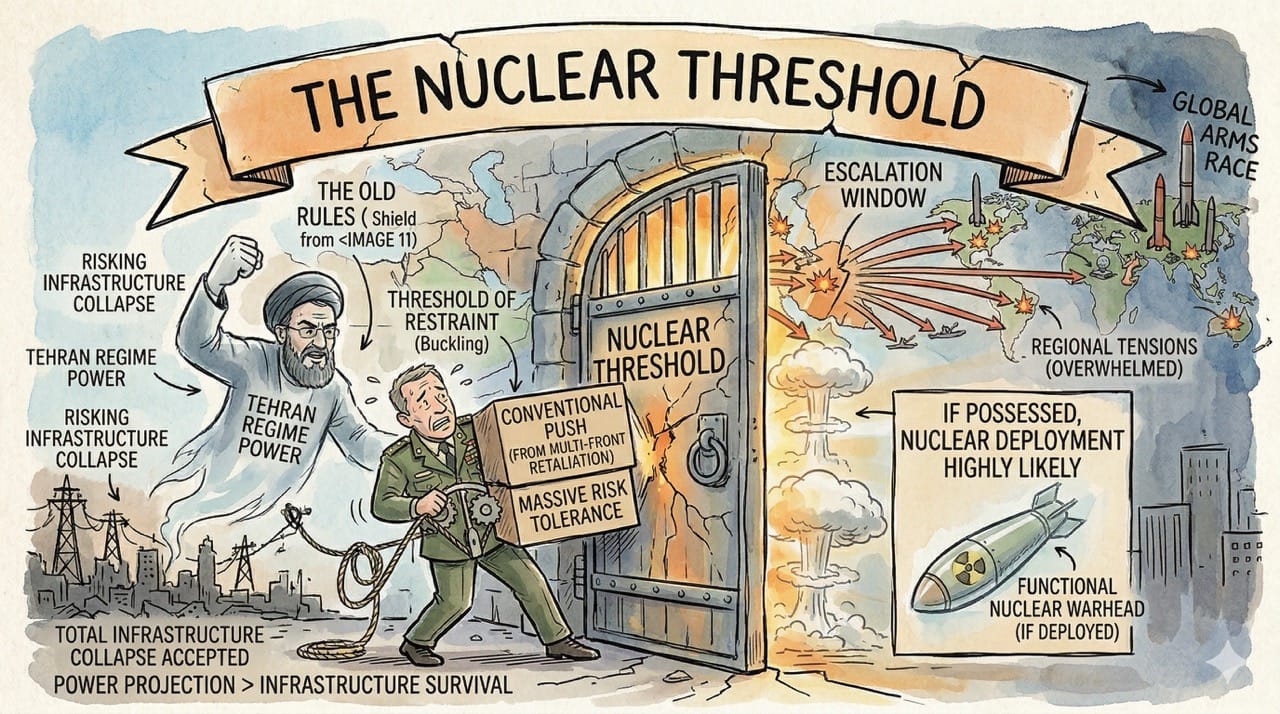
This volume of direct, conventional retaliation signals a massive shift in risk tolerance.
The regime in Tehran has demonstrated they are willing to risk total infrastructure collapse to project regional strength.
If they possessed a functional nuclear warhead during this exact escalation window, they would have highly likely deployed it.
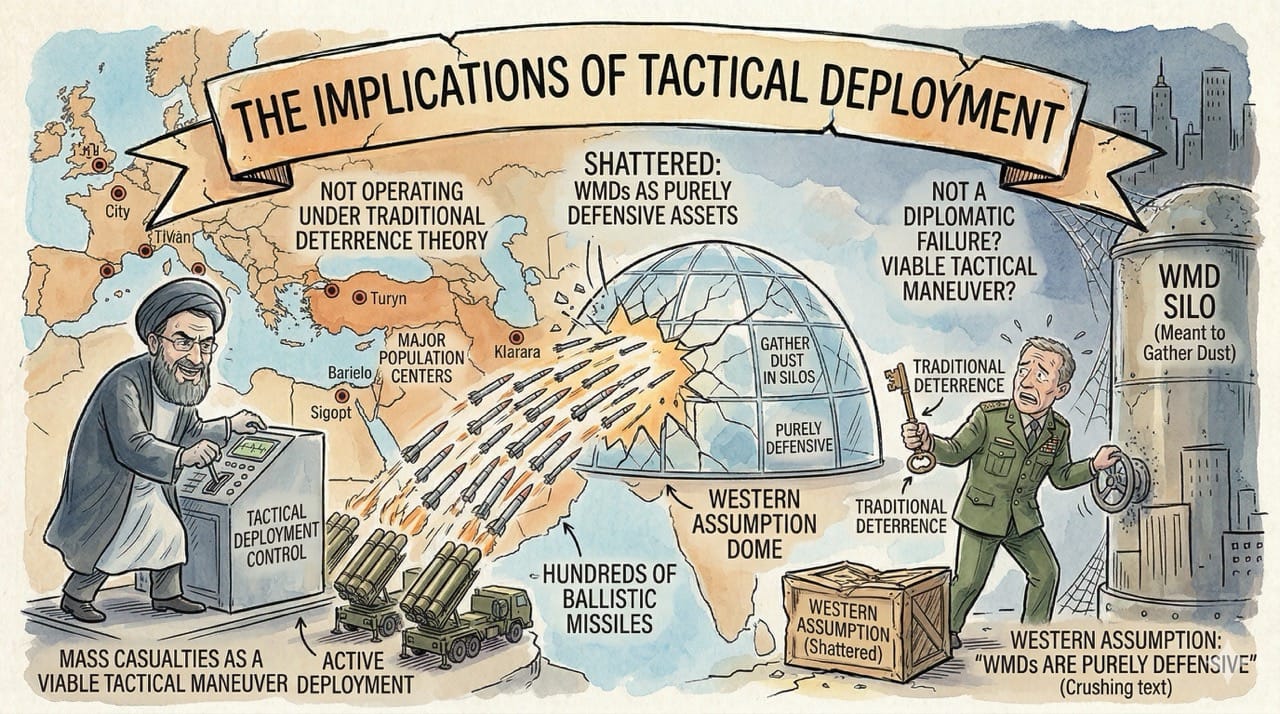
The Implications of Tactical Deployment
A regime willing to fire hundreds of ballistic missiles at major population centers is not operating under traditional deterrence theory.
They view mass casualties as a viable tactical maneuver rather than a diplomatic failure.
This shatters the western assumption that weapons of mass destruction are purely defensive assets meant to gather dust in silos.
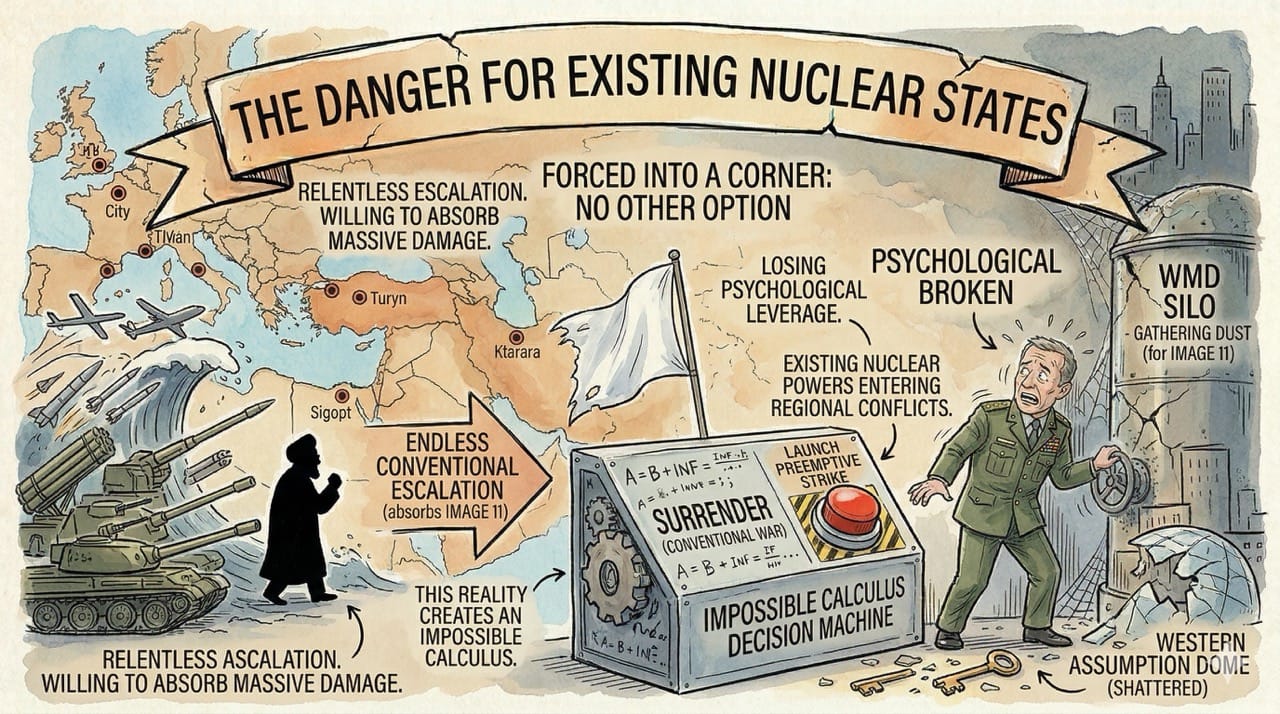
The Danger for Existing Nuclear States
This reality creates an impossible calculus for existing nuclear powers entering regional conflicts.
If an adversary is willing to absorb massive conventional damage and escalate endlessly, a nuclear state loses its primary psychological leverage.
They are eventually forced into a corner where they must either surrender a conventional war or launch a preemptive nuclear strike.
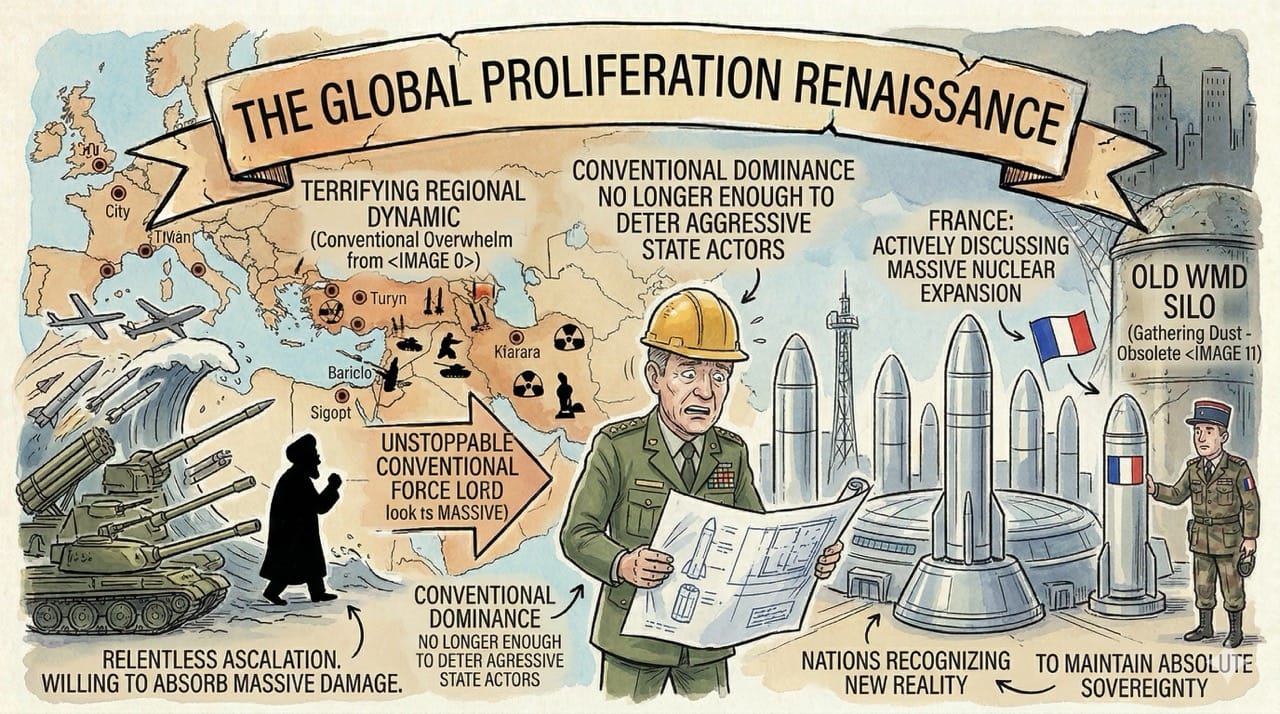
The Global Proliferation Renaissance
Observing this terrifying dynamic has triggered an immediate response from global superpowers.
Nations recognize that conventional military dominance is no longer enough to deter highly aggressive state actors.
Countries like France are now actively discussing massive expansions of their own nuclear arsenals to maintain absolute sovereignty in a destabilized world.
Conclusion: The End of the Post-War Consensus
The era of strategic patience and proxy warfare is officially over.
When adversaries demonstrate a willingness to cross every conventional red line, nuclear proliferation becomes a basic requirement for national survival.
The global security apparatus must now prepare for a world where nuclear arsenals are actively integrated into standard military strategy.