The End of the Safe Zone: Why Iran's Commercial Targets Change Global Security
The unwritten rules of modern warfare have been broken. By targeting commercial airports and hotels, Iran has inadvertently proven that American military protection is no longer an optional luxury for the global economy.

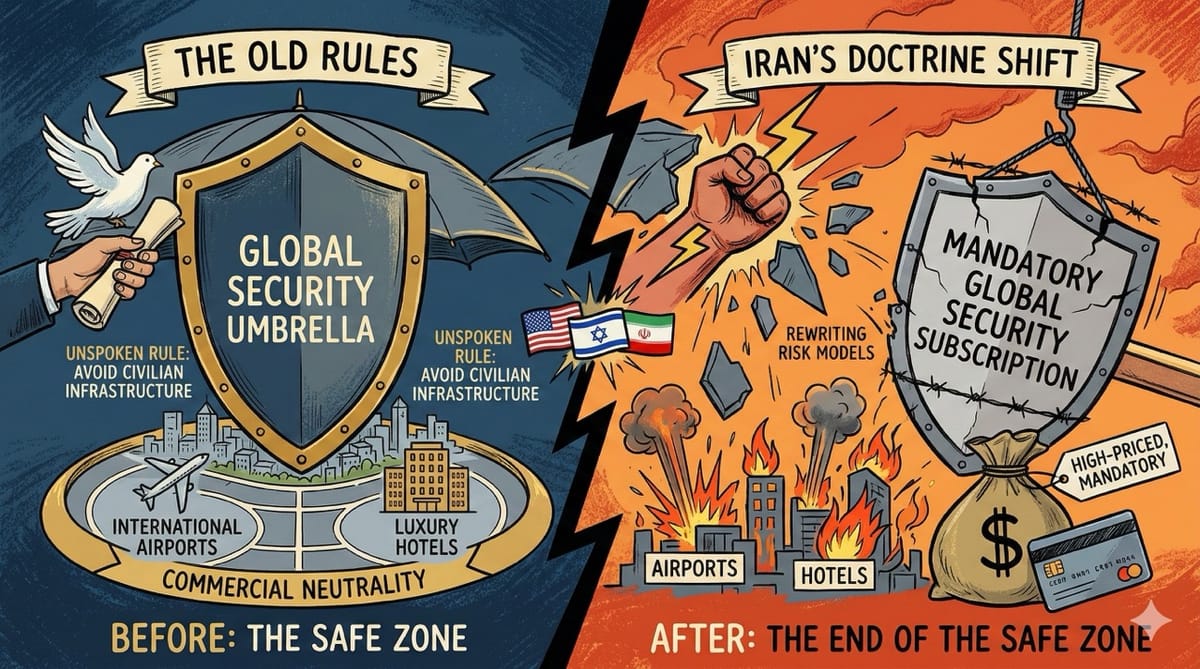
When airports and hotels become military targets, neutrality is a death sentence. The global security umbrella is about to become a mandatory, high-priced subscription service.
Inspiration: Analyzing the recent escalation between the US, Israel, and Iran. Realizing that targeting commercial infrastructure fundamentally rewrites the risk models and economic reality for non-NATO countries.
The recent conflict between the United States, Israel, and Iran has crossed a terrifying threshold.
Historically, proxy wars and state retaliations were generally confined to military bases or government installations.
Both sides understood the unspoken rule to avoid striking massive civilian infrastructure.
Iran recently shattered this paradigm with their retaliatory strikes.
They deliberately targeted commercial and residential hubs, including international airports and luxury hotels.
This is a profound shift in military doctrine that changes the entire geopolitical board.
Alienating the Non-Aligned World
This radical escalation is a massive strategic error for Tehran.
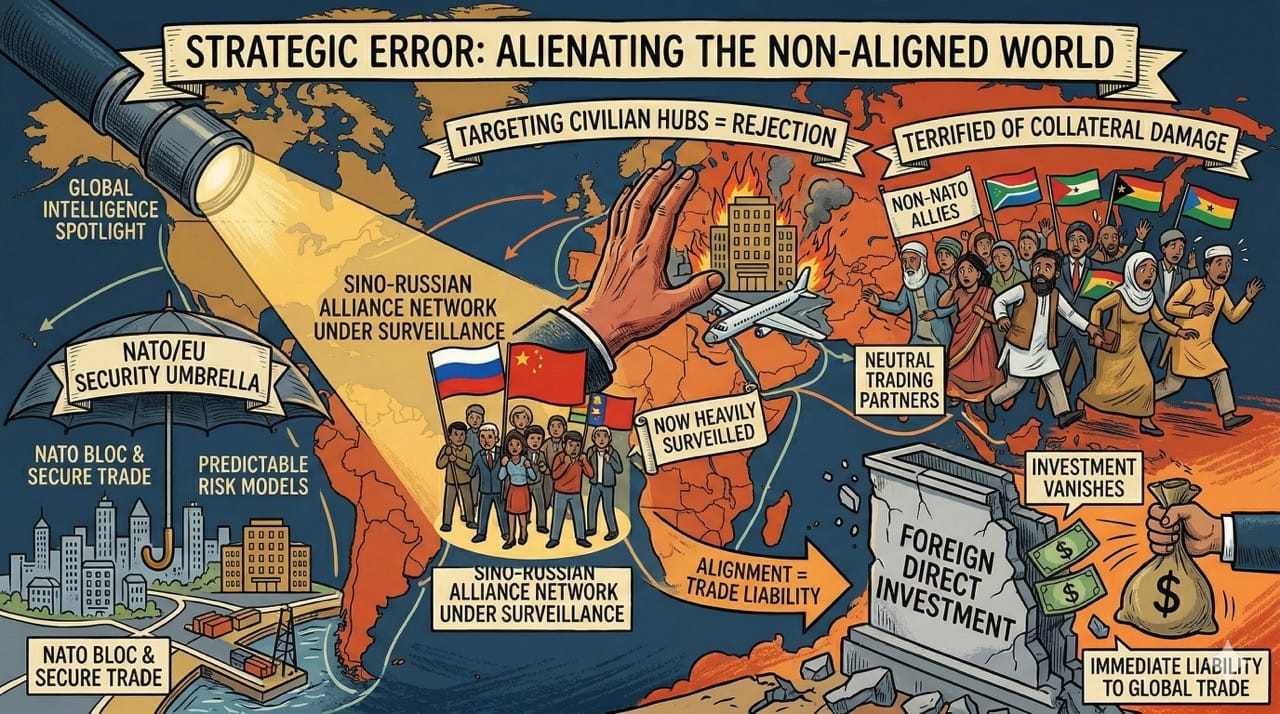
By targeting civilian infrastructure, they are rapidly alienating non-NATO allies and neutral trading partners.
Countries that previously turned a blind eye to the regime are now terrified of the collateral damage.
We have already seen Russia become globally alienated due to their own aggressive and unpredictable tactics. This new Iranian strategy puts a massive spotlight on the entire Sino-Russian alliance network.
The global intelligence community will now heavily surveil Chinese and Russian allies for similar radical retaliatory capabilities.
If a nation aligns with a bloc that bombs hotels, they become an immediate liability to global trade. Foreign direct investment will simply vanish from those regions.
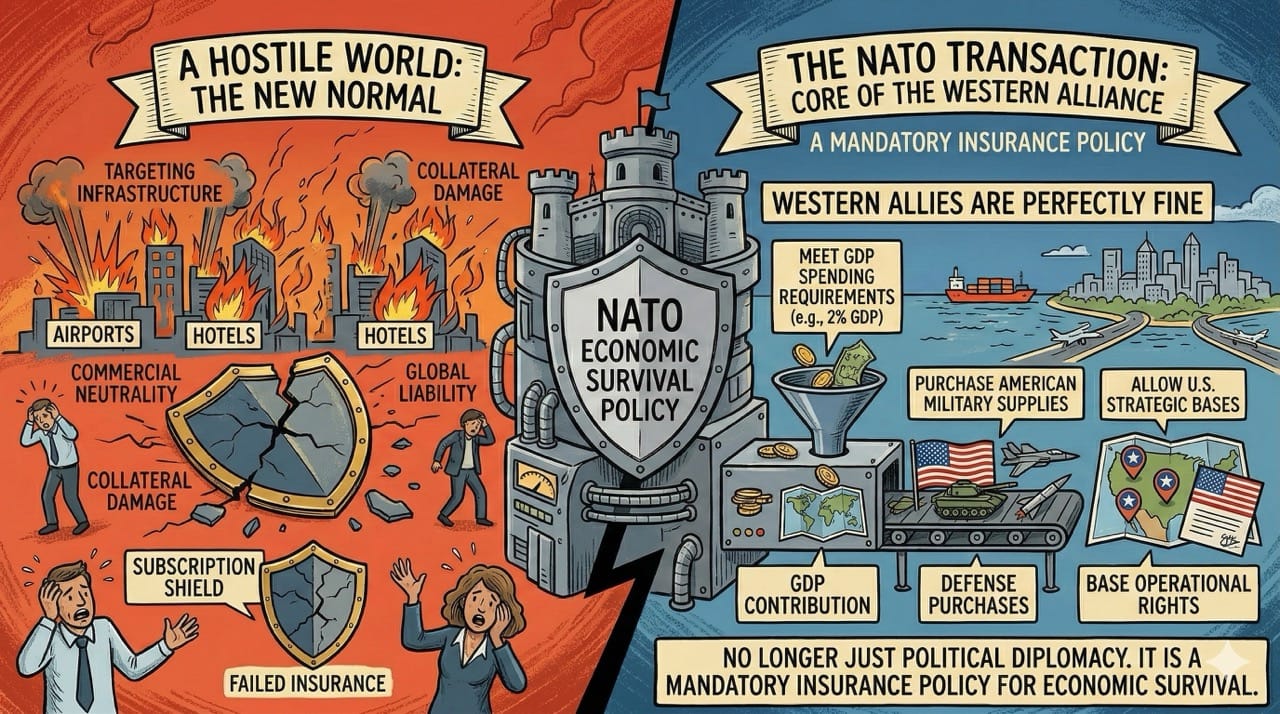
The NATO Transaction
In contrast, this chaos is actively strengthening the core of the Western alliance. NATO allies are going to be perfectly fine, provided they understand the new transaction.
They must meet their gross domestic product spending requirements and purchase American military supplies.
They must also continue to allow the United States to operate strategic bases within their borders.
This is no longer just a political alliance or a diplomatic courtesy. It is a mandatory insurance policy for economic survival in a hostile world.
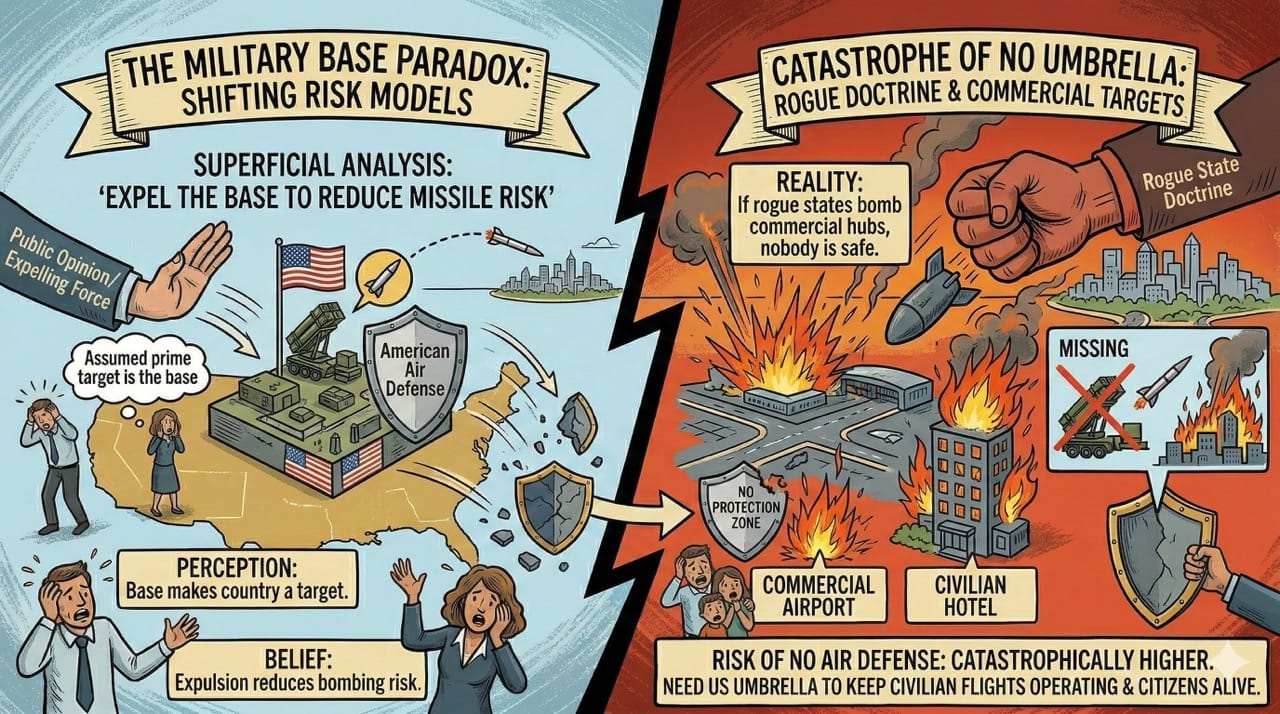
The Paradox of the Military Base
A superficial analysis might suggest that hosting an American military base makes a country a prime target for Iranian missiles.
People naturally assume that expelling the military reduces the risk of being bombed. However, the exact opposite is now true.
If a rogue state is willing to bomb a commercial airport or a civilian hotel, nobody is safe anywhere.
The risk of not having American air defense systems like Patriot batteries or THAAD is now catastrophically higher.
You need the US military umbrella just to keep your commercial flights operating and your citizens alive.
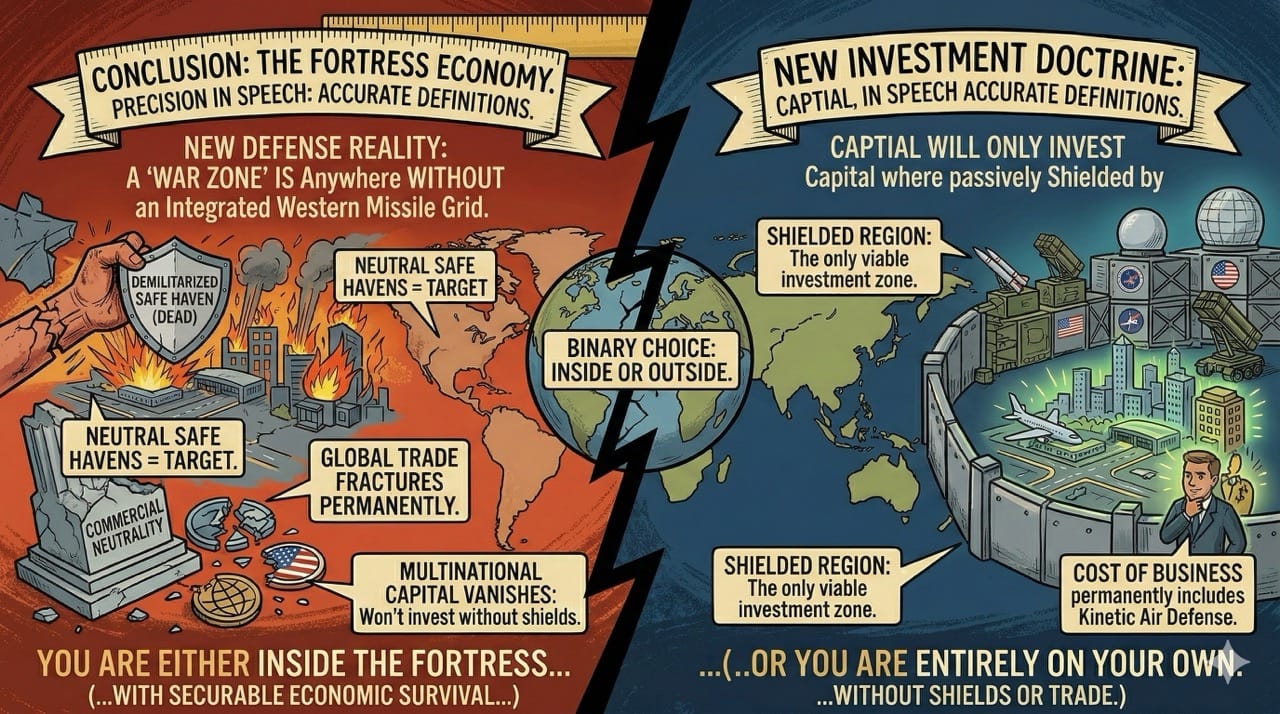
Conclusion: The Fortress Economy
We must accurately define what a war zone is today.
A war zone is no longer a designated battlefield; it is anywhere without an integrated, Western missile defense grid.
In the coming decades, we will see a massive fracturing of global trade. Multinational corporations will only invest capital in regions actively shielded by American military hardware.
The cost of doing business will permanently include the cost of kinetic air defense.
The concept of a neutral, demilitarized safe haven is officially dead.
You are either inside the fortress, or you are entirely on your own.