The Death of Average: Why the Cost of Being Mediocre is Ruining the Next Generation
We blame the youth for having fried dopamine receptors and gambling addictions. But we are missing the macro-economic reality. The middle class of wealth, looks, and relationships is hollowing out. Today, the penalty for being average is invisibility.

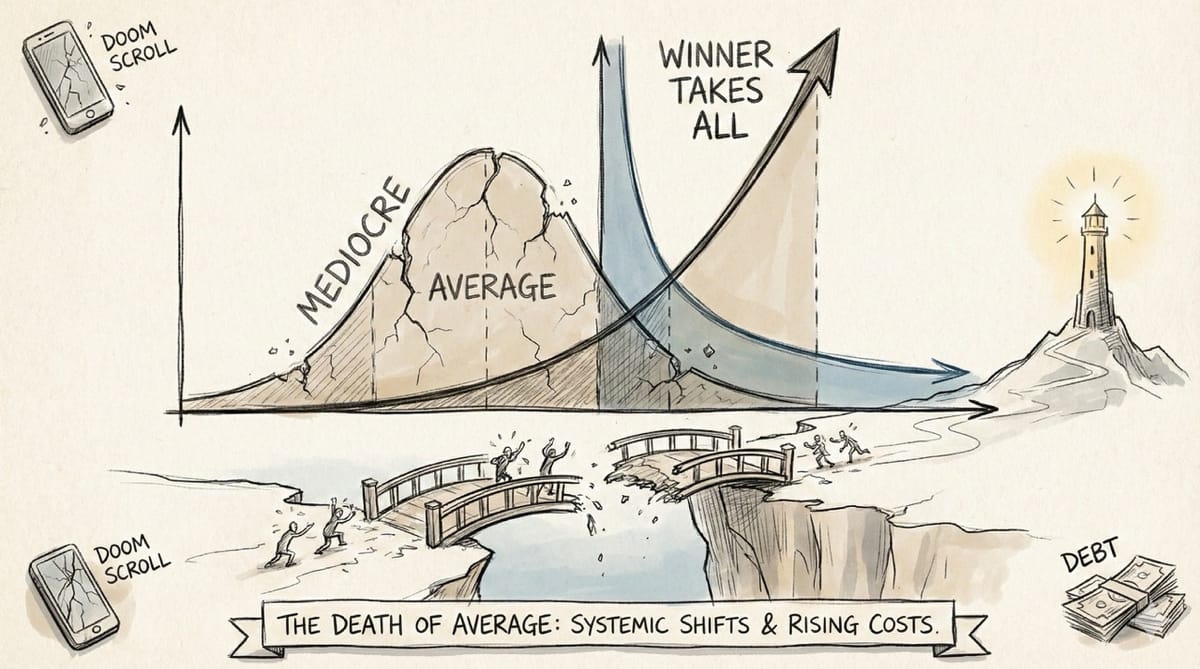
From real estate to dating apps, the world has shifted from a bell curve to a winner-takes-all power law. If you aren't in the top tier, you are nowhere.
Inspiration: Watching an Instagram Reel where an older commentator criticized young people for their "low dopamine thresholds" and obsession with instant gratification, completely missing the systemic economic and social shifts that are actually driving this behavior.
There is a popular narrative right now that the younger generation is simply broken.
The critics point to the rise of sports betting, the obsession with crypto, the endless doom-scrolling, and the hyper-fixation on physical appearance.
The diagnosis is usually lazy.
They say it is just a dopamine addiction fueled by TikTok.
While the dopamine crisis is real, it is a symptom, not the disease.
The disease is a fundamental shift in the architecture of society.
We have transitioned from an economy where being "mediocre" was perfectly fine, to an economy where being mediocre is heavily penalized.
The cost of being average has skyrocketed. The youth are reacting exactly how you would expect a rational human to react when their back is against the wall.
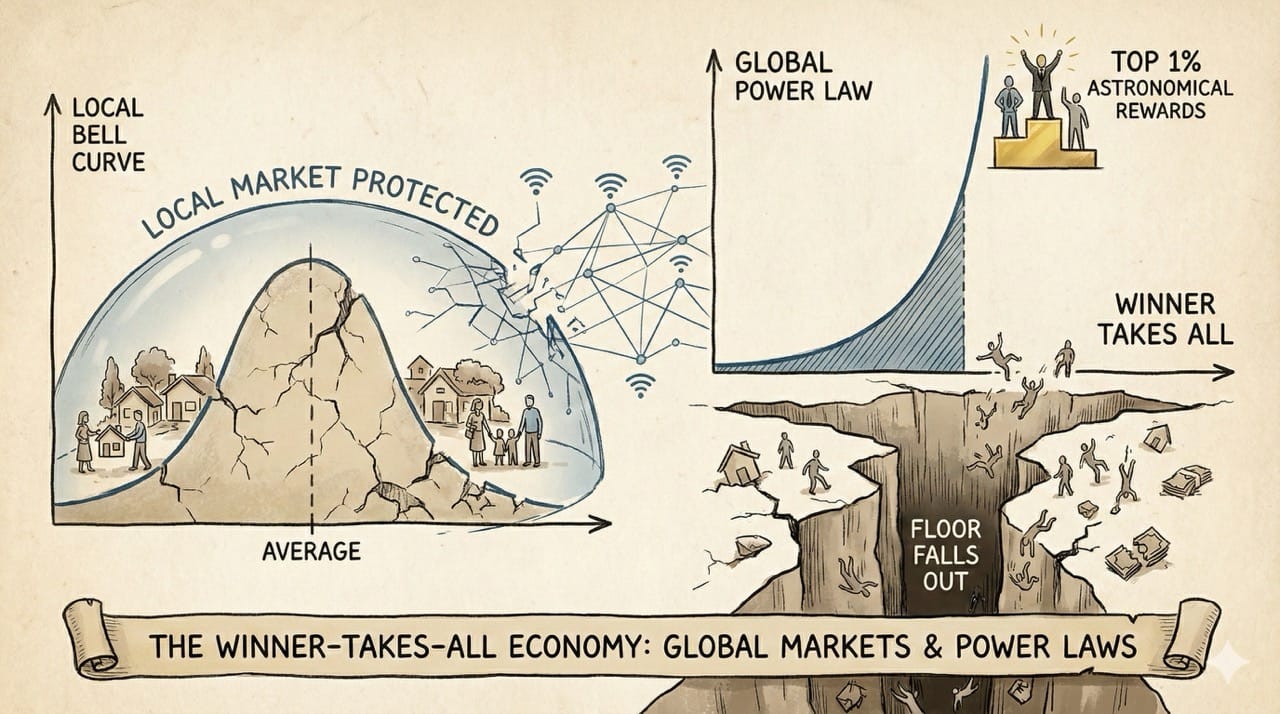
The Winner-Takes-All Economy
For decades, society operated on a normal distribution, which is a traditional bell curve.
If you were in the 50th percentile of income, attractiveness, and competence, you could secure a comfortable middle-class life.
You could buy a house in your hometown, find a spouse in your local social circle, and raise a family. The local market protected you.
But the internet destroyed the local market.
Today, every market is global, and global markets operate on power laws, not bell curves.
Whether it is income distribution, freelance talent, or the dating pool, the top ten percent of the market is capturing ninety percent of the rewards.
You are no longer competing with the guy down the street. You are competing with the curated, optimized top one percent on a digital feed.
When the market is hyper-efficient and perfectly visible, the rewards for being at the very top are astronomical, but the floor completely falls out for everyone else.
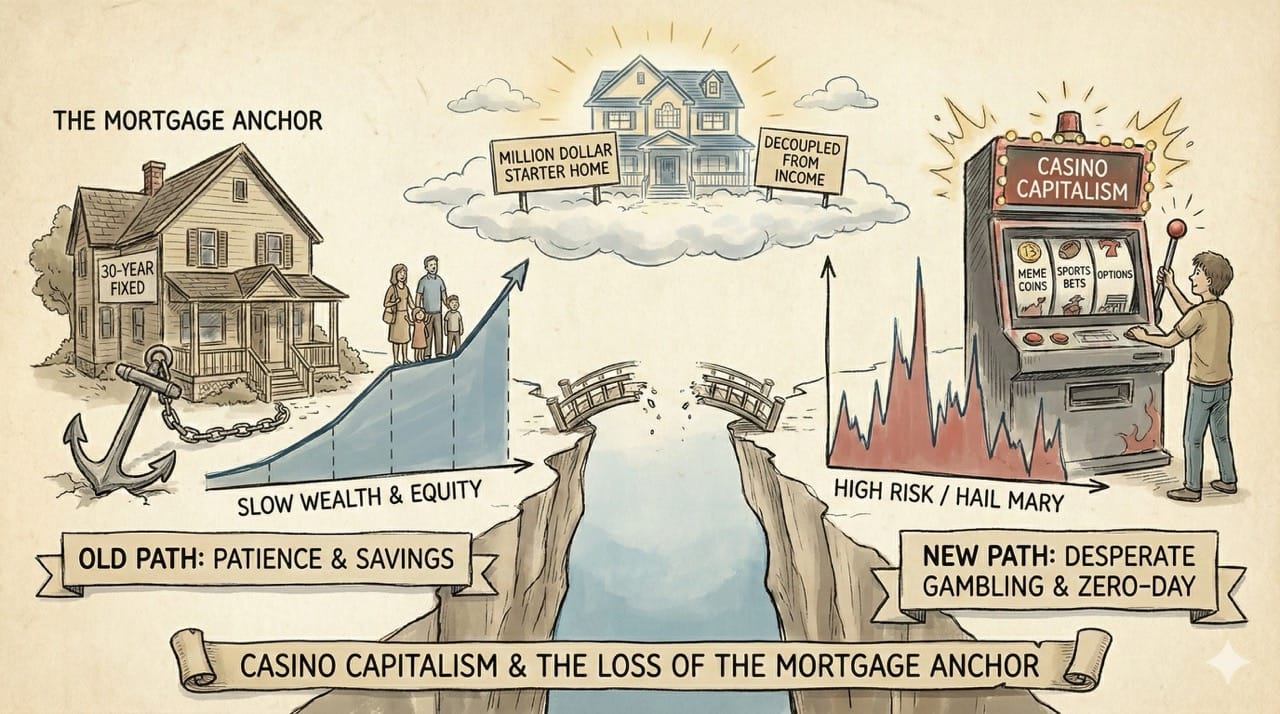
Casino Capitalism and the Loss of the Mortgage Anchor
Nowhere is this more evident than in wealth creation and real estate. For previous generations, the 30-year fixed-rate mortgage was the ultimate financial anchor.
It was a forced savings mechanism.
You bought an average house, paid it down slowly, and built equity.
It gave you a long-term time horizon and a reason to be patient. Today, average housing in major economic hubs is entirely decoupled from average local incomes.
For a young person looking at a million-dollar starter home while earning a median salary, the traditional path looks broken.
When the slow, reliable path to wealth is closed off, people do not stop trying to get wealthy. They simply change their risk profile.
This is the root of the current gambling and high-risk investing epidemic. If saving ten percent of your paycheck will never buy you a house, why save it?
Instead, young men are turning to zero-day-to-expiry options, meme coins, and aggressive sports betting.
It looks like erratic, degenerate behavior to the older generation. But to the youth, it is a desperate "Hail Mary" pass because the baseline economy feels like a casino where the house has already won.
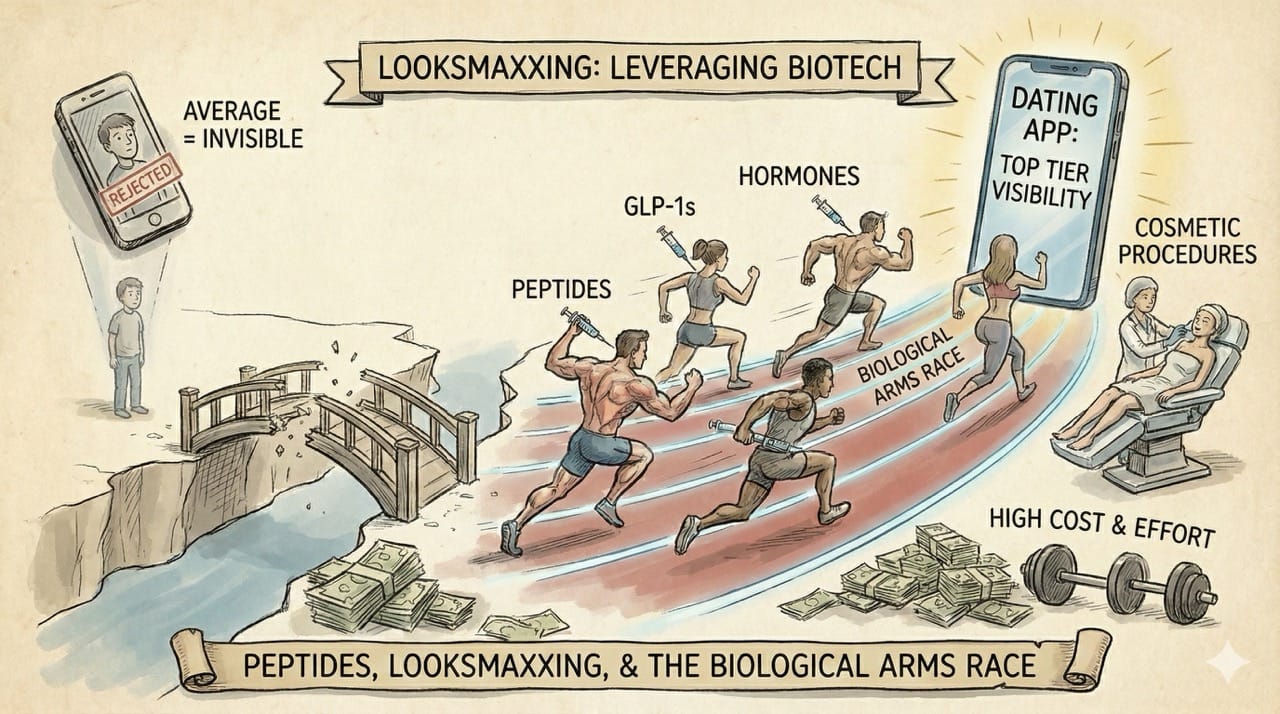
Peptides, "Looksmaxxing," and the Biological Arms Race
This hyper-competition has bled directly into the dating and social markets. In a world mediated by dating apps, physical appearance is quantified and ruthlessly filtered.
The algorithms have created an environment where being "average looking" makes you practically invisible.
As a result, we are witnessing a biological arms race. The trend of "looksmaxxing" (optimizing one's physical appearance through extreme measures) has exploded.
We are seeing the normalization of peptides like GLP-1s for weight loss, hormonal optimizations, and cosmetic procedures at increasingly younger ages.
It is no longer just about hitting the gym. It is about leveraging biotechnology to ensure you do not fall into the unseen middle percentiles.
The dating market has become so concentrated at the top that the sheer cost, effort, and chemical intervention required just to compete is staggering.
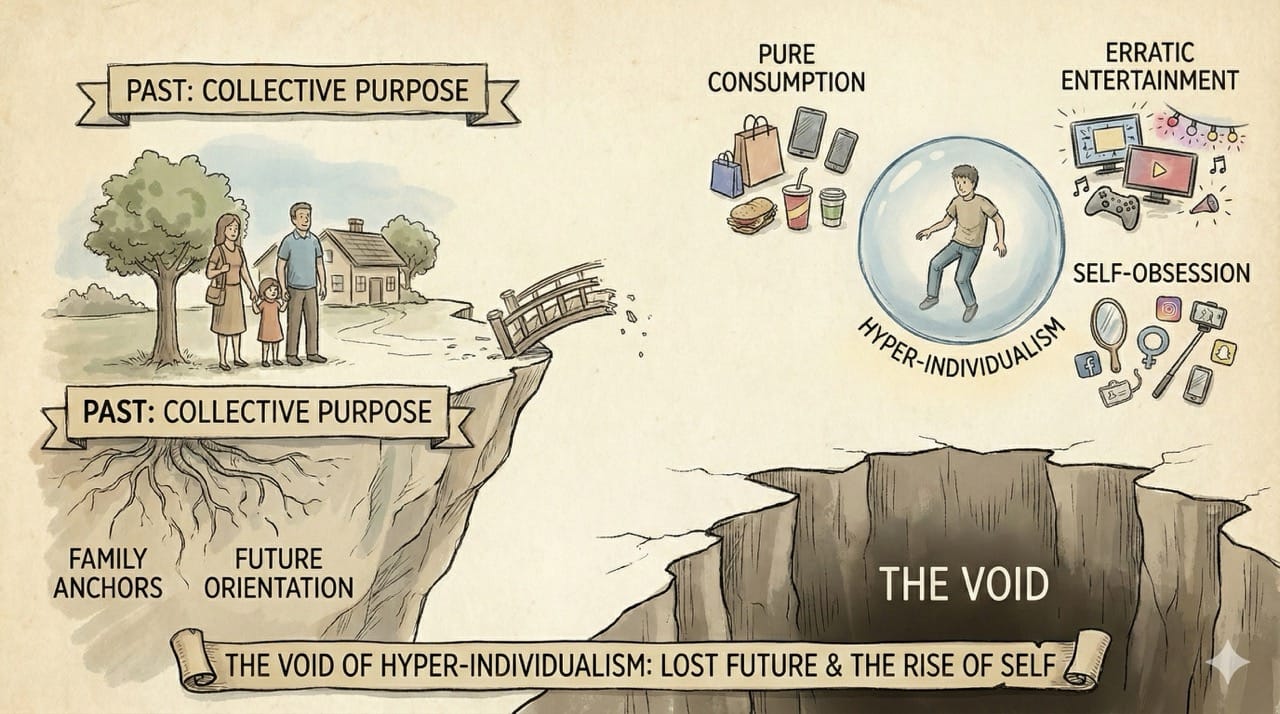
The Void of Hyper-Individualism
Compounding all of this is the collapse of family formation. Historically, getting married and having children acted as a grounding mechanism.
It forced you to stop thinking exclusively about your own immediate gratification and start building for the future.
With housing unaffordable and the dating market fractured, people are delaying or completely abandoning the idea of family formation.
Without those traditional anchors, people are left with a void. Hyper-individualism takes over.
When you do not have a family to provide for, your disposable income and your free time are redirected toward pure consumption, erratic entertainment, and self-obsession. The shift in how we consume media and spend our money is a direct reflection of a society that has lost its collective future orientation.
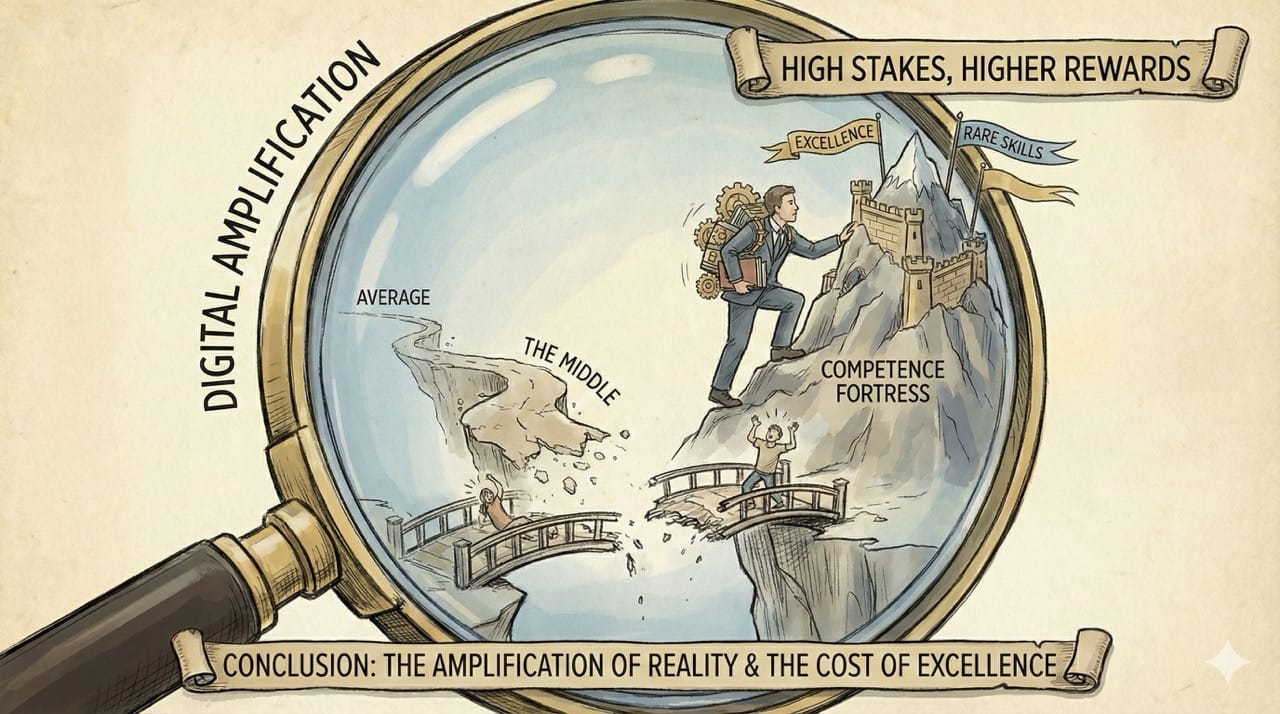
Conclusion: The Amplification of Reality
To be clear, inequality, vanity, and risk-taking have always existed in human history.
But the digitalization of our lives over the last two decades has acted as an unprecedented amplifier.
We are forced to constantly compare ourselves to the apex predators of every category.
The danger of this era is that the middle is disappearing.
You can no longer comfortably coast through life as an average player. The stakes are too high.
To survive and thrive in this environment, you have to actively reject mediocrity. You have to cultivate rare skills, maintain your physical and mental sharpness, and build a fortress of competence around yourself.
The world is unforgiving, but for those willing to pay the price of excellence, the rewards have never been higher.