The Cycle of Direct Response: Why We Click and How It Kills the Internet
Direct response ads are the psychological engine of the internet. From guys in garages to aesthetic concerts, they are designed to hijack your attention. But this relentless pursuit of the click is slowly destroying the platforms we use every day.

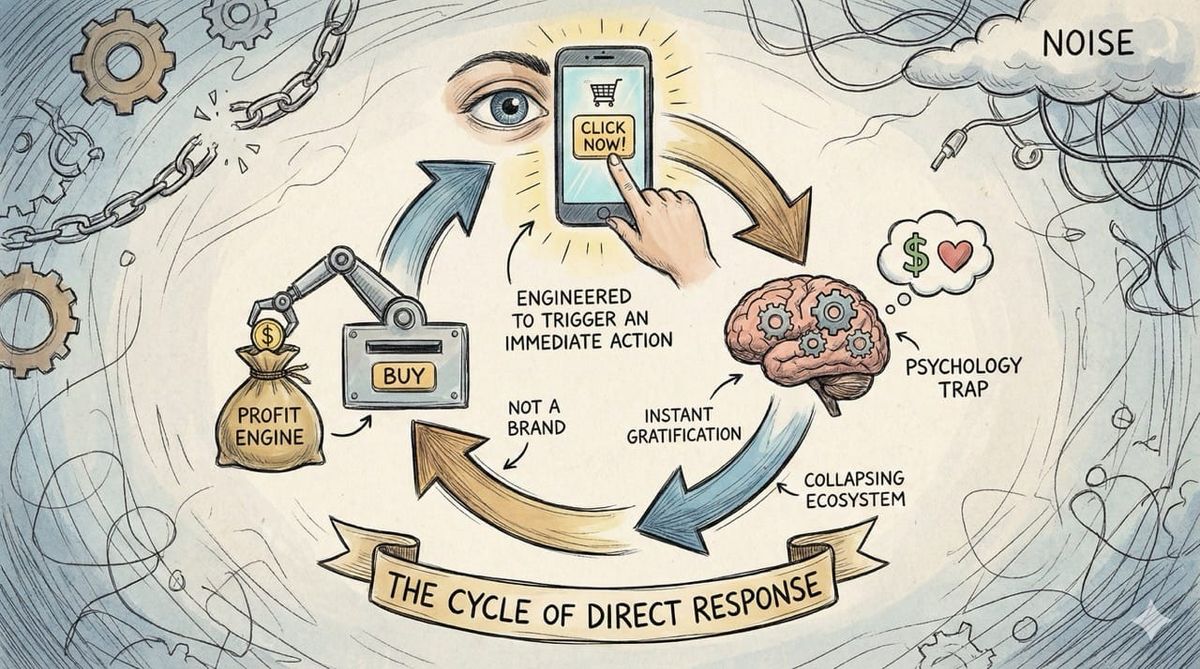
Performance marketing is a beautiful science. But when every advertiser optimizes for instant gratification, the entire ecosystem eventually collapses under the weight of its own noise.
Inspiration: Looking at my own Meta feed and tracking the evolution of direct response ads over the last decade. Realizing that the tactics change, but the underlying exploitation of human psychology remains exactly the same.
Direct response advertising is the financial engine of the modern internet. It does not care about brand awareness or winning creative awards.
It only cares about making you click and buy right now.
Every single element is engineered to trigger an immediate physical action. It is a psychological trap designed by performance marketers.
To understand where the internet is going, you have to understand the cycle of these ads.
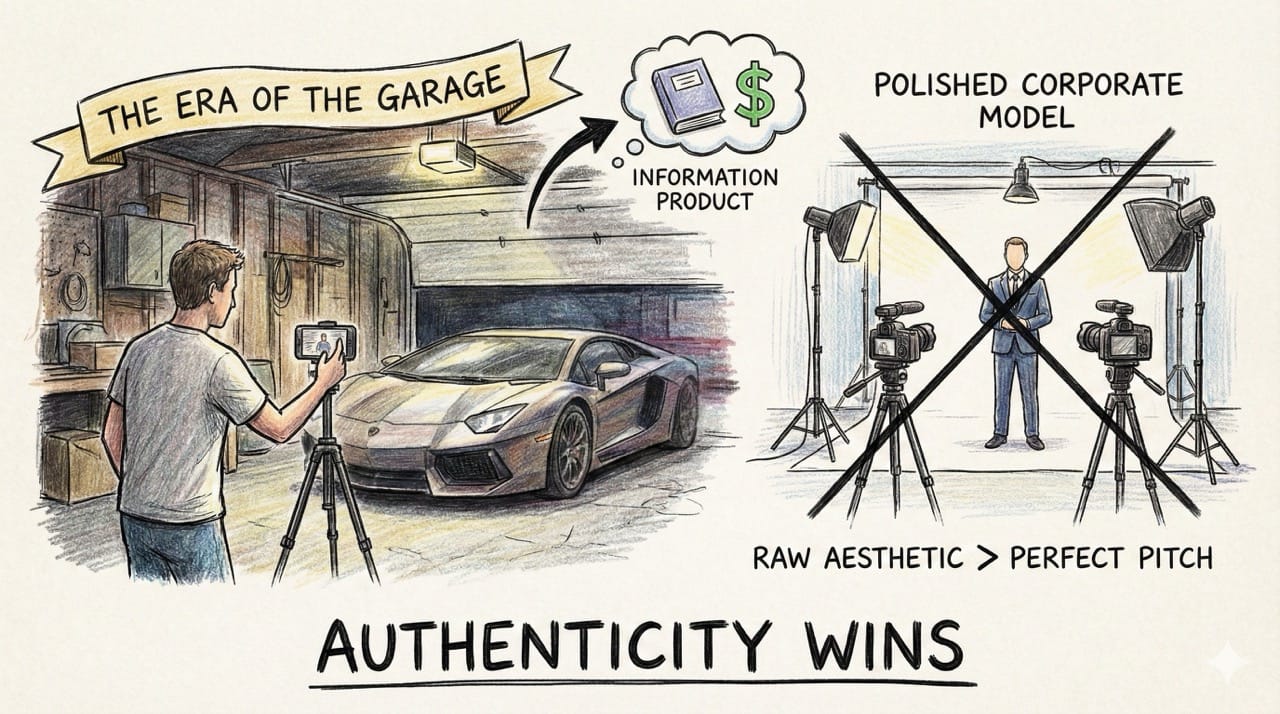
The Era of the Garage
Think back to the early days of video ads.
Tai Lopez standing in his garage next to a Lamborghini is the ultimate historical case study. He did not pitch a car.
He pitched the secret to wealth using a shaky smartphone camera.
That raw aesthetic completely shattered the polished corporate ad model. It birthed a massive information product industry overnight.
It worked because it felt authentic and unfiltered.
It promised a shortcut to success for young men looking for purpose. It was the perfect direct response hook for its time.
Hyper-Niche Targeting
As ad platforms evolved, the targeting became incredibly granular.
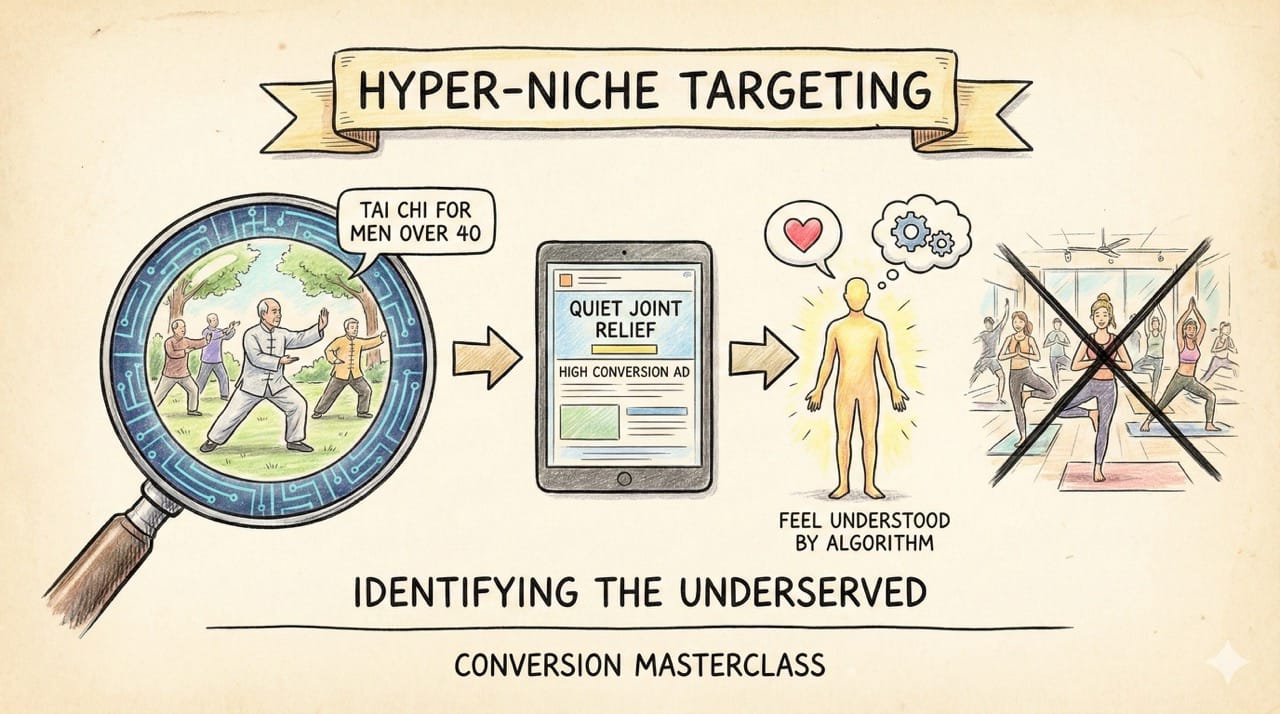
You might have seen ads recently pushing Tai Chi classes specifically for men over forty.
This works because it identifies a highly specific and underserved demographic.
It takes a known concept like mobility and repackages it perfectly.
It targets older men who want joint relief but feel alienated by trendy yoga studios.
The ad speaks directly to a quiet, specific insecurity.
By calling out the exact user persona in the first three seconds, the conversion rates skyrocket. It is a masterclass in making the viewer feel completely understood by an algorithm.
The Aesthetic Factory
Today, we see the aesthetic direct response model dominating platforms like Meta.
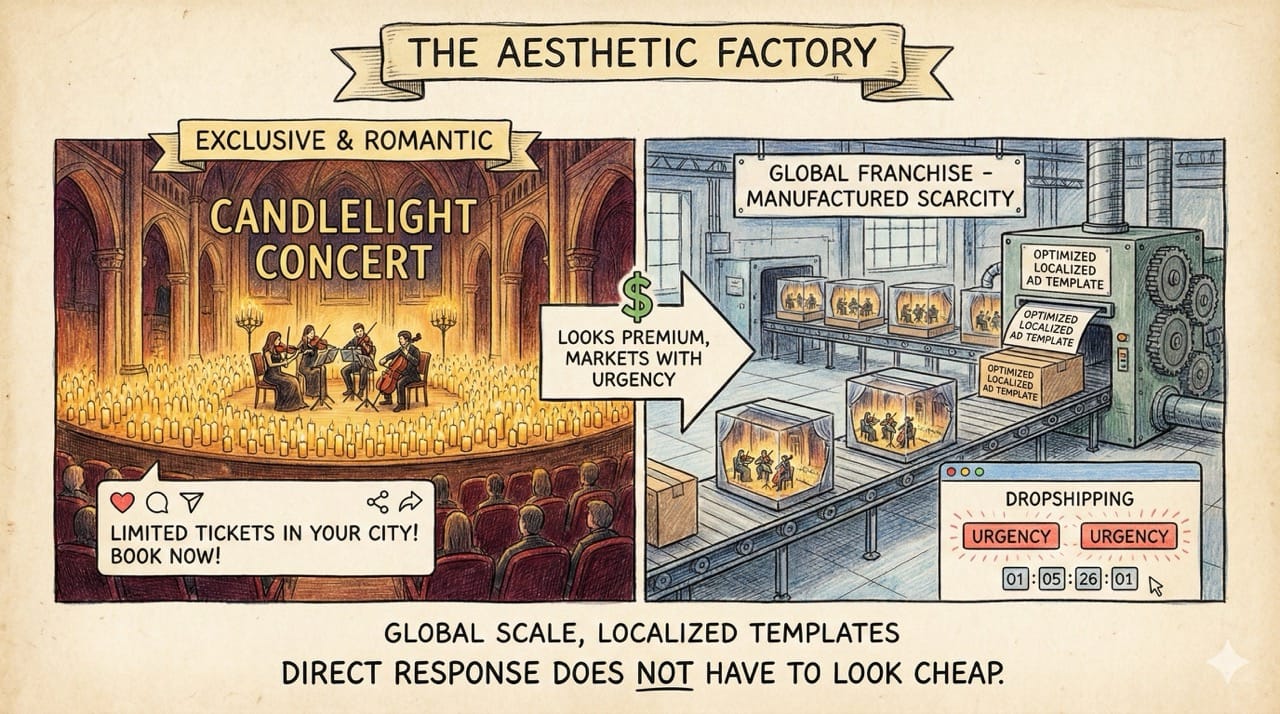
Fever's Candlelight Concert ads are a brilliant modern example.
They look like high-end and exclusive cultural events happening right in your local city.
The imagery is beautiful, romantic, and highly shareable. In reality, they are a globally scaled franchise operating in hundreds of cities.
They are built entirely on manufactured scarcity and highly optimized localized ad templates.
They sell an experience that looks premium but is marketed with the aggressive urgency of a dropshipping gadget.
It proves that direct response does not always have to look cheap to be effective.
Why the Psychology Works
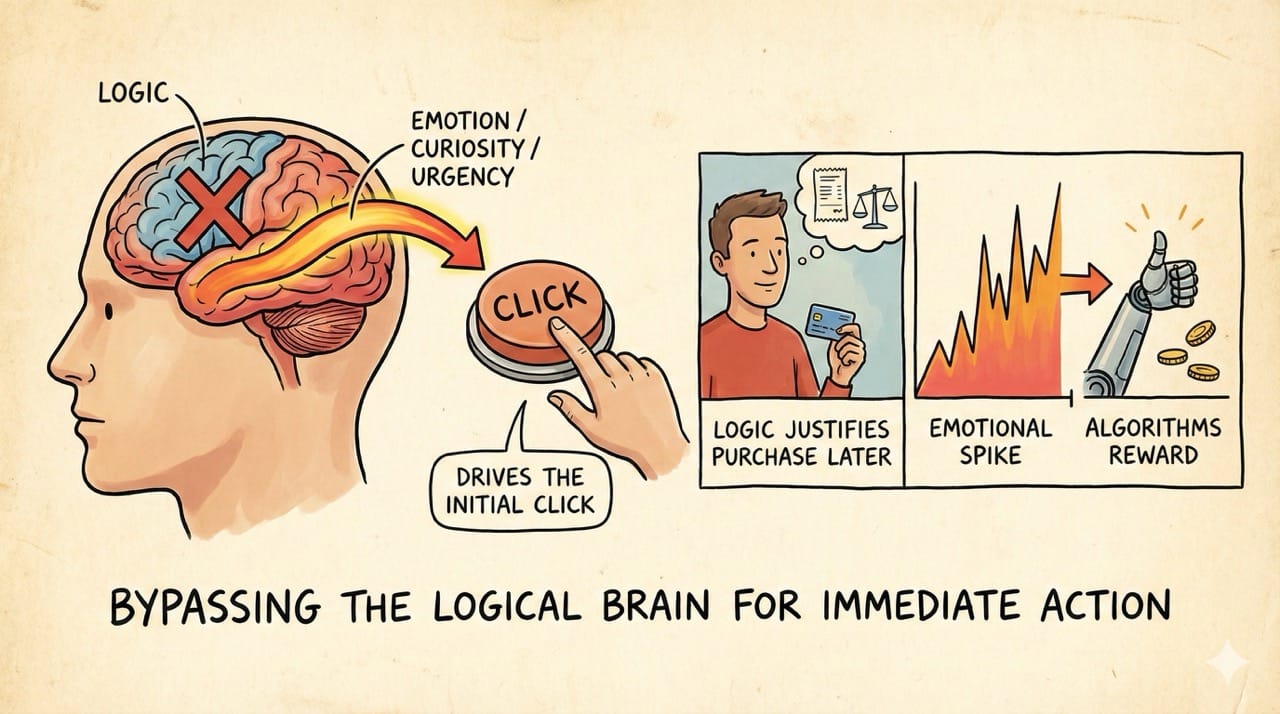
These campaigns succeed because they bypass the logical brain entirely.
They rely on massive curiosity gaps and urgent pain points. They promise a fast solution to wealth or health or cultural status.
In performance marketing, we know that emotion drives the initial click.
Logic only exists to justify the purchase after the credit card has been swiped. The algorithms simply reward the ads that trigger the highest emotional spikes.
The Tragedy of the Commons
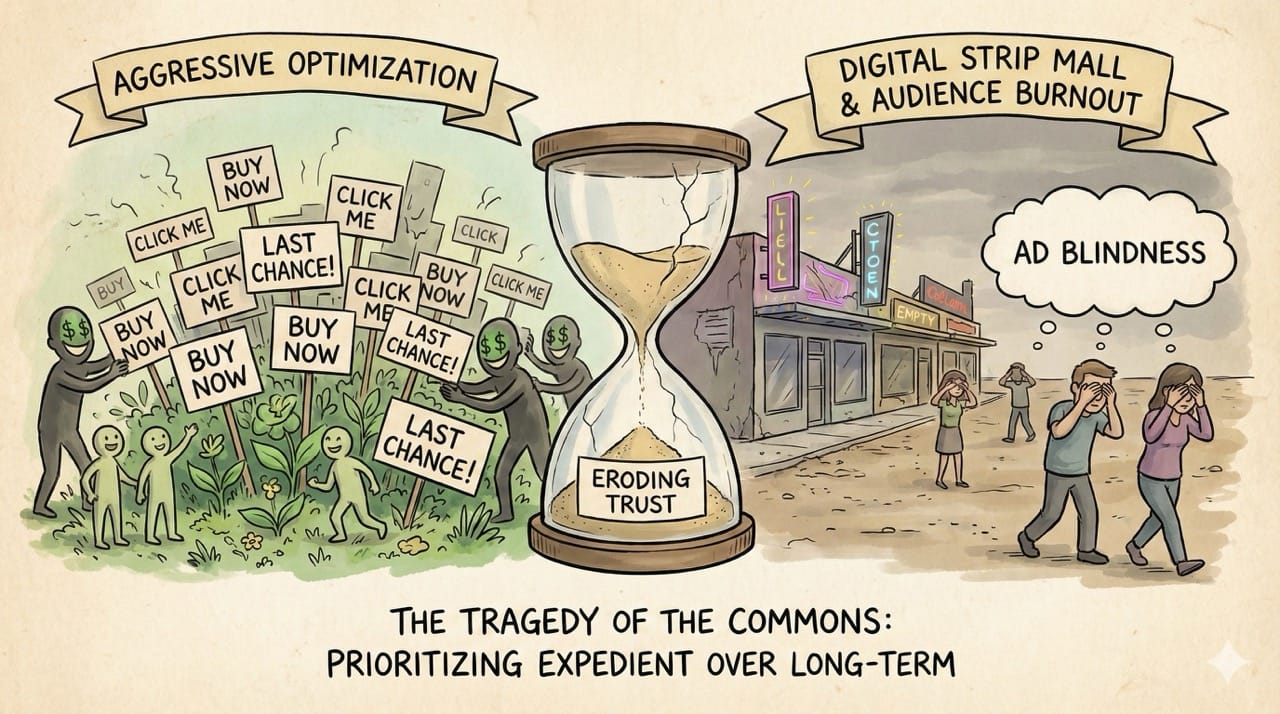
But this aggressive optimization has a massive hidden cost.
It slowly destroys the host platform. When every ad uses the exact same psychological hooks, users develop severe ad blindness.
The overall trust in the platform rapidly degrades.
This is a classic tragedy of the commons. Advertisers prioritize what is expedient over what is long-term and meaningful.
They burn out the audience with cheap dopamine hits.
The social network eventually turns into a digital strip mall. Users begin to actively avoid the feed because it feels entirely transactional.
Predictions for the Future
We are reaching the absolute limit of high-stimulation advertising.
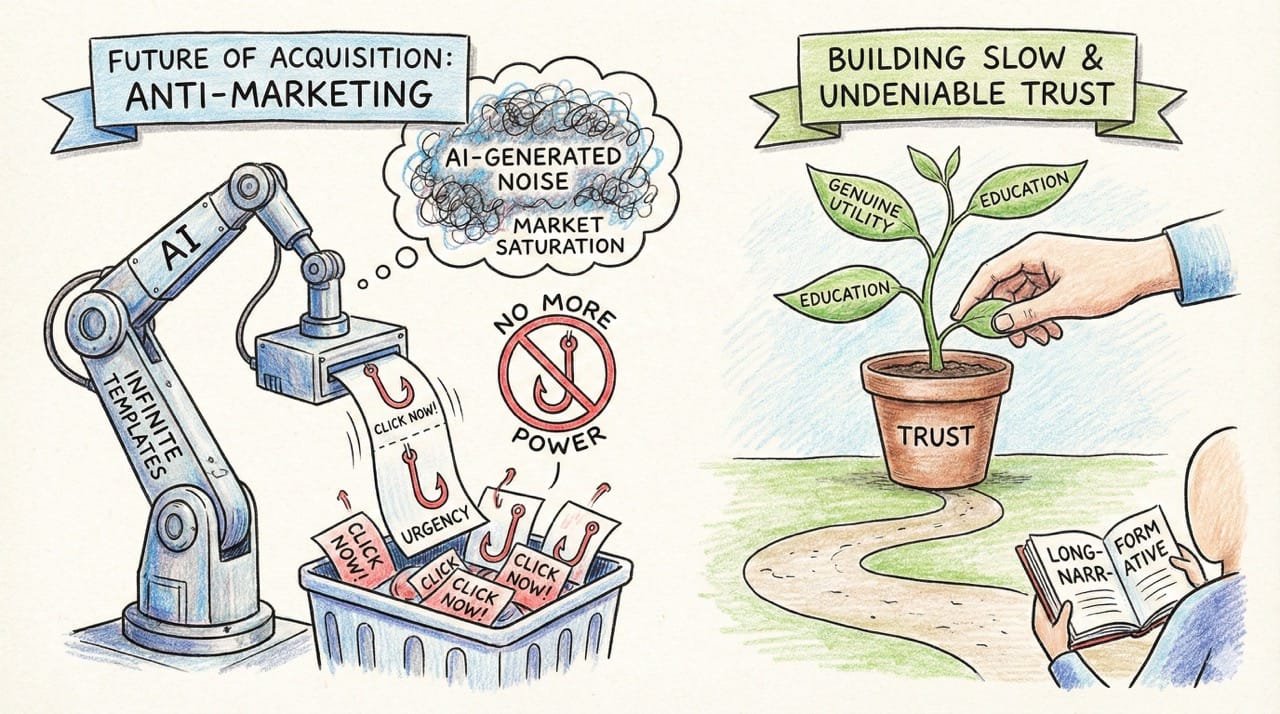
Artificial intelligence can now generate these direct response templates infinitely and for free.
When the market is flooded with perfect hooks, those hooks will lose all their power.
The future of customer acquisition will look like anti-marketing.
Consumers will crave deep authenticity and long-form narrative.
The brands that win will stop shouting for immediate clicks.
They will focus on building slow and undeniable trust over time.
They will offer genuine utility and education without a hidden countdown timer. That is the only way to survive in an internet filled with AI-generated noise.