The Autonomous Wingman: Why the Pentagon is Abandoning the Manned Fighter
We assume the future of air superiority relies on building increasingly expensive and heavily armored manned fighter jets. In reality, the military is rapidly pivoting to autonomous wingmen simply because a downed drone never requires a catastrophic rescue mission.

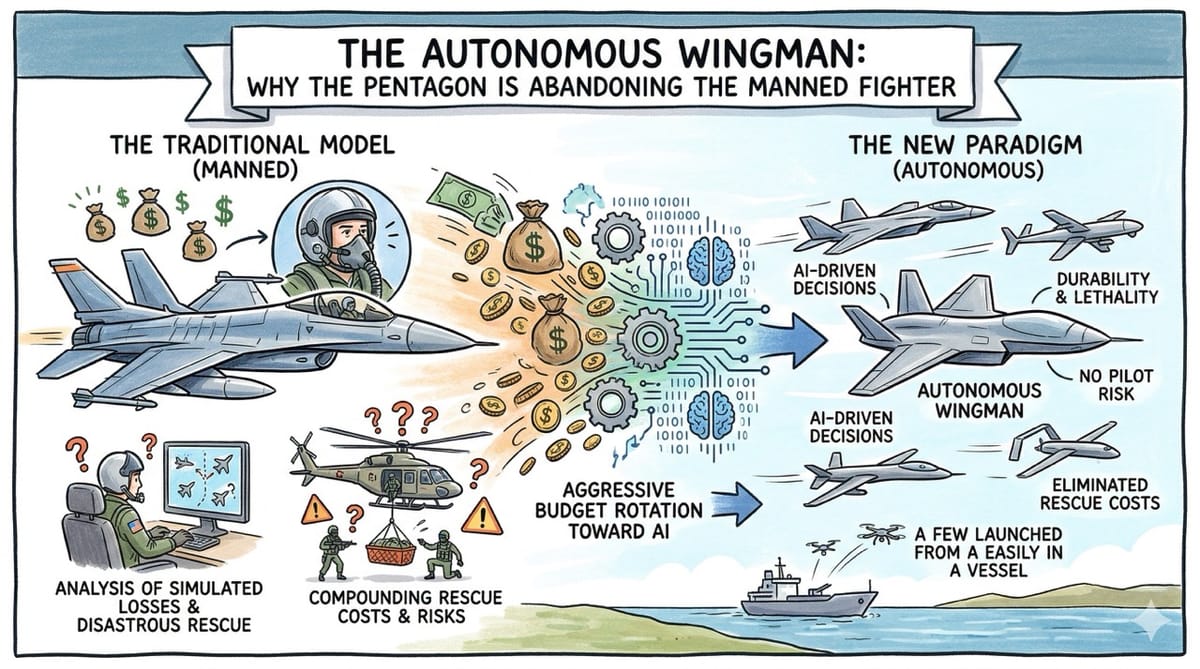
The biological pilot has become the greatest strategic liability on the modern battlefield. The defense budget is aggressively rotating toward artificial intelligence to eliminate the compounding cost of human rescue.
Inspiration: Analyzing the simulated loss of a US F15 Strike Eagle and the subsequent disastrous rescue mission in Iranian airspace. Realizing that the military budget is shifting away from manned platforms entirely to avoid these compounding biological liabilities.
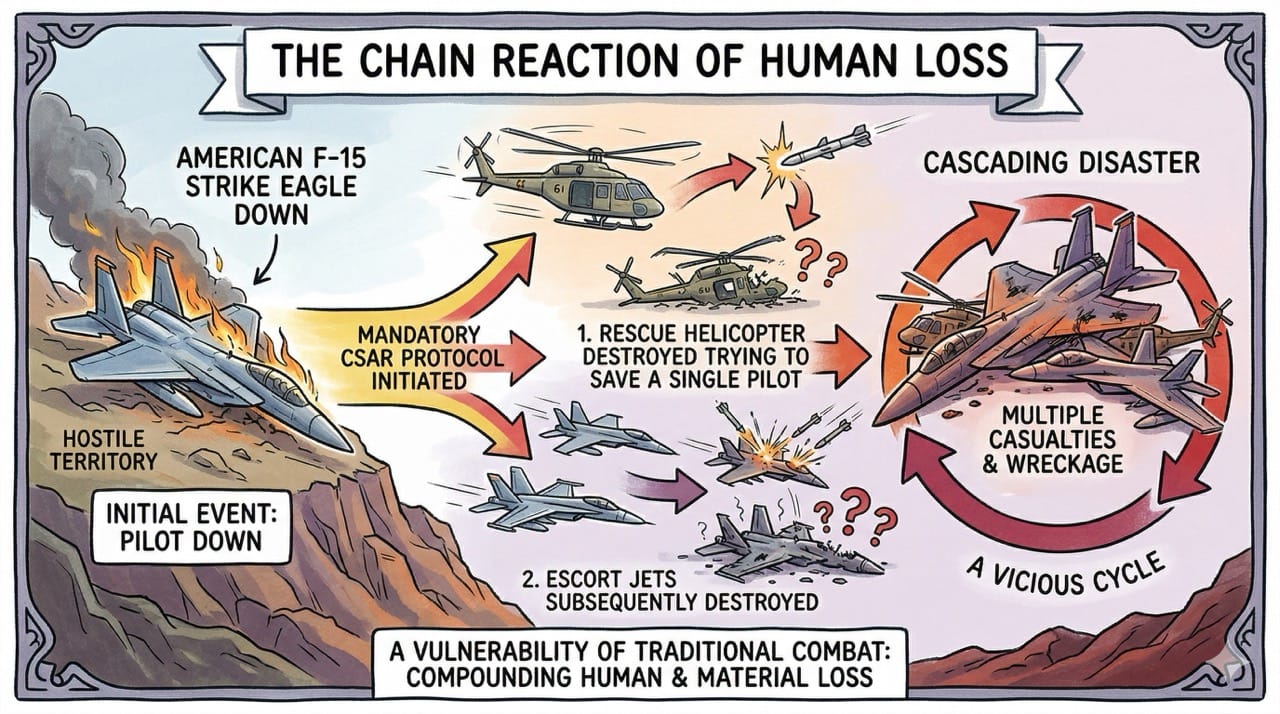
The Chain Reaction of Human Loss
Recent battlefield simulations perfectly illustrate the massive vulnerability of traditional air combat.
When an American F15 Strike Eagle goes down in hostile territory, it immediately triggers a mandatory combat search and rescue operation.
This strict protocol often results in a cascading disaster where rescue helicopters and escort jets are subsequently destroyed trying to save a single pilot.
The Budget Pivot
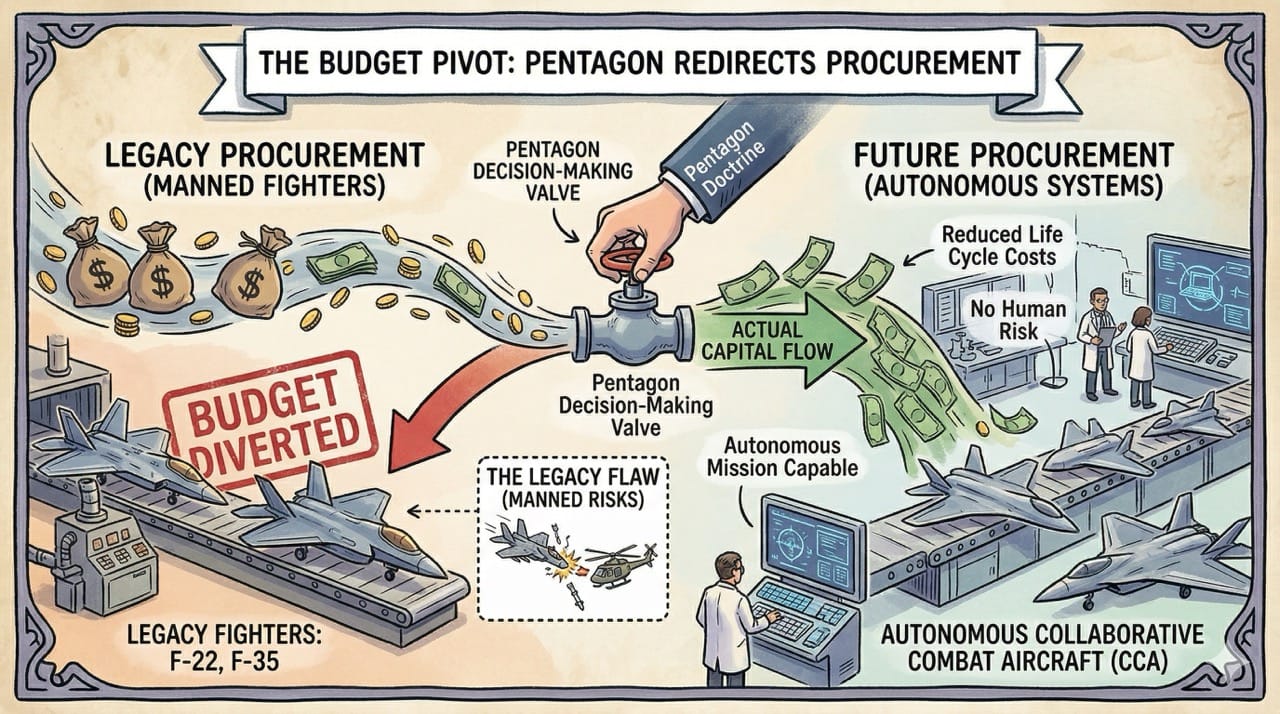
The Pentagon is finally recognizing this massive systemic flaw in their operational doctrine.
They are actively shifting their massive procurement budgets away from purchasing expensive legacy fighter jets.
That capital is now flowing directly into the development of autonomous collaborative combat aircraft.
The Cold Mathematics of Attrition
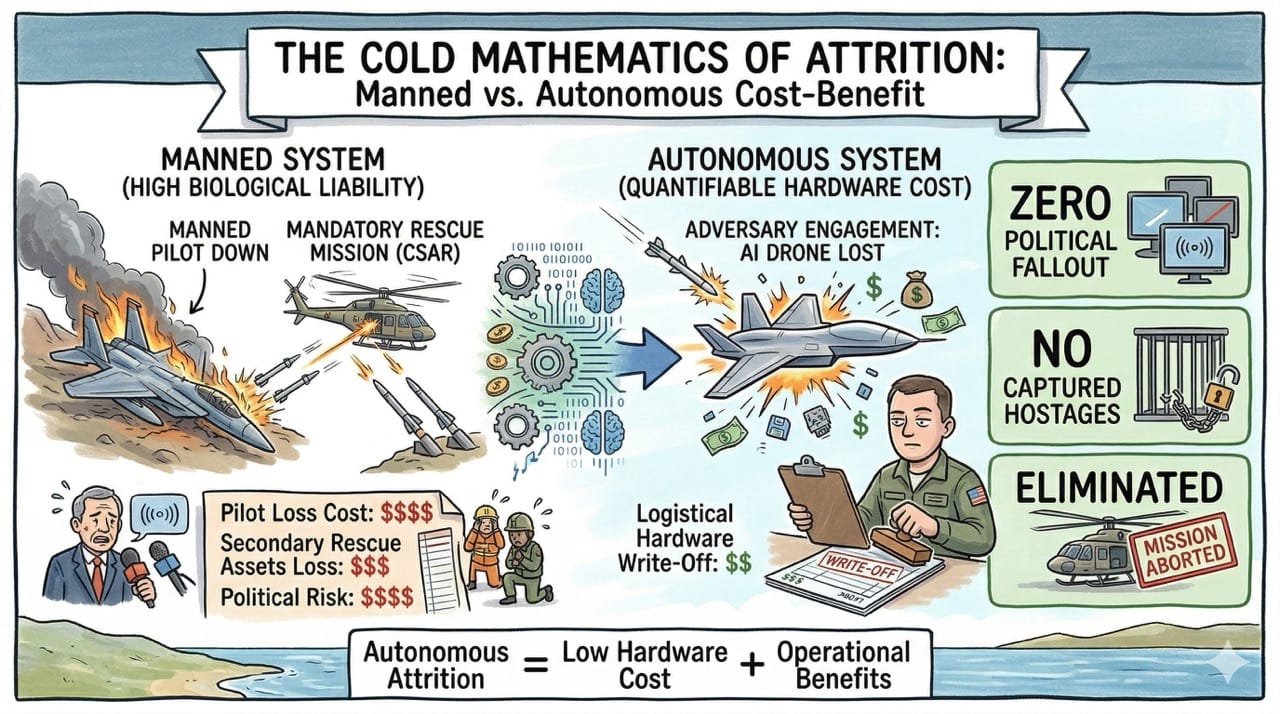
Deploying an autonomous drone swarm completely removes the biological liability from the battlefield.
If an adversary shoots down an artificial intelligence wingman, the military simply writes off the hardware cost without blinking.
There is zero political fallout, no captured hostages, and absolutely no need to launch a secondary rescue mission into a heavily defended kill zone.
The Defense Tech Beneficiaries
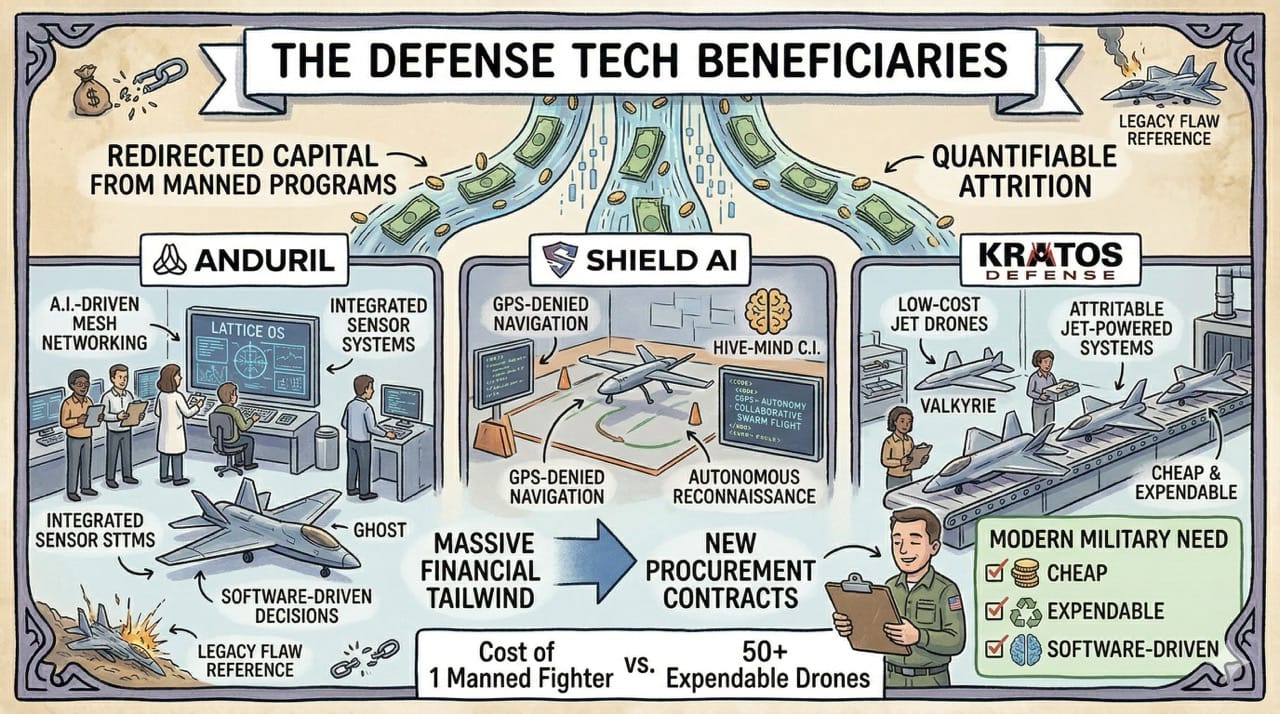
This aggressive budget rotation creates a massive financial tailwind for a specific breed of defense contractors.
Agile technology companies like Anduril, Shield AI, and Kratos Defense are perfectly positioned to capture these new procurement contracts.
They are building the exact cheap, expendable, software driven hardware that the modern military actually needs.
The Economics of Expendability
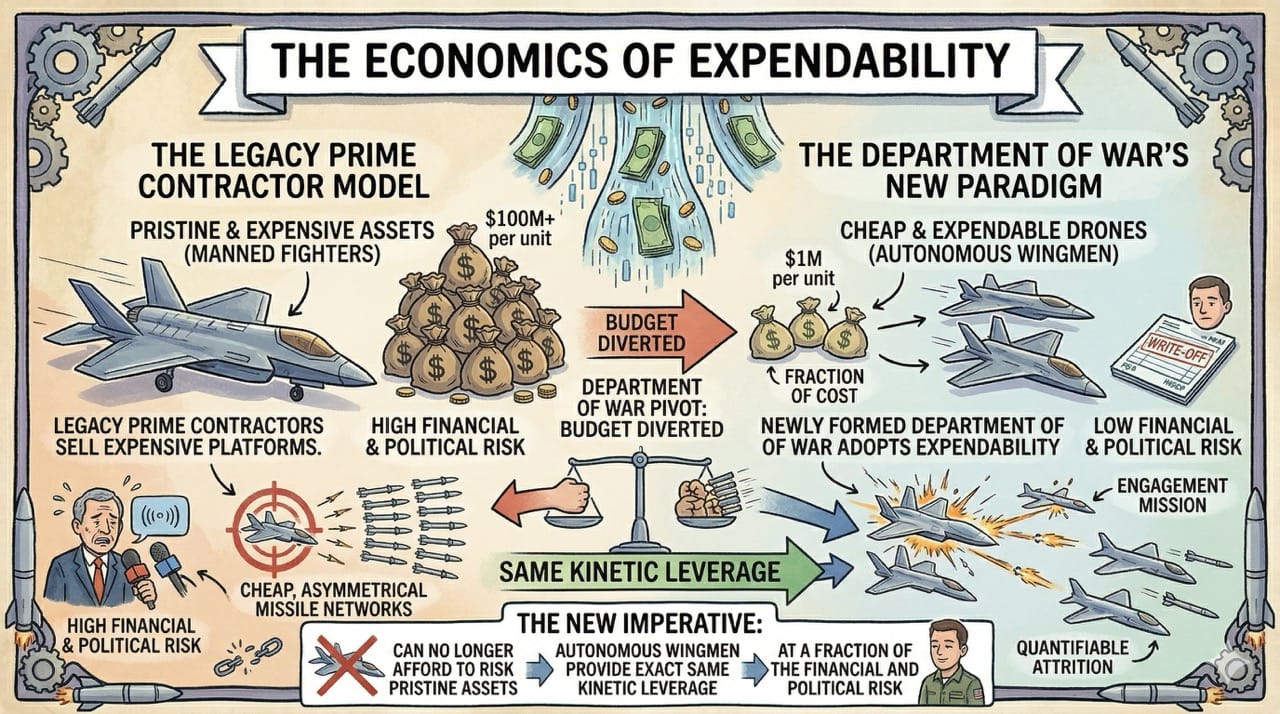
Legacy prime contractors have spent decades selling platforms that cost hundreds of millions of dollars per unit.
The newly formed Department of War can no longer afford to risk those pristine assets against cheap, asymmetrical missile networks.
Autonomous wingmen provide the exact same kinetic leverage at a fraction of the financial and political risk.
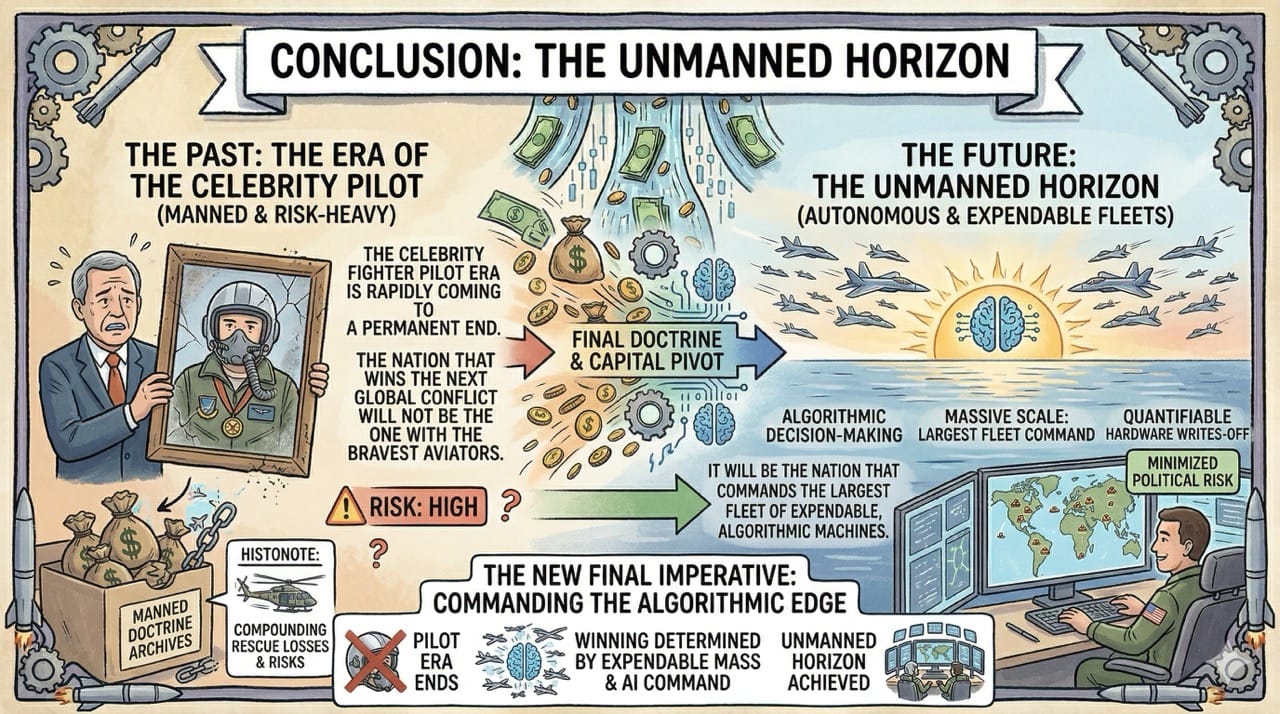
Conclusion: The Unmanned Horizon
The era of the celebrity fighter pilot is rapidly coming to a permanent end. The nation that wins the next global conflict will not be the one with the bravest aviators.
It will be the nation that commands the largest fleet of expendable, algorithmic machines.