Robots As A Service (RaaS)
We used to buy robots like tractors. Big CAPEX check, pray it does not break. The new future is OPEX. Subscribe to robots, pay per pick, scale on demand. This is Robots as a Service.
For thirty years automation was a rich company game. If you wanted a robot you needed 250k upfront, an integrator, six months of waiting, and a maintenance contract that cost more than the robot. Only Toyota and Amazon could play.
RaaS changes the accounting. You do not buy the robot. You subscribe to the task.
Chapter 1: Why CAPEX Killed US Manufacturing
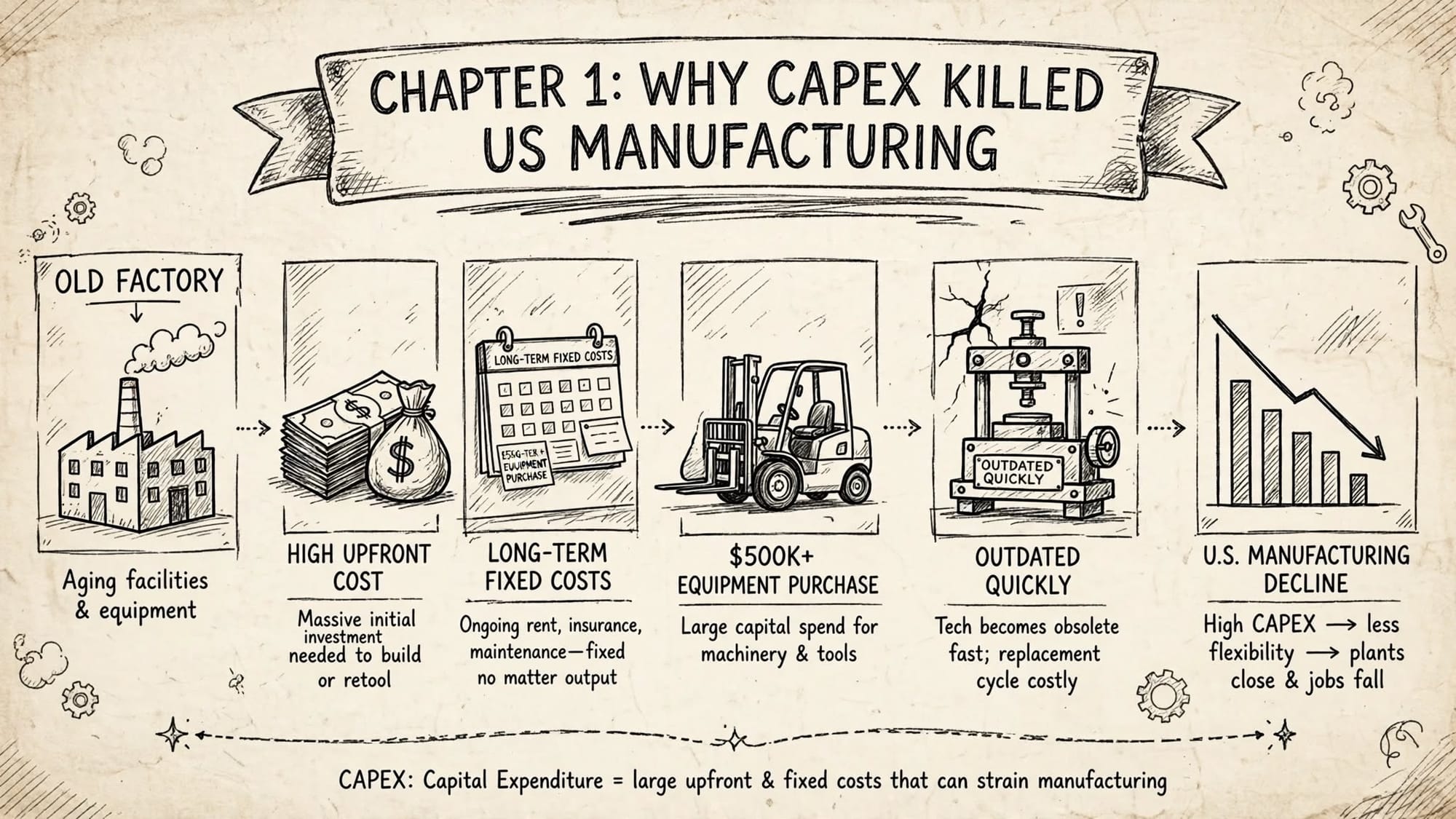
CAPEX means you own machinery and facilities.
Long term fixed costs. High upfront investment. Build your own, buy equipment, large capital spend.
That model worked when labor was cheap and products never changed. It fails now because:
- Demand changes weekly
- Tech gets obsolete in two years
- Small factories cannot fund 2M upfront
Result: 300k small US shops never automated. China did.
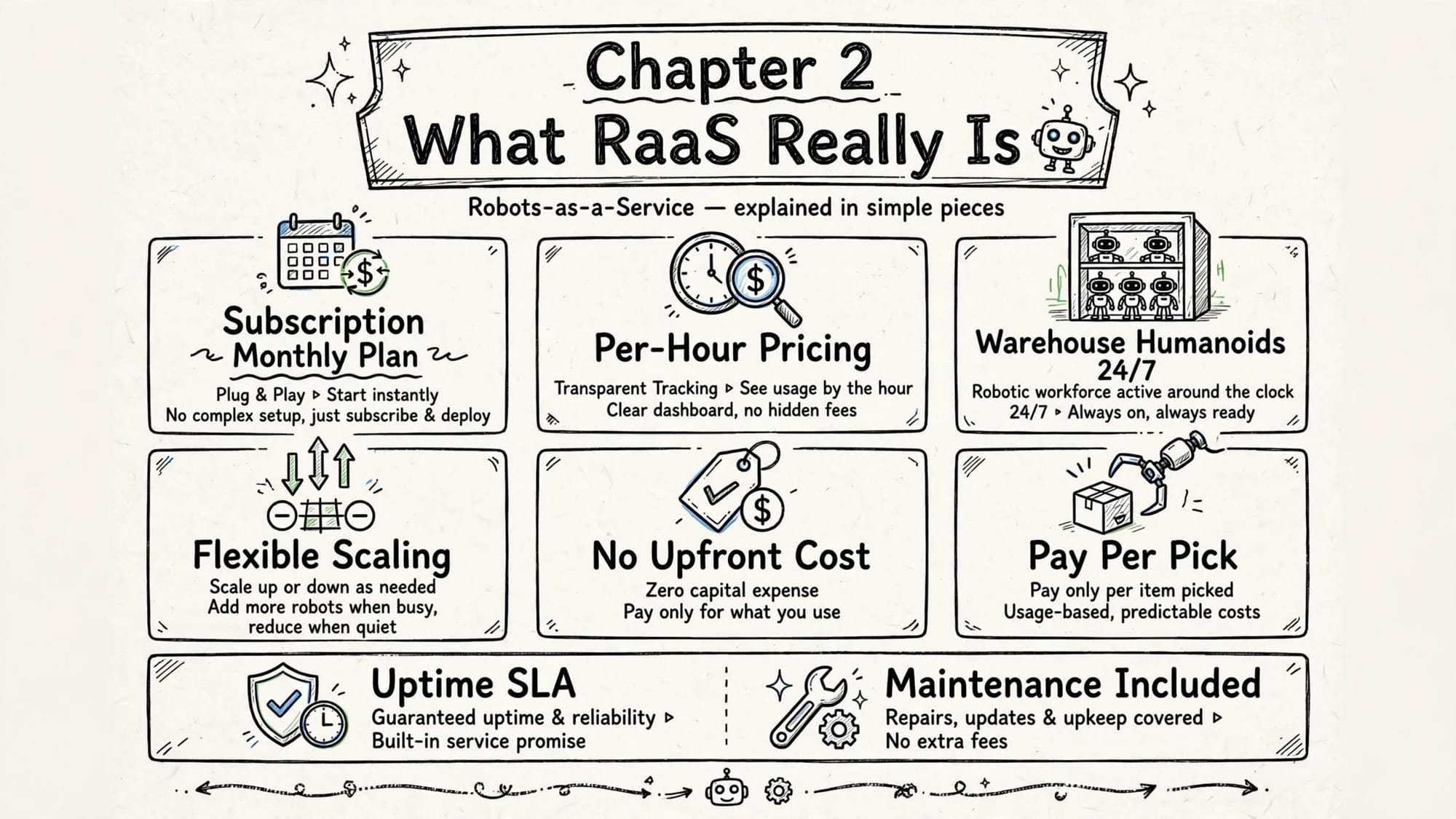
Chapter 2: What RaaS Really Is
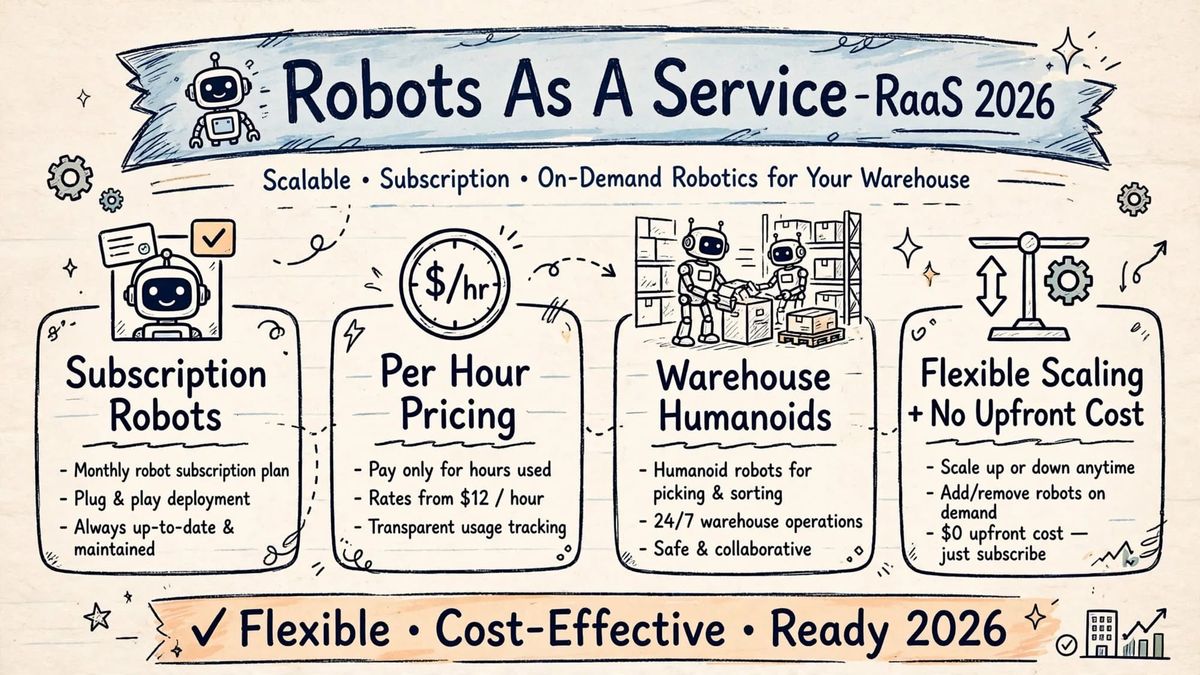
Robots as a Service is operational expense. Pay as you go. Subscription. Flexible and scalable costs.
- Subscription Robots: monthly plan, plug and play deployment, always up to date and maintained
- Per Hour Pricing: pay only for hours used, rates from 12 dollars per hour, transparent usage tracking
- Warehouse Humanoids: humanoid robots for picking and sorting, 24/7 operations, safe and collaborative
- Flexible Scaling plus No Upfront Cost: scale up or down anytime, add or remove robots on demand, zero upfront cost, just subscribe
You focus on operations, not upkeep. Vendor handles maintenance, updates, and support. You focus on throughput.
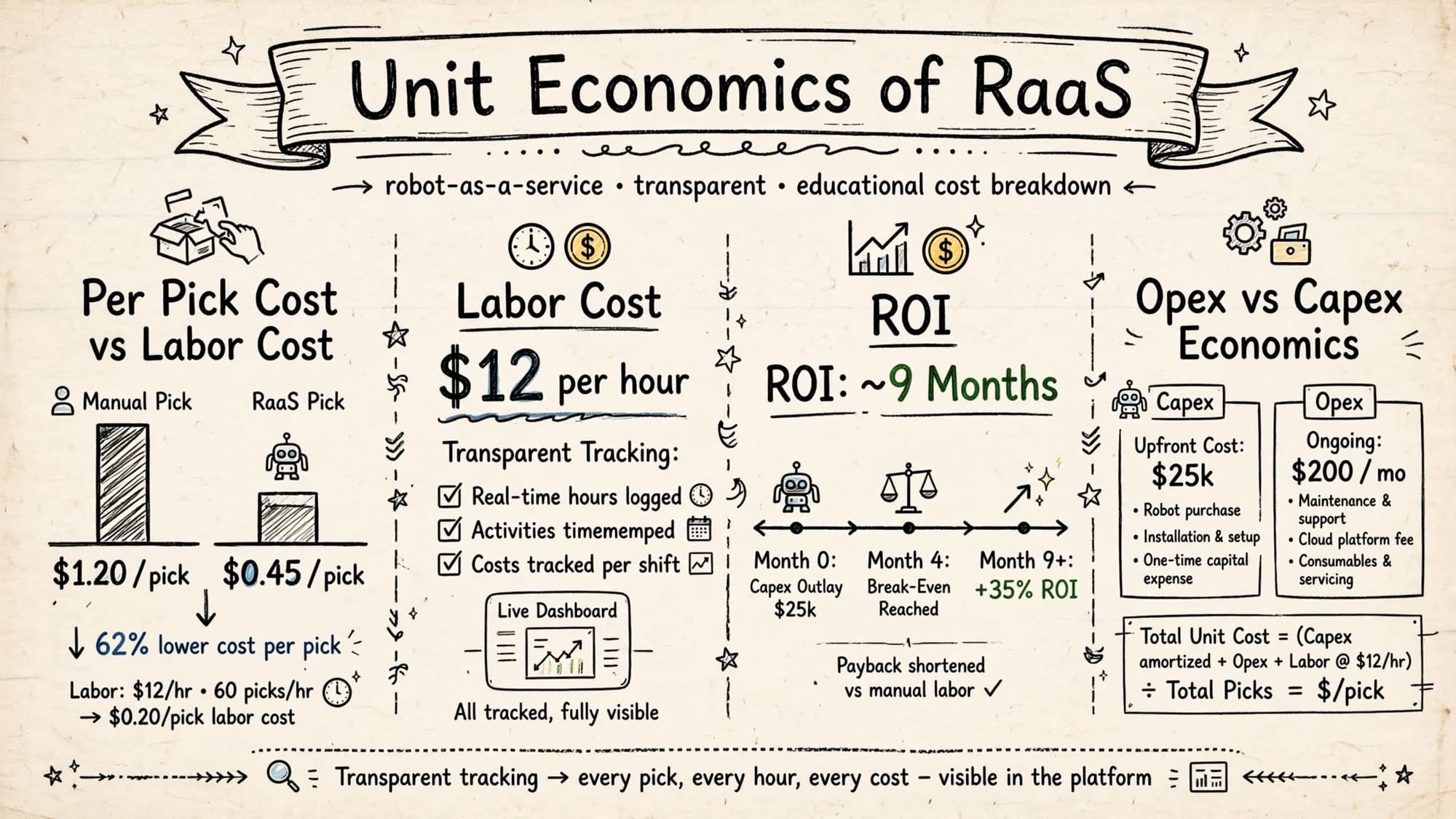
Chapter 3: Unit Economics of RaaS
This is where it gets real.
- Per Pick Cost vs Labor Cost: Manual pick 1.20 per pick. RaaS pick 0.45 per pick. That is 62 percent lower cost per pick. Labor at 12 per hour, 60 picks per hour, 0.20 per pick labor cost.
- Labor Cost 12 per hour: real time hours logged, activities time stamped, costs tracked per shift. All tracked, fully visible on live dashboard.
- ROI: about 9 months. Month 0: CAPEX outlay 25k. Month 4: break even reached. Month 9 plus: 35 percent ROI. Payback shortened vs manual labor.
- Opex vs Capex Economics: Capex upfront cost 25k for robot purchase, installation and setup, one time capital expense. Opex ongoing 200 per month for maintenance and support, cloud platform fee, consumables and servicing. Total unit cost equals Capex amortized plus Opex plus Labor at 12 per hour divided by total picks equals dollars per pick.
Transparent tracking: every pick, every hour, every cost visible in the platform. That is why CFOs love it. It turns a fixed cost into a variable cost tied to revenue.
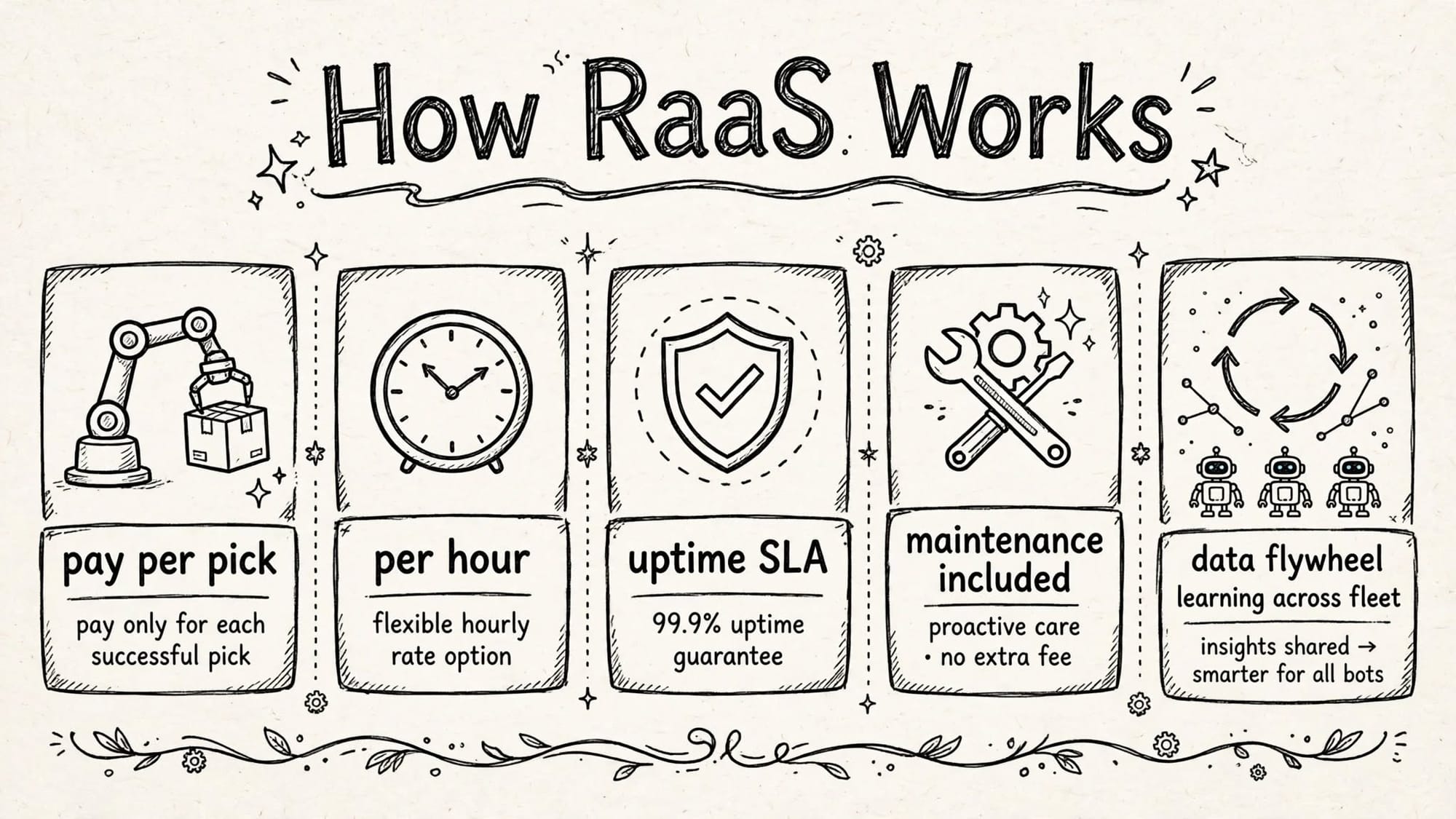
Chapter 4: How RaaS Works
The workflow is simple and it compounds.
Pay per pick: pay only for each successful pick. Per hour: flexible hourly rate option. Uptime SLA: 99.9 percent uptime guarantee.
Maintenance included: proactive care, no extra fee. Data flywheel: learning across fleet, insights shared, smarter for all bots.
One robot learns how to pick a new shampoo bottle in Ohio.
That night every robot in Texas and Berlin knows it.
Warehouse Bot A to Robot B to Robot C shared learning, sync and improve.
This is the data flywheel: collect data, train and learn, deploy to fleet, improve performance.
You never get that with a siloed FANUC arm from 2019.
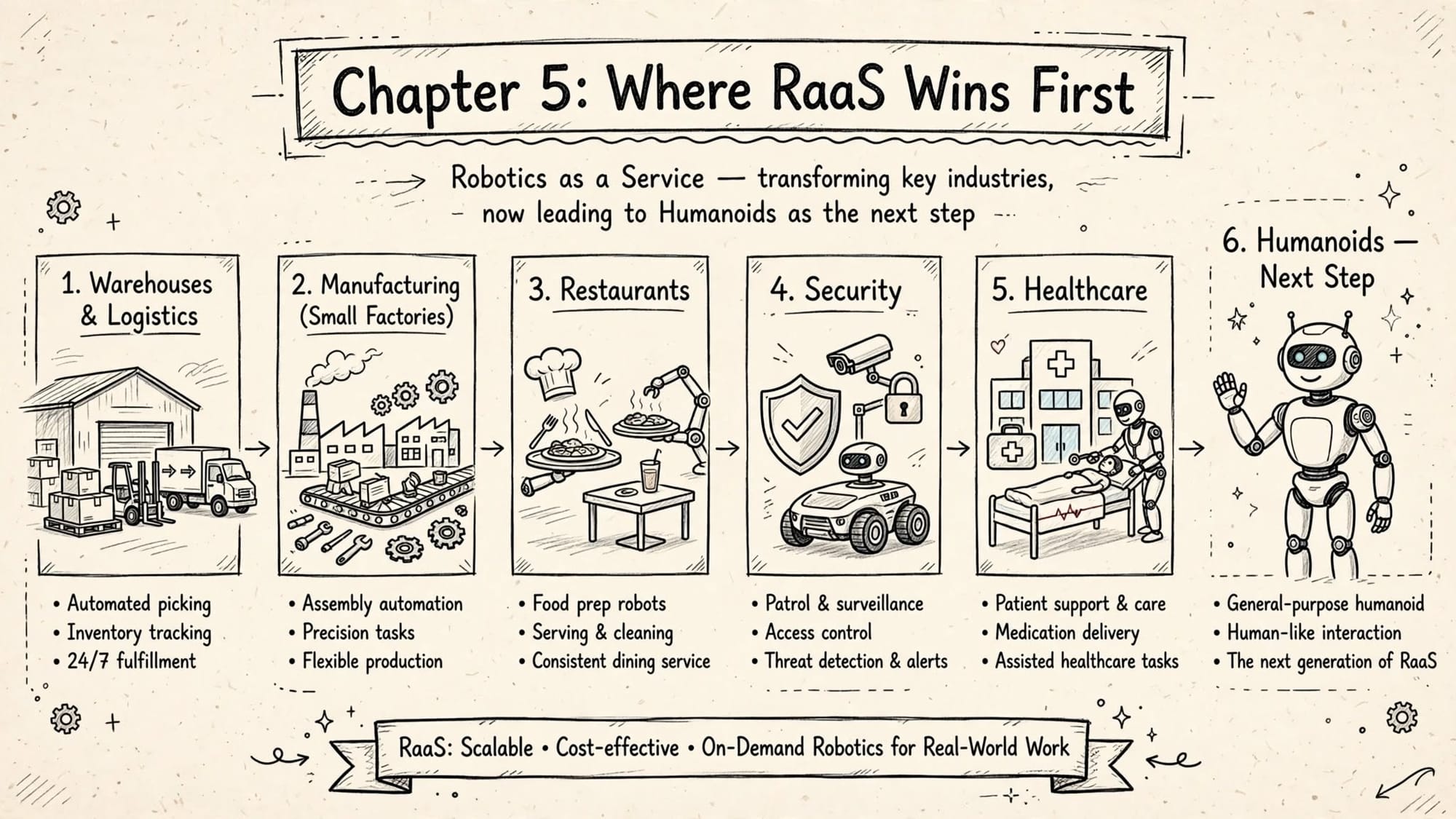
Chapter 5: Where RaaS Wins First
Not everywhere at once. It wins where turnover is high, labor is scarce, tasks are repetitive.
- Warehouses and Logistics: AMRs moving inventory, picking and sorting, inventory scanning. Locus, 6 River Systems. Already 60 percent of new warehouses are RaaS.
- Manufacturing and Small Factories: robotic arms on assembly line, welding, quality control. Formic model, zero upfront, dollars per hour. Small manufacturers can finally automate.
- Restaurants: serving, bussing, kitchen prep. Bear Robotics.
- Security: patrol, monitoring. Knightscope.
- Healthcare: logistics, cleaning, delivery in hospitals.
- Humanoids Next: the final step.
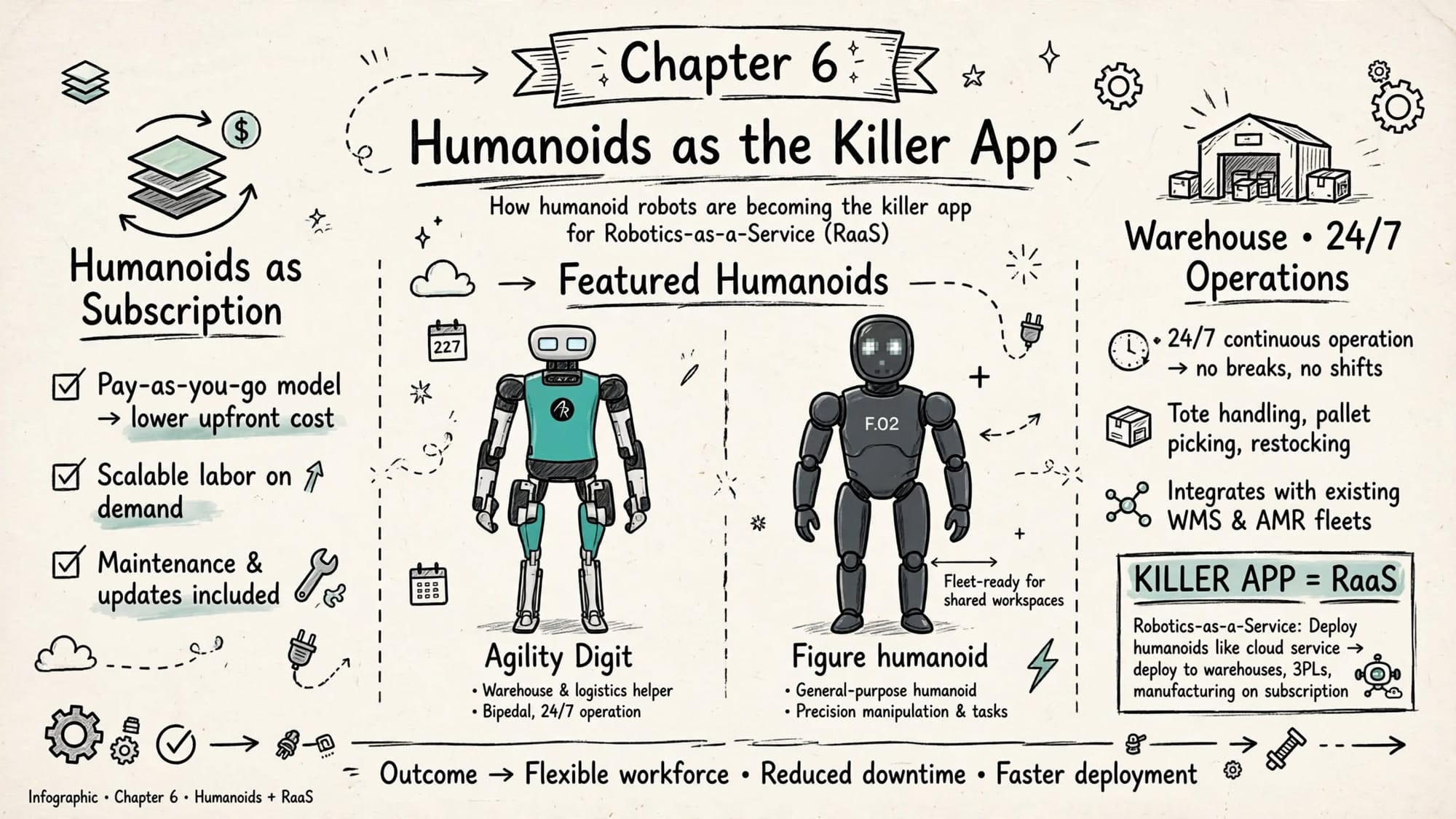
Chapter 6: Humanoids as the Killer App
Humanoids are the iPhone moment for RaaS.
No one wants to own a 70k humanoid that needs updates, falls over, and needs charging infrastructure.
Everyone wants to pay 30 dollars per hour for a robot that unloads totes, works night shift, and gets better while you sleep.
Agility Digit at Amazon, Figure at BMW, 1X in homes.
All will be RaaS. Subscription Robots plus Per Hour Pricing plus Warehouse Humanoids equals the future of labor.
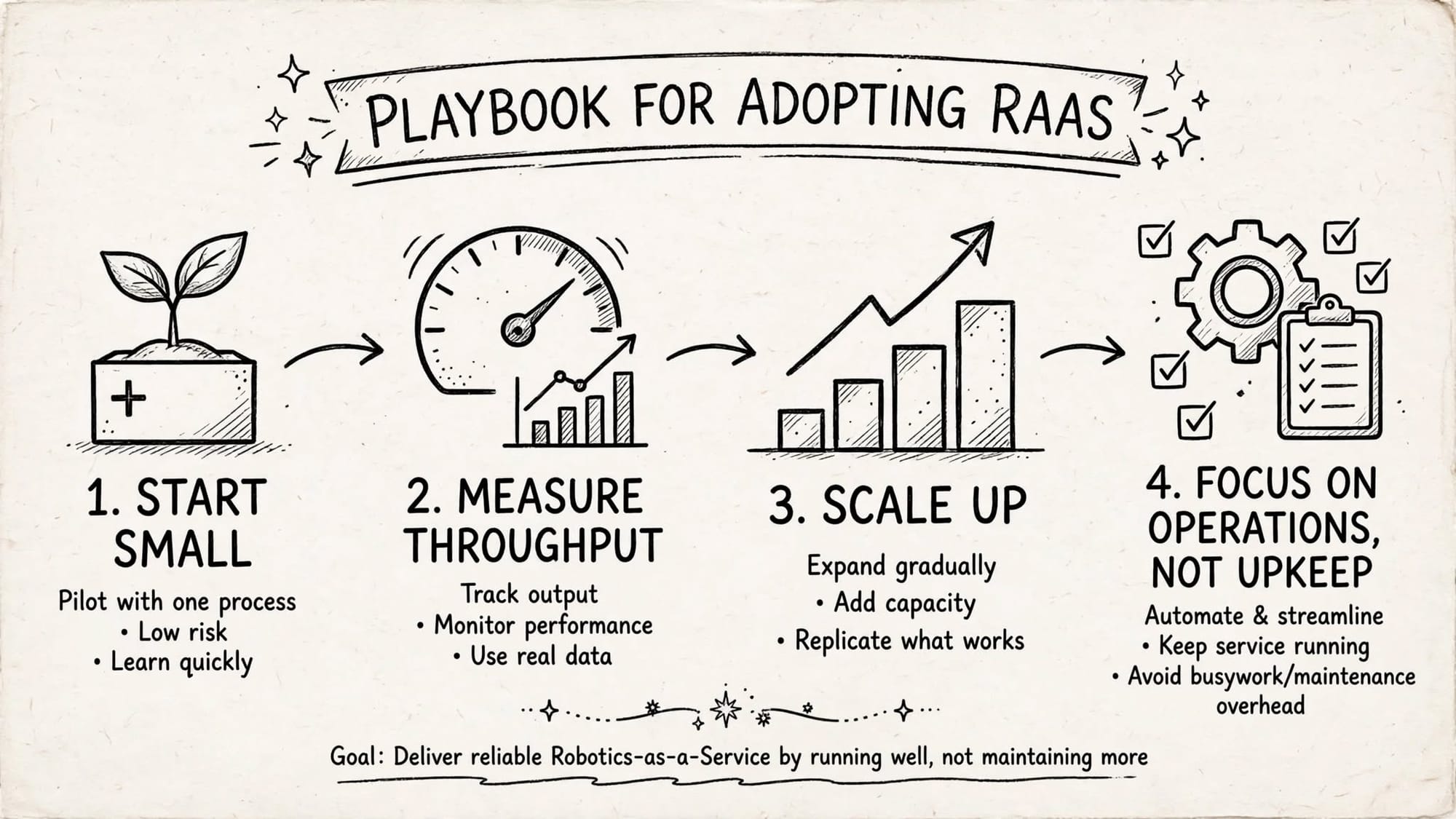
Chapter 7: Playbook for Adopting RaaS
If you run a warehouse, factory, or restaurant, here is the playbook.
- Start Small: pilot with one process. Low risk. Learn quickly. One aisle, one station, one robot.
- Measure Throughput: track output. Monitor performance. Use real data. Live dashboard, cost per pick, picks per hour, uptime.
- Scale Up: expand gradually. Add capacity. Replicate what works. Add robots on demand for Black Friday, remove them in January.
- Focus on Operations, Not Upkeep: automate and streamline. Keep service running. Avoid busywork and maintenance overhead. Goal: deliver reliable Robotics as a Service by running well, not maintaining more.
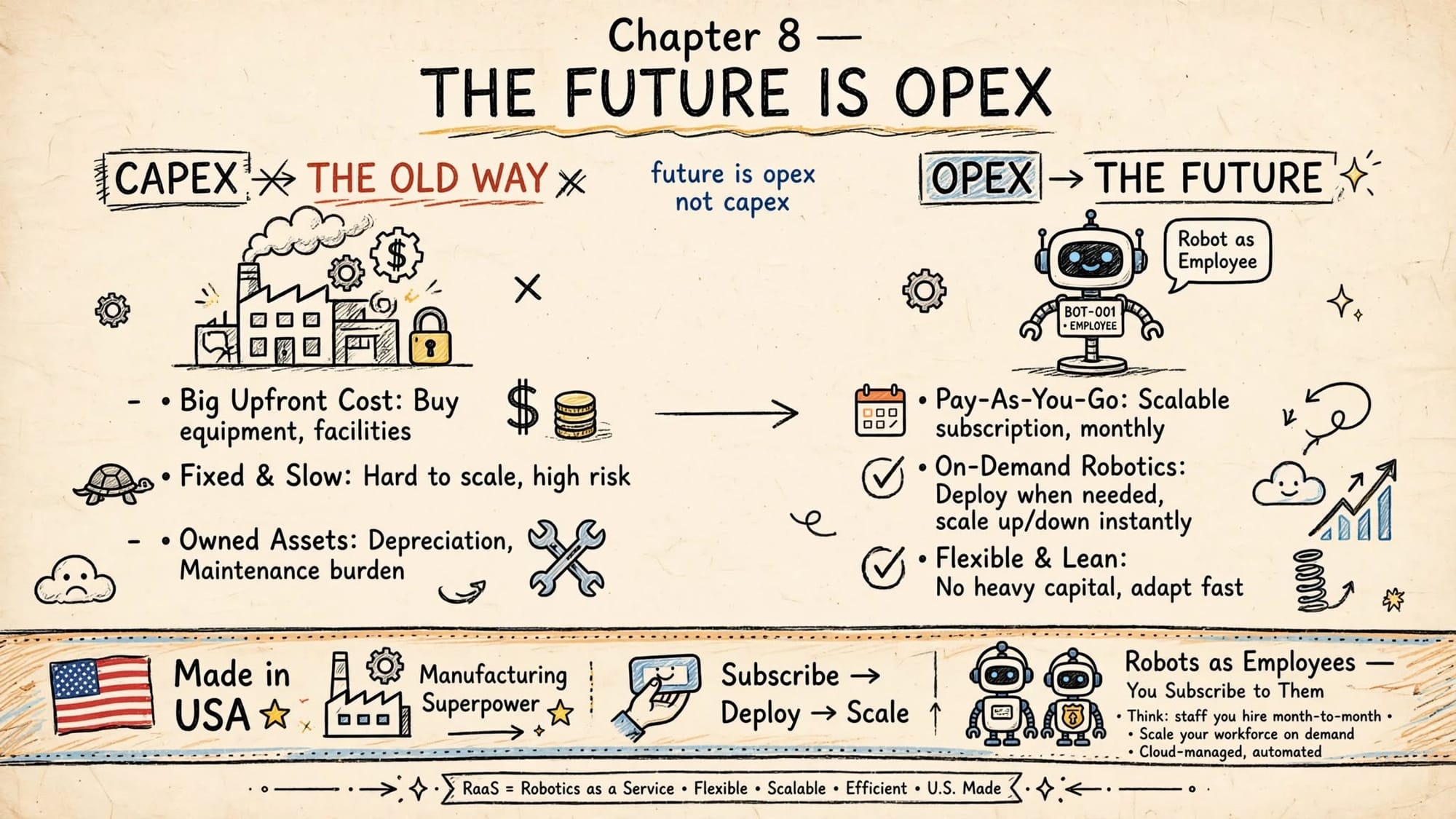
Chapter 8: The Future Is OPEX
CAPEX made America great in 1950. It killed us in 2000 because China did CAPEX cheaper.
OPEX makes us great again because no one does agile, AI powered, on demand manufacturing better than US tech plus US hustle.
Future proof and scalable. Lower barrier to entry. 24/7 monitoring and data insights. Focus on operations not upkeep.
We stopped buying servers. We started renting compute from AWS.
Now we stop buying robots. We rent labor from RaaS.
Robots are not products anymore. They are employees you can subscribe to.