Invading the Real World: Why the World of Warcraft Marketing Team is Unmatched
World of Warcraft is a twenty-year-old game that still dominates culture. Their marketing team achieves this by breaking the fourth wall through genius partnerships. Leading up to the Midnight expansion, they are proving that the best gaming ads do not look like ads at all.
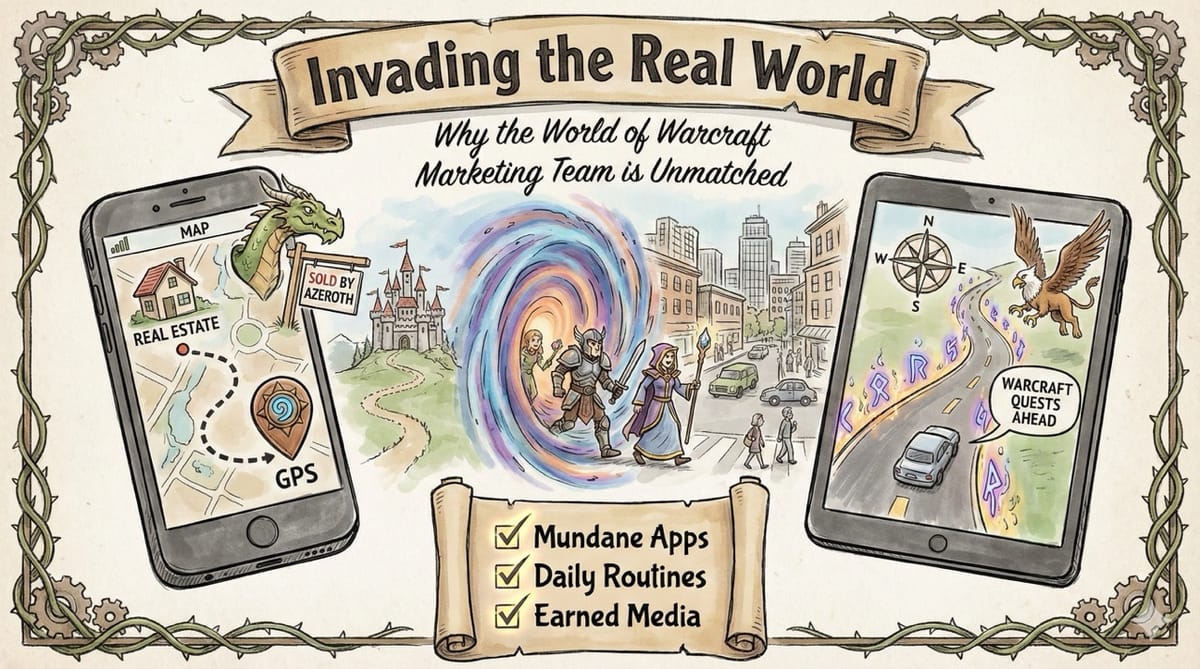
From real estate platforms to navigation apps, Blizzard is bypassing traditional ad auctions. They are keeping a legacy game relevant by seamlessly embedding it into our daily routines.
Inspiration: Seeing World of Warcraft lore pop up in completely unexpected, mundane applications and realizing how brilliant this non-endemic marketing strategy truly is for driving earned media.
The video game industry is notoriously difficult for customer retention. Most games lose their active player base within a few months of launch.
Yet, World of Warcraft has maintained a massive cultural footprint for two decades.
As Blizzard prepares for the upcoming Midnight expansion, their marketing strategy offers a masterclass for performance marketers.
They are not just running standard display ads or cinematic trailers.
The WoW marketing team has mastered the art of non-endemic, real-world partnerships.
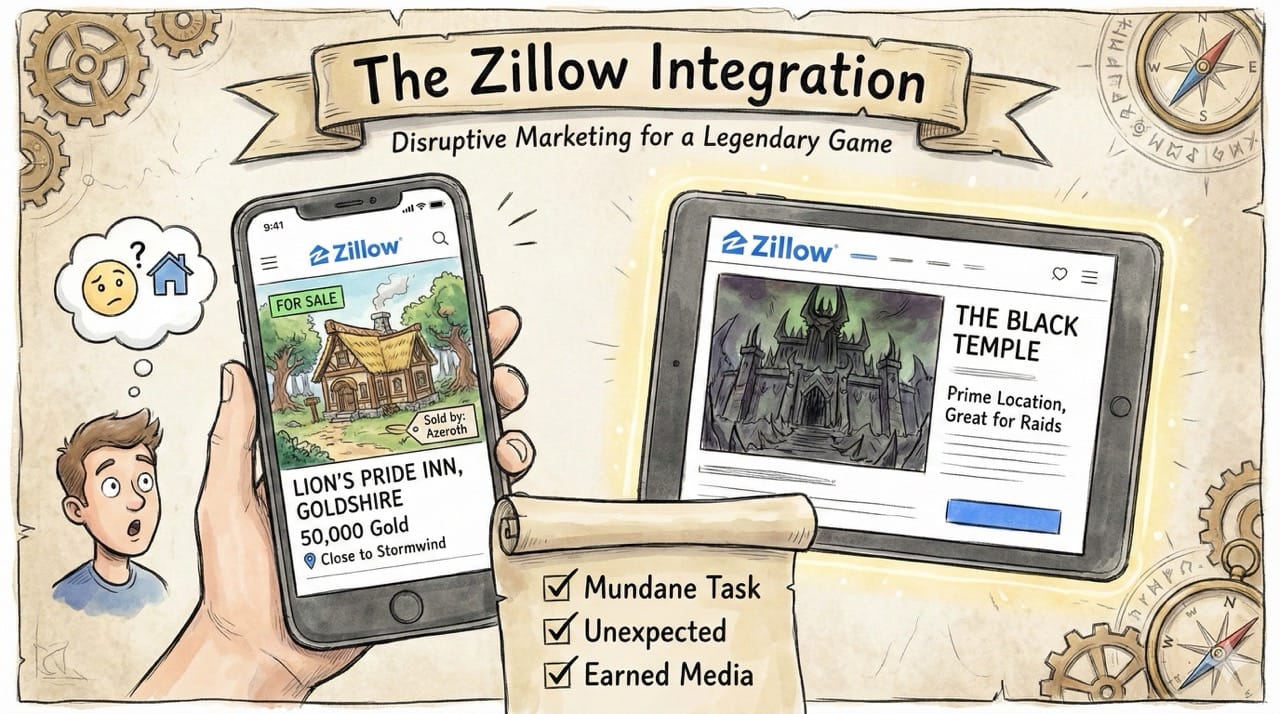
The Zillow Integration
Consider their brilliant integration with Zillow.
Instead of a traditional banner ad, they created actual real estate listings for iconic in-game properties.
Users browsing for real homes suddenly found themselves looking at a detailed listing for an inn or a fortress in Azeroth.
This is a perfect example of disruptive marketing.
It interrupts a mundane task with something completely unexpected and highly shareable.
It generated massive earned media because it was clever, funny, and deeply native to the platform it hijacked.
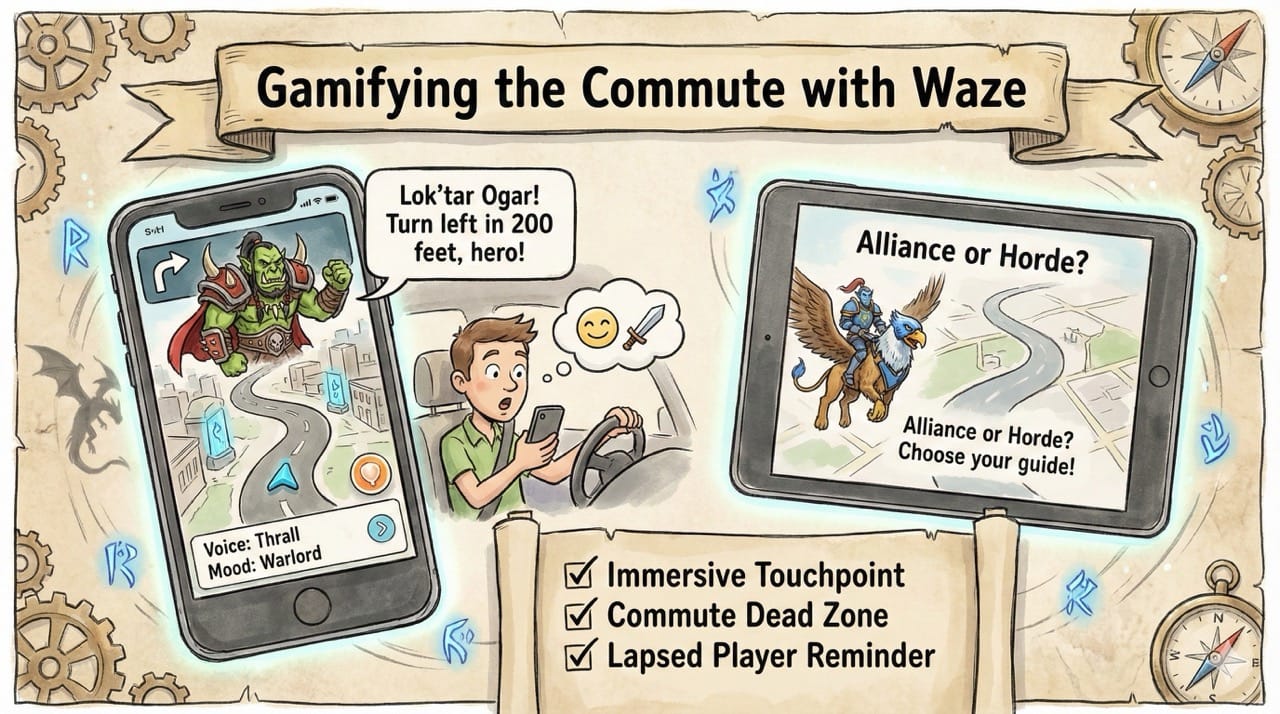
Gamifying the Commute with Waze
Then look at their partnership with Waze.
The marketing team integrated WoW characters into the navigation app to voice directions for everyday commuters.
You could have a legendary Orc Warchief guiding you through your morning traffic.
This transforms a highly functional utility into an immersive brand touchpoint. It keeps the game top of mind during the daily commute, which is a traditionally dead zone for gaming engagement.
It is an incredibly sticky way to remind lapsed players that the fantasy world is still waiting for them.
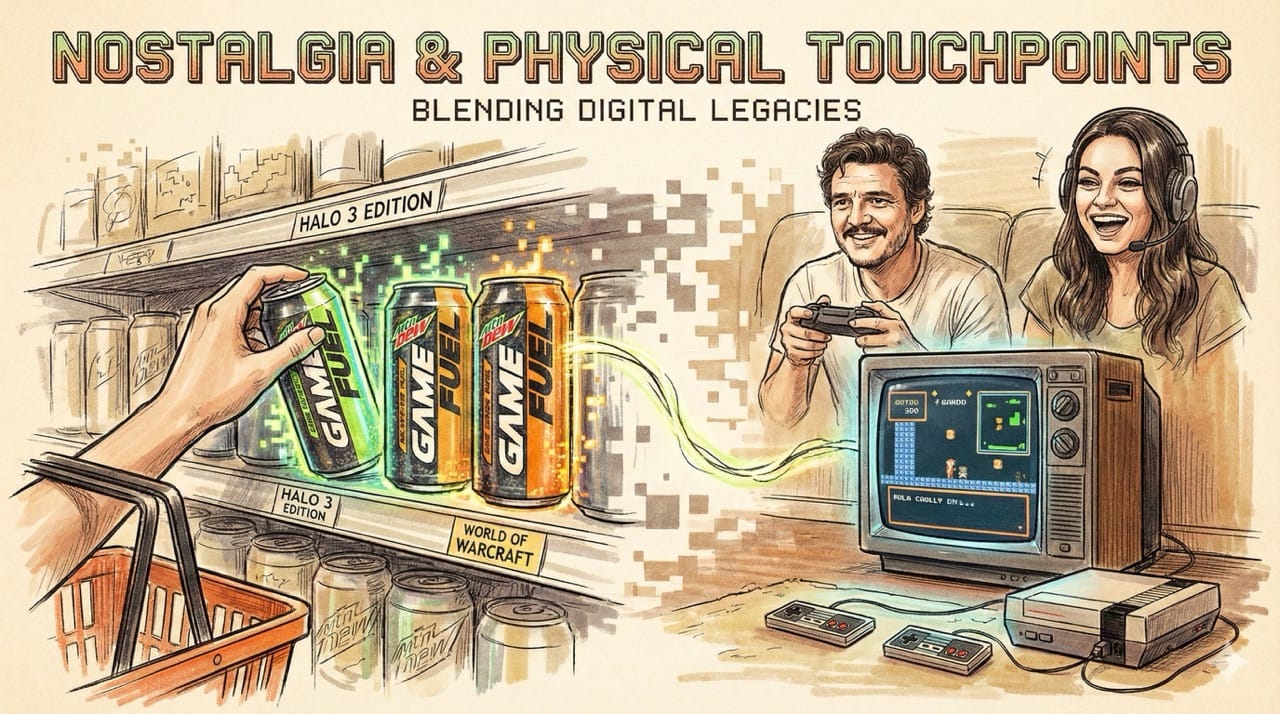
Nostalgia and Physical Touchpoints
This strategy of blending the physical and digital extends to their legacy partnerships. The return of Mountain Dew Game Fuel is a masterstroke in pure nostalgia marketing.
It directly targets millennial gamers who played the game obsessively during the late 2000s.
By putting physical products in grocery stores, they create a tactile reminder of a digital experience.
They also leverage high-profile celebrity campaigns featuring actors like Pedro Pascal or Mila Kunis casually discussing their gaming habits.
This normalizes the product and expands the top of the funnel far beyond just hardcore gamers.
The Performance Marketing Perspective
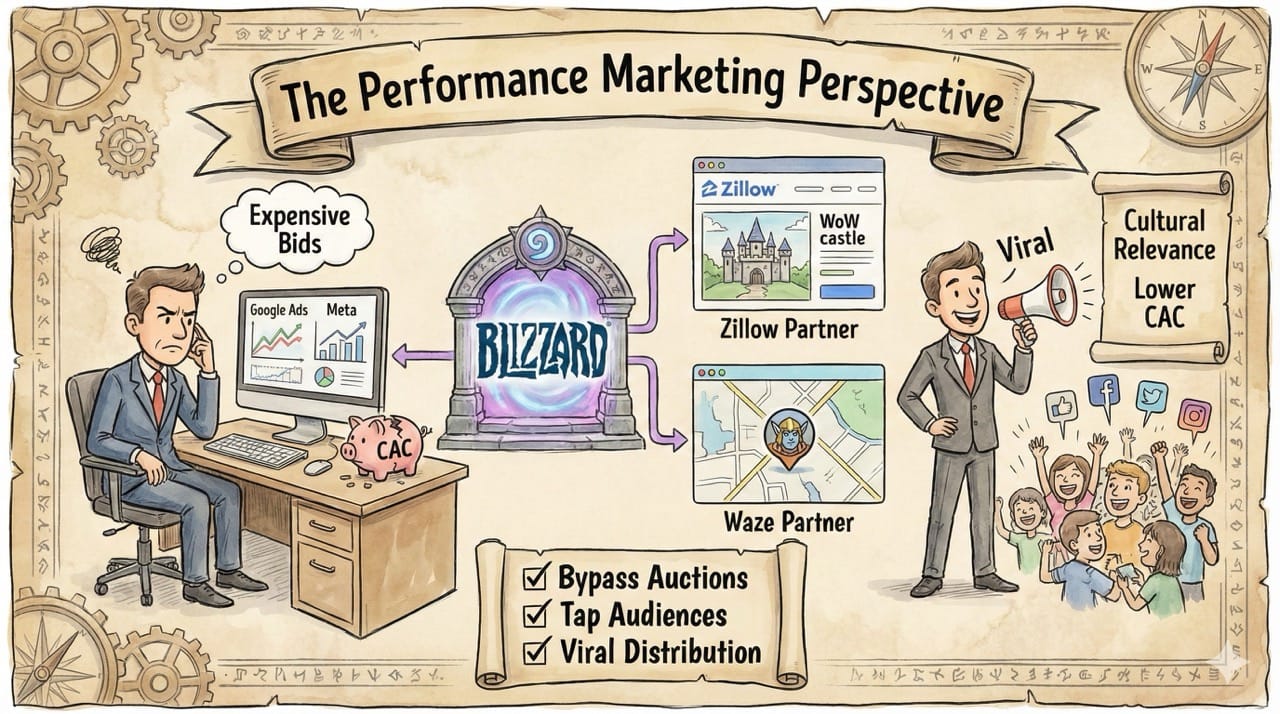
As a performance marketer, I look at these campaigns through the lens of customer acquisition cost.
Bidding on gaming keywords on Google Ads or Meta is a zero-sum game with compressing margins.
These clever partnerships allow Blizzard to bypass the traditional auction entirely.
By partnering with brands like Zillow or Waze, Blizzard taps into massive, established audiences.
The viral nature of these campaigns means the users do the distribution work for them. It is a highly scalable way to manufacture cultural relevance without overspending on basic paid media.
Conclusion: The Future of Utility Marketing
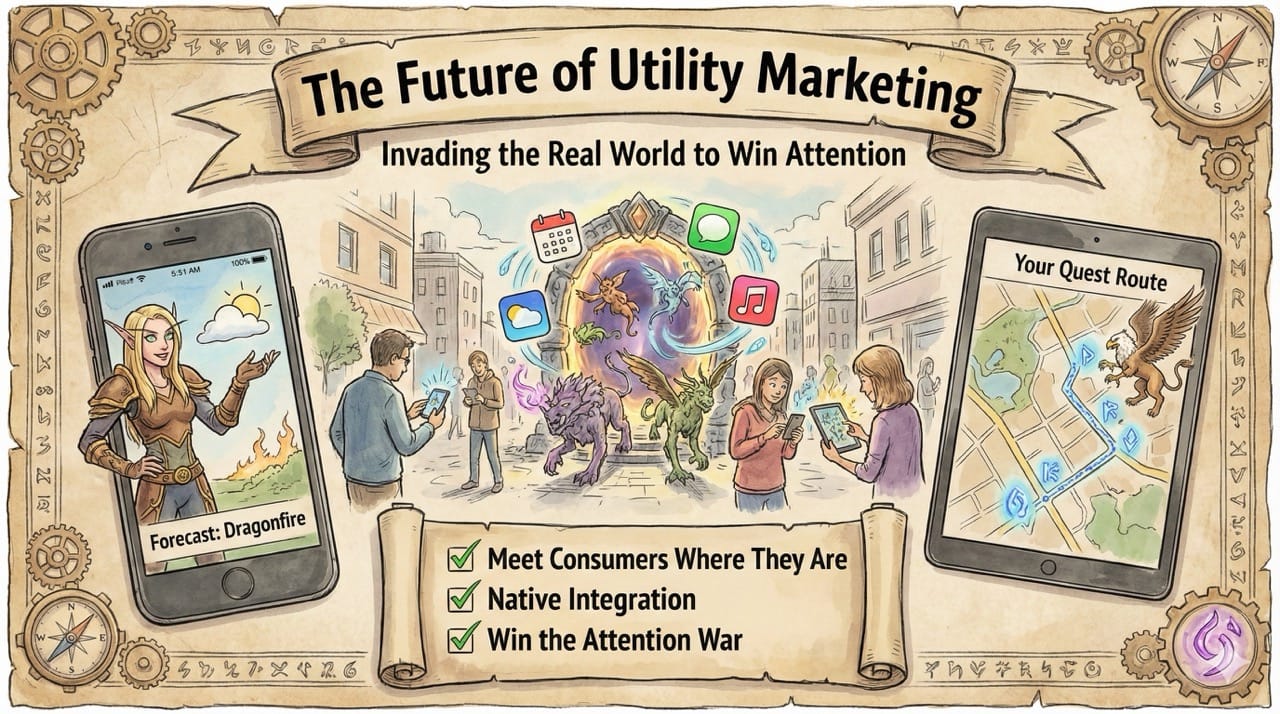
The WoW marketing team understands that to keep a fantasy world alive, you have to invade the real world.
Their upcoming Midnight expansion will likely push this boundary even further.
They know that capturing attention requires meeting consumers where they already spend their time.
My prediction is that we will see a massive shift toward utility-based marketing across all industries.
Brands will stop trying to pull users out of their daily apps and start finding ways to natively live inside them.
The companies that figure out how to be entertaining in the background of everyday life will ultimately win the attention war.