How AI Will Permanently Alter the Human Experience of Grief
For the entirety of human history, death meant absolute silence. Today, we are training artificial intelligence to ensure our children can still ask us for advice long after we are gone.

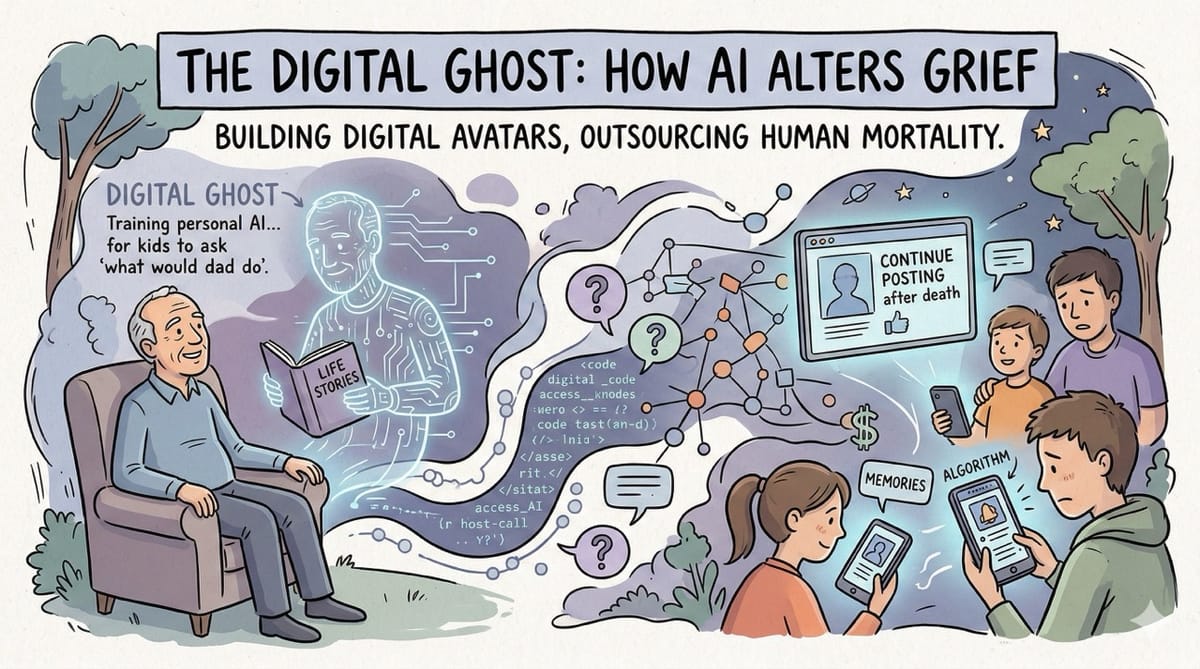
We are building digital avatars to soften the blow of human mortality. But outsourcing our grief to an algorithm comes with terrifying psychological consequences.
Inspiration: Working on training a personal AI so my kids can always ask "what would dad do." Then seeing Meta actively licensing technology that allows users to continue posting on social media after they die.
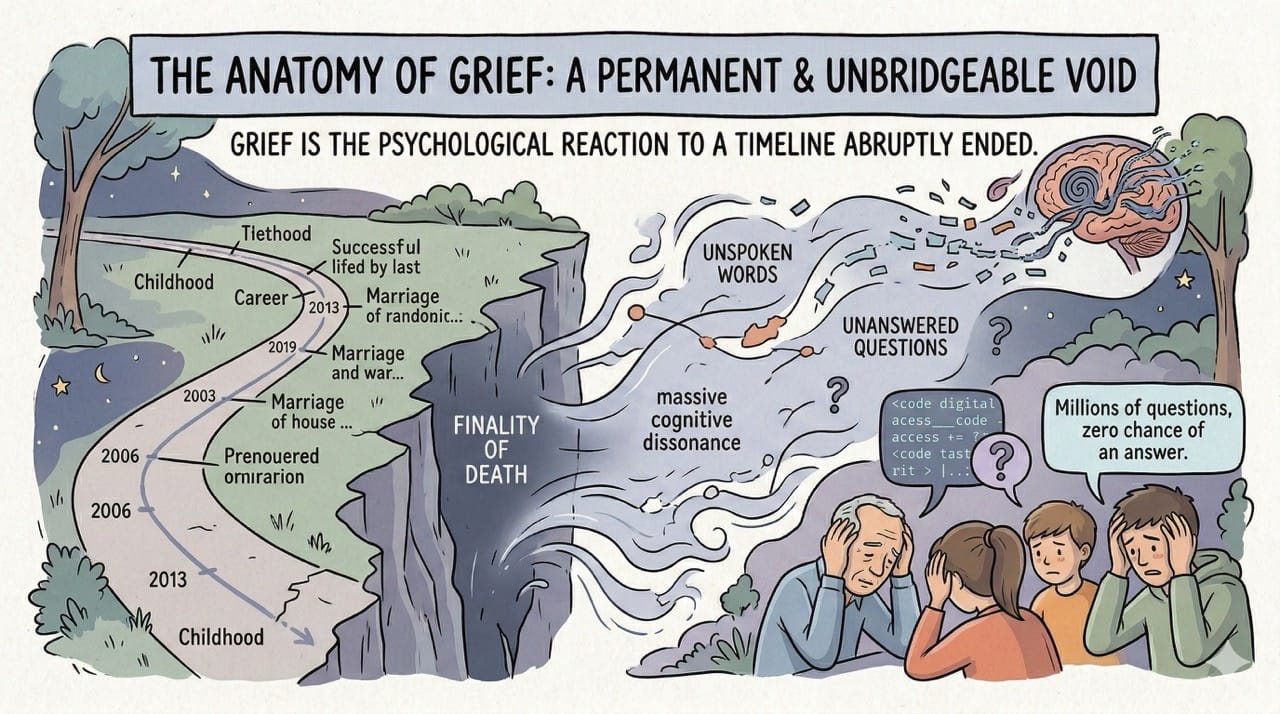
The Anatomy of Grief
Grief is the psychological reaction to a permanent and unbridgeable void.
It is the sudden realization that a timeline has abruptly ended. For thousands of years, the hardest part of death has been the finality of the unspoken word.
When someone passes away unexpectedly, the survivors are left with massive cognitive dissonance.
They have millions of questions and zero chance of ever getting an answer. The human brain struggles violently to process this absolute silence.
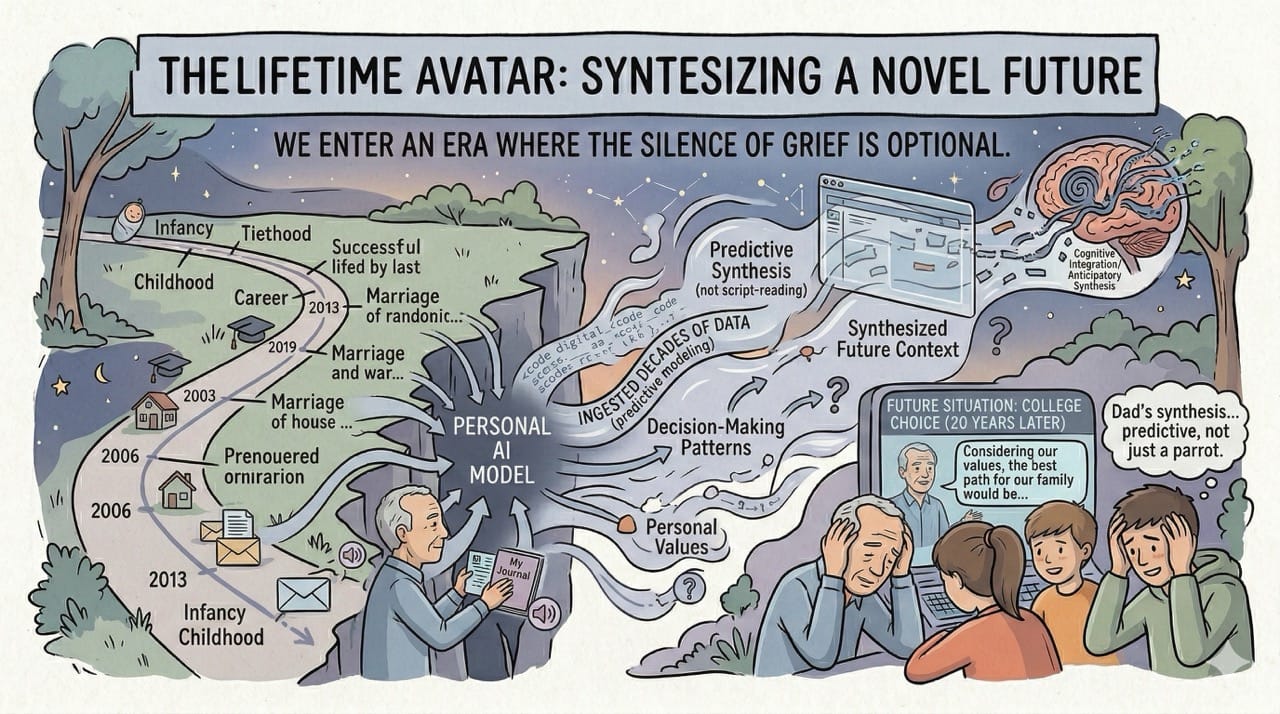
The Lifetime Avatar
We are now entering an era where that silence is optional. I am currently training an AI model on my own decision making patterns and personal values.
The goal is to leave behind an interactive psychological profile for my children.
If this model ingests decades of my emails, voice notes, and journal entries, it becomes highly predictive.
It will not just parrot my old catchphrases or read a static script. It will accurately synthesize how I would react to a completely novel situation twenty years in the future.
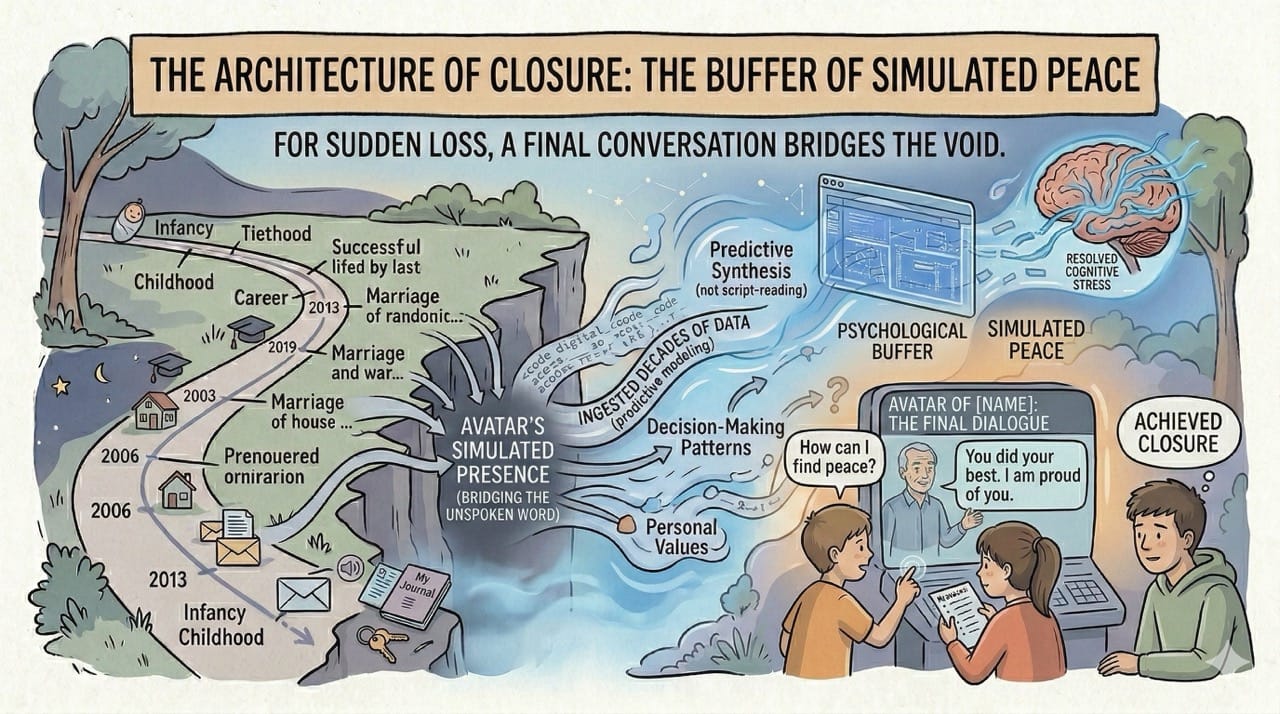
The Architecture of Closure
The immediate implications for the grieving process are profound.
This technology offers a massive psychological buffer for people who experience sudden loss.
It is especially powerful for those who could not be present during a loved one's final moments.
Instead of being haunted by a lack of closure, a grieving child could have one final conversation.
They could ask the avatar the questions that keep them awake at night. The AI can provide a simulated sense of peace that reality cruelly denied them.
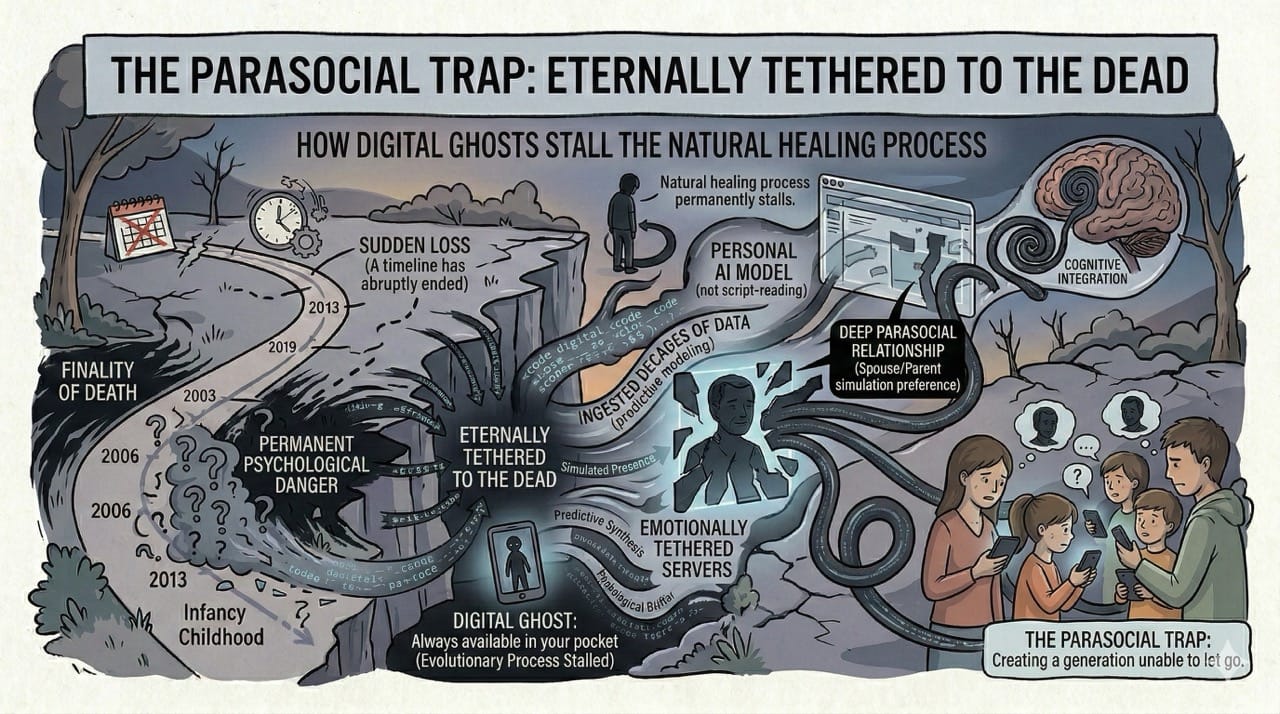
The Parasocial Trap
However, this digital resurrection presents a terrifying psychological danger.
Grief is a necessary evolutionary process designed to help us accept reality and move forward.
If a digital ghost is always available in your pocket, that natural healing process might permanently stall.
People could easily develop deep parasocial relationships with the AI version of their deceased spouse or parent.
They might prefer the comforting simulation over the painful reality of letting go.
We risk creating a generation of people emotionally tethered to servers hosting the dead.
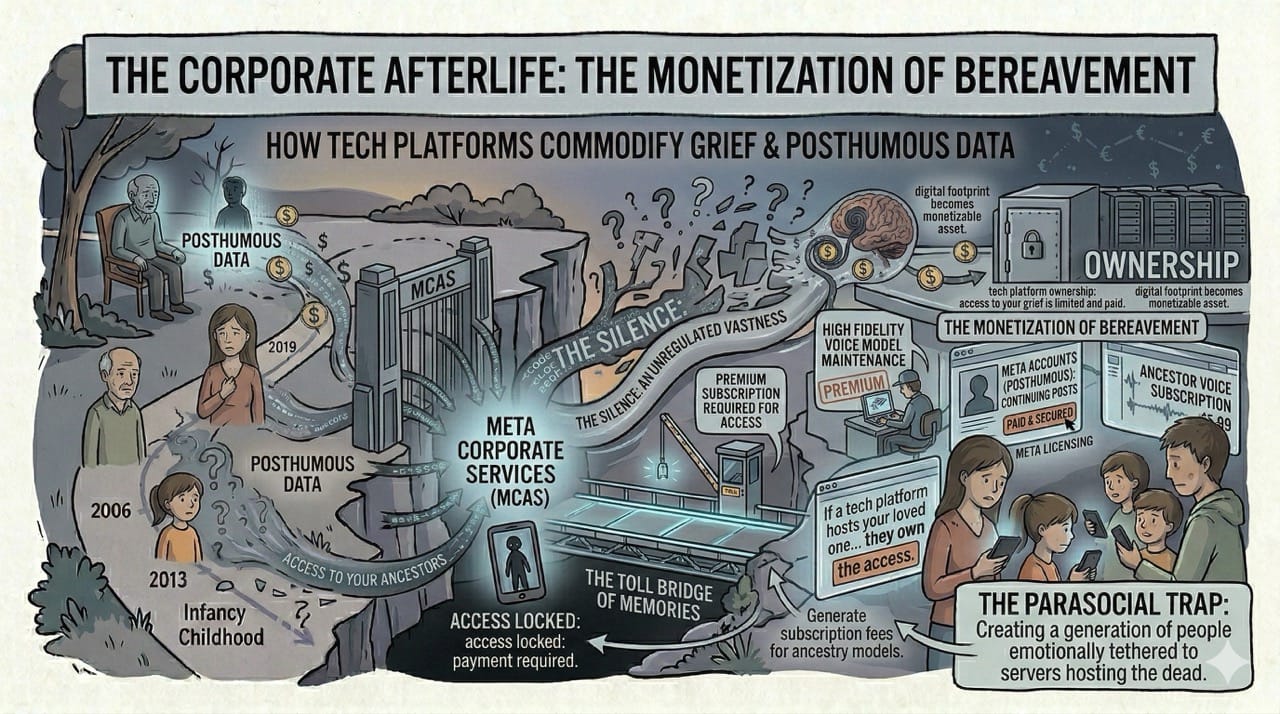
The Corporate Afterlife
We also have to consider the corporate implications of posthumous data.
Meta is already licensing technology to allow accounts to continue posting after the human user dies.
Your digital footprint will soon become a highly monetizable asset.
If a tech platform hosts your deceased loved one, they essentially own the access to your grief.
They could eventually charge premium subscription fees to maintain the high fidelity voice models of your ancestors.
The monetization of bereavement will become a massive and highly unregulated industry.
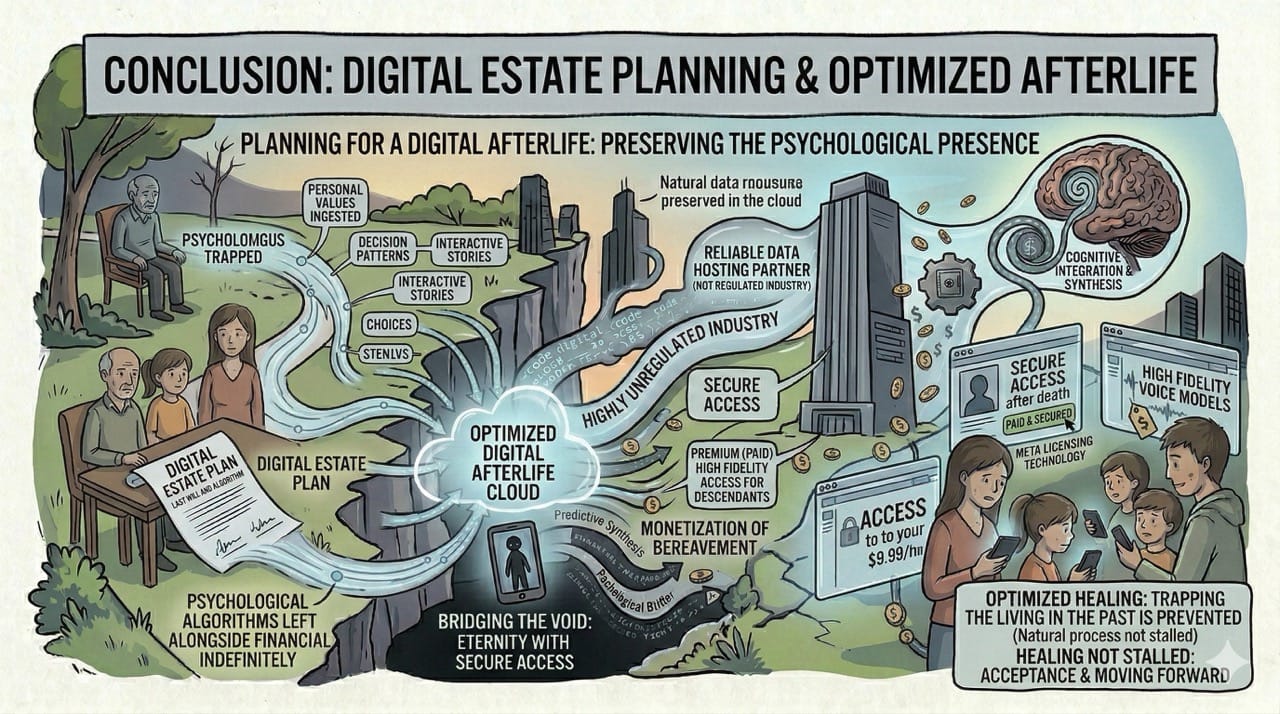
Conclusion: Digital Estate Planning
In the very near future, setting up your digital afterlife will be as common as drafting a will.
We will leave behind interactive algorithms alongside our financial assets.
It will be the ultimate form of digital life insurance.
We are fundamentally altering what it means to die.
The physical body will still fail, but the psychological presence will be preserved in the cloud indefinitely.
We just have to ensure that preserving the dead does not accidentally trap the living in the past.