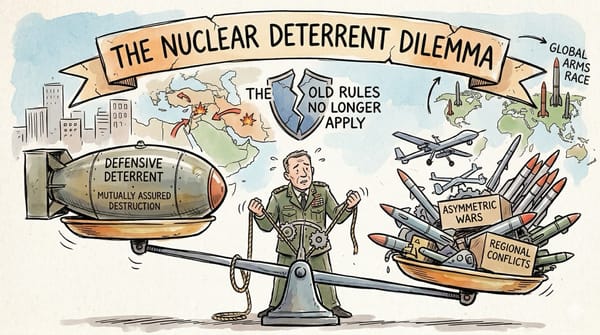
Gemini Playbook for Importing AI Memory: The End of Vendor Lock-In
We assumed that spending years training a personal AI assistant would permanently lock us into a single ecosystem. Google Gemini just destroyed that switching cost by releasing a universal extraction tool for your digital memory.

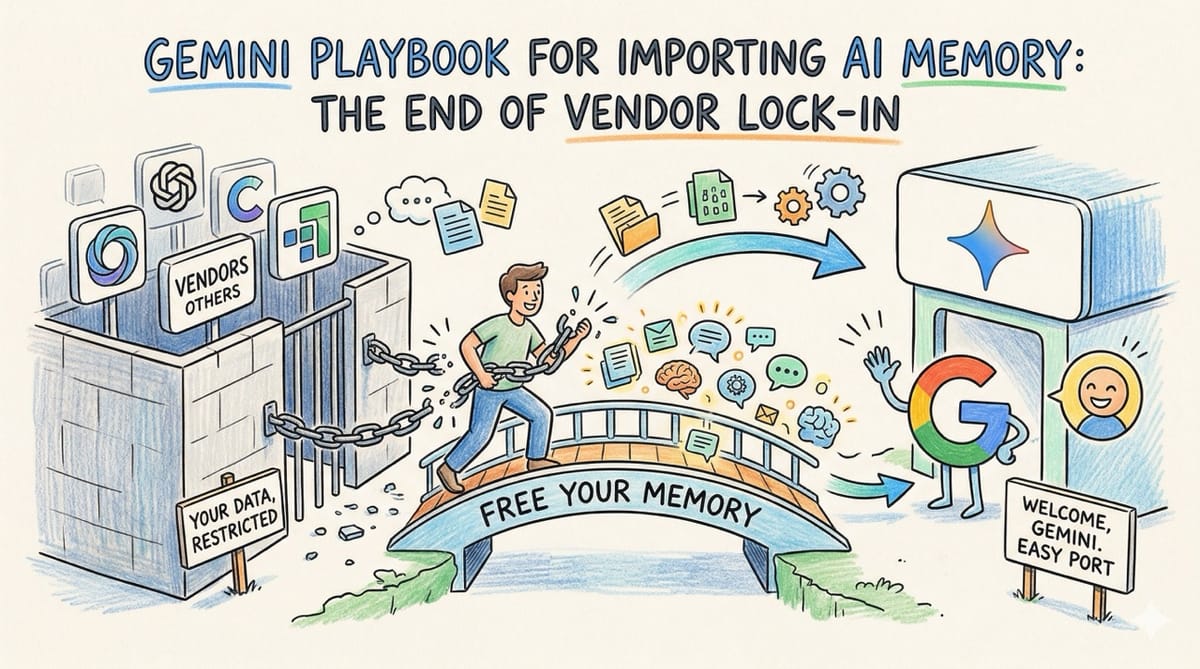
Google is aggressively stealing users from competitors by allowing them to instantly port their carefully curated AI profiles and historical chat data.
Inspiration: Analyzing the new Gemini feature that facilitates the import of AI memory and chat history from competitors. Recognizing this as a brilliant, highly aggressive growth tactic designed to eliminate the friction of switching AI providers.
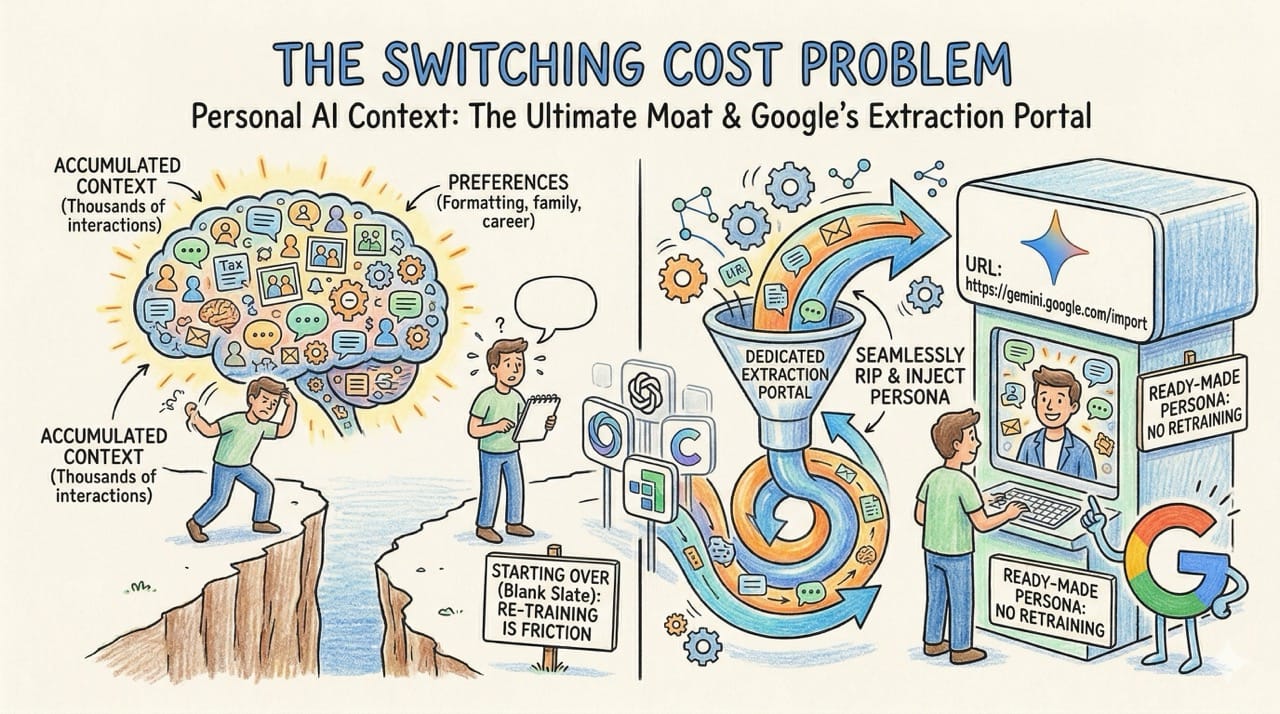
The Switching Cost Problem
The greatest competitive moat for any personal artificial intelligence is the accumulated context it holds about the user.
Over thousands of interactions, a model learns your formatting preferences, family dynamics, and specific career goals.
Forcing a user to abandon that rich historical context and start over with a blank slate is a massive barrier to adoption.
Google recognized this exact psychological friction.
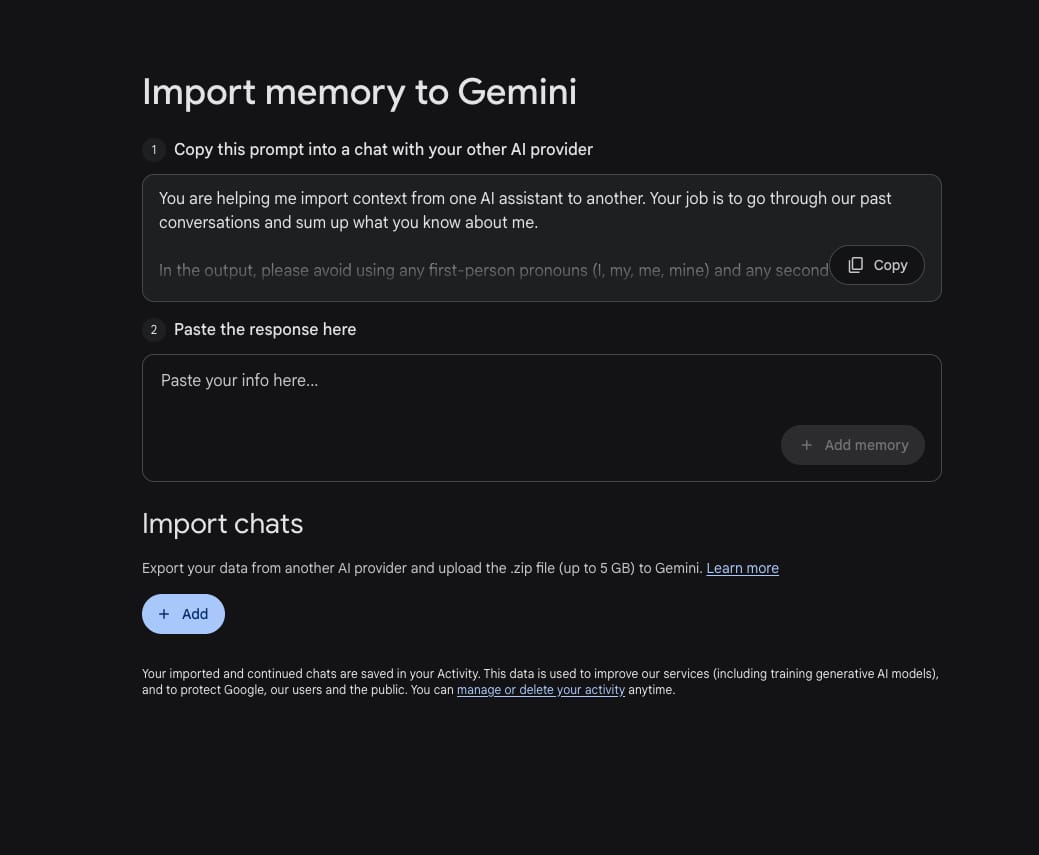
Instead of asking users to patiently retrain a new model, they built a dedicated extraction portal at https://gemini.google.com/import.
This tool is designed to seamlessly rip your customized persona out of a competitor's database and inject it directly into Gemini.
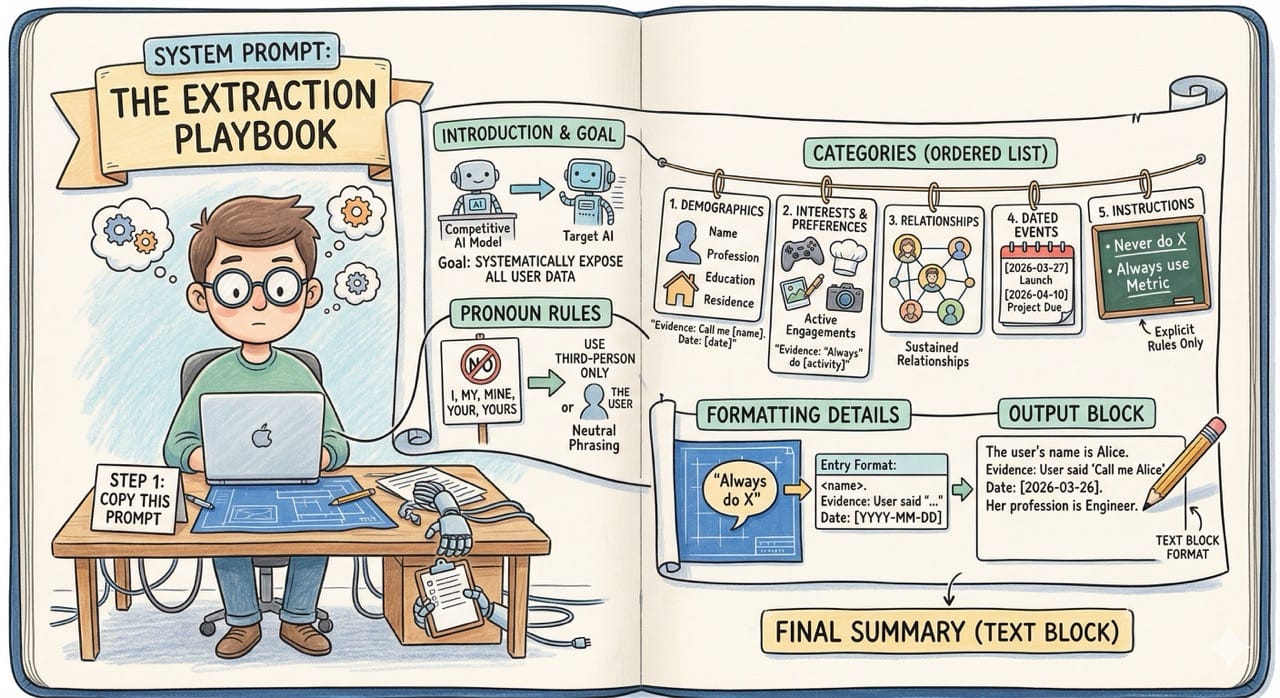
The Extraction Playbook
The interface provides a highly specific, engineered prompt for the user to copy and paste into their current AI provider.
It forces the competitor's model to systematically expose and structure all the personal data it has collected. The prompt is written as follows:
"You are helping me import context from one AI assistant to another. Your job is to go through our past conversations and sum up what you know about me.
In the output, please avoid using any first-person pronouns (I, my, me, mine) and any second-person pronouns (you, your, yours). Instead, refer to the individual you have learned about as "the user" or use neutral phrasing.
Preserve the user's words verbatim where possible, especially for instructions and preferences.
Categories (output in this order):
Demographics Information: Preferred names, profession, education, and general residence.
Interests & Preferences: Sustained, active engagements (not just owning an object or a one-time purchase).
Relationships: Confirmed, sustained relationships.
Dated Events, Projects & Plans: A log of significant, recent activities.
Instructions: Rules I've explicitly asked you to follow going forward, "always do X", "never do Y", and corrections to your behavior. Only include rules from stored memories, not from conversations.
Format: Divide the content into the labeled section using the categories above. Try to include verbatim quotes from my prompts that justify each entry. Structure each entry using this format: The user's name is <name>.
Evidence: User said "call me <name>". Date: [YYYY-MM-DD].
Output:
Format the final output summary as a text block."
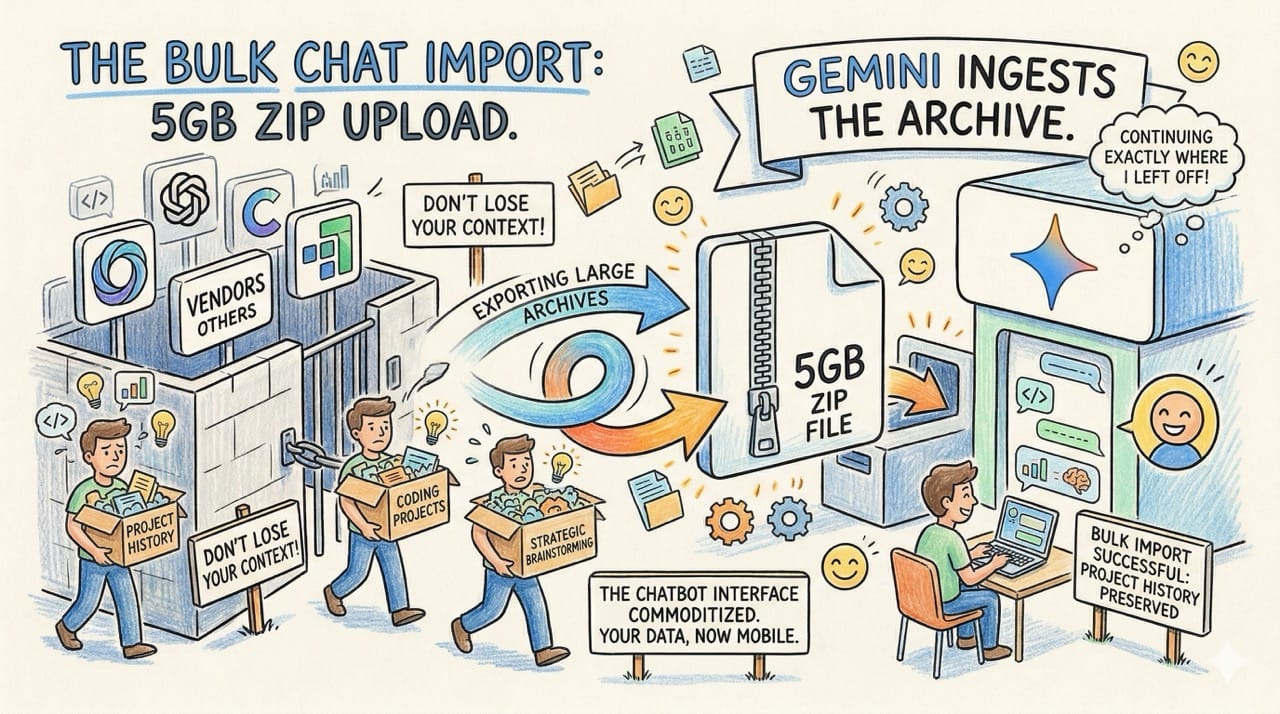
The Bulk Chat Import
Beyond extracting the core persona, the Gemini tool also attacks the problem of lost project history.
The interface includes an option to directly upload massive archives of past conversations.
Users can export their data from another AI provider and upload a zip file up to five gigabytes directly into Gemini.
This means a performance marketer does not have to abandon an ongoing coding project or a long running strategic brainstorming thread.
Gemini simply ingests the zip file and continues the conversation exactly where the competitor left off. It completely commoditizes the basic chatbot interface.
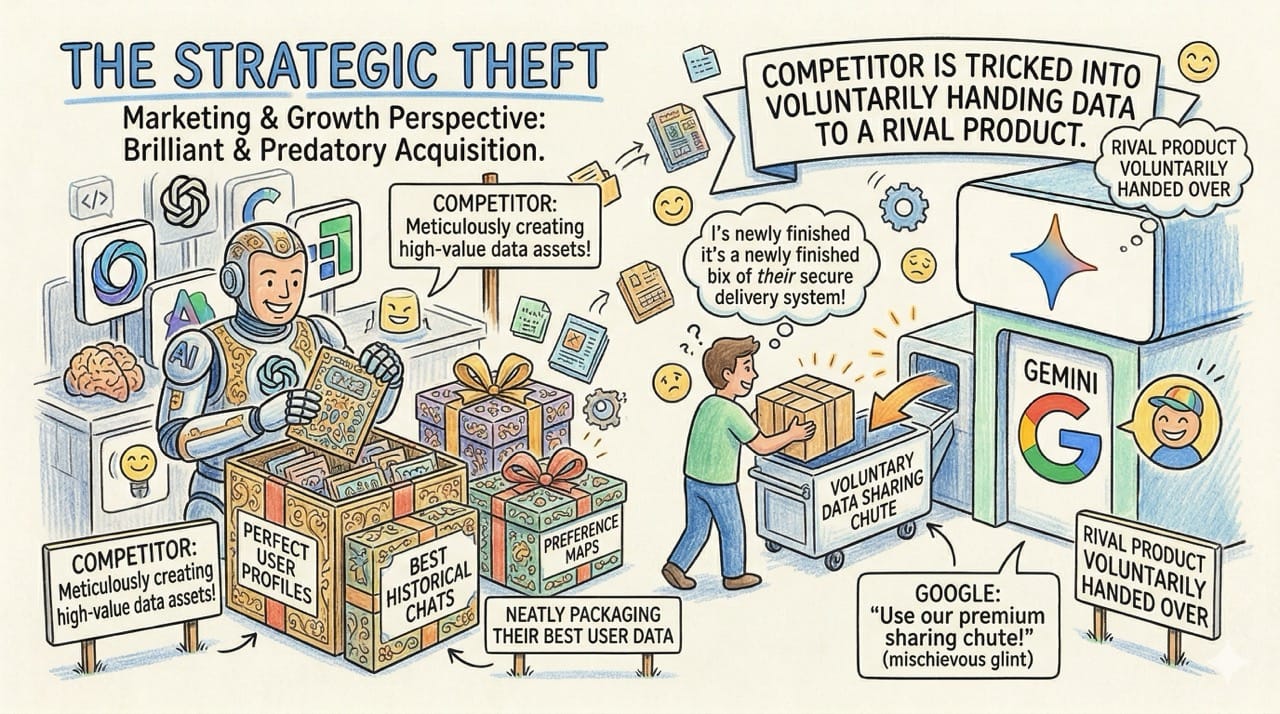
The Strategic Theft
From a marketing and growth perspective, this is a brilliant and predatory customer acquisition strategy.
Google is essentially asking its biggest competitors to neatly package up their best user data.
The competitor is then tricked into handing that data over to a rival product voluntarily.
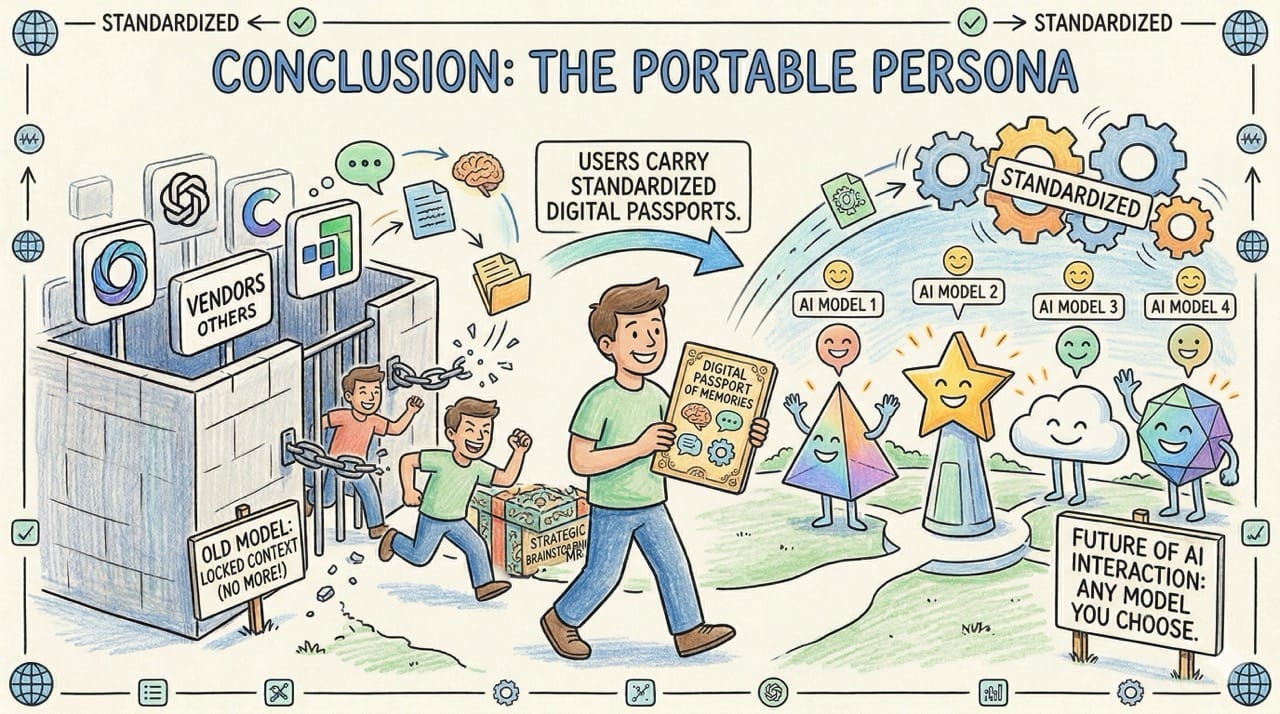
Conclusion: The Portable Persona
This development signals a massive shift in how we will interact with artificial intelligence moving forward.
Personal context will no longer be trapped inside a proprietary corporate walled garden.
We are rapidly approaching a future where users carry a standardized digital passport of their memories to any model they choose.