
Emil Michael and the New Department of War
We assumed the military industrial complex would always be dominated by slow and bloated legacy contractors. Emil Michael is attempting to turn the newly minted Department of War into the most aggressive technology startup on the planet.

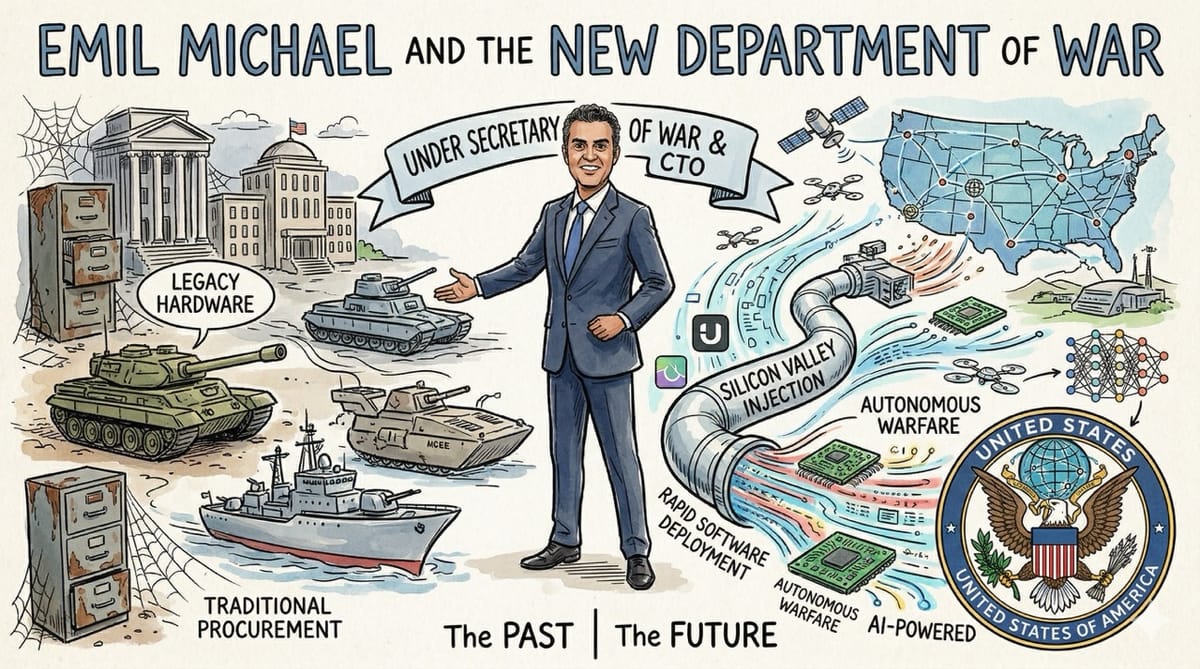
The United States is abandoning traditional bureaucratic procurement. They are injecting Silicon Valley hyper growth directly into the defense sector to prepare for autonomous warfare.
Inspiration: Analyzing the appointment of former Uber executive Emil Michael as the Under Secretary of War for Research and Engineering and Department of War Chief Technology Officer. Recognizing this as a massive structural pivot from legacy hardware procurement to rapid software deployment.
The Silicon Valley Pivot
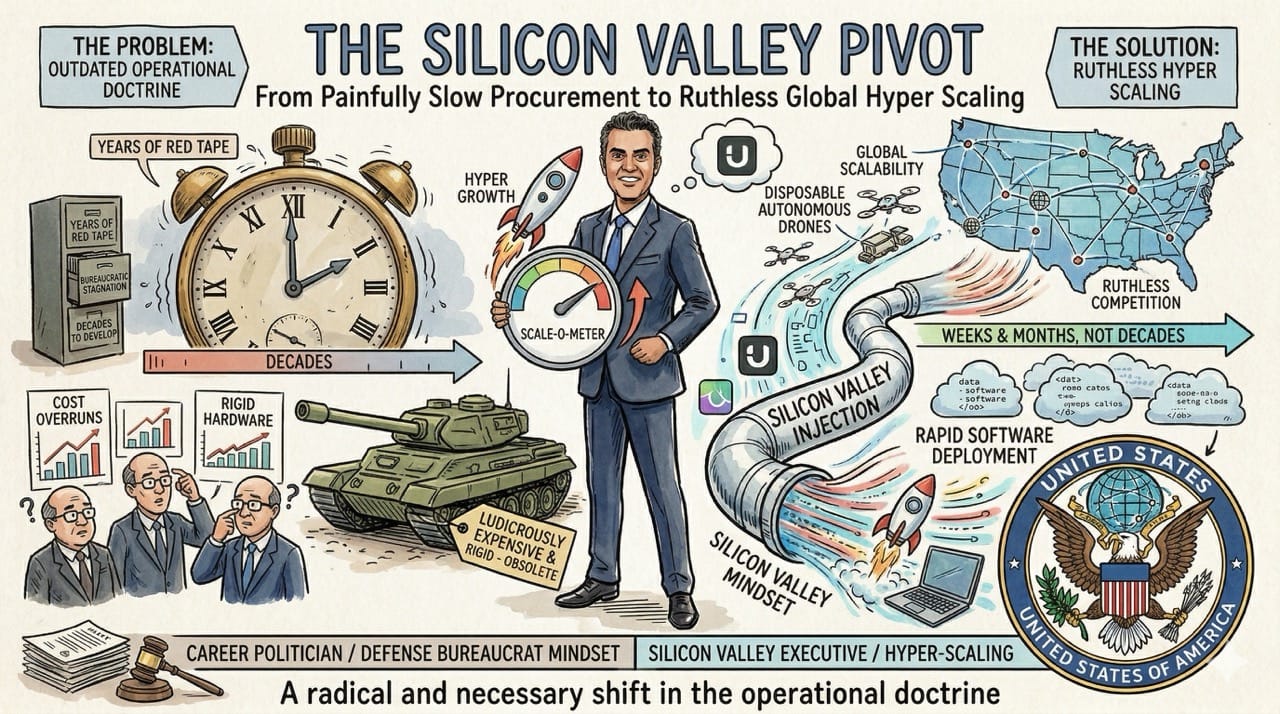
The United States military apparatus has historically relied on a painfully slow procurement cycle.
Legacy defense contractors take decades to deliver incredibly expensive and rigid hardware.
The appointment of Emil Michael signals a radical and necessary shift in this outdated operational doctrine.
Michael made his reputation as the Chief Business Officer at Uber during its absolute most aggressive growth phase.
He is a corporate executive who intimately understands ruthless competition and global hyper scaling.
He does not think like a traditional defense bureaucrat or a career politician.
The New CTO Mandate
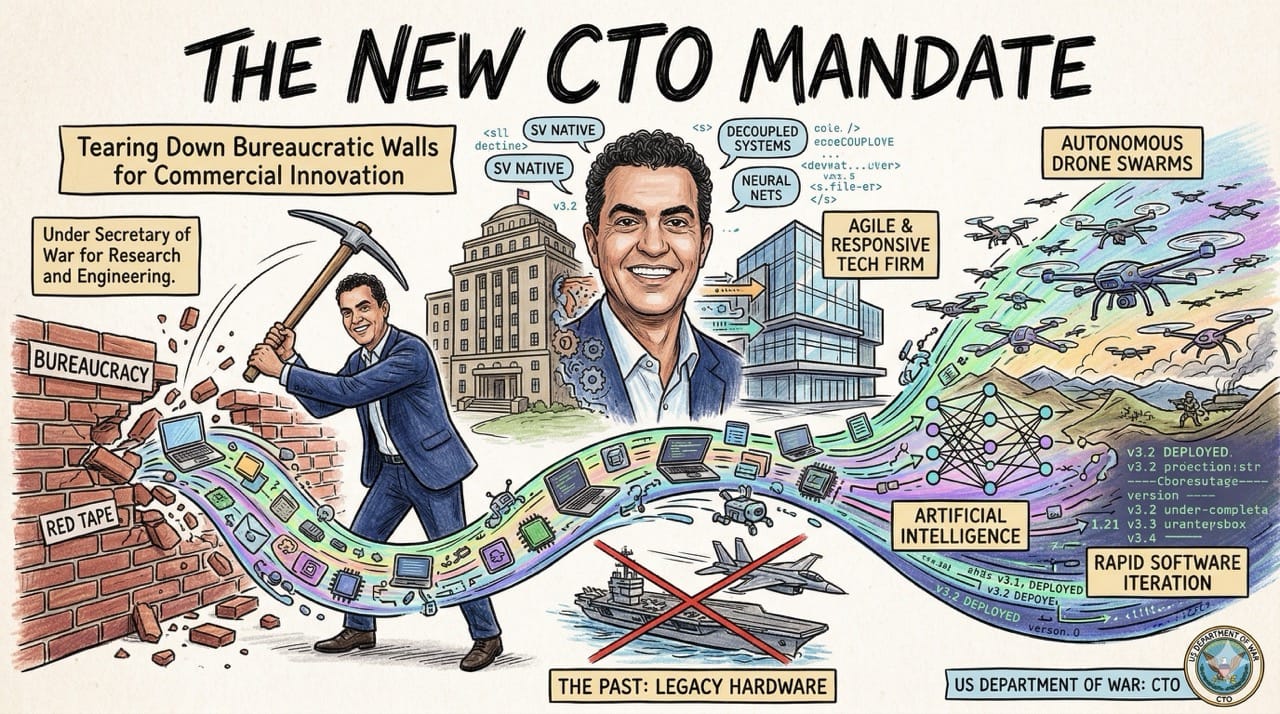
As the new Under Secretary of War for Research and Engineering, his mandate is incredibly clear. He must transform the department into a highly agile and responsive technology firm.
This requires tearing down the bureaucratic walls that currently prevent commercial innovation from reaching the actual battlefield.
Modern conflicts are no longer decided strictly by massive aircraft carriers or expensive legacy fighter jets.
The future of global warfare relies entirely on artificial intelligence, autonomous drone swarms, and rapid software iteration. The military desperately needs a Chief Technology Officer who speaks the native language of Silicon Valley founders.
Bypassing the Prime Contractors
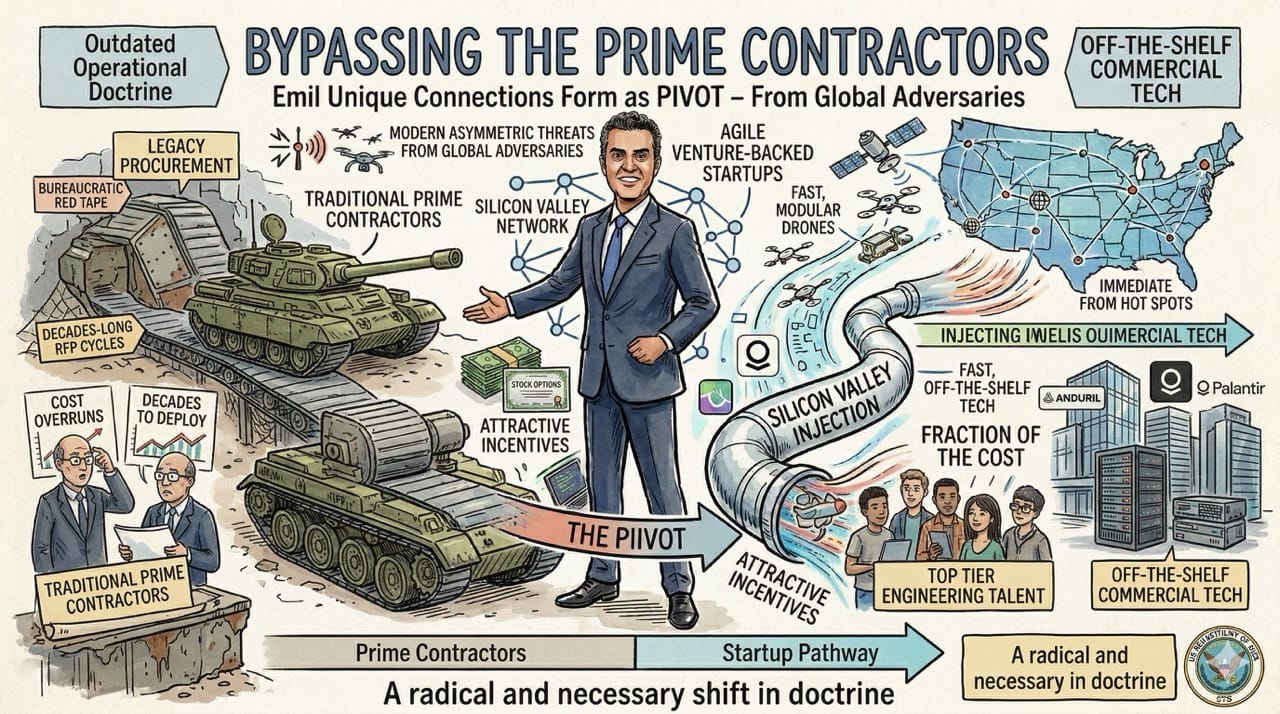
Legacy procurement systems simply cannot move fast enough to counter modern asymmetric threats from global adversaries.
Michael will likely pivot the department toward purchasing off the shelf commercial technology from agile venture backed startups.
This strategy intentionally bypasses the traditional prime contractors to inject immediate technological leverage into the armed forces.
Startups like Anduril and Palantir have already proven that software companies can build better defense systems for a fraction of the cost.
Michael possesses the exact Silicon Valley network required to scale these commercial partnerships rapidly.
He understands how to structure incentives that will make defense contracts highly attractive to top tier engineering talent.

Conclusion: The Ultimate Corporate Street Fighter
This entire appointment is the absolute pinnacle of the effective executive framework.
You do not solve a speed and innovation problem by promoting another slow moving administrator.
You solve it by bringing in a corporate street fighter who knows exactly how to scale global operations overnight.