Will Language Matter in the Age of AI? The End of the "Anglosphere" Monopoly
We think the internet connected the world. It didn't. It connected the English-speaking world. AI is about to tear down the Tower of Babel, and the geopolitical implications are massive.
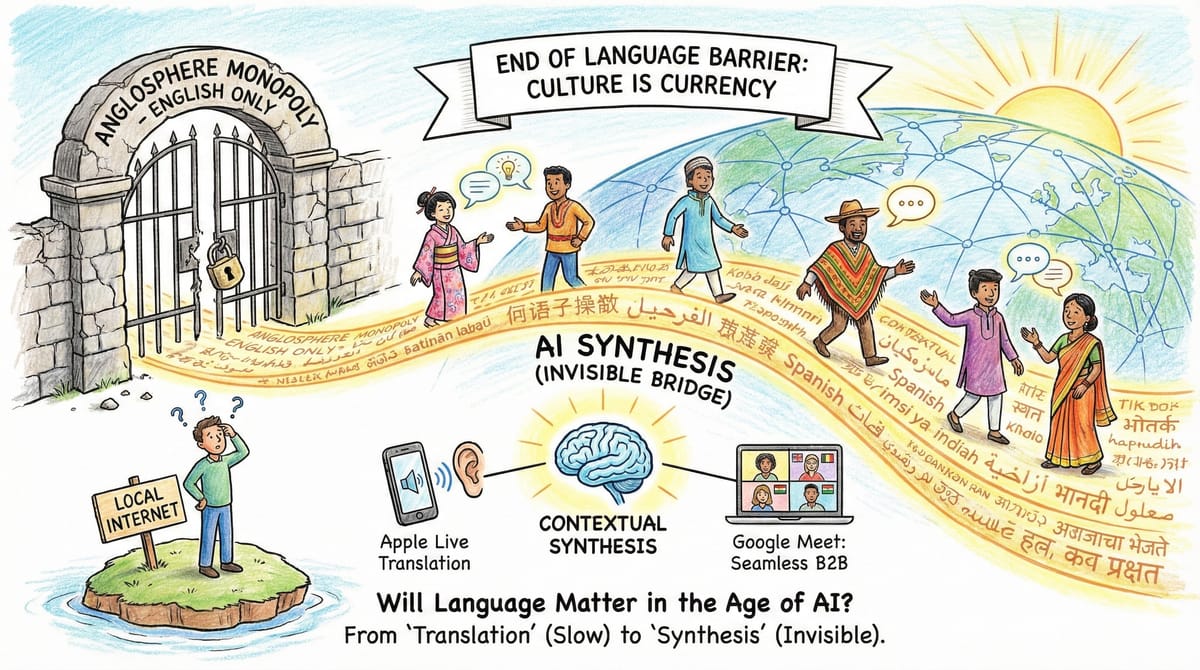
We are moving from "Translation" (slow) to "Synthesis" (invisible). When language is no longer a barrier, culture becomes the only currency.
Inspiration: Seeing a real-time demo of an AI translating a lecture into Mandarin, perfectly lip-synced, and realizing that "Foreign Language" is about to become an obsolete concept.
For the last 30 years, the internet had a secret gatekeeper: English. To participate in the global economy, you had to speak it. If you didn't, you were on the "local internet."
That era is ending.
The "Simple Translator" is Dead. We aren't talking about Google Translate anymore. We are talking about Contextual Synthesis.
- Apple: Live translation is integrating into the OS. Your iPhone listens to a Japanese speaker and whispers English into your ear.
- Google Meet: B2B meetings are seamless. A German engineer speaks German; a Brazilian client hears Portuguese. The friction of global business drops to zero.
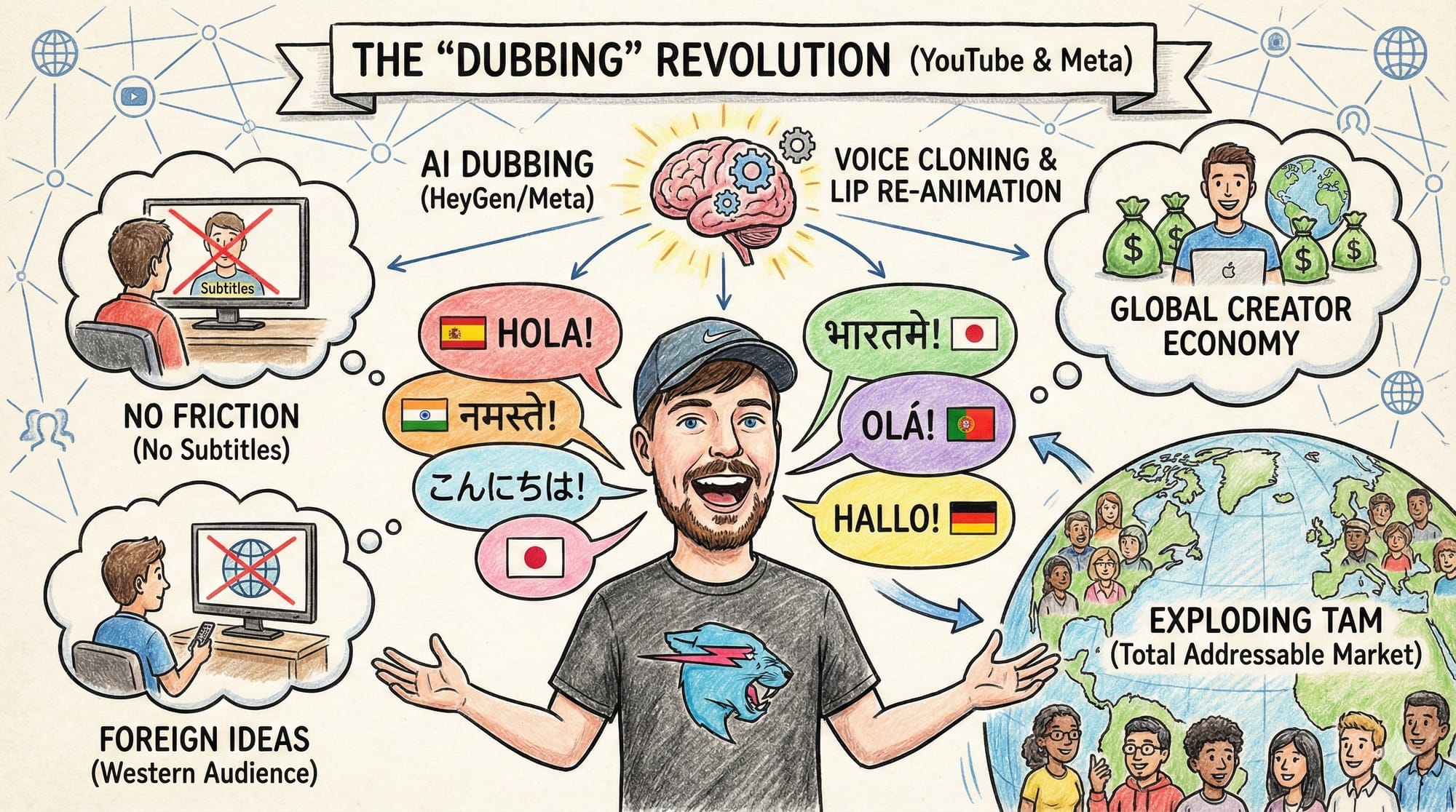
The "Dubbing" Revolution (YouTube & Meta)
The most visceral shift is in Content. AI dubbing tools (like HeyGen) don't just translate text; they clone the voice and re-animate the lips.
A YouTuber like MrBeast isn't just an English creator anymore. He is a Spanish creator. He is a Hindi creator. This explodes the Total Addressable Market (TAM) for every creator. But it also exposes Western audiences to "Foreign" ideas without the "Foreign" friction (subtitles).
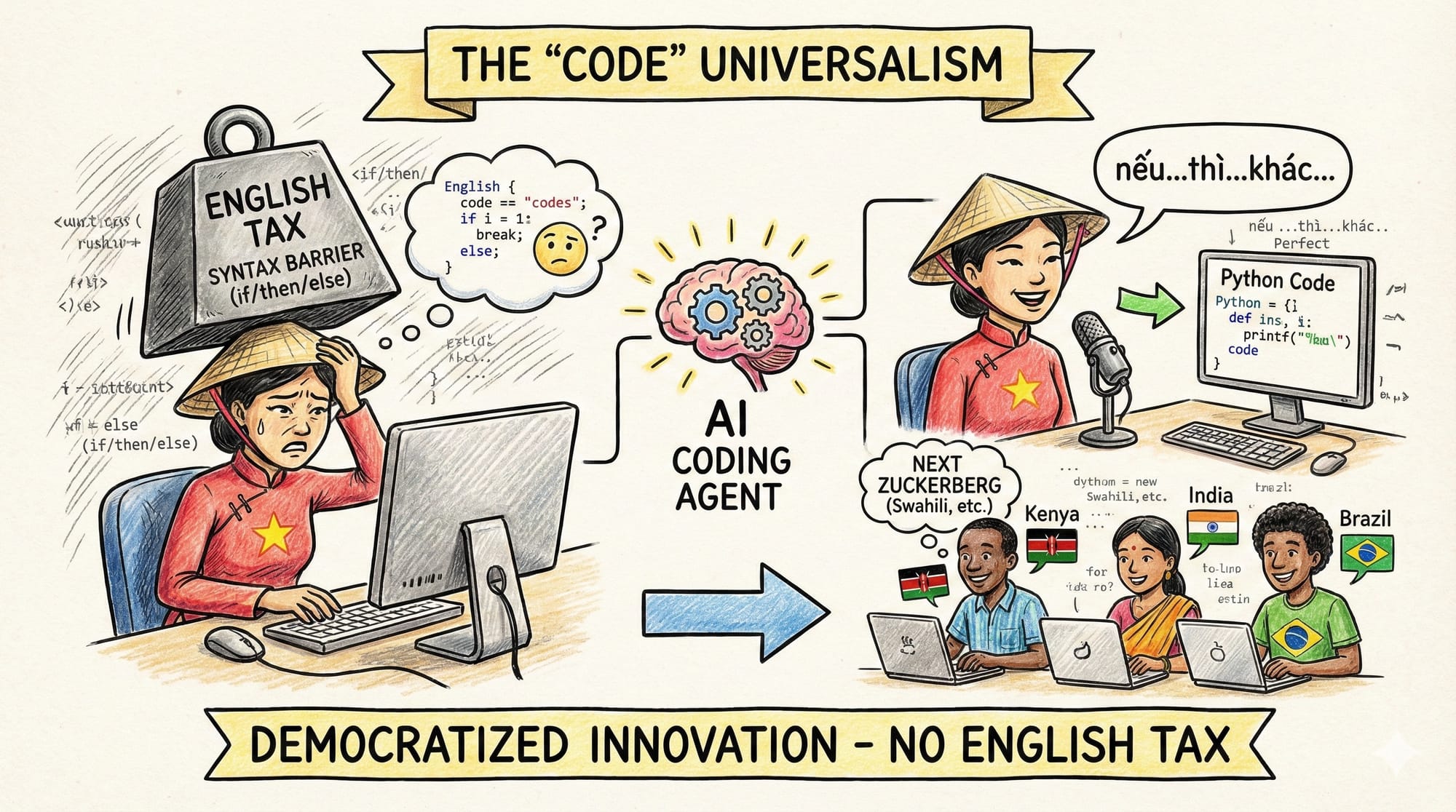
The "Code" Universalism
Interestingly, this translates to Coding. Programming languages are based on English syntax (if/then/else). As AI coding agents improve, a developer in Vietnam can prompt in Vietnamese. The AI writes the Python. The "English Tax" on becoming a software engineer evaporates.
This democratizes innovation. The next Zuckerberg might speak only Swahili, and it won't matter.
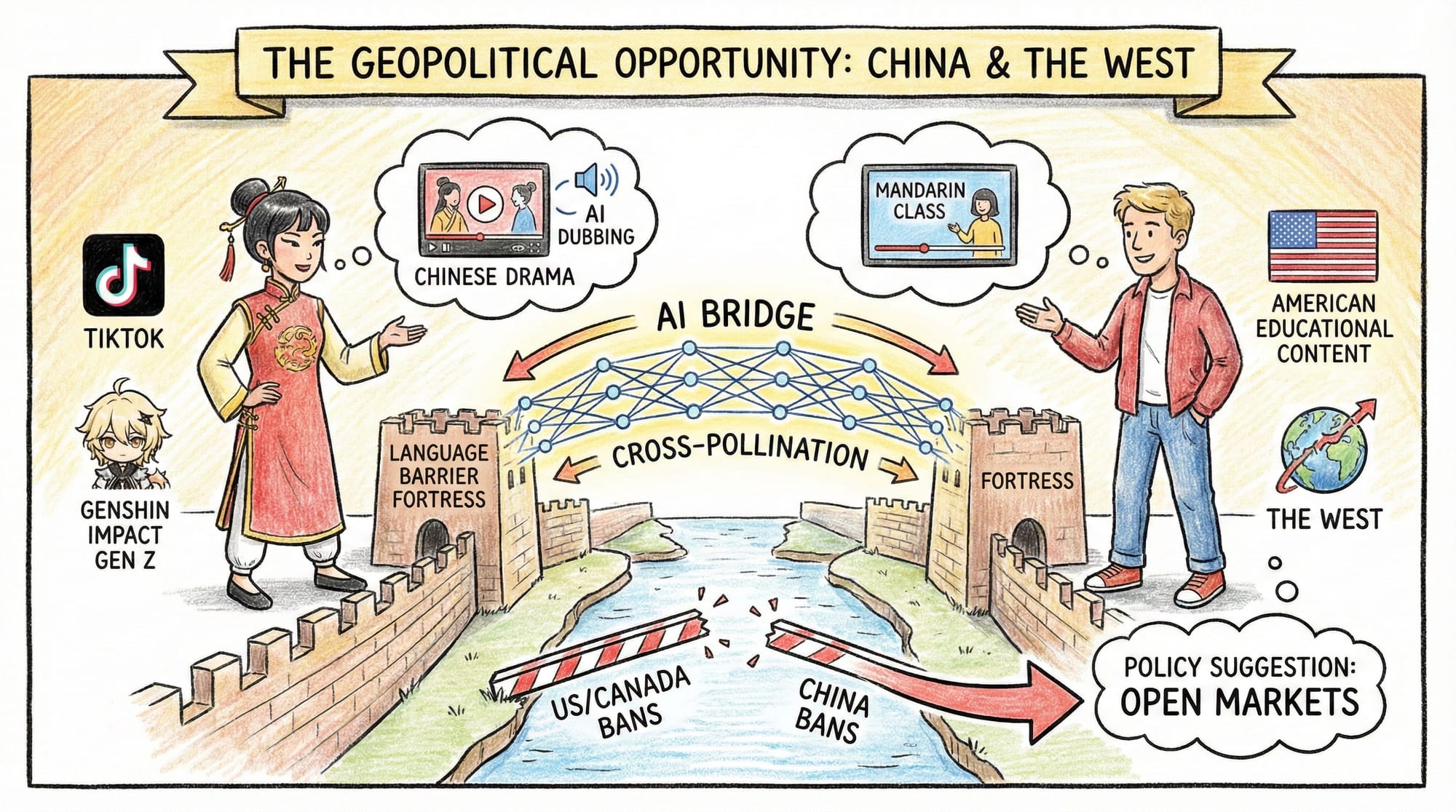
The Geopolitical Opportunity: China & The West
This is where it gets strategic. There is a rising interest in Chinese culture among Gen Z (thanks to TikTok and Genshin Impact). But the language barrier is a fortress.
AI bridges the moat.
- If Chinese dramas are perfectly dubbed instantly, Western audiences will consume them.
- If American educational content is accessible in Mandarin, Chinese students will consume it.
The Policy Suggestion: Currently, the US and Canada ban Chinese apps. China bans US apps. This is a mistake. We should figure out a way to open markets to allow Cross-Pollination (while putting clear constraints around national security concerns and data privacy).
Why? Diplomacy. It is easy to bomb a country you don't understand. It is much harder to bomb a country whose TV shows you binge-watch.
Cultural familiarity reduces the likelihood of conflict. If the next generation of administrators grows up consuming each other's stories, the "Thucydides Trap" becomes less likely.
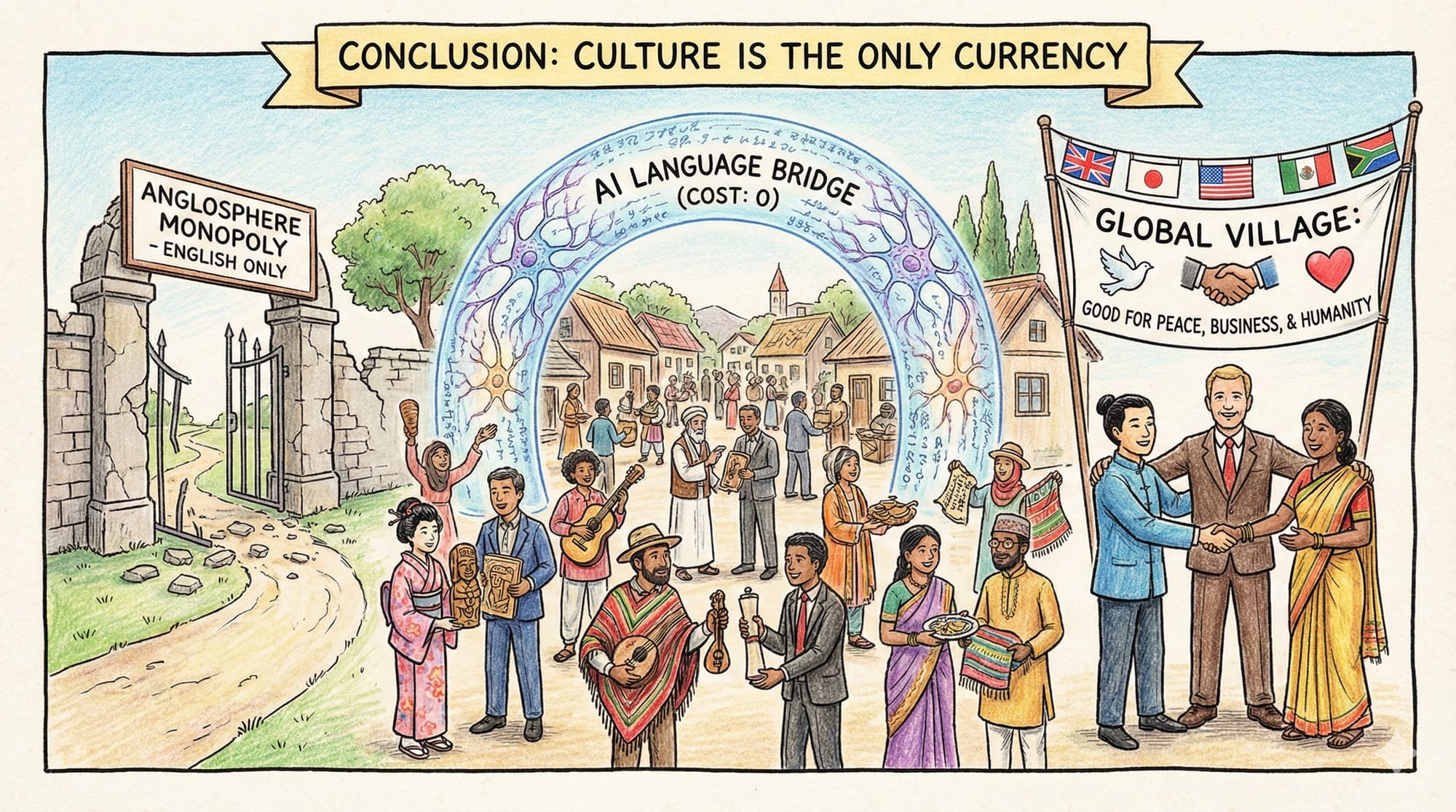
Conclusion: Culture is the Only Currency
When language costs zero, Culture is the only differentiator.
My Prediction: We are entering the age of the "Global Village" for real this time. The gatekeepers are gone. The Anglosphere monopoly is over. And that is a good thing for peace, for business, and for humanity.