Why YouTubers Predict Wars Faster Than CNN

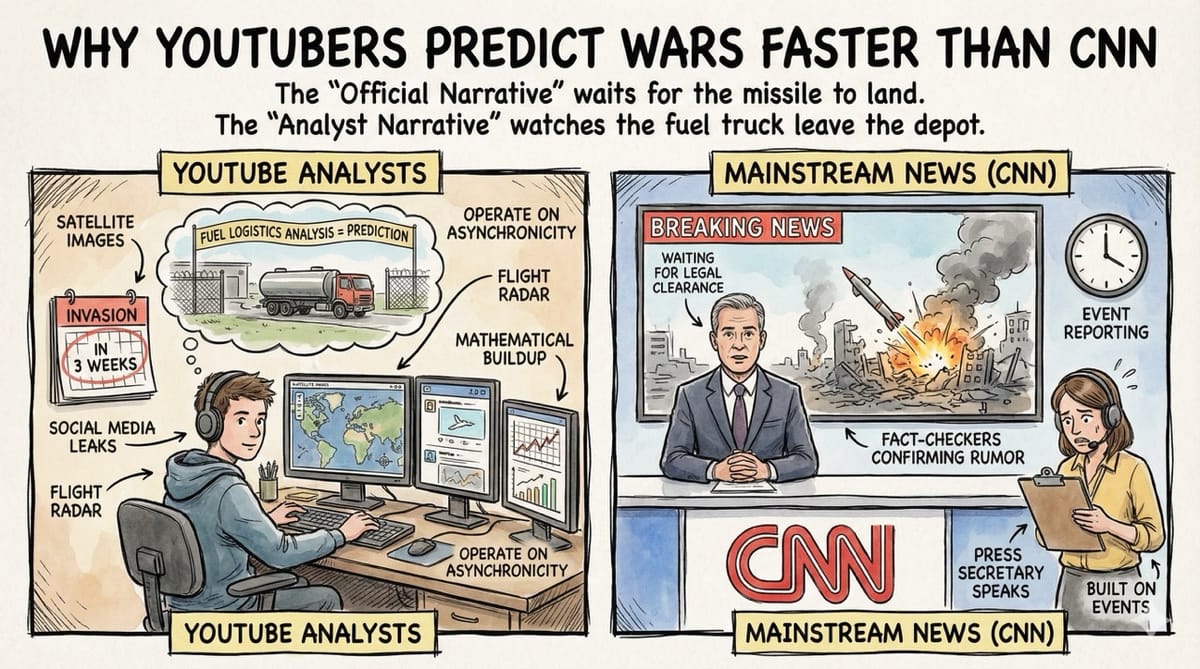
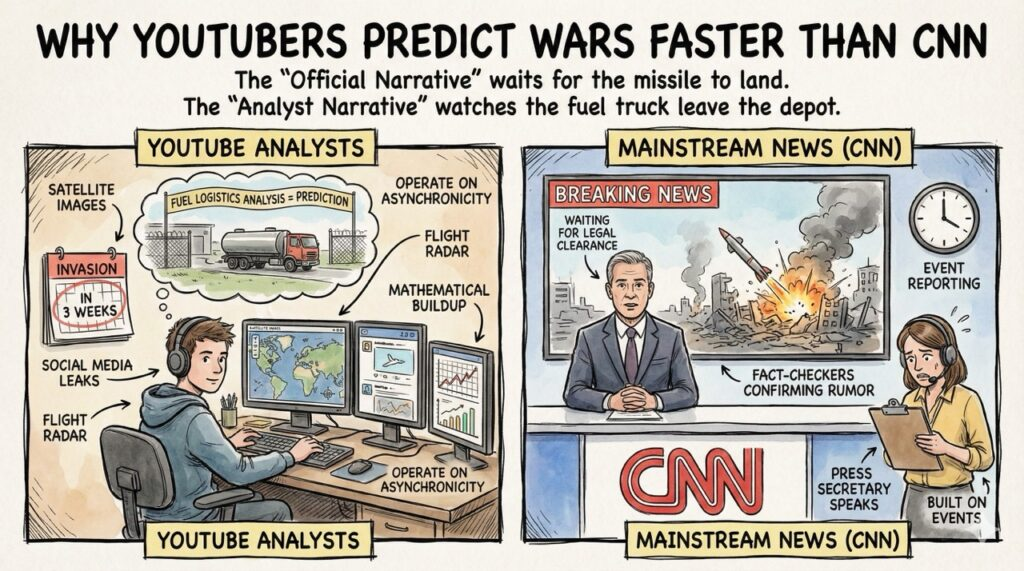
The "Official Narrative" waits for the missile to land. The "Analyst Narrative" watches the fuel truck leave the depot.
Inspiration: Watching a YouTuber analyze fuel logistics on Google Earth and predicting an invasion three weeks before the “Breaking News” banner appeared on TV.
Mainstream news is built on “Events.” They report when the missile lands. They report when the press secretary speaks.
YouTube analysts operate on “Asynchronicity.”
They don’t need a cameraman on the ground. They aggregate data points—satellite images, social media leaks, flight radars—to build a picture of what is about to happen.
While CNN is waiting for legal clearance and fact-checkers to confirm a “rumor,” creators are publishing a 20-minute deep dive on why the mathematical buildup makes war undeniable.
The Rise of the “Ex-Mil” Creator
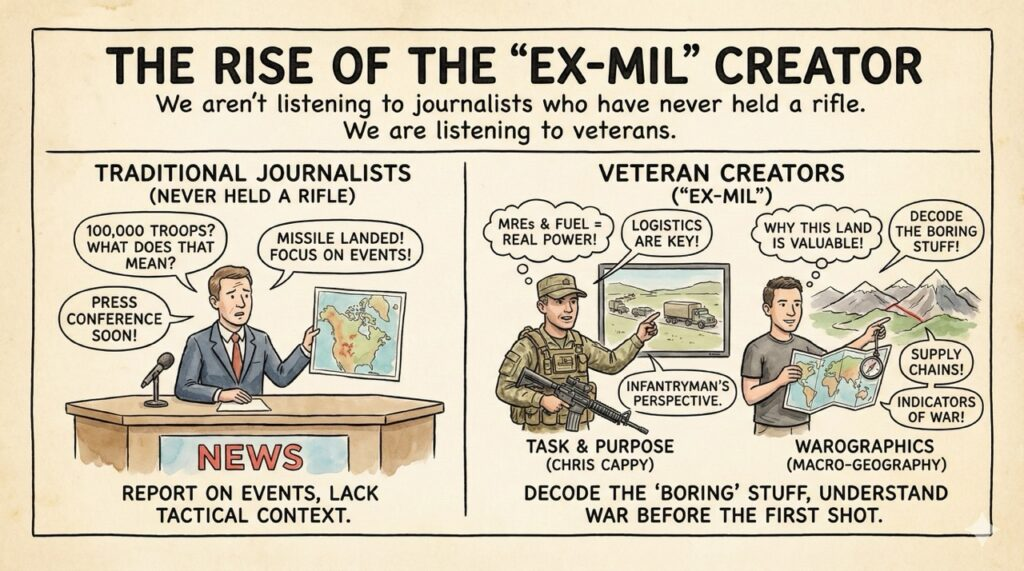
We aren’t listening to journalists who have never held a rifle. We are listening to veterans.
Channels like Task & Purpose (when Chris Cappy was a part of it) bring the infantryman’s perspective. They understand that “100,000 troops” means nothing without “100,000 MREs” and fuel.
Channels like Warographics focus on macro-geography. They show why a piece of land is valuable before the first shot is fired.
They decode the “boring” stuff (logistics, supply chains), which are the actual indicators of war.
The Track Record (The Predictions)
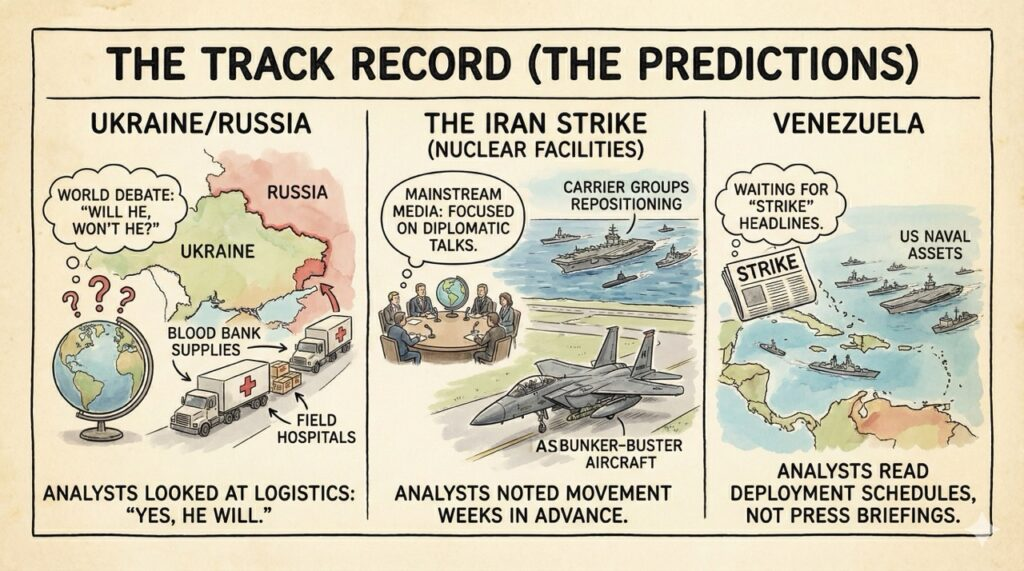
Ukraine/Russia: While the world debated “Will he, won’t he?”, these channels looked at the blood bank supplies and field hospitals moving to the border and said, “Yes, he will.”
The Iran Strike (Nuclear Facilities): Mainstream media was focused on diplomatic talks. The YouTube analysts noted the movement of bunker-buster capable aircraft and the repositioning of carrier groups weeks in advance.
Venezuela: They spotted the silent accumulation of US naval assets in the Caribbean long before the “Strike” headlines hit. They read the deployment schedules, not the press briefings.
Today’s Prediction: Iran (January 9, 2026)
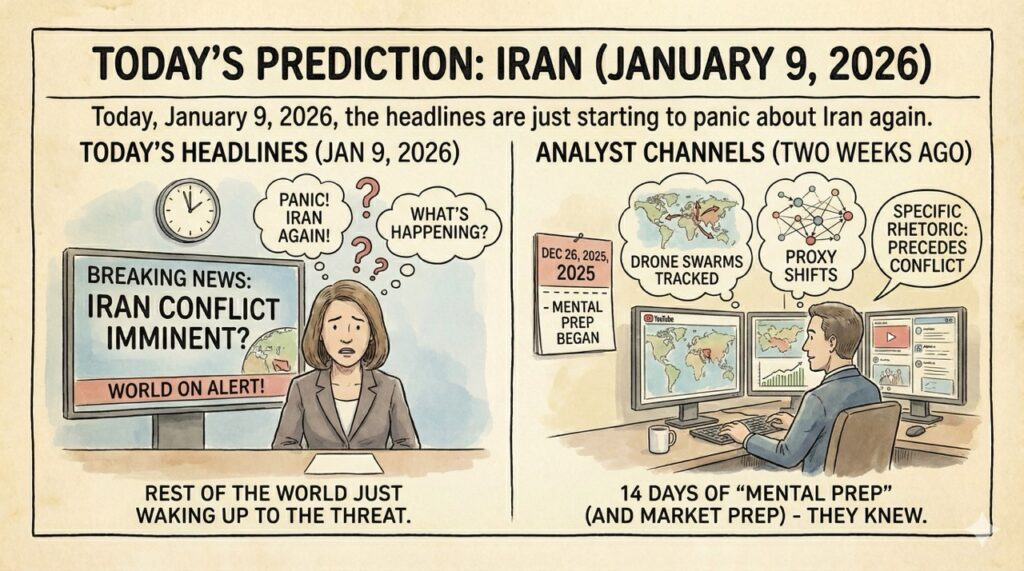
Today, January 9, 2026, the headlines are just starting to panic about Iran again.
But if you watched these channels two weeks ago, you already knew.
They tracked the drone swarms, the proxy shifts, and the specific rhetoric that historically precedes conflict. You had 14 days of “mental prep” (and market prep) while the rest of the world was sleeping.
Conclusion: The Decentralized CIA
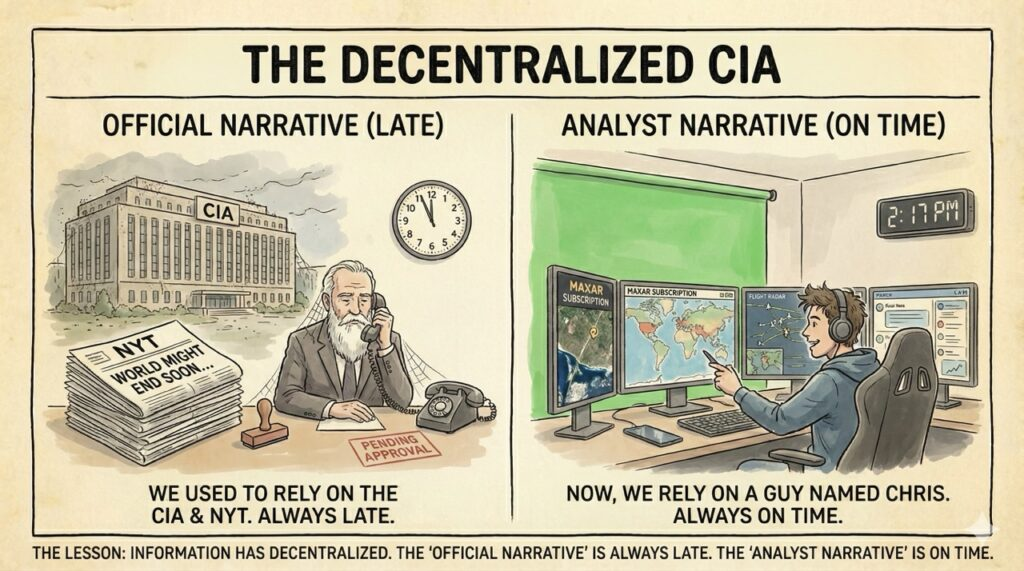
We used to rely on the CIA and the NYT to tell us the world was ending. Now, we rely on a guy named Chris with a green screen and a subscription to Maxar.
The Lesson: Information has decentralized. The “Official Narrative” is always late. The “Analyst Narrative” is on time.