Why We Are Hyperoptimizing Short-Form Video
We assume short-form video is the ultimate pinnacle of modern digital marketing because it commands the most immediate attention. In reality, we have hyperoptimized ourselves into a low-quality attention bubble that actively destroys long-term brand equity and consumer trust.

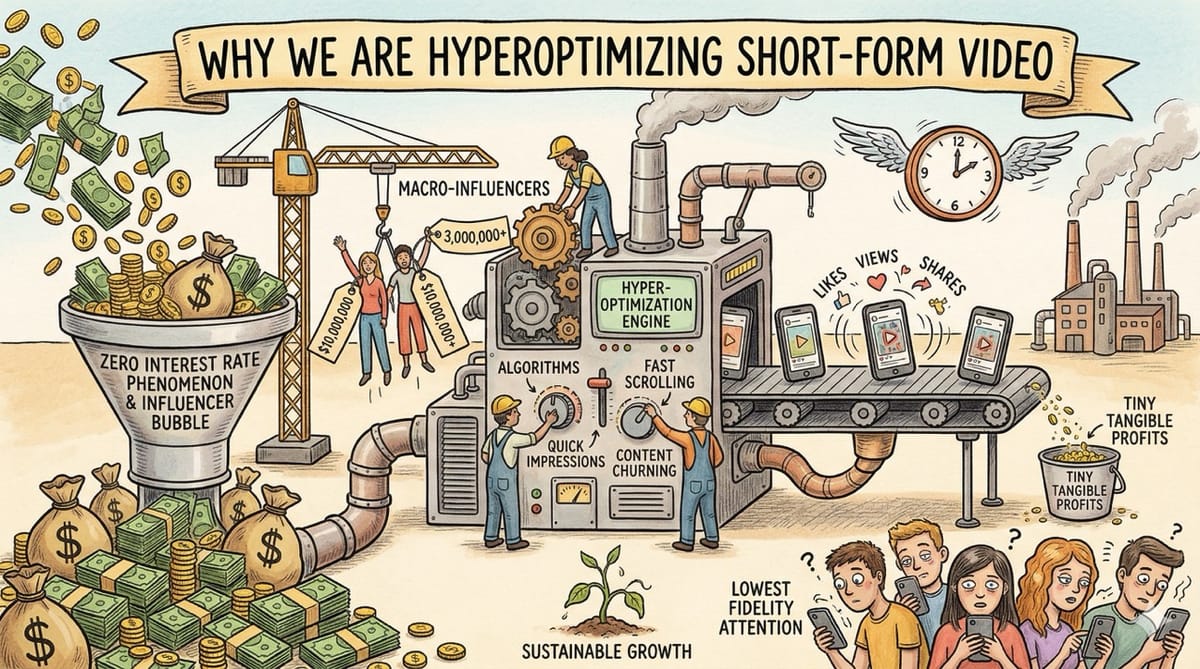
The zero interest rate phenomenon created a massive bubble in influencer marketing. We are now paying exorbitant prices for the lowest fidelity attention in the history of the internet.
Inspiration: Analyzing the aggressive corporate shift toward short-form video platforms and the massive valuations placed on macro-influencers. Realizing that the relentless pursuit of quick impressions is completely hindering sustainable growth for lean performance marketers.
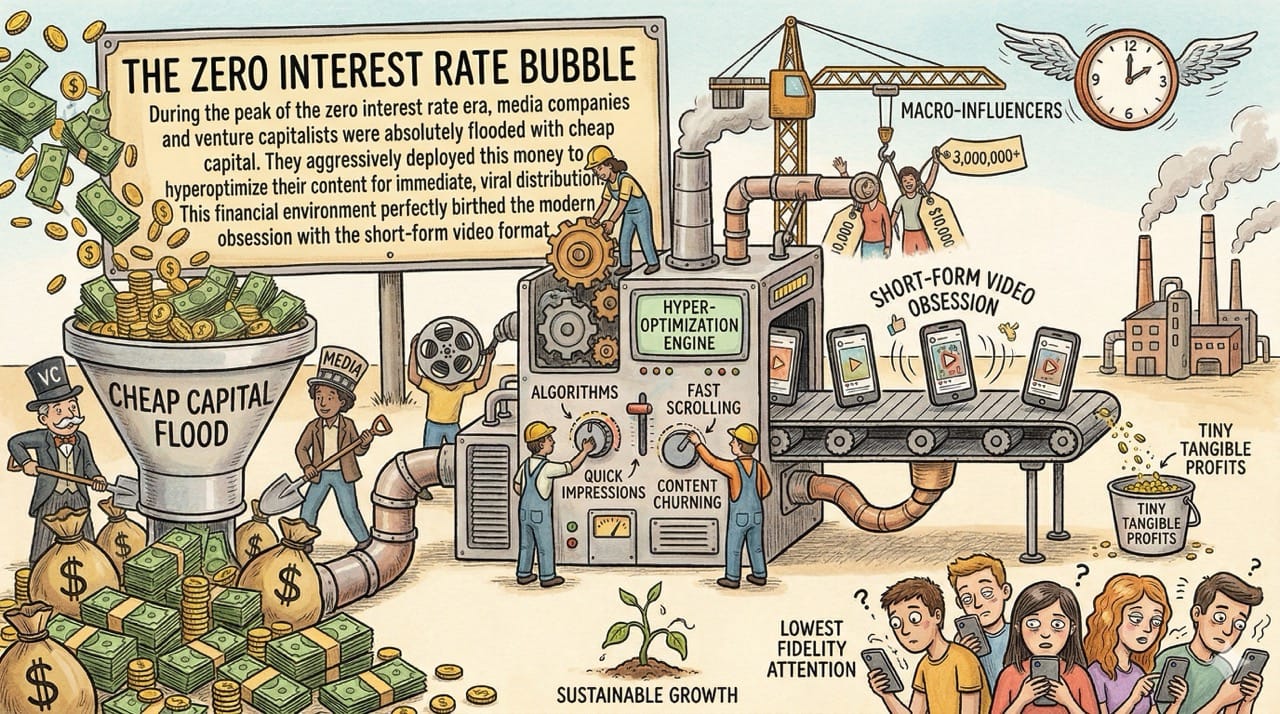
The Zero Interest Rate Bubble
During the peak of the zero interest rate era, media companies and venture capitalists were absolutely flooded with cheap capital.
They aggressively deployed this money to hyperoptimize their content for immediate, viral distribution.
This financial environment perfectly birthed the modern obsession with the short-form video format.
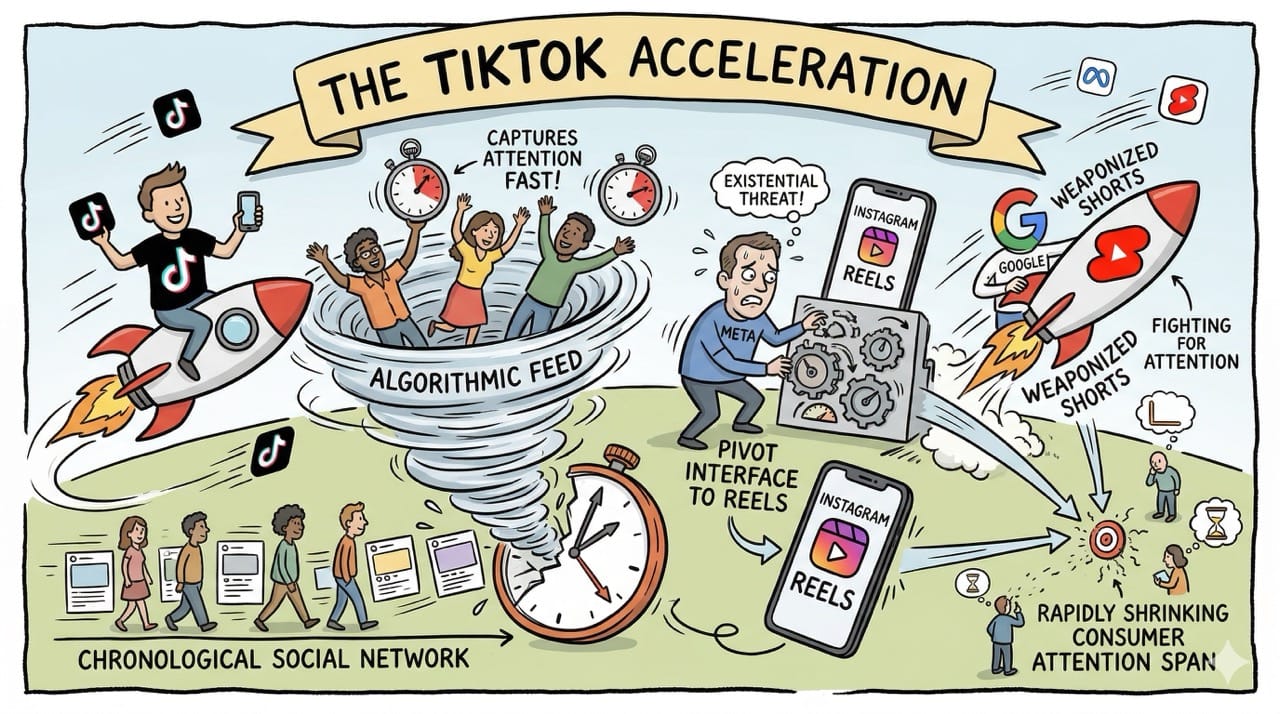
The TikTok Acceleration
TikTok completely accelerated this behavioral shift by proving that an algorithmic feed could capture human attention faster than a chronological social network.
This existential threat forced Meta to immediately pivot their entire interface to Instagram Reels.
Google simultaneously weaponized YouTube Shorts to fight for the exact same rapidly shrinking consumer attention span.
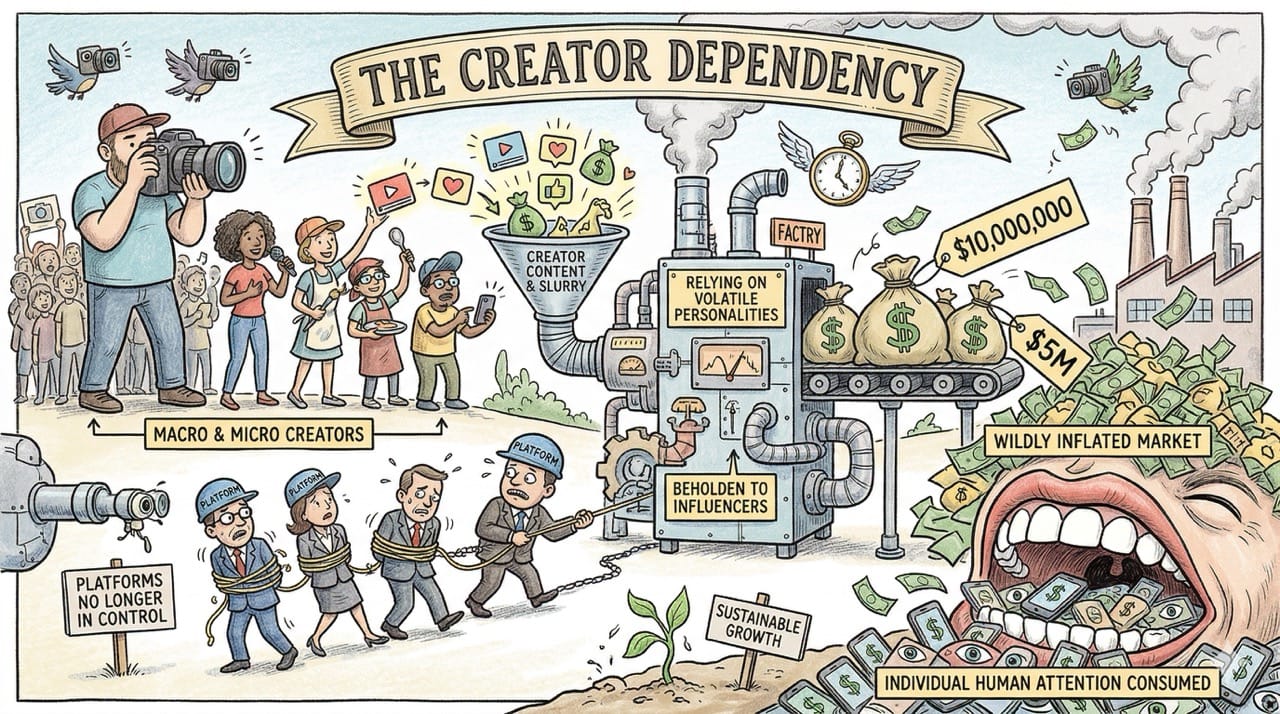
The Creator Dependency
This hyperoptimized format relies almost entirely on the volatile personalities of both macro and micro content creators.
The platforms no longer control the cultural narrative; they are completely beholden to the influencers who produce the actual daily content.
This power dynamic has created a wildly inflated market for individual human attention.
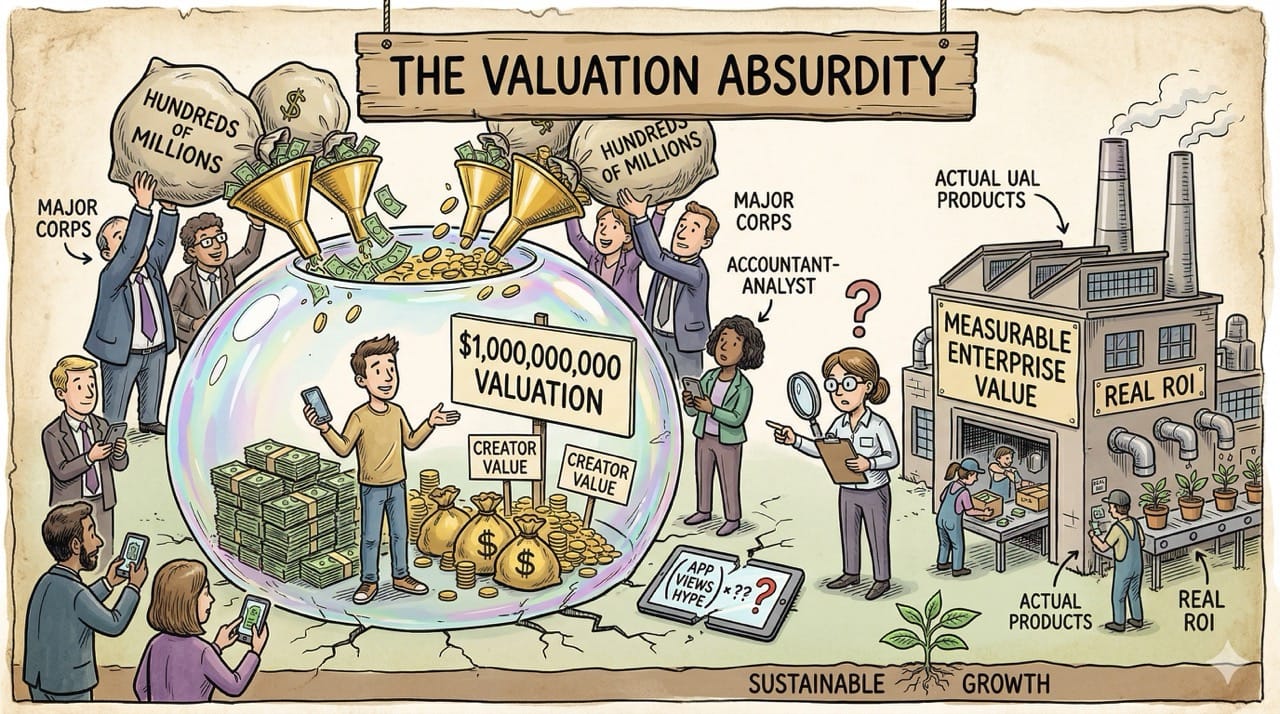
The Valuation Absurdity
We are currently witnessing a massive, unsustainable bubble in creator investments.
Major corporations are pouring hundreds of millions of dollars into influencers to secure basic brand deals.
When a creator like Khaby Lame commands an almost billion-dollar valuation, we must critically ask how that figure mathematically translates to actual enterprise value and measurable return on investment.
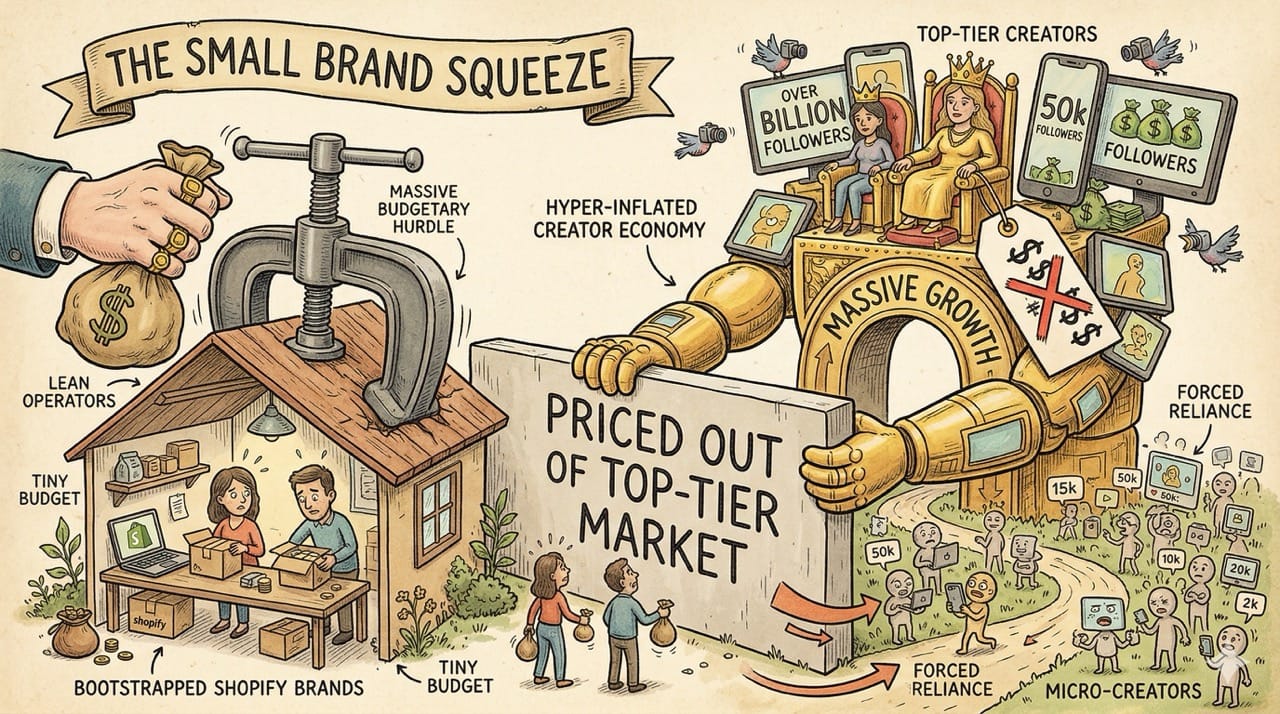
The Small Brand Squeeze
This hyper-inflated creator economy makes it incredibly difficult for bootstrapped Shopify brands to actually compete.
Investing in high-level influencers was already a massive budgetary hurdle for lean operators.
Now, smaller performance marketers are completely priced out of the top-tier creator market, forcing them to rely on volatile, micro-creator strategies.
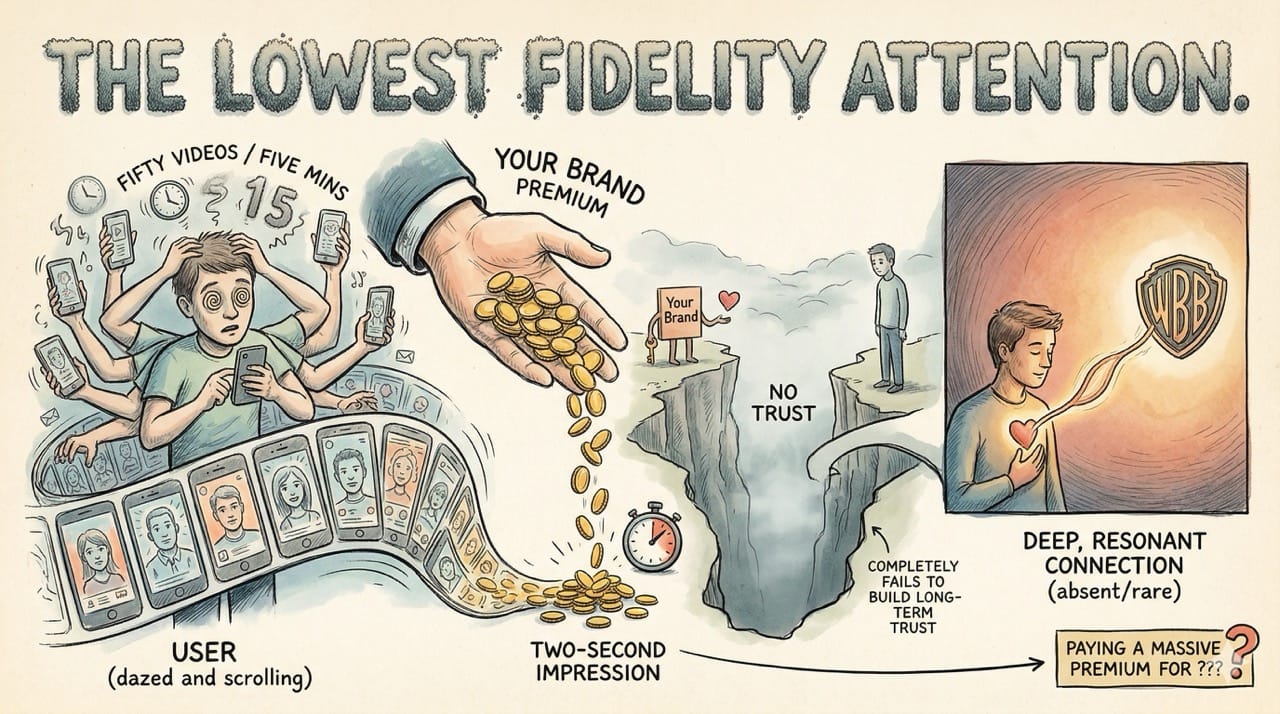
The Lowest Fidelity Attention
The ultimate tragedy of this short-form obsession is that it yields the absolute lowest quality of consumer attention.
A user mindlessly scrolling through fifty TikToks in five minutes is not forming a deep, resonant connection with your specific brand.
You are paying a massive premium for a fleeting, two-second impression that completely fails to build long-term trust.
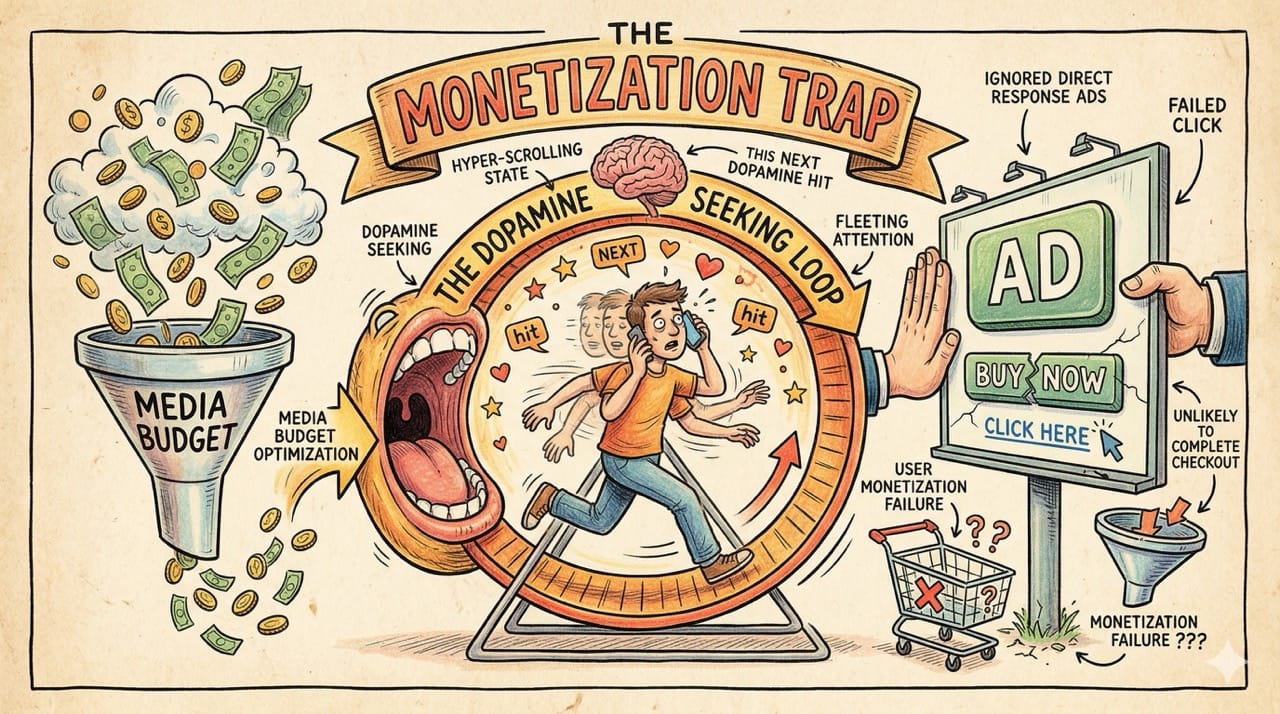
The Monetization Trap
Because this attention is so incredibly fleeting, the format is notoriously difficult to actually monetize through direct response advertising.
A consumer in a hyper-scrolling state is highly unlikely to stop, click a link, and complete a complex e-commerce checkout.
We are optimizing our media budgets for a format that biologically trains the user to ignore the advertisement and immediately seek the next hit of dopamine.
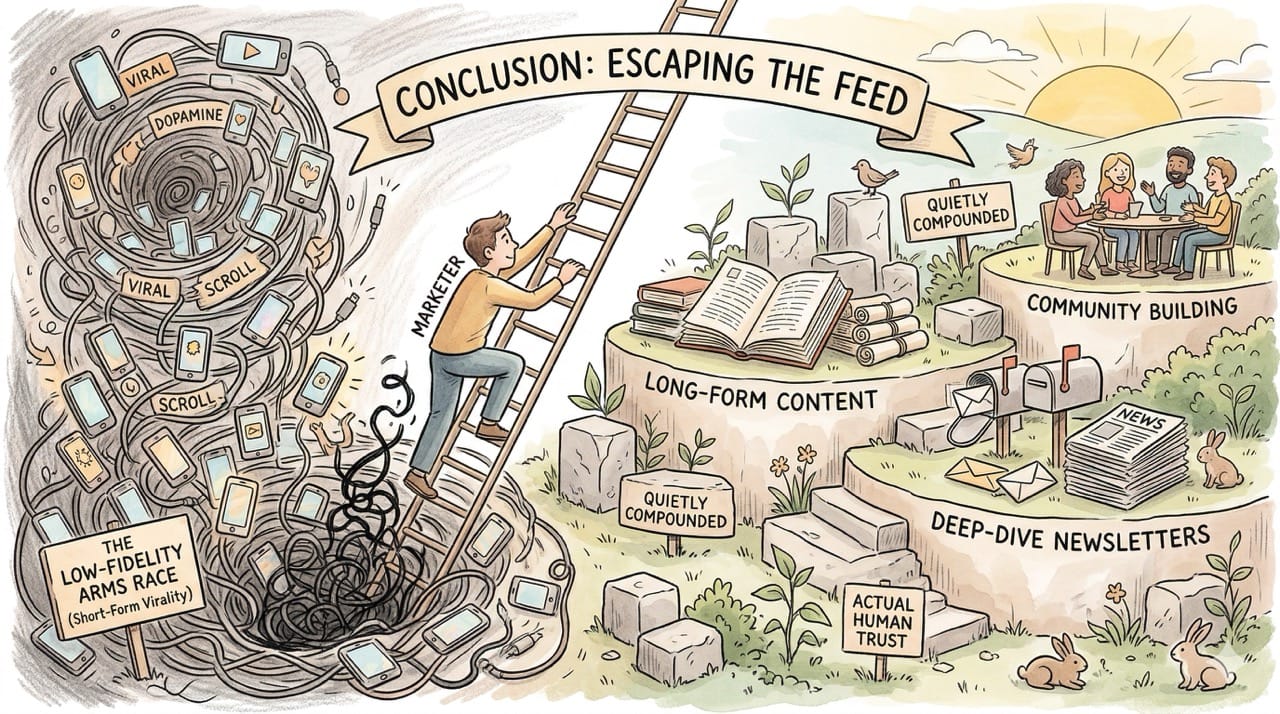
Conclusion: Escaping the Feed
If you want to build a truly resilient business, you must pursue meaningful engagement rather than the expedient dopamine of short-form virality.
The smartest marketers will eventually abandon this low-fidelity arms race.
They will rotate their capital back into long-form content, deep-dive newsletters, and community building, where actual human trust is quietly compounded.