Why Shopify Wins the AI Coding Race: The Liquid Arbitrage

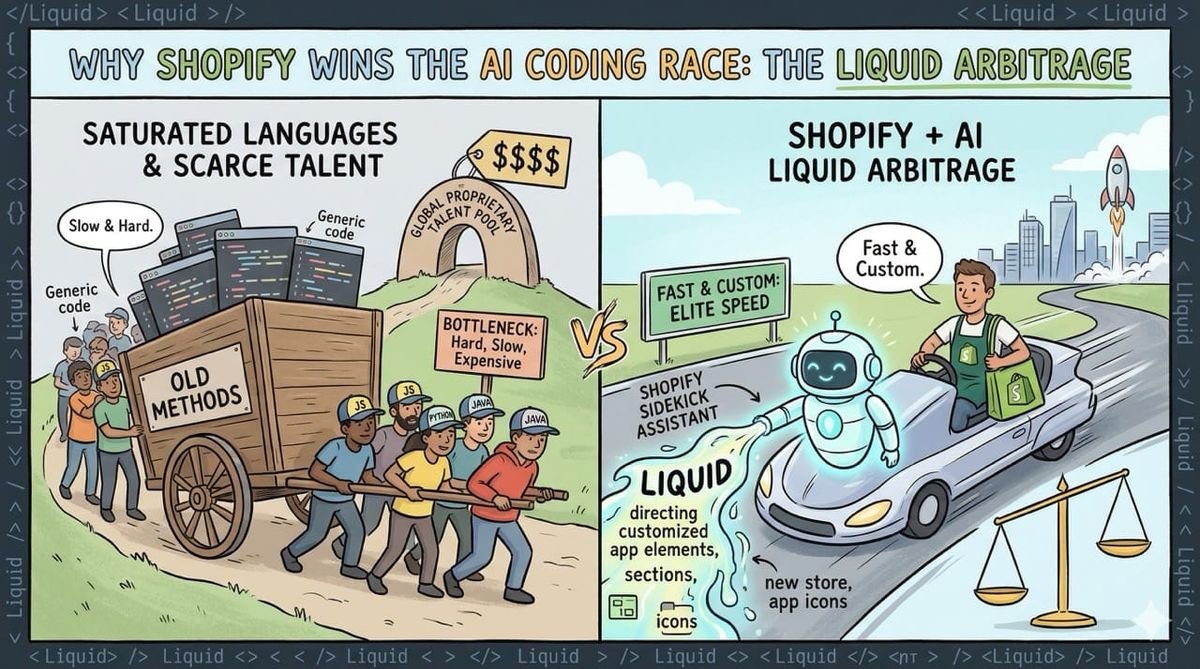
The global talent pool for proprietary e-commerce coding is notoriously small and expensive. Artificial intelligence is completely eradicating this technical bottleneck and transforming merchants into elite software engineers.
Inspiration: Observing the terrifying speed at which the Shopify Sidekick assistant generates custom applications. Realizing that deploying large language models to write niche code provides a vastly higher competitive advantage than optimizing saturated languages.
The Liquid Bottleneck
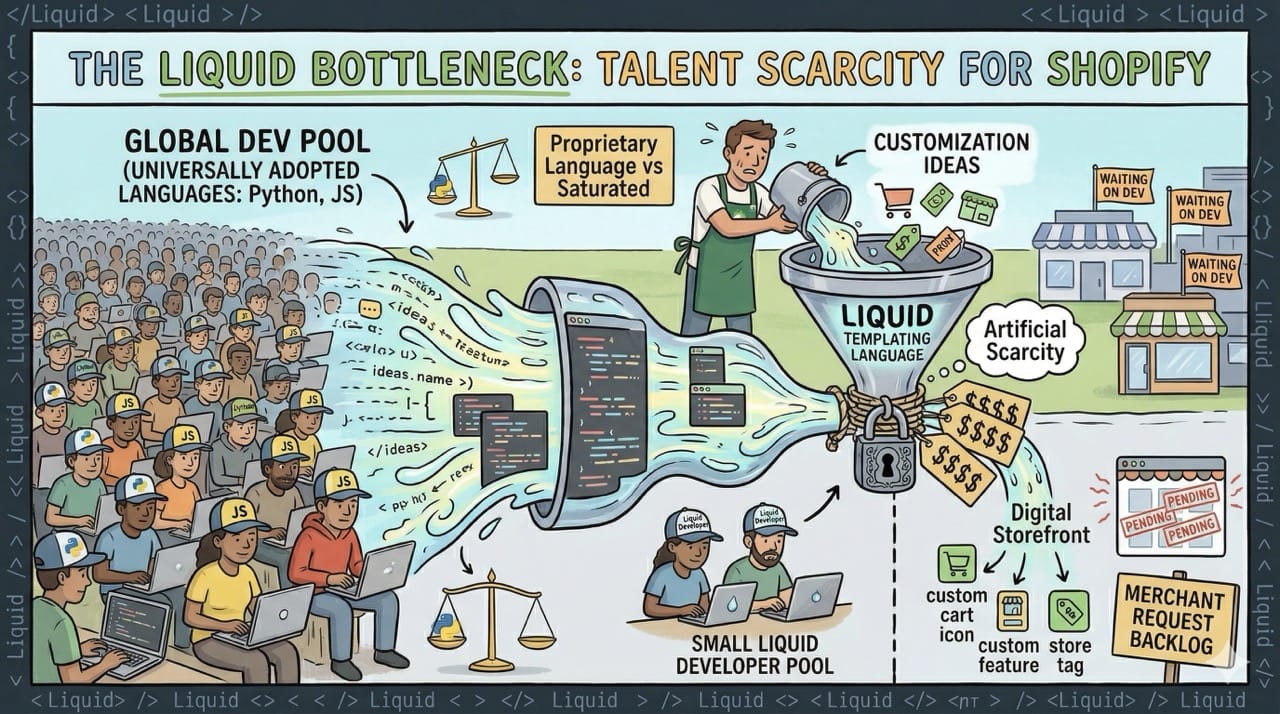
Shopify operates entirely on a proprietary templating language known as Liquid.
Compared to universally adopted languages like Python or Javascript, the global pool of developers who deeply understand Liquid is incredibly small.
This artificial talent scarcity has historically created a massive financial bottleneck for merchants trying to customize their digital storefronts.
The Marginal Multiplier
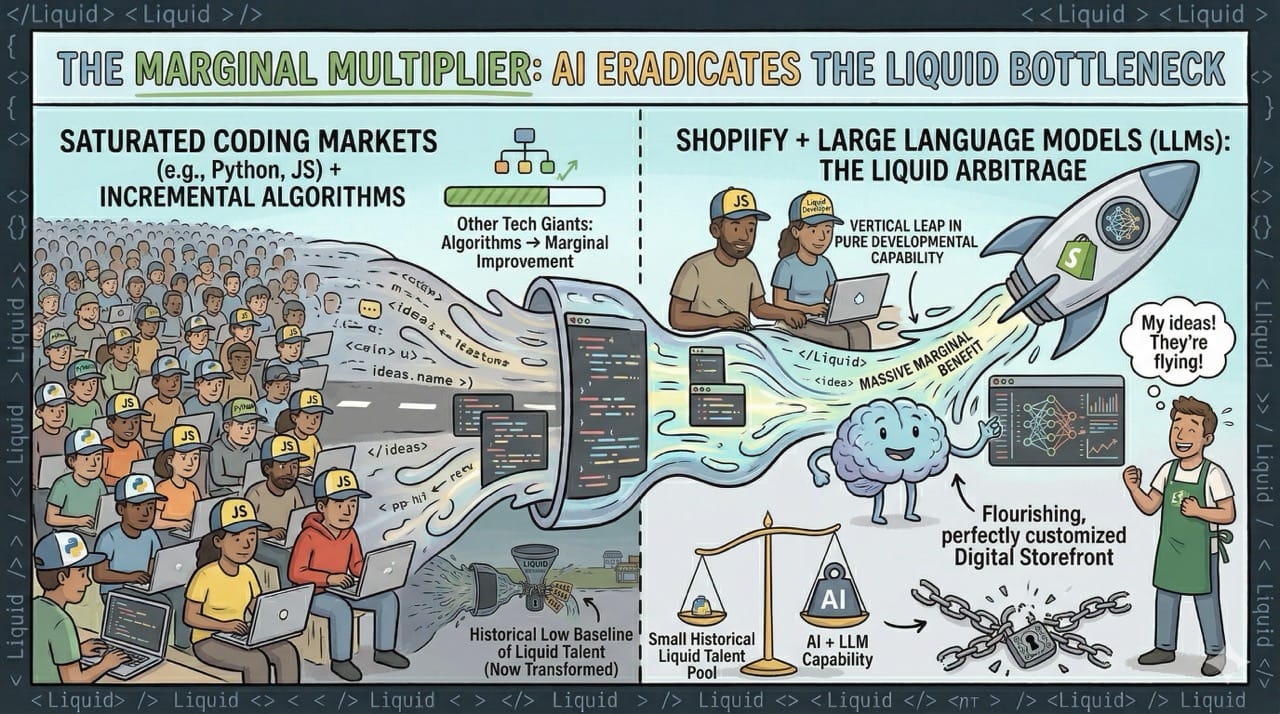
Large language models are currently eradicating this exact technical barrier overnight.
Because the baseline of human talent in Liquid was so remarkably low, the introduction of artificial intelligence provides a massive marginal benefit to the platform.
While other tech giants use algorithms to marginally improve saturated coding markets, Shopify is experiencing a vertical leap in pure developmental capability.
The Sidekick Disruption
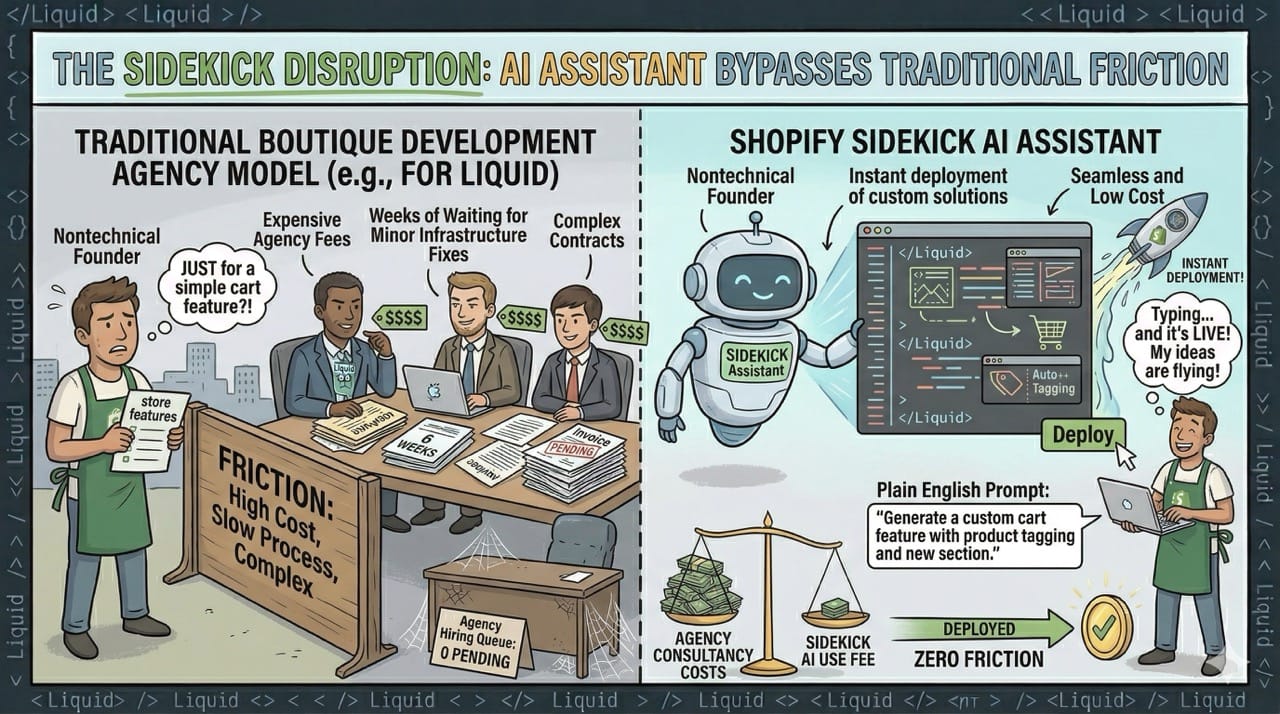
Shopify recently introduced an artificial intelligence assistant named Sidekick specifically designed to generate complex store applications.
This tool allows nontechnical founders to instantly deploy custom software solutions simply by typing a plain English prompt.
It completely bypasses the traditional friction of hiring expensive boutique development agencies to fix minor infrastructure problems.
The Native Expansion
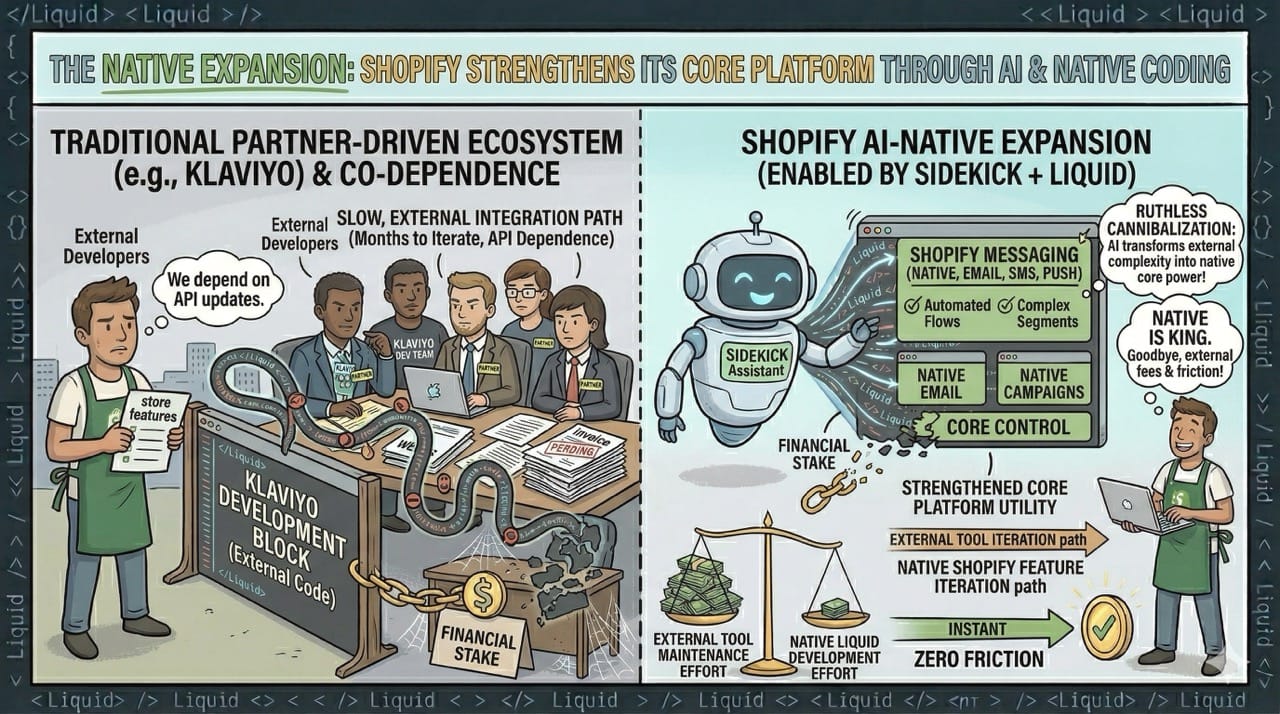
This accelerated coding velocity allows Shopify to drastically enhance their own native product offerings.
They can rapidly iterate on built in features like Shopify Messaging without relying on slow external integrations.
Even though they hold a financial stake in partners like Klaviyo, they will ruthlessly cannibalize those external tools to strengthen their core platform utility.
The Third Party Collapse
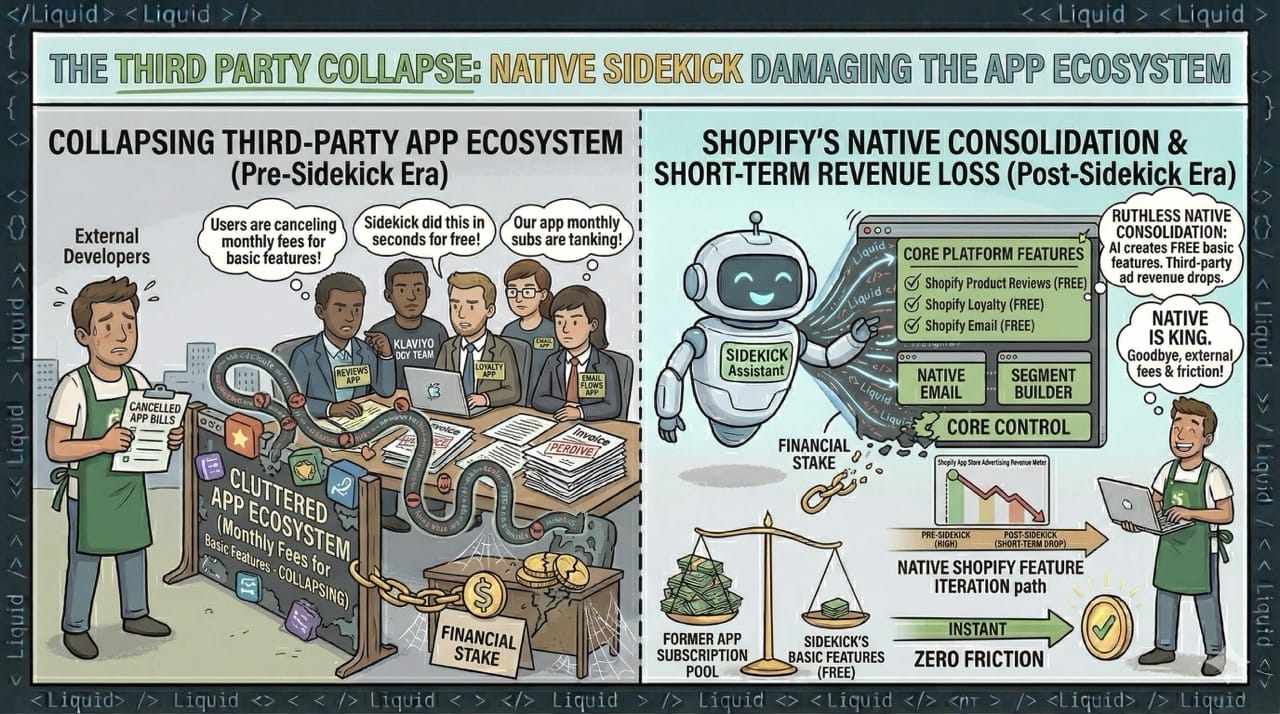
This incredible native capability will inevitably damage the highly lucrative third party app ecosystem.
Independent developers rely heavily on charging monthly subscription fees for basic features that Sidekick can now generate for free in seconds.
Shopify will absolutely experience a short term drop in the massive advertising revenue previously generated within their proprietary app store.
The Long Term Moat
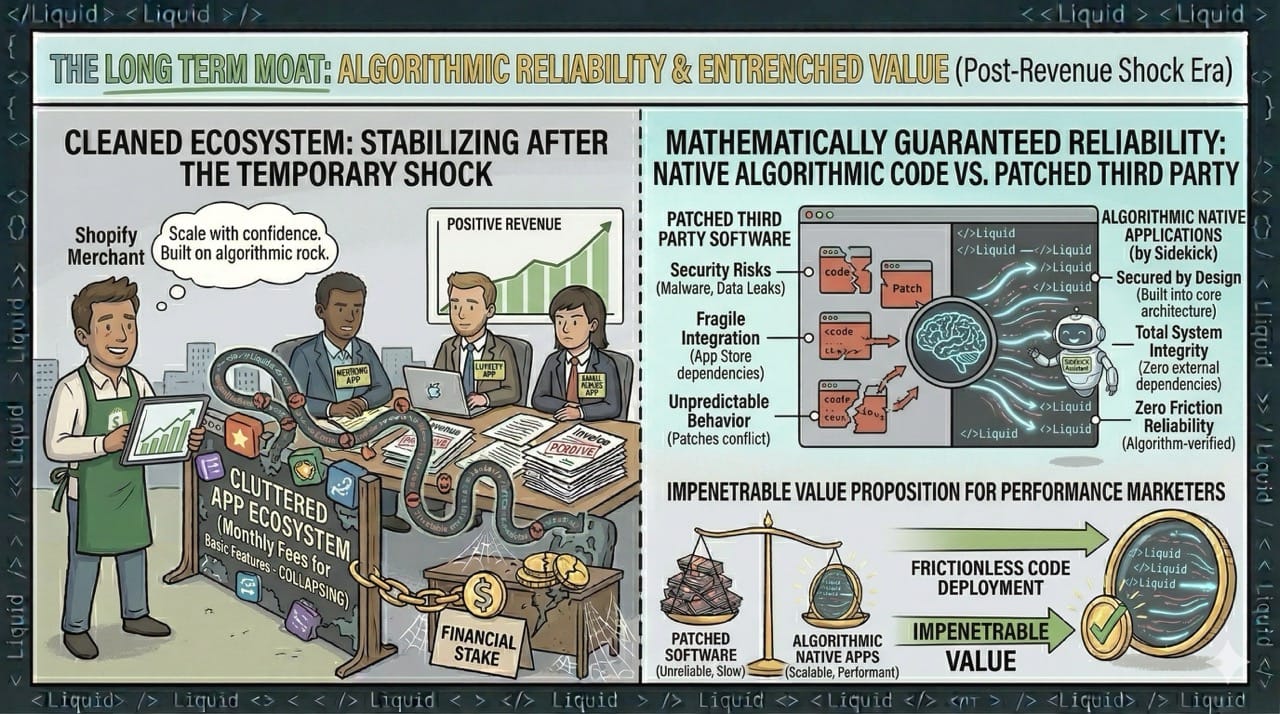
Despite this temporary revenue shock, the long term enterprise value of Shopify will absolutely skyrocket.
Native applications generated directly by the core algorithm are mathematically guaranteed to be safer and vastly more reliable than patched third party software.
This frictionless reliability ultimately creates an impenetrable value proposition for serious performance marketers building scalable businesses.
Conclusion: The Autonomous Engineer
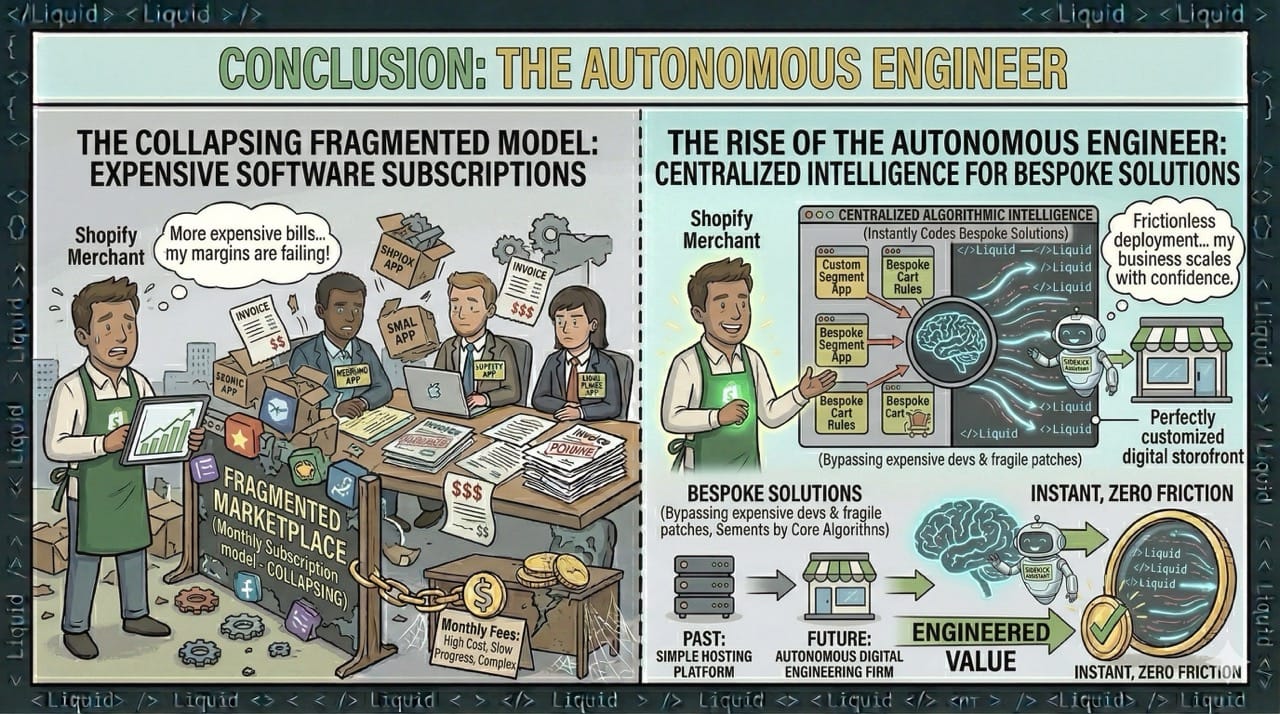
The future of digital commerce does not rely on a fragmented marketplace of expensive software subscriptions.
It relies on a centralized intelligence that instantly codes bespoke solutions for the individual merchant.
Shopify is quietly transforming from a simple hosting platform into an autonomous digital engineering firm.