Why Meta and Google Should Support Shopify's Growth: The Tech Mutualism
We assume major advertising platforms rely primarily on massive enterprise budgets for their sustained revenue growth. In reality, their ultimate cash flow depends entirely on the frictionless creation of millions of scrappy Shopify merchants.

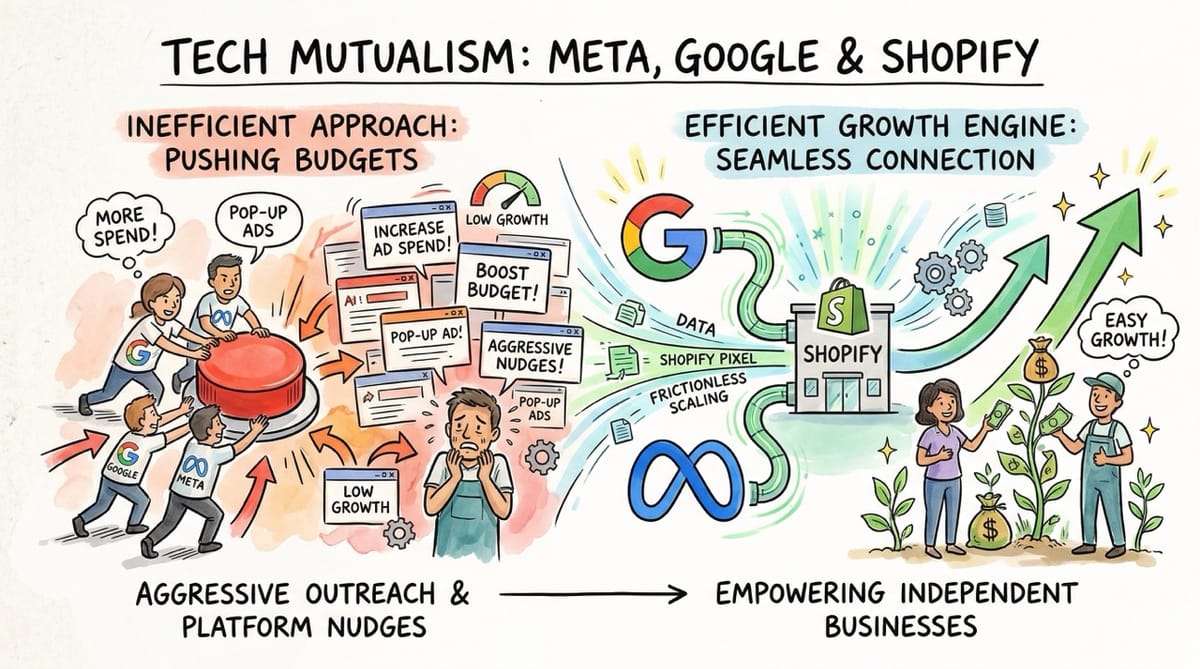
Aggressive sales outreach and platform pop-ups are highly inefficient ways to increase ad spend. The true growth engine is a completely seamless data integration with the world's largest digital storefront builder.
Inspiration: Observing the stark contrast between annoying platform nudges to increase ad budgets versus the frictionless scaling that occurs when Shopify connects directly to an advertising pixel. Realizing that empowering independent entrepreneurs is far more lucrative than trying to squeeze legacy enterprise accounts.
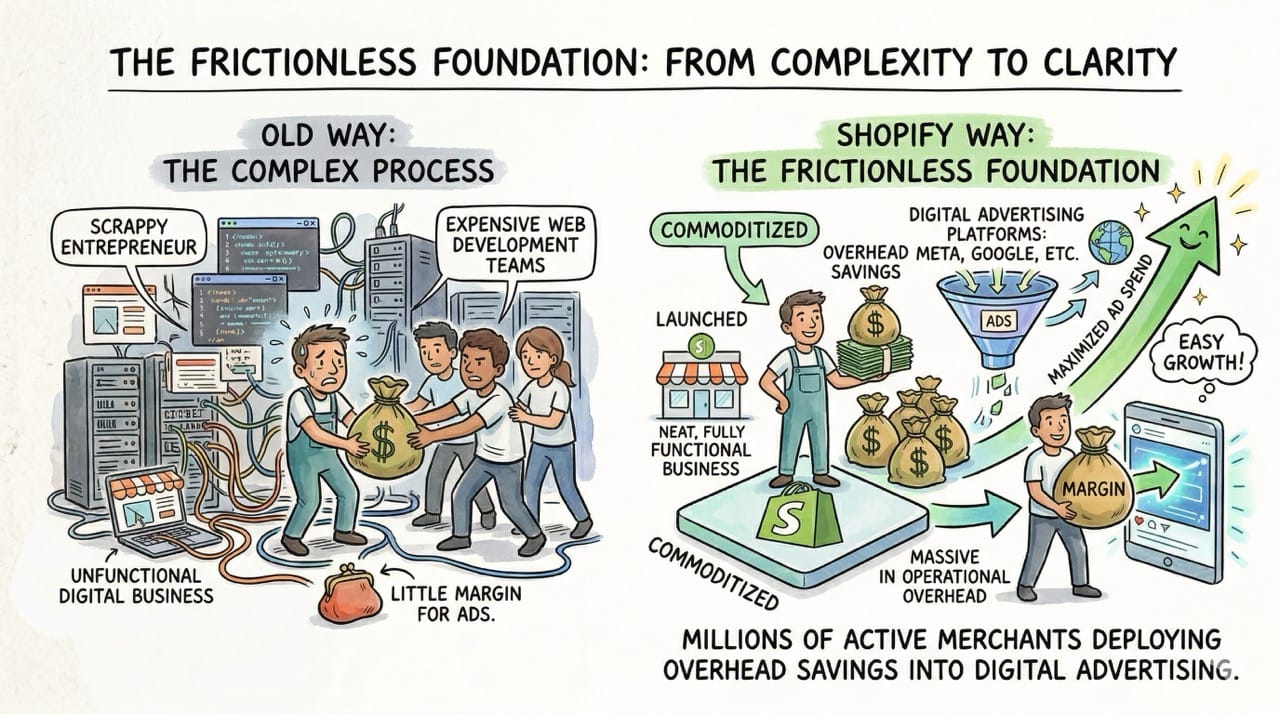
The Frictionless Foundation
Shopify has completely commoditized the complex process of launching a functional digital business.
The platform currently powers millions of active merchants who no longer need to hire expensive web development teams.
This massive reduction in operational overhead gives scrappy entrepreneurs significantly more margin to deploy directly into digital advertising.
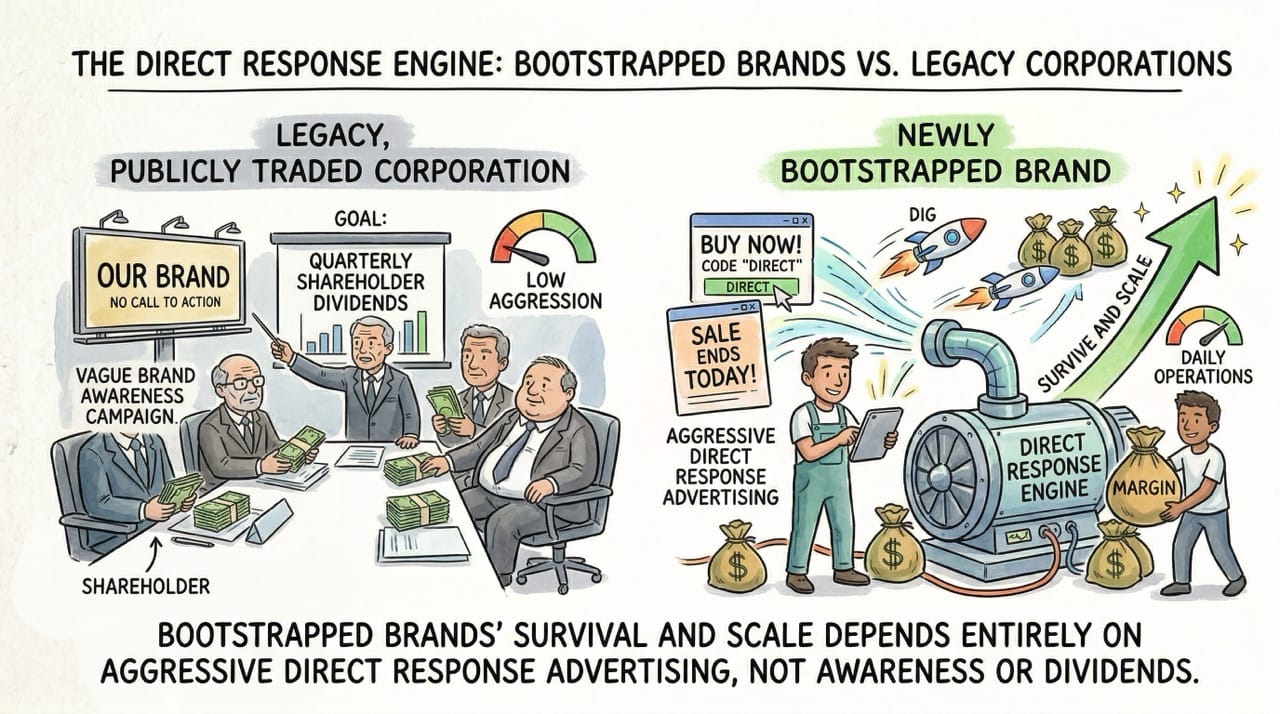
The Direct Response Engine
These newly bootstrapped brands possess a fundamentally different psychology than legacy, publicly traded corporations.
They do not care about vague brand awareness campaigns or quarterly shareholder dividends.
They depend entirely on aggressive direct response advertising to survive and scale their daily operations.
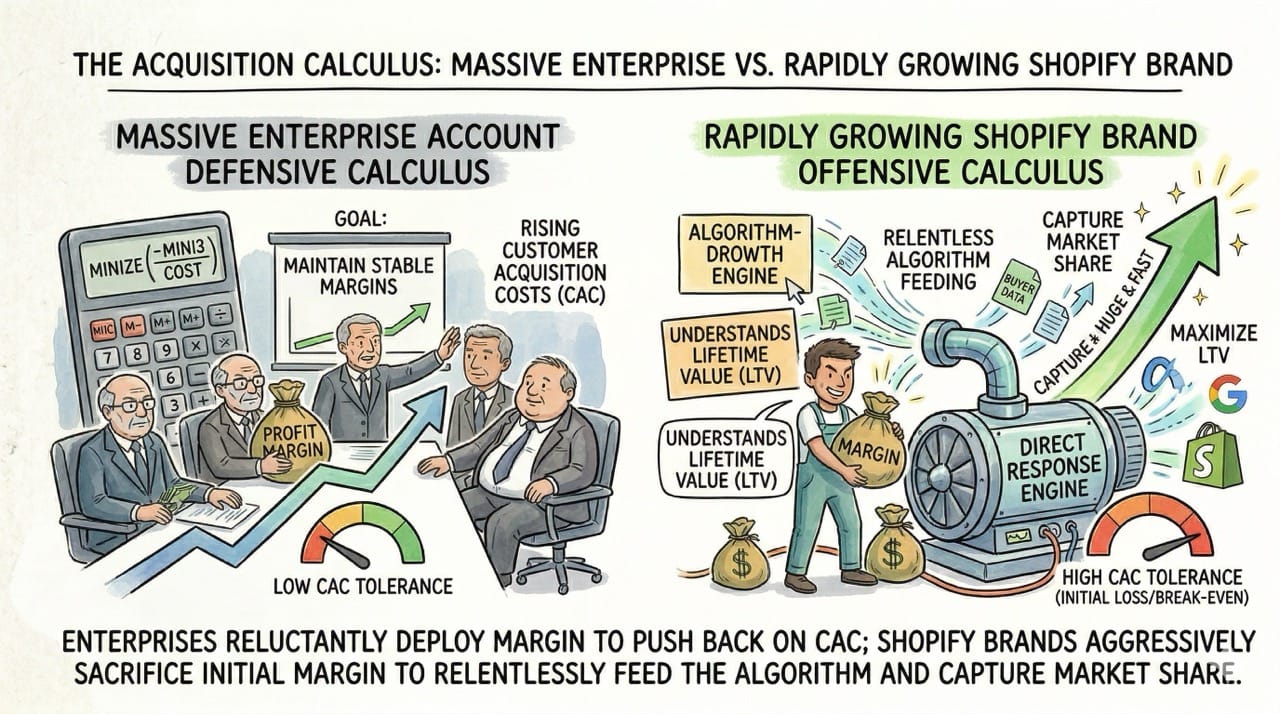
The Acquisition Calculus
A massive enterprise account will fiercely protect its profit margins and push back against rising customer acquisition costs.
Conversely, a rapidly growing Shopify brand is often perfectly willing to break even or take a loss on initial customer acquisition.
They understand the lifetime value of a buyer and will relentlessly feed the algorithm to capture market share.
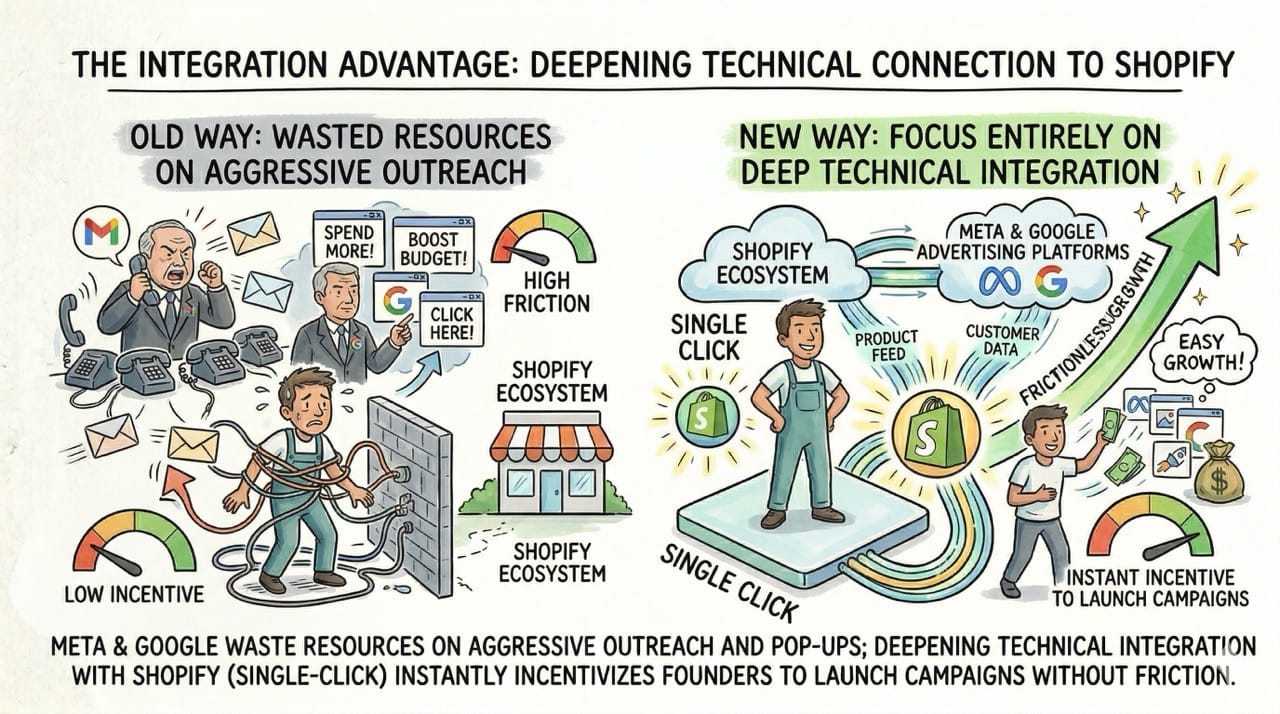
The Integration Advantage
Meta and Google are currently wasting resources on aggressive cold outreach and annoying in-platform pop-ups begging advertisers to spend more.
They should instead focus entirely on deepening their technical integration with the Shopify ecosystem.
Linking a digital storefront to an advertising platform with a single click instantly incentivizes founders to launch new campaigns without any technical friction.
The Ultimate Beta Testers
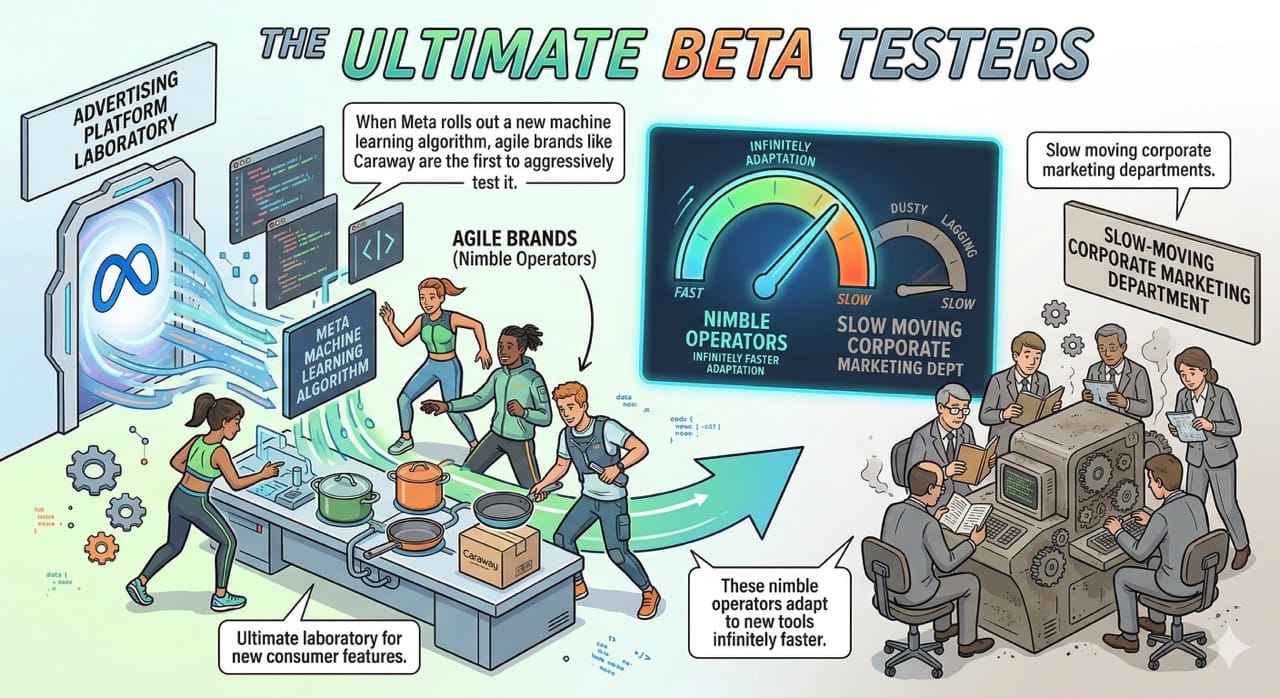
This mutualism also provides advertising platforms with the ultimate laboratory for new consumer features.
When Meta rolls out a new machine learning algorithm, agile brands like Caraway are the first to aggressively test it.
These nimble operators adapt to new tools infinitely faster than slow moving corporate marketing departments.
The Data Flywheel
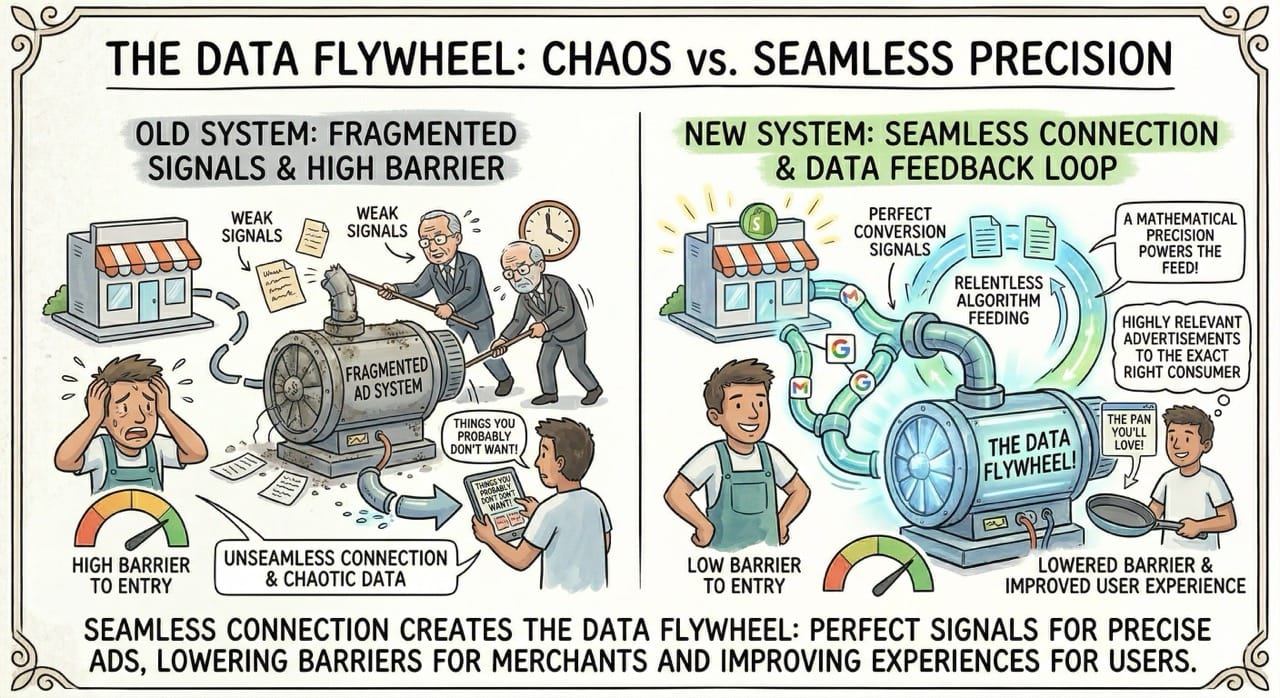
A seamless connection between the store and the ad platform creates an incredibly powerful data feedback loop.
The algorithm receives perfect conversion signals to serve highly relevant advertisements to the exact right consumer.
This mathematical precision lowers the barrier to entry for the merchant while simultaneously improving the daily feed experience for the user.
The Collaborative Frontier
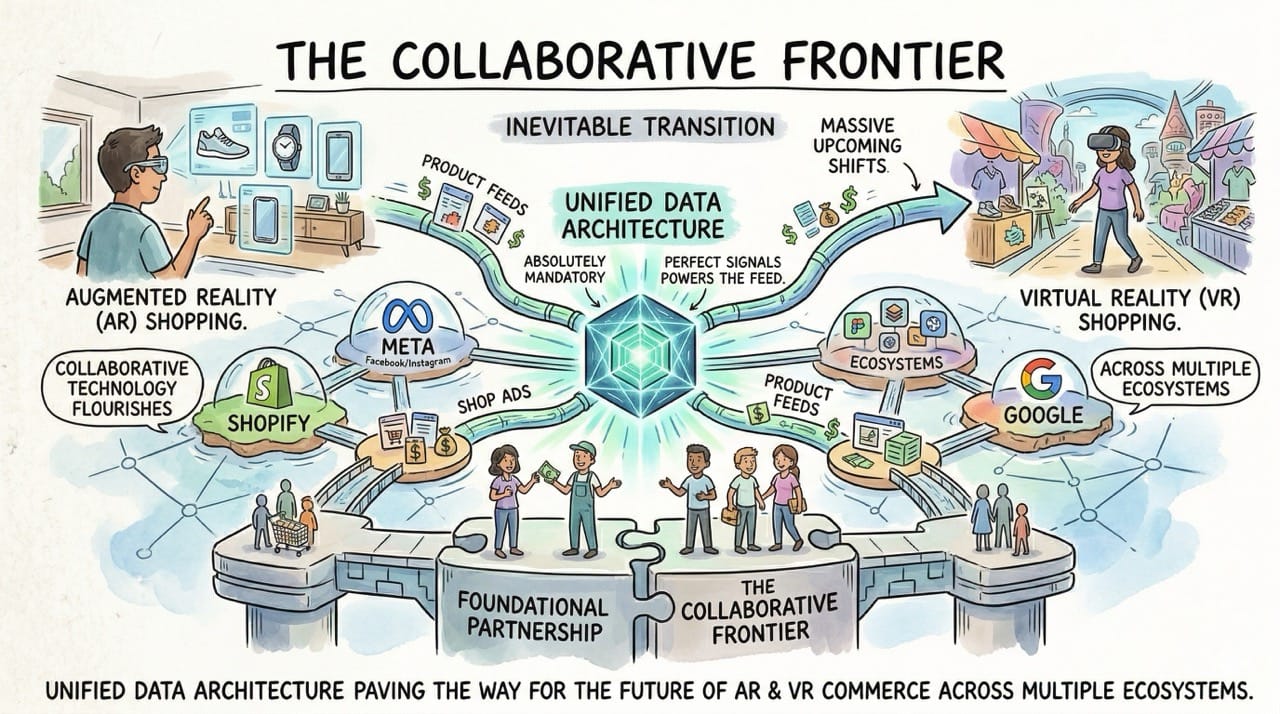
This foundational partnership paves the way for massive upcoming shifts in consumer commerce.
It creates immediate opportunities for collaborative technology like Shop Ads to flourish across multiple ecosystems.
As we inevitably transition toward augmented reality and virtual reality shopping, this unified data architecture will be absolutely mandatory.
Conclusion: Funding the Arsenal
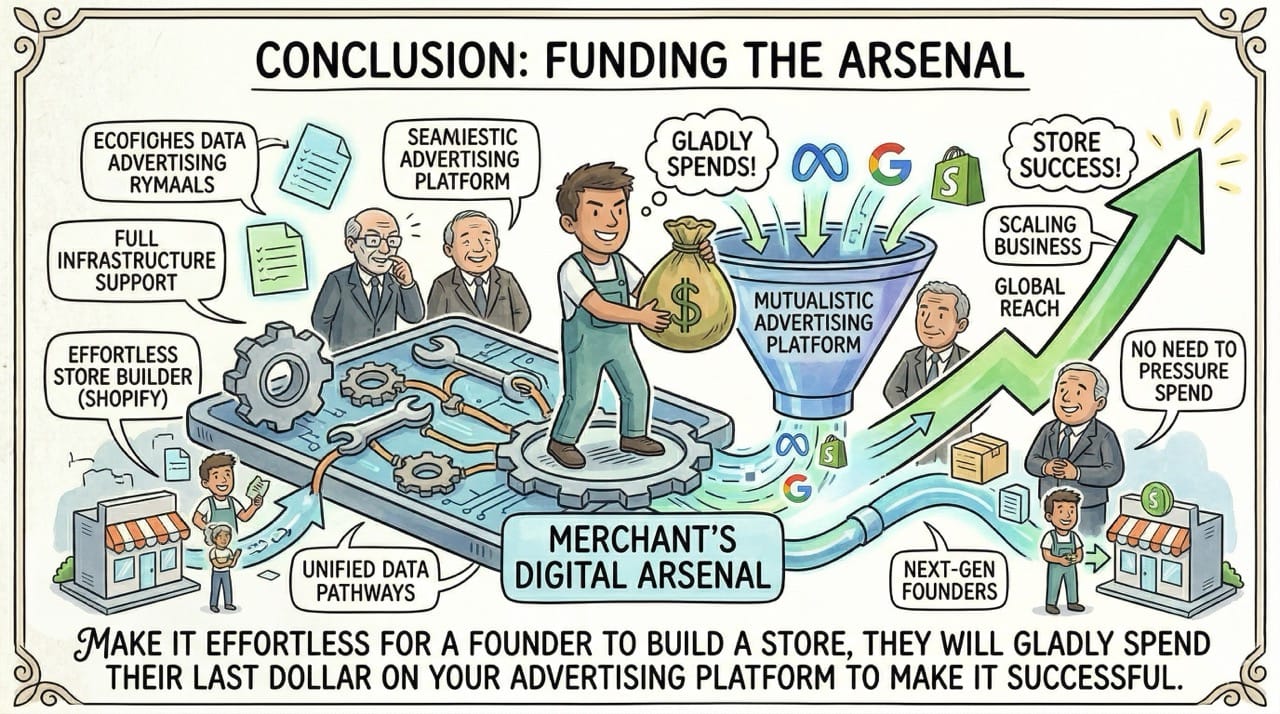
Advertising monopolies do not need to constantly pressure their users to spend more money.
They just need to fully support the infrastructure that arms the next generation of digital merchants.
If you make it effortless for a founder to build a store, they will gladly spend their last dollar on your advertising platform to make it successful.