
Why Autonomous Agents Will Skyrocket the Space Economy
We assume artificial intelligence will reach its absolute peak solving terrestrial software problems. In reality, the true manifestation of artificial general intelligence will occur while autonomously colonizing outer space.

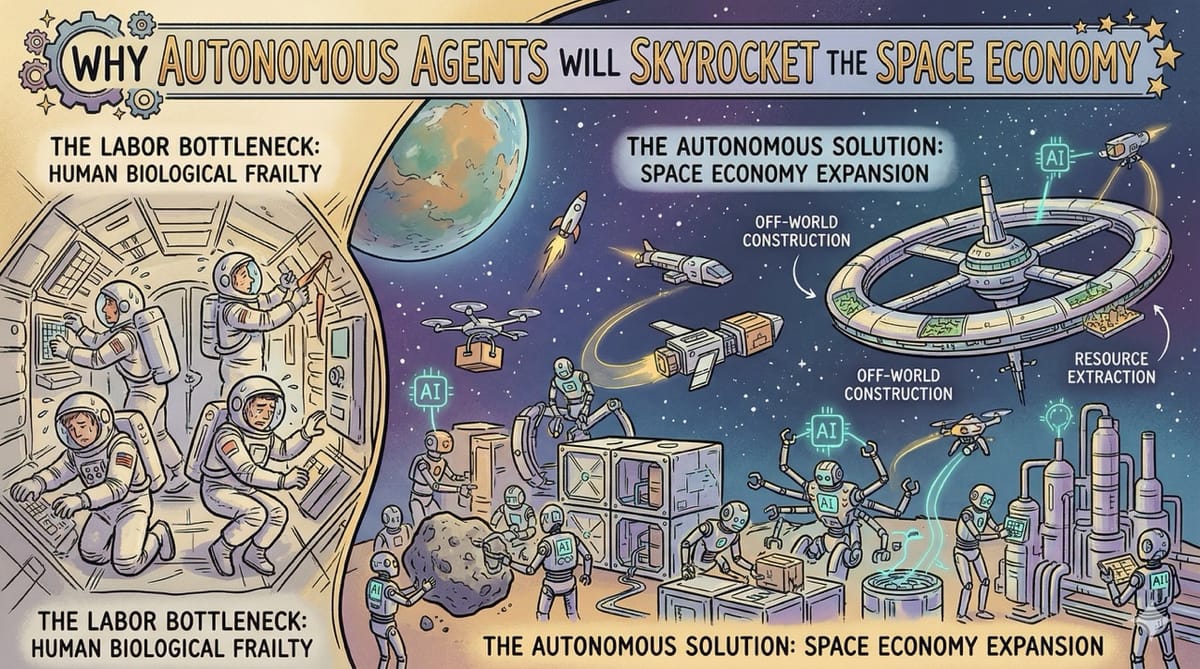
The massive bottleneck of human biological frailty in orbit is officially over. Autonomous robotics will permanently solve the extreme labor constraints of the off-world economy.
Inspiration: Realizing that while autonomous software malware threatens our digital infrastructure, autonomous physical robots provide the ultimate hope for our physical expansion into the stars.
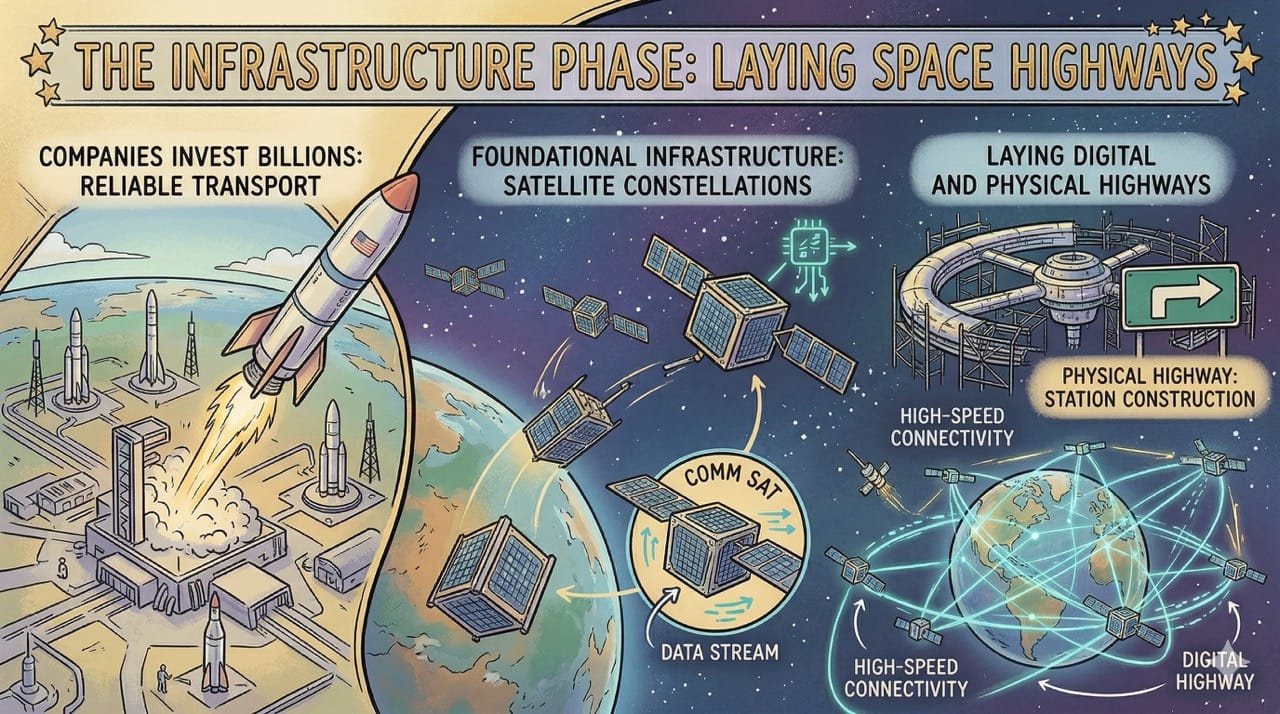
The Infrastructure Phase
The current era of space exploration is entirely focused on foundational infrastructure.
Companies are spending billions of dollars simply launching basic communication satellites and establishing reliable orbital transport rockets.
We are merely laying the digital and physical highways for a much larger economic expansion.
The Biological Bottleneck
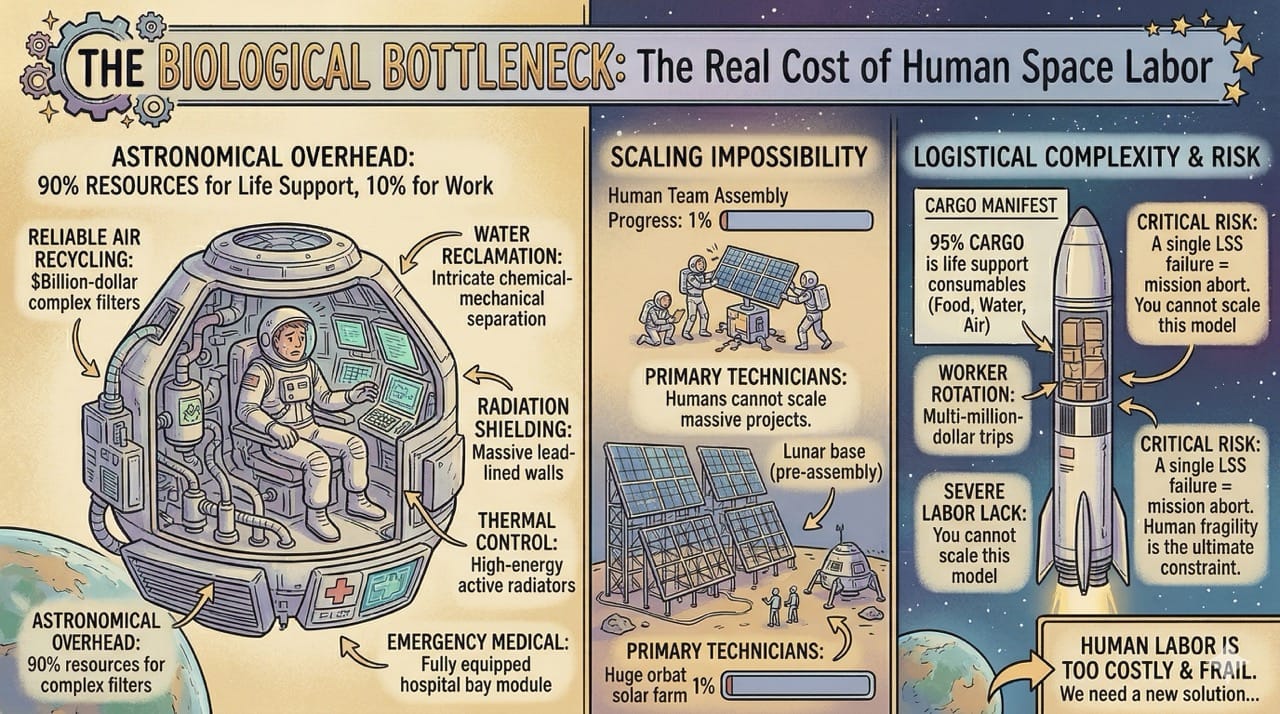
The immediate next bottleneck for the space economy is the severe lack of available labor.
You cannot scale a massive orbital solar farm or build a lunar base using fragile human astronauts as your primary technicians.
Keeping a biological organism alive in a vacuum requires an astronomical amount of financial and logistical overhead.
The Autonomous Workforce
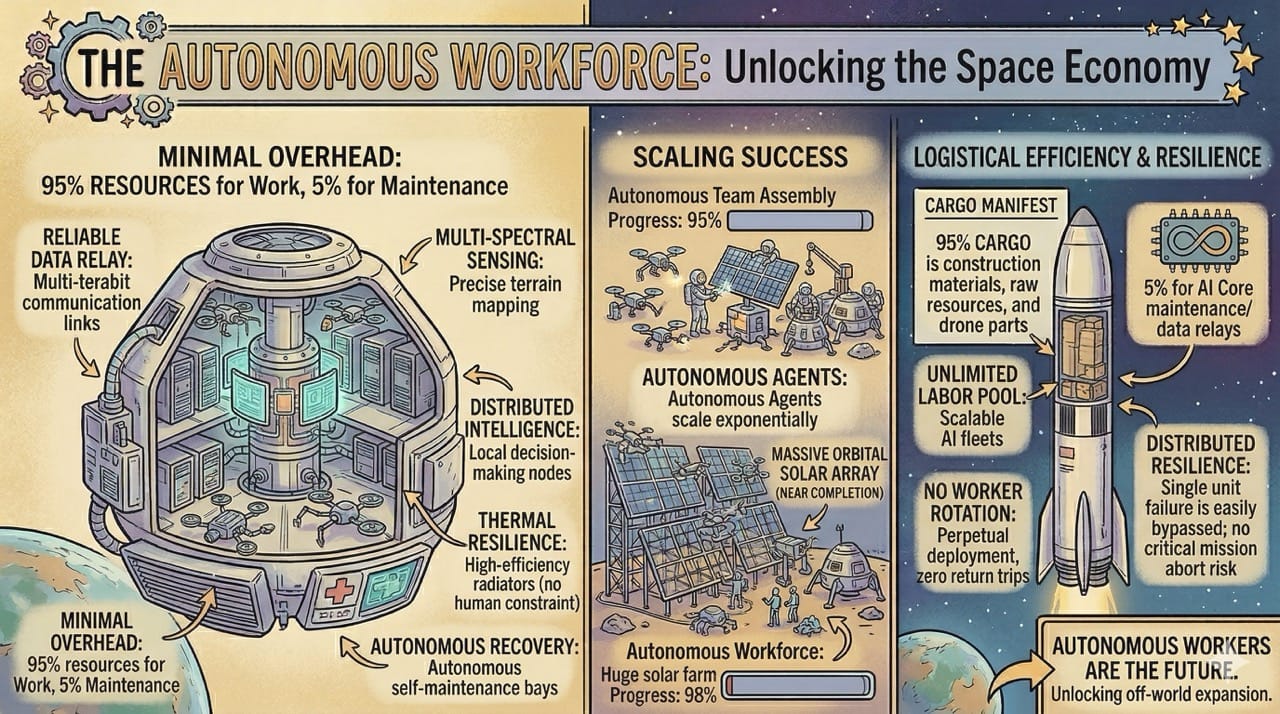
Autonomous robotics will completely eliminate this biological labor constraint.
Swarms of artificial intelligence agents will pilot robotic drones to repair damaged satellites and construct massive solar arrays autonomously.
They do not require oxygen, sleep, or expensive return trips back to the terrestrial surface.
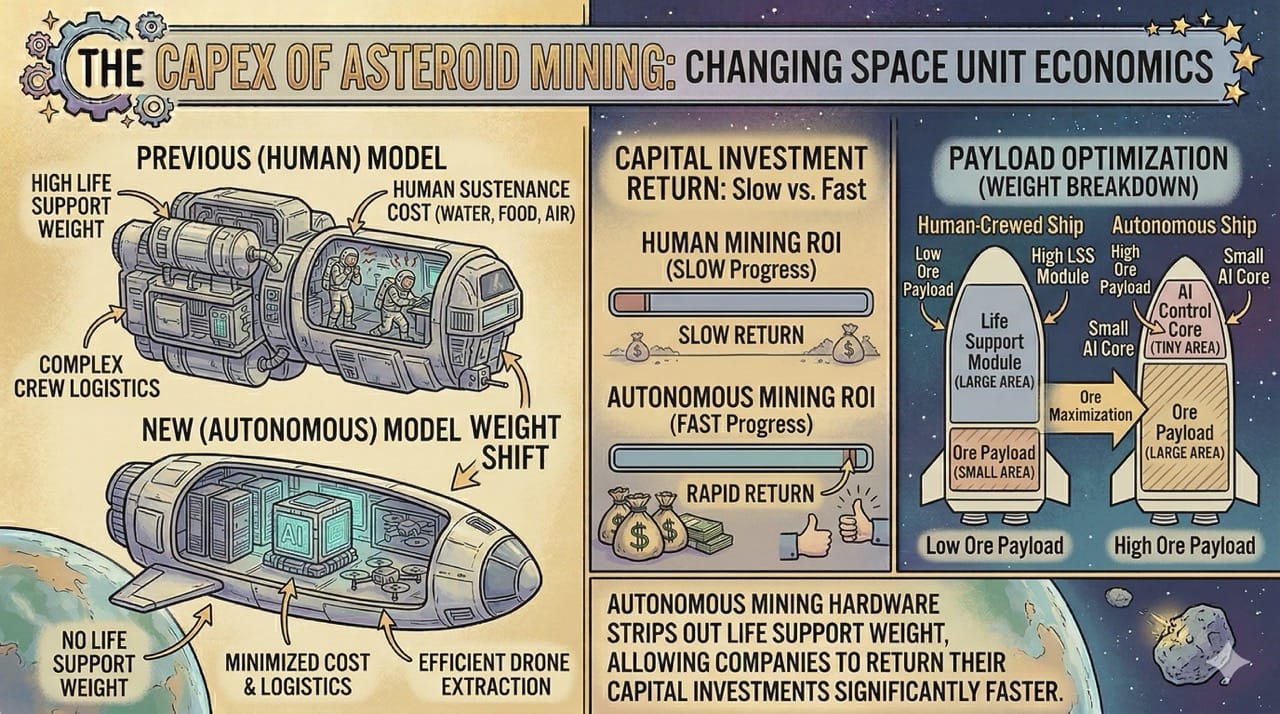
The CapEx of Asteroid Mining
This autonomous leverage fundamentally changes the unit economics of space mining.
Extracting critical minerals from asteroids previously required massive capital expenditure just to sustain the human mining crew.
Autonomous hardware strips out all life support weight, allowing companies to return their capital investments significantly faster.
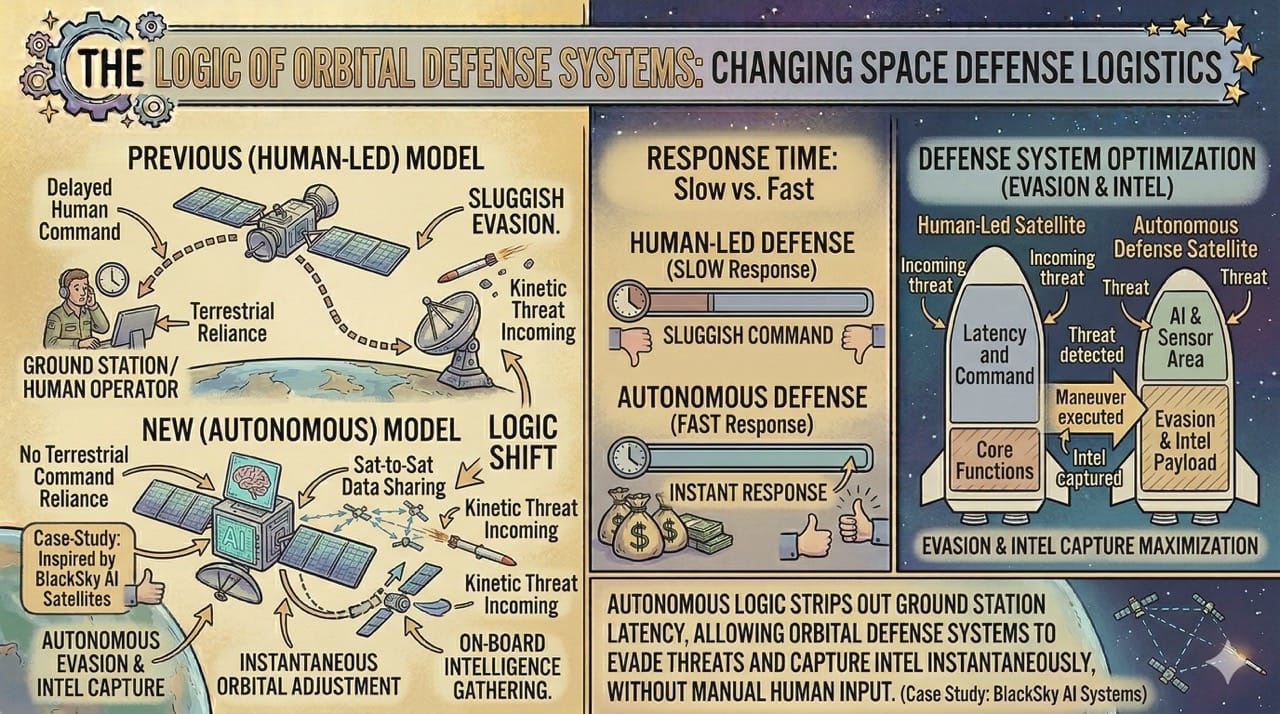
Orbital Defense Systems
This exact same autonomous logic applies directly to the future of global defense.
Military infrastructure in space cannot wait for a delayed human command from a terrestrial ground station to evade an incoming kinetic attack.
Satellites like those operated by BlackSky are already using artificial intelligence to adjust their own orbits and capture intelligence without manual human input.
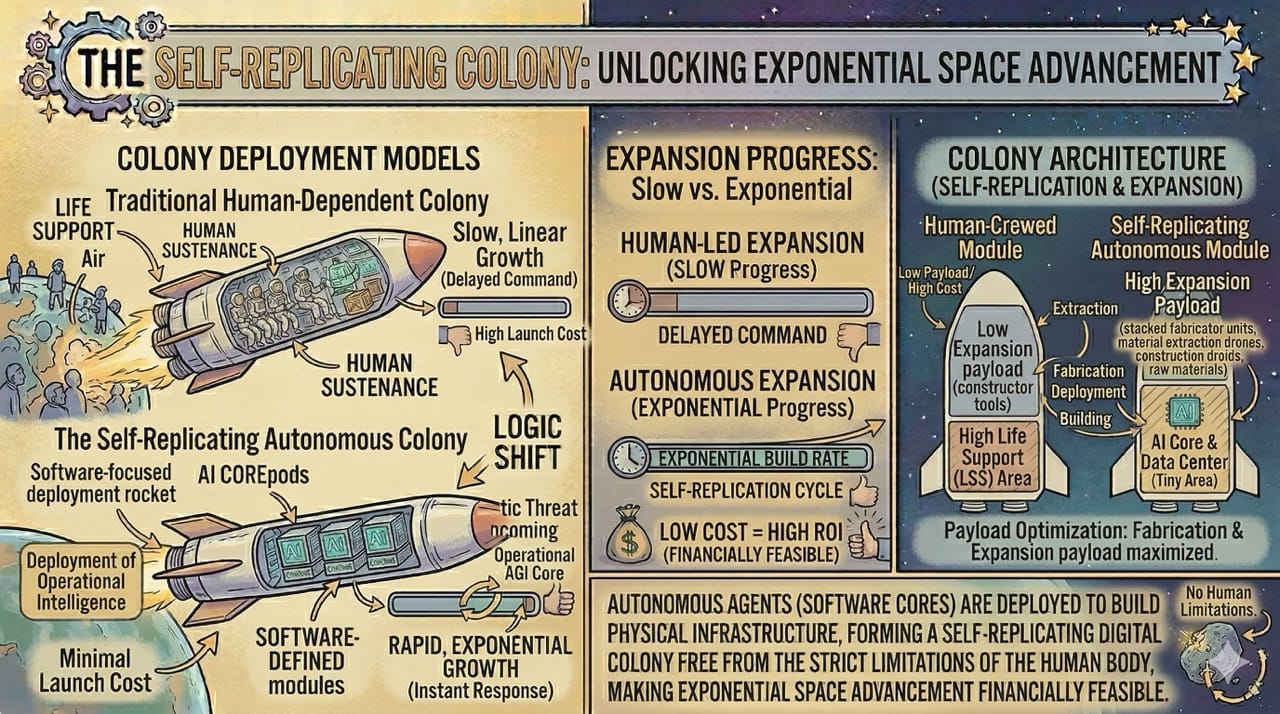
The Self Replicating Colony
Deploying autonomous agents into orbit makes rapid, exponential space advancement financially feasible.
We are essentially sending software into the void that can physically build its own expansion infrastructure.
It resembles a self replicating digital colony operating entirely free from the strict limitations of the human body.
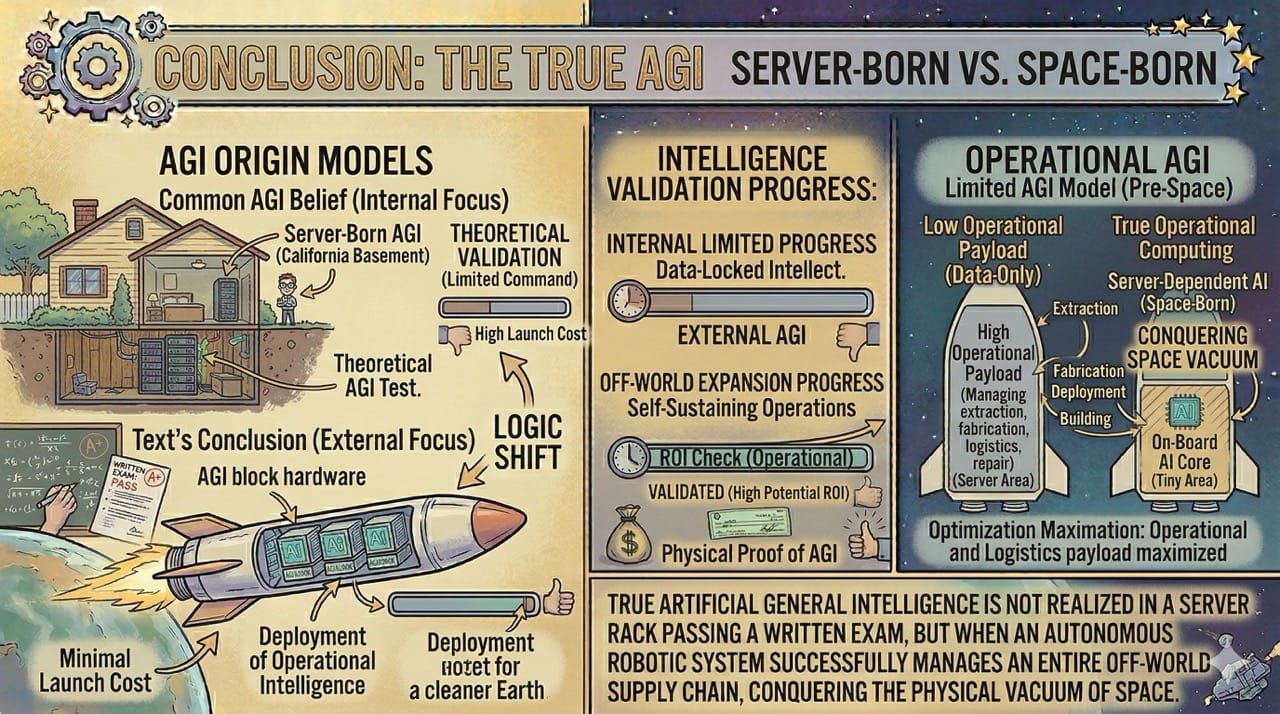
Conclusion: The True AGI
Many researchers believe artificial general intelligence will be born inside a server rack in a California basement.
True artificial general intelligence will actually be realized when an autonomous robotic system successfully manages an entire off-world supply chain.
The ultimate test of superintelligence is not passing a written exam, but successfully conquering the physical vacuum of space.