Why Apple Vision Pro Failed: It’s Not the Price, It’s the Signaling
Rory Sutherland argues that early adoption is about signaling. The problem with the Vision Pro isn't that it costs $3,500; it’s that wearing it signals "isolation" rather than "status."

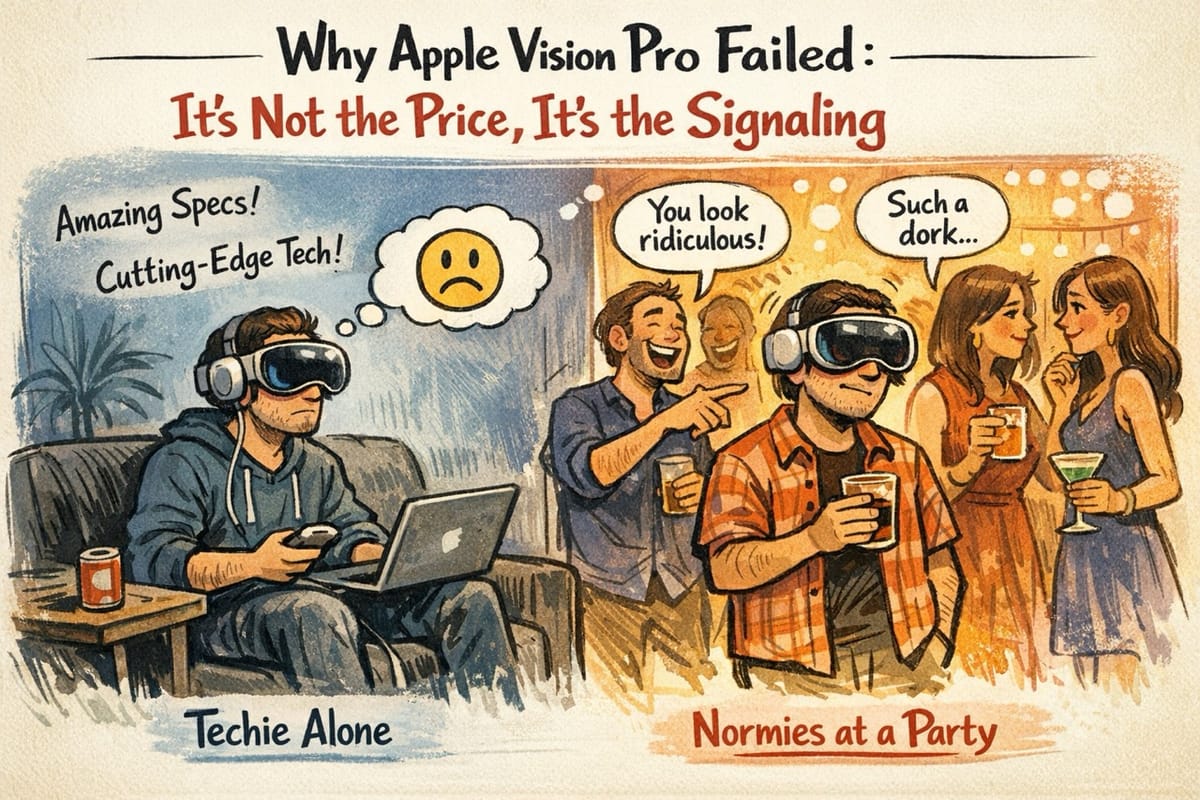
Techies didn't buy it because the specs didn't match the price. Normies didn't buy it because you can't wear it to a party without looking like a dork.
Inspiration: Watching Rory Sutherland explain (around the 41-minute mark) that technology adoption is fundamentally about social signaling, and realizing Apple missed the most important signal of all.
The Apple Vision Pro is a technical marvel. The screens are incredible. The eye-tracking is magic.
And yet, it failed.
Why? Rory Sutherland gives us the answer: Signaling.
Early adoption is rarely about utility. It is about signaling. You buy a Tesla to signal you are eco-conscious and futuristic. You buy a Birkin bag to signal status.
The Vision Pro signals that you are... alone.
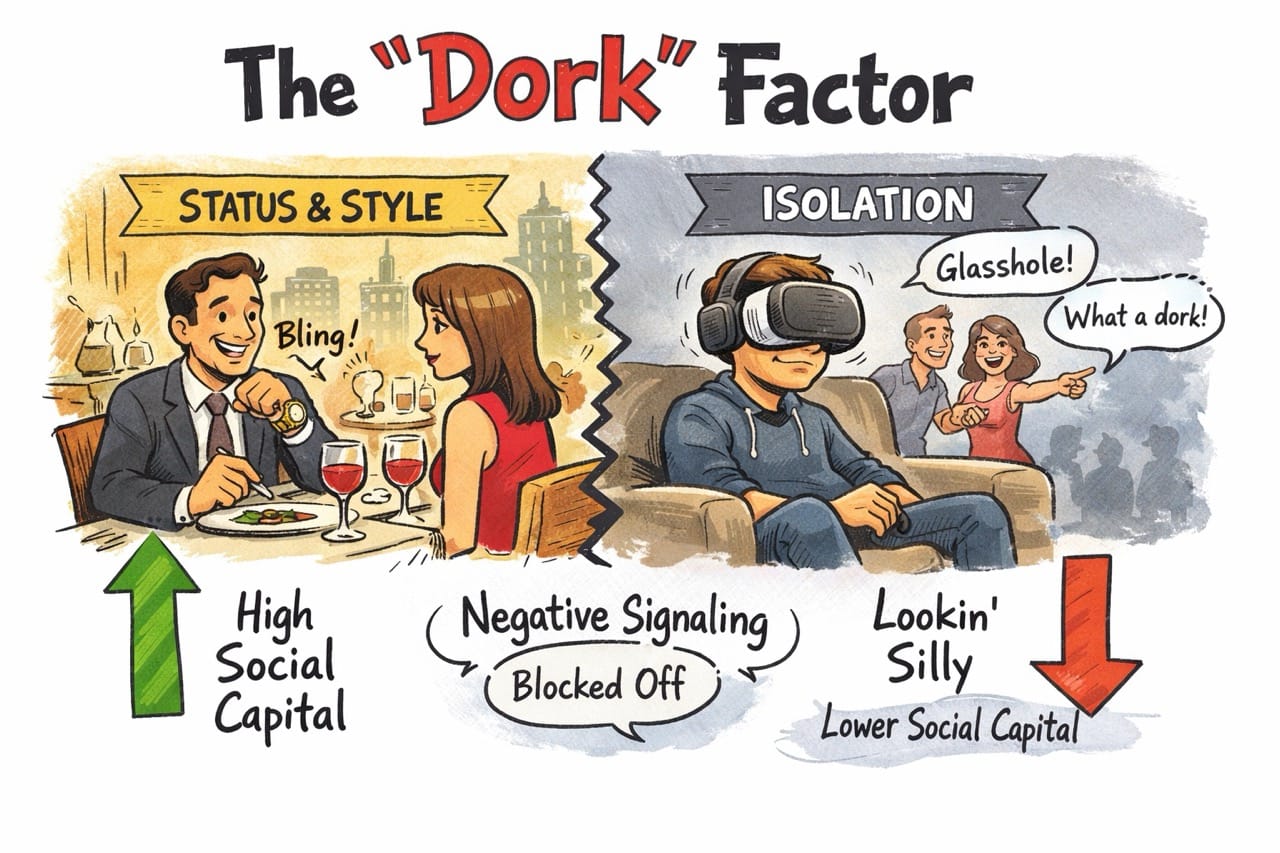
The "Dork" Factor
Status symbols must be visible and desirable.
If I buy a $3,500 watch, I wear it to dinner. People see it. It enhances my social standing. If I buy a $3,500 headset, I wear it alone in my living room. If I wear it in public, I don't look rich; I look like a "Glasshole."
It isolates the user. It creates a barrier between you and the world. That is Negative Signaling. You are paying $3,500 to lower your social capital.
The Missing "Inferior" Model
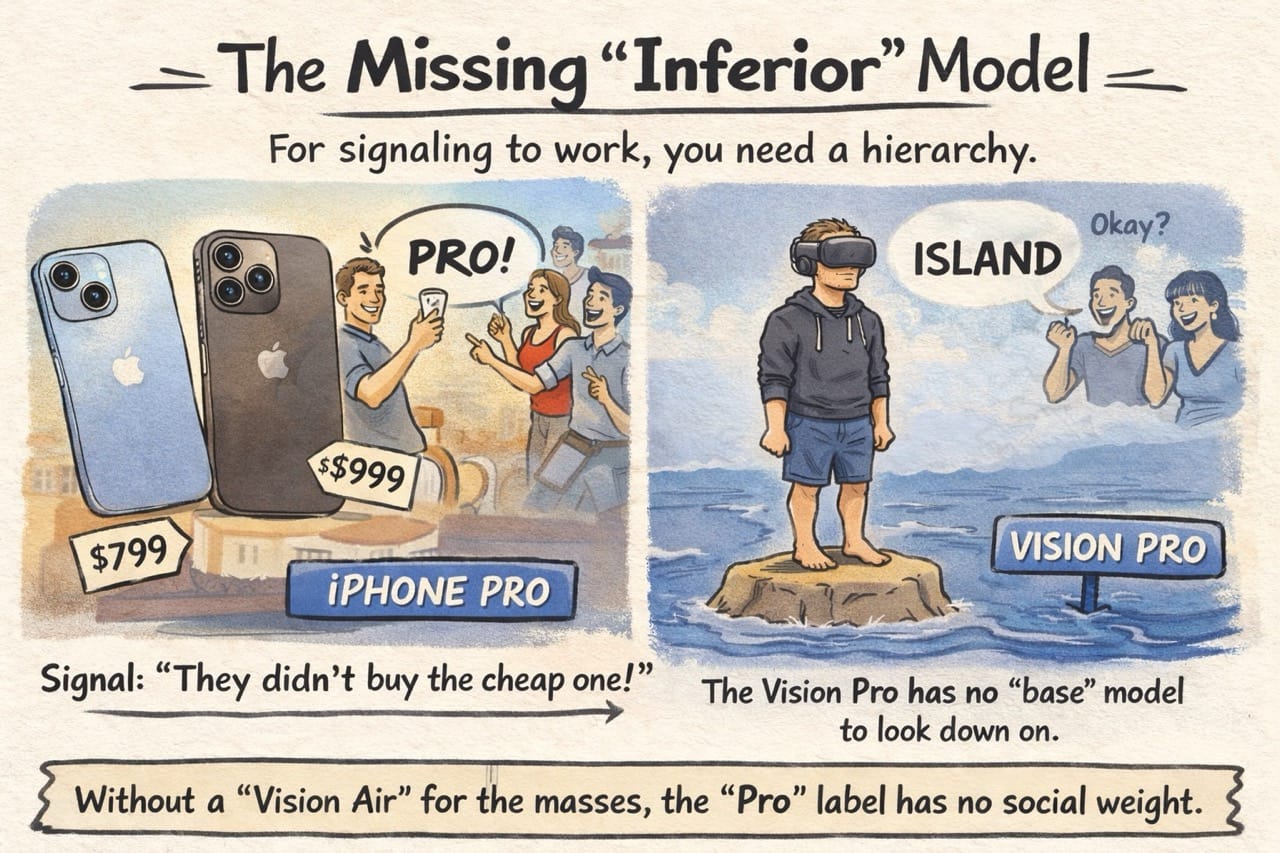
For signaling to work, you need a hierarchy.
This is why the iPhone Pro sells so well. Most people don't need the Pro camera. But they buy it because it signals they didn't buy the "base" model. The existence of the cheaper iPhone makes the expensive one a status symbol.
The Vision Pro has no "base" model to look down on. It is an island. Without a "Vision Air" for the masses, the "Pro" label has no social weight.
The Palmer Luckey Critique (R&D Dump)
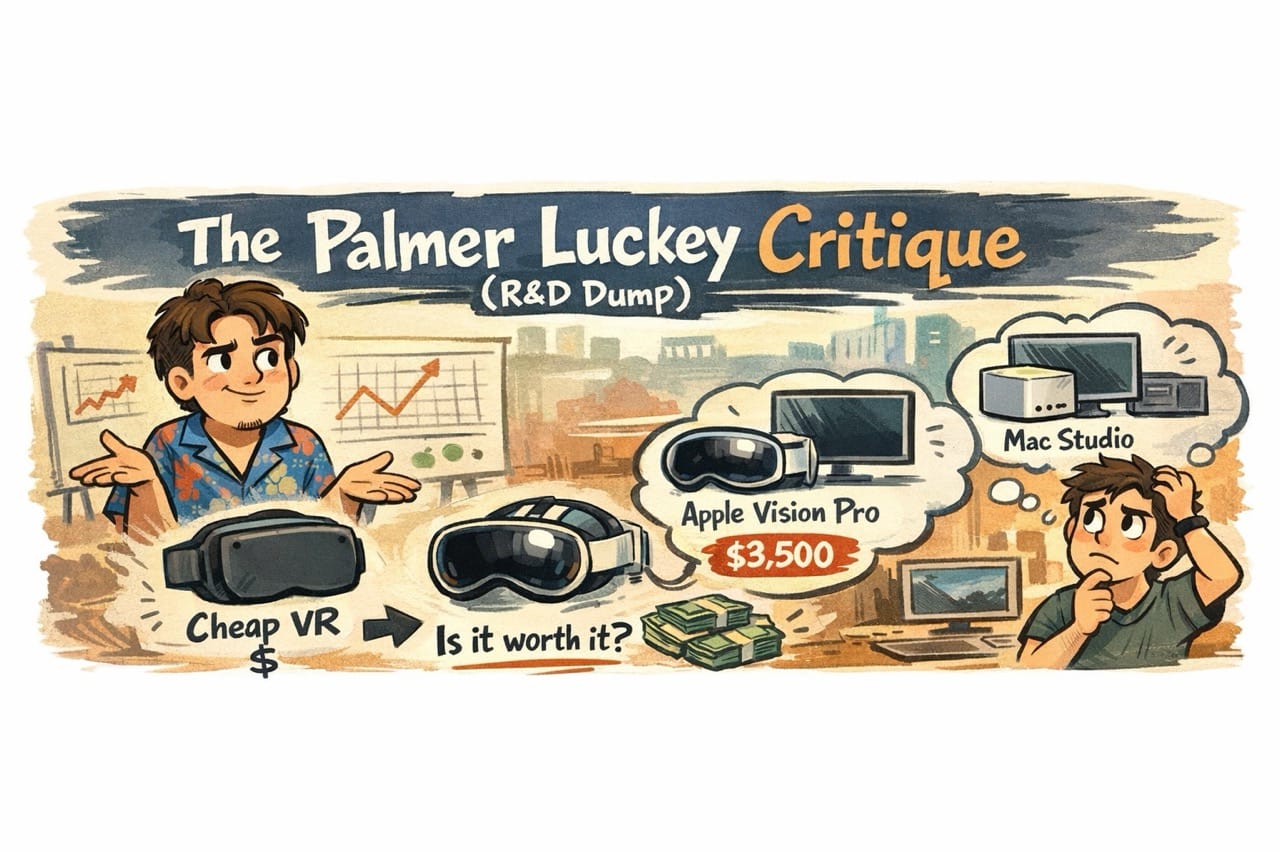
Palmer Luckey (founder of Oculus) noted that making a headset cheaper doesn't automatically make it sell better (the Quest is cheap, but retention is still an issue).
But Apple went the other way. They tried to push the entire R&D cost onto the consumer. They built a "Dev Kit" and sold it as a consumer product.
Techies—the usual early adopters—did the math. For $3,500, they could buy a maxed-out Mac Studio and a nice monitor. The utility didn't justify the spend.
Conclusion: It’s Not a Product (Yet)
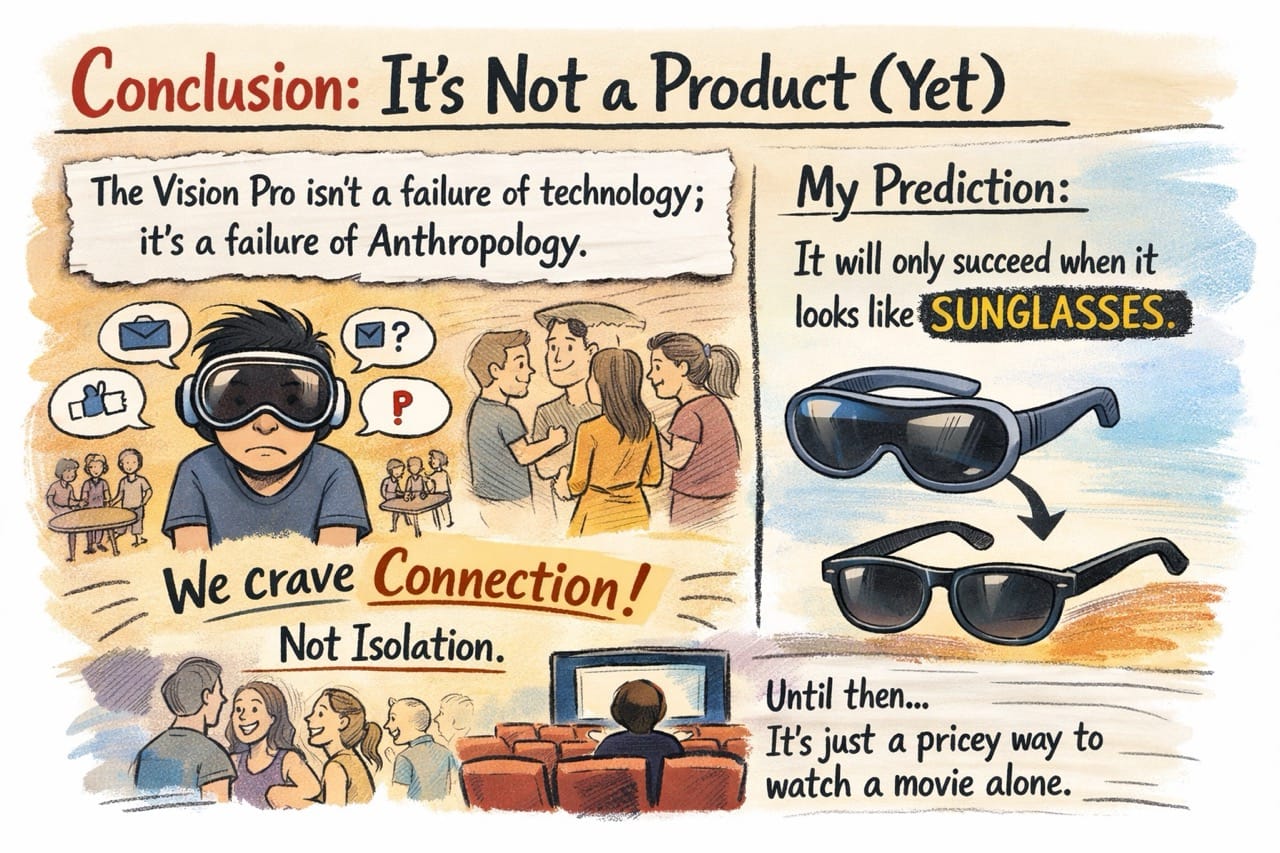
The Vision Pro isn't a failure of technology; it’s a failure of Anthropology.
Humans are social animals. We crave connection. A device that covers your eyes—the primary window of human connection—starts with a massive sociological handicap.
My Prediction: The Vision Pro will only succeed when it looks like sunglasses (wink wink, Meta). This thesis is supported by Rory Sutherland as well, as he too mentioned that Mark might be right about the form factor.
Until then, it’s just a very expensive way to watch a movie alone.