Why AMC's The Walking Dead Spinoffs Fail on Social Media
Entertainment studios mistakenly believe that a massive historical follower count guarantees an audience for new projects. In reality, modern social media algorithms actively suppress legacy franchises unless they are rescued by organic meme culture.

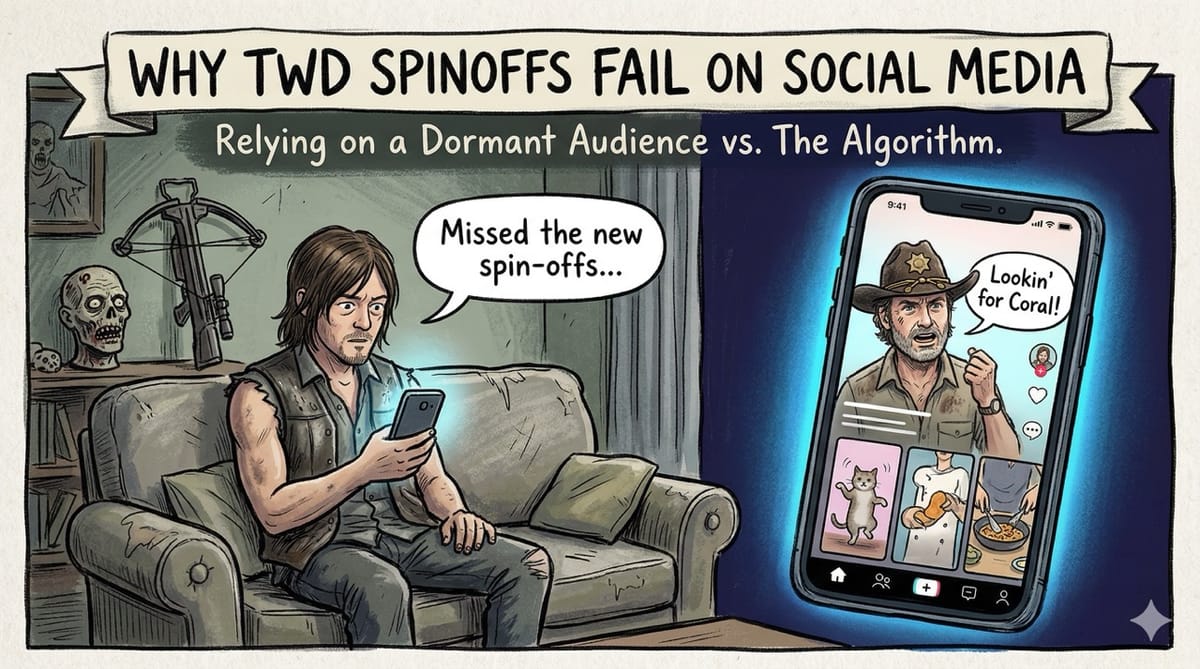
Relying on a dormant audience is a fatal marketing flaw. The algorithm only cares about your current digital diet, completely ignoring your past fandom.
Inspiration: Realizing that as a massive, chronically online fan of The Walking Dead, I completely missed the new spin-offs. I only discovered them because random creators doing viral impressions of Daryl Dixon and Rick Grimes penetrated my algorithm.
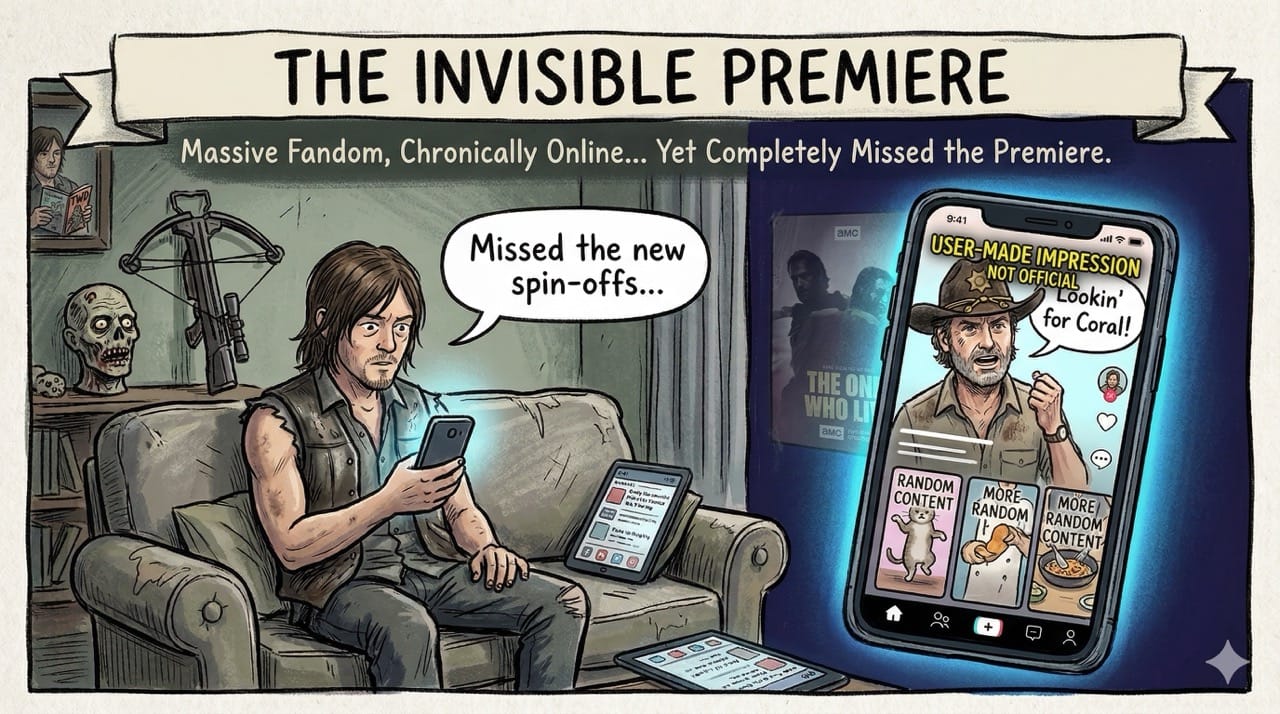
The Invisible Premiere
It is entirely possible to be a massive fan of a television franchise and completely miss a new premiere.
You can be chronically online and never see a single piece of promotional material.
This happens because legacy networks like AMC fundamentally misunderstand modern content distribution.
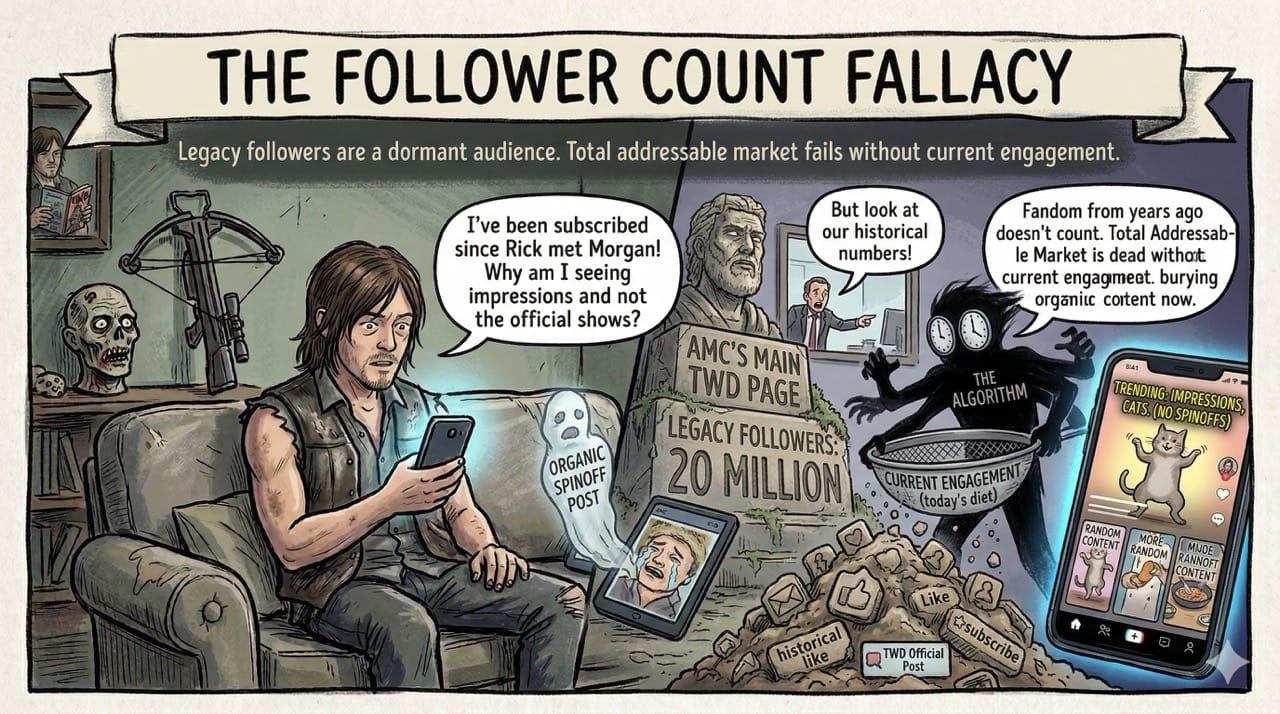
The Follower Count Fallacy
AMC relies heavily on the main social media pages of The Walking Dead to launch their new character spin-offs.
They assume that having millions of legacy followers automatically translates to massive, immediate reach.
This is a catastrophic miscalculation of how total addressable market actually functions online.
If a user has not actively liked or shared a post from that specific page recently, the algorithm assumes they no longer care.
It actively suppresses the studio's organic posts.
The platform prioritizes the content the user engages with today, completely burying their historical subscriptions.
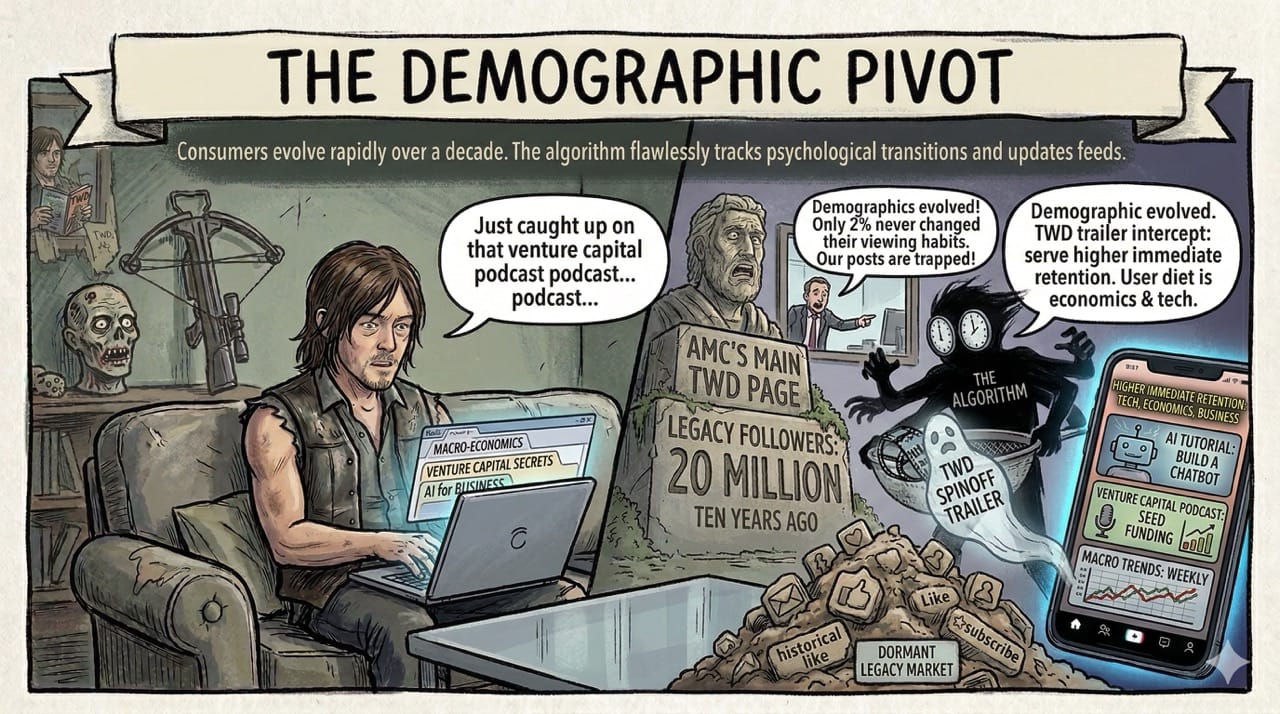
The Demographic Pivot
Consumers evolve rapidly over a decade.
A fan who obsessively watched zombie shows ten years ago might now exclusively consume content about economics, technology, and business strategy.
The algorithm flawlessly tracks this psychological transition and updates the feed accordingly.
When AMC posts a trailer to a dormant fan, the algorithm intercepts it.
It decides to serve the user an AI tutorial or a venture capital podcast instead because it generates higher immediate retention.
The studio ends up trapped in an algorithmic echo chamber, pitching only to the tiny fraction of fans who never changed their viewing habits.
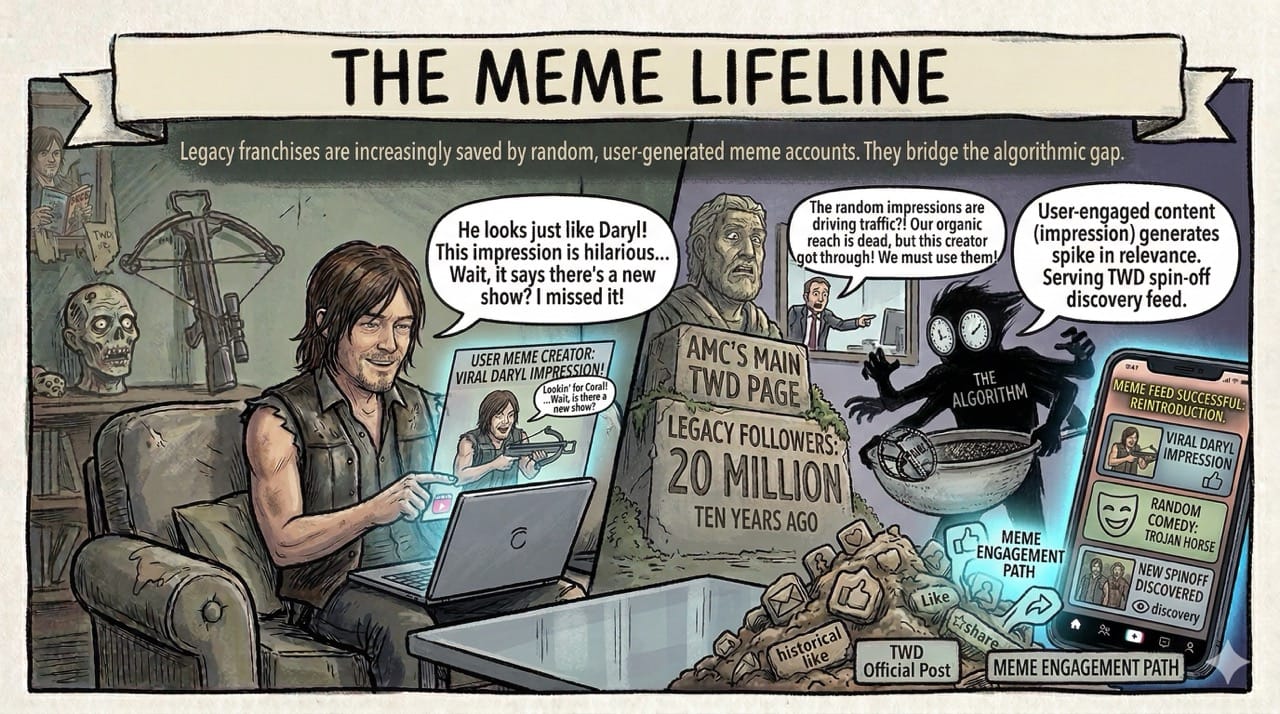
The Meme Lifeline
Corporate marketing rarely penetrates these evolved algorithm feeds. Instead, legacy franchises are increasingly saved by random, user-generated meme accounts.
A highly engaged professional might finally discover a new show solely because a comedic creator did a viral impression of Daryl Dixon.
These organic creators bridge the algorithmic gap.
They package the intellectual property in a format that easily bypasses rigid corporate filters.
They successfully reintroduce the franchise to dormant fans through the highly engaging Trojan horse of internet comedy.
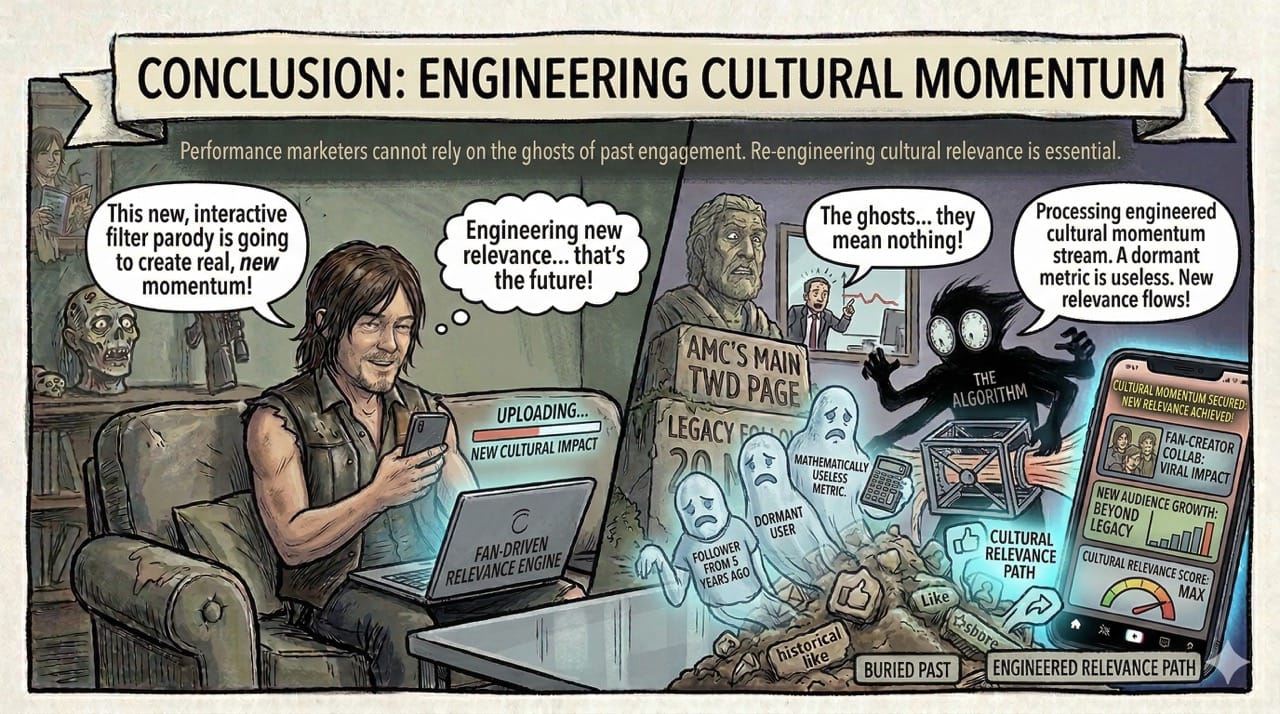
Conclusion: Engineering Cultural Momentum
Performance marketers cannot rely on the ghosts of past engagement.
A follower from five years ago is a mathematically useless metric.
If you want to expand your total addressable market, you must engineer new cultural relevance rather than endlessly recycling a dead audience.