Why Airbnb Should Incentivize Developers to Build More
We assume the biggest threat to Airbnb is competing hotel chains or travel aggregators. In reality, their ultimate survival depends entirely on incentivizing private real estate developers to build more physical housing.

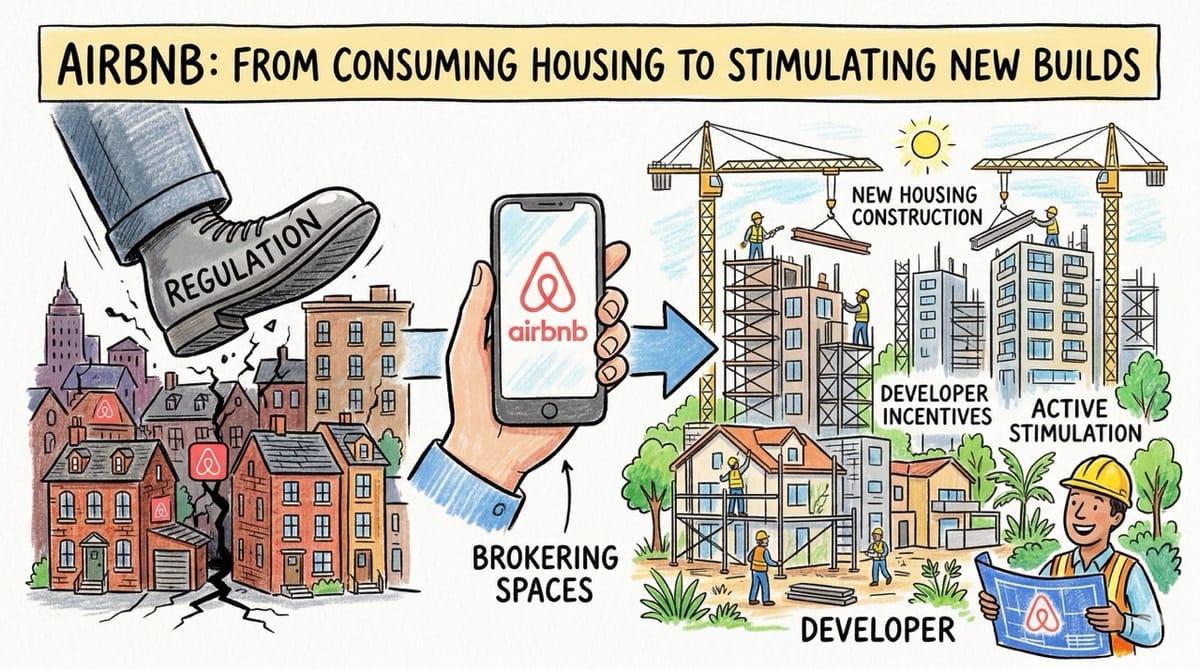
The platform is cannibalizing the housing market it relies on. To avoid regulatory extinction, they must transition from just brokering spaces to actively stimulating new construction.
Inspiration: Listening to the founding story of Brian Chesky and Joe Gebbia. Realizing that a software company must eventually manipulate the physical world to sustain its hyper-growth and protect its political standing.
The Structural Flaw
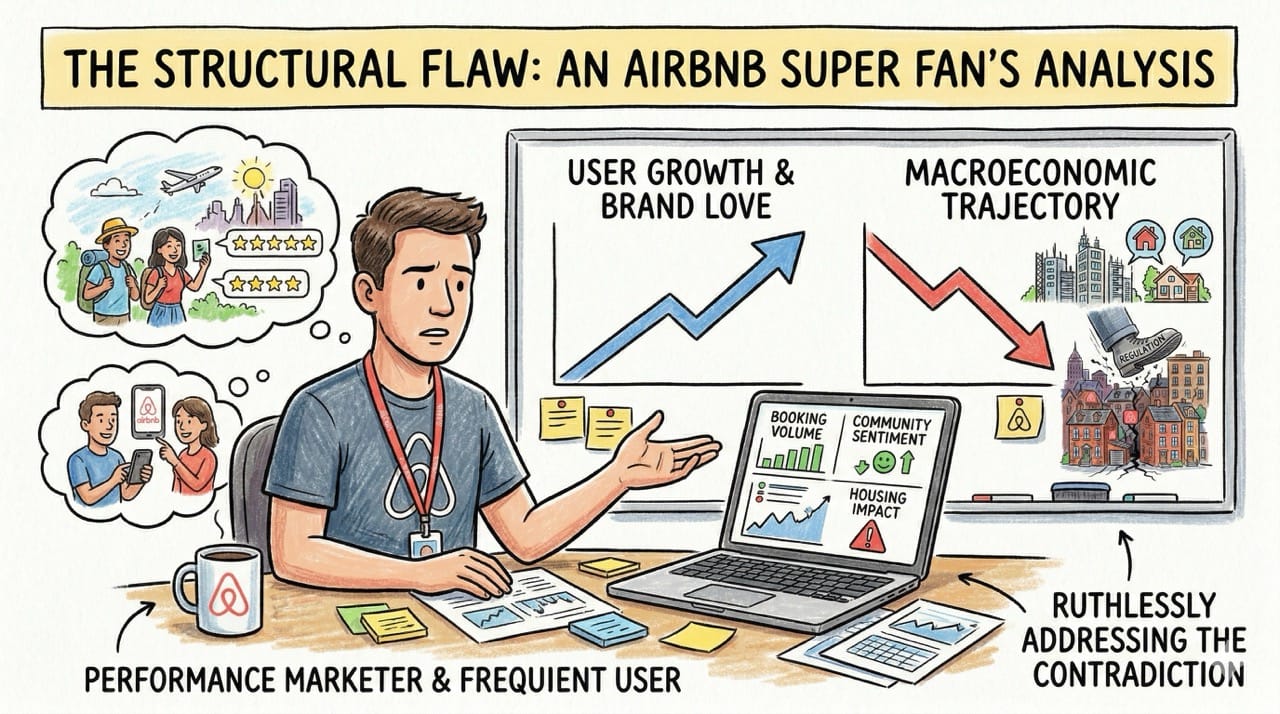
Alright, whoa, a performance marketer talking about Airbnb business strategies and physical construction?
I genuinely love the brand, use the product frequently, and want to see it continue to grow globally.
However, we must ruthlessly address the massive structural flaw in their current macroeconomic trajectory.
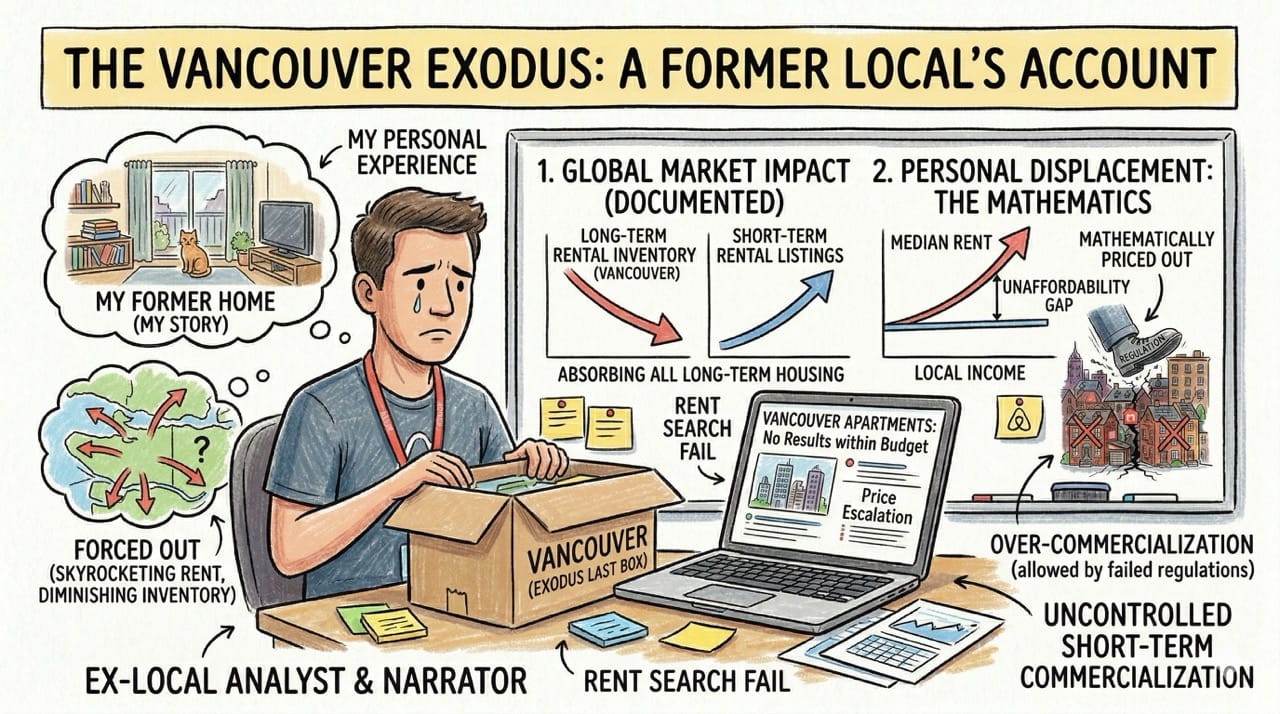
The Vancouver Exodus
The platform has a severe, documented impact on local rental markets across the globe.
I experienced this firsthand when skyrocketing rent prices and diminishing inventory completely drove me out of Vancouver.
When short term rentals absorb all the long term housing, the local population gets mathematically priced out of their own city.
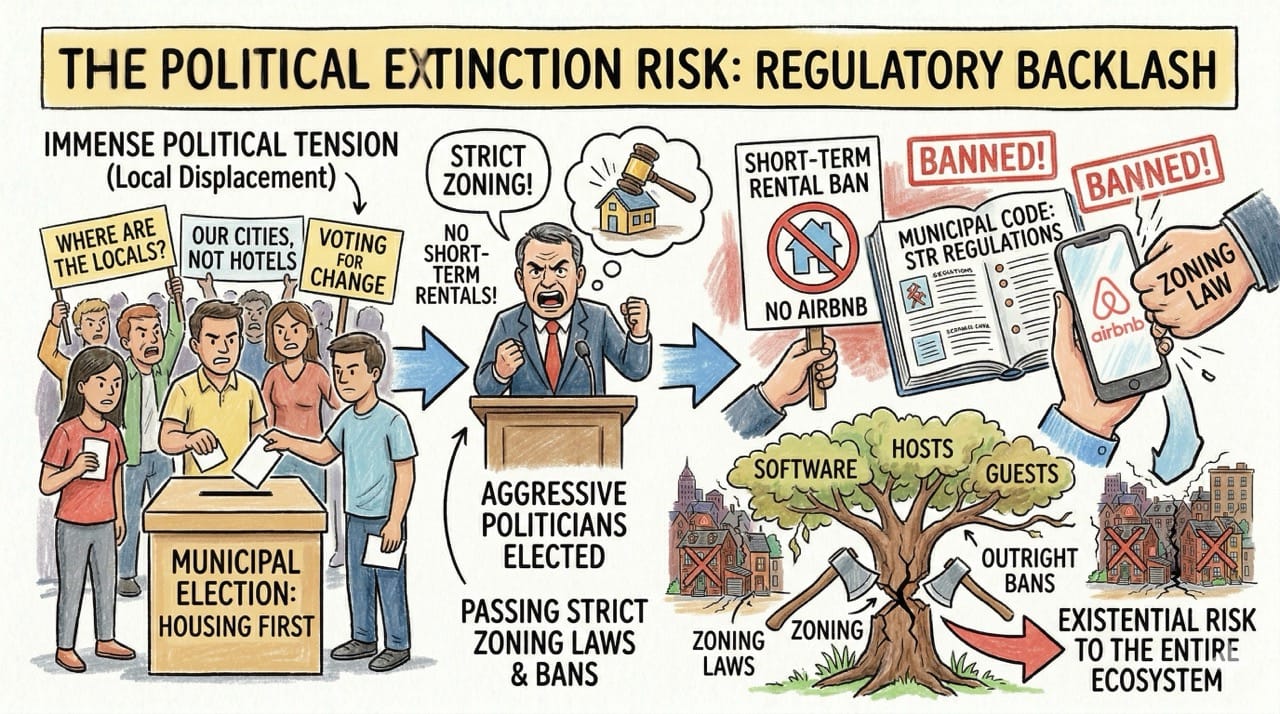
The Political Extinction Risk
This housing displacement creates immense political tension at the municipal level.
Angry locals vote for aggressive politicians who immediately pass strict zoning laws and outright bans on short term rentals.
This predictable regulatory backlash is currently the single biggest existential risk to the entire Airbnb ecosystem.
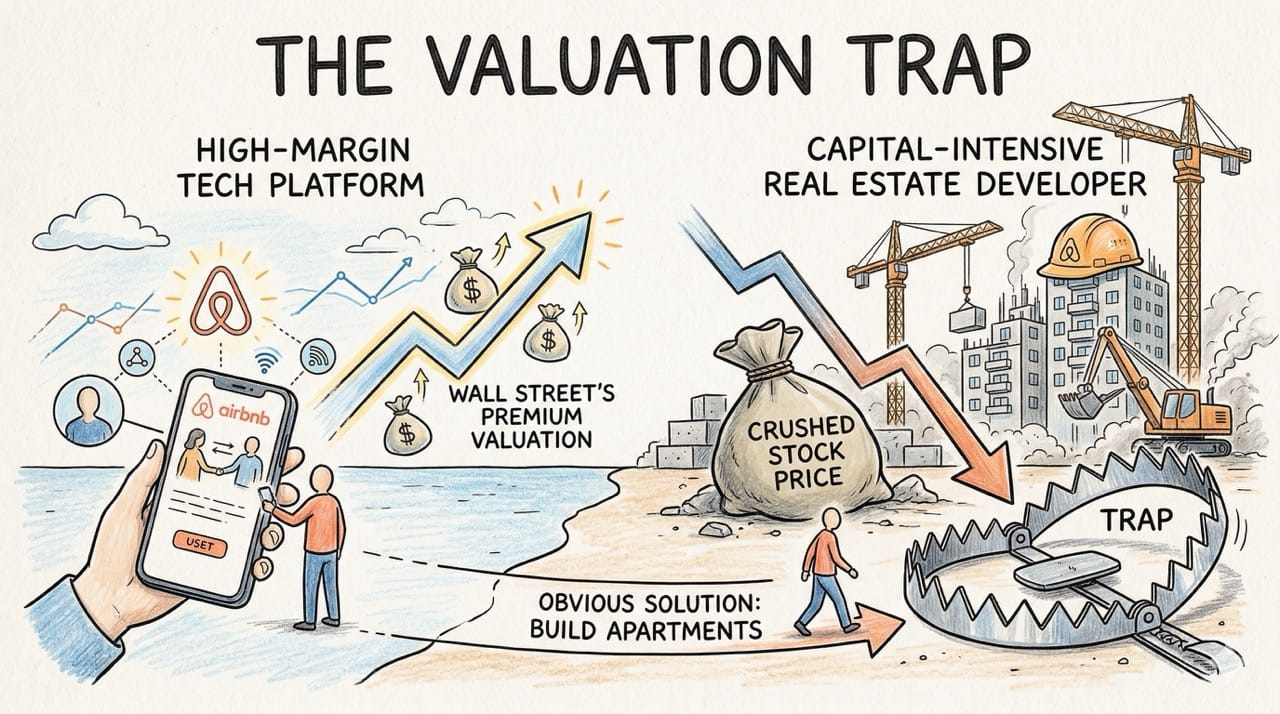
The Valuation Trap
The most obvious solution is for Airbnb to simply build their own massive apartment complexes.
However, executing that strategy would completely destroy their asset light business model and crush their stock price.
Wall Street values them at a premium precisely because they are a high margin technology platform, not a capital intensive real estate developer.
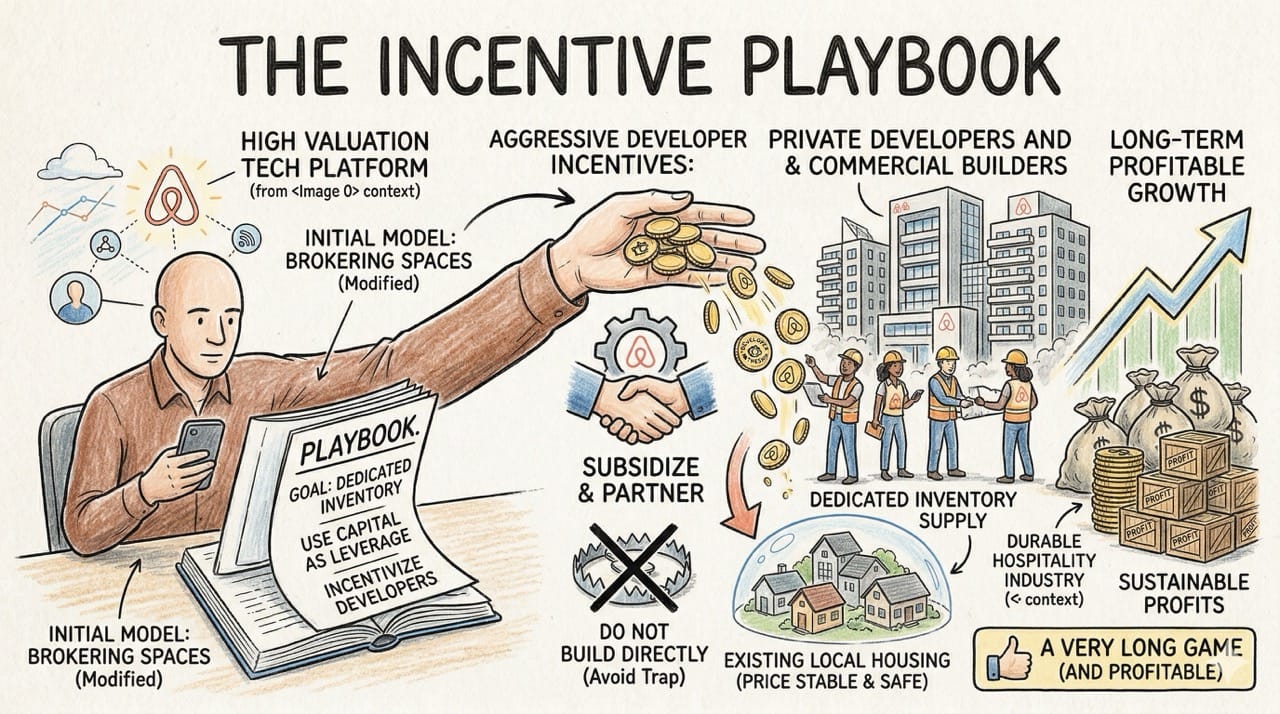
The Incentive Playbook
Instead of building properties directly, Airbnb needs to aggressively incentivize private developers to build more dedicated inventory.
By subsidizing or partnering with commercial builders, they can create new supply without inflating existing local housing prices.
The hospitality industry is incredibly durable, meaning Airbnb can afford to play a very long and profitable game here.
Demographic Blueprints
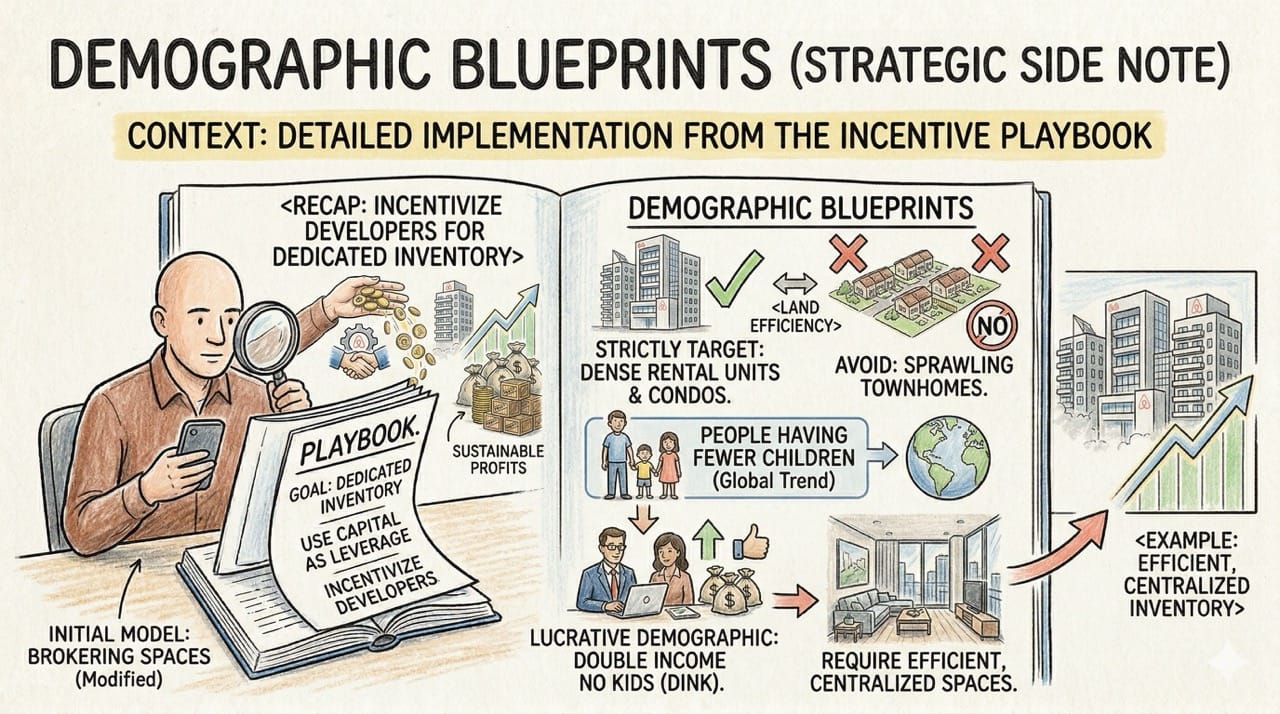
As a strategic side note, these construction incentives should strictly target dense rental units and condos rather than sprawling townhomes.
This aligns perfectly with current global demographic shifts.
People are having fewer children, and the highly lucrative demographic of double income no kids requires efficient, centralized spaces.
The Macro Hub Strategy
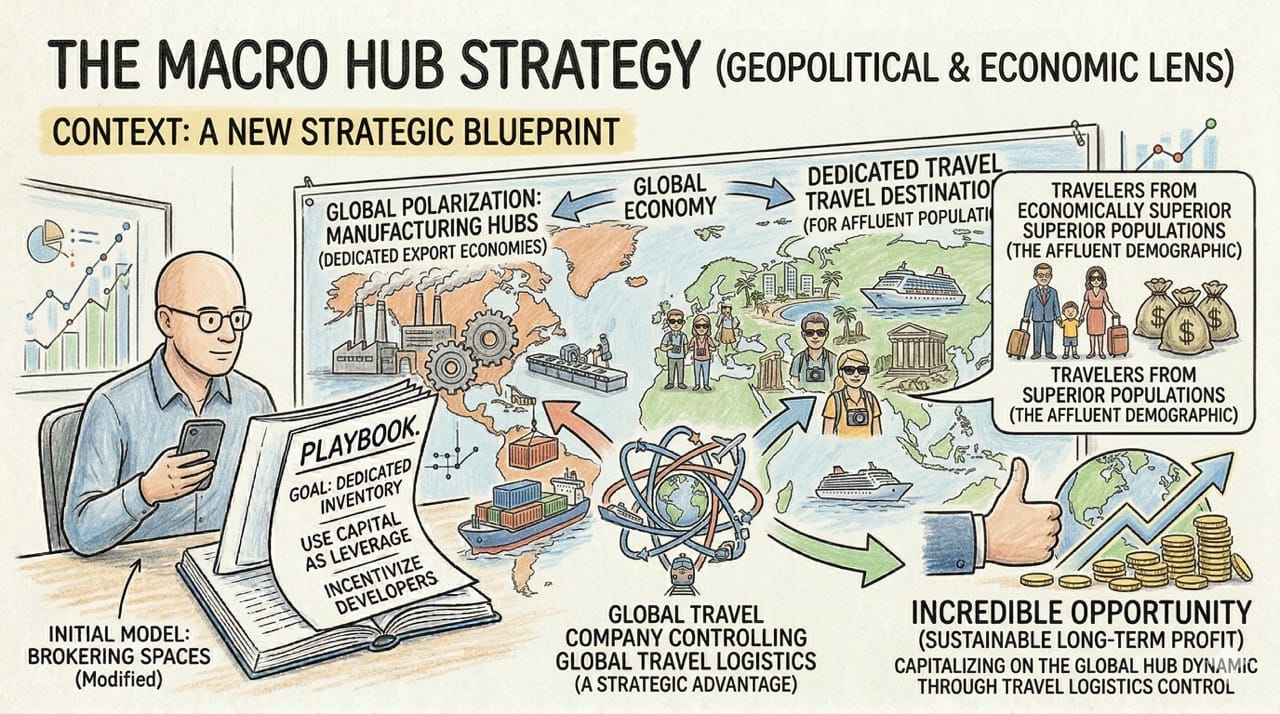
We must also view this through a broader geopolitical and economic lens.
The global economy is polarizing nations into either pure manufacturing hubs or dedicated travel destinations for economically superior populations.
This dynamic presents an incredible opportunity for a company that controls global travel logistics.
Conclusion: Pursuing the Meaningful
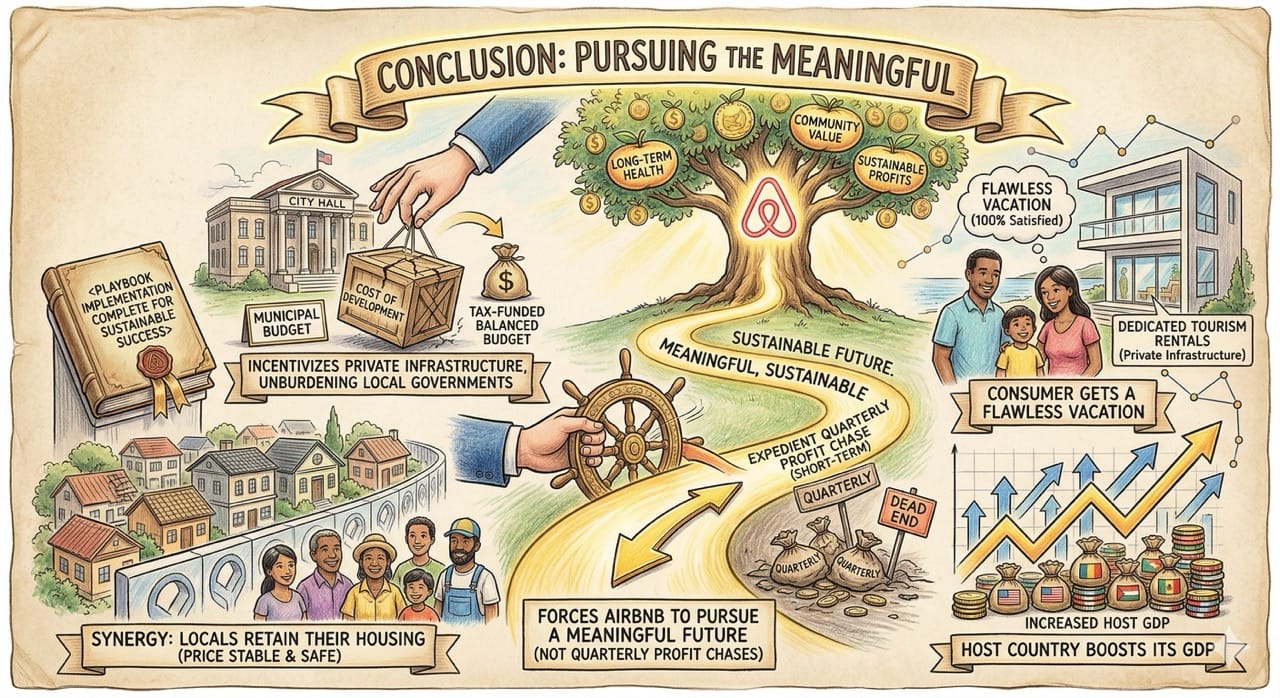
Incentivizing private tourism infrastructure lifts the heavy financial burden of development off local governments.
It creates a perfect synergy where the local population retains their housing, the host country boosts its GDP, and the consumer gets a flawless vacation.
Most importantly, it forces Airbnb to pursue a meaningful, sustainable future rather than just chasing an expedient quarterly profit.