Vietnam: The Booming Economy of the Next Century
In 1975, Vietnam was one of the poorest nations on earth. Today, it is the new factory of the world. Here is how they used free trade and math scores to beat their neighbors.

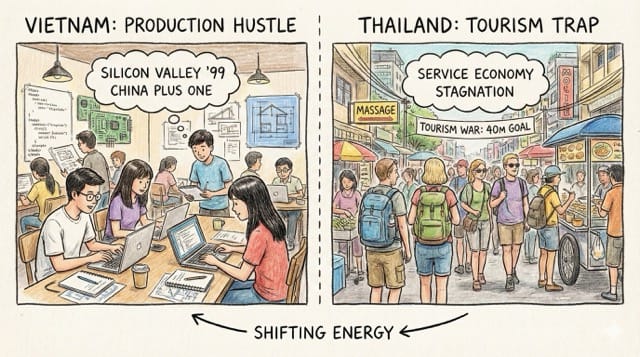
While its neighbors are fighting stagnation, tourism traps, or demographic collapse, Vietnam is quietly becoming the factory—and the code—of the future.
Inspiration: My recent trip to Vietnam, seeing young developers coding in cafes while Thai streets were packed with tourists.
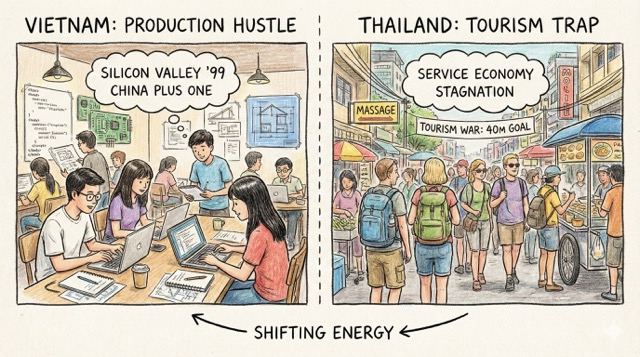
Walking through Ho Chi Minh City feels different than Bangkok.
In Thailand, the energy is directed at service: massage parlors, hotels, street food. It’s a “hospitality” economy.
In Vietnam, the energy is directed at production. You see young people studying code, engineering blueprints on tables, and a hustle culture that feels like Silicon Valley in 1999.
Thailand is stuck in the “Tourism Trap.” They are fighting a “Tourism War” (aiming for 40M visitors) while their industrial base stagnates.
Vietnam is playing a different game: they are building the “China Plus One” supply chain.
The Cultural Superpower: Pragmatism (The “Nguyen” Factor)
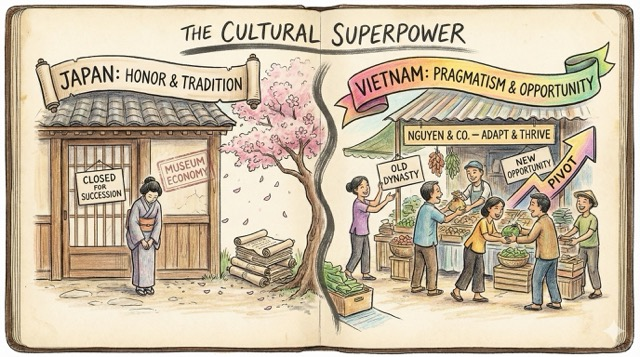
Let’s talk about Japan for a second. Japan is a “Museum Economy.”
99% of businesses are SMEs, and they are dying because of a “Succession Crisis.” Owners would rather close a profitable business than sell it to an “outsider” or tarnish the family lineage. It is Honor over Profit.
Now, look at Vietnam. Consider the name “Nguyen.” 40% of the country has this last name.
Why? Not because they are all related. But because throughout history, Vietnamese people changed their names to align with the ruling dynasty (the Nguyen Dynasty) to avoid persecution or gain favor.
This isn’t “selling out”; it’s Survival Pragmatism.
The Vietnamese culture is willing to adapt, rebrand, and pivot instantly to survive and thrive. While Japan clings to tradition, Vietnam clings to opportunity.
The “Paper Tiger” Neighbors
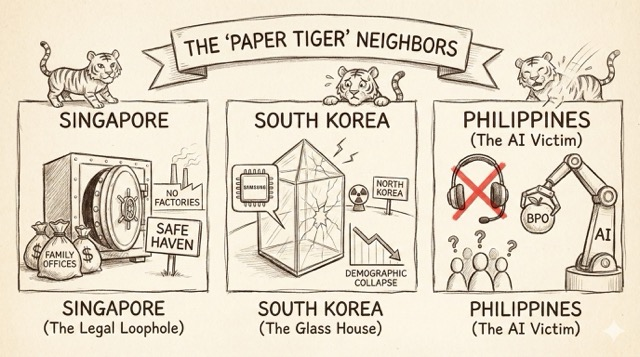
Singapore (The Legal Loophole): Singapore is lovely. But let’s be honest: it’s a bank, not a factory. It attracts wealth (Family Offices), but it doesn’t create raw value. It’s a “safe haven” for capital, not an engine of growth for the masses.
South Korea (The Glass House): They are taking their dominance (Samsung chips, nuclear tech) for granted. They sit next to a nuclear powder keg (North Korea) and face demographic collapse faster than anyone. They are optimizing the penthouse while the foundation cracks.
Philippines (The AI Victim): The economy is healthy now, fueled by BPO (Call Centers). But this is the “low-hanging fruit” for AI automation. In 5 years, AI agents will wipe out that sector. Vietnam’s manufacturing and coding sectors are much harder to automate.
The Geopolitical Windfall
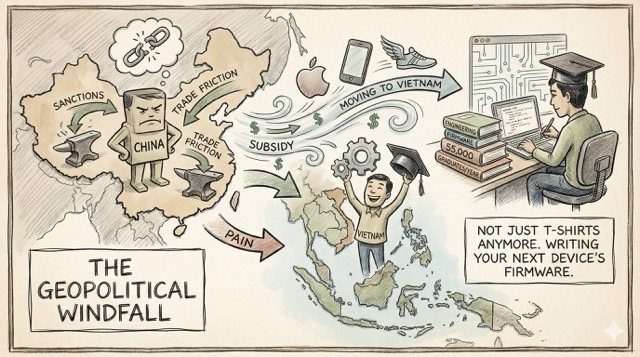
China is in a different weight class. But their pain is Vietnam’s gain.
Every sanction on China (and trade friction with India) is a direct subsidy to Vietnam. Apple, Samsung, and Nike aren’t moving to Thailand; they are moving to Vietnam.
And they aren’t just sewing t-shirts anymore. Vietnam produces over 55,000 engineering graduates a year. They are writing the firmware for your next device.
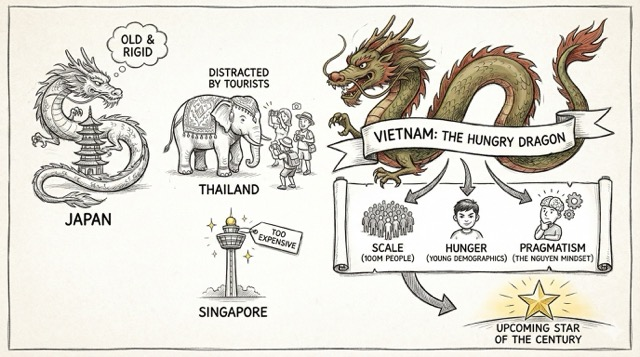
Conclusion: The Hungry Dragon
Japan is old and rigid. Thailand is distracted by tourists. Singapore is too expensive.
My Prediction: Vietnam is the only player in the region that combines Scale (100M people), Hunger (young demographics), and Pragmatism (The Nguyen Mindset).
They are the upcoming star of the century.
Part 2: Vietnam’s Insane Economic Boom: How a "Poor" Country Outsmarted the World
While the West turns to protectionism, Vietnam has become the most pro-trade nation on earth. The result? A GDP that is about to overtake Thailand.
Inspiration: Watching the TLDR News breakdown of Vietnam's growth and realizing that their "poverty" is a lagging indicator, while their "potential" is a leading one.
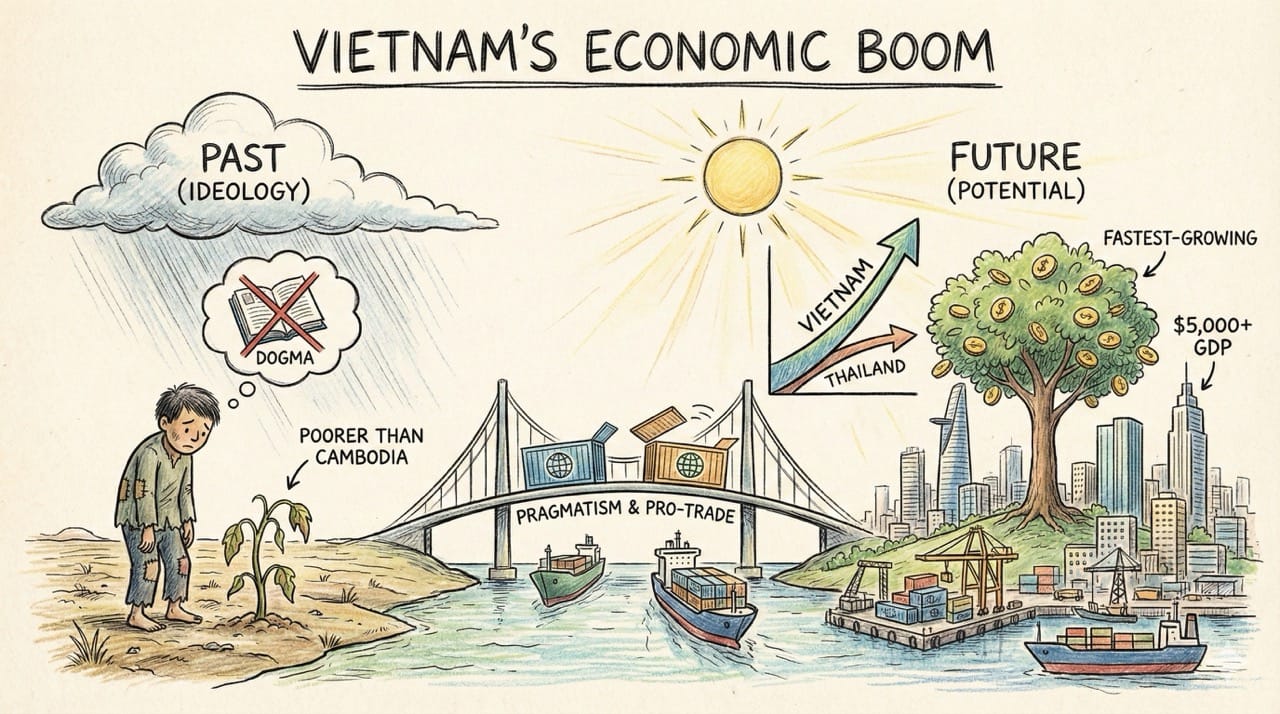
A few decades ago, Vietnam was poorer than Cambodia.
It had a GDP per capita of $84. It had to import food despite being an agrarian society. It was a failed state.
Today, it is the fastest-growing economy in Southeast Asia.
It has a GDP per capita of nearly $5,000. It is about to overtake Thailand.
How did they do it? They stopped being ideological and started being pragmatic.
1. The "Doi Moi" Pivot (Free Trade Extremism)
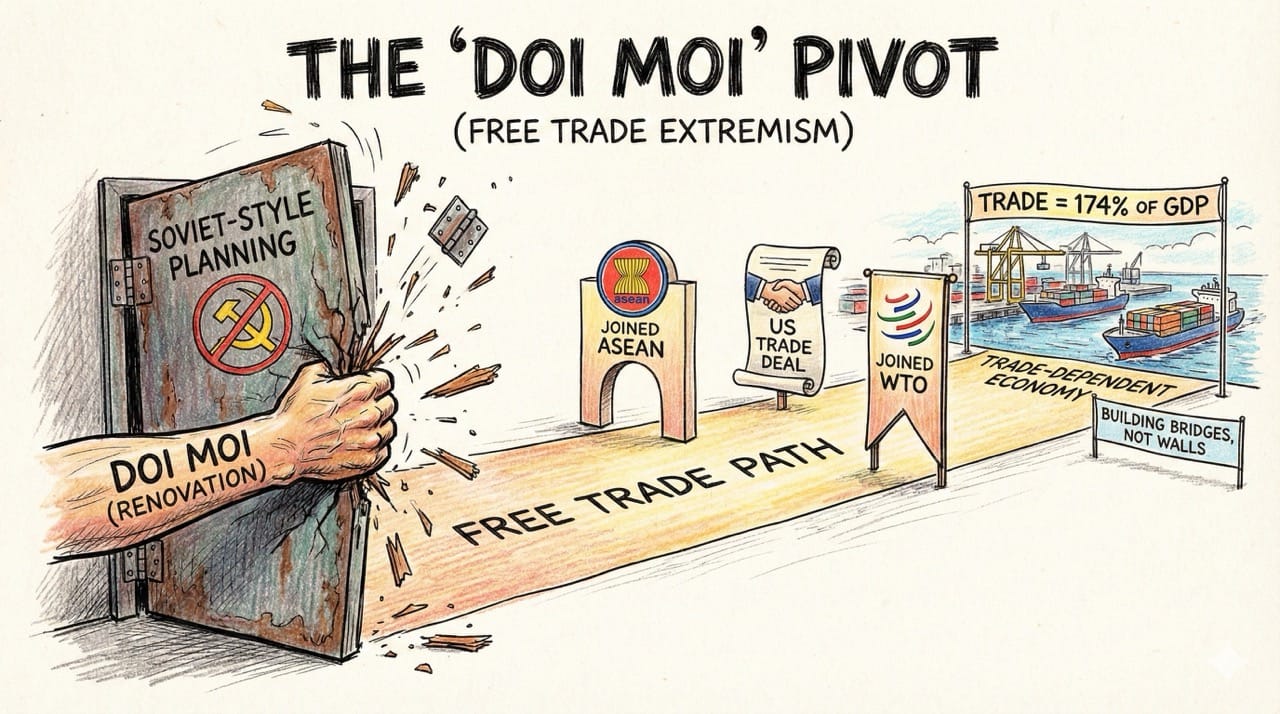
In 1986, the Communist Party realized that Soviet-style planning was starvation. So they launched "Doi Moi" (Renovation).
They didn't just open the door; they tore it off the hinges.
- They joined ASEAN.
- They signed a trade deal with the US.
- They joined the WTO.
The Result: Vietnam is now one of the most trade-dependent economies in the world. Trade amounts to 174% of its GDP. While the US and Europe build tariff walls, Vietnam is building bridges.
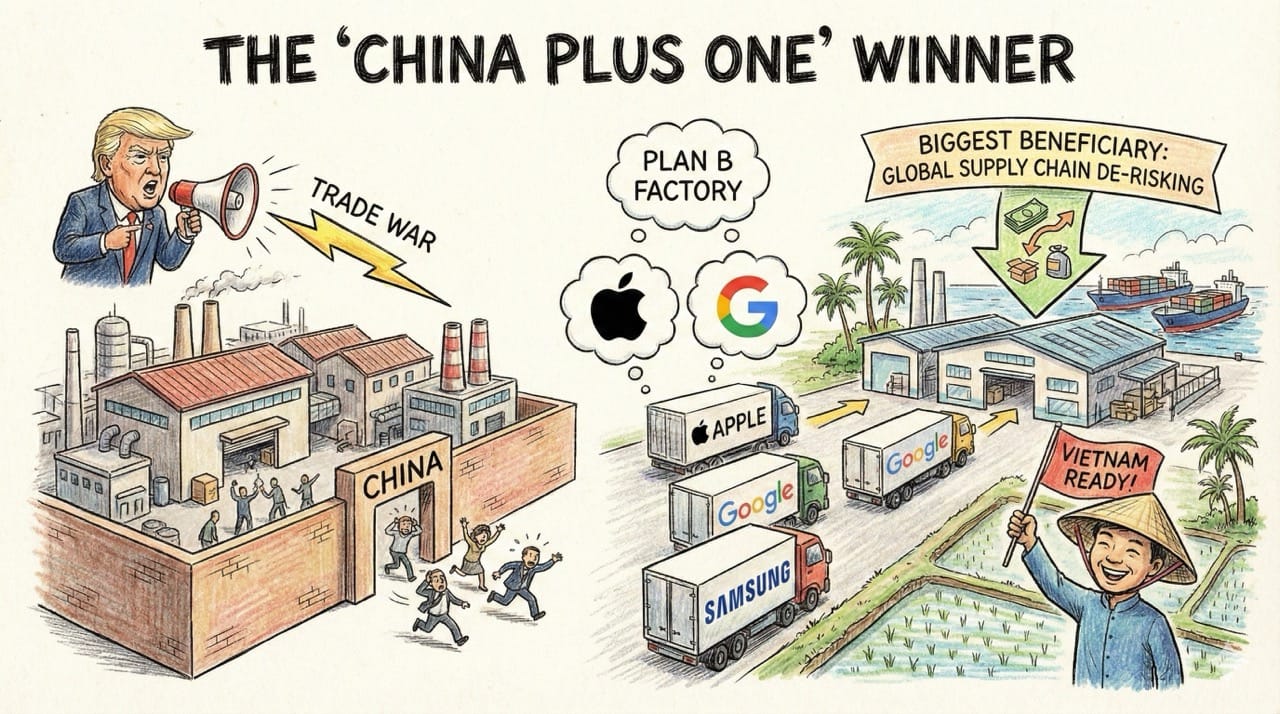
The "China Plus One" Winner: When Trump launched the trade war with China, Vietnam didn't panic; they cheered.
Companies like Apple, Google, and Samsung needed a "Plan B" factory. Vietnam was ready. They are the biggest beneficiary of the global supply chain de-risking.
2. The Human Capital Alpha (Math Scores)
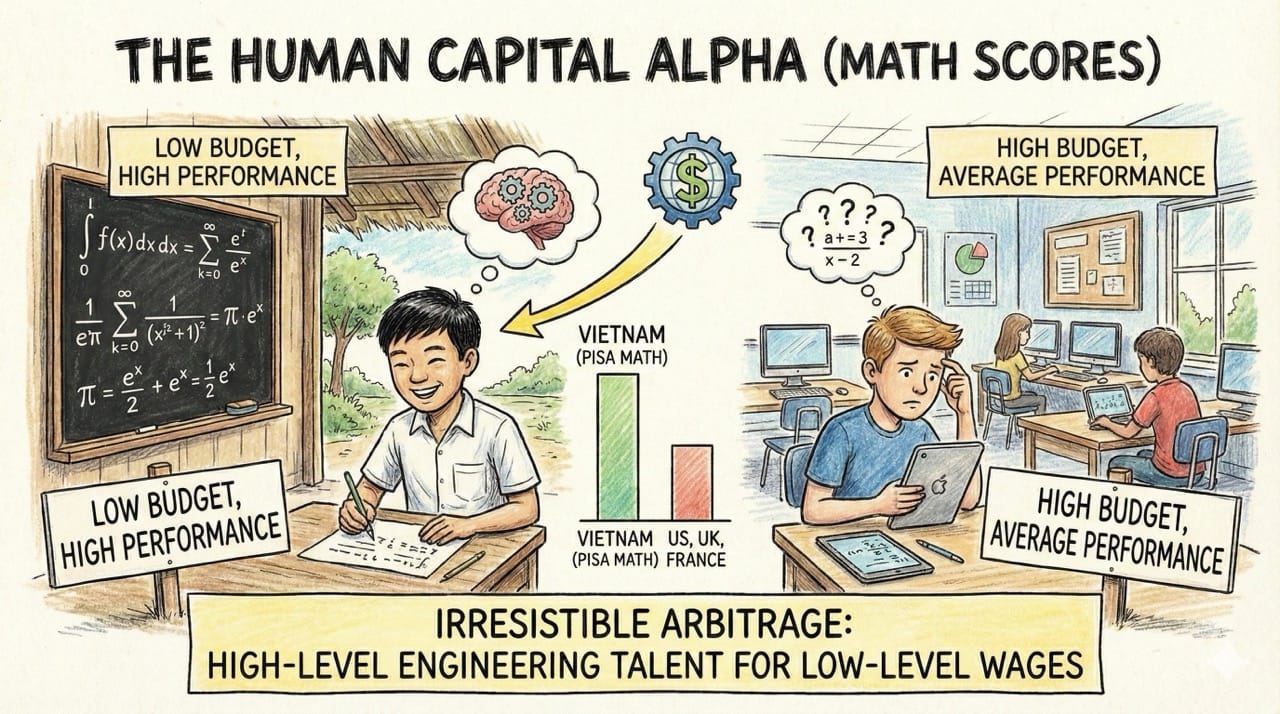
This is the most shocking stat. Vietnam is a lower-middle-income country.
Usually, education quality correlates with wealth.
Not here. In PISA rankings, Vietnamese students score on par with the OECD average.
In Math, they outperform students in the US, UK, and France.
Think about that.
A Vietnamese kid in a village with a fraction of the budget is out-calculating a kid in a generic American suburb.
This means global companies can hire high-level engineering talent for low-level wages. That is an irresistible arbitrage.
3. Political Stability (The Authoritarian Discount)
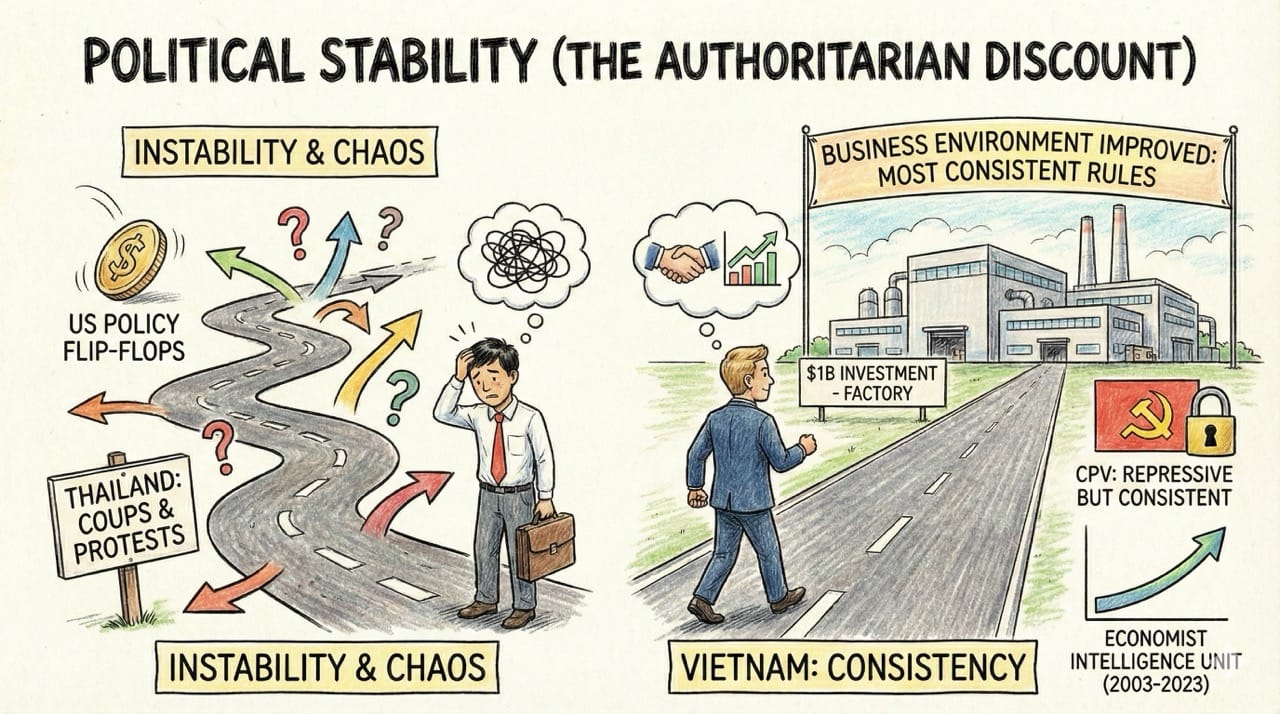
This is controversial, but it’s true. Investors hate chaos.
Look at Thailand: constant coups, protests, and government changes. Look at the US: policy flip-flops every 4 years.
Vietnam offers Stability. The Communist Party (CPV) is repressive, yes.
But it is consistent.
Between 2003 and 2023, Vietnam’s business environment improved more than any other country according to the Economist Intelligence Unit.
When you build a $1B factory, you want to know the rules won't change tomorrow.
Conclusion: The New Tiger
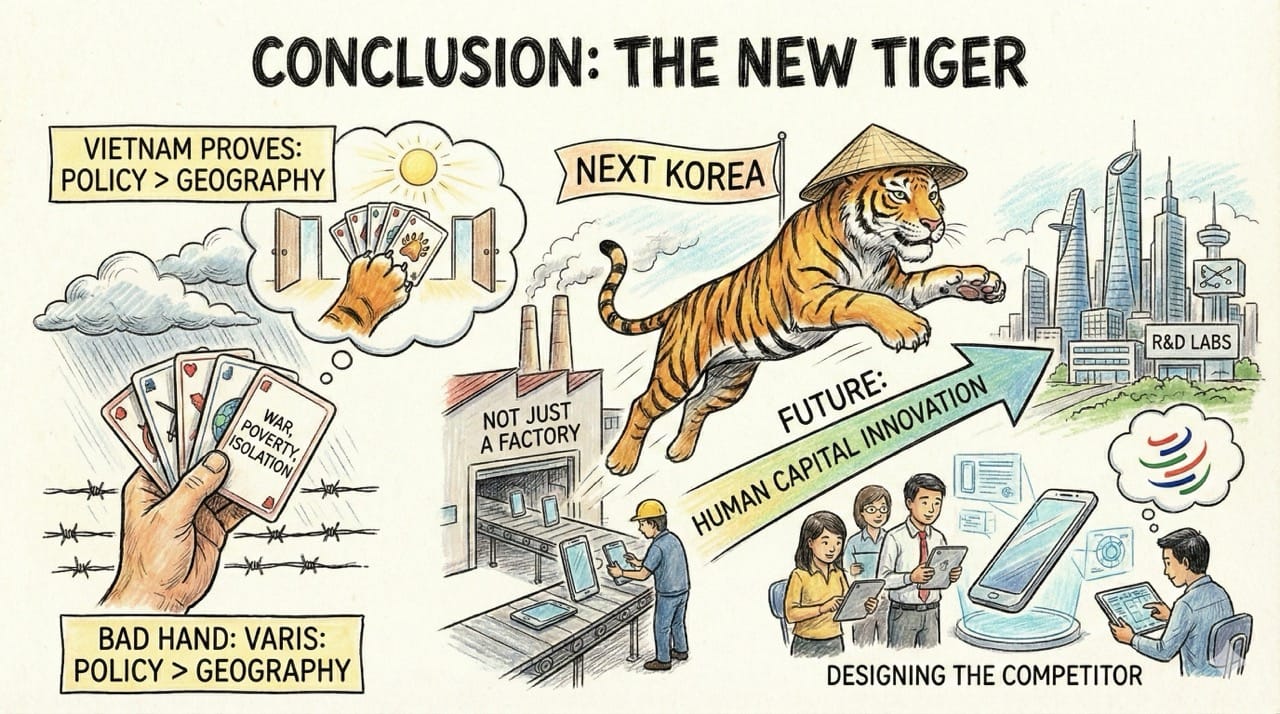
Vietnam proves that Policy > Geography. They had a bad hand (war, poverty, isolation).
They played it perfectly.
My Prediction: Vietnam isn't just a factory.
With that level of human capital, they are the next Korea.
They won't just assemble iPhones; soon, they will be designing the competitor.