Uber Autonomous Vehicle Marketplace: The Aggregator Advantage
Wall Street assumes that proprietary robotaxis will completely destroy the traditional ride hailing model. In reality, Uber is perfectly positioned to become the ultimate and indispensable aggregator for the entire autonomous vehicle industry.

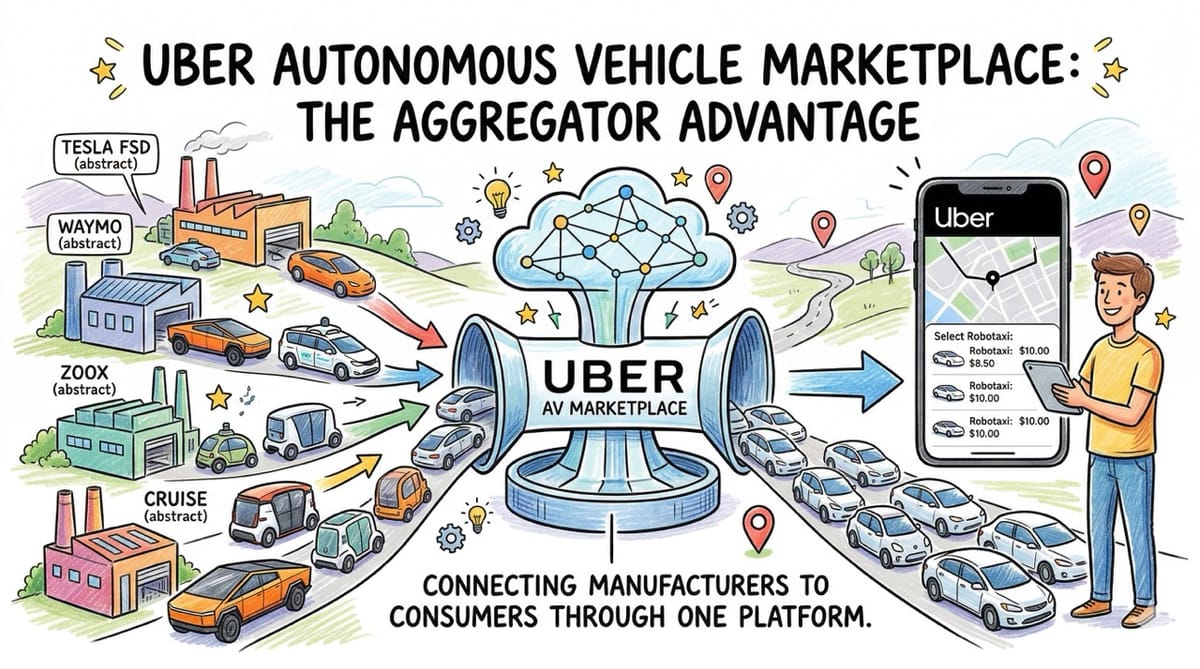
When multiple robotaxi companies enter the market, consumers will not download ten different applications. They will default to the single platform that aggregates them all.
Inspiration: Analyzing the current autonomous vehicle landscape with Tesla FSD and Waymo. Realizing that the ultimate economic winner of the robotaxi wars is not the hardware manufacturer, but the marketplace that connects the machines to the consumer.
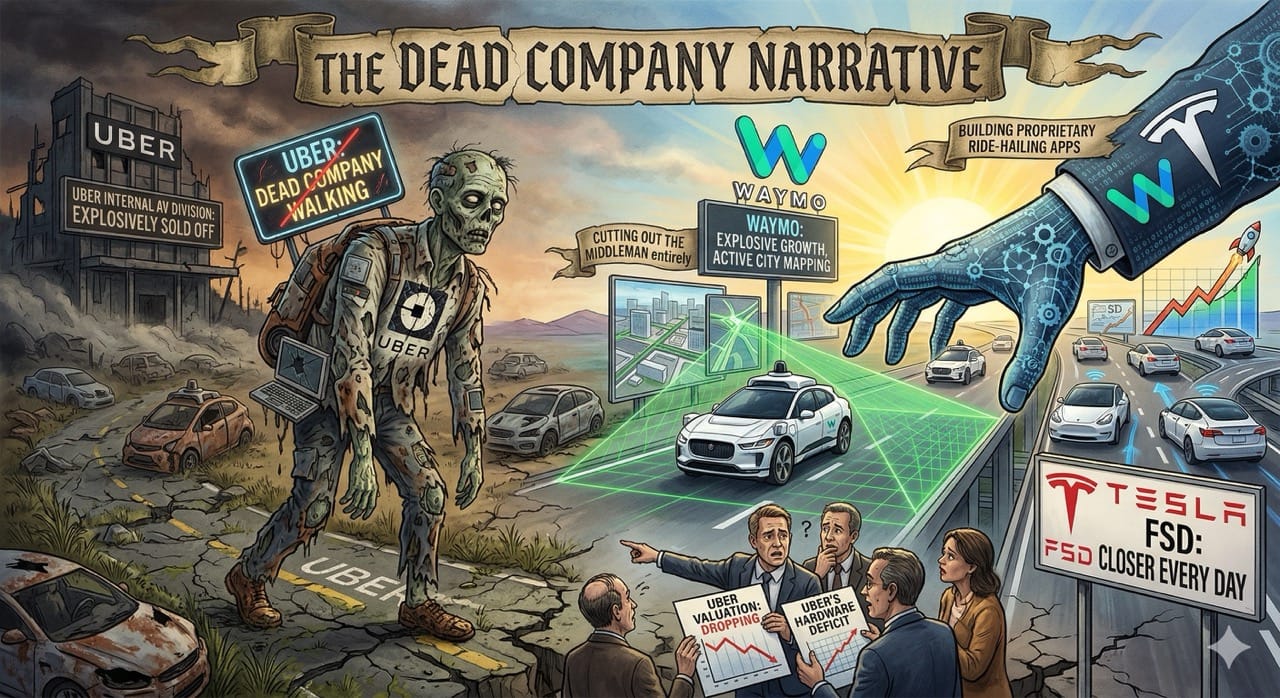
The Dead Company Narrative
Waymo is experiencing explosive growth with their fully autonomous fleets actively mapping major cities.
Tesla is pushing their Full Self Driving software closer to reality every single day.
Meanwhile, Uber completely sold off its own internal autonomous division years ago.
Because of this specific hardware deficit, many financial analysts currently value Uber as a dead company walking.
They assume manufacturers like Tesla will simply build their own proprietary ride hailing apps and cut out the middleman entirely.
The Platform Economics
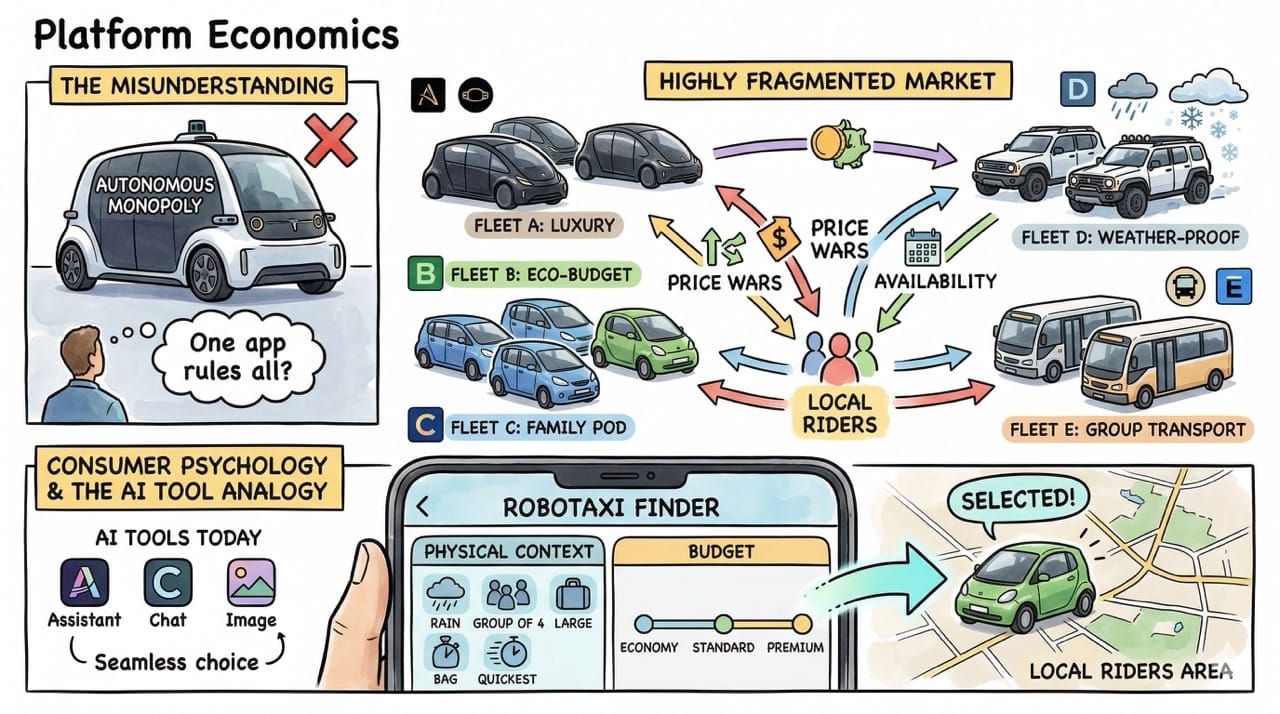
This assumption fundamentally misunderstands platform economics and modern consumer psychology.
The future will not be dominated by a single autonomous monopoly.
We will see a highly fragmented market of multiple robotaxi fleets competing aggressively for local riders.
Consumers will treat these autonomous vehicles exactly like they treat artificial intelligence tools today.
They will want to seamlessly pick the specific car that best fits their immediate physical context and budget.
The Hardware Fragmentation
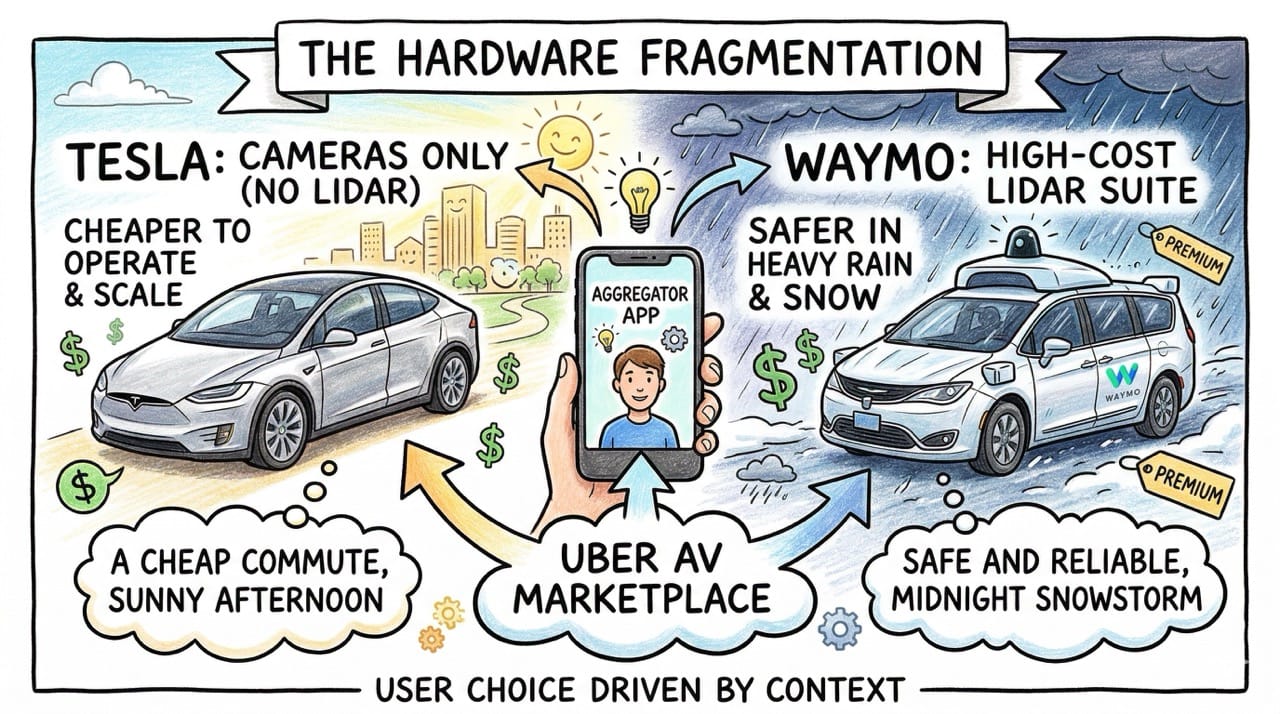
Different manufacturers will offer entirely different value propositions based on their underlying technology.
Tesla relies purely on cameras without Lidar, which will likely make their fleet significantly cheaper to operate and scale.
Waymo relies on highly expensive Lidar sensor suites, making them the definitively safer choice in heavy rain or harsh weather.
A customer might intentionally choose a cheap Tesla for a sunny afternoon commute.
However, that exact same customer will happily pay a premium to request a Waymo during a midnight snowstorm.
The Neutral Marketplace
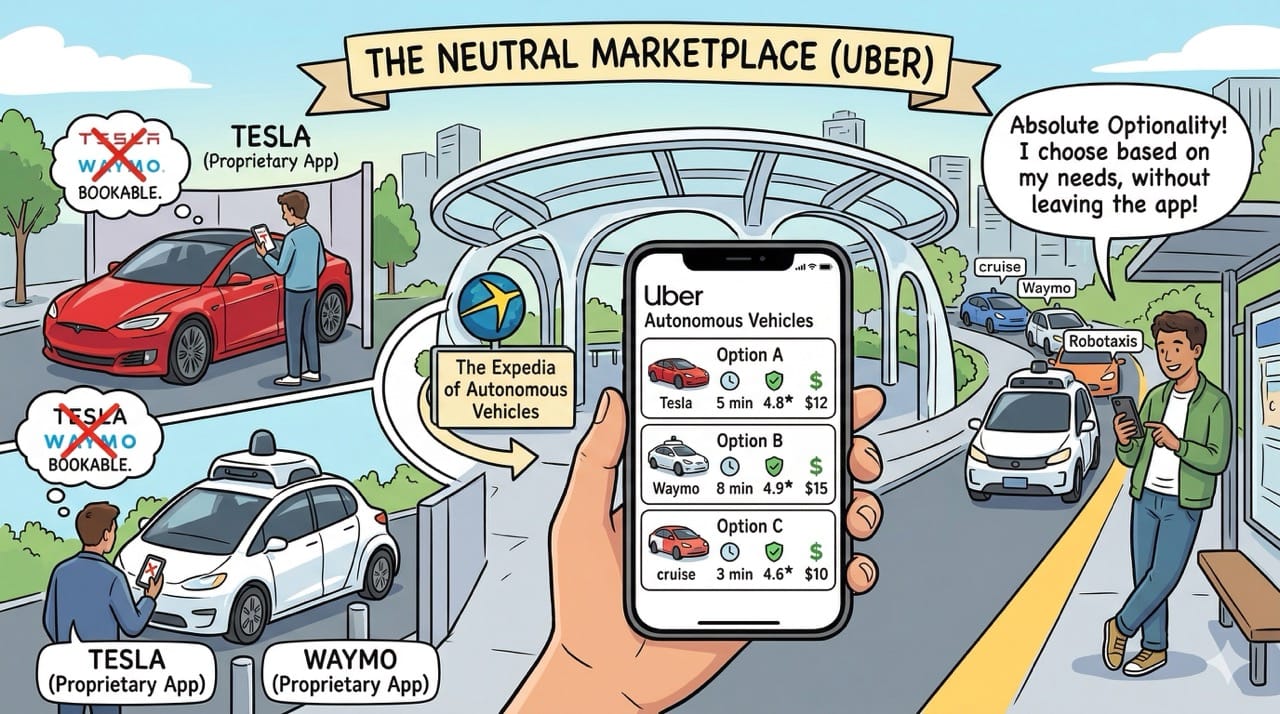
A major hardware company like Tesla will never allow a competitor like Waymo to be booked on their proprietary application.
This creates a massive structural void for a neutral, third party aggregator.
Uber is perfectly positioned to become the Expedia of autonomous vehicles.
They will allow riders to instantly compare wait times, safety ratings, and pricing across every single robotaxi provider in the city.
The consumer gets absolute optionality without leaving their preferred application.
The Deficit of Trust
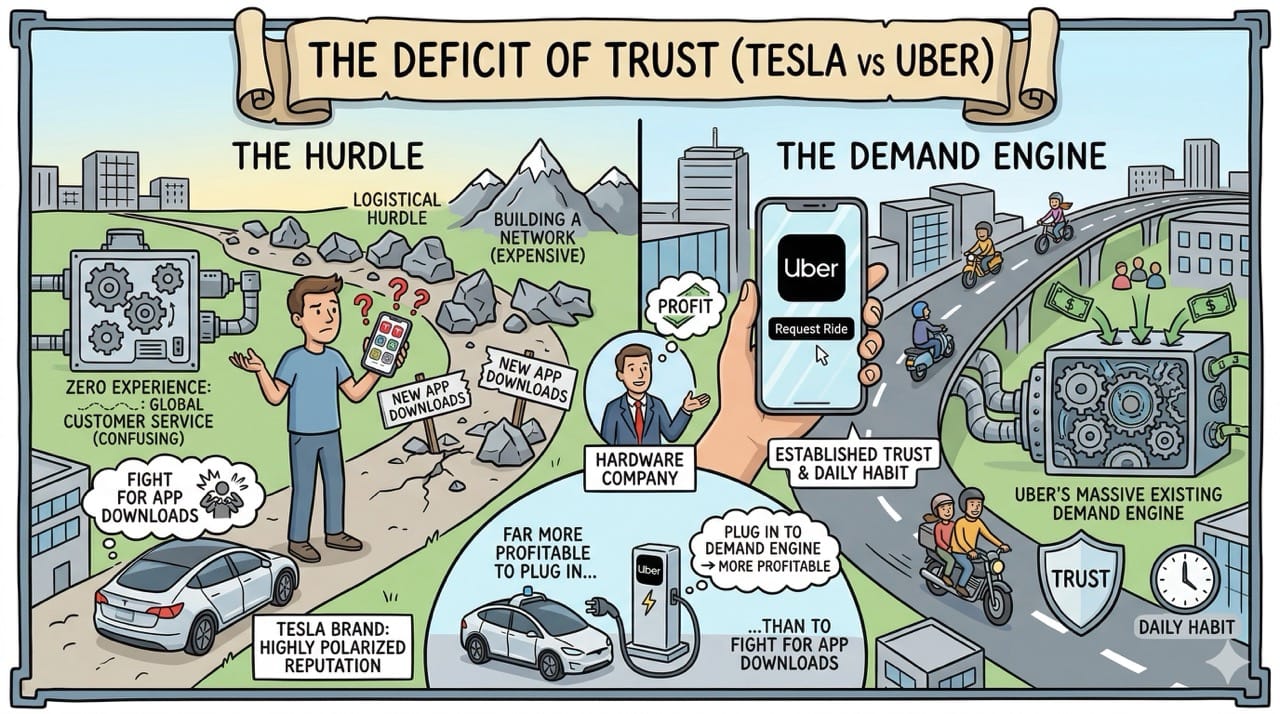
Building a massive network of active riders from scratch is incredibly difficult and expensive.
Tesla currently has a highly polarized brand reputation and zero experience managing a global customer service network.
Forcing millions of consumers to download and trust a brand new Tesla booking app is a massive logistical hurdle.
Uber already commands the absolute trust and daily habit of the global consumer.
Hardware companies will eventually realize it is far more profitable to plug their cars into Uber's massive existing demand engine than to fight them for app downloads.
Conclusion: The Invisible Toll Booth
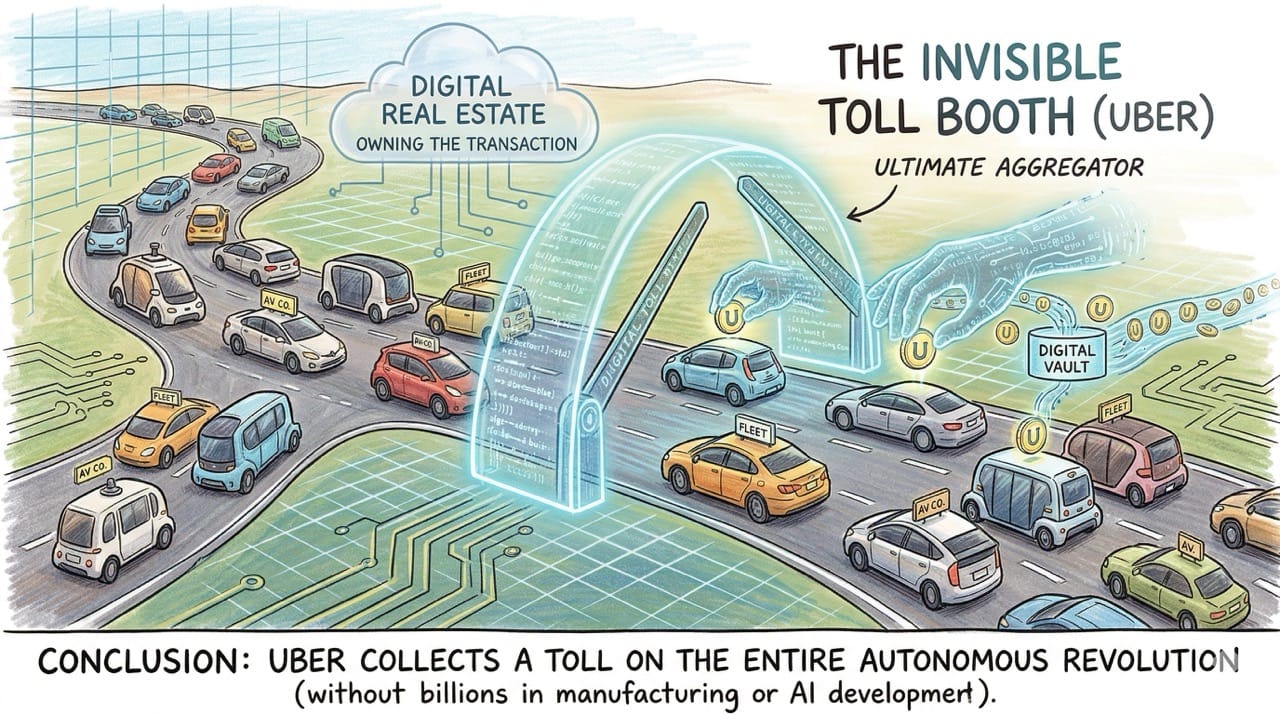
Uber does not need to spend billions of dollars manufacturing cars or perfecting artificial intelligence.
They just need to own the digital real estate where the transaction actually happens.
By acting as the ultimate aggregator, Uber will quietly collect a toll on the entire autonomous revolution.