To Win Consumer AI, Meta Should Focus on Language

Google organizes the world's information. Meta connects the world's people. In the AI era, the killer app isn't a chatbot; it's a universal translator.
Inspiration: Trying to use Google Translate in Southeast Asia and realizing that while it knows the words, it doesn’t know the context.
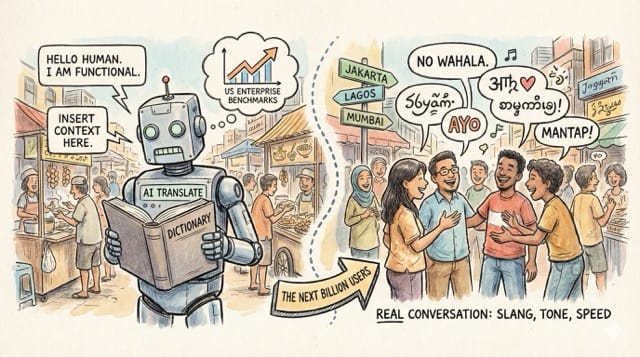
Most AI companies (OpenAI, Anthropic, Google) are obsessed with English benchmarks. They are fighting for the US enterprise market.
But the next billion users aren’t in San Francisco. They are in Jakarta, Lagos, and Mumbai.
My recent trip to Southeast Asia proved this. Google Translate is “functional,” but it’s awkward. It feels like a robot reading a dictionary. It misses the slang, the tone, and the speed of real conversation. It adds friction, not connection.
Meta’s Unfair Advantage: The World’s Conversation Data
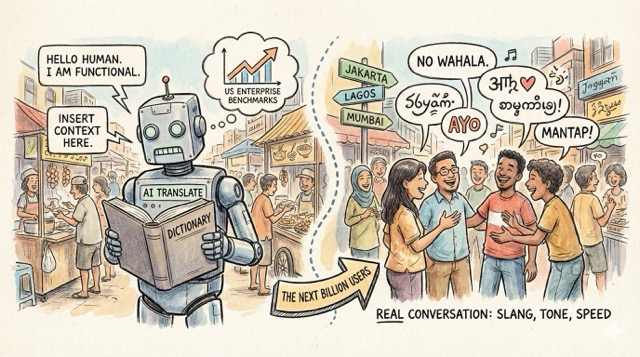
Everyone scrapes the web (Wikipedia, Reddit). But only Meta has WhatsApp, Messenger, and Instagram DMs.
They have the largest dataset of informal, human, multi-lingual conversation in history. They know how people actually talk to each other, not just how they write formal documents.
Meta has already quietly built the best translation models in the world (NLLB – No Language Left Behind). They just haven’t productized it for consumers yet.
The Apple & Google Gap
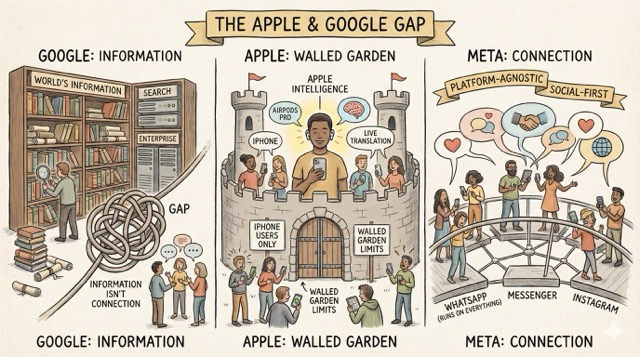
Google’s mission is to “organize the world’s information.” That’s why they are winning in search and enterprise. But information isn’t connection.
Apple is forcing “Apple Intelligence” and live translation into AirPods Pro. But Apple’s walled garden limits them. You can’t connect the world if you only connect iPhone users.
Meta is the only player that is platform-agnostic (WhatsApp runs on everything) and social-first.
The “Connect the World” Mandate
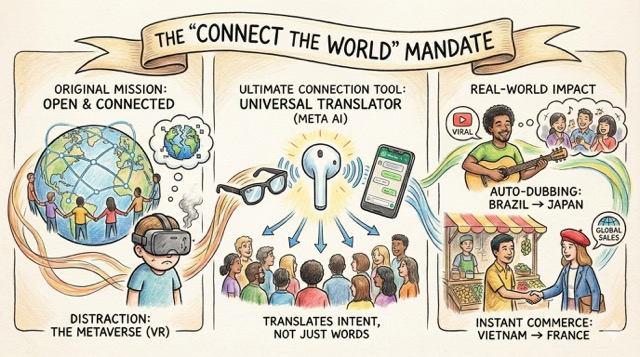
Remember Facebook’s original mission? “To make the world more open and connected.”
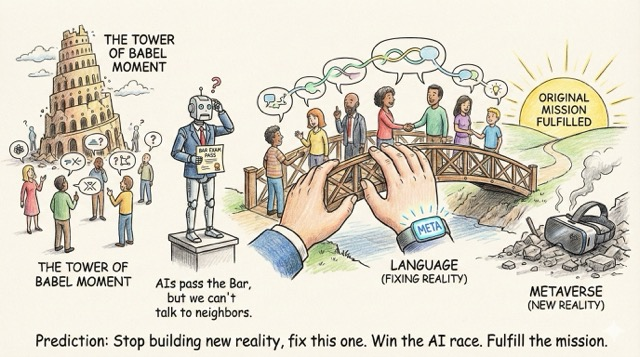
They got distracted by the Metaverse (VR). But the ultimate connection tool isn’t a VR headset; it’s a Universal Translator.
Imagine a “Meta AI” that lives in your ear (Ray-Bans) or your chat (WhatsApp) that doesn’t just translate words, but translates intent.
- It lets a creator in Brazil go viral in Japan instantly (auto-dubbing).
- It lets a merchant in Vietnam sell to a buyer in France without a pause.
The Business Case (Ads & Enterprise)
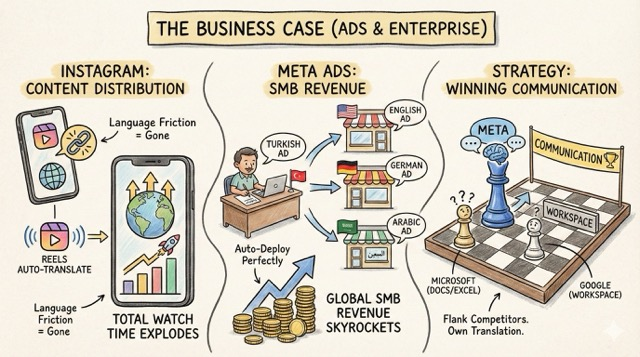
Instagram: Language is the biggest friction for content distribution. If Reels are auto-translated perfectly, total watch time explodes.
Meta Ads: If an SMB in Turkey can write an ad in Turkish and have it auto-deploy perfectly in English, German, and Arabic, Meta’s ad revenue skyrockets.
By owning consumer translation, Meta can flank Microsoft and Google. They don’t need to win “Workspace” (Docs/Excel); they just need to win “Communication.”
Conclusion: The Tower of Babel Moment
We are building AIs that can pass the Bar Exam, but we still can’t talk to our neighbors.
My Prediction: If Meta stops trying to build a new reality (Metaverse) and starts fixing this reality (Language), they won’t just win the AI race. They will fulfill their original mission.