The Viral Power-Up: How Users Turned Coca-Cola and Monster into Internet Magic
Coca-Cola and Monster Energy do not just sell beverages. They engineer organic viral loops that dominate social media algorithms and create an unbreakable moat for global distribution.

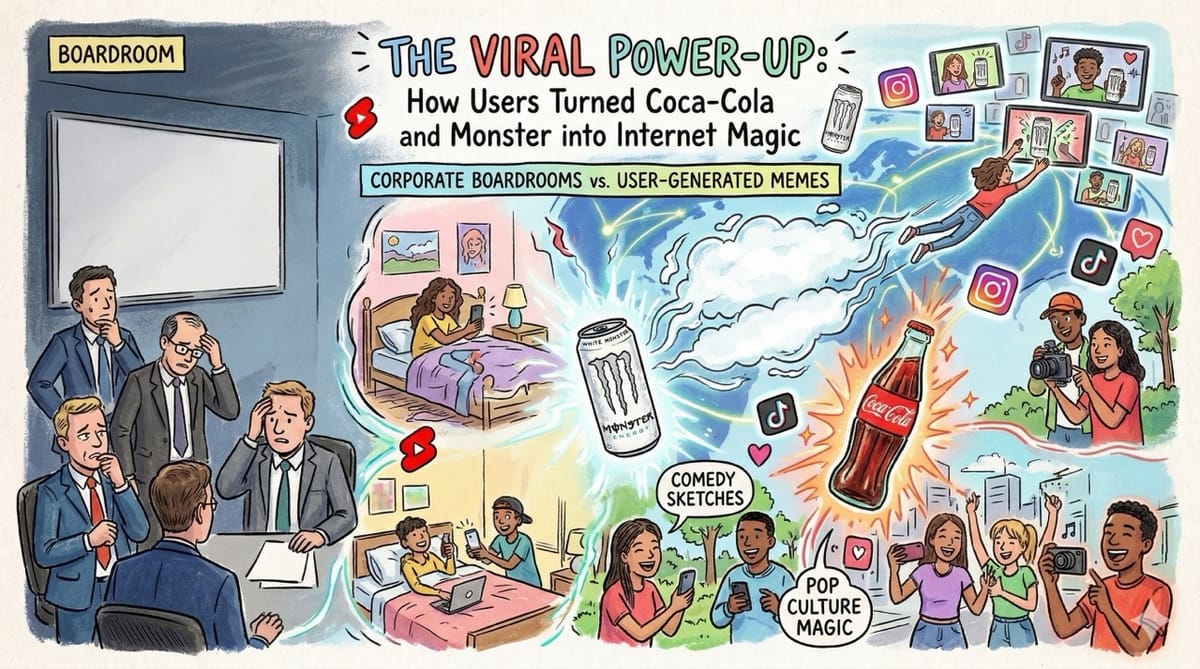
You cannot manufacture a meme in a corporate boardroom. Millions of users are willingly turning physical cans into viral props, and it is quietly building a global monopoly.
Inspiration: Watching the organic "White Monster Effect" trend on YouTube Shorts and Instagram. Realizing that when users treat a physical drink as a magical item for their comedy sketches, the parent company gains infinite cultural leverage.
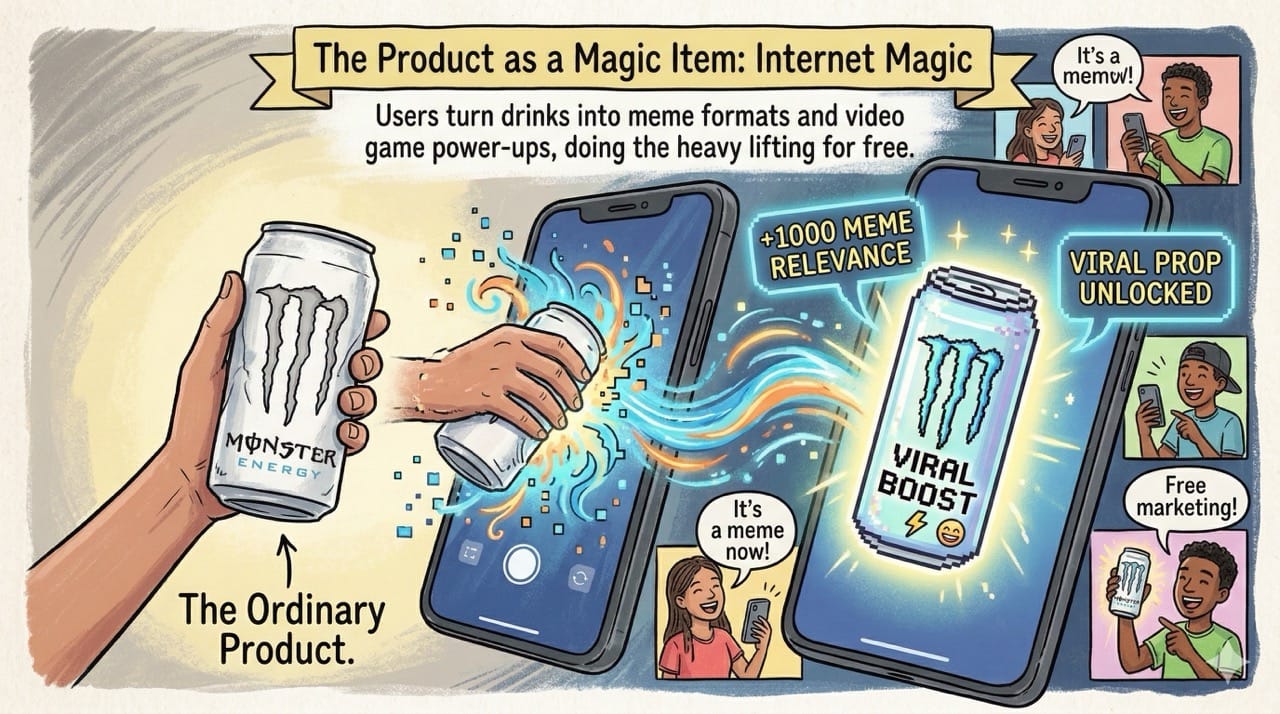
The Product as a Magic Item
Social media has birthed a fascinating new type of organic marketing. Users are no longer just showing off products in their videos for aesthetic reasons.
They are turning physical beverages into literal meme formats and video game power-ups.
When a brand achieves this level of cultural integration, the users do all the heavy lifting for free.
The product ceases to be a simple drink and becomes a necessary prop to complete an internet joke.
The White Monster Effect
Monster Energy has completely taken over the short-form video algorithm through these exact organic trends.
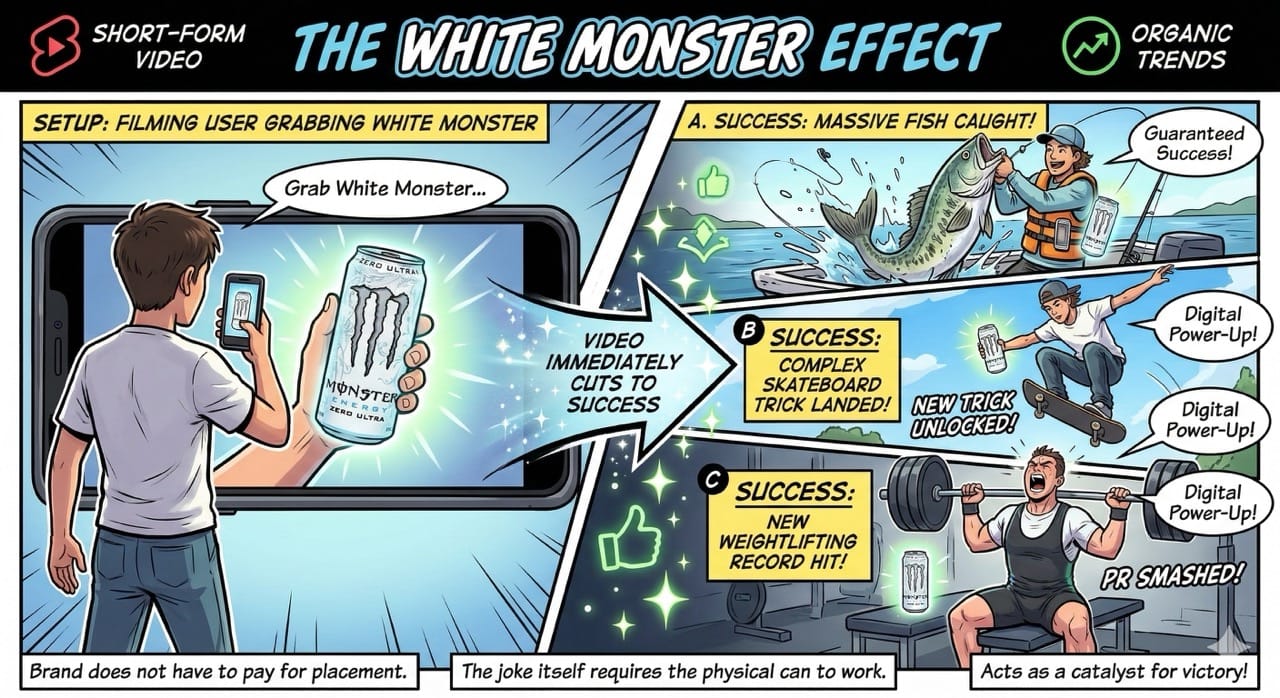
The "White Monster Effect" is a perfect example of this phenomenon.
A user films themselves grabbing a can of Monster Zero Ultra, and the video immediately cuts to them achieving something incredible.
Whether it is catching a massive fish, landing a complex skateboard trick, or hitting a new weightlifting record, the drink is presented as the catalyst.
It acts as a digital power-up that guarantees success.
The brand does not have to pay for this placement because the joke itself requires the physical can to work.
The trend simply applies to content from various content creators with different tones and themes. Here is another example, which has attracted over 600K likes in the span of just two days.
The Coca-Cola Fandom
Coca-Cola commands a slightly different but equally powerful organic loop.
Users love creating memes and organic content around their love for the product.
The best part is that, many of these memes are also often localized, allowing the brand to capture attention across regions as the go-to drink for all events.
The Hidden Corporate Empire
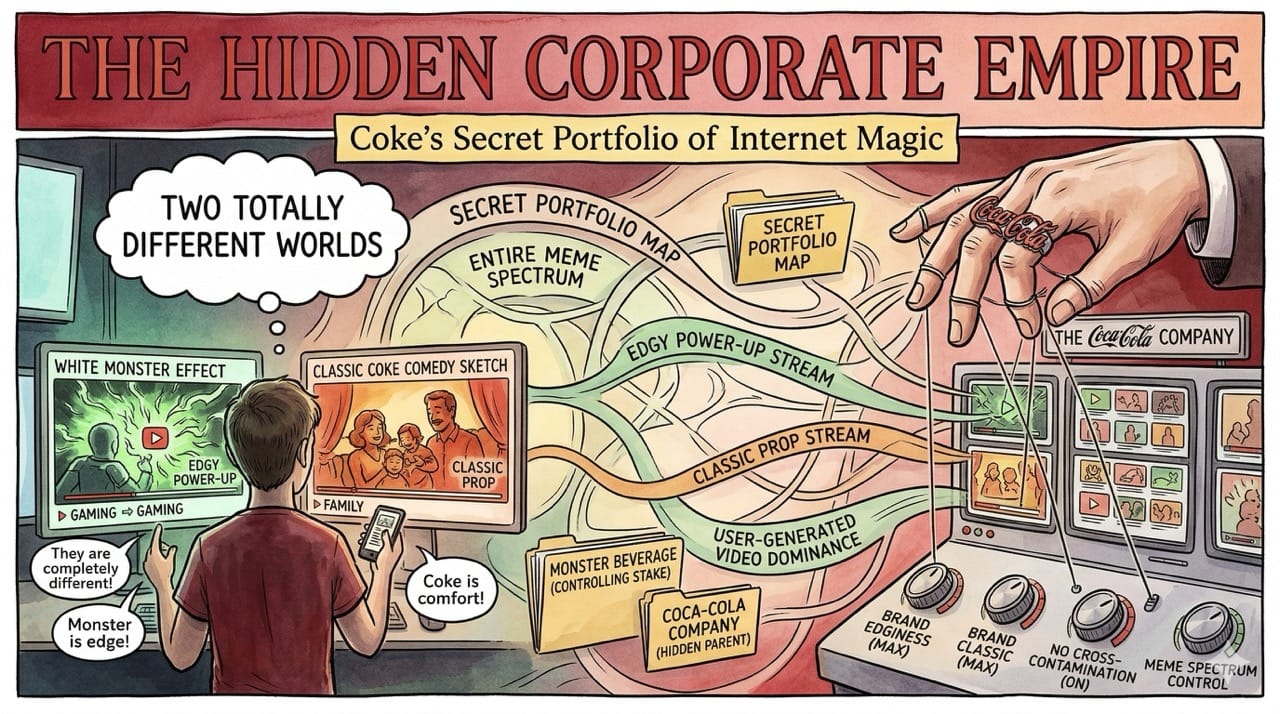
To the average teenager participating in these trends, Monster and Coca-Cola are completely different worlds.
One represents extreme edge and the other represents classic comfort.
However, the Coca-Cola Company actually owns a massive, controlling stake in Monster Beverage.
They successfully engineered a portfolio that captures the entire spectrum of internet meme culture.
They own the edgy power-up and the classic transition prop.
They completely dominate the user-generated video space without ever having to cross-contaminate the brands.
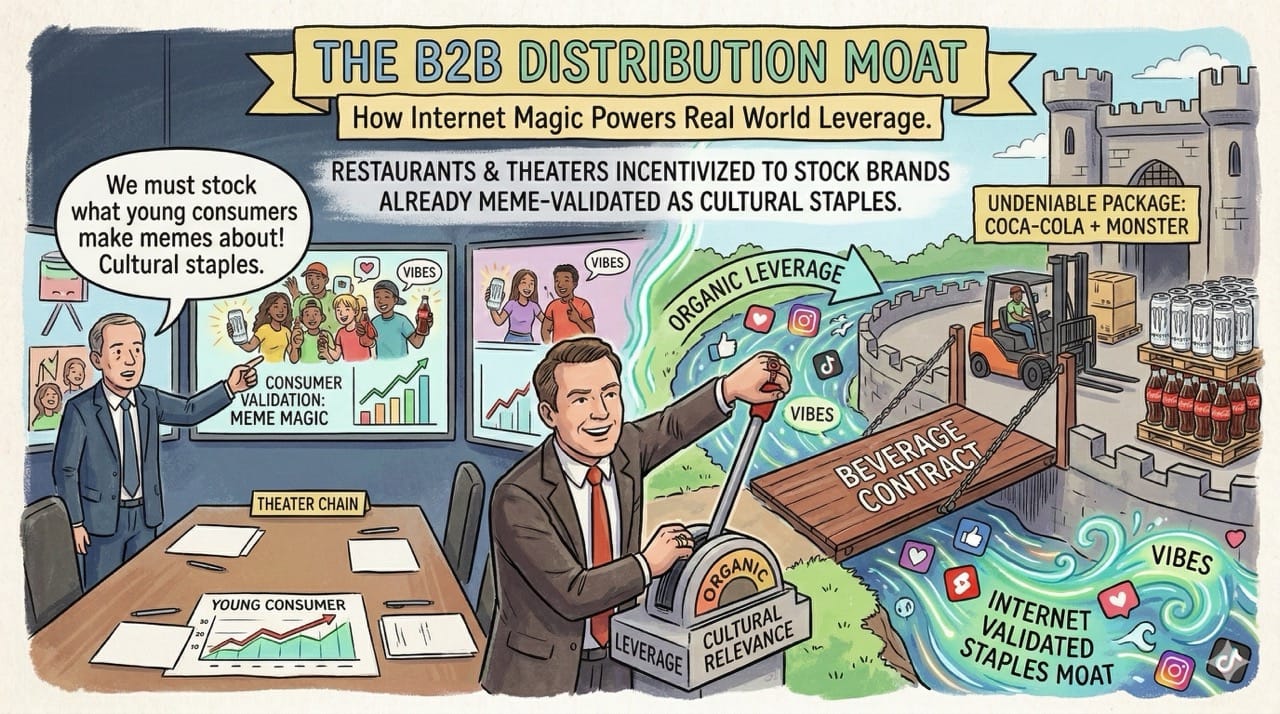
The B2B Distribution Moat
This organic virality translates directly into massive real-world leverage.
Imagine a major movie theater chain negotiating their beverage contracts. They are looking at the cultural relevance of the products they are about to stock.
By offering both Coca-Cola and Monster, the distributor brings an undeniable package to the table.
They are supplying the exact products that millions of young consumers are already actively making memes about.
Restaurants and theaters are highly incentivized to stock these brands because the internet has already validated them as cultural staples.
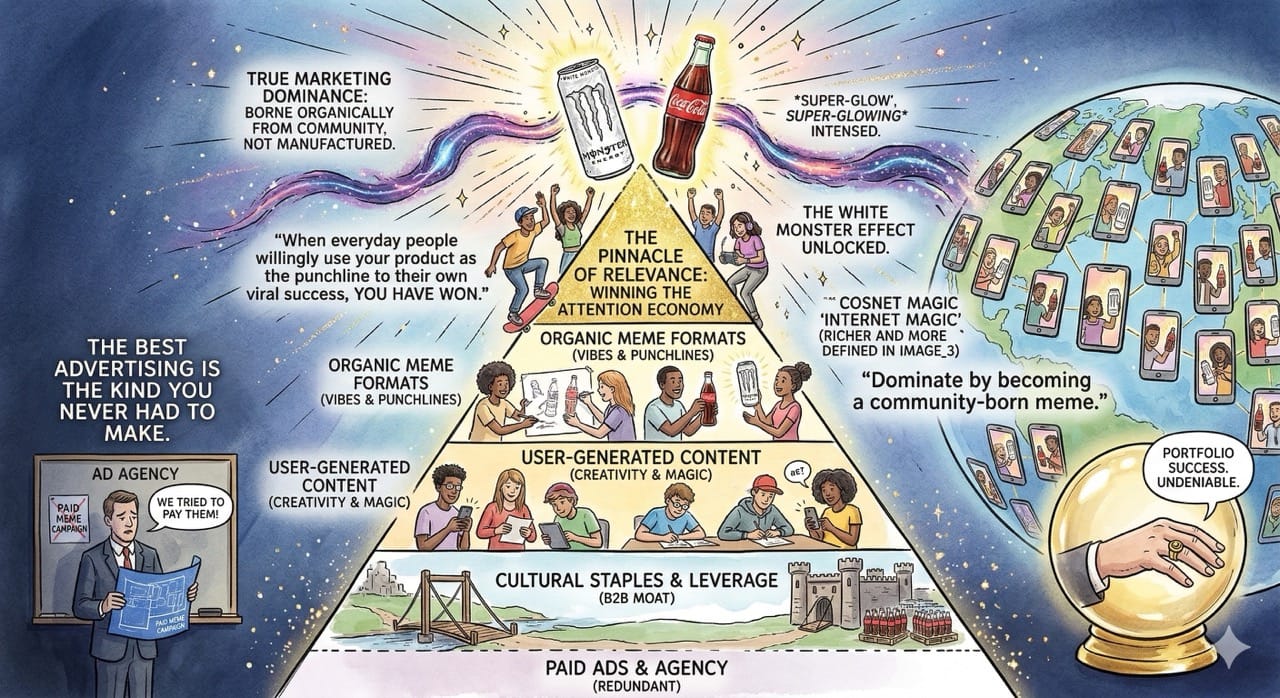
Conclusion: The Pinnacle of Relevance
True marketing dominance is achieved when your product becomes a verb or a meme format.
You cannot manufacture a trend like the White Monster Effect by paying an advertising agency. It has to be born organically from the community.
When everyday people willingly use your product as the punchline to their own viral success, you have won the attention economy.
It is a brilliant reminder that the best advertising is the kind you never actually had to make.