The Ultimate Orchestrator: High-Bandwidth Synthesizers in the Age of AI
The modern economy no longer rewards the hyper-specialized worker. The future belongs to high-bandwidth synthesizers who can use artificial intelligence to connect seemingly unrelated data points into a singular, profitable strategy.

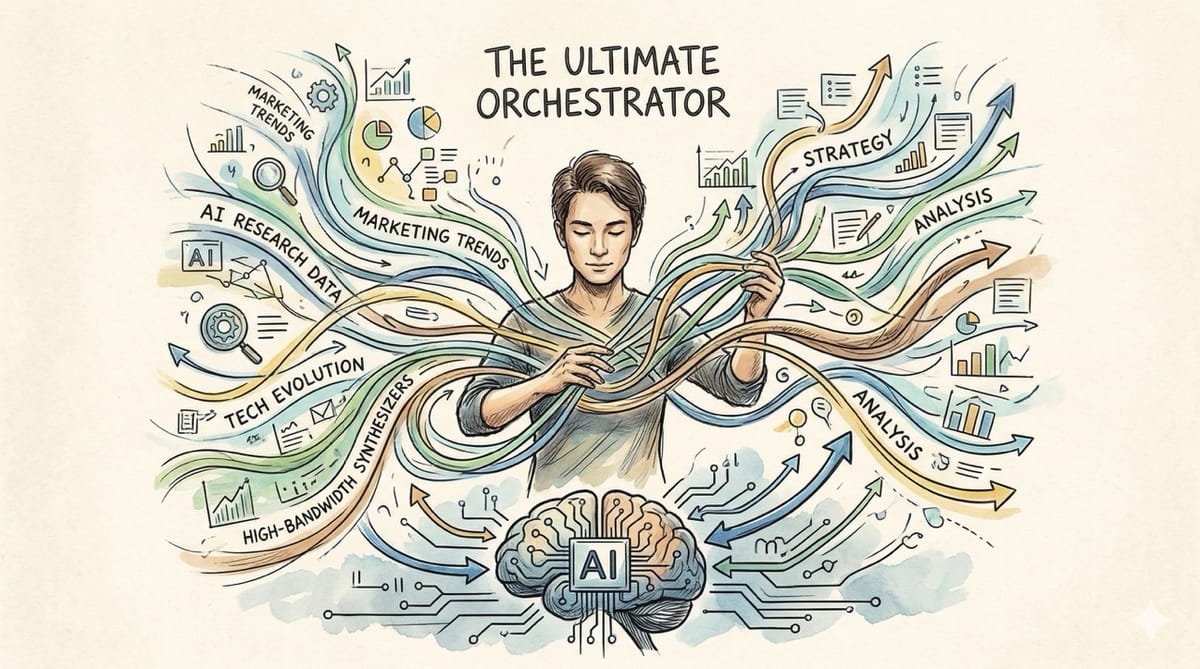
Artificial intelligence is the ultimate research assistant. But it requires a human mind capable of absorbing massive data streams to actually direct the ship.
Inspiration: Reflecting on the evolution of performance marketing and the broader tech landscape. Realizing that the most valuable skill is no longer producing raw data, but synthesizing it across multiple disciplines simultaneously.
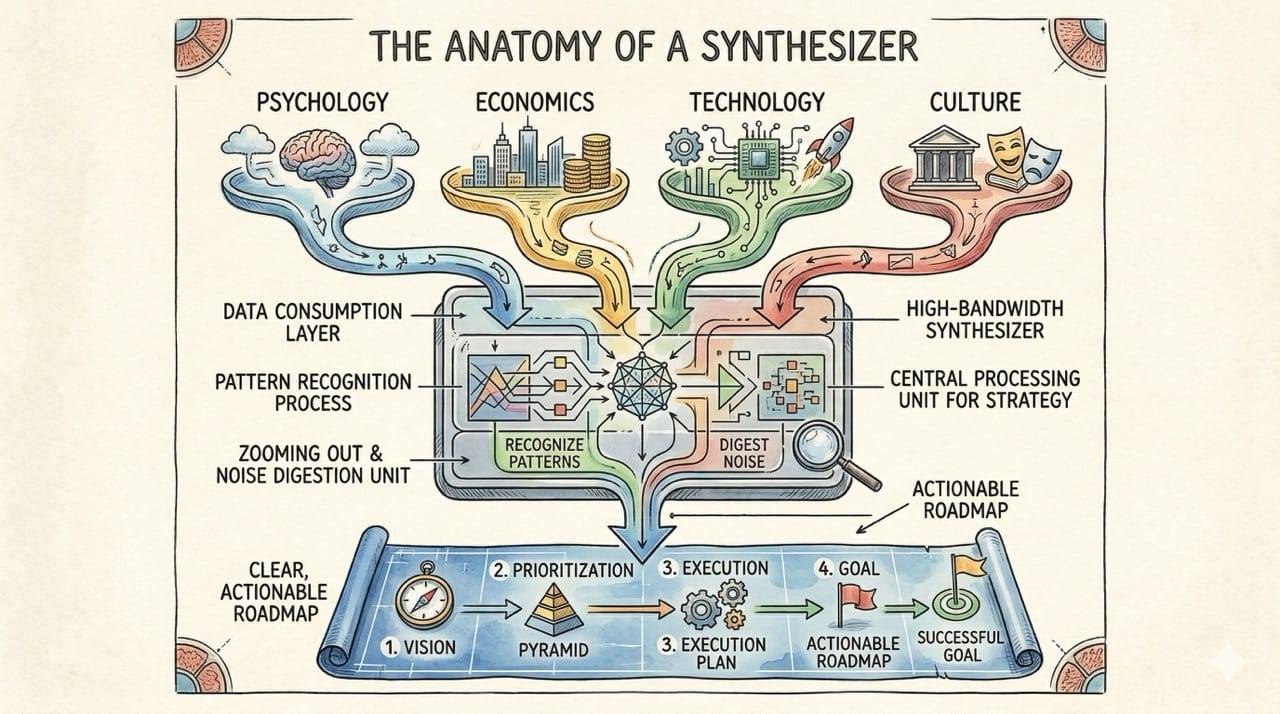
The Anatomy of a Synthesizer
A high-bandwidth synthesizer is a specific type of intellectual profile. It describes someone who can consume massive amounts of disparate information across completely different fields and immediately recognize the hidden patterns.
They do not get bogged down in the microscopic details of a single discipline.
Instead, they operate at the intersection of psychology, economics, technology, and culture.
They act as a central processing unit for strategy.
Their primary value is their ability to zoom out, digest the noise, and produce a clear, actionable roadmap.
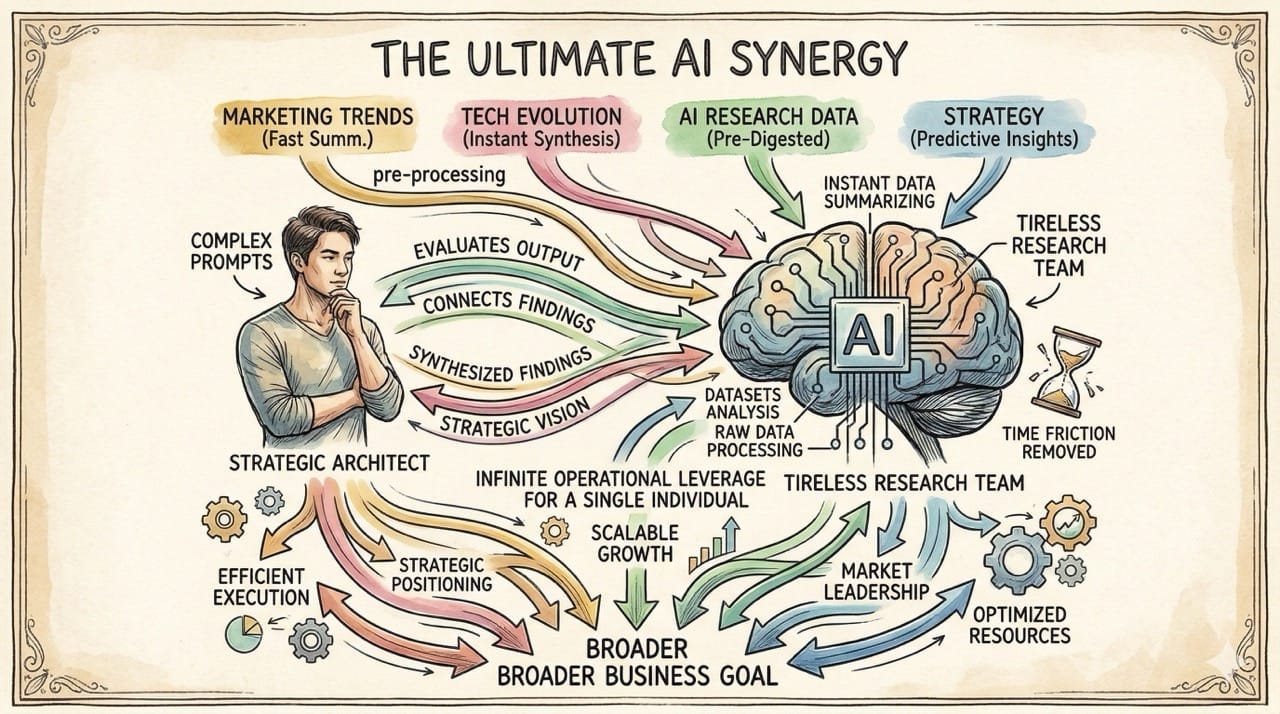
The Ultimate AI Synergy
Artificial intelligence is the perfect multiplier for this exact personality type.
Previously, a synthesizer was bottlenecked by the sheer physical time it took to read research papers or analyze datasets.
AI completely removes this friction by instantly summarizing the raw data.
The human acts as the strategic architect, while the AI acts as the tireless research team.
The synthesizer feeds the machine complex prompts, evaluates the output, and connects the findings to a broader business goal.
This dynamic creates infinite operational leverage for a single individual.
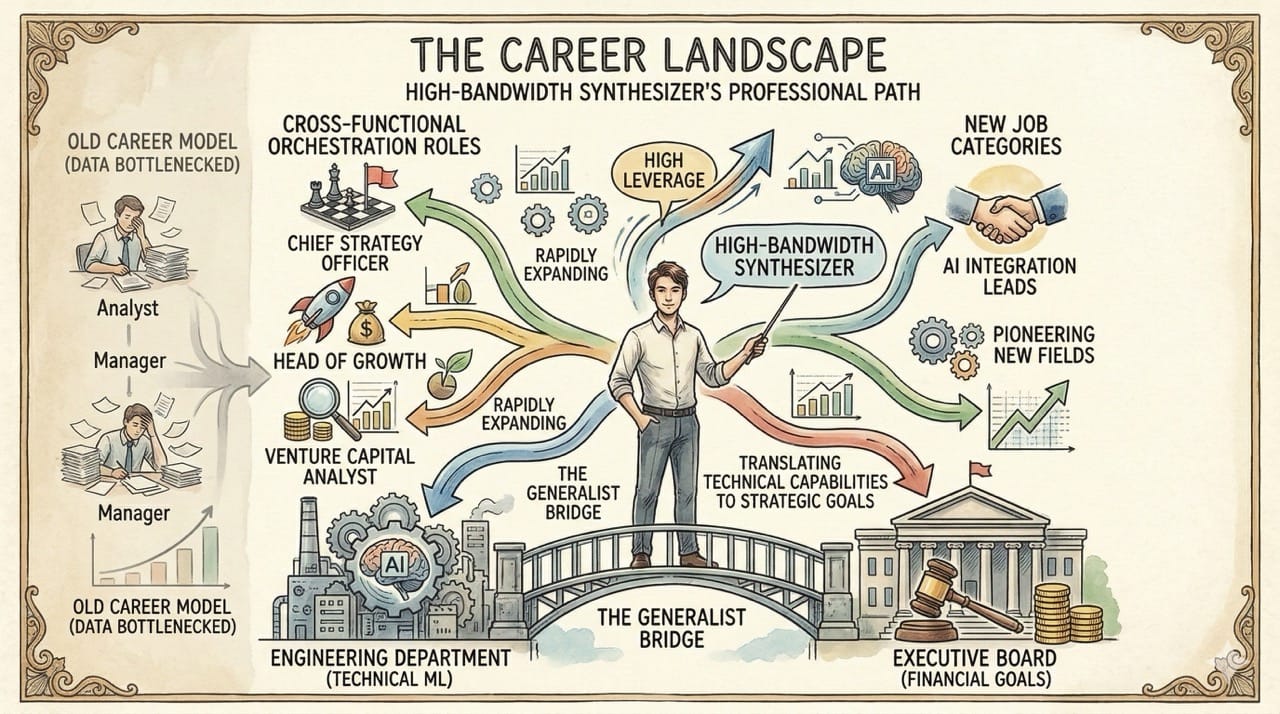
The Career Landscape
Because of this leverage, the job market for high-bandwidth synthesizers is rapidly expanding.
They are perfectly suited for roles that require cross-functional orchestration. Positions like Chief Strategy Officer, Head of Growth, and Venture Capital Analyst are ideal fits.
These individuals will also pioneer entirely new job categories, such as AI Integration Leads.
Corporations will need generalists who understand both the technical capabilities of machine learning and the financial goals of the company. The synthesizer becomes the bridge between the engineering department and the executive board.
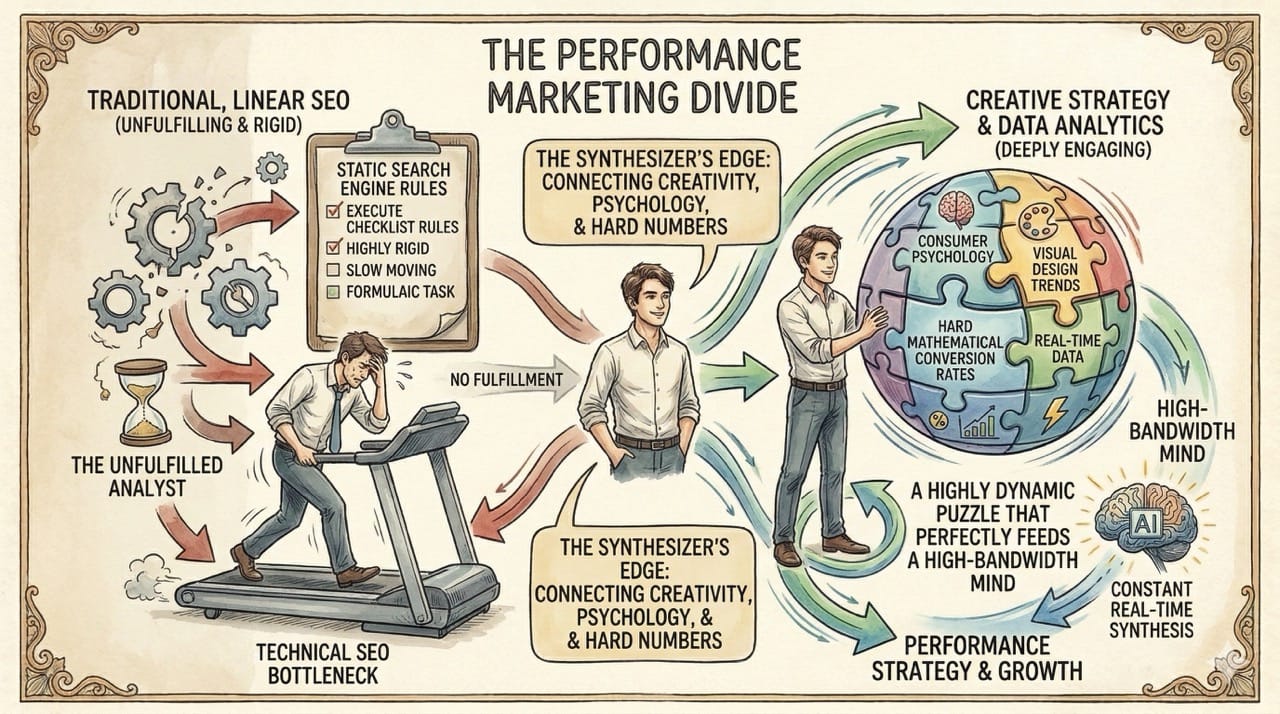
The Performance Marketing Divide
Here's my anecdotal finding.
This dynamic is incredibly obvious in the field of performance marketing. Traditional, linear tasks like technical SEO often feel unfulfilling to a synthesizer. SEO is highly rigid, slow moving, and heavily reliant on executing a static checklist of search engine rules.
Conversely, creative strategy and data analytics are deeply engaging.
These areas require you to constantly synthesize consumer psychology, visual design trends, and hard mathematical conversion rates in real time.
It is a highly dynamic puzzle that perfectly feeds a high-bandwidth mind.
Personal Life Optimization
This synthesizing capability extends far beyond the corporate boardroom.
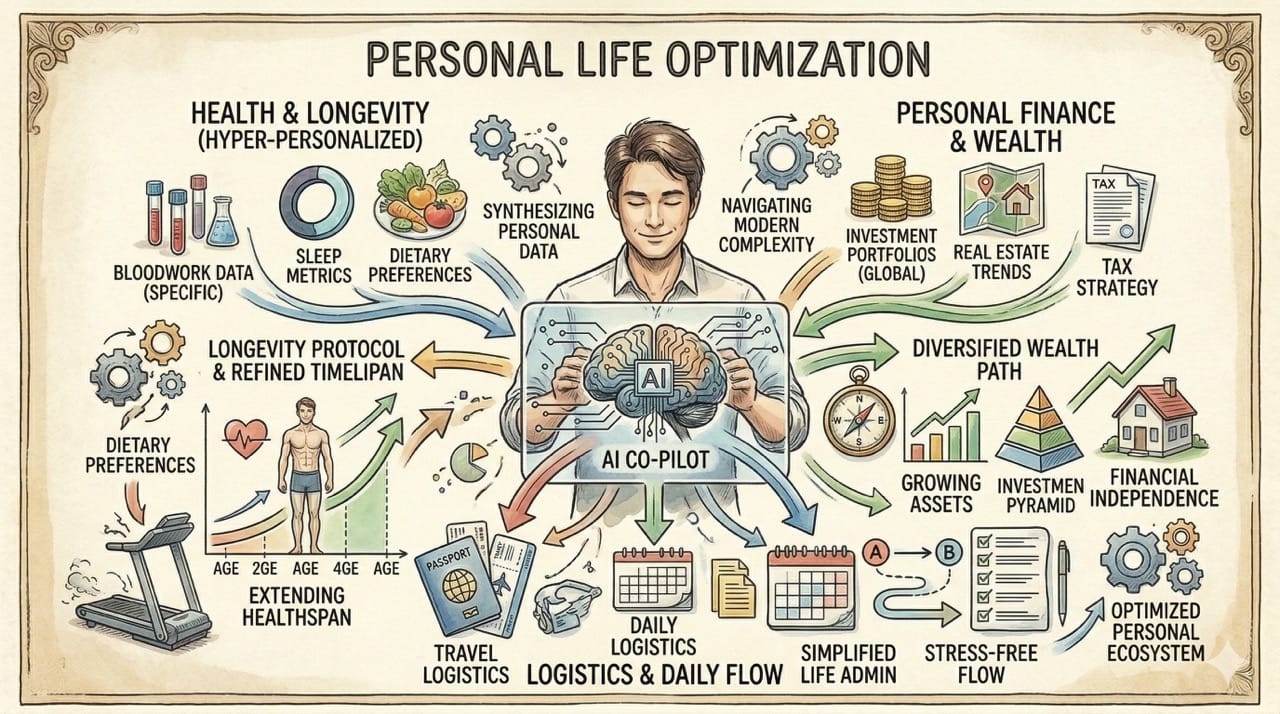
In their personal lives, these individuals use AI to optimize their health, finances, and daily logistics.
They do not just ask a chatbot for a generic workout routine.
They feed the AI their specific bloodwork data, sleep metrics, and dietary preferences to synthesize a hyper-personalized longevity protocol.
They use agents to cross-reference travel logistics, investment portfolios, and real estate market trends.
The AI becomes a co-pilot for navigating the complexities of modern adult life.
The Future of Product Development
The next generation of AI tools will be built specifically for these high-bandwidth users.
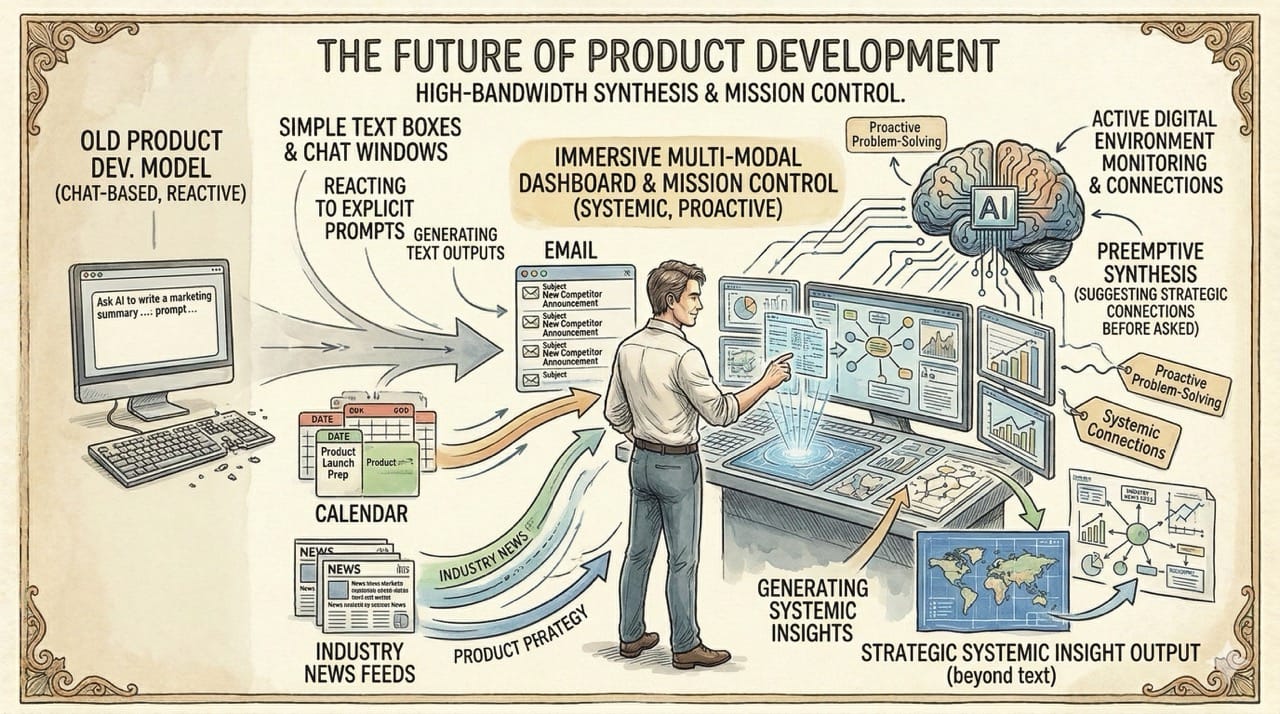
We will move away from simple text boxes and toward immersive, multi-modal dashboards.
Future software will preemptively synthesize data streams before the user even asks a question.
Tools will actively monitor a user's digital environment and suggest strategic connections between their emails, calendar, and industry news feeds.
The product development focus will shift from generating text to generating systemic insights.
The interface will look less like a chat window and more like a dynamic mission control center.
Conclusion: The Blind Spots of Abstraction
However, this immense power creates dangerous new blind spots.
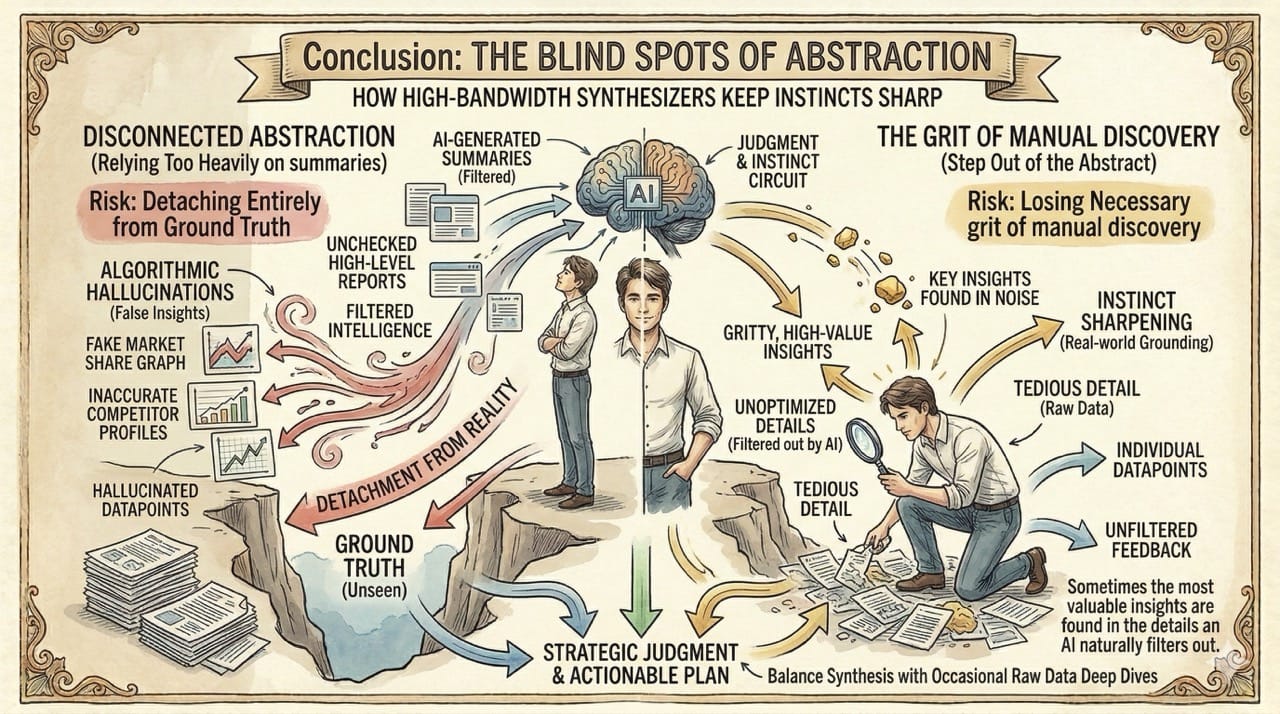
When a synthesizer relies too heavily on AI summaries, they risk detaching entirely from the ground truth.
If you never look at the raw data yourself, you become highly susceptible to algorithmic hallucinations.
There is also a risk of losing the necessary grit of manual discovery.
Sometimes the most valuable insights are found in the tedious, unoptimized details that an AI will naturally filter out.
High-bandwidth synthesizers must purposefully force themselves to occasionally step out of the abstract and do the manual work just to keep their instincts sharp.