The Tax Code is a National Security Threat: Lessons from Sarah Paine and Rory Sutherland
Sarah Paine calls it a "heist." Rory Sutherland calls it an "efficiency trap." Both agree: The US tax code isn't just boring; it is eroding the strategic foundation of the West.

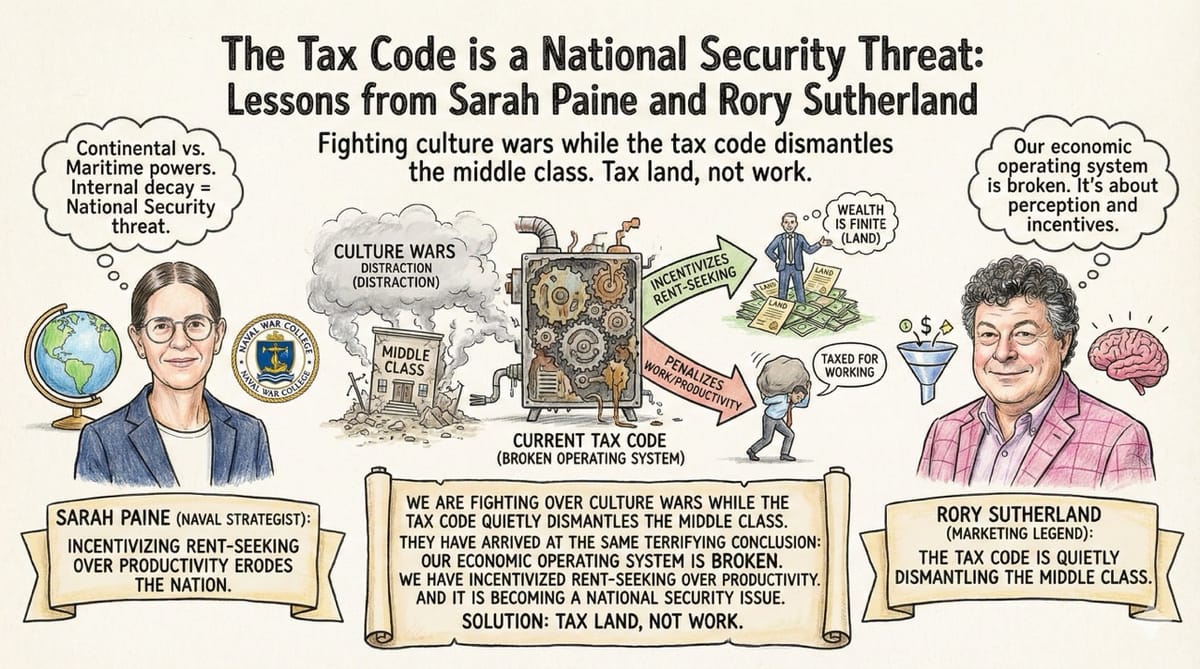
We are fighting over culture wars while the tax code quietly dismantles the middle class. Here is why we need to tax land, not work.
Inspiration: Realizing that while we fight over "Culture Wars" on Twitter and TikTok, the tax code is quietly eroding the foundation of the country, and nobody is talking about it because it’s "boring."
I’ve been studying two very different thinkers recently: Sarah Paine (Naval Strategist) and Rory Sutherland (Marketing Legend).
They come from different worlds, but they have arrived at the same terrifying conclusion: Our economic operating system is broken.
We have incentivized rent-seeking over productivity. And it is becoming a national security issue.
The "Heist" (Sarah Paine)
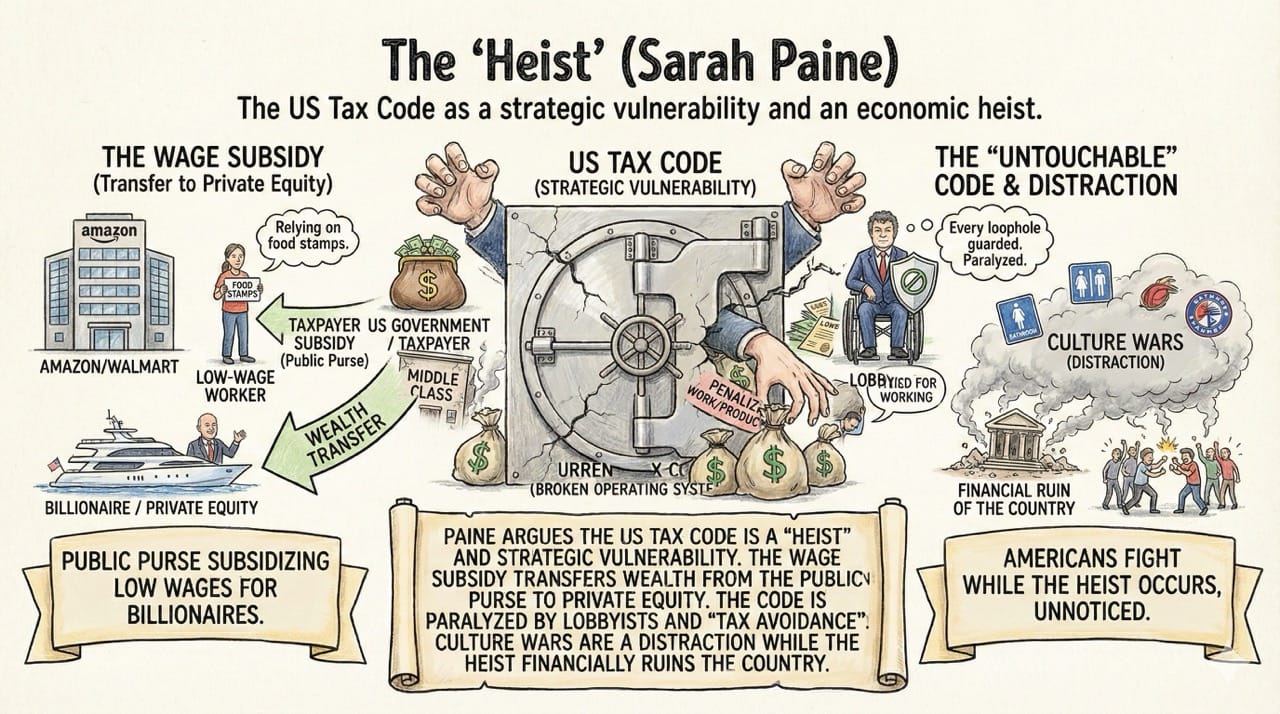
Paine argues that the US tax code is a strategic vulnerability. She describes the current economy as a "heist."
The Wage Subsidy: Major corporations (like Amazon and Walmart) pay workers so little that they rely on food stamps. This means the US government—and by extension, the taxpayer—is subsidizing the low wages paid by billionaires.
It is a transfer of wealth from the public purse to private equity.
The "Untouchable" Code: The tax code is paralyzed. Every loophole has a lobbyist guarding it. We waste billions in "tax avoidance" (unproductive activity) rather than "growth" (productive activity).
The Distraction: Paine argues that Culture Wars (debates over bathrooms, sports teams) are a distraction. While Americans fight over social issues, they fail to notice the heist occurring via the tax code that is financially ruining the country.
The Efficiency Trap (Rory Sutherland)
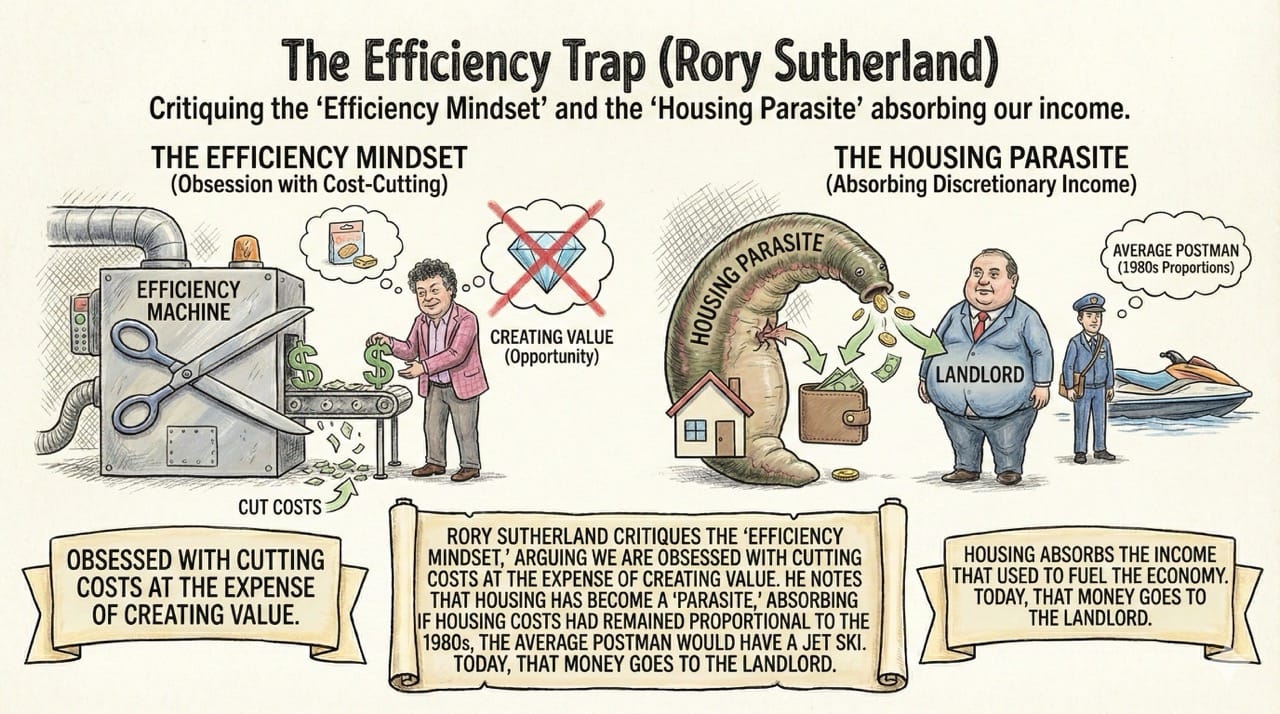
Rory Sutherland attacks the same problem from a behavioral angle. He critiques the "Efficiency Mindset."
We are obsessed with cutting costs (Efficiency) at the expense of creating value (Opportunity).
The Housing Parasite: Sutherland notes that housing has become too expensive, absorbing the discretionary income that used to fuel the economy.
- The Insight: If housing costs had remained proportional to the 1980s, the average postman would have a jet ski. Today, that money goes to the landlord.
The Solution: Tax the Land, Not the Work
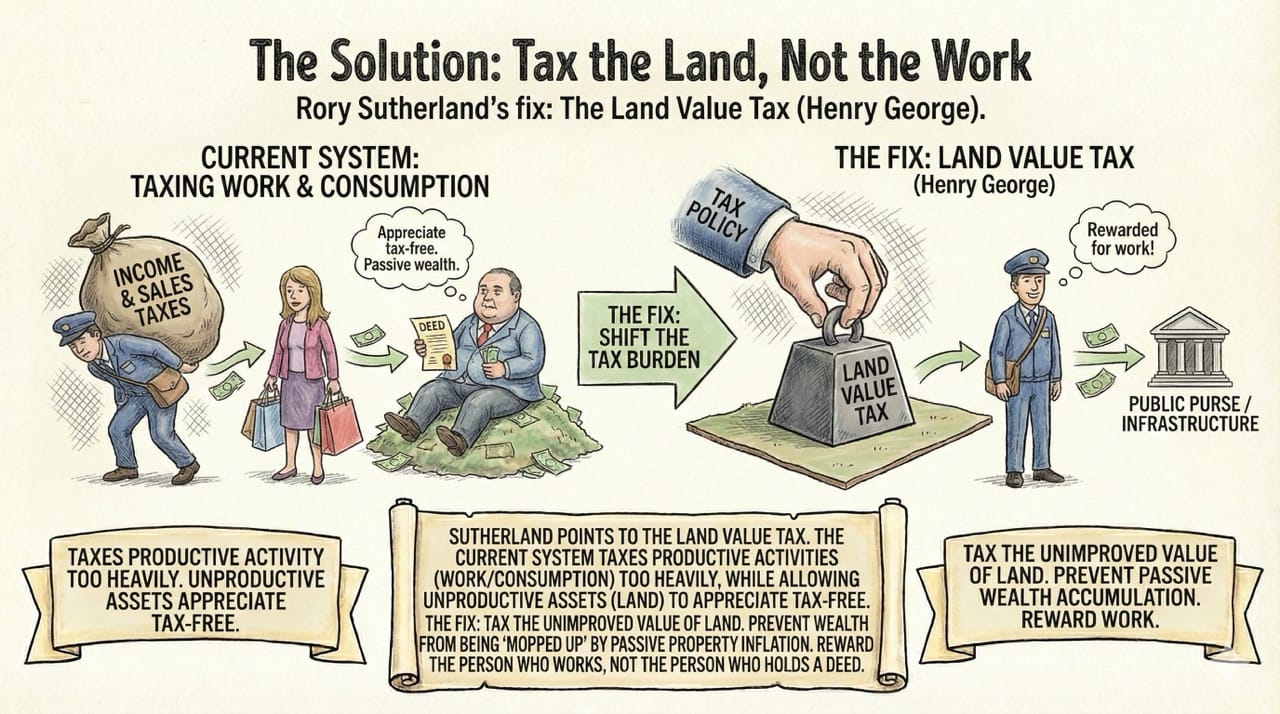
So, how do we fix it? Sutherland points to an old idea: The Land Value Tax (Henry George).
The current system taxes productive activities (work and consumption) too heavily, while allowing unproductive assets (land) to appreciate tax-free.
The Fix: Tax the unimproved value of land. Prevent wealth from being "mopped up" by passive property inflation. Reward the person who works, not the person who holds a deed.
The Economic Value of Leisure
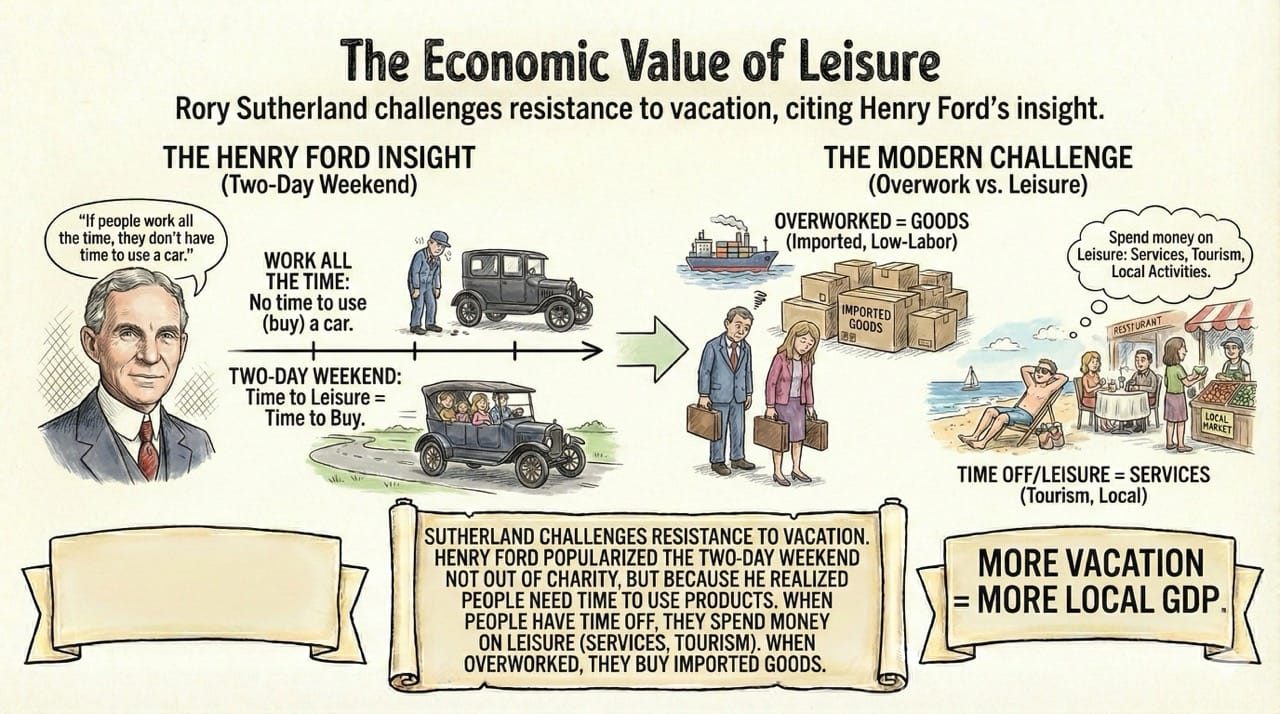
Sutherland also challenges the American resistance to vacation.
He cites Henry Ford, who popularized the two-day weekend not out of charity, but because he realized: "If people work all the time, they don't have time to use (and thus buy) a car."
When people have time off, they spend money on Leisure (services, tourism, local activities). When they are overworked, they buy Goods (imported, low-labor).
More vacation = More local GDP.
Conclusion: The Operating System Update
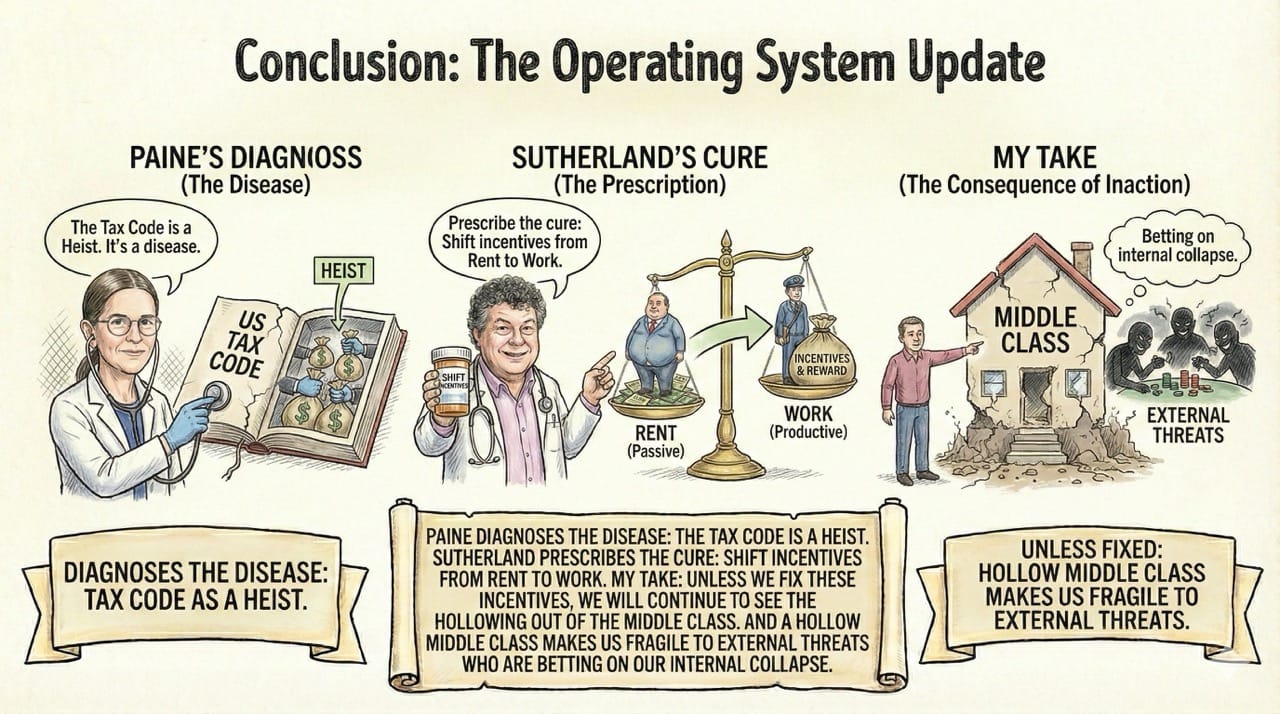
Paine diagnoses the disease: The Tax Code is a Heist. Sutherland prescribes the cure: Shift incentives from Rent to Work.
My Take: Unless we fix these incentives, we will continue to see the hollowing out of the middle class. And a hollow middle class makes us fragile to external threats who are betting on our internal collapse.