The Soft Power Shift: How Video Games and Food Are China’s Trojan Horse
Hollywood and Burgers conquered the world in the 20th century. Wukong and Hot Pot are coming for the 21st. The next superpower war won't be fought with missiles; it will be fought with culture.

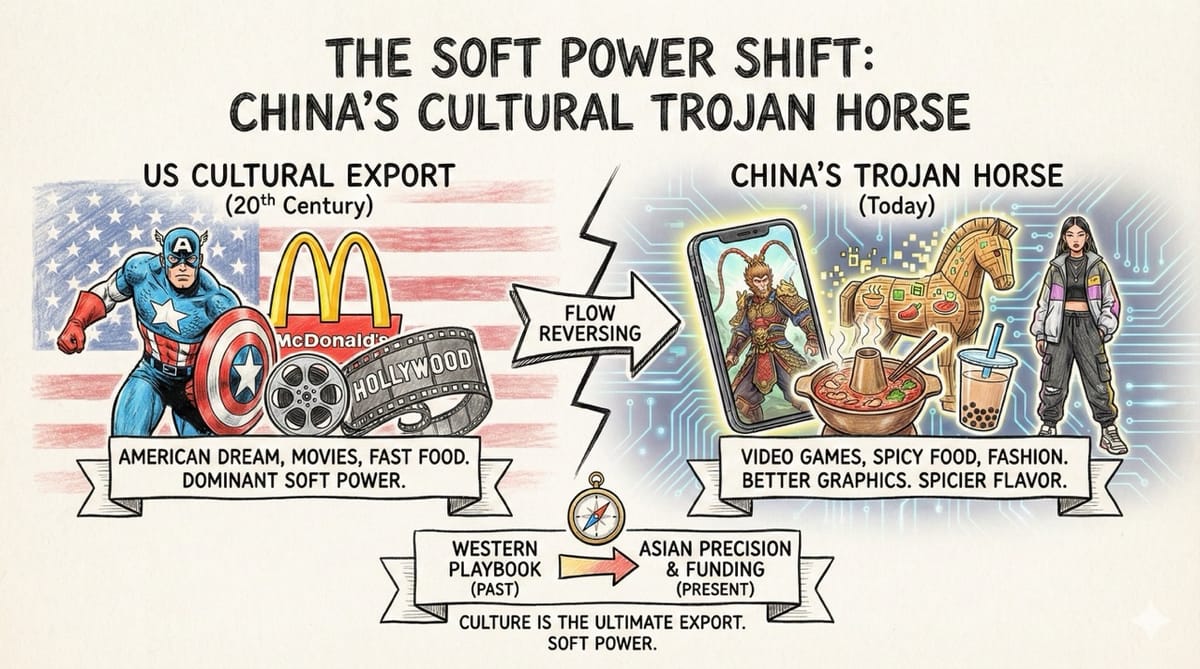
The US exported Captain America and McDonald's to win the 20th century. China is using the same playbook, but with better graphics and spicier food.
Inspiration: A discussion on the China Decode Podcast about how Chinese fashion is quietly taking over the West, and realizing it’s just the tip of the spear.
Culture is the ultimate export. It is Soft Power.
For decades, the US dominated this game. You watched Marvel movies, you ate McDonald's, and you wore Nikes. You bought the "American Dream" before you ever bought an American product. This cultural hegemony meant that when the US wanted to negotiate a trade deal or build a military base, the local population was already primed to like them.
But the flow is reversing. The Asian players have memorized the Western playbook, and they are executing it with a level of precision and funding that the West has forgotten how to muster.
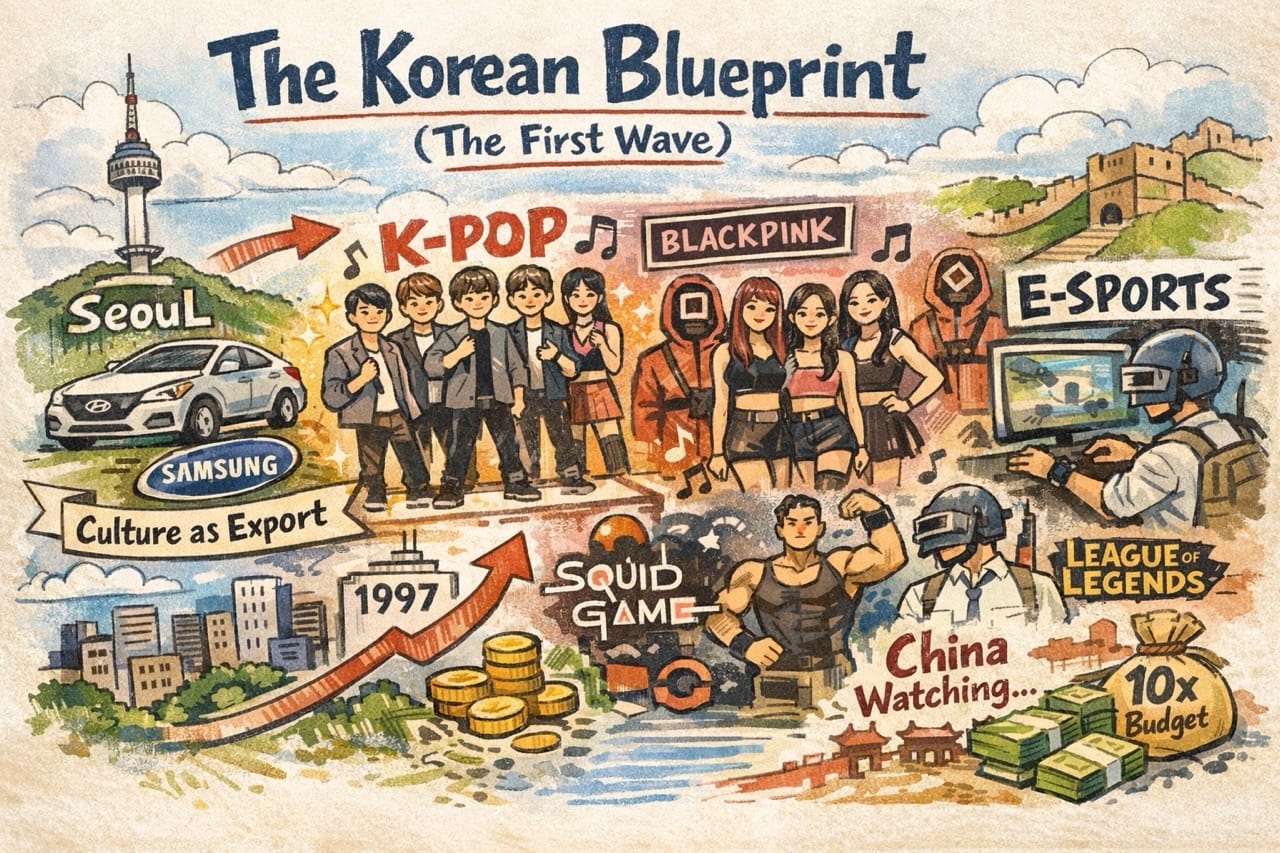
The Korean Blueprint (The First Wave)
Korea proved it was possible. They didn't just export cars (Hyundai) or phones (Samsung); they exported cool.
This wasn't an accident. It was a government strategy. After the Asian Financial Crisis in 1997, South Korea decided to invest heavily in culture as an export.
- Music: K-Pop isn't a genre; it's a meticulously engineered industry. BTS and Blackpink didn't just top charts; they made Korean language and fashion aspirational for teenagers in Ohio and Paris.
- TV: Squid Game and Physical: 100 dominated Netflix, breaking the subtitle barrier. Suddenly, Western audiences were consuming Korean social commentary for entertainment.
- Gaming: They localized League of Legends to the point where they dominate the eSports scene globally. Krafton acquired PUBG, injecting Korean elements into a global shooter.
They made Seoul the cultural capital of Asia. Now, China is watching, and they have 10x the budget.
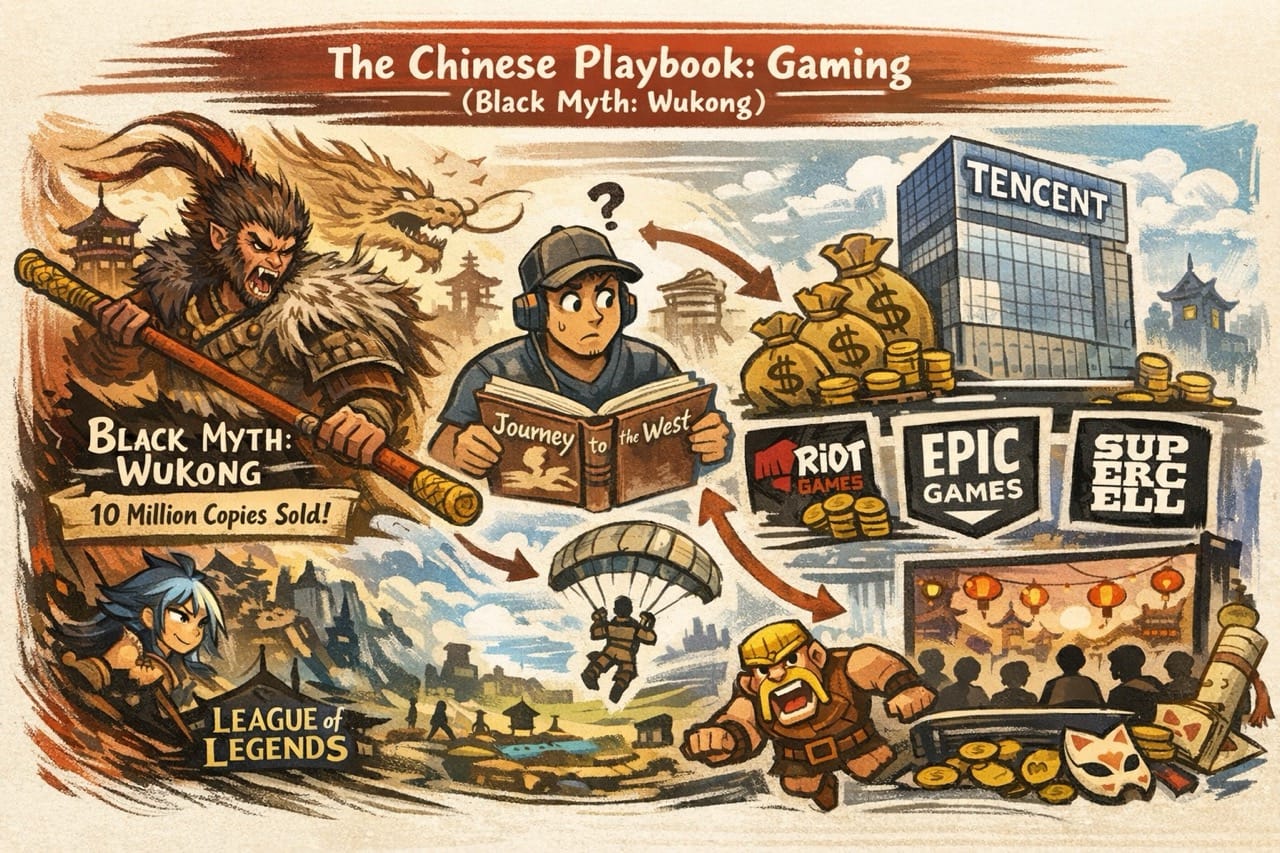
The Chinese Playbook: Gaming (Black Myth: Wukong)
China used to be the factory for Western games. They made the assets; we made the stories. That era is over.
Black Myth: Wukong is the turning point. It is the first Chinese AAA title to shatter global sales records (10 million copies in 3 days). It forces Western gamers to learn Chinese mythology (The Journey to the West) just to understand the mechanics. It normalizes Chinese folklore in the same way God of War normalized Greek mythology.
But the real power is financial infrastructure. Tencent isn't just a participant; they are the landlord.
- They own Riot Games (League of Legends, Valorant).
- They have a massive stake in Epic Games (Fortnite, Unreal Engine).
- They own Supercell (Clash of Clans).
They own the infrastructure of play. They don't need to force Chinese culture down your throat immediately; they just own the platform where you hang out. Slowly, the skins, the events, and the narratives will shift East.
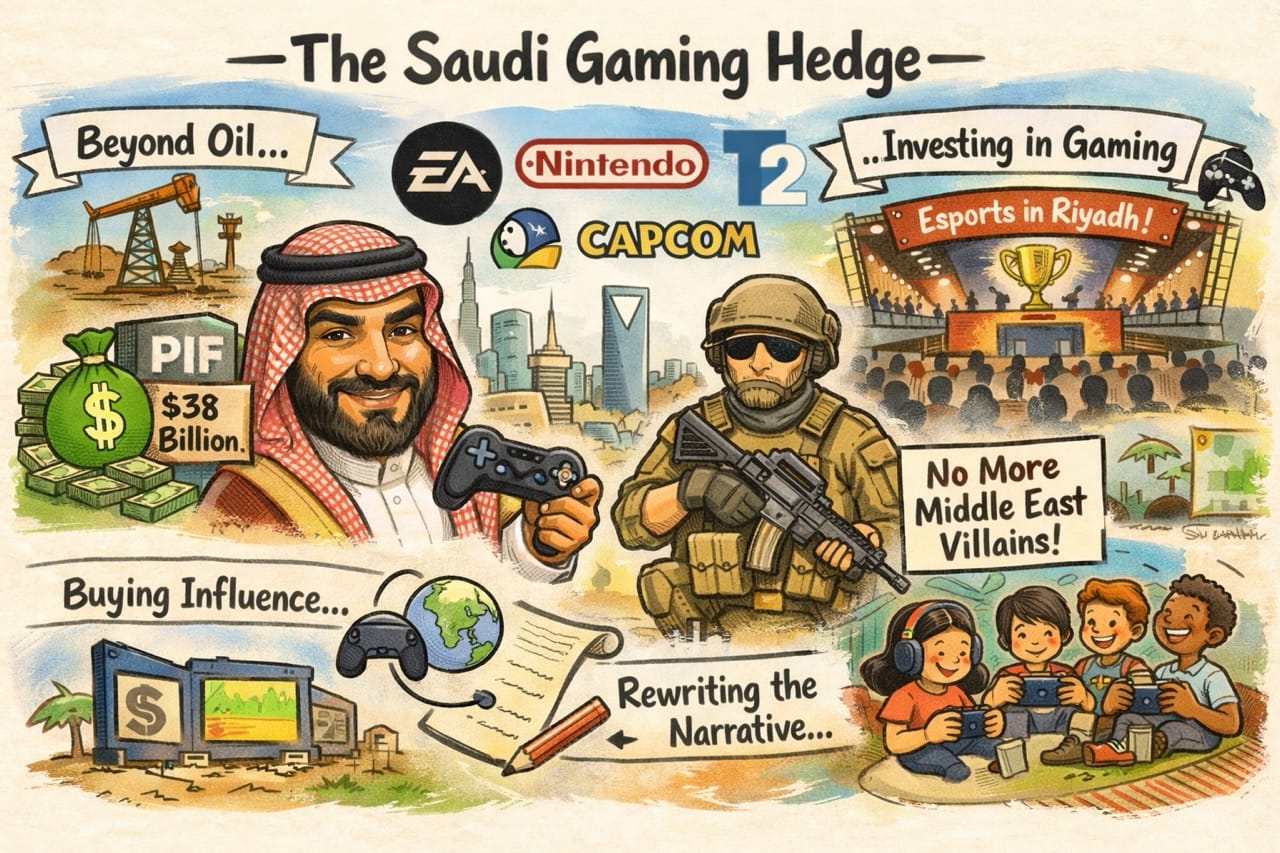
The Saudi Hedge: Why MBS is Buying Electronic Arts
It isn't just China. Look at Saudi Arabia.
Under Mohammed bin Salman (MBS), the Public Investment Fund (PIF) has been aggressively buying stakes in Electronic Arts (EA), Nintendo, Take-Two, and Capcom. They are investing $38 billion to turn Riyadh into a global gaming hub.
Why? Because MBS knows that oil is a dying asset, but Attention is the commodity of the future.
He isn't just "sportswashing" with LIV Golf; he is "gamewashing." By owning a seat at the table of EA (makers of FC/FIFA and Battlefield), Saudi Arabia buys influence over how the Middle East is portrayed in digital media.
If you own the game studio, you ensure the villains in the next blockbuster shooter aren't from your region. You ensure the next massive esports tournament is hosted in Riyadh. It is the ultimate rebranding strategy: buying the childhoods of the next generation.
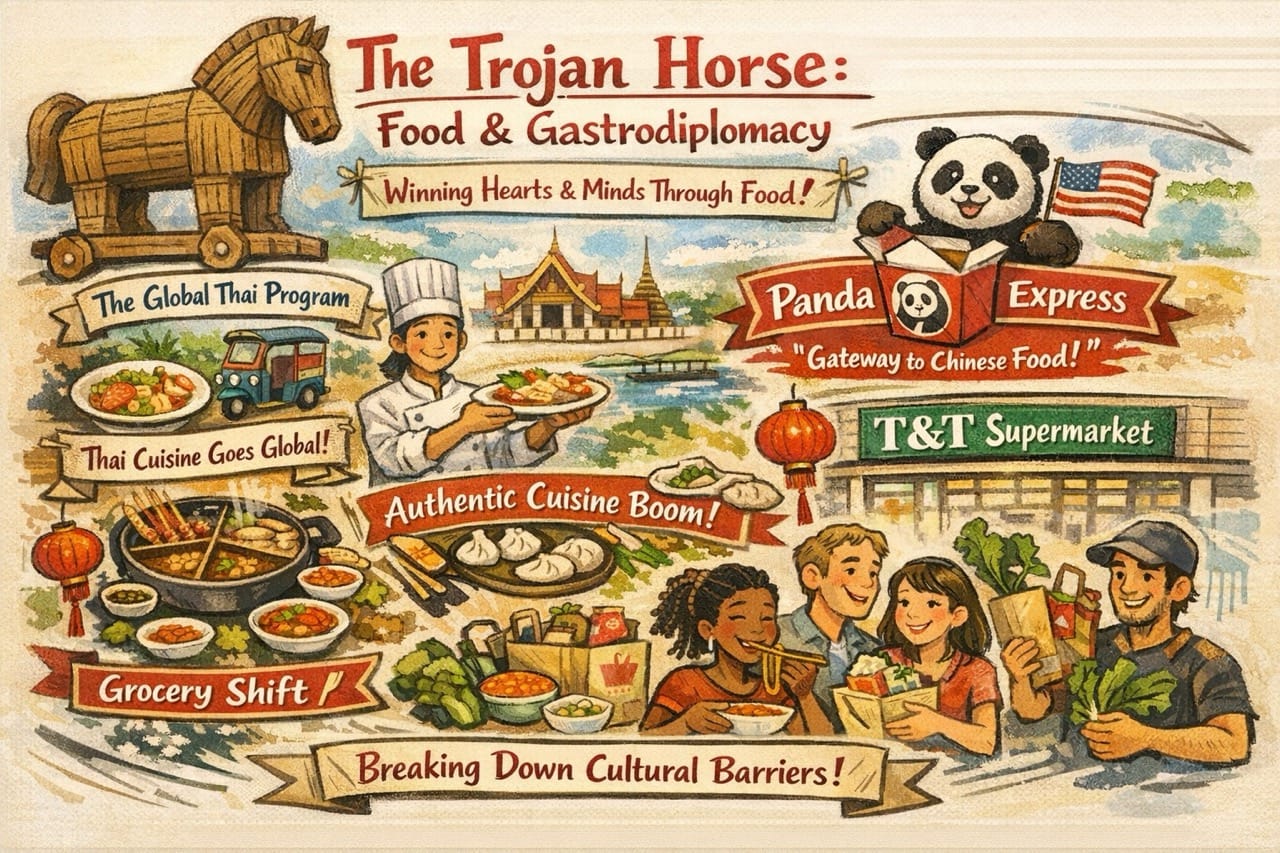
The Trojan Horse: Food & Gastrodiplomacy
Food is the easiest way to win hearts and minds. If you love a country's food, it is very hard to hate its people.
Thailand pioneered this with "Gastrodiplomacy." The Thai government launched the "Global Thai" program to train chefs and export them abroad, aiming to increase the number of Thai restaurants worldwide. It worked. Thai food is now a global staple.
China is waking up to this potential.
- Panda Express: It’s Americanized, sure. But it’s the "gateway drug." It makes the flavor profile familiar.
- Authenticity Boom: We are seeing a massive boom in authentic chains like Haidilao (Hot Pot) expanding into US and European cities. These aren't cheap takeouts; they are premium dining experiences.
- The Grocery Shift: Look at T&T Supermarkets in Canada. Loblaws bought them, and they are expanding aggressively. They aren't just for Chinese expats anymore; they are for everyone who wants better produce and dumplings.
When the average Canadian family shops at a Chinese supermarket for their weekly groceries, the cultural barrier has effectively dissolved.
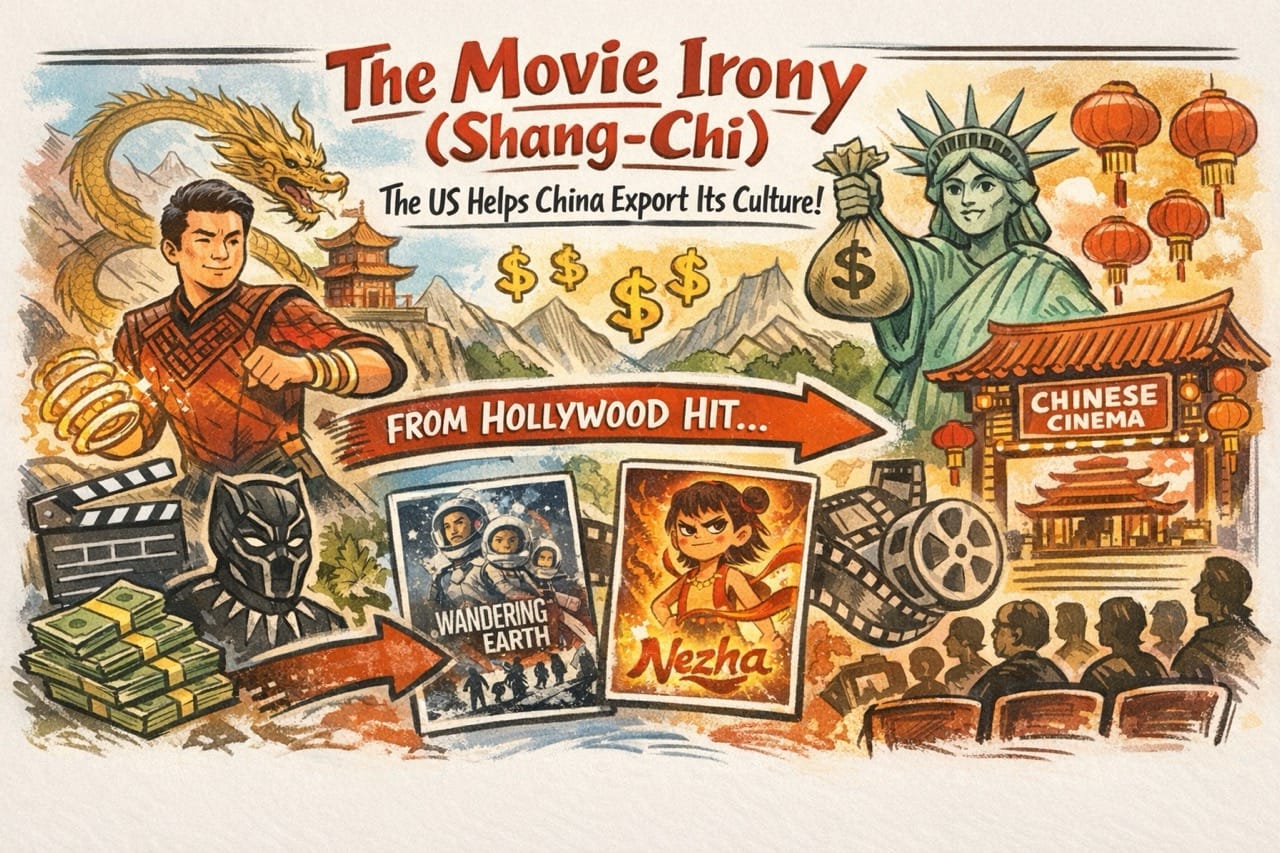
The Movie Irony (Shang-Chi)
Ironically, the US is helping China export its culture.
Marvel’s Shang-Chi was a massive hit. It introduced Chinese martial arts mysticism and aesthetics to the mainstream MCU audience.
Just as Black Panther proved African stories sell, Shang-Chi proved Chinese stories sell. This validates the market. It opens the door for domestic Chinese blockbusters (like The Wandering Earth or Nezha) to cross over. Western audiences are now primed for the visual language of Chinese cinema.
Prediction: The US will realize this and try to either subsidize or make it easier for IP-holders like Disney to produce and export more content.
Conclusion: The Cultural Silk Road
The West thinks China is just a factory or a military threat. They are missing the bigger picture.
China is building a Cultural Silk Road. They are laying the fiber optic cables of culture—through games, food, and film—that will carry their values to the next generation.
My Prediction: In 10 years, your kids will know the backstory of the Monkey King better than King Arthur. They will eat soup dumplings more often than burgers. And they won't even realize they are participating in a geopolitical shift. They will just think it tastes good.