The Illusion of Safety: Why EU Tech Workers Will Be Replaced by AI Faster Than Americans
The European Union regulated tech to protect its citizens. In the process, they created a hyper-specialized workforce perfectly primed for AI replacement. Meanwhile, the chaotic US market built workers who adapt faster than machines can learn.
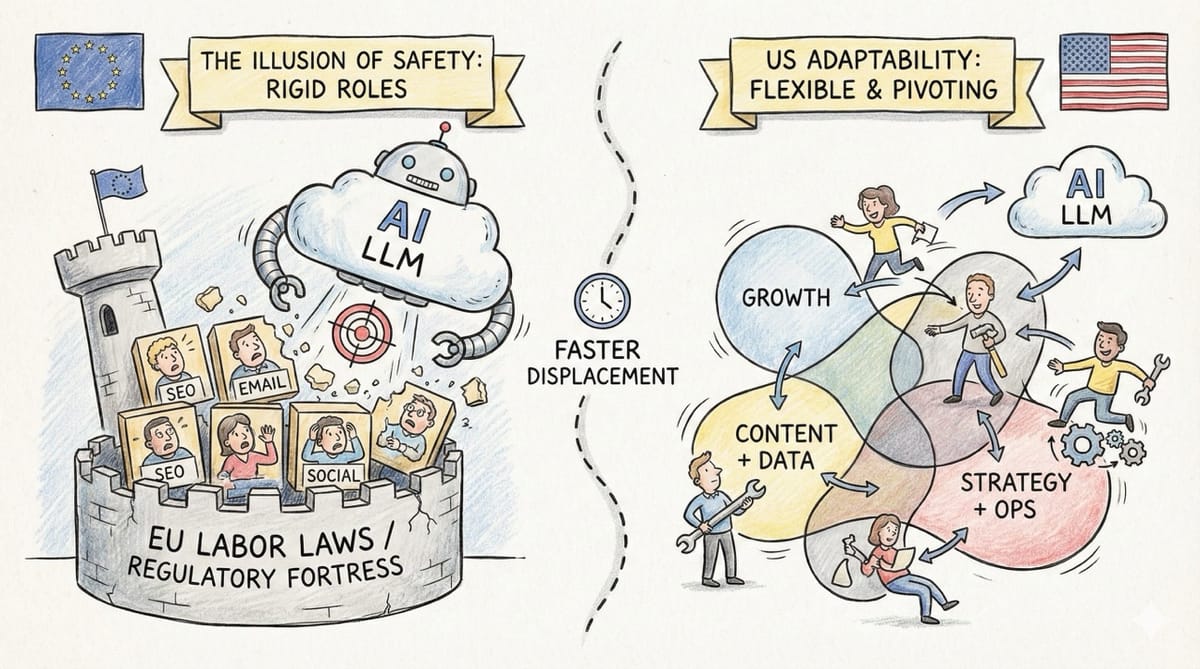
Labor laws cannot protect you from technological obsolescence. By forcing workers into rigid, single-purpose roles, the EU has accidentally built the perfect target for the next generation of LLMs.
Inspiration: Comparing the job descriptions of European marketers with their American counterparts. Realizing that the European desire for regulatory safety has completely destroyed their ability to pivot in the age of artificial intelligence.
We often assume the European Union is the safest place on earth to be an employee.
They have incredibly strong labor laws and aggressive tech regulations designed to protect human workers from corporate greed.
However, this regulatory fortress has inadvertently created the perfect target for artificial intelligence.
The EU tech worker is about to be replaced much faster than their American counterpart.
The mechanism driving this displacement is exactly what was supposed to keep them safe.
The Trap of Hyper-Specialization
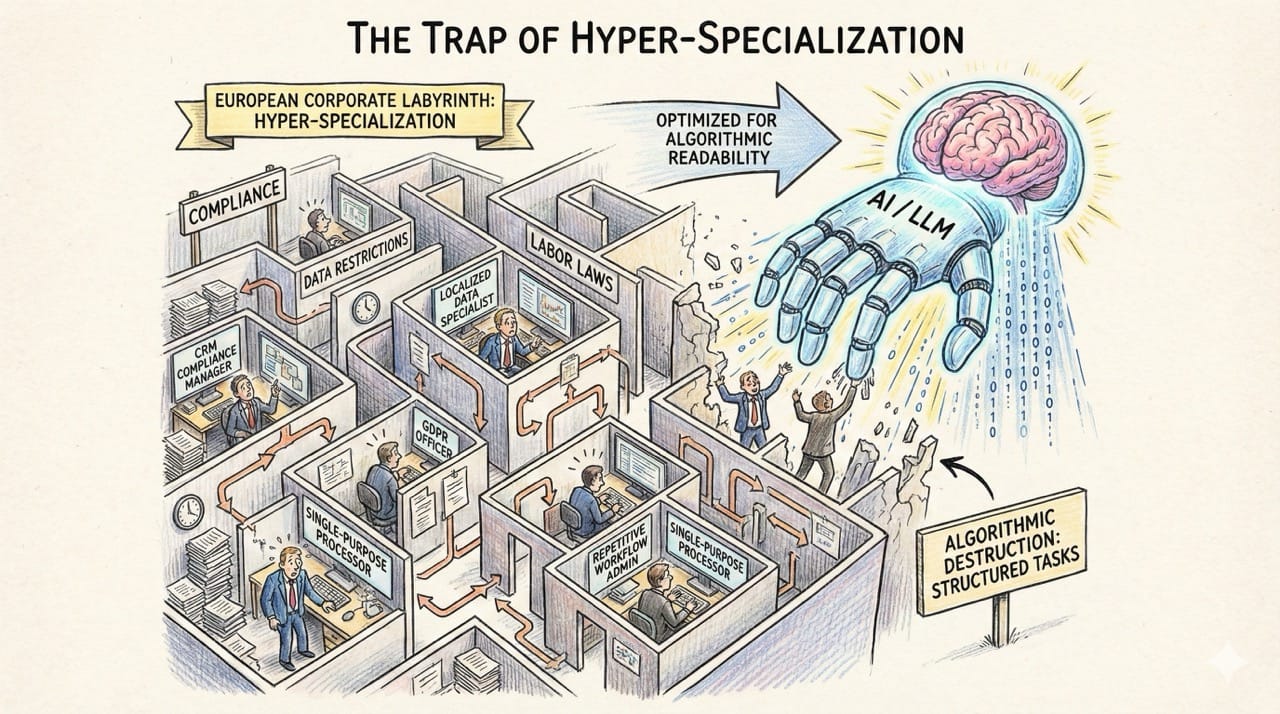
European companies have spent the last decade navigating a labyrinth of compliance, data restrictions, and labor laws.
This created a culture of extreme corporate caution and hyper-specialized job roles.
You rarely see a scrappy generalist in a European corporate tech firm.
Instead, you see highly specific roles like a "CRM Compliance Manager" or a "Localized Data Specialist."
Their entire job is to manage a single, repetitive workflow within strictly defined parameters.
They are not allowed to step outside their lane.
This extreme specialization is exactly what large language models are designed to destroy. Artificial intelligence still struggles with chaotic, multi-disciplinary problem solving.
But it absolutely excels at highly structured, single-purpose tasks.
If your entire job description can be mapped out in a predictable flow chart, you are competing directly with a machine.
The EU essentially optimized its workforce to be perfectly readable by an algorithm.
The US Outsourcing Advantage
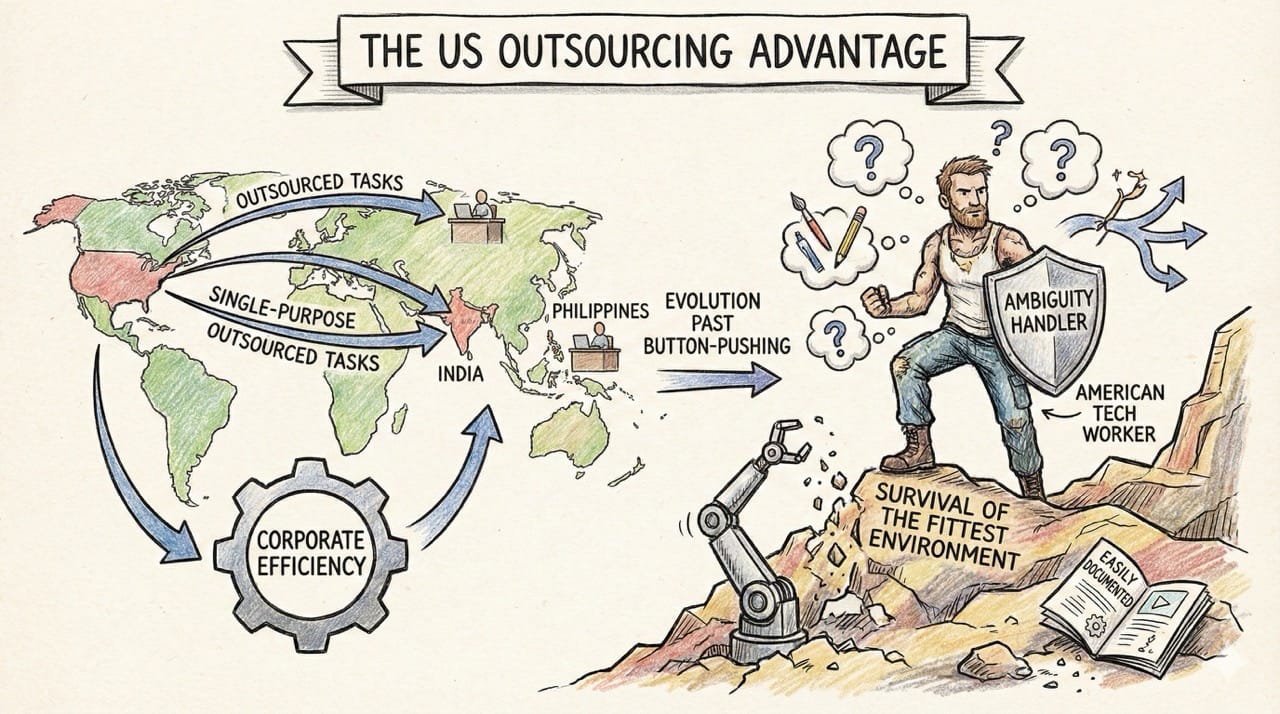
The United States labor market experienced this exact structural shift years ago. Long before ChatGPT existed, US companies relentlessly outsourced their single-purpose, repetitive tasks.
Workflows were shipped to countries like the Philippines or India to maximize profit margins.
Because of this brutal corporate efficiency, the domestic American tech worker was forced to adapt.
They had to evolve past basic button-pushing to survive. They had to justify their high salaries by offering something that could not be easily documented and shipped overseas.
As a result, the American tech sector became a survival-of-the-fittest environment. The workers who remained were the ones who could handle ambiguity.
They had already been filtered for the exact skills that AI currently lacks.
The Era of the Growth Hacker
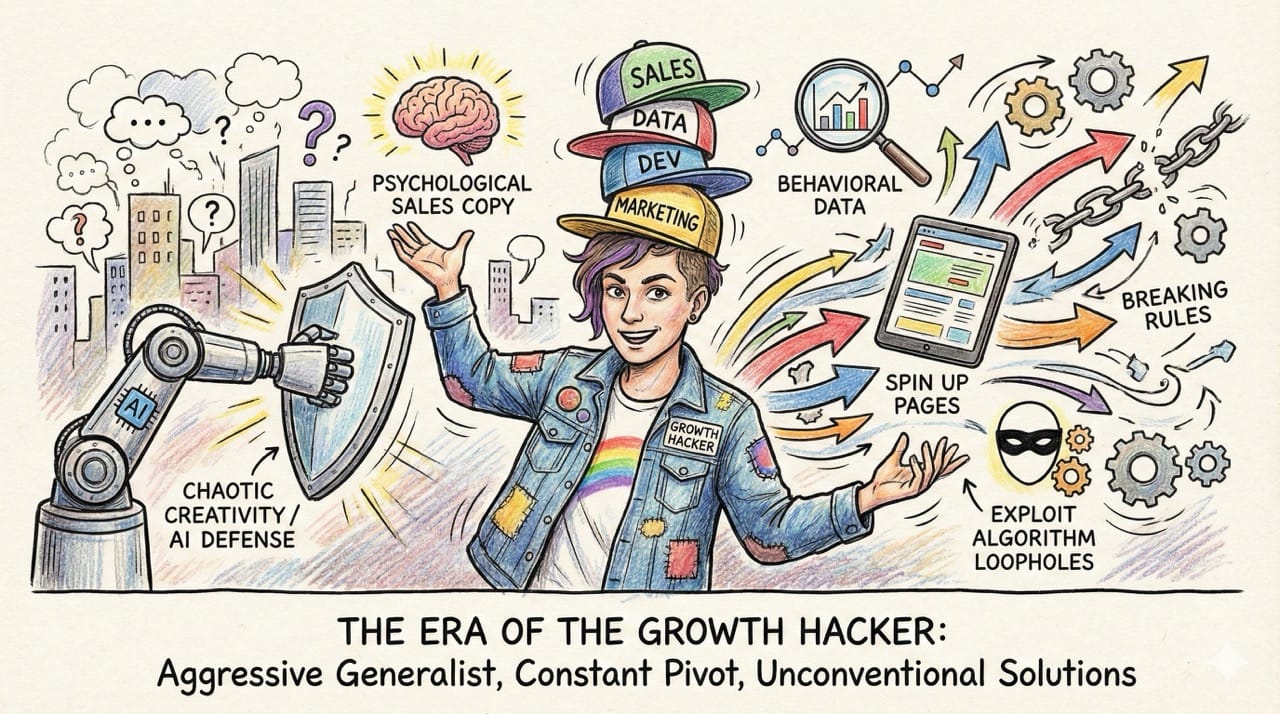
Because of this constant pressure, the surviving US workers became aggressive generalists.
They are required to wear multiple hats, pivot constantly, and find highly unconventional solutions to complex business problems.
An American growth hacker does not just manage a CRM system.
They write the psychological sales copy, analyze the behavioral data, spin up the landing pages, and exploit loopholes in the Meta Ads algorithm.
They are rewarded for breaking the traditional rules and taking calculated risks. This chaotic creativity is the ultimate defense against artificial intelligence.
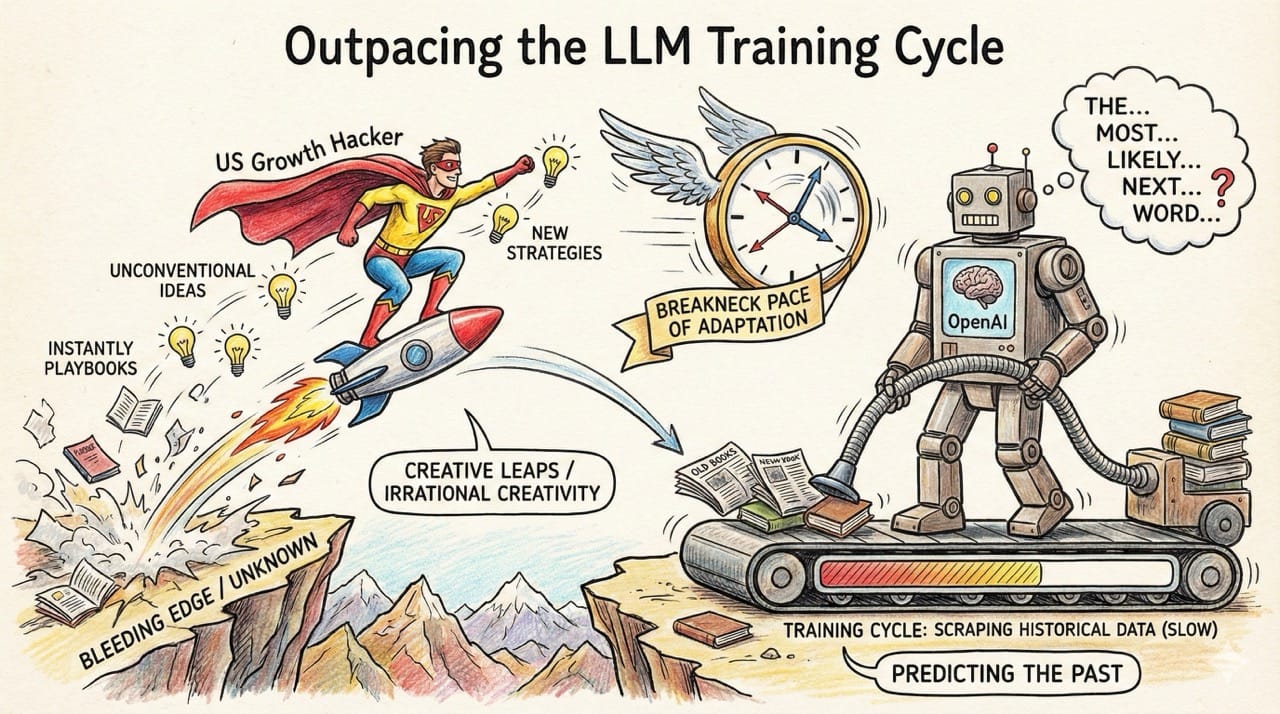
Outpacing the LLM Training Cycle
US workers survive by pivoting and adopting new strategies at a breakneck pace.
They test unconventional ideas faster than OpenAI can scrape the internet to train their next foundational model.
By the time an AI officially learns a new marketing playbook, the American growth hacker has already abandoned it.
They survive by constantly operating on the bleeding edge of the unknown. An LLM can only predict the most likely next word based on historical data.
It cannot predict the deeply irrational, creative leaps required to capture human attention in a saturated market.
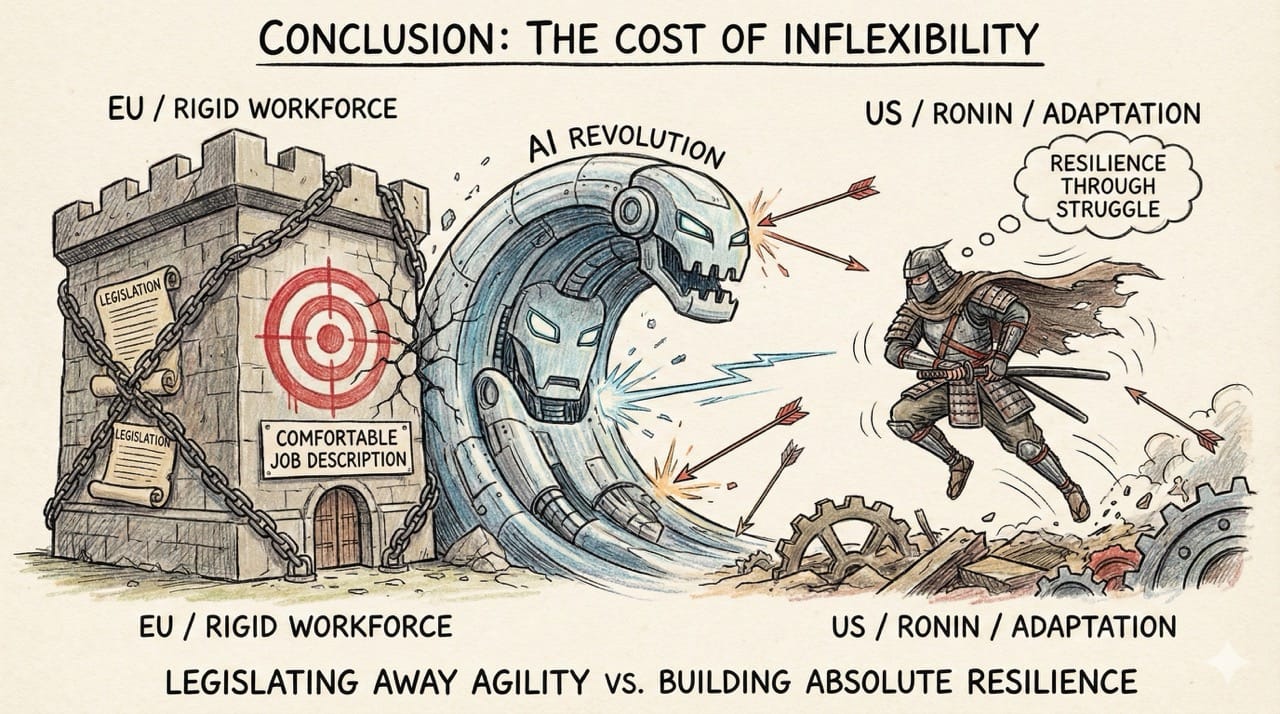
Conclusion: The Cost of Inflexibility
The European Union is facing a massive structural economic risk. Their workforce is simply too rigid to survive the coming transition.
By legislating away risk, they also legislated away the agility required to outmaneuver the AI revolution.
The American tech worker lives like a Ronin, constantly adapting to a hostile, zero-loyalty environment.
That daily struggle is exhausting, but it builds absolute resilience. In the age of artificial intelligence, a comfortable job description is just a bullseye.