The Future of Tax: Why We Will Start Taxing Robots
If robots take all the jobs, who pays the taxes? The answer isn't income tax; it's a Robot Tax. We are moving to a world where the cost of AI is just the cost of energy, and that energy bill will fund society.
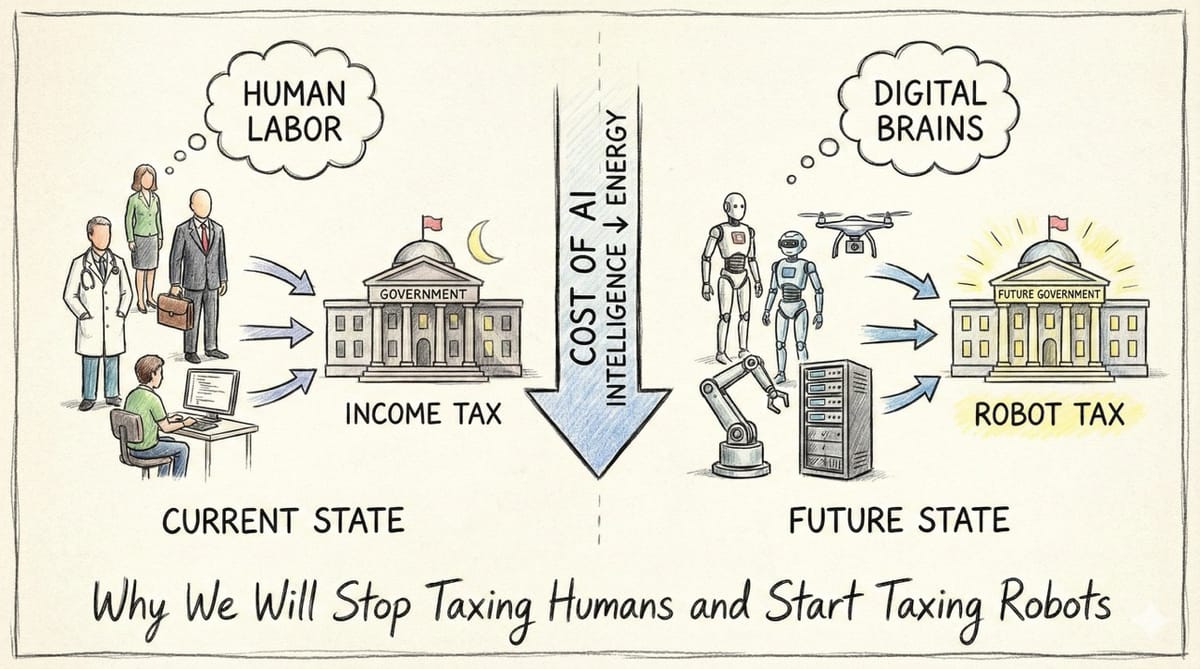
We worry about unemployment. But the bigger problem is the tax base. If AI drives the cost of intelligence to zero, the government needs a new way to keep the lights on.
Inspiration: Realizing that if OpenAI achieves its goal, the marginal cost of a doctor, a lawyer, and a coder drops to the price of a kilowatt-hour.
The cost of AI is plummeting. Soon, the cost of intelligence will effectively be the Cost of Energy.
When you can rent a digital brain for $0.01/hour, human labor becomes a luxury good. This creates a crisis. Not just for workers, but for the Government.
- Current State: Governments run on Income Tax.
- Future State: If robots do the work, Income Tax evaporates. Robots don't get paychecks. They don't buy houses. They don't pay VAT.
The "Robot Tax" Solution
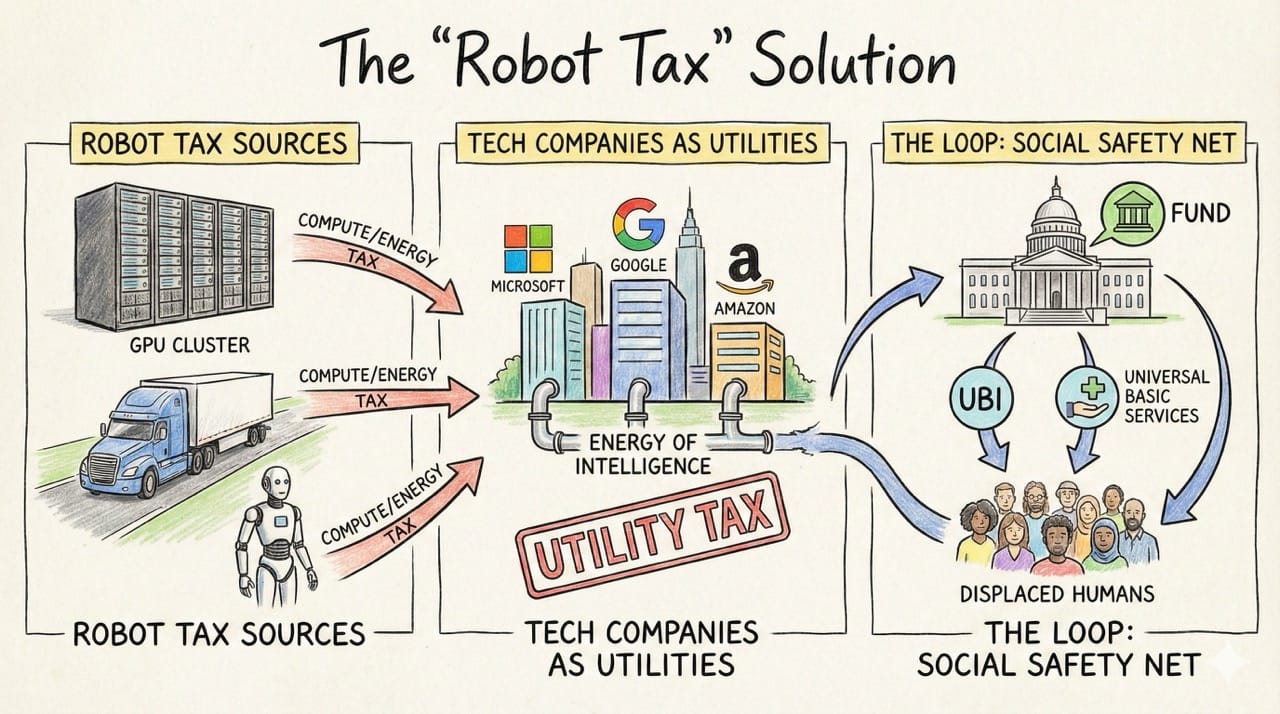
To mitigate the collapse of the tax base, governments will have to implement a Robot Tax (or a "Compute Tax").
How it works: Every GPU cluster, every autonomous truck, and every humanoid robot is taxed based on its output or its energy consumption.
- Tech Companies as Utilities: Microsoft, Google, and Amazon become the new oil companies. They provide the "Energy of Intelligence." They will be taxed like utilities.
- The Loop: This tax revenue funds the social safety net (UBI or Universal Basic Services) for the displaced humans.
The Deflationary Dividend
This sounds dystopian (mass unemployment). But there is a flip side: Deflation.
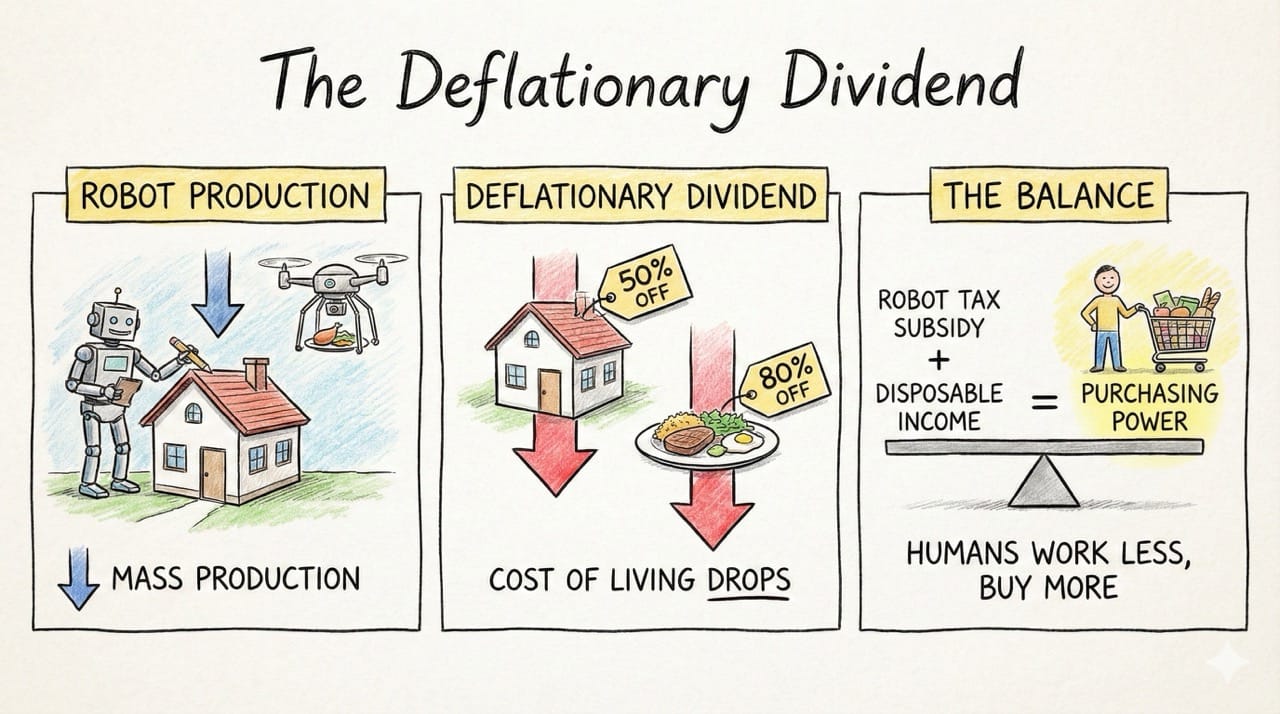
If robots produce everything—food, housing, transport—the cost of living drops.
- A robot-built house costs 50% less.
- Autonomous food delivery costs 80% less.
The Balance: The Robot Tax subsidizes the cost of goods. Even if disposable income drops (because humans work less), purchasing power might actually increase because everything is cheaper.
Conclusion: The Energy Currency
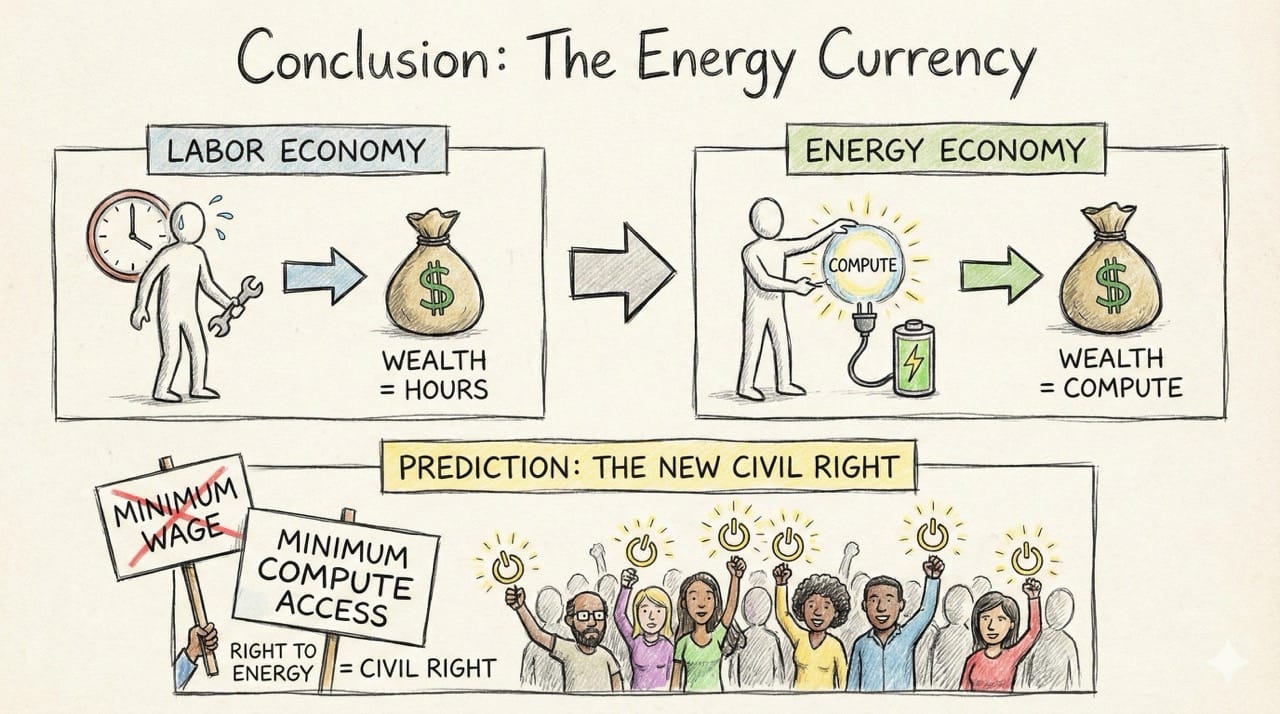
We are moving from a Labor Economy to an Energy Economy. In the future, your wealth won't be measured by how many hours you work. It will be measured by how much Compute you control.
My Prediction: The next great political debate won't be about "Minimum Wage." It will be about "Minimum Compute Access." The right to energy will be the new civil right.