The End of the Infinite Checkbook: Why Tech is About to Pause the AI Spending Spree
Wall Street just told Big Tech to stop spending. The "AI Hangover" is here. Amazon and Microsoft are being punished, but Meta is surviving because Zuckerberg owns the one thing investors can't argue with: Control.
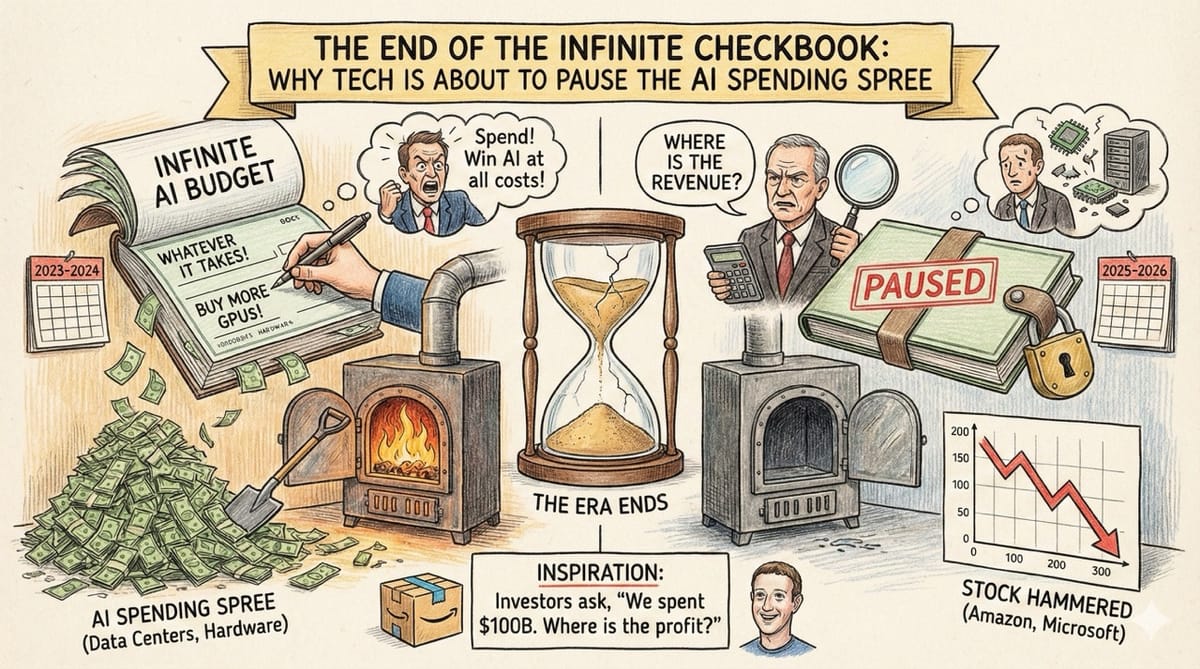
For two years, the message was "Spend whatever it takes." Now, investors are asking "Where is the revenue?" The answer might crash the hardware market.
Inspiration: Reading the brutal earnings reports where Amazon got hammered for "excessive spending," while Zuckerberg smiled through a massive CapEx bill because his revenue growth justified it.
For two years, the mandate in Silicon Valley was simple: Spend whatever it takes to win AI.
That era just ended.
In recent earnings reports, Amazon and Microsoft announced massive CapEx increases to build more data centers. Their stocks got hammered.
Investors finally asked the question: "We spent $100B on GPUs. Where is the profit?"
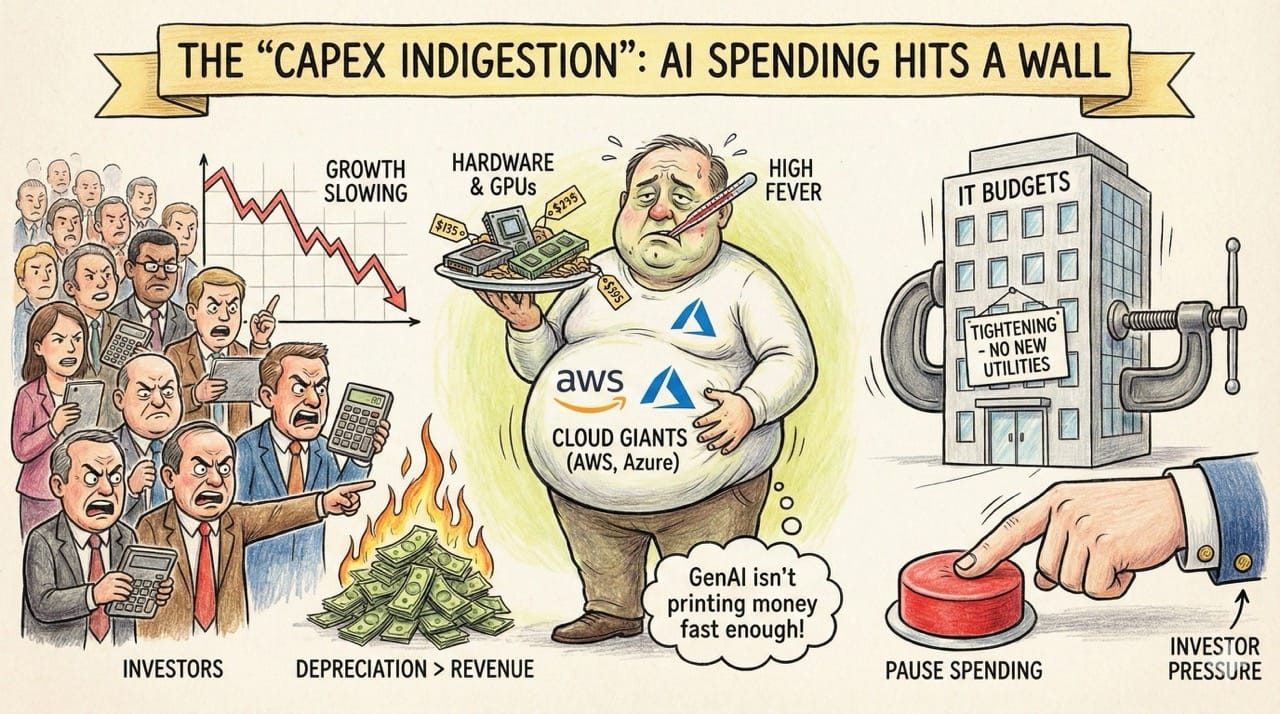
The "CapEx Indigestion"
Investors realized that "GenAI" isn't printing money fast enough to cover the depreciation of the hardware.
Businesses with cloud infrastructure (AWS, Azure) are susceptible. Their growth is slowing down. Selling "AI" as a utility is hard when corporate IT budgets are tightening.
Investors shape company decisions. The drops in Microsoft and Amazon will force them to pause. They don't have a choice.
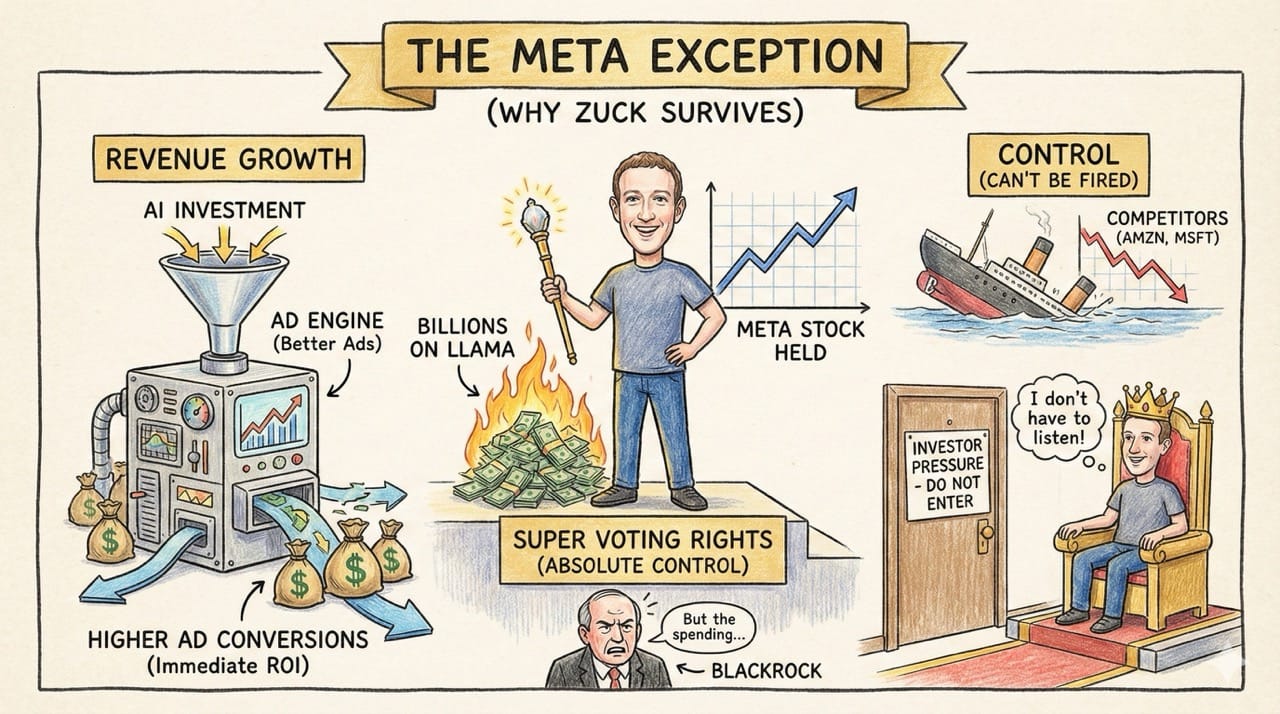
The Meta Exception (Why Zuck Survives)
Meta was the only survivor. They announced huge spending, but their stock held.
Why? Two reasons.
- Revenue Growth: Meta isn't selling "AI." They use AI to make Ads better. Their investment instantly translates to higher ad conversions. The ROI is immediate.
- Control: Zuckerberg has Super Voting Rights. He controls the company. He doesn't have to listen to BlackRock. He can burn billions on Llama because he can't be fired.
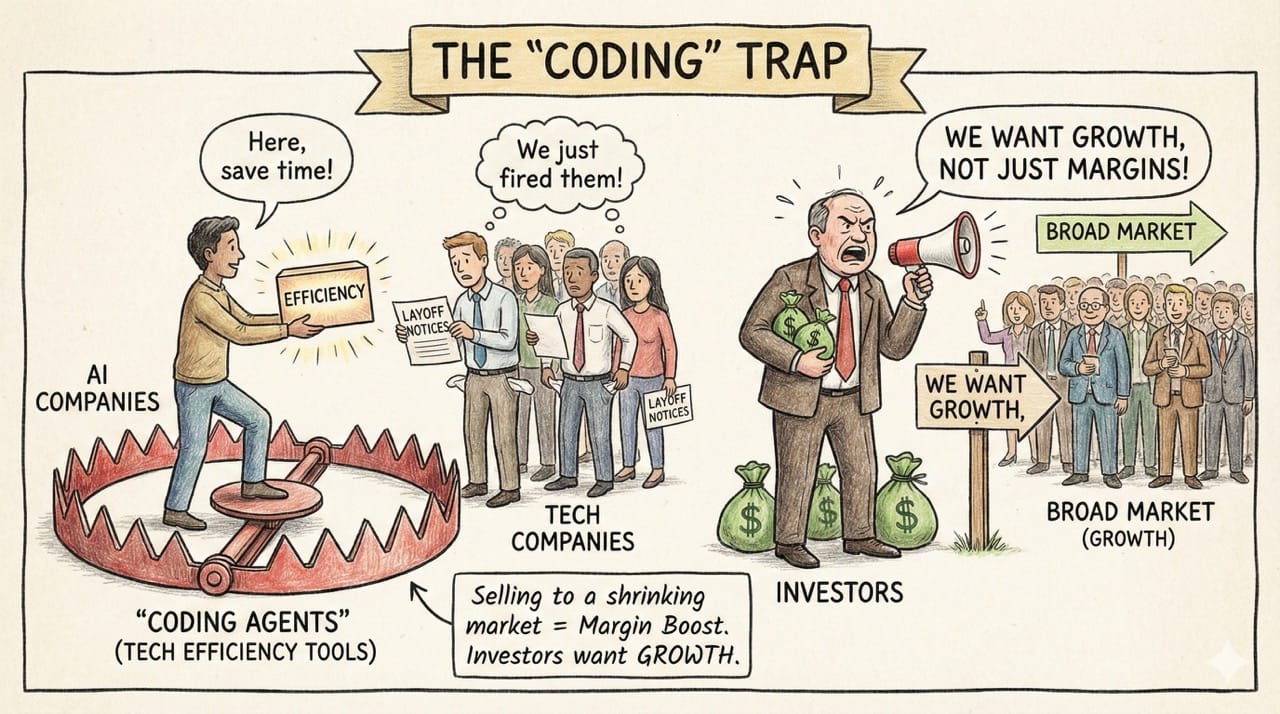
The "Coding" Trap
Everyone focused on "Coding Agents." It makes sense technically, but not commercially.
They are selling efficiency tools to Tech Companies... who just laid off thousands of developers. Selling to a shrinking market doesn't drive growth; it just boosts internal margins. Investors want growth.
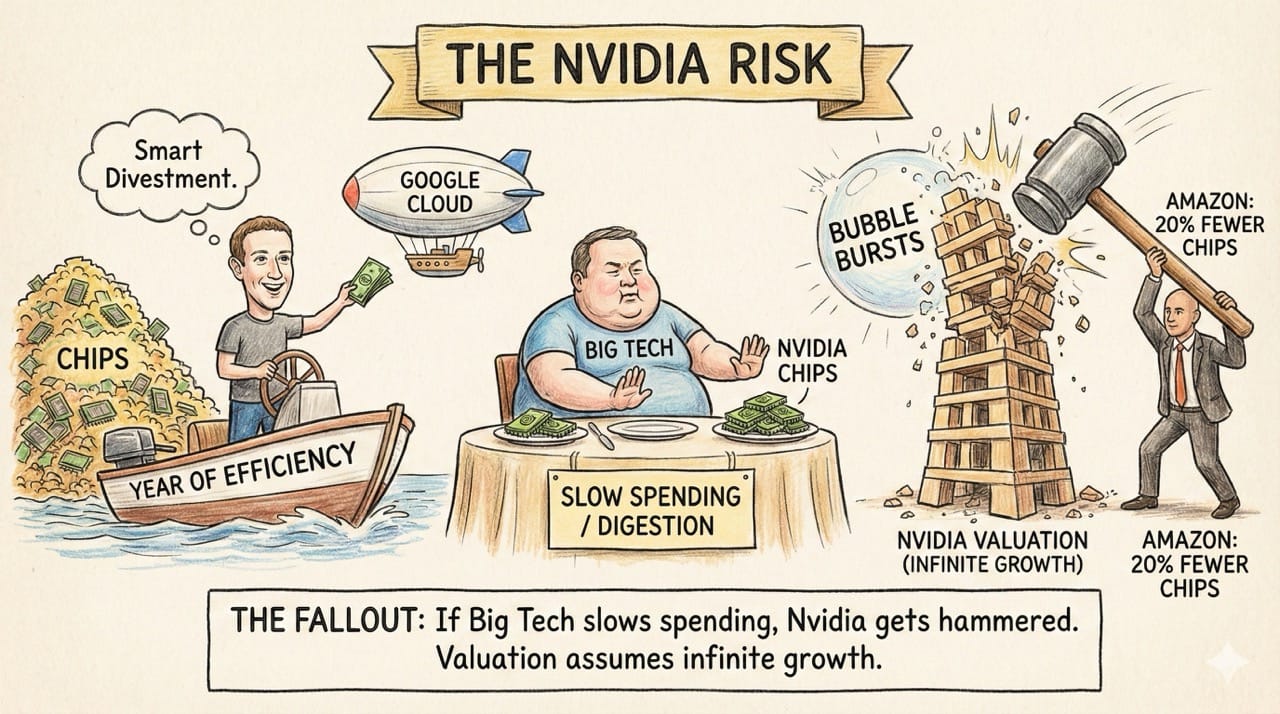
The Nvidia Risk
Zuckerberg steered the "Year of Efficiency" much sooner than anyone else. He also smartly divested some CapEx to Google Cloud, lowering his reliance on hoarding chips.
The Fallout: If Big Tech slows down spending to "digest" their infrastructure, Nvidia gets hammered. Their valuation assumes infinite growth. If Amazon buys 20% fewer chips next quarter, the bubble bursts.
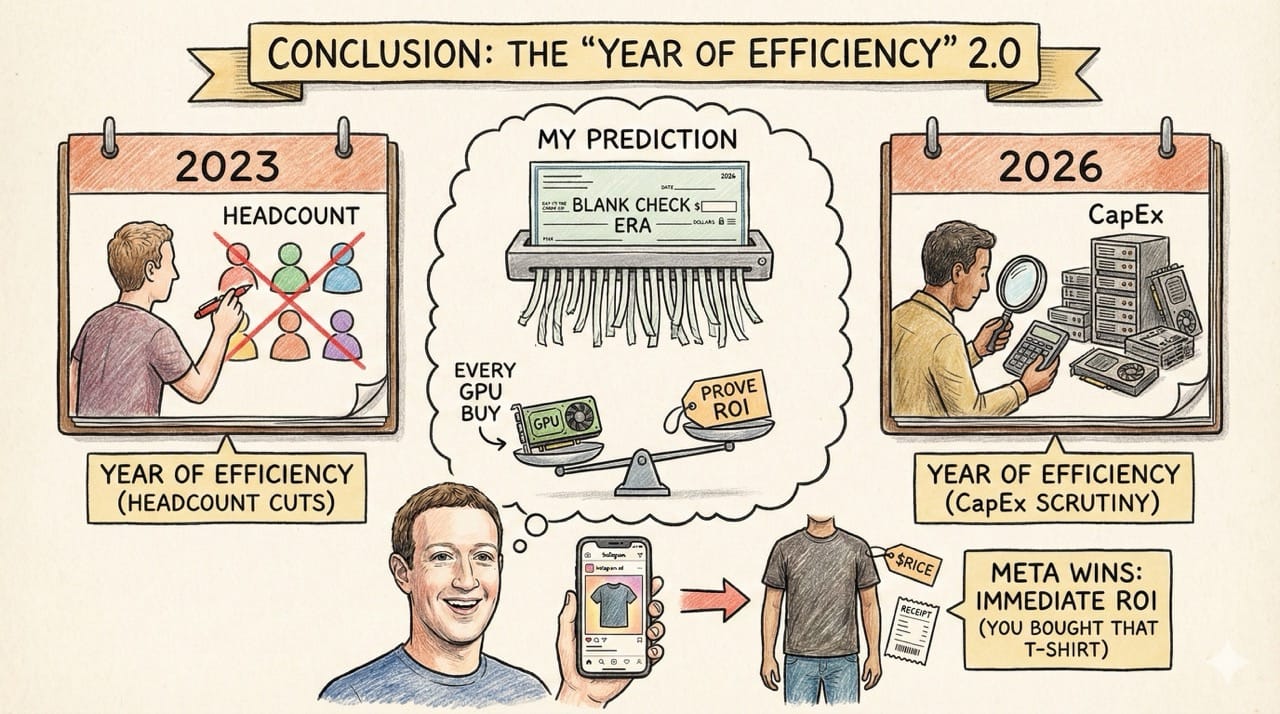
Conclusion: The "Year of Efficiency" 2.0
2023 was the "Year of Efficiency" for headcount. 2026 will be the "Year of Efficiency" for CapEx.
My Prediction: The "Blank Check" era is over. Companies will have to prove the ROI of every GPU they buy. Meta wins because their ROI is "you bought that t-shirt on Instagram."