The Efficiency Trap: Why My North American Brain Misjudged the World
Traveling through Georgia and Thailand, I initially saw what I thought to be laziness. I was wrong. I was seeing a different currency being traded—one that my Western Operating System didn't recognize.
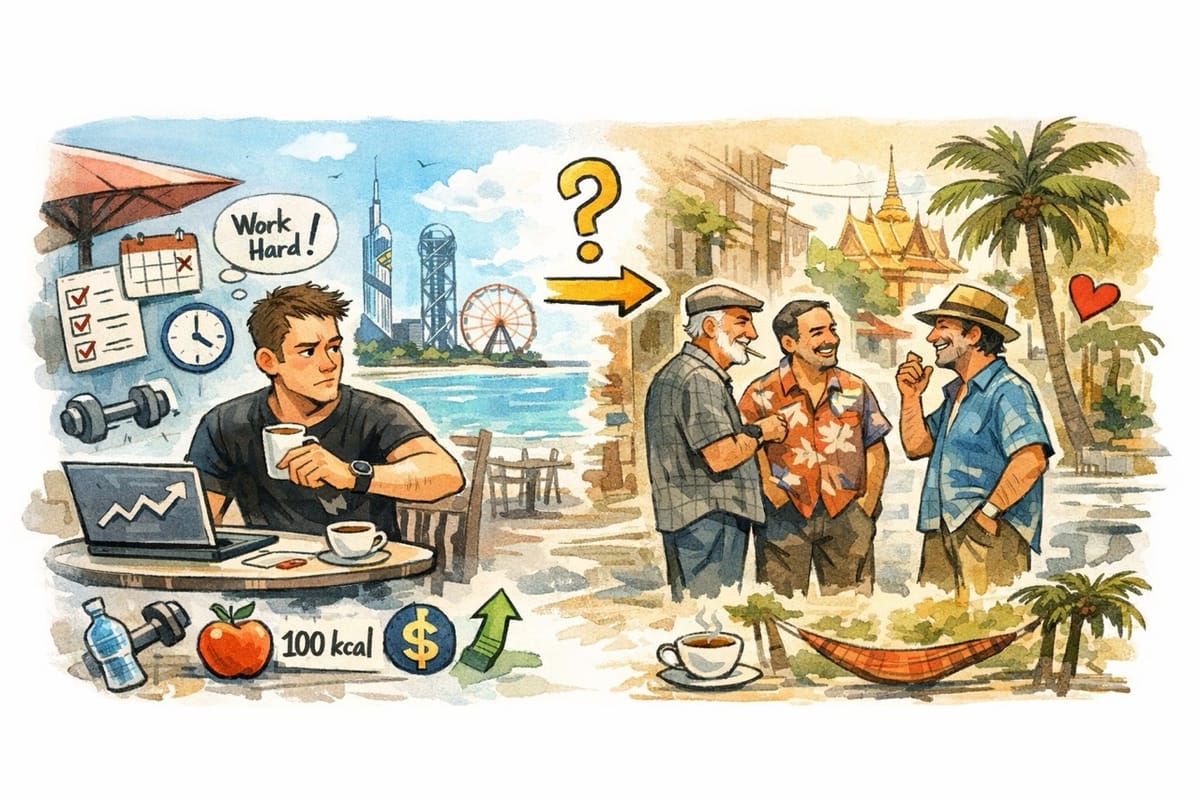
Inspiration: Sitting in a cafe in Batumi, watching men talk on a street corner for hours, day after day, wondering how they make a living.
According to a realization I got with the help of Gemini, I am a "Ronin."
I track my calories, I optimize my sleep, and I treat my day like a P&L statement.
This is a distinctly North American trait. Whether it’s my Canadian side or just the influence of Western capitalism, I run on a specific Operating System: Efficiency is God.
To an American engine, idling looks like a malfunction. If you aren't moving, you aren't producing.
Traveling through the Global South and the Post-Soviet sphere, I initially felt friction. I saw "slowness." But I realized I was projecting my own values onto cultures that are optimizing for completely different variables.
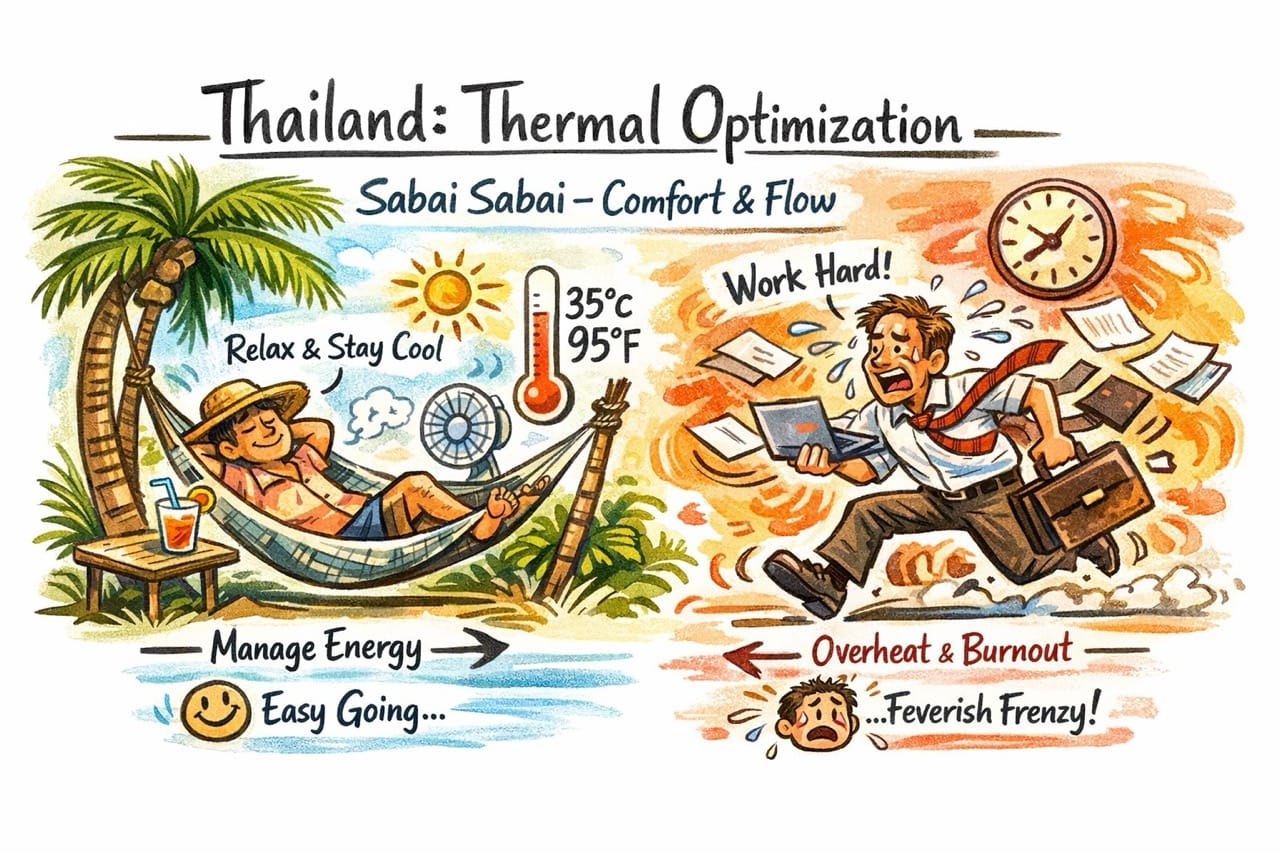
1. Thailand: Thermal Optimization
In Thailand, the core value is Sabai Sabai—comfort, ease, and flow.
My Western brain initially read this as a lack of drive. But it is actually Thermodynamics.
You cannot "hustle" at 100% intensity in 35°C (95°F) humidity without burning out. The culture evolved a deliberately slower pace as a biological survival mechanism.
They aren't avoiding work; they are managing energy. To them, my frantic pace doesn't look productive; it looks like a fever.
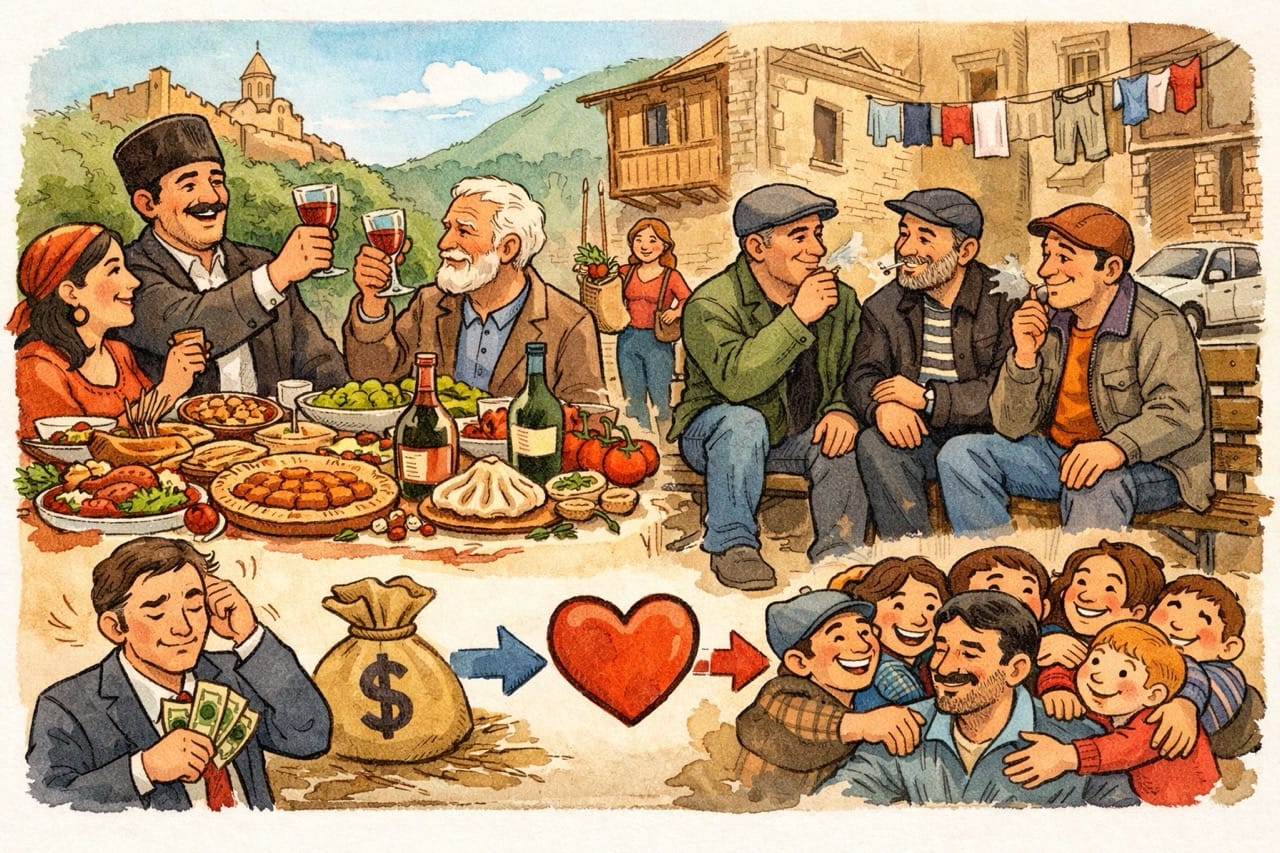
2. Georgia: Social Capital > Financial Capital
Georgia is fascinating. It sits at the intersection of Post-Soviet bureaucracy and Mediterranean leisure.
Here, a man’s status isn't necessarily determined by his quarterly earnings. It is determined by the Supra (the feast). Are you a pillar of the community? Can you toast? Can you hold a conversation for 4 hours?
They prioritize Connection over Production.
To me, sitting on a street corner smoking for 3 hours is "wasting time." But they are investing in Social Capital. In a crisis, an American has money but no friends. A Georgian might have no money, but 50 cousins who will show up to help. Who is actually richer?
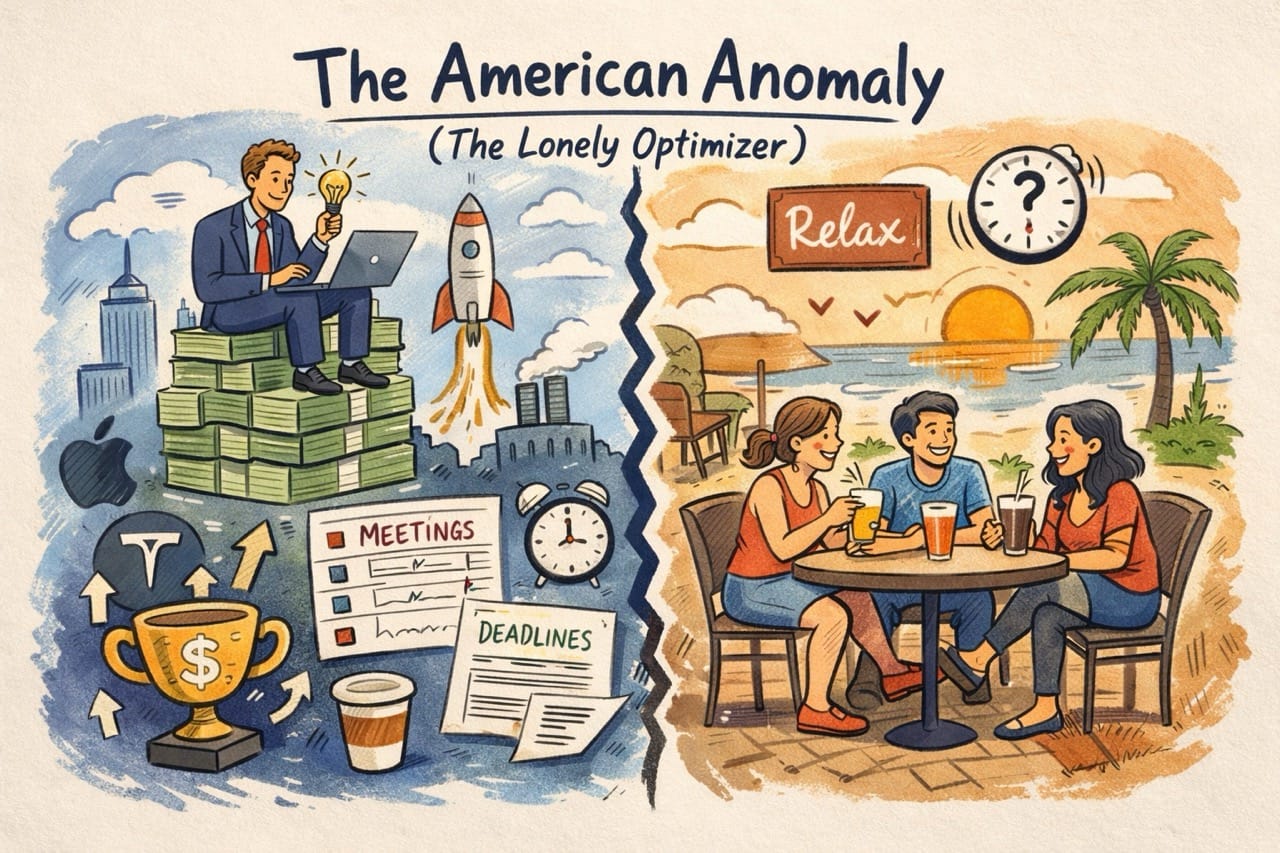
3. The American Anomaly (The Lonely Optimizer)
This brings me to the American work culture I relate to most.
The US (and Canada) runs on the Protestant Work Ethic. We believe that work is a virtue in itself. We optimize for Individual Output.
- The Pro: We build massive companies (Apple, Tesla). We innovate. We are "Hungry."
- The Con: We are lonely. We schedule "coffee chats" 2 weeks in advance because we are too busy to just hang out.
I realized that my frustration with "slower" cultures was actually a symptom of my own conditioning. I was judging them for not playing a game they never agreed to enter.
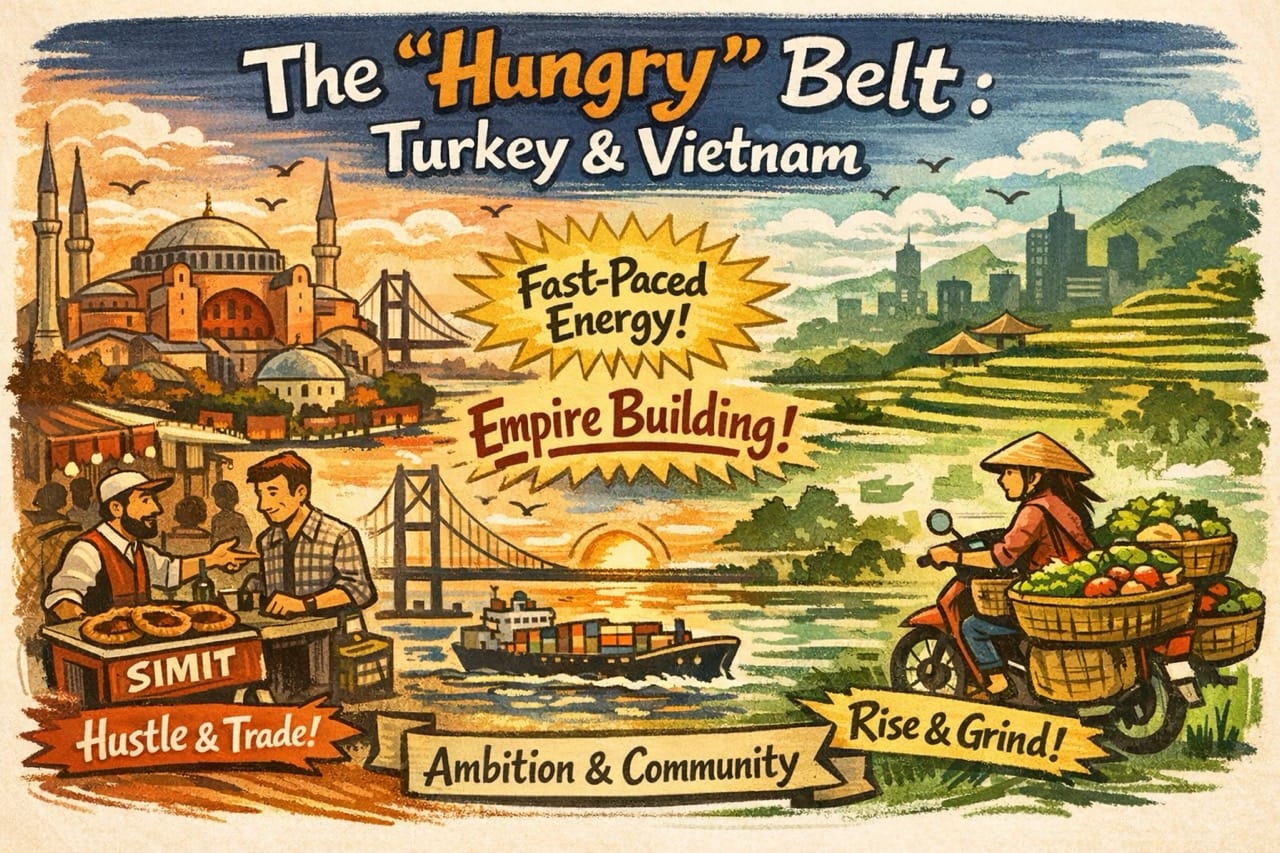
4. The "Hungry" Belt: Turkey & Vietnam
Then there are the cultures where I feel most "at home." Turkey, China, Vietnam.
These are places that have adopted the Hustle.
- Turkey: Istanbul is chaotic energy. It is a bridge of trade. If you aren't selling, you are losing.
- Vietnam: The "Tiger Economy." They wake up at 5 AM to exercise. They trade aggressively.
I relate to them because they are currently in their Empire Building phase. They share that American hunger, but often retain the community aspect.
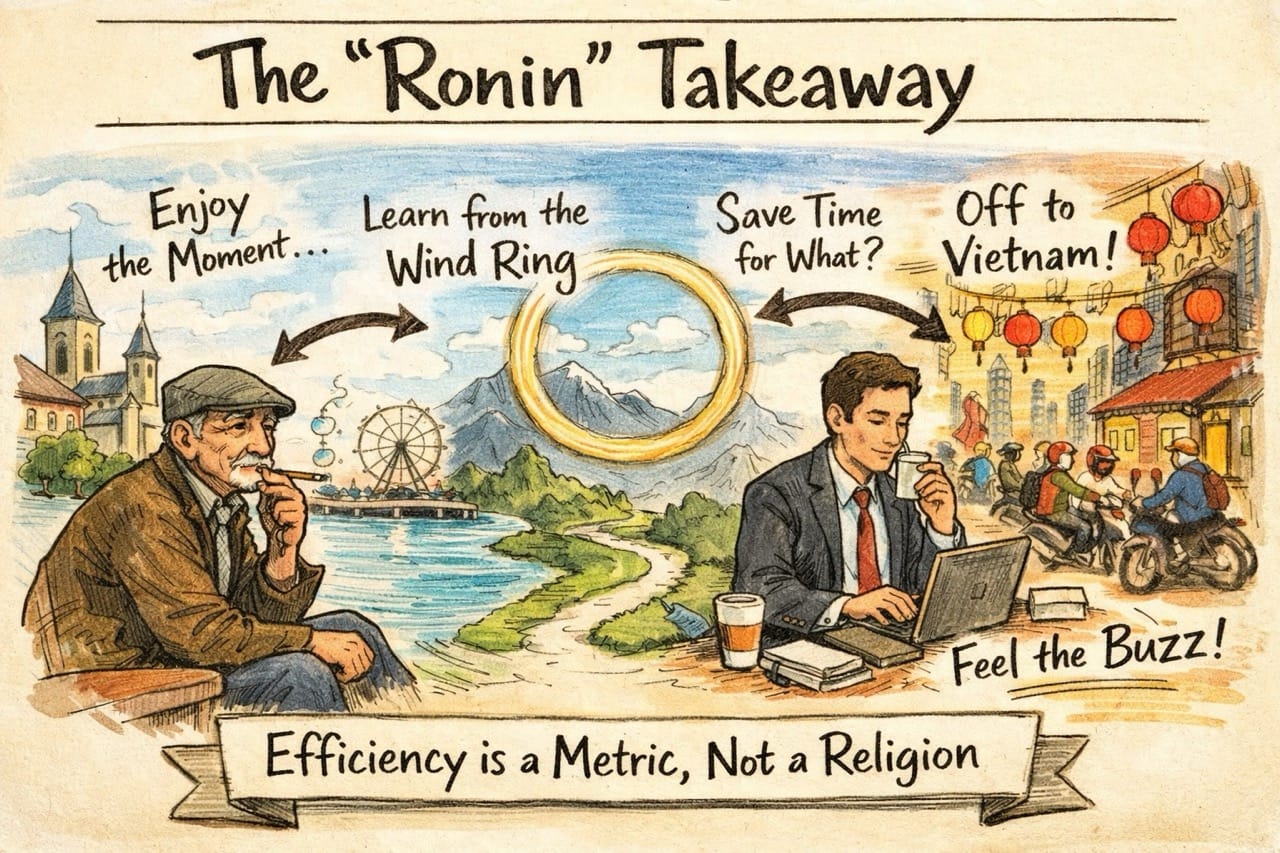
The "Ronin" Takeaway
I am currently a High-RPM engine. I like speed. I like optimization.
The Shift: Instead of judging the "Slow" cultures, I am trying to learn from them (The Wind Ring).
The Georgian man smoking his cigarette isn't "wasting time." He is enjoying the time he has. The American man checking emails on a Saturday is "saving time," but for what?
I am moving to SEA soon. I expect to feel that electric hum again. But I am taking a lesson from Batumi with me: Efficiency is a metric, not a religion.