The Death of the Book Tour: How Andrew Ross Sorkin Used Podcasts to Make "1929" a Bestseller
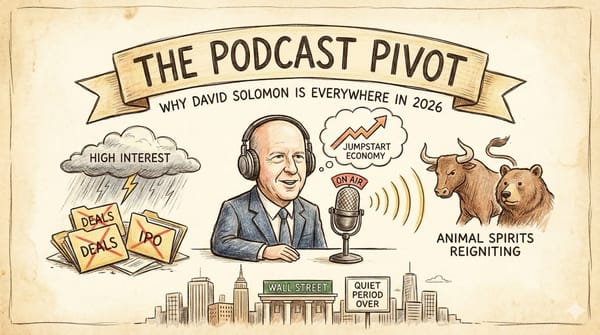
Andrew Ross Sorkin is the face of CNBC. But to sell his new book, he ignored cable news. He realized that to sell a complex history of the Great Depression, you don't need a 3-minute soundbite; you need a 3-hour conversation.
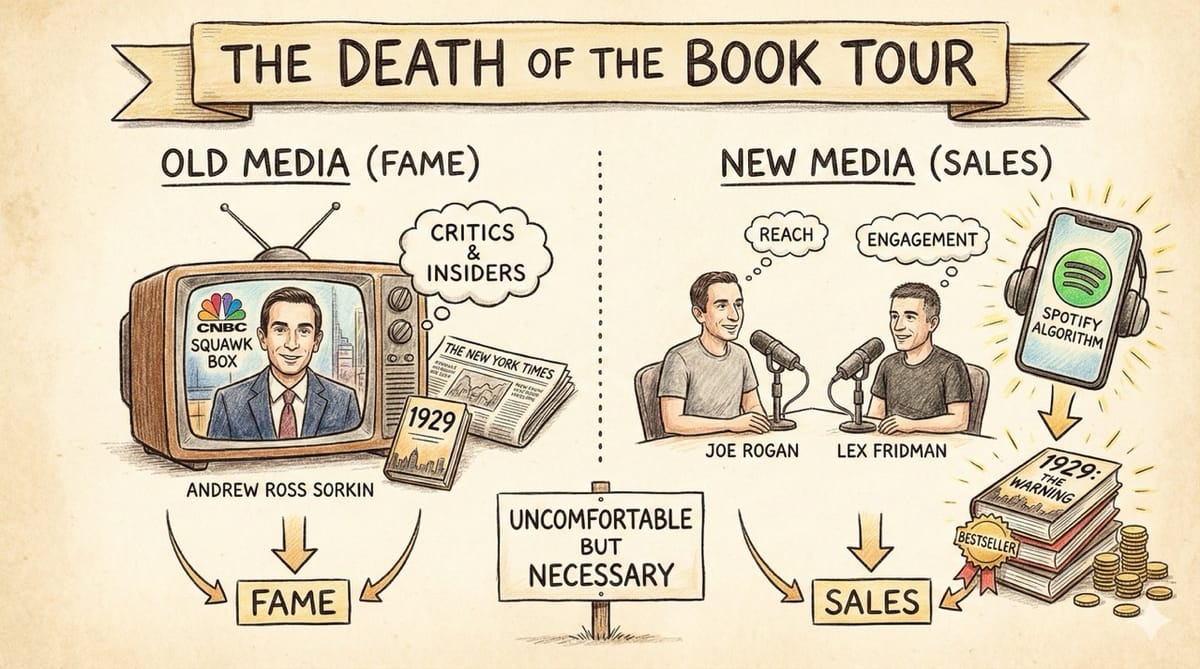
The "New York Times Bestseller" list isn't decided by critics anymore. It is decided by the "Spotify Algorithm." Even the establishment insiders are bending the knee to the podcasters.
Inspiration: Seeing Andrew Ross Sorkin—the ultimate TV anchor—sitting in Joe Rogan’s and Lex Fridman’s studios, looking uncomfortable but knowing it was the only way to reach the audience.
Andrew Ross Sorkin is the definition of "Old Media." He writes for the New York Times.
He anchors Squawk Box on CNBC. He is the establishment.
But when he launched his new book, "1929: The Warning," he didn't rely on the establishment. He executed a "New Media" Blitz.
He realized a hard truth: TV gives you fame, but Podcasts give you sales.
The Product: "1929"
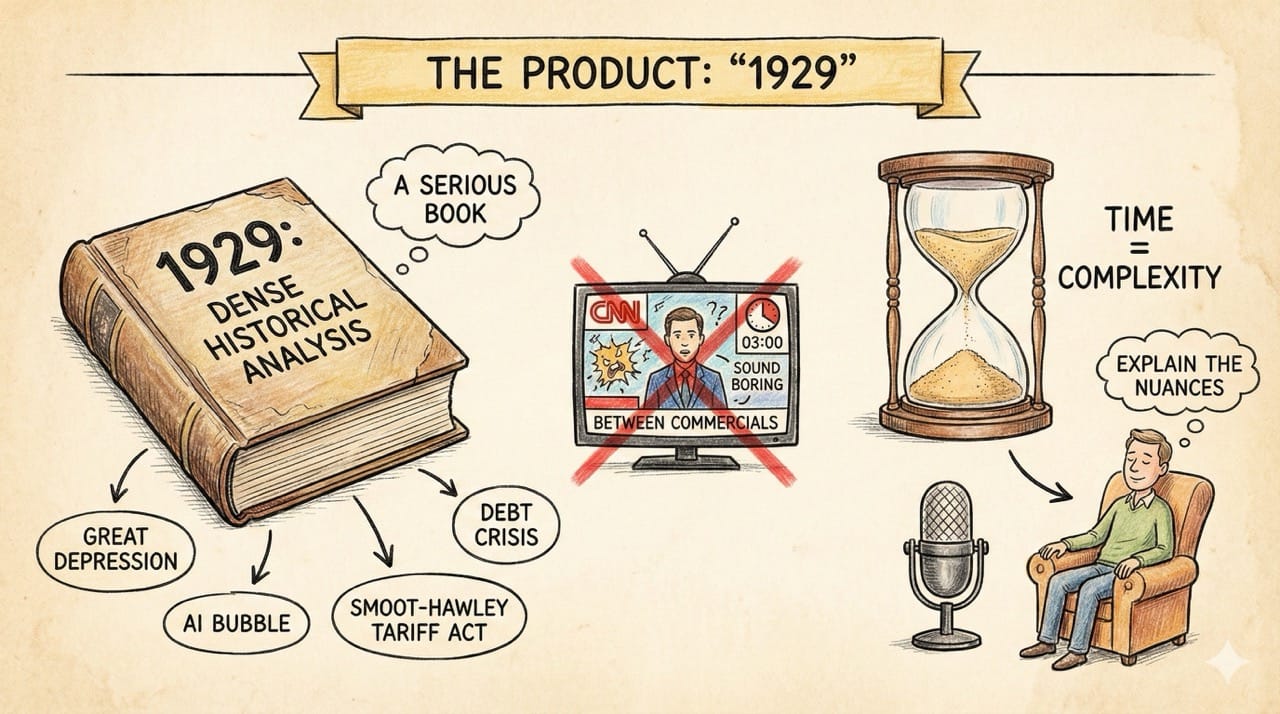
First, the book. 1929 is a dense, historical analysis of the Great Depression, drawing parallels to the AI Bubble and the Debt Crisis of today.
It is a serious book.
You cannot explain the nuances of the "Smoot-Hawley Tariff Act" in a 3-minute segment between commercials on CNN. If you try, you sound boring.
To sell "Complexity," you need Time.
The Tour: The "YouTube" Circuit
Sorkin went where the attention is.
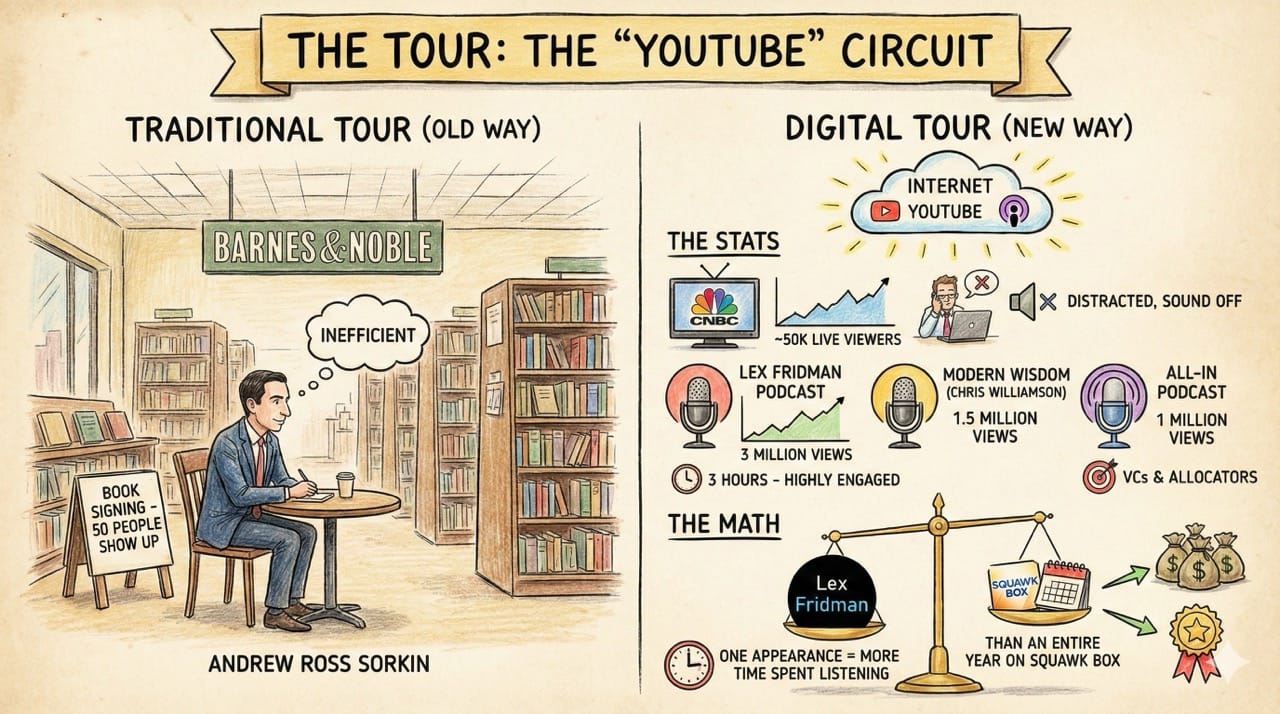
He didn't do a Barnes & Noble signing tour (where 50 people show up).
He did a Digital Tour.
The Stats:
- CNBC Appearance: ~50k live viewers (mostly distracted traders with the sound off).
- Lex Fridman Podcast: 3 Million views (highly engaged, listening for 3 hours).
- Modern Wisdom (Chris Williamson): 1.5 Million views.
- All-In Podcast: 1 Million views (the specific target audience of VCs and allocators).
The Math: One appearance on Lex Fridman generates more "Time Spent Listening" than an entire year of appearing on Squawk Box.
The Collaborations: Borrowed Credibility
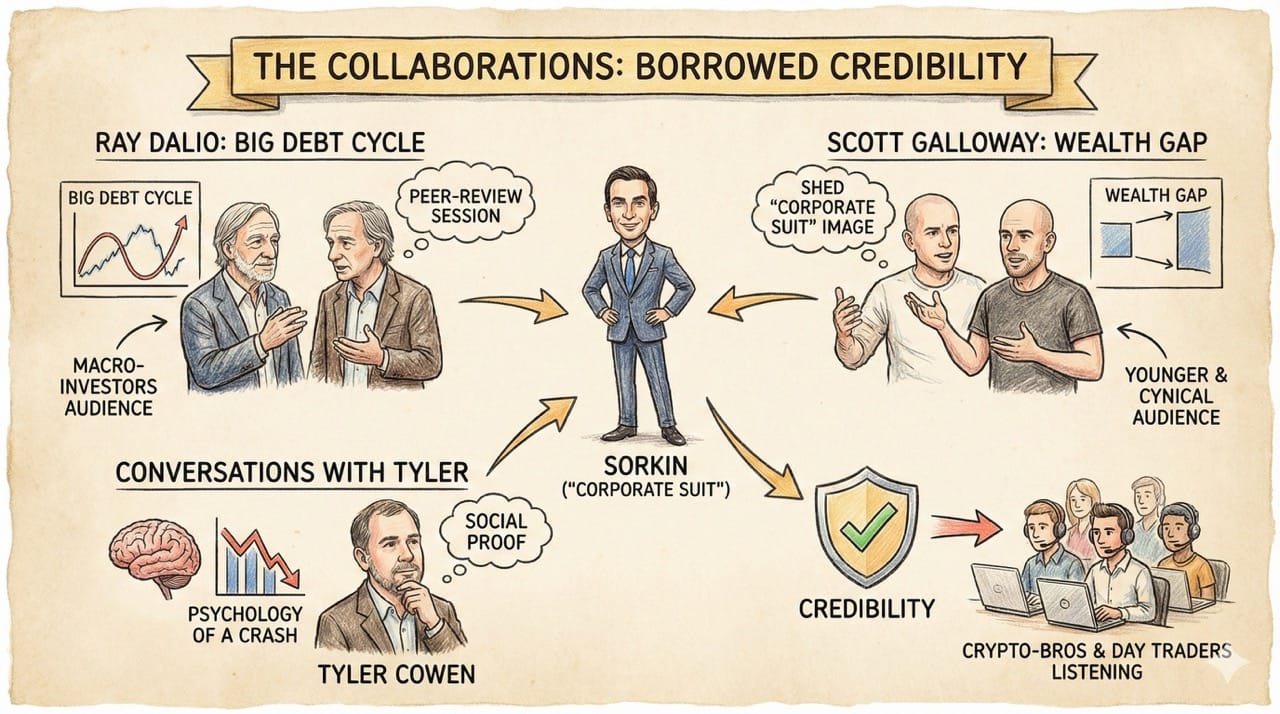
He didn't just go on shows; he partnered with figures who validated his thesis.
- Ray Dalio: Sorkin did a deep-dive episode with Dalio on the "Big Debt Cycle." Dalio’s audience (macro-investors) is the perfect demographic for 1929. It wasn't an interview; it was a peer-review session.
- Scott Galloway: He went on Prof G Markets to debate the "Wealth Gap." Galloway’s audience is younger and cynical. Sorkin used this to shed his "Corporate Suit" image and show he understands the rigged system.
- Conversations with Tyler: A long-form discussion on the psychology of a crash.
These collaborations acted as Social Proof.
If Dalio respects Sorkin’s history, the crypto-bros and day traders will listen too.
Why Podcasts Took Over
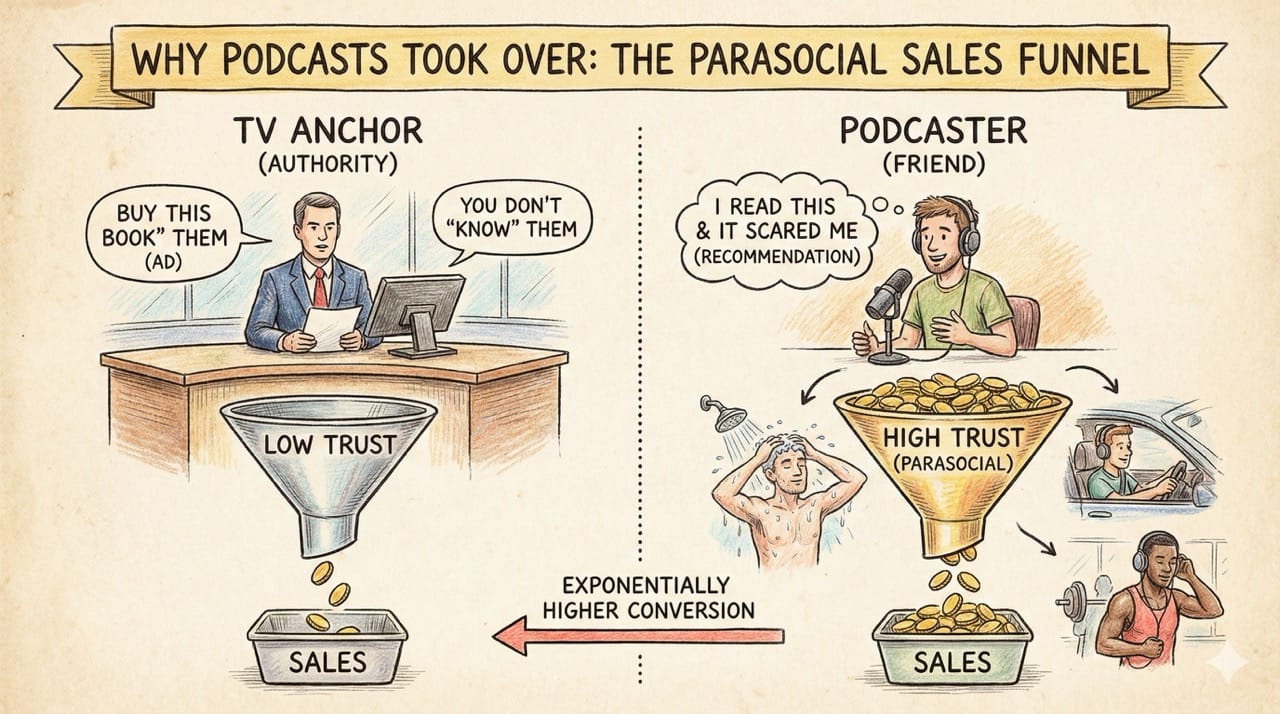
Why does this work? The Parasocial Sales Funnel.
- TV Anchor: An authority figure. You respect them, but you don't "know" them. They are reading a teleprompter.
- Podcaster: A friend. You listen to them while you shower, drive, and work out.
When a TV anchor says "Buy this book," it’s an ad. When a Podcaster says "I read this book and it scared me," it’s a recommendation from a friend.
The Conversion Rate: The conversion rate from a podcast recommendation is exponentially higher than TV because the Trust is higher.
The "Evergreen" Asset
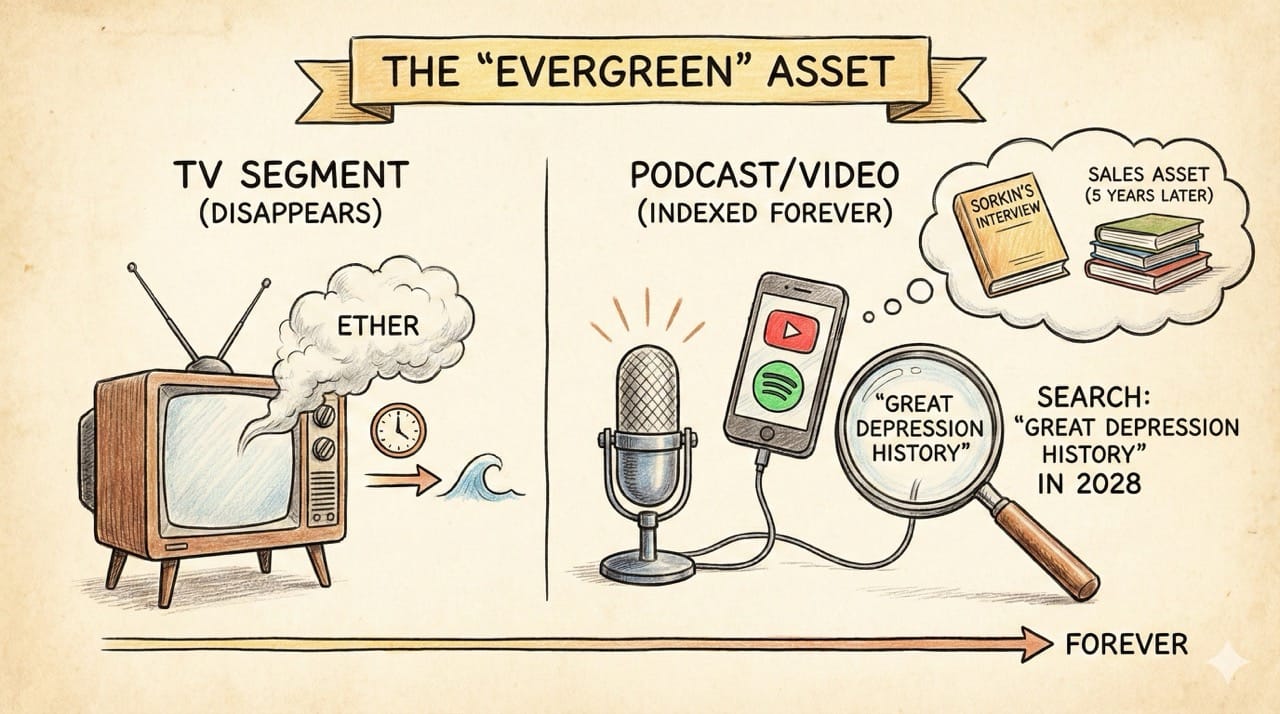
There is one more strategic advantage: The Long Tail.
A TV segment disappears into the ether the moment it airs. A YouTube video or Spotify episode is indexed forever.
- Someone searching for "Great Depression History" in 2028 will find Sorkin’s interview with Lex Fridman.
- That video will continue to sell books 5 years from now.
- He built a Sales Asset, not just a promotional event.
Conclusion: The New Gatekeepers
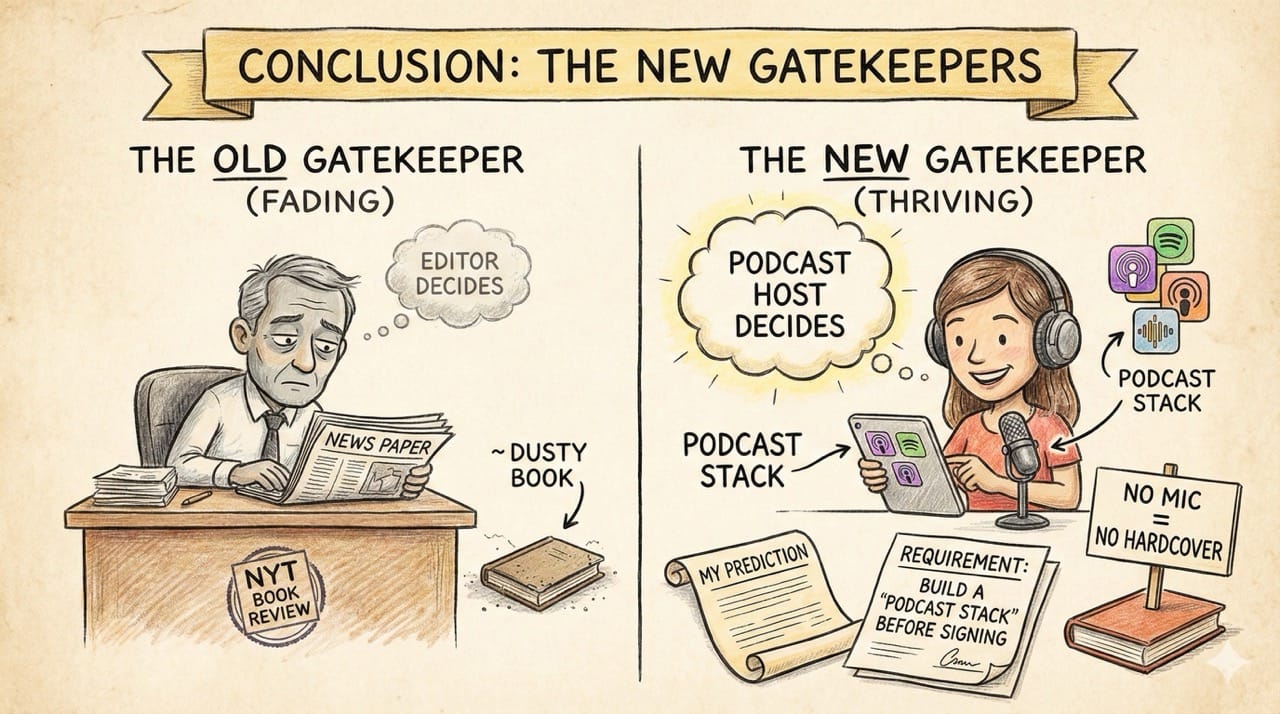
Andrew Ross Sorkin proved that the "Gatekeepers" have changed.
It used to be the New York Times Book Review editor. Now, it is the Podcast Host.
My Prediction: In the future, publishers won't even book TV slots.
They will demand that authors build a "Podcast Stack" before they even sign the book deal. If you can't hold a mic for 3 hours, you can't sell a hardcover.