The D-Day Playbook: How Startups Invade Markets and Win
Launching a startup often feels like going to war against a giant monopoly. Jacques Benkoski proves that you do not need a bigger army to win. You just need to study how the Allies pulled off the D-Day invasion.

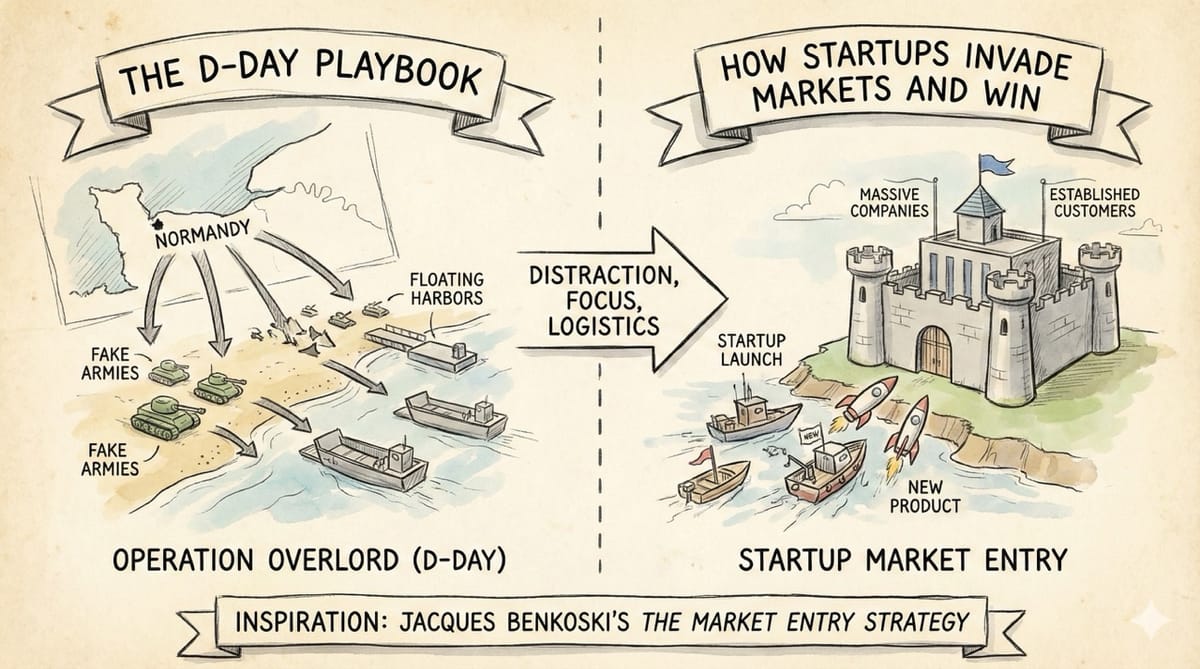
From fake armies to floating harbors, the Allied invasion of Normandy is the ultimate blueprint for launching a business.
Inspiration: Reading Jacques Benkoski's book, The Market Entry Strategy. He perfectly maps the chaos of a startup launch to the meticulous planning of Operation Overlord.
When you launch a new product in a crowded market, it feels like an impossible fight.
You are going up against massive companies with endless budgets and established customer bases. It is easy to feel overwhelmed.
Jacques Benkoski looks at this problem through a fascinating historical lens. He compares a startup market entry to the Allied invasion of Normandy during World War II.
The Allies had to breach a heavily fortified continent, much like a startup has to breach a monopolized industry.
The secret to D-Day was not just brute force. It was a masterclass in distraction, extreme focus, and backend logistics.
Today, the smartest founders use this exact same playbook to take down corporate giants.
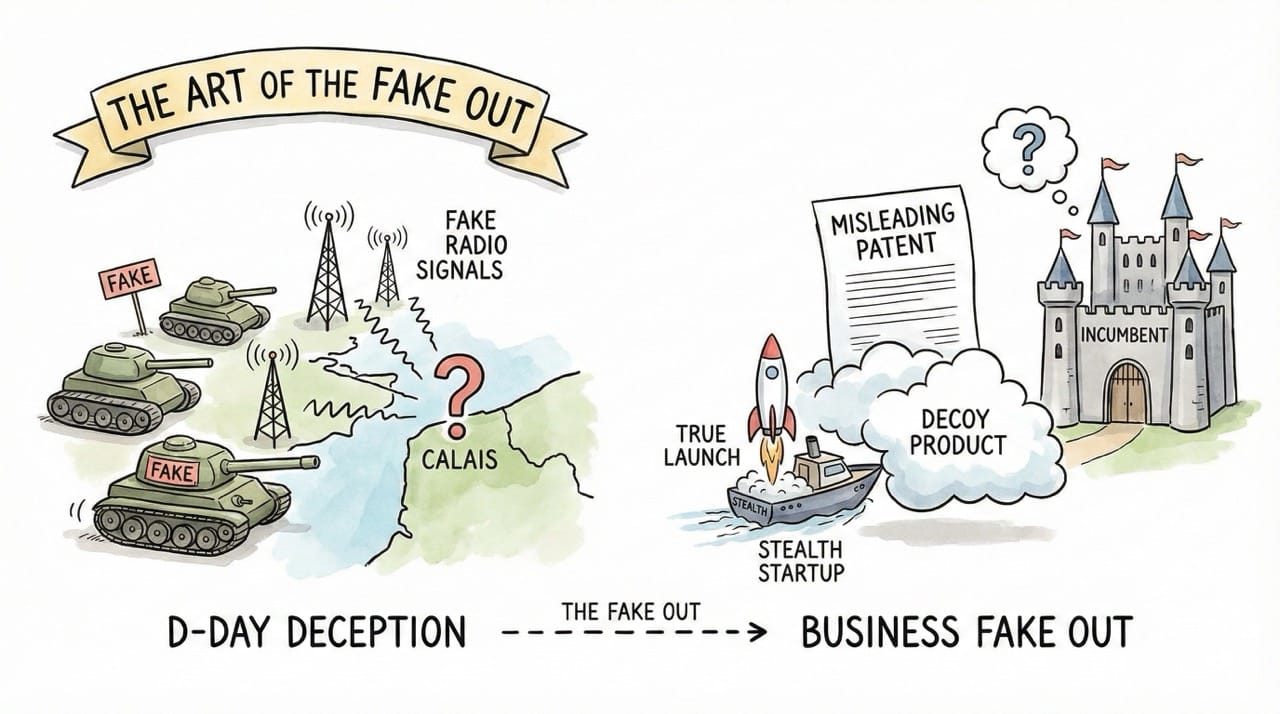
The Art of the Fake Out
Before the Allies ever touched the beaches of Normandy, they ran a massive deception campaign.
They built fake inflatable tanks and broadcast fake radio signals. They wanted the Germans to think the attack was coming at Calais, hundreds of miles away.
This forced the German army to keep their best troops waiting in the wrong spot. In the business world, startups do the exact same thing to distract incumbents.
They operate in stealth mode for as long as possible.
Sometimes, larger tech companies will even announce decoy products or file misleading patents.
They want their competitors to waste time and money defending the wrong market segment.
By the time the incumbent realizes the true target, the startup has already launched.
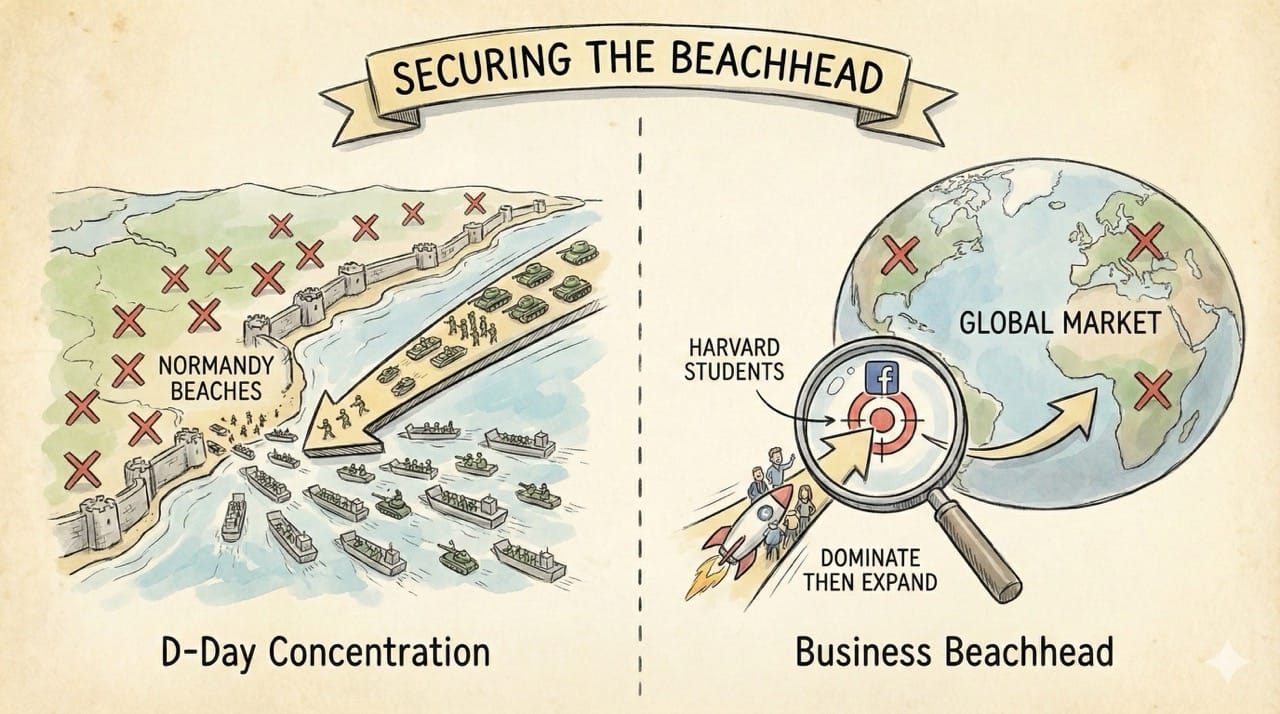
Securing the Beachhead
When the invasion finally happened, the Allies did not attack the entire coastline of Europe.
That would have spread their forces too thin and guaranteed a loss. Instead, they concentrated all their power on a tiny, fifty-mile strip of beaches in Normandy.
This concept is universally known in business as establishing a beachhead. You cannot sell your product to everyone on day one.
If you try to appeal to the whole world, your marketing budget will evaporate instantly.
You have to find a highly specific, underserved niche. Facebook famously ignored the global market and focused exclusively on Harvard students.
Once you completely dominate that small beachhead, you have a safe staging area to plan your next expansion.
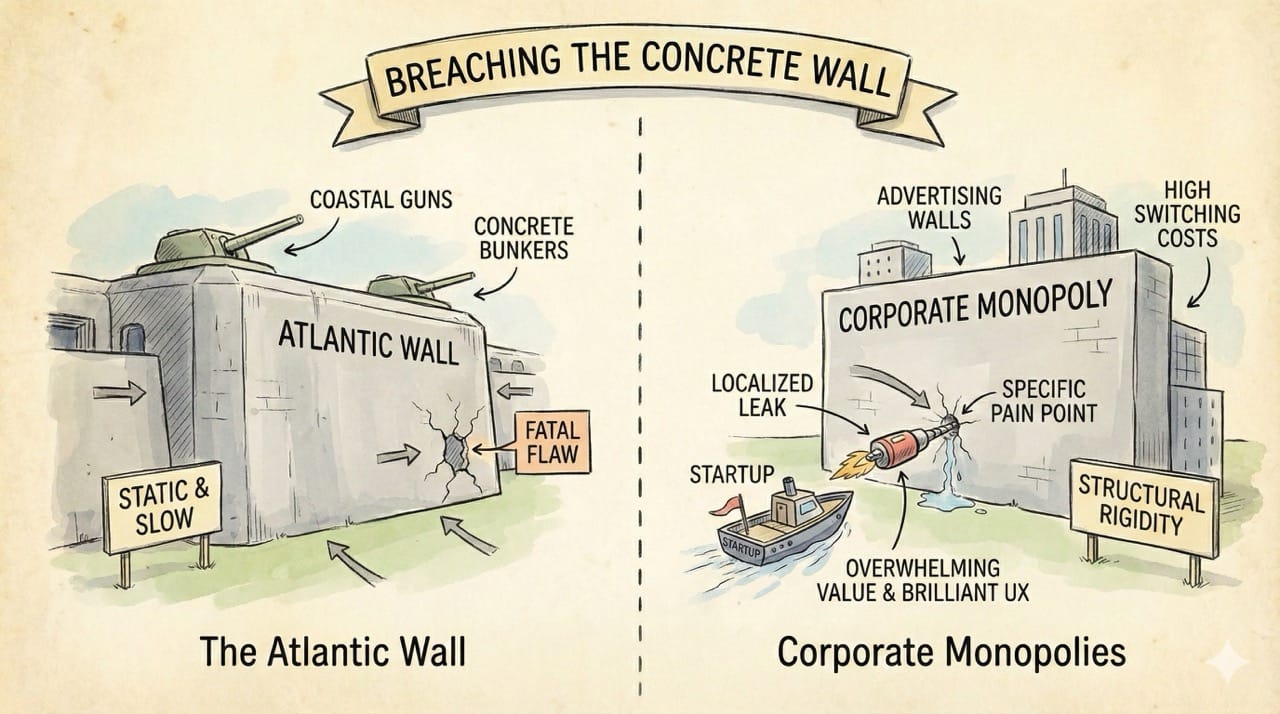
Breaching the Concrete Wall
The Germans defended Europe with the Atlantic Wall. It was a terrifying system of concrete bunkers and coastal guns.
But it had a fatal flaw because it was entirely static and slow to adapt.
Corporate monopolies suffer from the exact same structural rigidity. They build massive walls of advertising and high switching costs to keep new players out.
They assume their sheer size will protect them forever.
But an agile startup does not try to knock down the whole wall. They apply overwhelming value and brilliant UX to one specific pain point.
The slow-moving corporate giant simply cannot react fast enough to plug the localized leak.
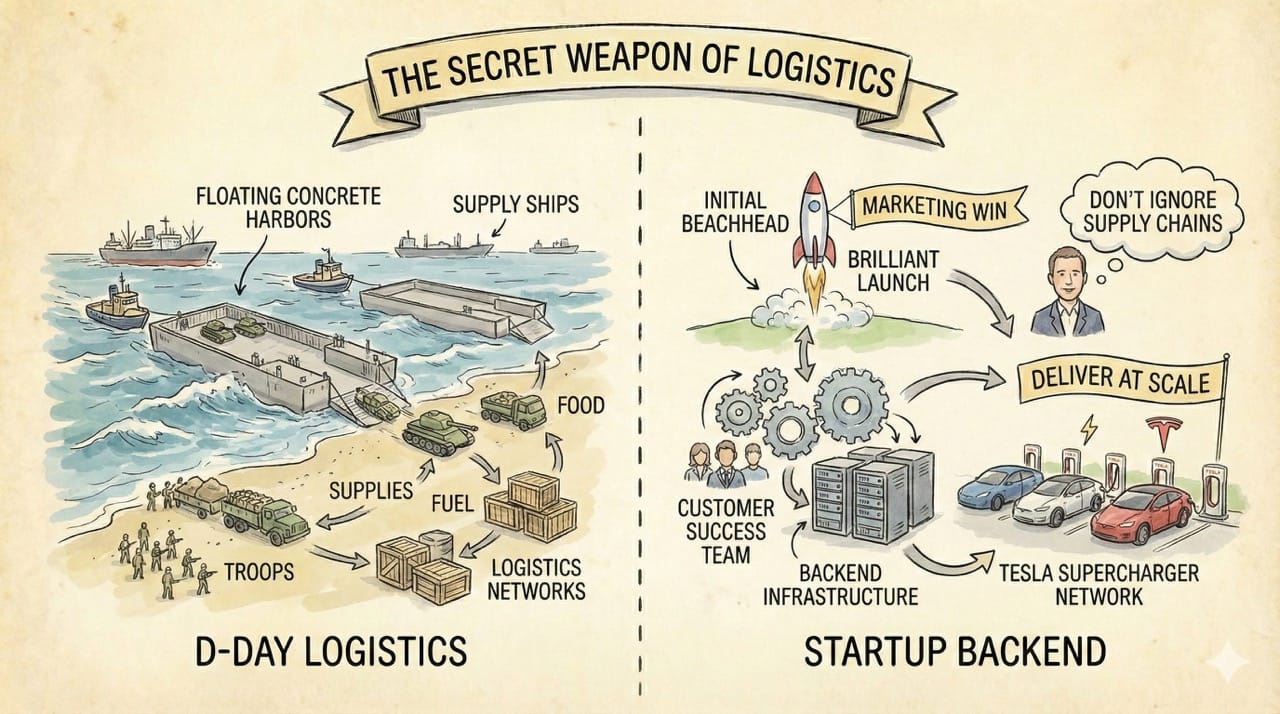
The Secret Weapon of Logistics
The most incredible part of D-Day was not the combat itself. It was how the Allies kept their troops fed and fueled.
They literally towed massive floating concrete harbors across the ocean to unload supplies directly onto the sand.
A startup can have a brilliant marketing launch and secure an initial beachhead. But if the backend infrastructure fails, the company will die within months.
You have to be able to deliver on your promises at scale.
Startups frequently fail because the founders obsess over the product but ignore customer success and supply chains.
Tesla survived because they built their own Supercharger network when nobody else would. You cannot outgrow your own logistics.
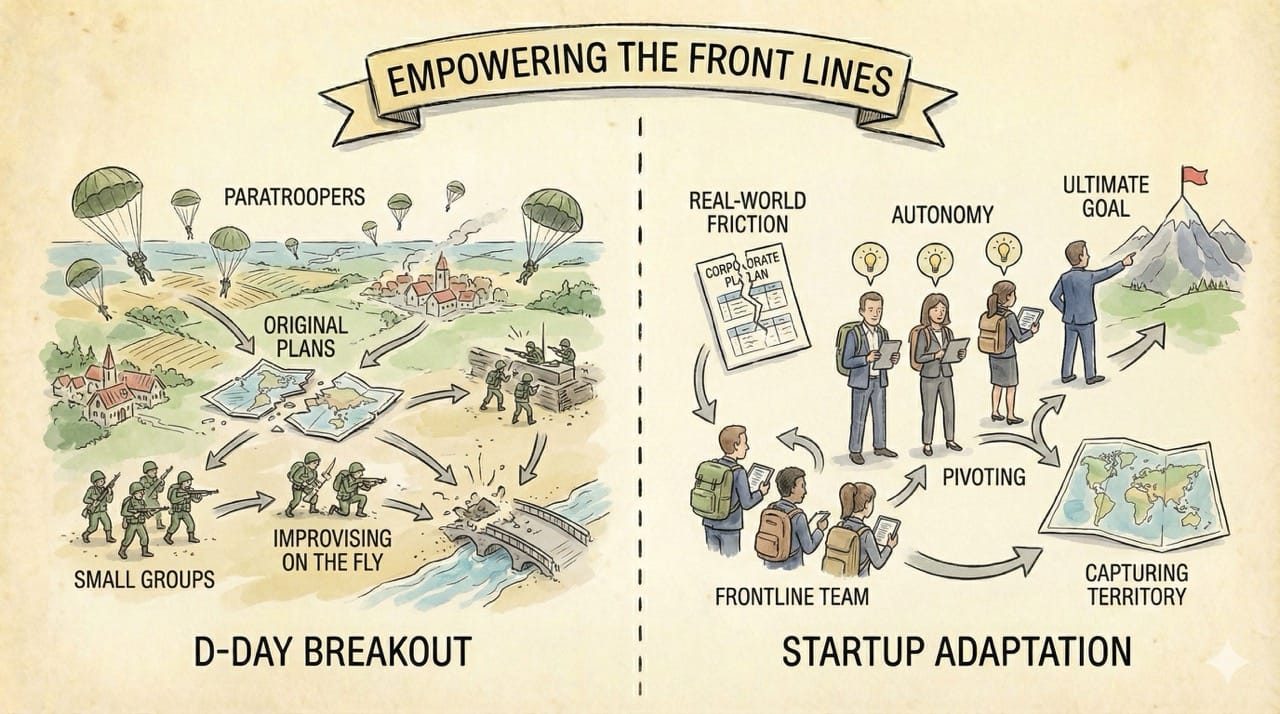
Empowering the Front Lines
Once the beachhead is secure and supplied, it is time to break out into the wider market.
During D-Day, paratroopers were scattered everywhere and the original plans fell apart immediately.
They survived by forming small groups and improvising on the fly.
A rigid corporate strategy will shatter the moment it hits real-world friction.
Leadership must set the ultimate goal, but they must give the frontline teams the freedom to act.
Sales teams and marketers need the autonomy to pivot when things go wrong.
In war and in business, the team that adapts the fastest is the one that captures the territory.