The Apple & Microsoft Truce: A Modern Retelling of Saladin and Richard the Lionheart
In 1192, Saladin sent ice to his dying enemy, Richard the Lionheart. In 1997, Bill Gates sent $150 million to a dying Apple. Why do conquerors sometimes save their rivals?

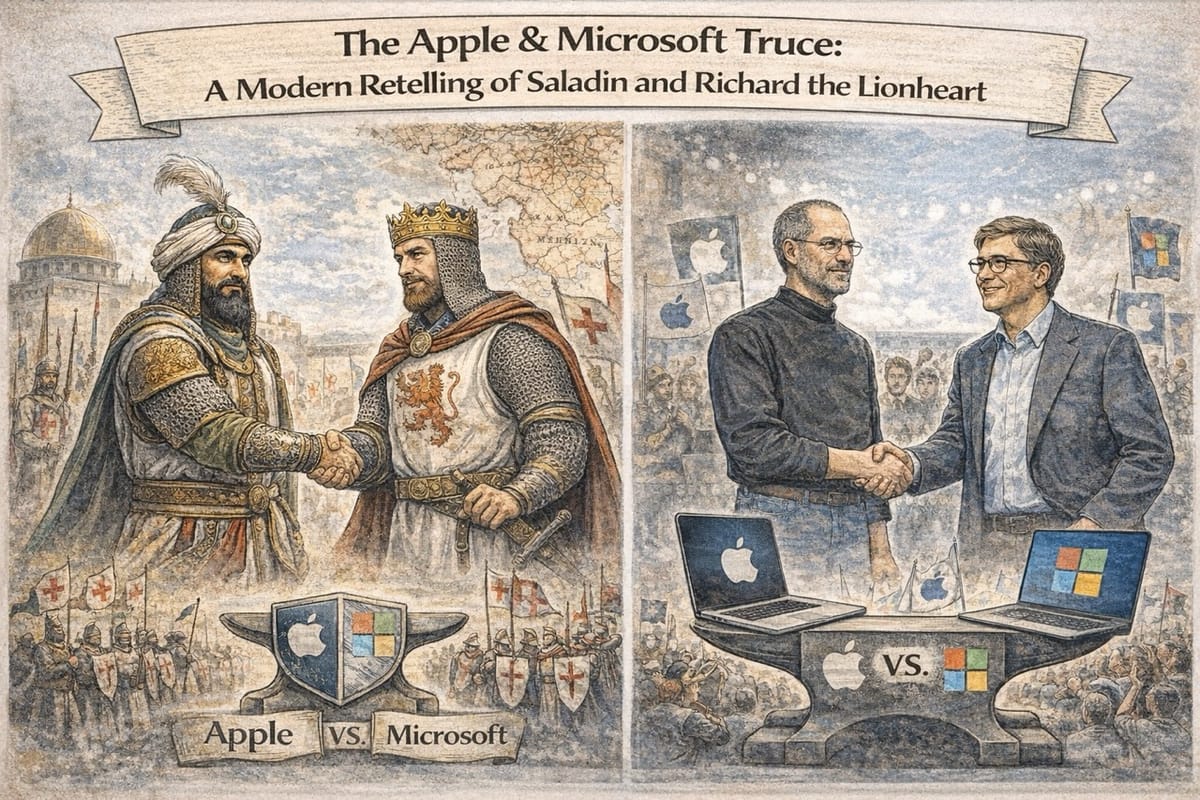
Sometimes you save your enemy not out of kindness, but out of necessity. A monopoly has no one to fight, and a king without a rival is just a tyrant.
Inspiration: Learning about the Treaty of Jaffa, where Saladin saved Richard the Lionheart from fever, and realizing it’s the exact same script as the 1997 Macworld Expo.
History repeats itself. The players change, but the strategy remains the same.
In the 12th century, Saladin and Richard the Lionheart were locked in a holy war. In the 1990s, Microsoft and Apple were locked in a digital holy war (Mac vs. PC).
The parallels are uncanny.
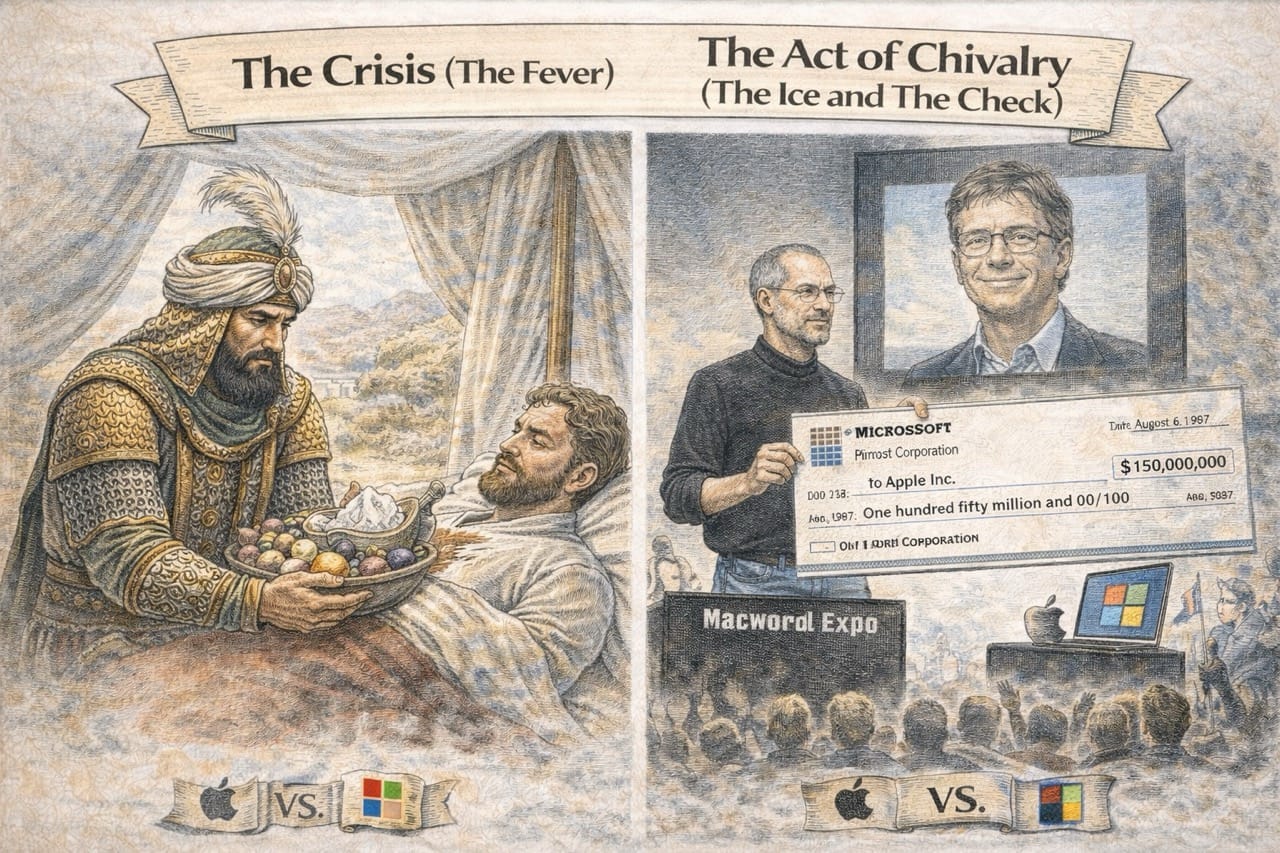
The Crisis (The Fever)
1192: Richard falls deathly ill with a fever while on the brink of battle. He is vulnerable. He is dying. 1997: Apple is on the brink of bankruptcy. It has roughly 90 days of cash left. It is effectively dying.
The Act of Chivalry (The Ice and The Check)
1192: Instead of crushing his vulnerable enemy, Saladin sends fresh fruit and ice (a luxury in the desert) to help Richard recover. 1997: In a move that shocked the world, Bill Gates steps in. At the Macworld Expo, Steve Jobs announces that Microsoft has invested $150 million in Apple to keep it afloat.
Why? Was it kindness? No. It was Strategy.
Saladin realized a worthy rival was better than a vacuum. Gates knew Microsoft needed Apple to survive. If Apple died, Microsoft would be a monopoly, and the US Department of Justice would break them up. He bought an insurance policy against the regulators.
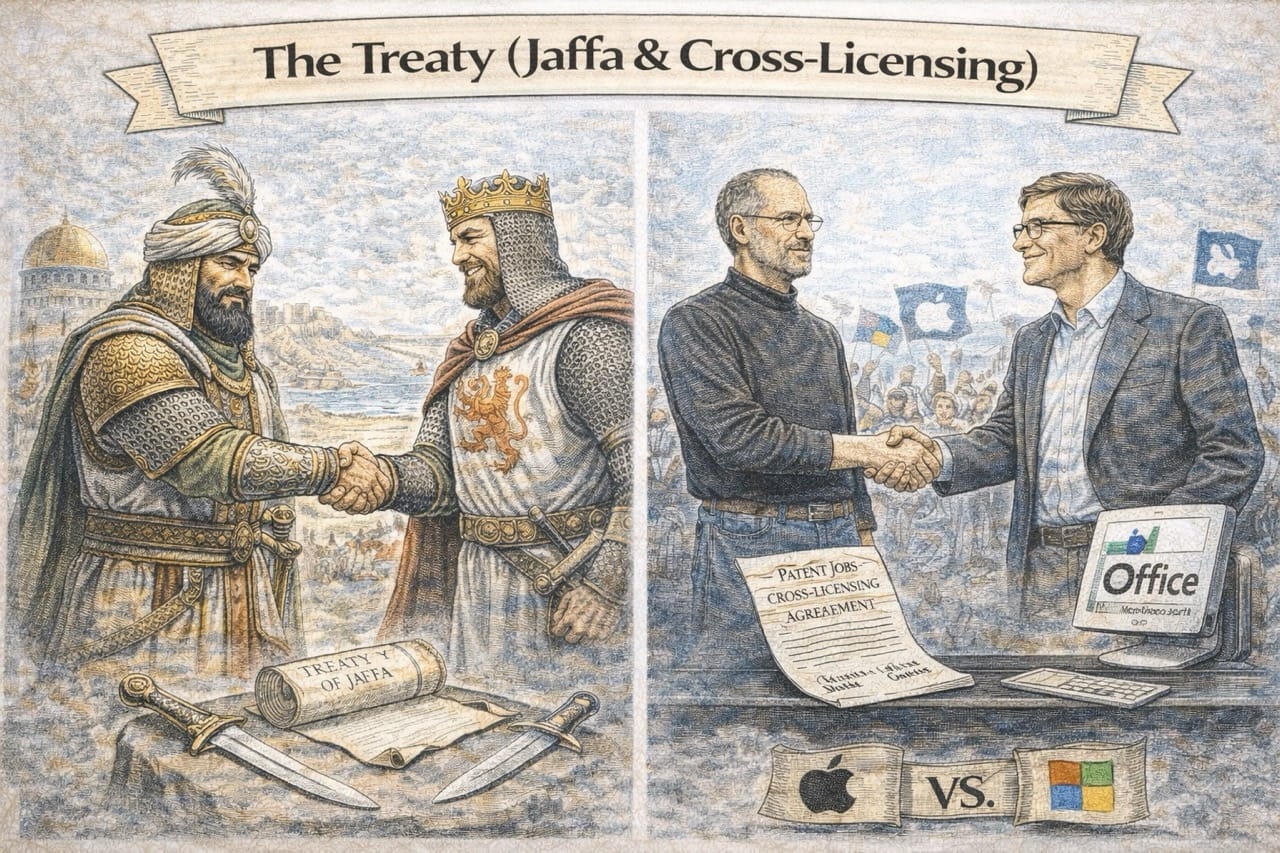
The Treaty (Jaffa & Cross-Licensing)
1192: They sign the Treaty of Jaffa. It allows both to coexist. Muslims held Jerusalem; Christians held the coast. 1997: They sign a five-year patent cross-licensing agreement. Microsoft promised to keep making Office for Mac.
Like the Treaty of Jaffa, this didn't end the competition—they still fought for dominance—but it established a "truce" that allowed both to survive.
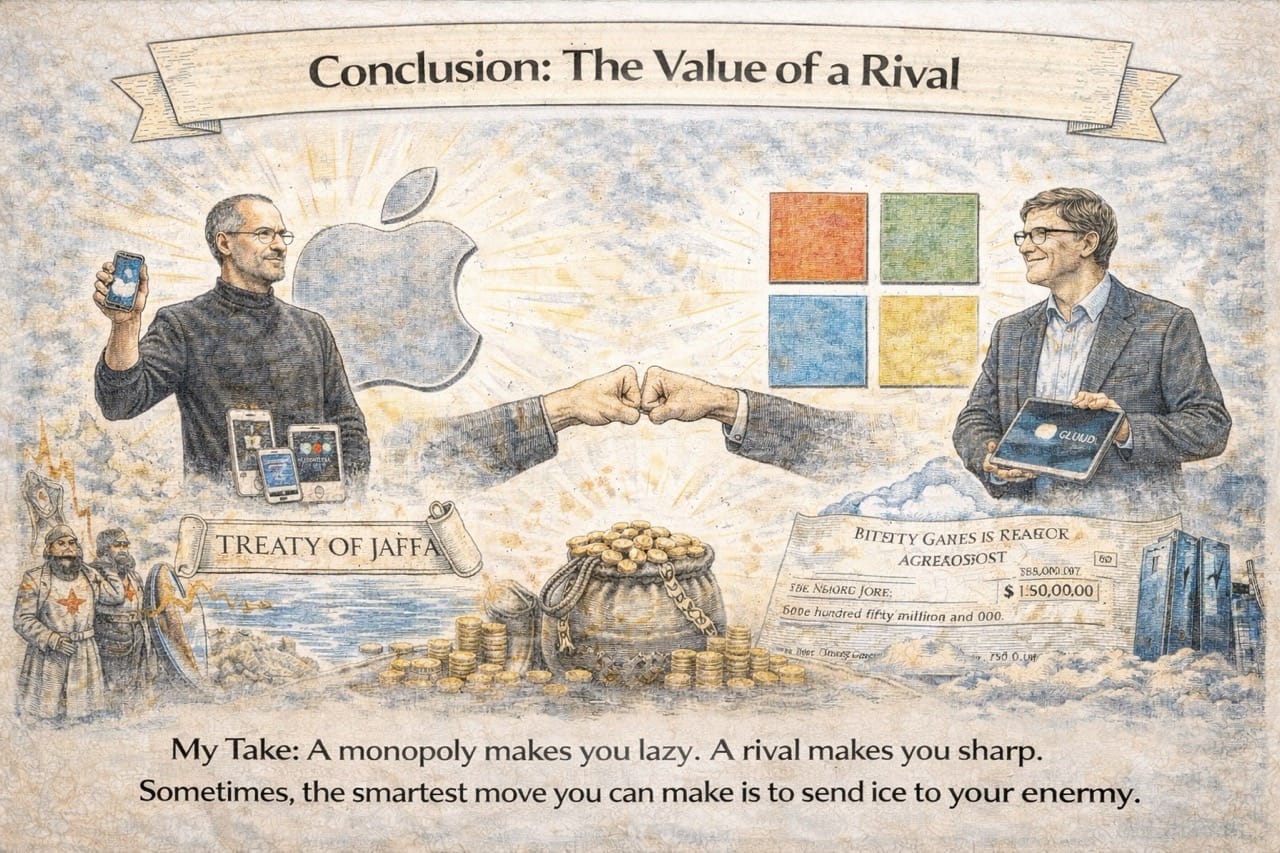
Conclusion: The Value of a Rival
Today, Apple and Microsoft are the two most valuable companies on earth.
They pushed each other. Microsoft forced Apple to innovate (the iPod, the iPhone). Apple forced Microsoft to pivot (Surface, Cloud).
My Take: A monopoly makes you lazy. A rival makes you sharp. Sometimes, the smartest move you can make is to send ice to your enemy.