Stop Optimizing Your Life. Start Living It.
We treat life like a spreadsheet to be solved. But optimization without a "Why" is just anxiety with a methodology. Are you optimizing your life, or just avoiding living it?
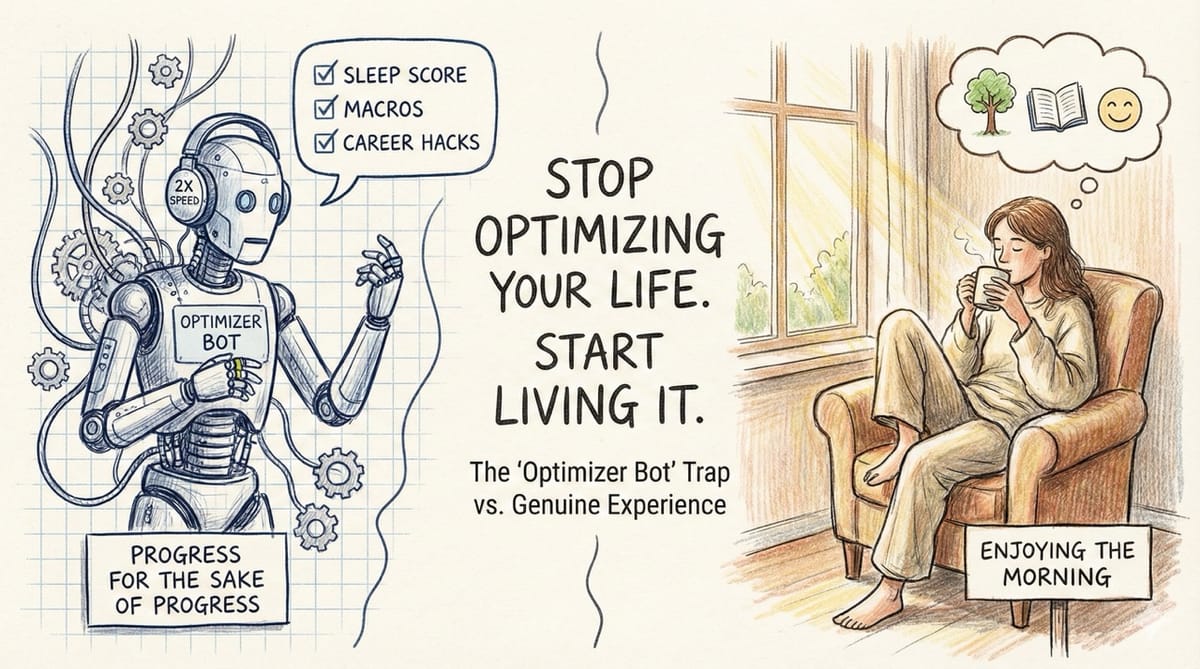
We have become "Optimizer Bots." We optimize our sleep, our macros, and our careers. But when optimization becomes the goal, we lose the game.
Inspiration: Watching Dr. K’s breakdown of the "Relentless Optimizer" and realizing I’ve spent more time researching the perfect morning routine than actually enjoying my mornings.
We have a culture of "Relentless Optimization."
We listen to podcasts at 2x speed. We track our sleep with rings. We biohack our focus.
We have turned ourselves into "Optimizer Bots."
We progress for the sake of progress. But Dr. K (HealthyGamerGG) identifies a critical flaw:
When you try to optimize everything, you don't optimize anything.
Optimization is healthy when it is a means to an end (e.g., getting fit to play with your kids). It becomes a pathology when it is an end in itself.
Here are the three types of "Optimizer Bots." Which one are you?
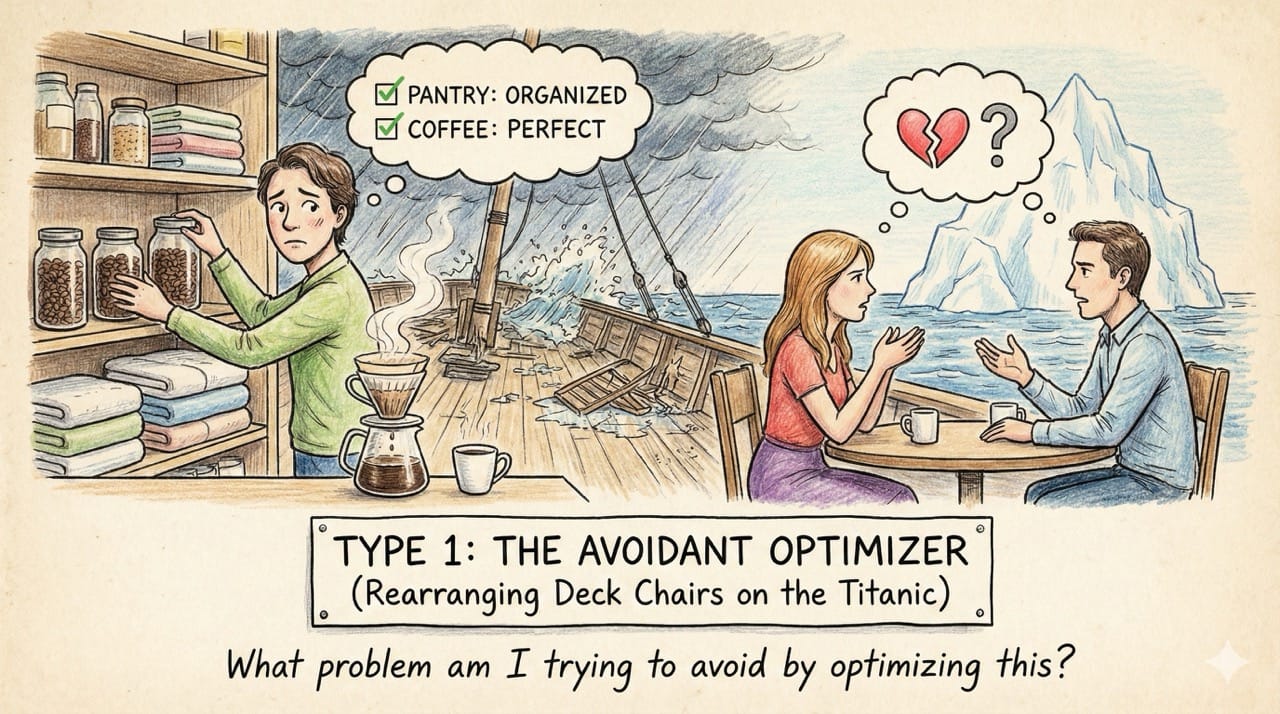
Type 1: The Avoidant Optimizer (Rearranging Deck Chairs)
Humans hate unsolvable problems.
If your relationship is failing (hard problem), you might obsess over organizing your pantry or perfecting your coffee brewing method (solvable problem).
Solving small, irrelevant problems gives you a dopamine hit of "progress," masking the fact that you are stuck on the big things.
It’s like rearranging deck chairs on the Titanic.
The Question: "What problem am I trying to avoid by optimizing this?"
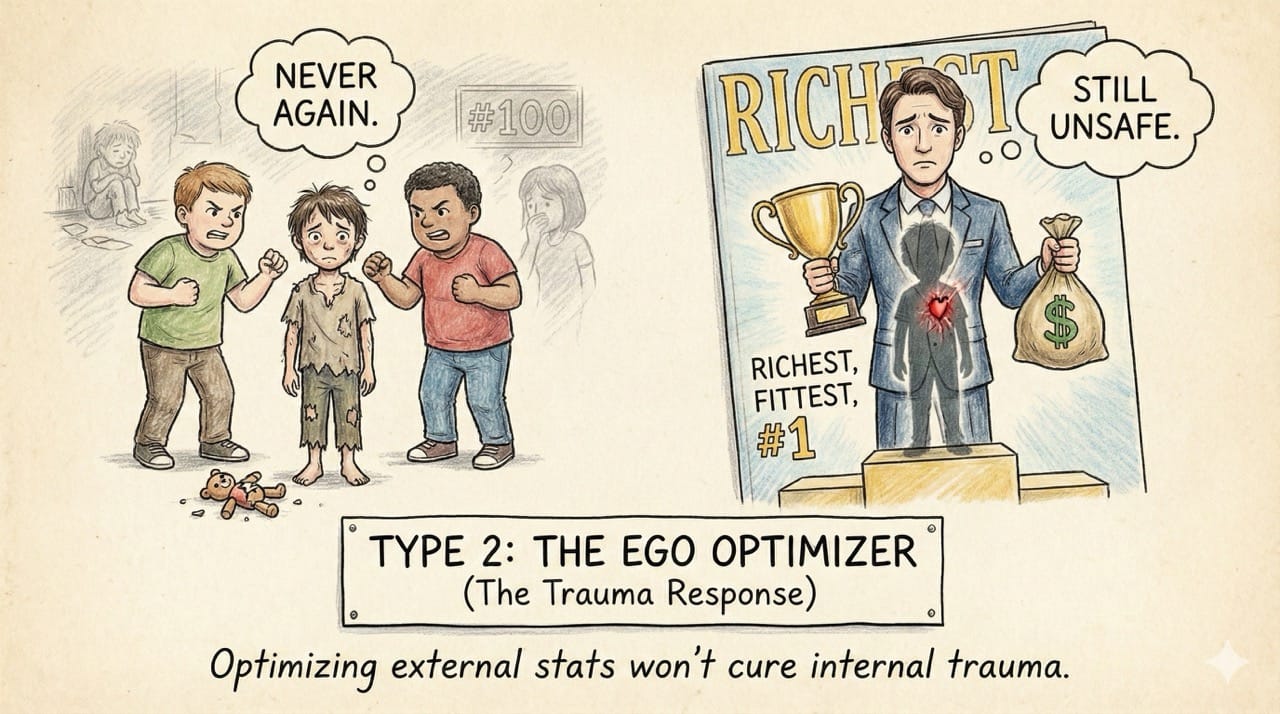
Type 2: The Ego Optimizer (The Trauma Response)
This drives many high performers.
Maybe you were bullied.
Maybe you were poor.
Maybe you were #100. You vowed: "Never again."
You think being #1 will fix the sadness of being #100.
The Trap: It won't. You can be the richest, fittest person in the room and still feel unsafe.
You are optimizing your external stats to fix an internal wound. But progress doesn't cure trauma; processing emotion does.
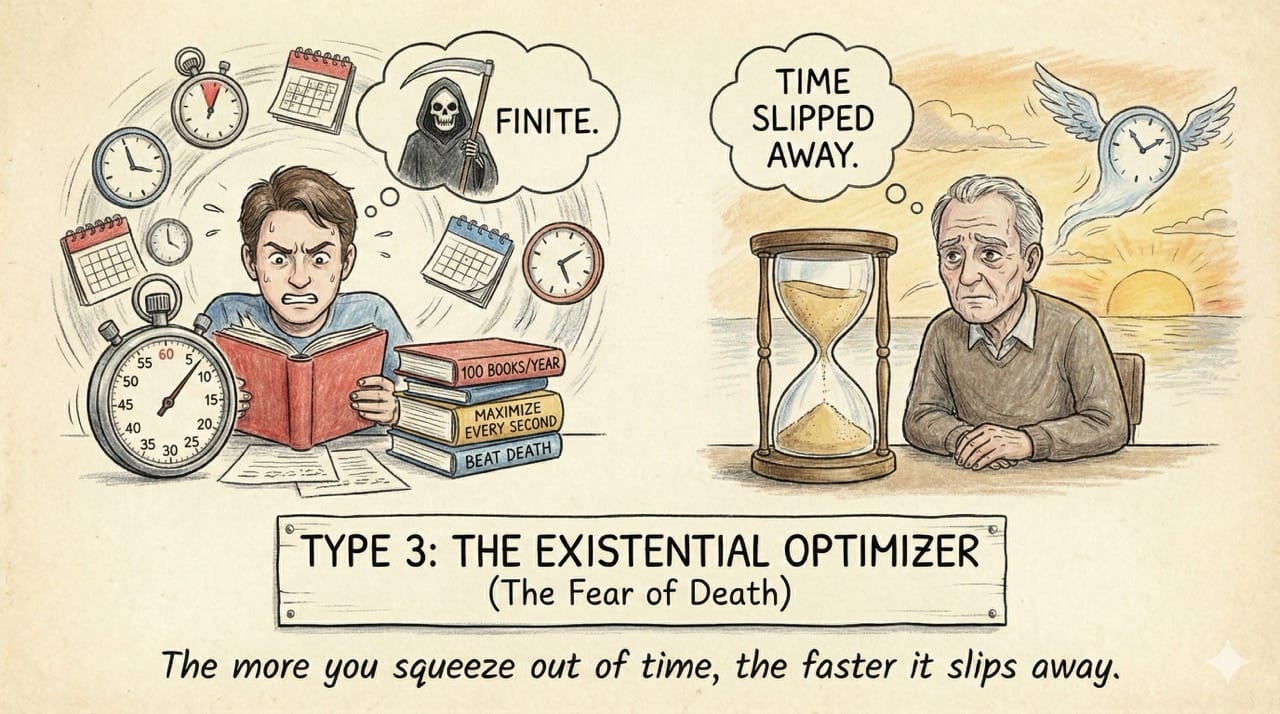
Type 3: The Existential Optimizer (The Fear of Death)
This is the most subtle one. Life is finite.
Time is the limiting factor.
The logic goes: "If I can do MORE in less time, I can beat death."
So we try to read 100 books a year.
We try to maximize every second.
The Paradox: The more you try to squeeze out of time, the faster it seems to slip away. You are so busy "making the most of it" that you miss the experience of it.
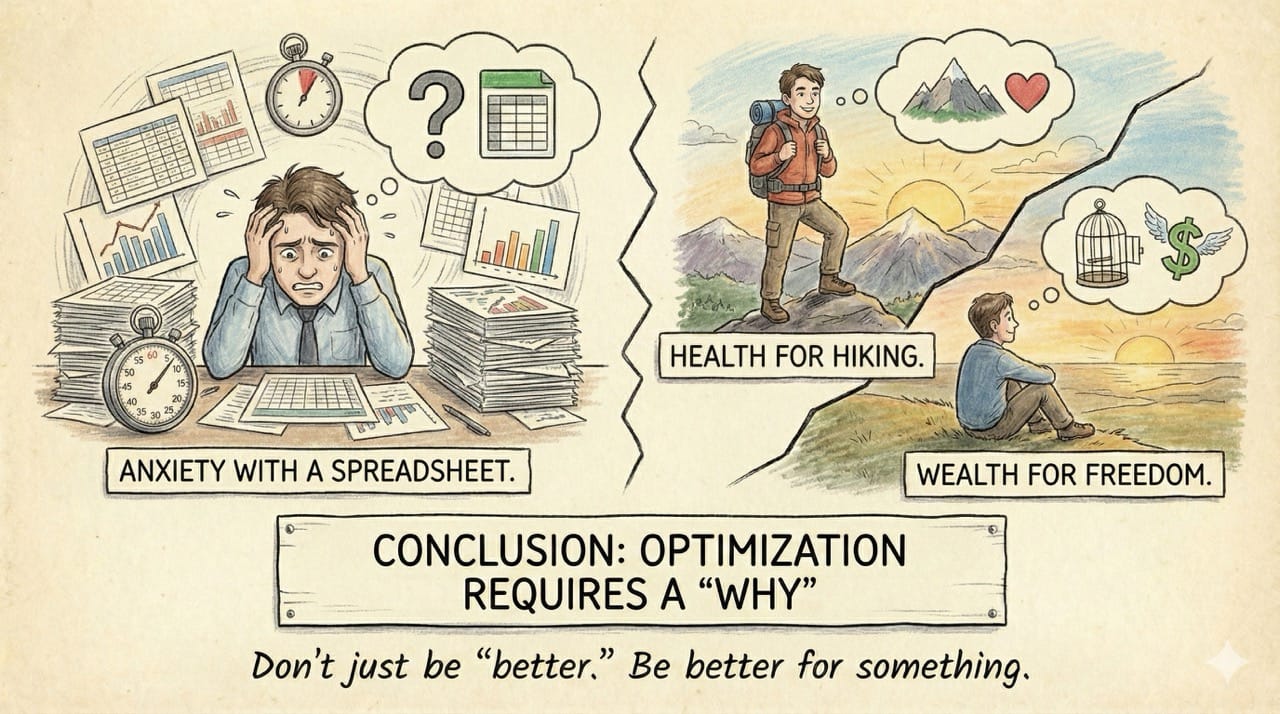
Conclusion: Optimization Requires a "Why"
Optimization without a goal is just anxiety with a spreadsheet.
My Take: Optimize your health so you can hike.
Optimize your wealth so you can be free.
But don't optimize just to be "better." Be better for something.