Raising Kids in the Age of AI: Arming the Next Generation
Artificial intelligence is permanently destroying the barrier to entry for modern knowledge work. If we do not actively teach our children how to build unique competitive moats, they will be entirely replaced by software before they ever enter the workforce.

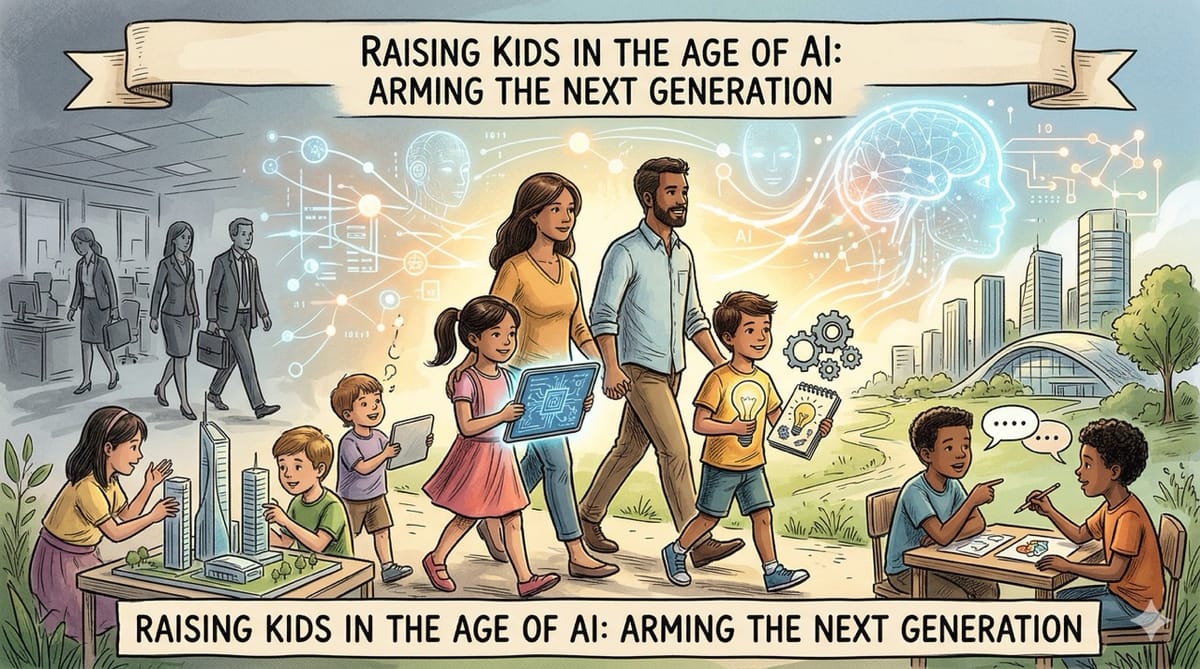
The era of the safe, average corporate job is officially dead. Parents must stop preparing their children to be compliant workers and start training them to become irreplaceable strategic assets.
Inspiration: Reflecting on a recent Scott Galloway podcast question about the fear of children treating "finding themselves" as a legitimate career path. Realizing that preparing kids for the future means understanding how AI fundamentally rewrites the rules of income distribution.
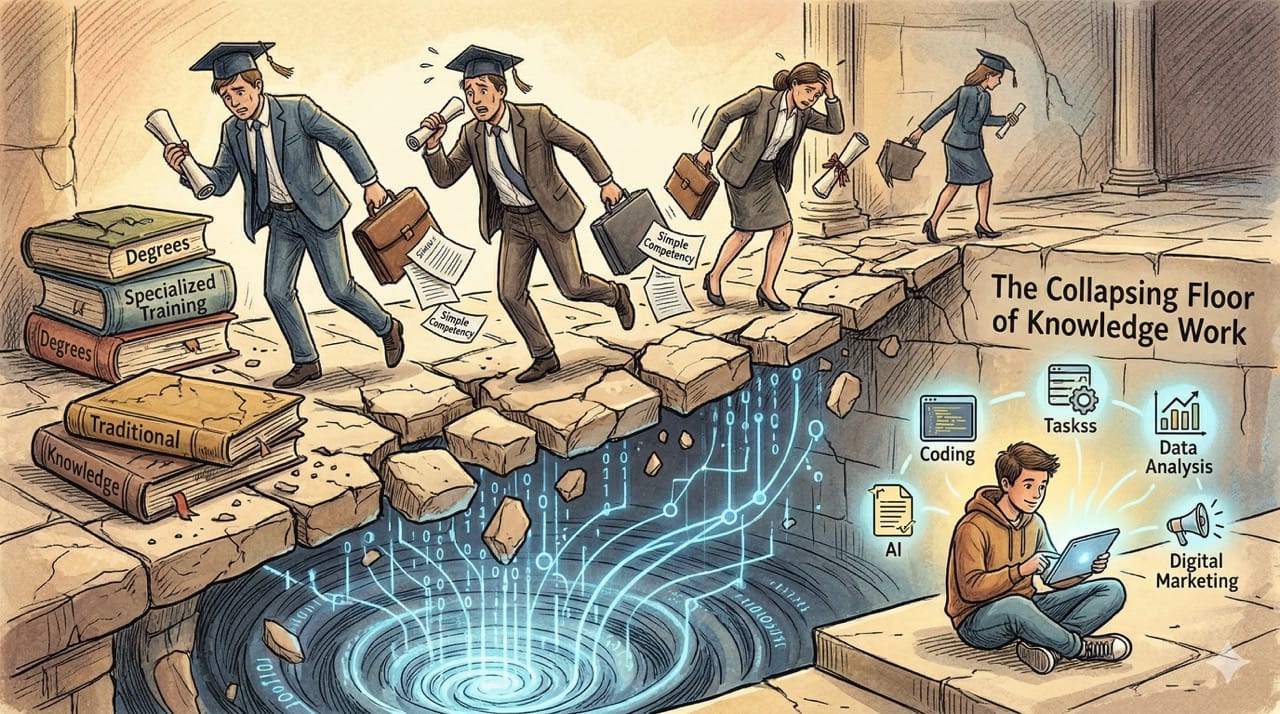
The Collapsing Floor of Knowledge Work
Artificial intelligence has permanently lowered the barrier to entry for almost all traditional knowledge work.
Tasks that used to require a specialized college degree can now be executed by anyone with a basic internet connection.
This creates a massive systemic problem for individuals planning to build a career on simple competency.
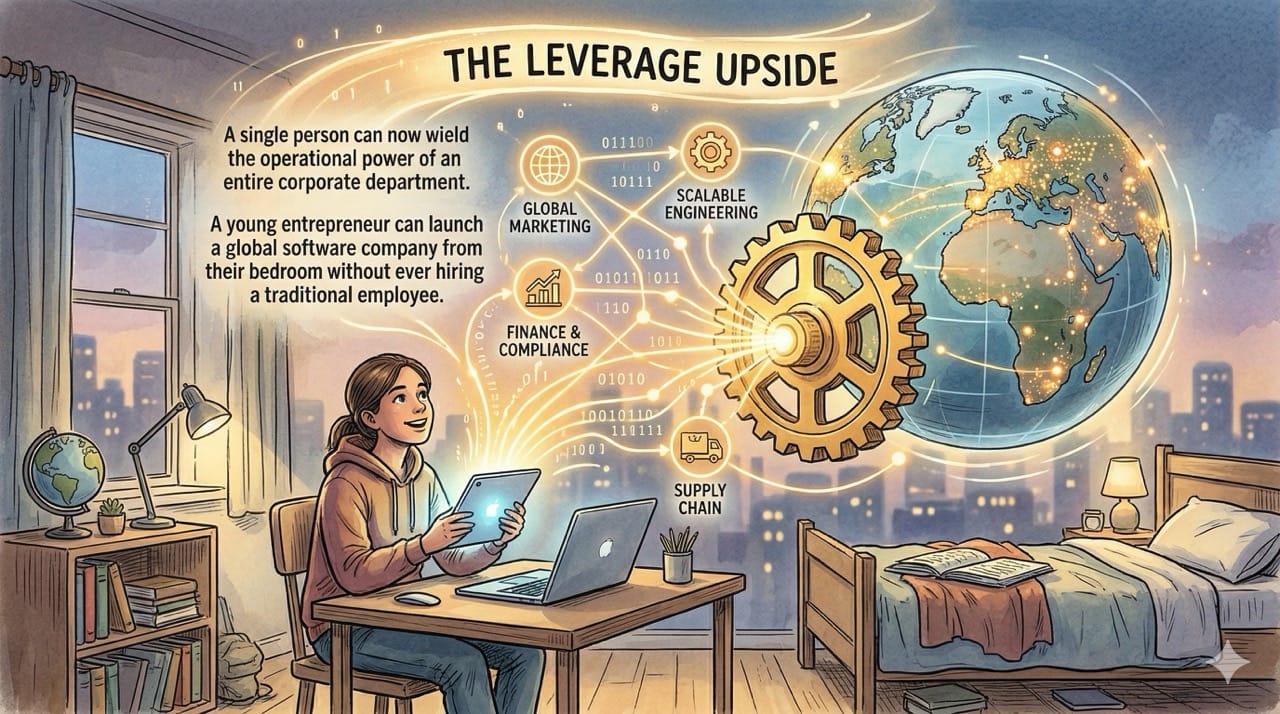
The Leverage Upside
However, this technological shift also presents an incredible upside for the highly ambitious.
A single person can now wield the operational power of an entire corporate department.
A young entrepreneur can launch a global software company from their bedroom without ever hiring a traditional employee.
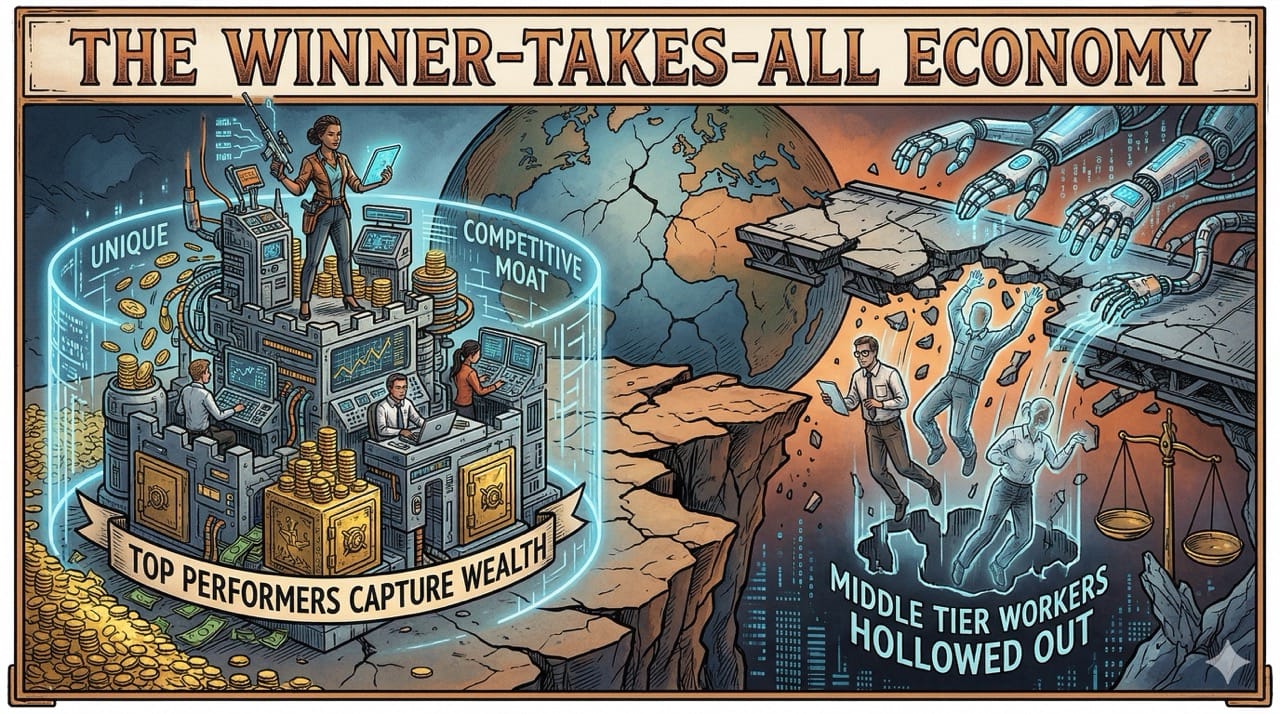
The Winner-Takes-All Economy
This new leverage fundamentally alters the global income distribution. We are rapidly moving toward a brutal, winner-takes-all economic landscape.
Top performers who possess unique competitive moats will capture almost all of the available wealth, while the middle tier of workers will be completely hollowed out by algorithms.
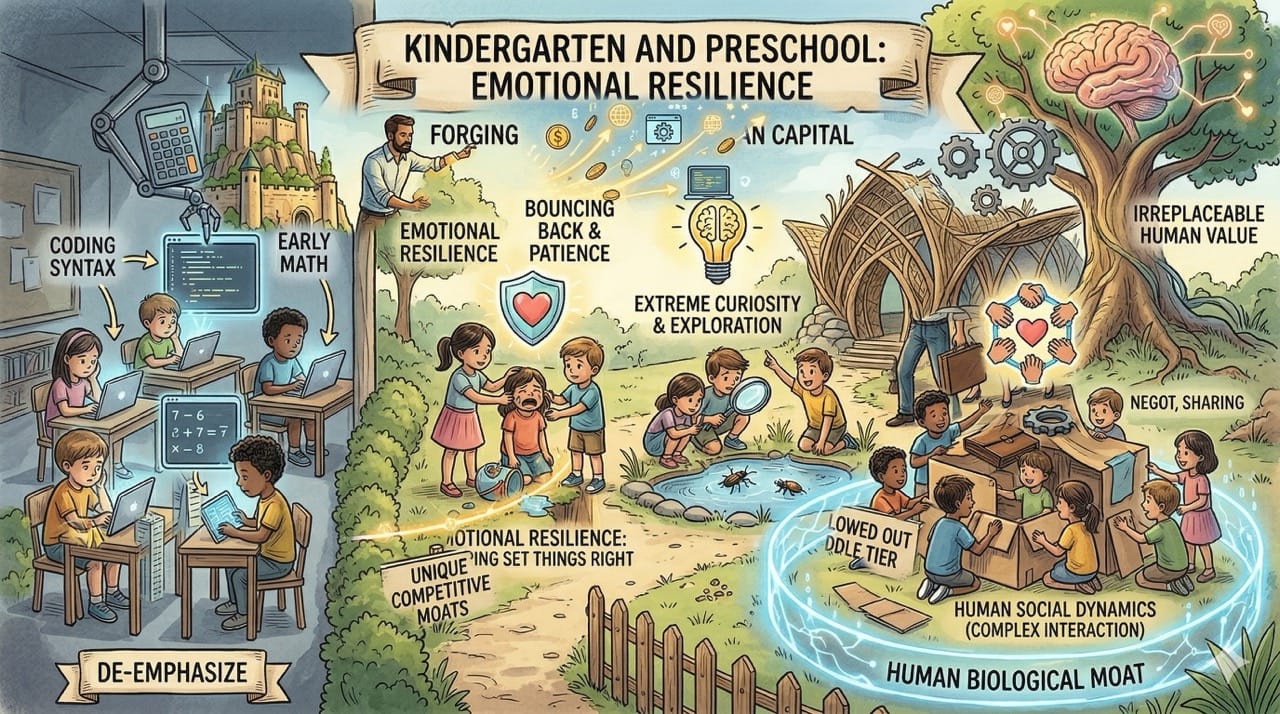
Kindergarten and Preschool: Emotional Resilience
The earliest years of education must focus entirely on the biological traits that machines cannot replicate.
Preschoolers do not need to learn basic coding syntax or early mathematics.
They need to learn intense emotional resilience, extreme curiosity, and how to navigate complex human social dynamics in a physical space.
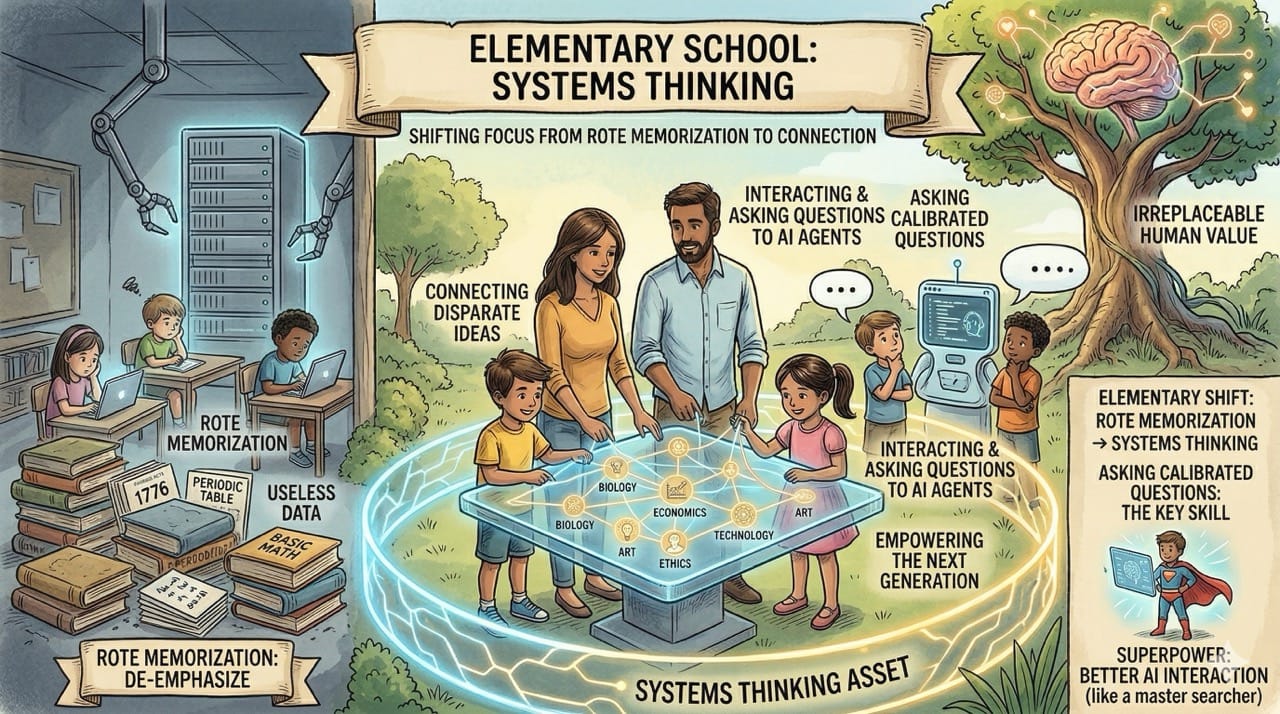
Elementary School: Systems Thinking
As children enter elementary school, the focus must shift toward foundational systems thinking. Rote memorization is completely useless when a machine holds the entirety of human knowledge on a server.
Children must learn how to connect completely disparate ideas and ask highly calibrated questions.
Asking calibrated questions is a skill that will become more valuable in the age of age. Similar to the superpower of using Google Search better than the general population, interacting and asking questions to AI agents will empower the next generation even more than before.
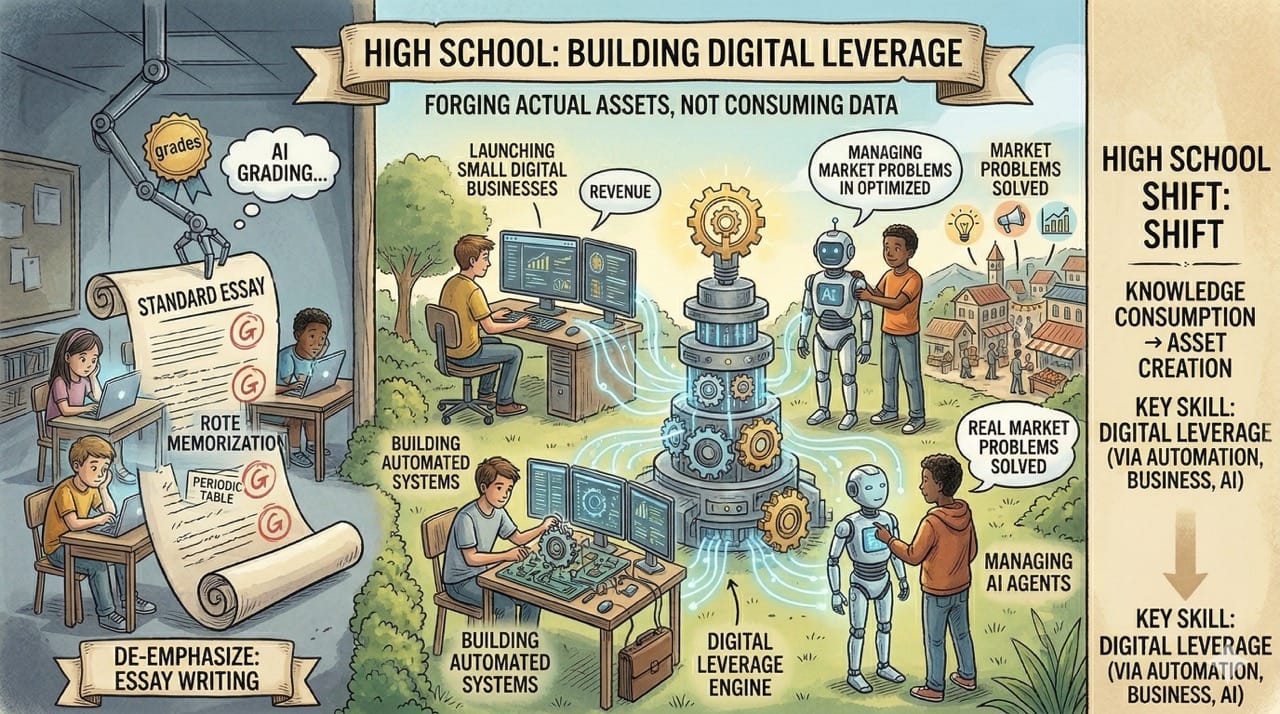
High School: Building Digital Leverage
High school is the precise moment to start building actual digital leverage. Students should stop writing standard essays that will inevitably be graded by an AI algorithm.
They should be forced to build actual automated systems, launch small digital businesses, and manage their own artificial intelligence agents to solve real market problems.
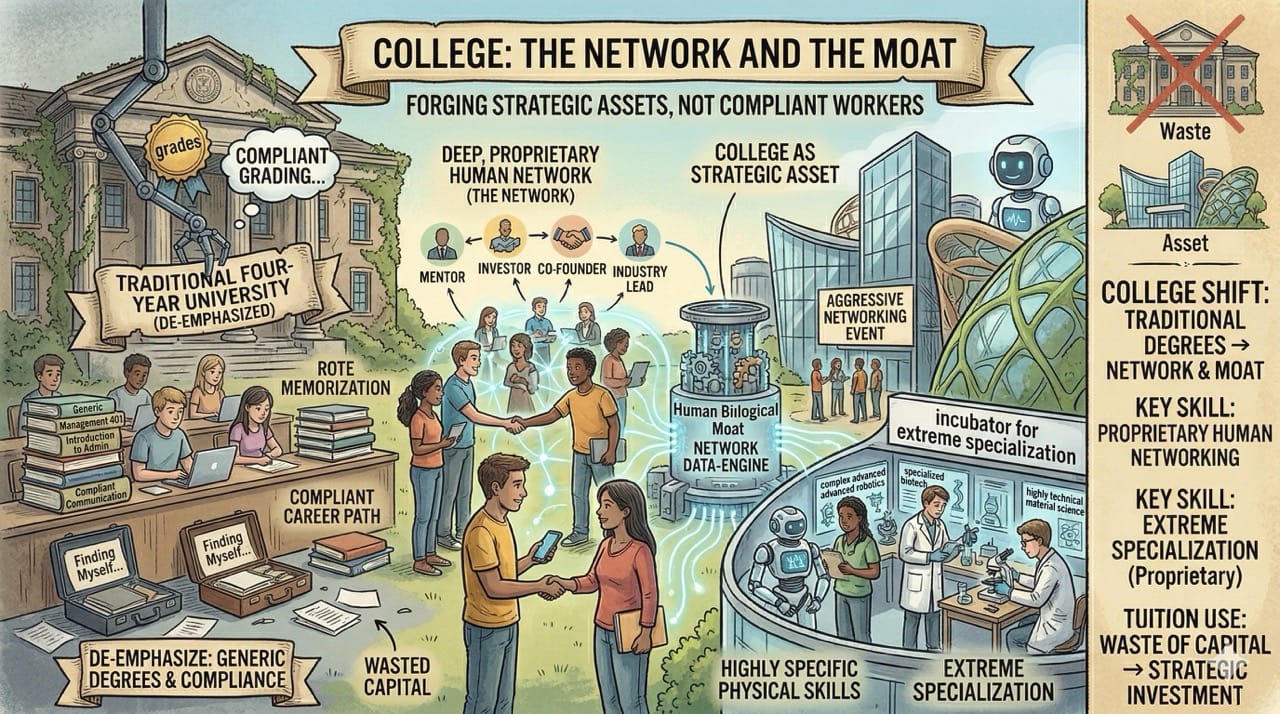
College: The Network and the Moat
The traditional four-year university is no longer a guaranteed ticket to the middle class.
College must now be viewed strictly as a highly aggressive networking event and an incubator for extreme specialization.
If a student is not actively building a deep, proprietary human network or a highly specific physical skill, the tuition is a complete waste of capital.
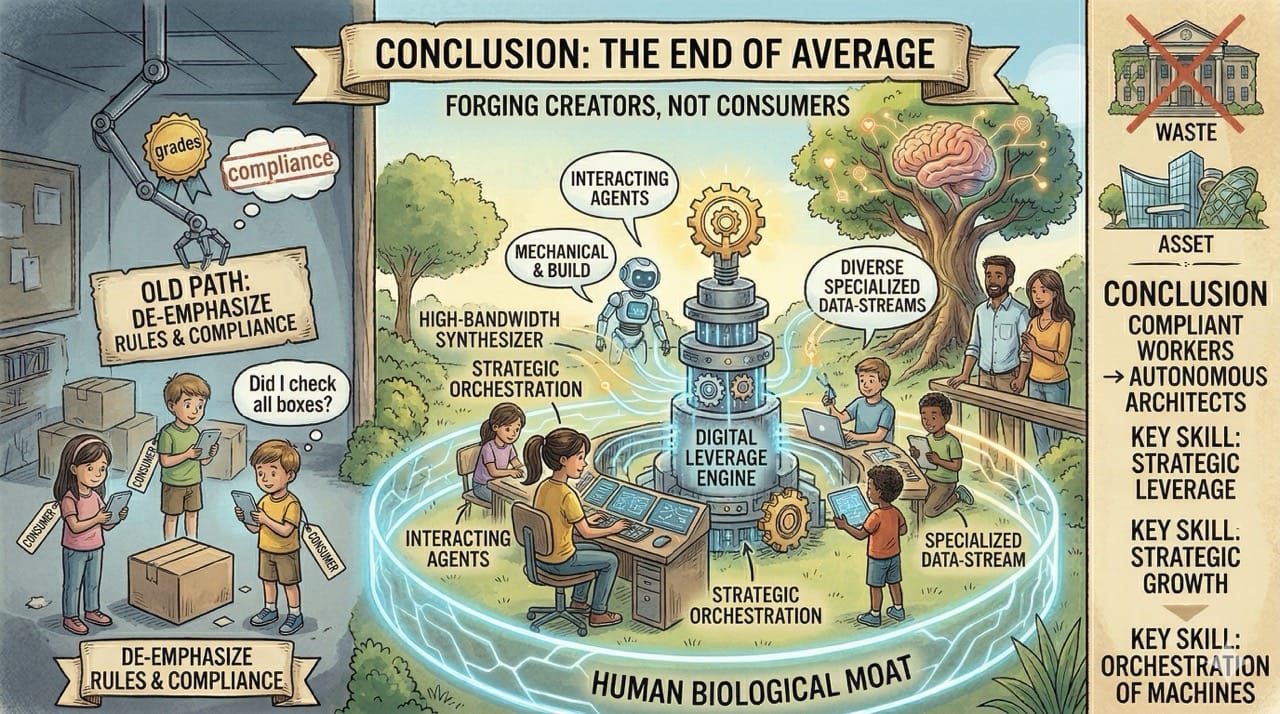
Conclusion: The End of Average
The future economy will not reward those who simply follow the rules and check the boxes.
It will only reward high-bandwidth synthesizers who can strategically orchestrate machines.
We must stop raising our children to be passive consumers of technology and start training them to be autonomous architects of their own leverage.