Oil, Water, and War: How Geography Decides the Winners Before the Game Starts
We love the myth of the "Self-Made Man." But the truth is, most success is environmental. Nations are dealt a hand of cards—navigable rivers, oil, neighbors—that they cannot change.
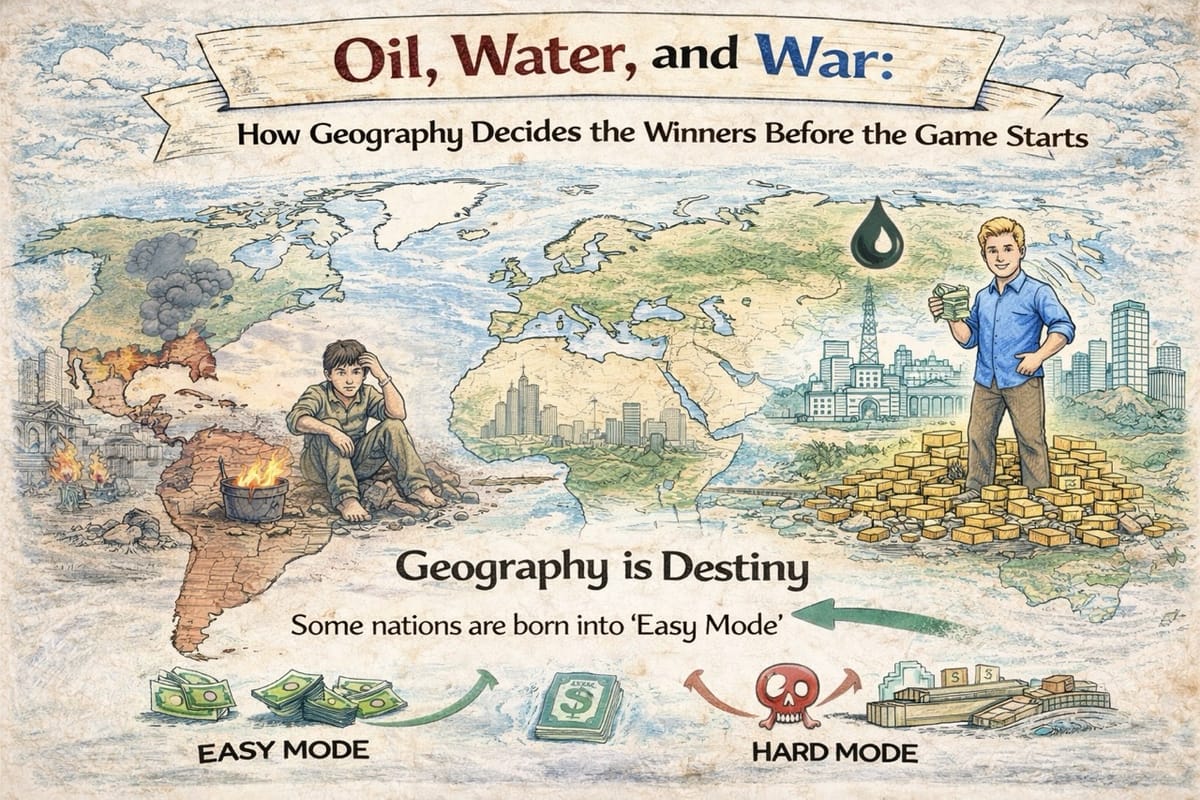
Nations are like people. Some are born on "Easy Mode" with a trust fund. Others are born in a war zone and have to hack the system just to survive.
Inspiration: Realizing that a genius born in a landlocked, war-torn country has a lower ceiling than a mediocre person born in a resource-rich democracy.
We love to talk about "Meritocracy." We tell ourselves that hard work beats everything.
But the hard reality is that Geography is Destiny.
You don't choose your parents. You don't choose your IQ. You don't choose your passport. Yet these three variables account for ~80% of your lifetime earning potential.
The same applies to nations. The game is rigged before the first move is made.
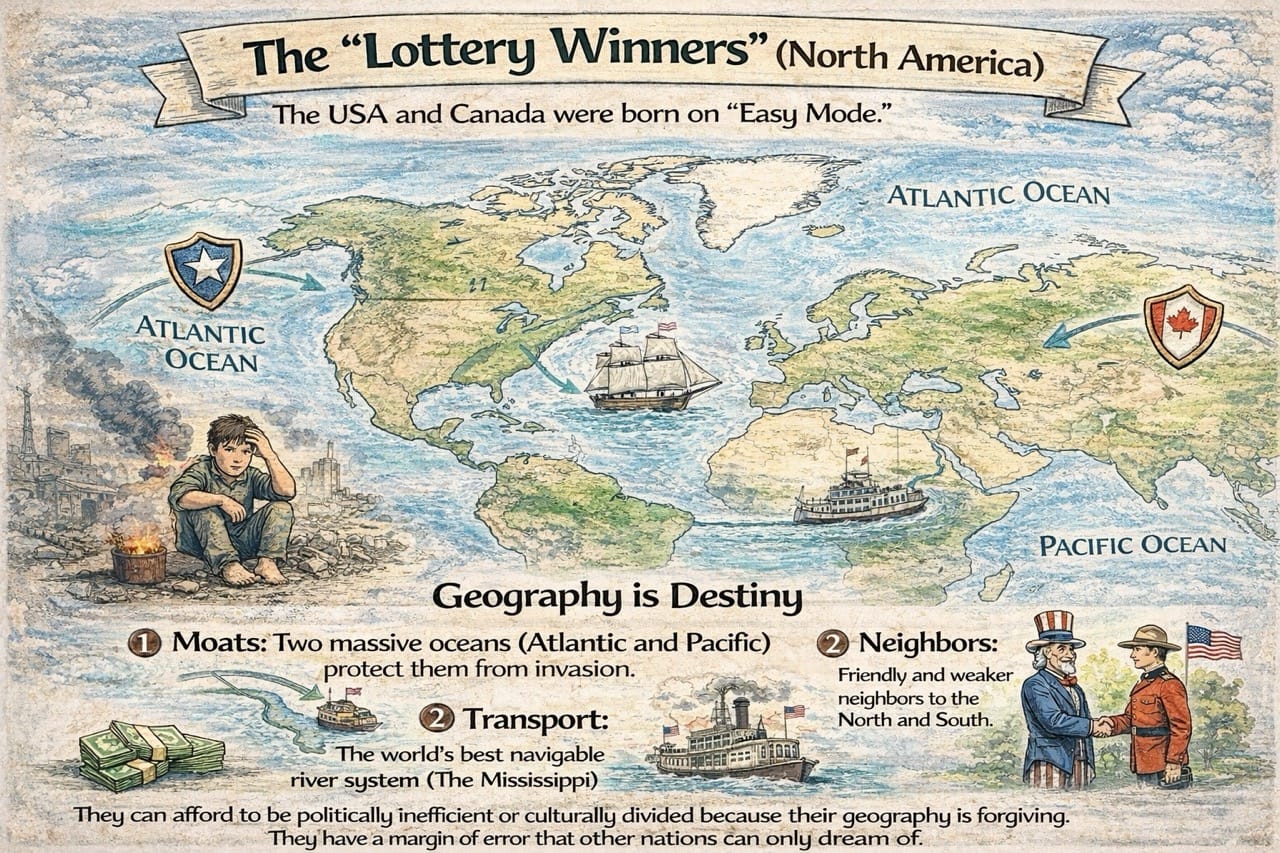
The "Lottery Winners" (North America)
The USA and Canada were born on "Easy Mode."
- Moats: Two massive oceans (Atlantic and Pacific) protect them from invasion.
- Transport: The world's best navigable river system (The Mississippi) makes transport dirt cheap.
- Neighbors: Friendly and weaker neighbors to the North and South.
They can afford to be politically inefficient or culturally divided because their geography is forgiving. They have a margin of error that other nations can only dream of.
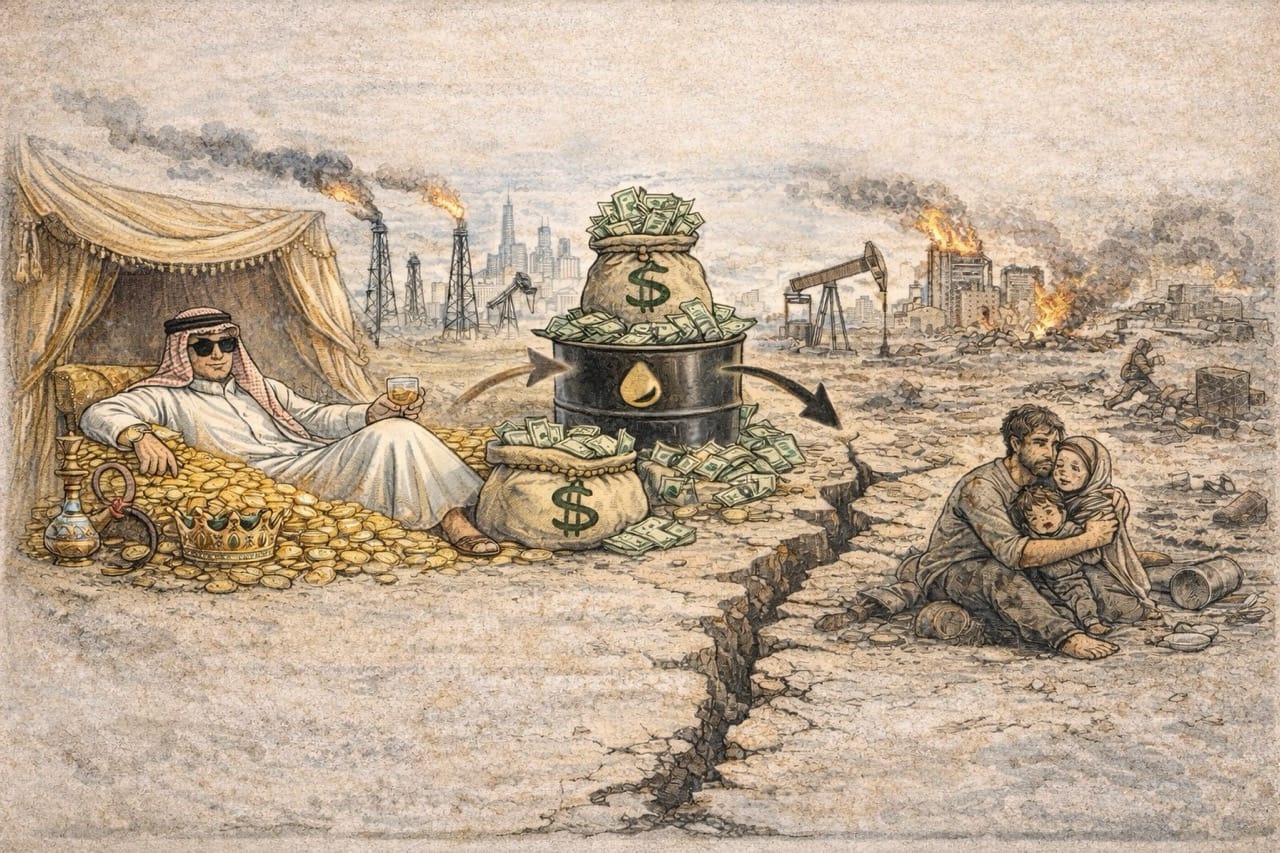
The "Trust Fund" Kids (The Resource Curse)
Then there are the Oil States. They are the geopolitical equivalent of the "Trust Fund Kid."
They inherited a massive estate (oil fields). They don't need to be productive. They don't need innovation. They just need to pump.
The Result: The "Resource Curse." Because the government doesn't need tax revenue from its people (it has oil money), it doesn't need to listen to them. Democracy rarely flourishes where the ground is richer than the citizens. They are rich, but they are fragile. If the oil price drops, the society collapses because there is no underlying engine of productivity.
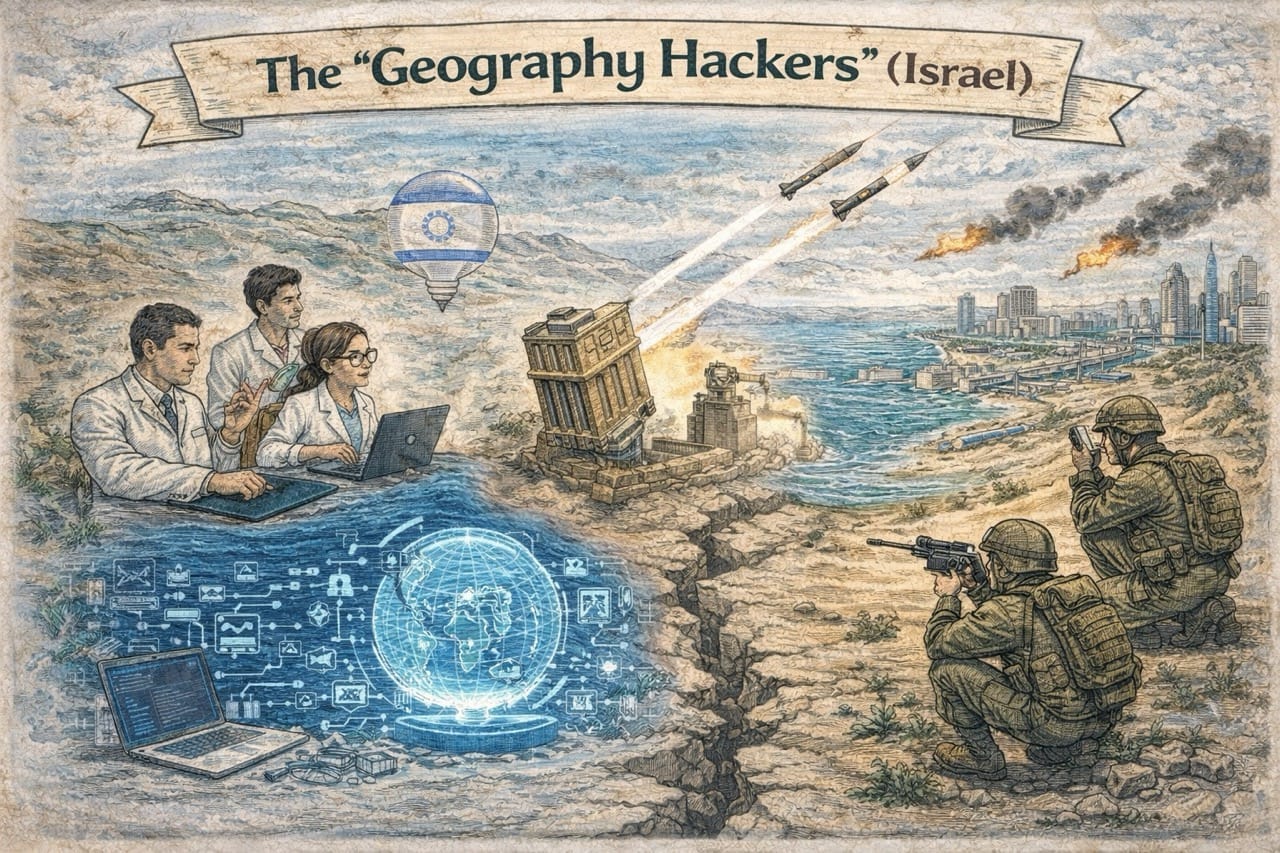
The "Geography Hackers" (Israel)
Can you beat a bad hand? Yes, but the cost is high.
Look at Israel.
- Geography: Tiny, arid, scarce water, surrounded by hostile neighbors. No natural resources (until very recently).
- The Hack: Innovation as Survival.
Because they couldn't rely on land, they relied on brains. They built a tech sector (Unit 8200) and a military that is pound-for-pound the best in the world.
They are the only country currently proving that you can overcome a "Bad Neighborhood" through sheer competence. They invest in desalination (fixing the water problem) and Iron Domes (fixing the neighbor problem). They grow faster than their oil-rich neighbors because they have to.
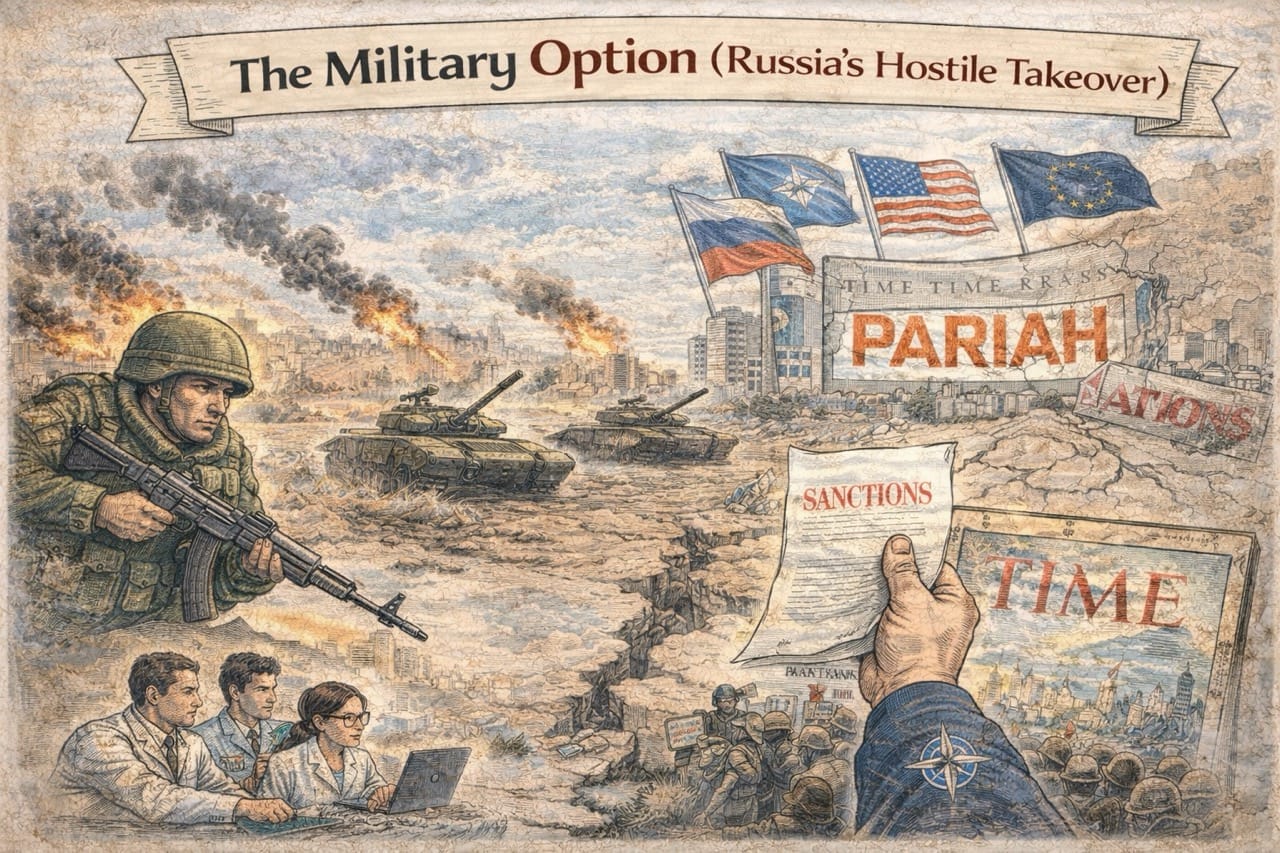
The Military Option (Russia's Hostile Takeover)
If you have bad geography, the alternative to innovation is Brute Force.
Russia is the classic example. It lacks natural mountain borders in the West (the North European Plain). It is terrified of invasion.
Historically, Russia solves this by invading its neighbors (Poland, Ukraine) to create "buffer zones." They try to fix their geography with tanks.
The Risk: In the modern world, this is expensive. You either forfeit your future (sanctions) or you become a pariah.
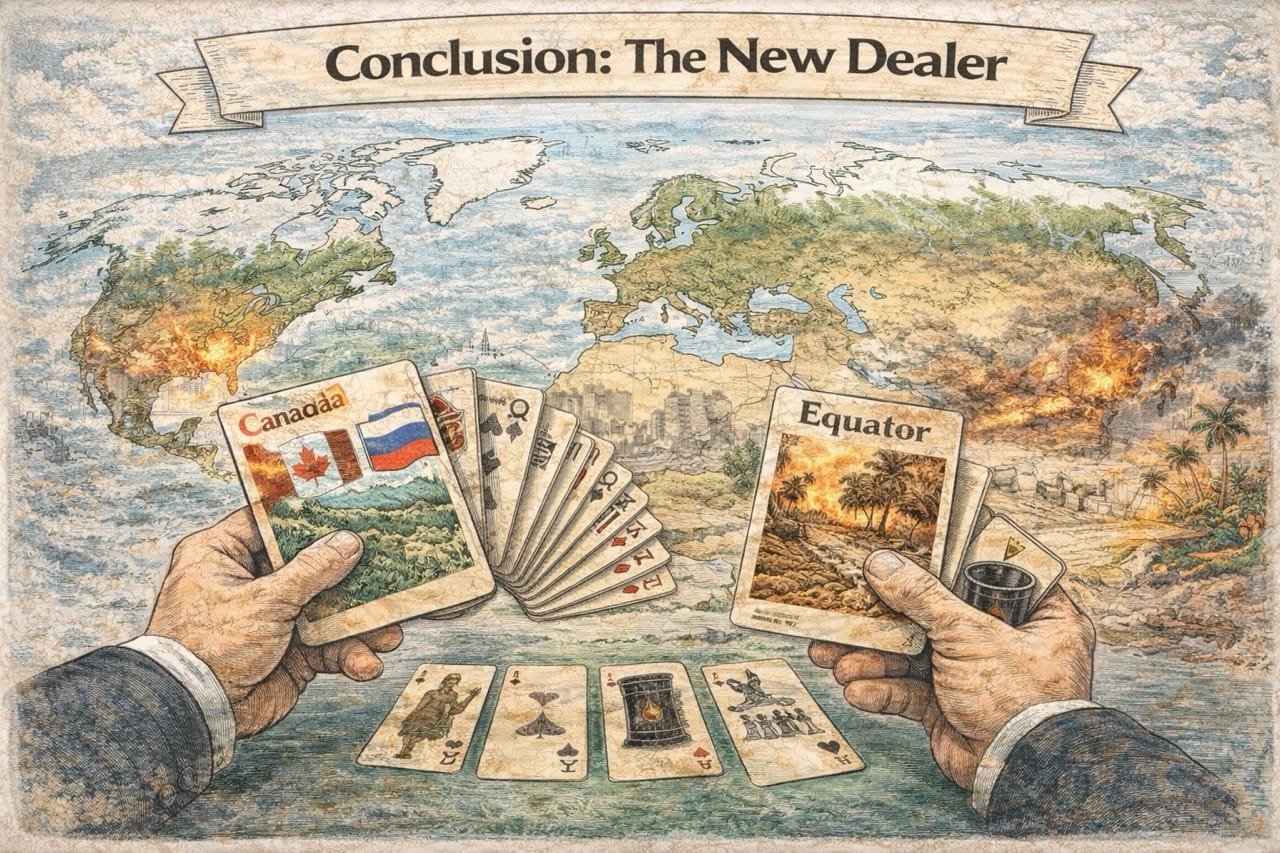
Conclusion: The New Dealer
We are playing the hand we were dealt centuries ago. But the dealer is about to shuffle the deck.
My Prediction: Climate Change will be the great reshuffle.
- Canada and Russia (The Cold North) become the new prime real estate as the permafrost melts and agriculture moves north.
- The Equator becomes unlivable.
- Australia & New Zealand: Also appreciate in value, as they are more likely to survive a post-nuclear world.
- But then, we will have bigger problems to deal with in such a world, rather than these goofy predictions.
The "Geography Lottery" is about to have a new drawing. And this time, "arable land" might be worth more than oil.