Ohalo: The Startup About to Revolutionize Agriculture
Potatoes have been "clones" for thousands of years. David Friedberg just turned them into "software." Ohalo isn't just a startup; it's the end of the agricultural stone age.
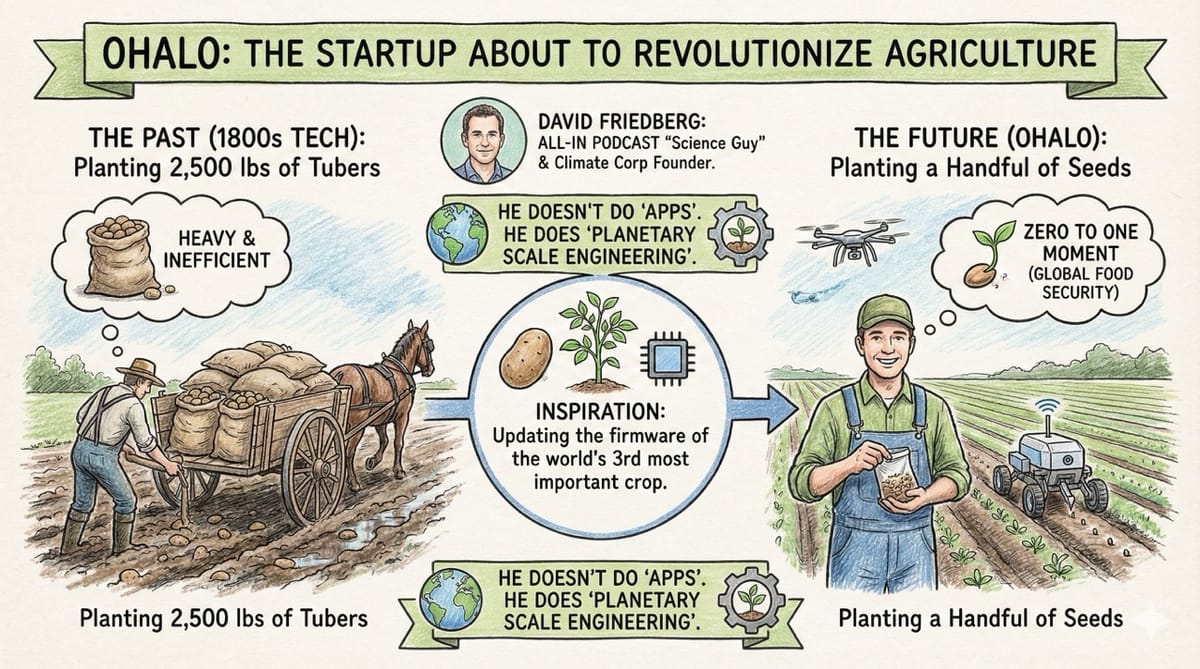
We are moving from planting 2,500 lbs of tubers to planting a handful of seeds. This is the "Zero to One" moment for global food security.
Inspiration: Realizing that the potato industry is still operating on technology from the 1800s, and that one man is about to update the firmware of the world's third most important crop.
Most people know David Friedberg as the "Science Guy" on the All-In Podcast. They forget he is also the guy who sold The Climate Corporation to Monsanto for $1.1 Billion in 2013.
He doesn't do "Apps." He does "Planetary Scale Engineering."
His latest venture, Ohalo Genetics, just emerged from stealth. And it is about to break the fundamental laws of agriculture.
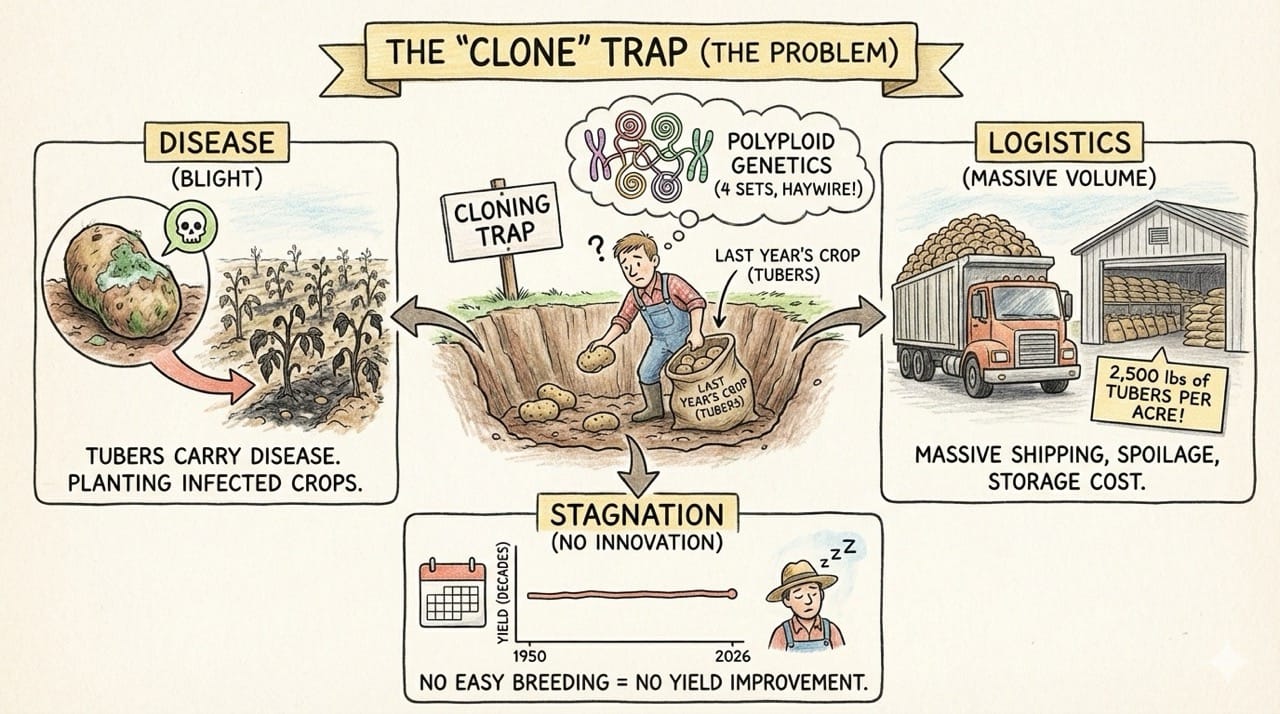
The "Clone" Trap (The Problem)
For thousands of years, farmers haven't planted potato seeds. They plant potato tubers (chunks of last year's crop).
Why? Because potatoes are Polyploid. They have 4 sets of chromosomes (humans have 2). If you try to breed them like corn, the genetics go haywire. You can't predict the outcome. So, farmers rely on Cloning to maintain consistency.
The Cost of Cloning:
- Disease: Tubers carry disease (blight) from season to season. You are planting infected crops.
- Logistics: To plant 1 acre, you need 2,500 lbs of potato tubers. That is massive shipping volume, spoilage, and storage cost.
- Stagnation: Because you can't easily breed them, potato yields haven't improved in decades.
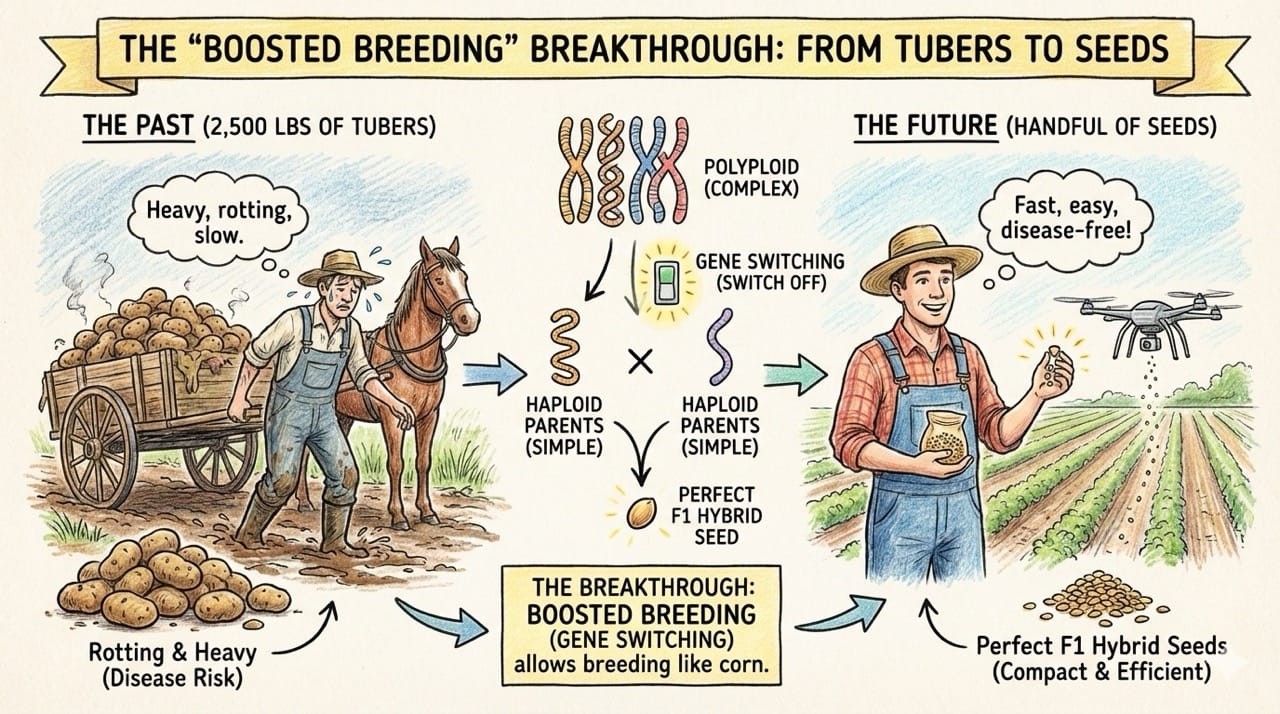
The "Boosted Breeding" Breakthrough
Ohalo solved the biology. They developed "Boosted Breeding."
They figured out how to "switch off" specific gene sets, allowing them to create "Haploid" parents. This allows them to breed potatoes just like corn. They can create Perfect F1 Hybrid Seeds.
The Shift: Instead of shipping 2,500 lbs of heavy, rotting tubers, a farmer can now plant a handful of seeds.
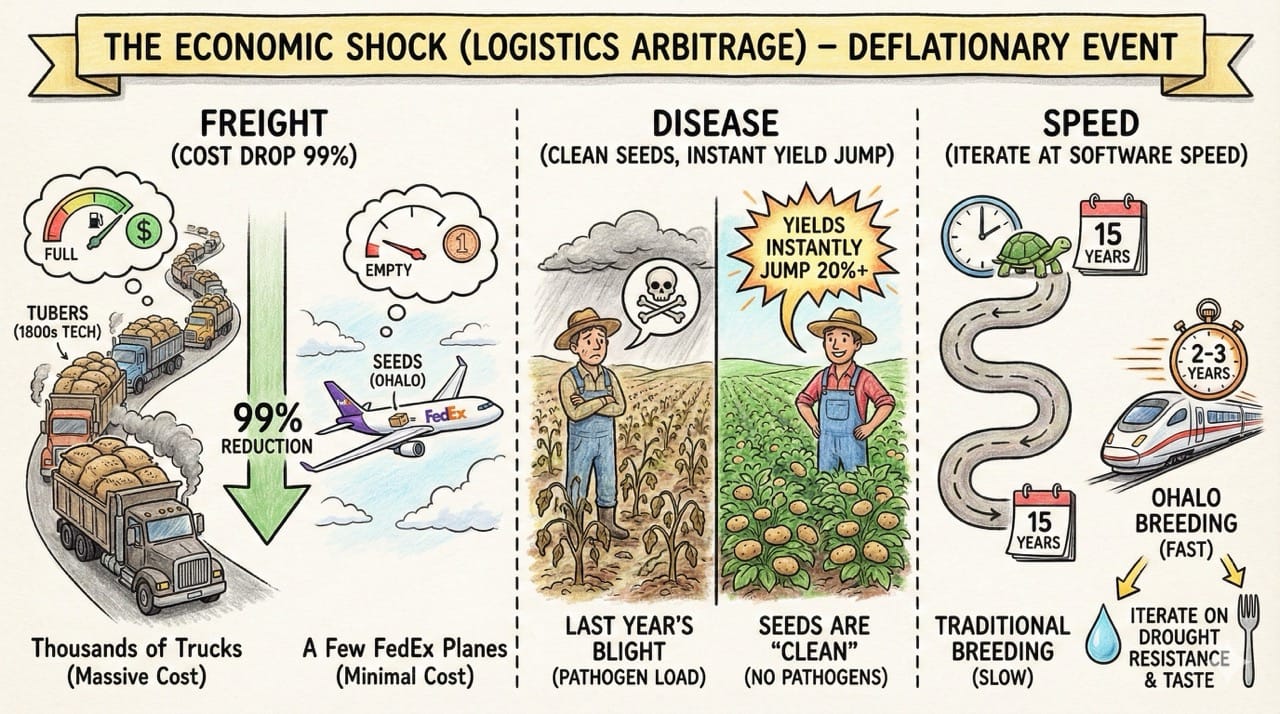
The Economic Shock (Logistics Arbitrage)
This is a massive deflationary event.
- Freight: The cost of transport drops by 99%. You can ship the inputs for an entire country's potato crop in a few FedEx planes rather than thousands of trucks.
- Disease: Seeds are "clean." They don't carry last year's blight. Yields instantly jump 20%+ just by removing the pathogen load.
- Speed: Traditional potato breeding takes 15 years. Ohalo can do it in 2-3 years. They can iterate on drought resistance and taste at the speed of software.
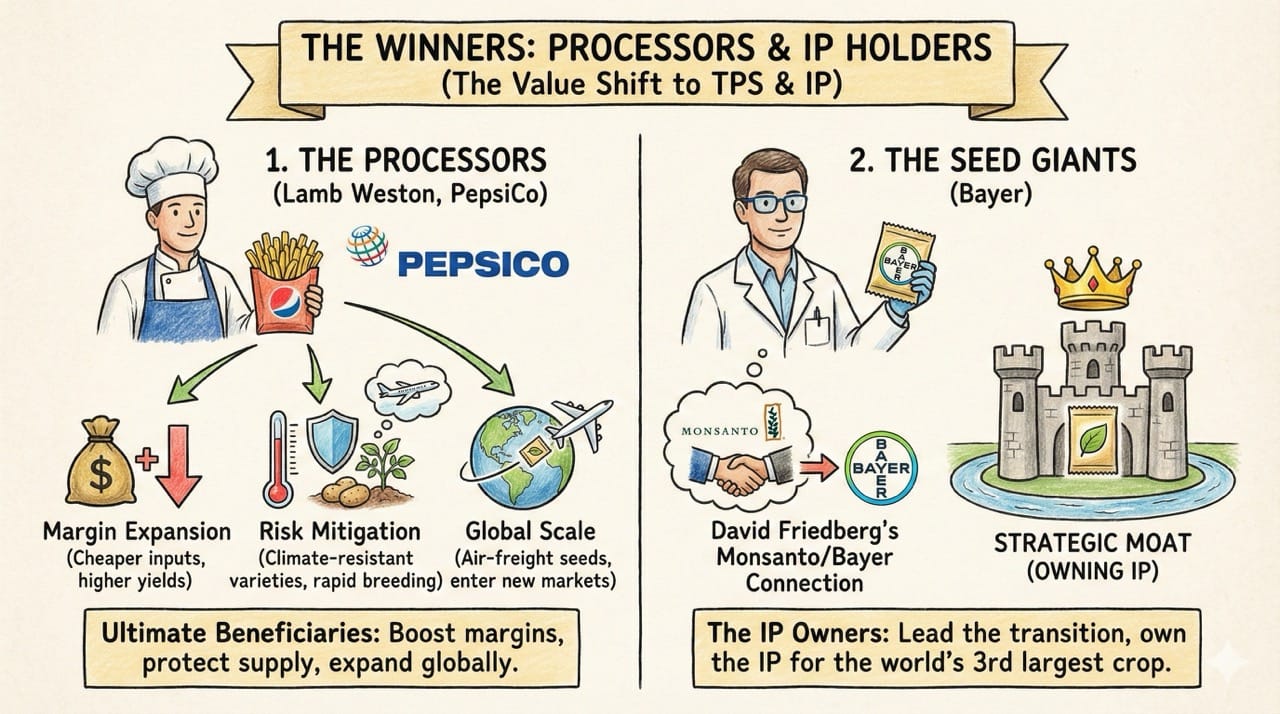
The Winners: Processors & IP Holders
The transition to True Potato Seeds (TPS) transfers value from logistics to intellectual property.
1. The Processors (Lamb Weston, PepsiCo): These companies are the ultimate beneficiaries. Raw potato costs represent ~30% of their COGS.
- Margin Expansion: Cheaper inputs (no storage costs for tubers) and higher yields (disease-free crops) directly boost gross margins.
- Risk Mitigation: TPS allows for rapid breeding of heat-resistant varieties, protecting their supply chain from climate shocks like the 2021 "Heat Dome."
- Global Scale: PepsiCo can enter markets like Africa or India by air-freighting seeds, bypassing the need for a cold-chain tuber infrastructure.
2. The Seed Giants (Bayer): David Friedberg sold his last company to Monsanto (now Bayer). Bayer is the most likely partner or acquirer. They are already positioning themselves to lead the TPS transition. Owning the IP for the world's third-largest food crop is a massive strategic moat.
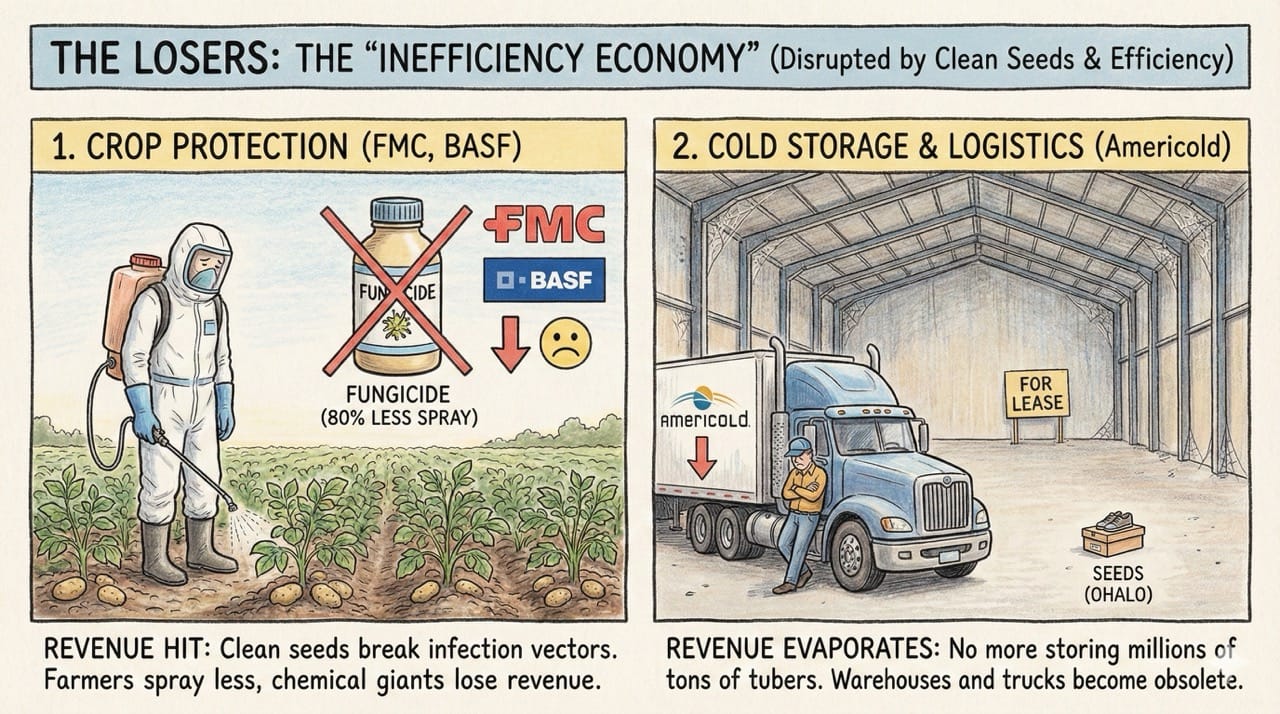
The Losers: The "Inefficiency Economy"
The efficiency gains of Ohalo come at the expense of industries built to service the inefficiencies of the old tuber model.
1. Crop Protection (FMC, BASF): Potatoes are one of the most fungicide-intensive crops because tubers carry disease (Late Blight). "Clean" seeds break this infection vector. If farmers spray 80% less fungicide because they are planting disease-free seeds, the revenue for chemical giants takes a structural hit.
2. Cold Storage & Logistics (Americold): Currently, massive warehouses are dedicated to storing seed tubers for months. TPS requires a shoebox, not a warehouse. The revenue from storing and trucking millions of tons of seed potatoes evaporates.
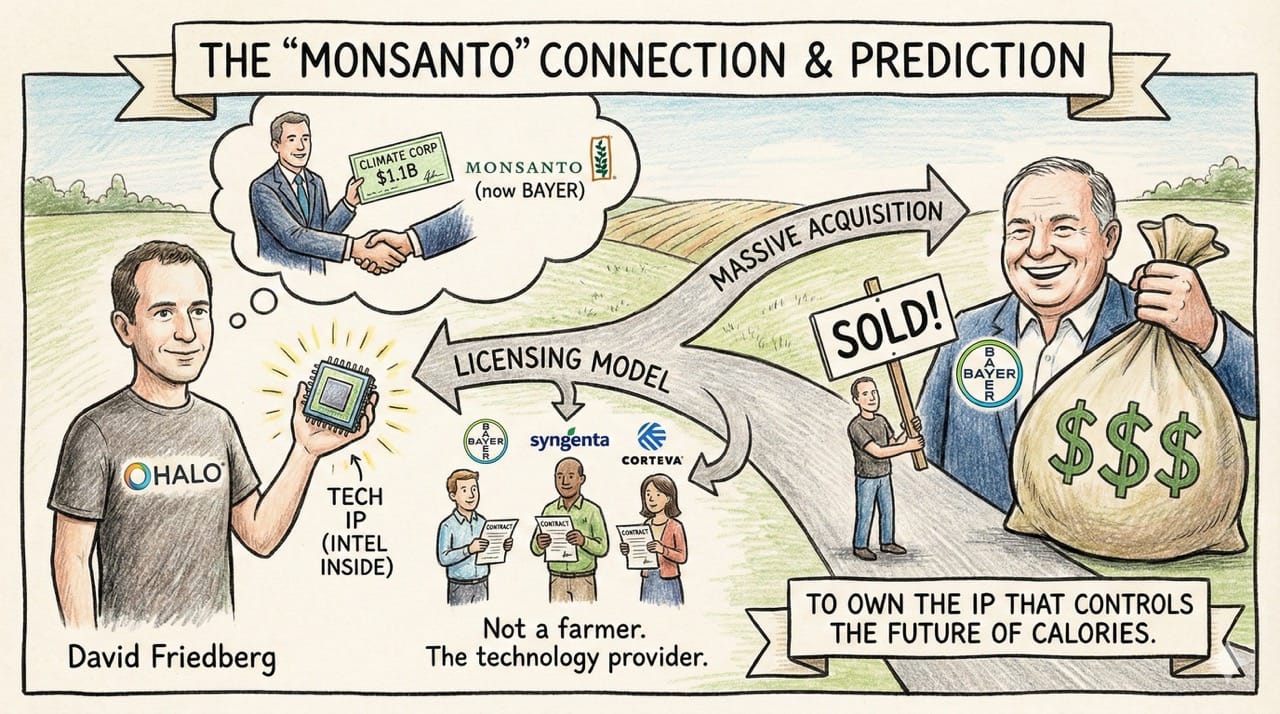
The "Monsanto" Connection
Friedberg has deep ties to the legacy giants. He sold his last company to Monsanto (now Bayer).
Prediction: Ohalo won't try to be a farmer. They will be the Intel Inside. They will likely license this tech to Bayer, Syngenta, or Corteva. Or, given Friedberg’s history, we might see a massive acquisition by Bayer to own the IP that controls the future of calories.
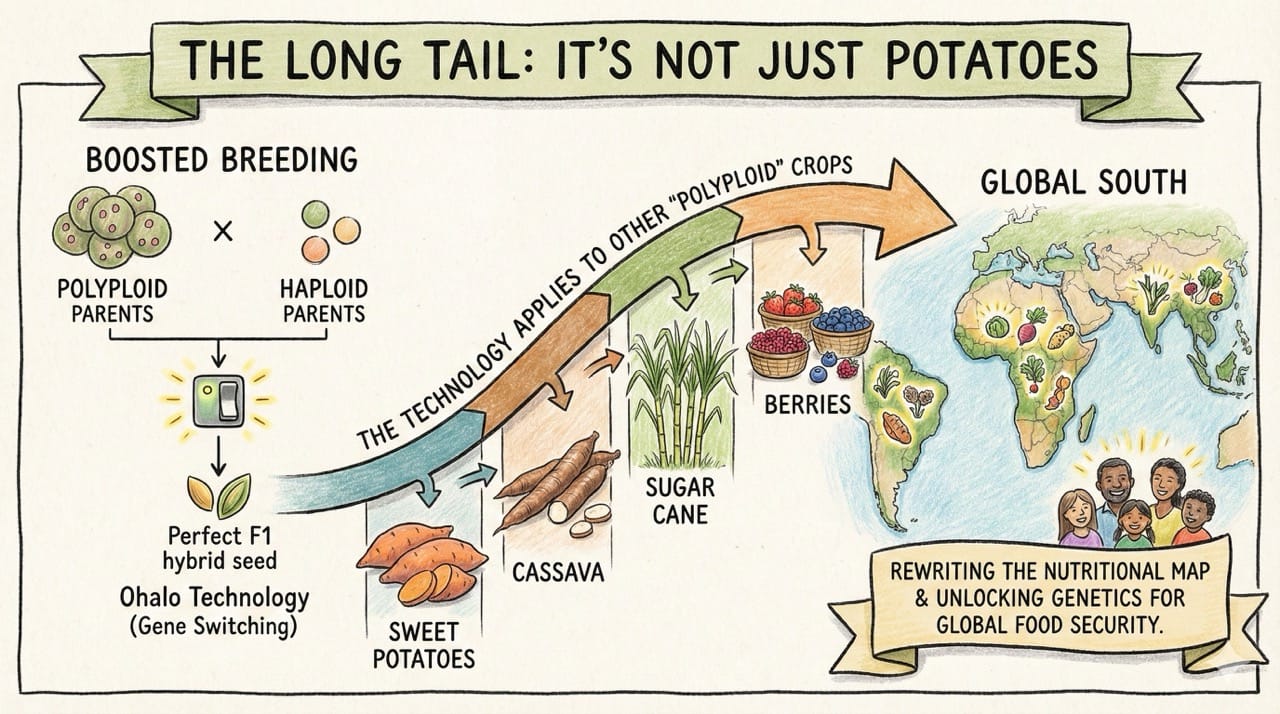
The Long Tail: It’s Not Just Potatoes
Potatoes are just the proof of concept. This technology applies to other "Polyploid" crops that are currently stuck in the cloning trap: Sweet Potatoes, Cassava, Sugar Cane, and Berries.
If Ohalo can unlock the genetics of these crops, they aren't just improving yields; they are rewriting the nutritional map of the Global South.
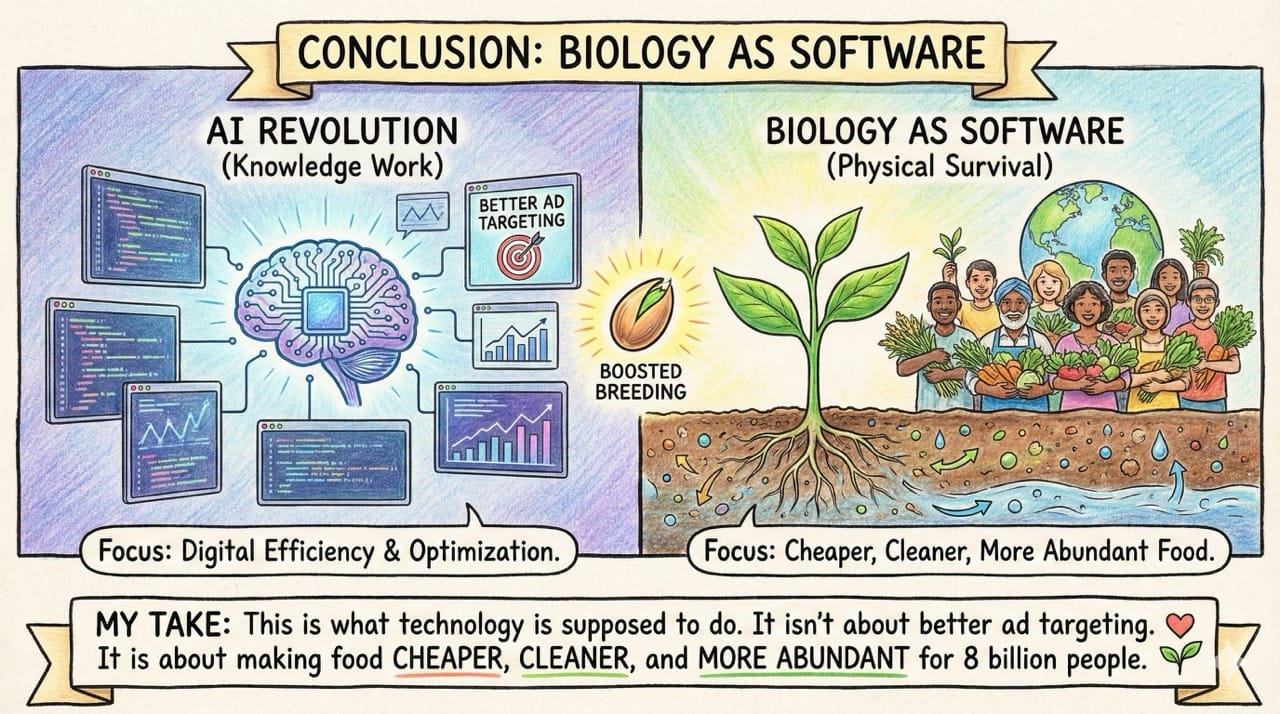
Conclusion: Biology as Software
We talk about AI revolutionizing "Knowledge Work." Ohalo is revolutionizing "Physical Survival."
My Take: This is what technology is supposed to do. It isn't about better ad targeting. It is about making food cheaper, cleaner, and more abundant for 8 billion people.