NotebookLM: Storytelling Has Never Been Easier
We used to drown in PDFs. Now, we chat with them. But the real revolution isn't reading; it's presenting. NotebookLM has turned from a research tool into a full-stack storytelling engine.

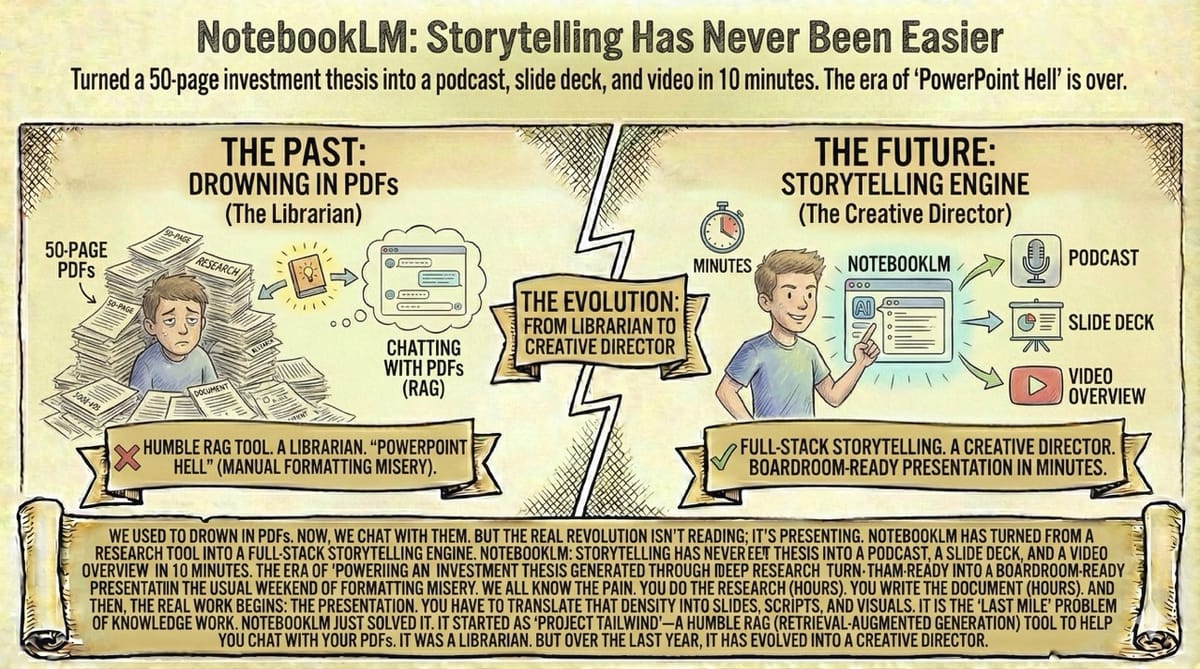
I turned a 50-page investment thesis into a podcast, a slide deck, and a video overview in 10 minutes. The era of "PowerPoint Hell" is over.
Inspiration: Watching an investment thesis generated through Deep Research turn into a boardroom-ready presentation in just a few minutes, rather than the usual weekend of formatting misery.
We all know the pain. You do the research (hours). You write the document (hours). And then, the real work begins: The Presentation.
You have to translate that density into slides, scripts, and visuals. It is the "Last Mile" problem of knowledge work.
NotebookLM just solved it.
It started as "Project Tailwind"—a humble RAG (Retrieval-Augmented Generation) tool to help you chat with your PDFs. It was a librarian.
But over the last year, it has evolved into a Creative Director.
The "Deep Research" to "Deep Presentation" Pipeline
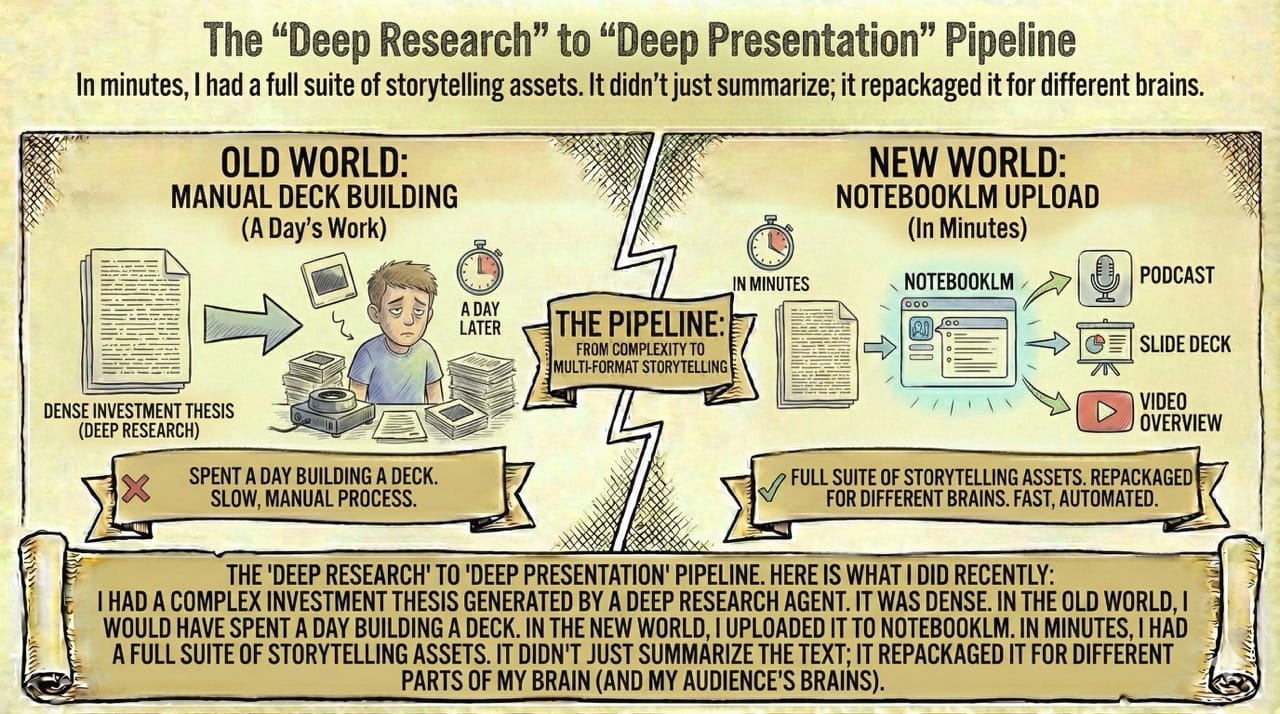
Here is what I did recently: I had a complex investment thesis generated by a Deep Research agent. It was dense.
In the old world, I would have spent a day building a deck. In the new world, I uploaded it to NotebookLM.
In minutes, I had a full suite of storytelling assets. It didn't just summarize the text; it repackaged it for different parts of my brain (and my audience's brains).
The "Storytelling Stack"
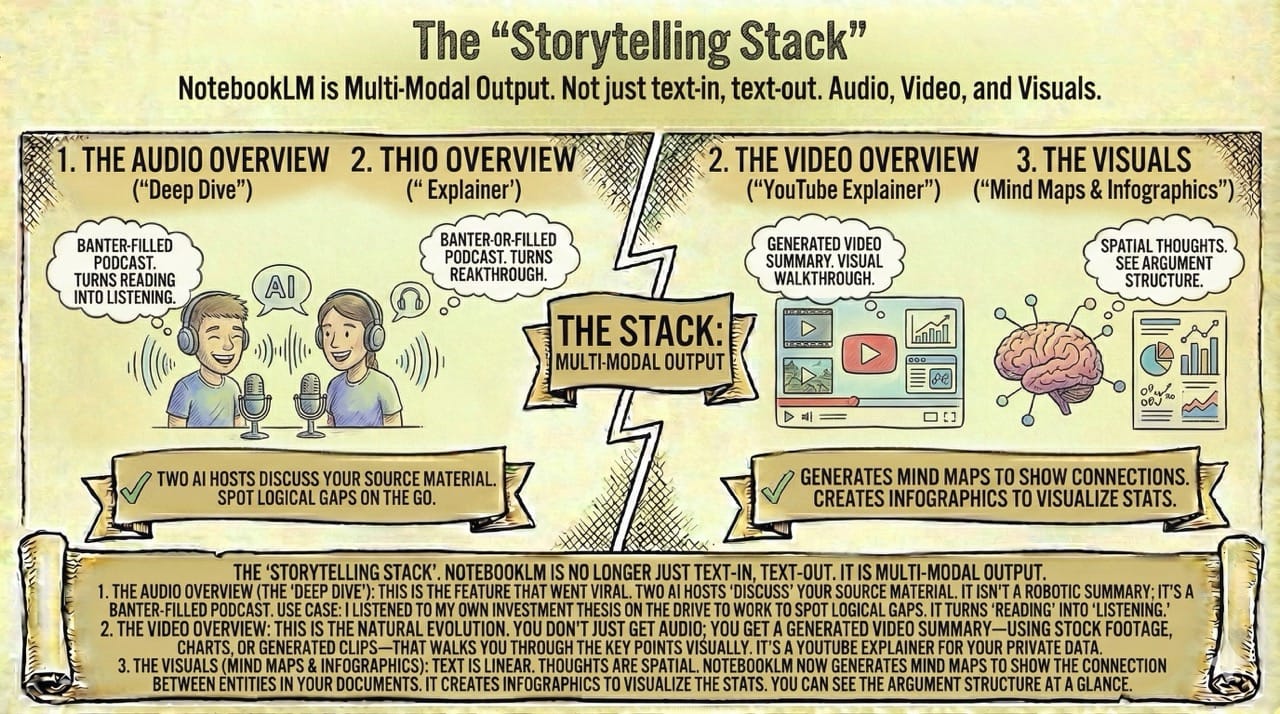
NotebookLM is no longer just text-in, text-out. It is Multi-Modal Output.
1. The Audio Overview (The "Deep Dive"): This is the feature that went viral. Two AI hosts "discuss" your source material. It isn't a robotic summary; it's a banter-filled podcast.
- Use Case: I listened to my own investment thesis on the drive to work to spot logical gaps. It turns "Reading" into "Listening."
2. The Video Overview: This is the natural evolution. You don't just get audio; you get a generated video summary—using stock footage, charts, or generated clips—that walks you through the key points visually. It’s a YouTube explainer for your private data.
3. The Visuals (Mind Maps & Infographics): Text is linear. Thoughts are spatial. NotebookLM now generates Mind Maps to show the connection between entities in your documents. It creates Infographics to visualize the stats. You can see the argument structure at a glance.
The "Structure" Engines
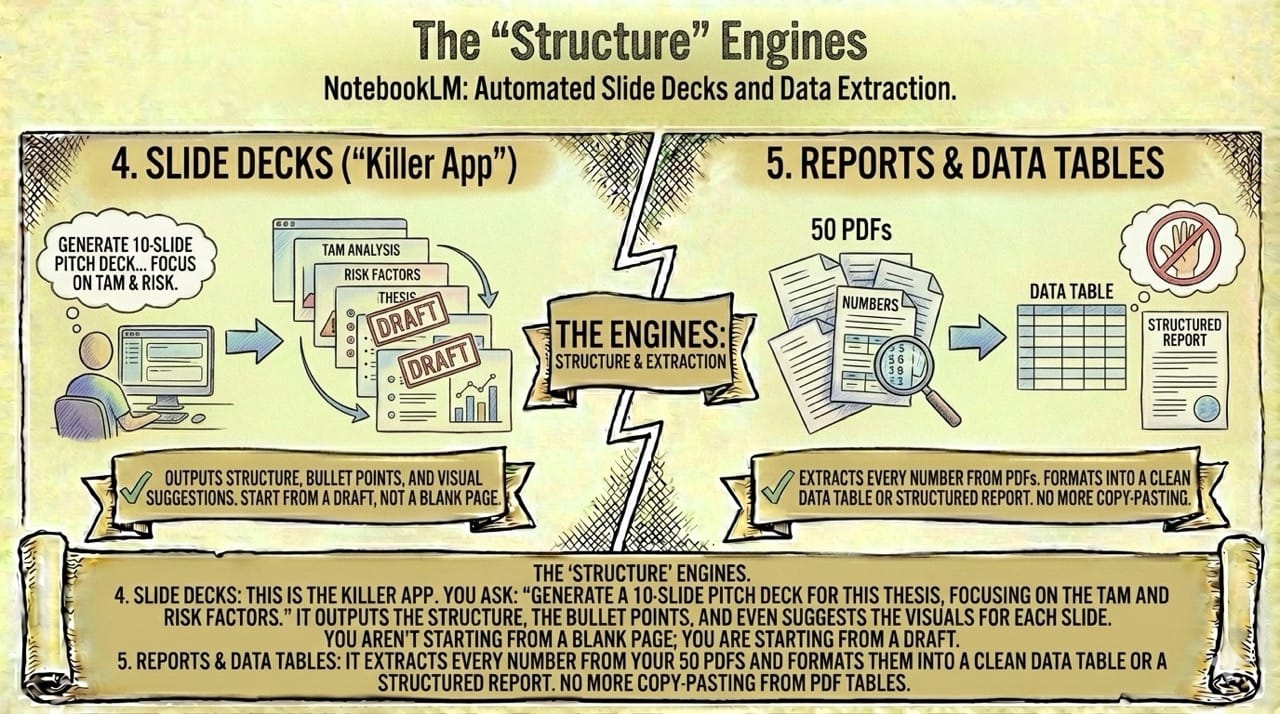
4. Slide Decks: This is the killer app. You ask: "Generate a 10-slide pitch deck for this thesis, focusing on the TAM and Risk factors." It outputs the structure, the bullet points, and even suggests the visuals for each slide. You aren't starting from a blank page; you are starting from a draft.
5. Reports & Data Tables: It extracts every number from your 50 PDFs and formats them into a clean Data Table or a structured Report. No more copy-pasting from PDF tables.
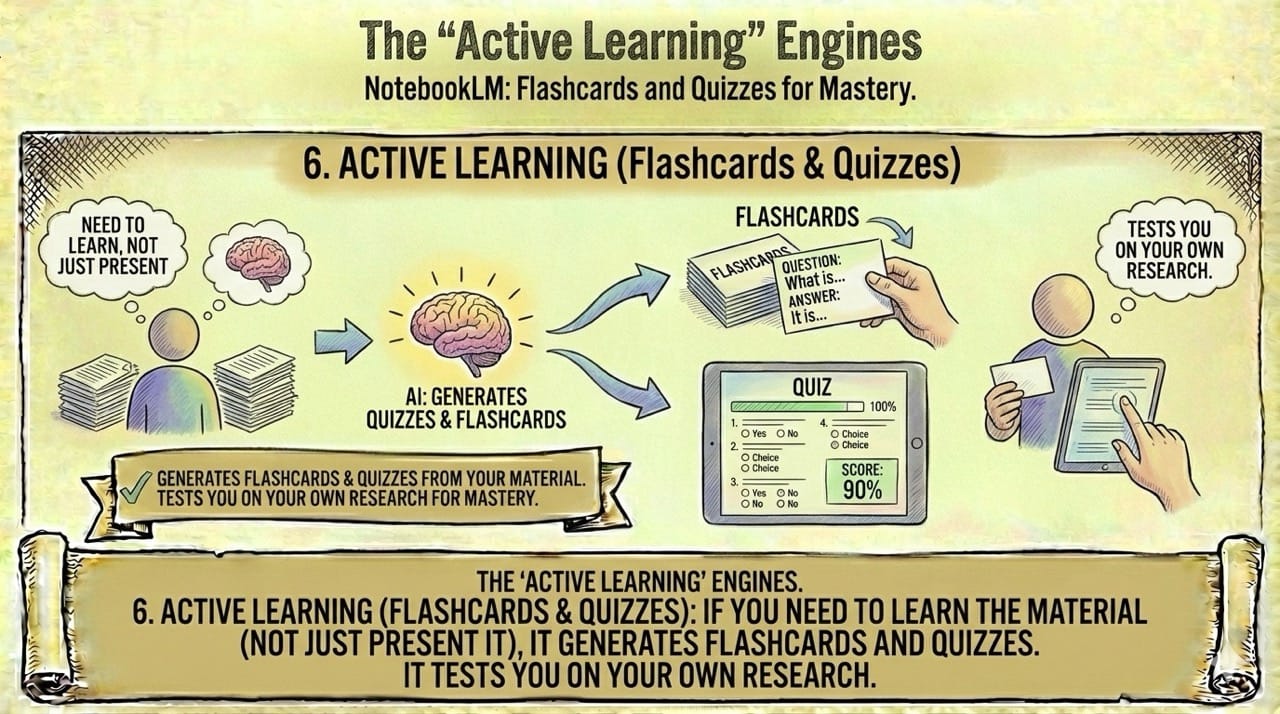
Active Learning (Flashcards & Quizzes)
If you need to learn the material (not just present it), it generates Flashcards and Quizzes. It tests you on your own research.
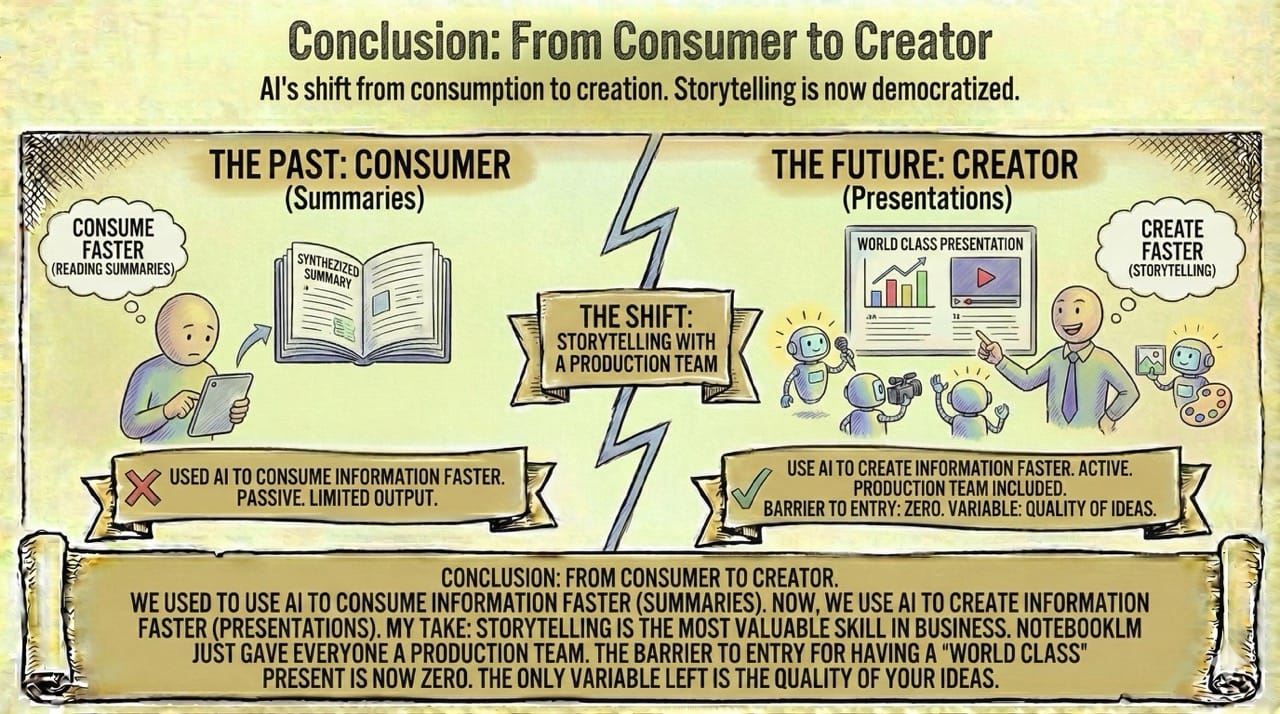
Conclusion: From Consumer to Creator
We used to use AI to consume information faster (summaries). Now, we use AI to create information faster (presentations).
My Take: Storytelling is the most valuable skill in business. NotebookLM just gave everyone a production team. The barrier to entry for having a "World Class" presentation is now zero. The only variable left is the quality of your ideas.