Manus My Computer: The AI That Actually Does Your Work
Manus just released a desktop app that lets AI run directly on your computer. It does not chat with you. It does your work for you. This changes the game for how we think about AI assistants.

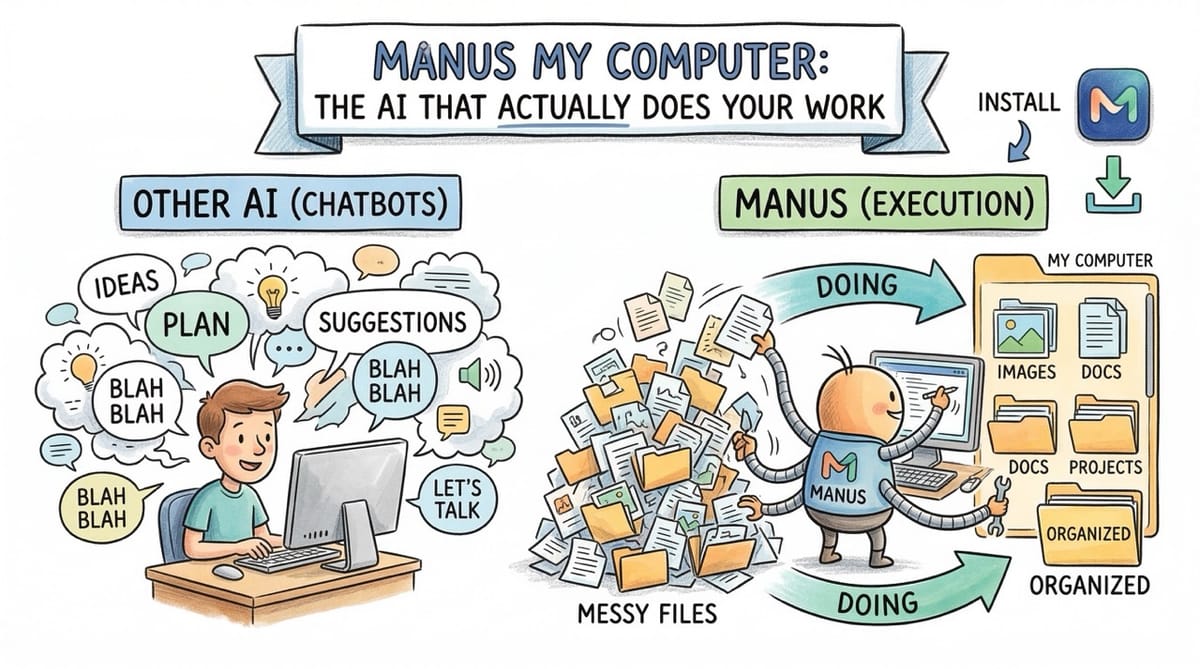
Every other AI tool talks to you. Manus skips the conversation and goes straight to execution.
Inspiration: Downloading the Manus desktop app and watching it organize a messy folder of thousands of files in minutes. Realizing that every AI chatbot I use daily still just gives me answers. This one actually does the thing.
What It Does
Manus just launched a desktop app called My Computer.
It is available for both macOS and Windows.
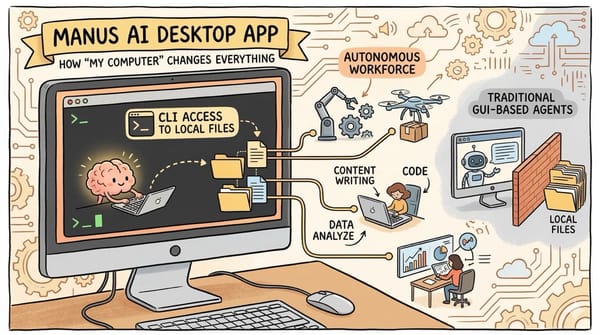
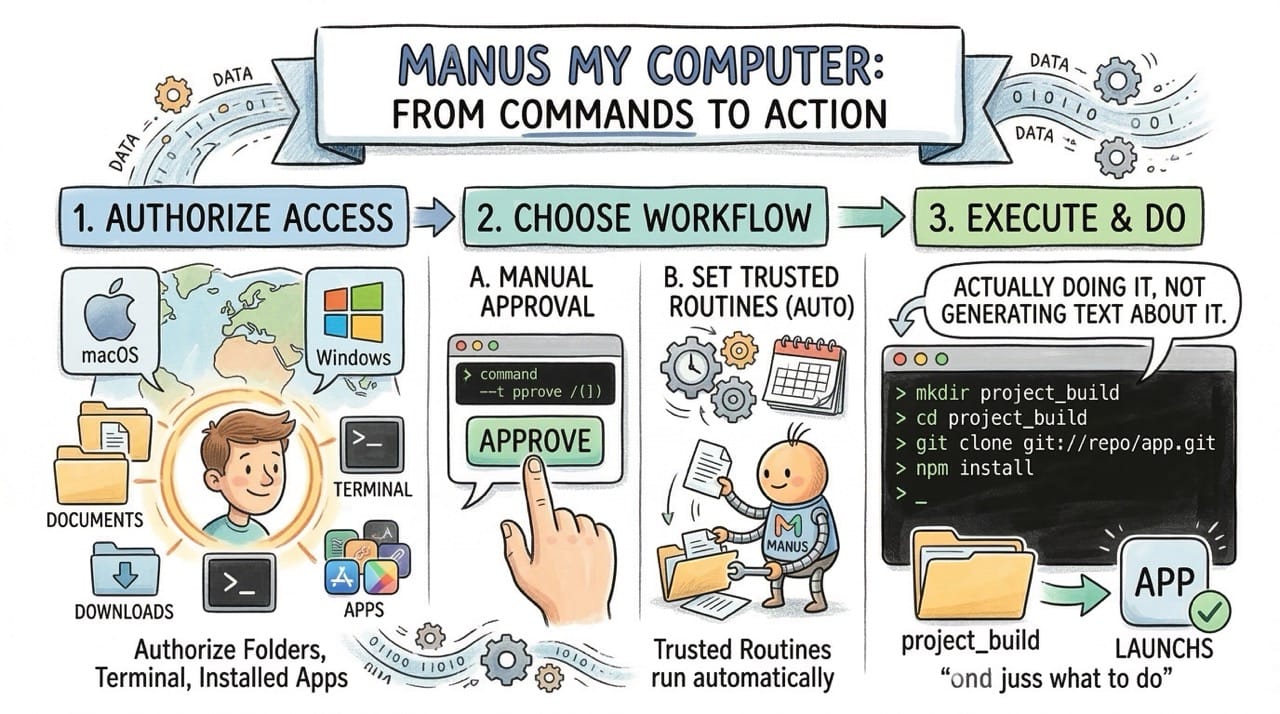
The idea is simple. Instead of chatting with an AI in a browser window, you give it access to your actual computer. Your files. Your terminal. Your installed apps.
Then you tell it what to do. And it does it.
You authorize which folders it can access. You approve each action, or set trusted routines to run automatically.
It works through your terminal, executing real commands on your machine. Not generating text about what you should do. Actually doing it.
Use Cases
The practical applications are immediately obvious.
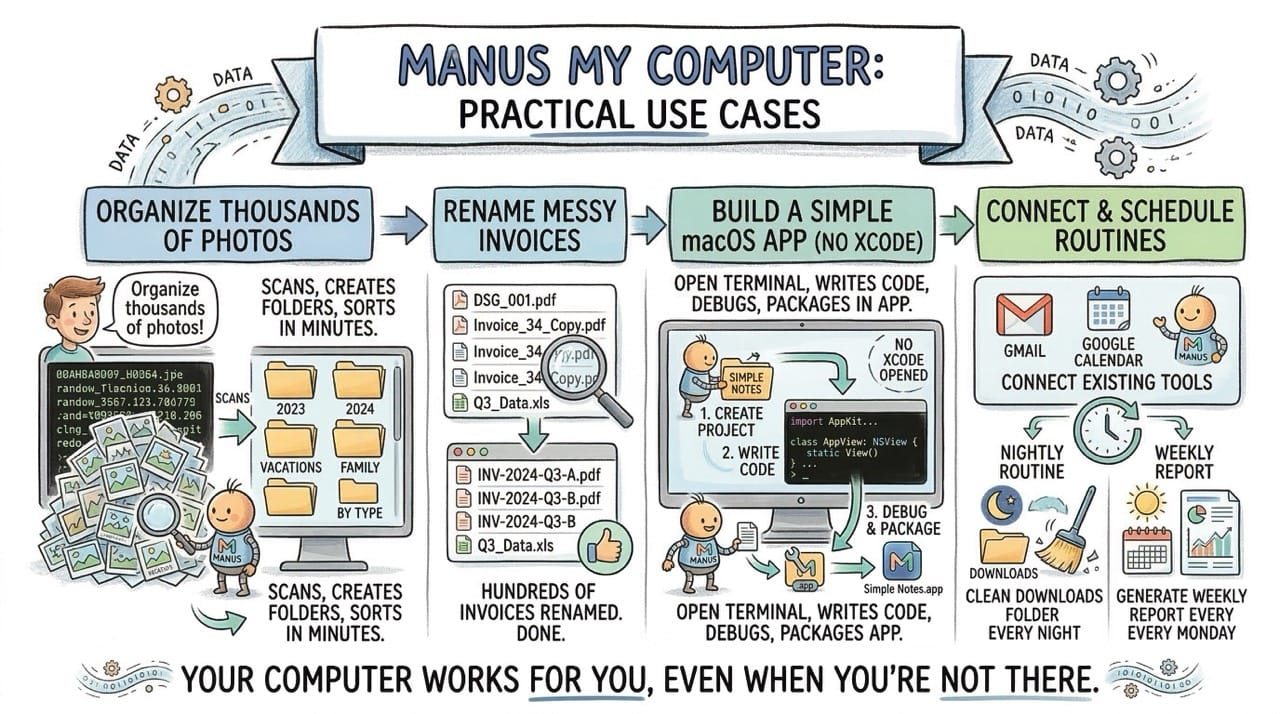
You have thousands of unsorted photos. You tell Manus to organize them. It scans each image, creates folders by type or date, and sorts everything in minutes.
You have hundreds of invoices with messy file names. You tell Manus to rename them. Done.
You want a simple macOS app built. Manus opens your terminal, creates the project, writes the code, debugs it, and packages the final app. Without you opening Xcode once.
You can also connect it to your existing tools like Gmail and Google Calendar.
Then you schedule recurring tasks. Clean up your Downloads folder every night. Generate a weekly report every Monday morning.
It turns your computer into something that works for you even when you are not sitting in front of it.
Why It Might Beat Claude and ChatGPT
Here is the key difference.
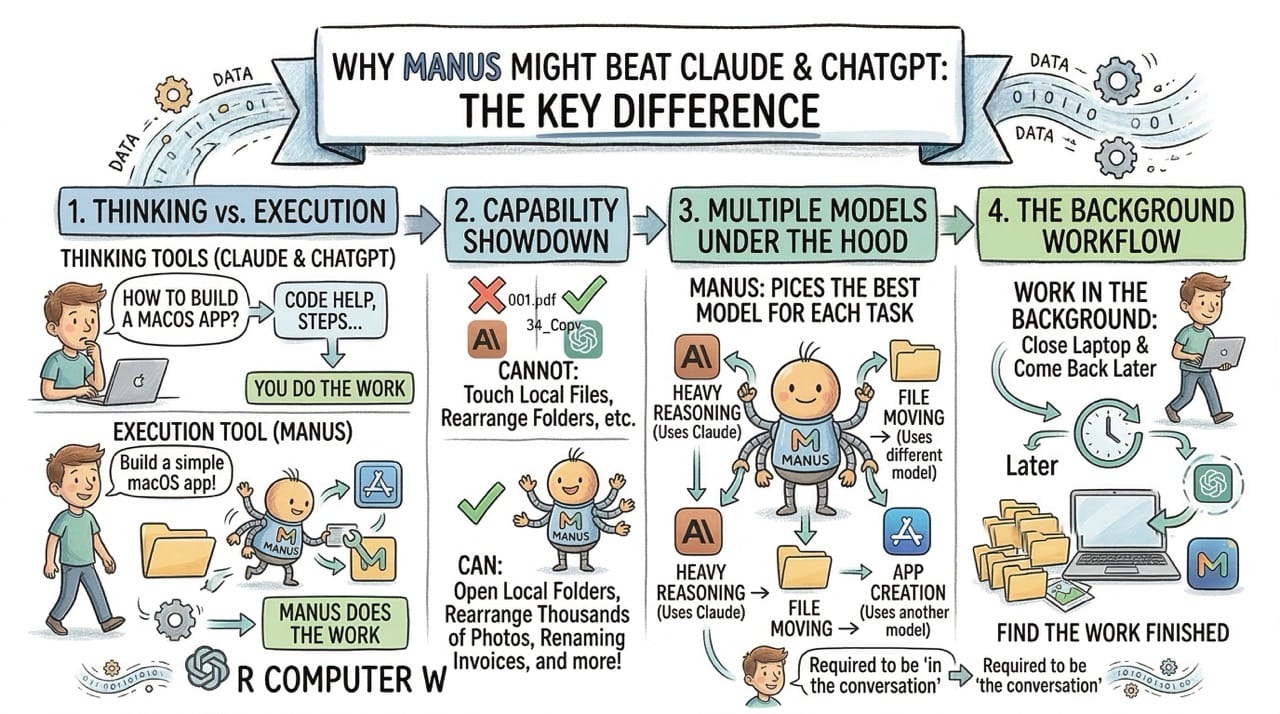
ChatGPT and Claude are thinking tools. You ask a question, they give you an answer. You take that answer and go do the work yourself.
Manus is an execution tool. You describe the outcome you want and walk away.
That is a fundamentally different product.
ChatGPT is brilliant at writing, brainstorming, and coding help. Claude is the best at deep analysis, long documents, and structured reasoning.
But neither of them can open a folder on your desktop and reorganize it (at least not well).
Manus can.
It also runs multiple AI models under the hood. It picks the best one for each task. For heavy reasoning, it uses Claude. For other tasks, it routes to different models.
And it works in the background. You can close your laptop, come back later, and find the work finished.
Claude and ChatGPT require you to be in the conversation. Manus does not. That alone is a huge shift.
The Gemini Backdoor
Here is something most people are missing.
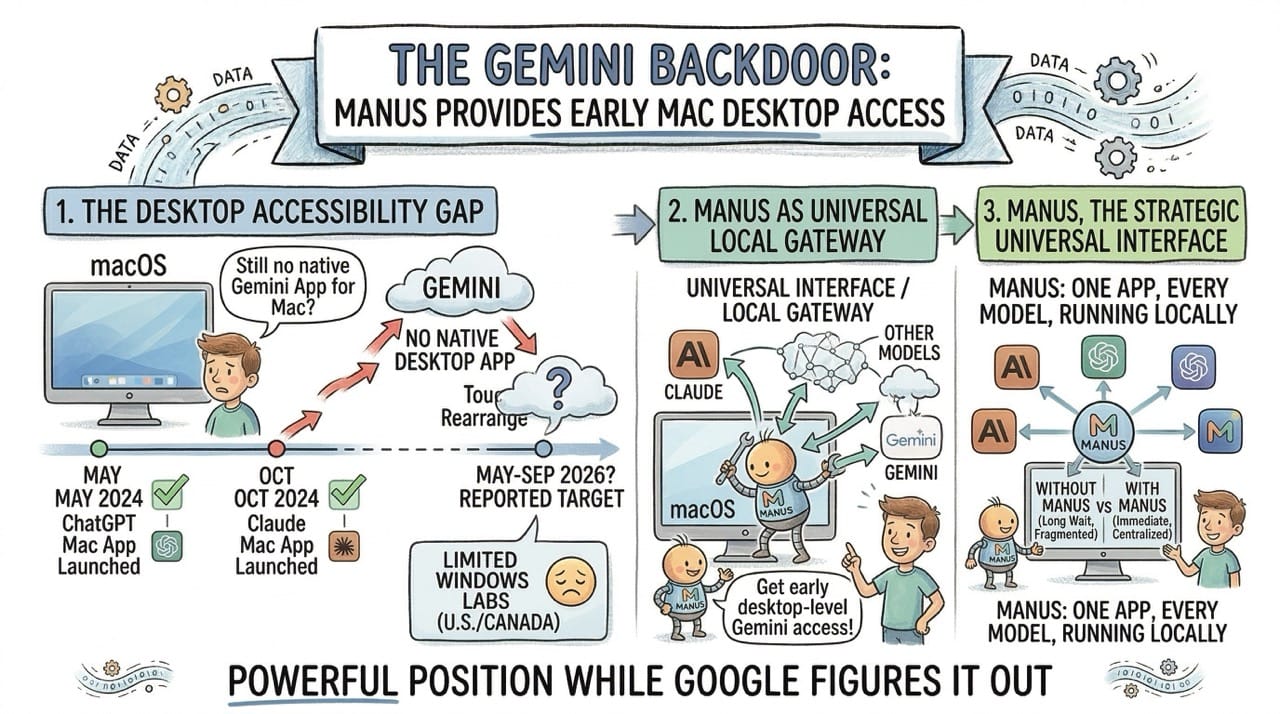
Google still has not released a native Gemini desktop app for macOS. As of today, it only exists on Windows through Google Labs, and even that is limited to the U.S. and Canada.
ChatGPT has had a Mac app since May 2024. Claude launched its Mac app in October 2024.
Google is reportedly targeting somewhere between May and September 2026 for a macOS release. That is a long wait.
Manus fills this gap in a clever way.
Because it runs multiple models and sits directly on your desktop, it can serve as a local gateway to AI models that do not yet have their own native apps.
If Manus integrates Gemini as one of its available models, Mac users would get desktop-level access to Google's AI without waiting for Google to ship anything.
Manus becomes the universal interface. One app, every model, running locally on your machine.
That is a powerful position to hold, especially while Google is still figuring out its desktop story.
Additional Thoughts
The real shift here is philosophical.
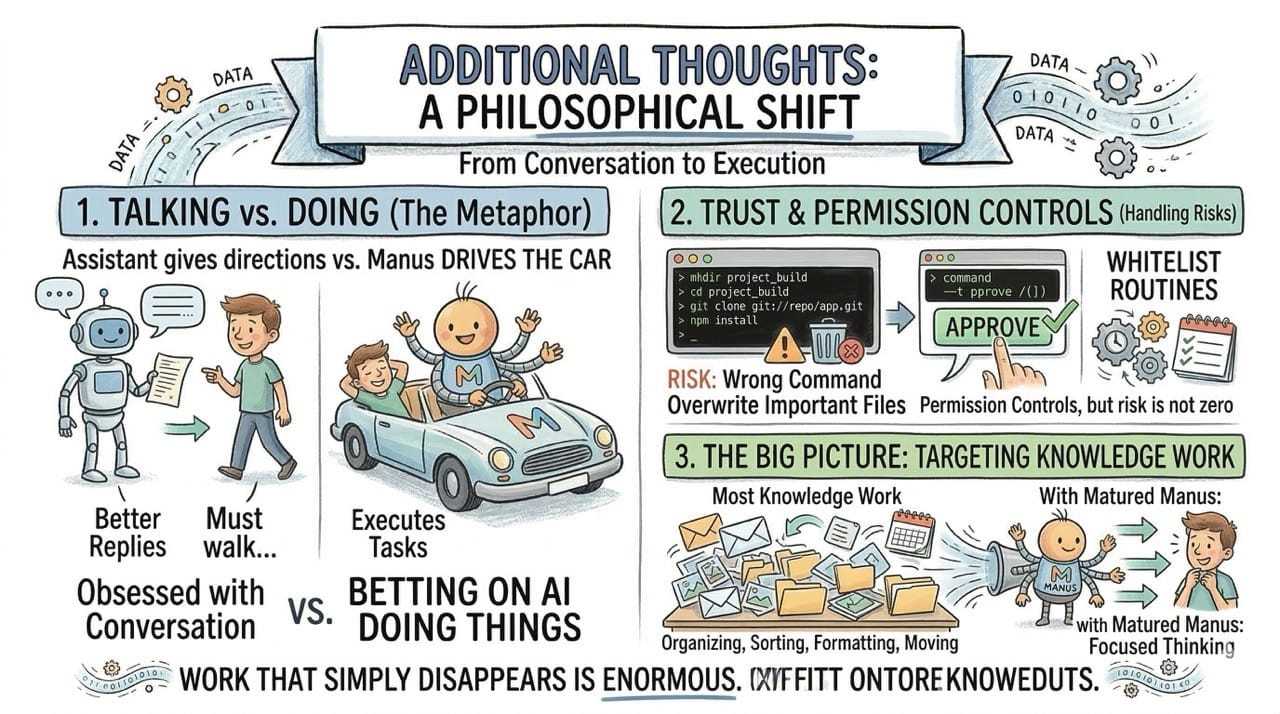
For three years, the AI industry has been obsessed with conversation. Better chatbots. Smarter replies. More natural dialogue.
Manus is betting that the future is not about talking to AI. It is about AI doing things.
That is the difference between an assistant who gives you directions and one who drives the car.
There are real risks, of course. Giving any AI agent access to your file system and terminal requires trust. One wrong command could delete the wrong folder or overwrite important files.
Manus handles this with permission controls. You approve each action or whitelist routines you trust. But the risk is not zero.
The bigger question is what happens when this kind of tool matures. If an AI agent can reliably manage your computer, your email, your calendar, and your files, the amount of daily work that simply disappears is enormous.
Most knowledge work is not thinking. It is organizing, sorting, formatting, and moving things from one place to another. That is exactly what Manus is targeting.
Predictions
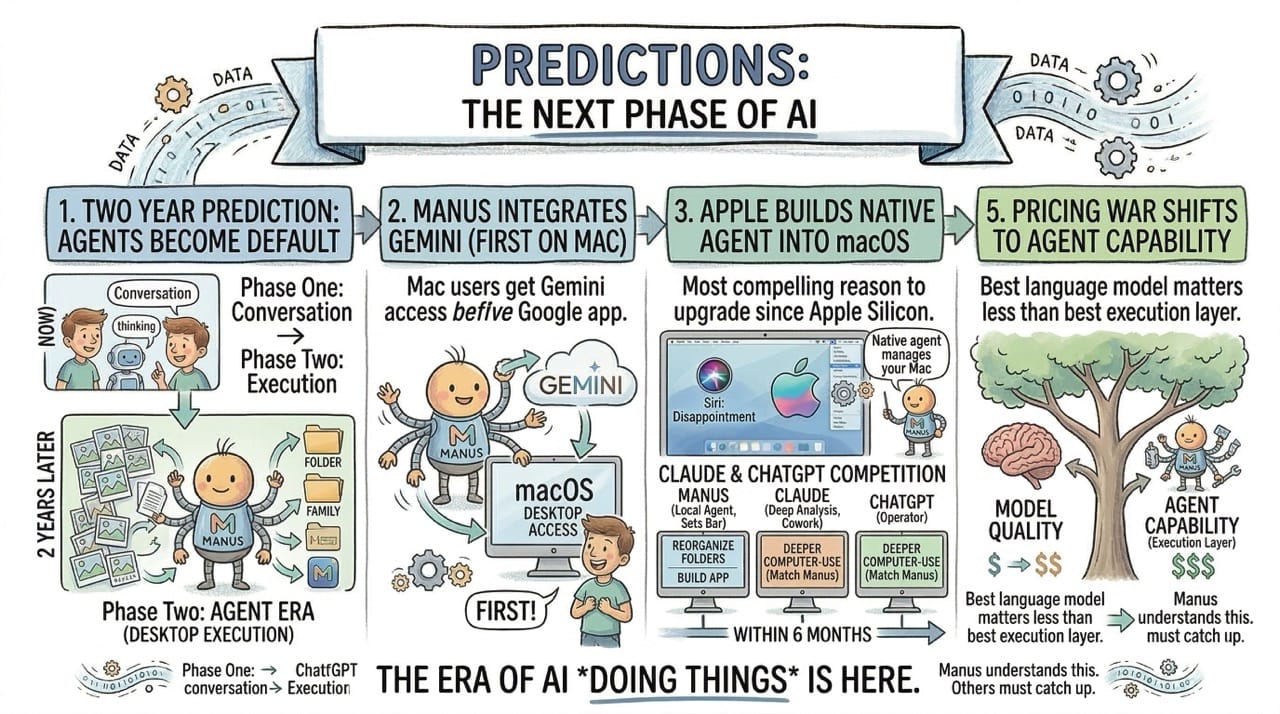
Desktop AI agents will become the default way people interact with AI within two years. The chatbot era was phase one. Agents that execute tasks on your actual machine are phase two.
Manus will integrate Gemini before Google ships a native macOS app. The incentive is obvious. Millions of Mac users want Gemini access. Manus can offer it first.
Apple will build its own version of this directly into macOS. Siri has been a disappointment for years. A native AI agent that manages your Mac the way Manus does would be the most compelling reason to upgrade since Apple Silicon.
Claude and ChatGPT will respond with deeper computer-use features within six months. Claude already has Cowork. ChatGPT has Operator. But Manus has set the bar for what a local desktop agent should feel like. The others will have to match it.
The AI pricing war will shift from model quality to agent capability. The best language model will matter less than the best execution layer. Manus understands this. The question is whether the bigger players catch on fast enough.