LinkedIn’s "Comment Baiting" Epidemic: How Engagement Farming is Killing the Platform
"Comment 'YES' to get the PDF." We see it every day. It isn't networking; it's engagement farming. And it is breaking the machine learning models that power the professional world.

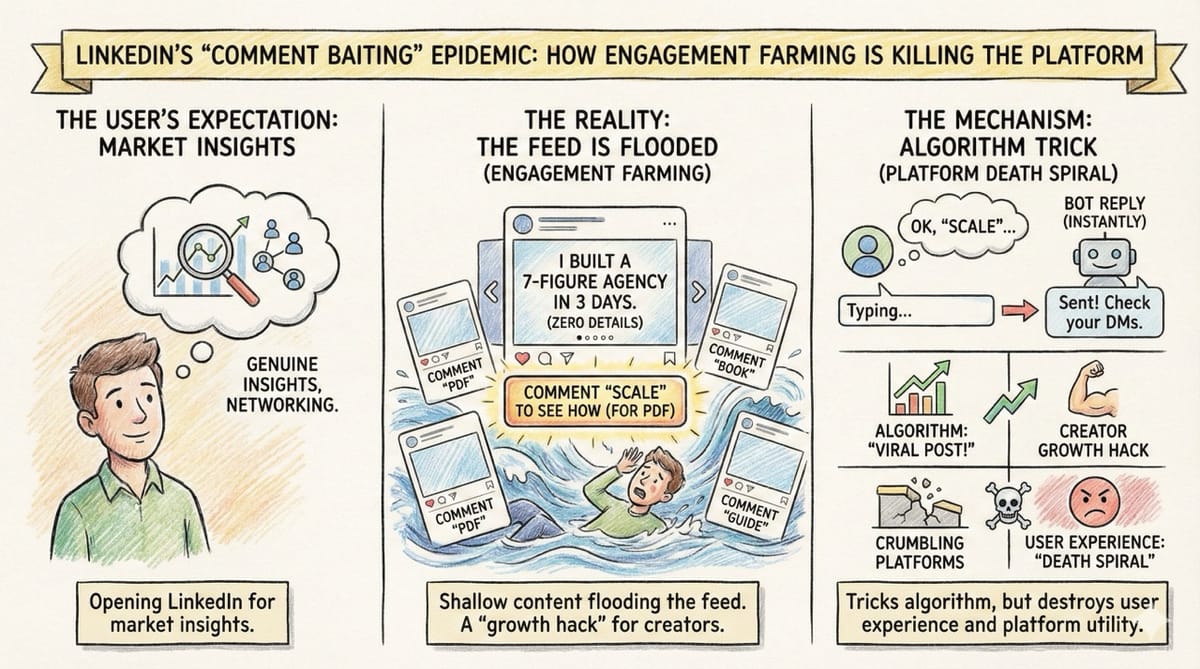
The feed is flooded with shallow content asking for keywords. It’s a growth hack for creators, but a death spiral for the platform’s utility.
Inspiration: Opening LinkedIn to find some market insights, but drowning in a sea of "I built a 7-figure agency in 3 days. Comment 'SCALE' to see how."
You know the post. A generic, high-contrast carousel. A hook about massive success with zero details. And the Call to Action: "Comment 'PDF' and I’ll DM you the guide."
You comment. Instantly, a bot replies: "Sent! Check your DMs."
This is Engagement Farming. It is a growth hack designed to trick the algorithm into thinking a post is viral. But it is destroying the user experience.
The "Artificial" Loop (Terms & Conditions)
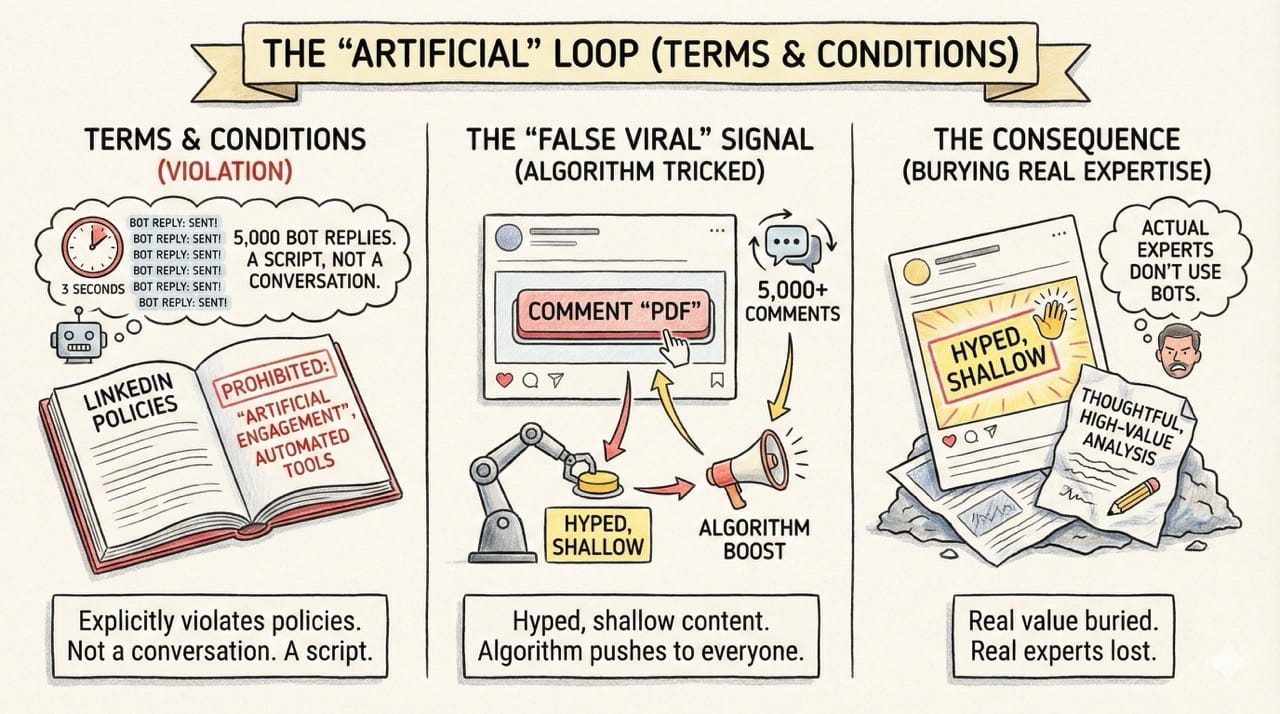
Does this violate the rules? LinkedIn’s Professional Community Policies explicitly prohibit "Artificial Engagement" and the use of automated tools to game the feed.
When 5,000 people comment "PDF" and a bot replies to all of them in 3 seconds, that is not a conversation. That is a script.
It creates a "False Viral" signal. The content is usually hyped, shallow, and disappointing. But because the comment count is high, the algorithm pushes it to everyone, burying the thoughtful, high-value analysis written by actual experts who don't use bots.
The "Dead Internet" Experience
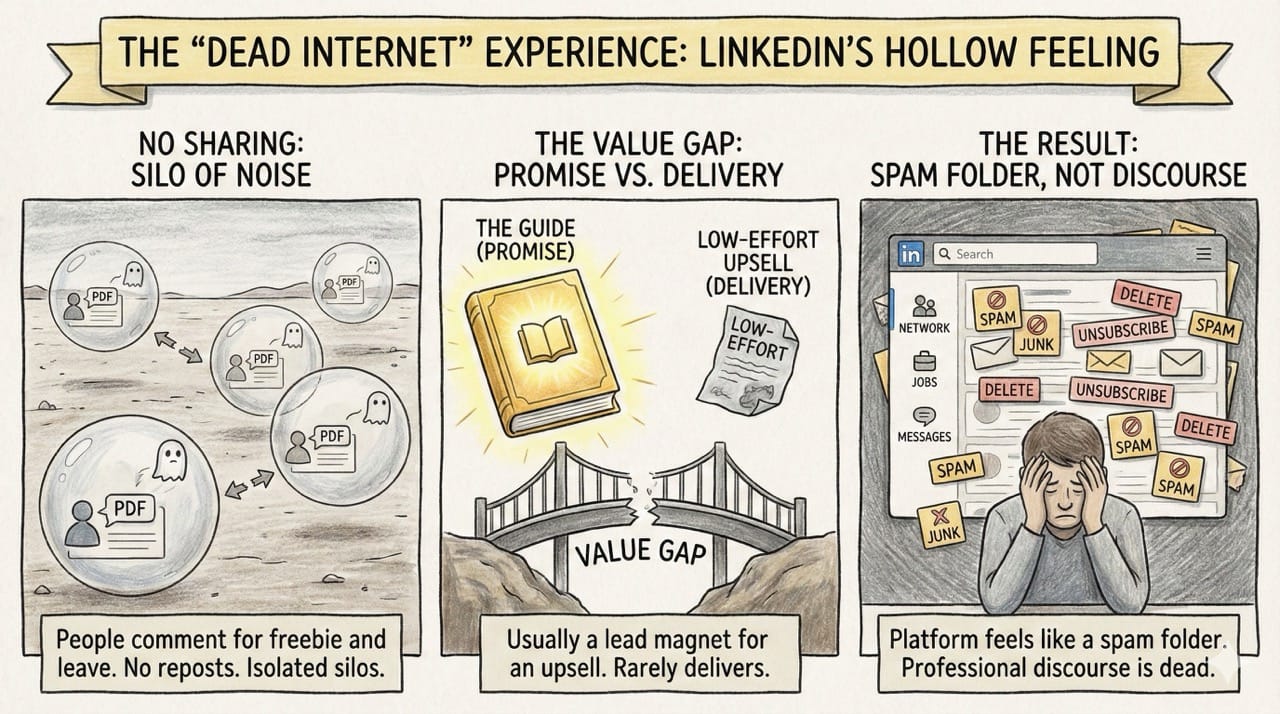
This makes the platform feel hollow.
- No Sharing: People don't repost these. They comment to get the freebie and leave. It creates a silo of noise.
- The Value Gap: The "Guide" is usually a low-effort lead magnet designed to upsell a course. It rarely delivers on the promise.
The result: LinkedIn stops being a place for professional discourse and starts feeling like a spam folder.
The AI Pollution Risk (Microsoft’s Problem)
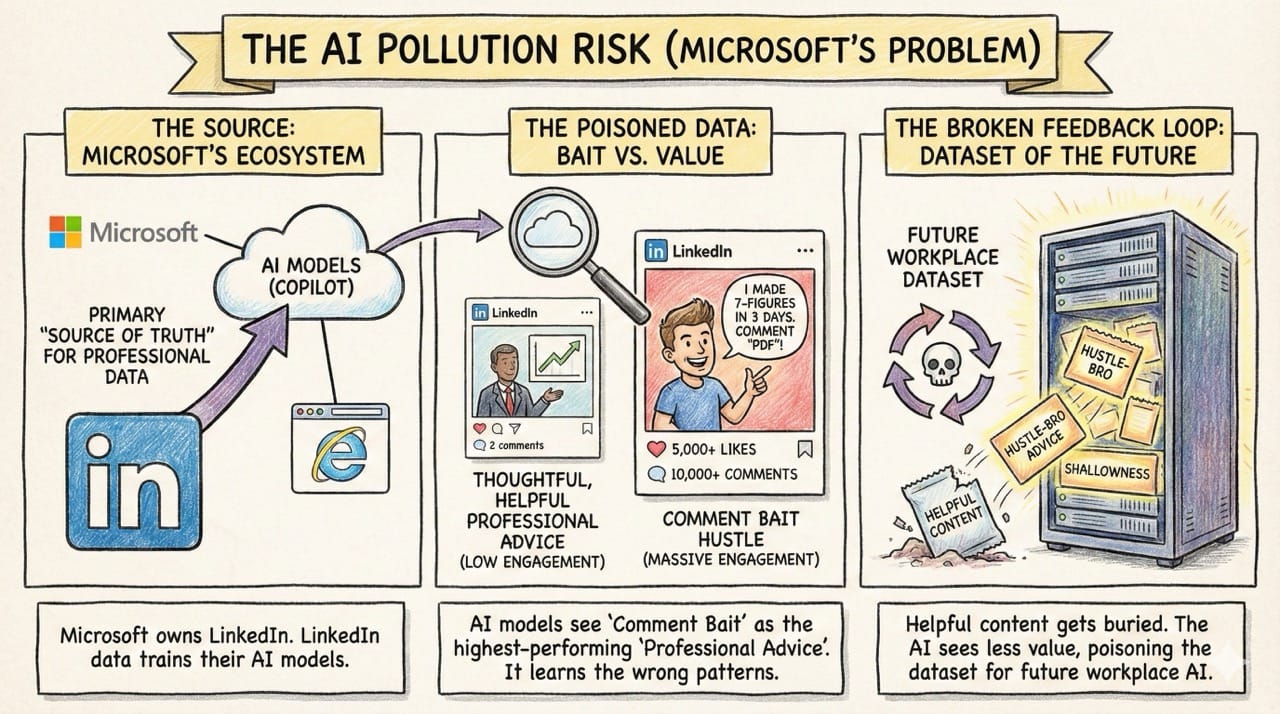
Here is the hidden danger. Microsoft owns LinkedIn. They also own Copilot.
AI models are trained on internet data. If LinkedIn is the "Source of Truth" for professional data, and the highest-performing posts are technically "Comment Bait," what is the AI learning?
It is learning that "Professional Advice" looks like a hustle-bro asking for keywords. It breaks the feedback loop. Helpful, conversation-starting content gets buried, so the AI sees less of it. We are poisoning the dataset of the future workplace.
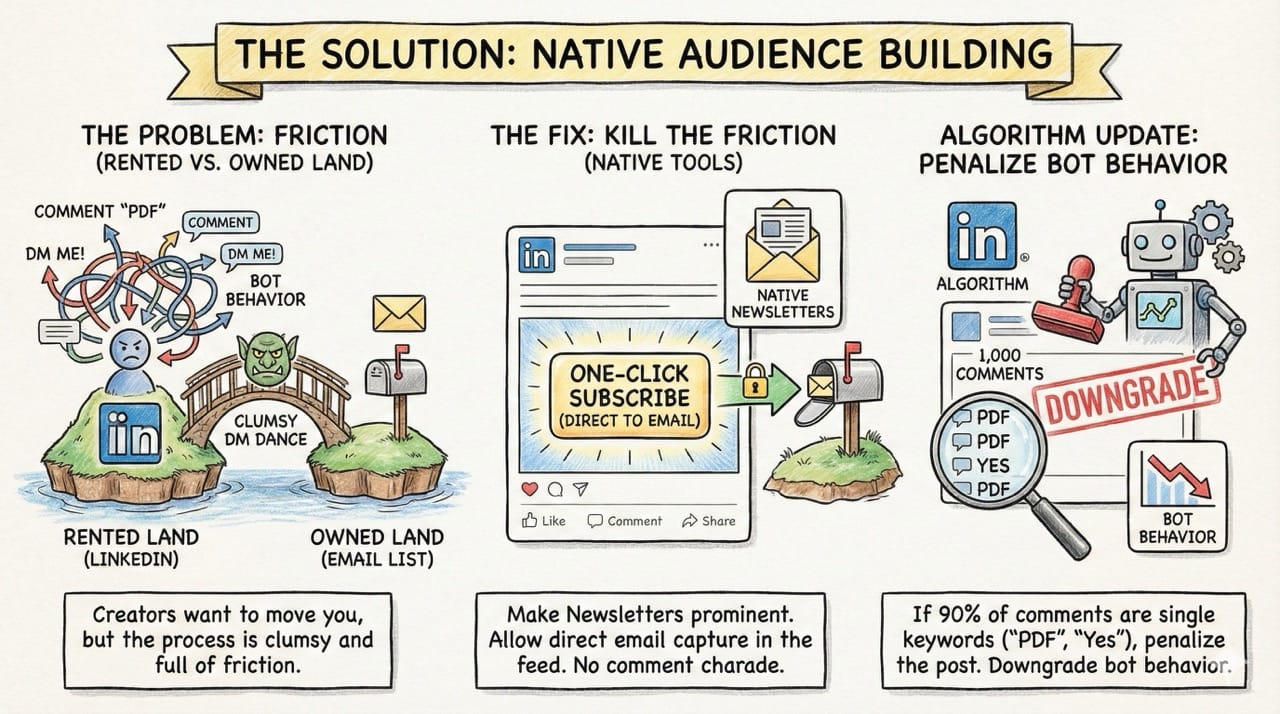
The Solution: Native Audience Building
Why do creators do this? Friction. They want to move you from "Rented Land" (LinkedIn) to "Owned Land" (Email List). The only way to do that currently is this clumsy DM dance.
The Fix: LinkedIn needs to kill the friction.
- Native Newsletters: They exist, but they are hidden. Make them prominent.
- One-Click Subscribe: Allow users to capture emails directly in the feed (like Twitter Revue or Substack), without the comment charade.
Algorithm Update: The algorithm needs to penalize "Single Keyword" comment sections. If a post has 1,000 comments and 90% of them are one word ("PDF," "Yes," "Interested"), that is bot behavior. Downgrade it.
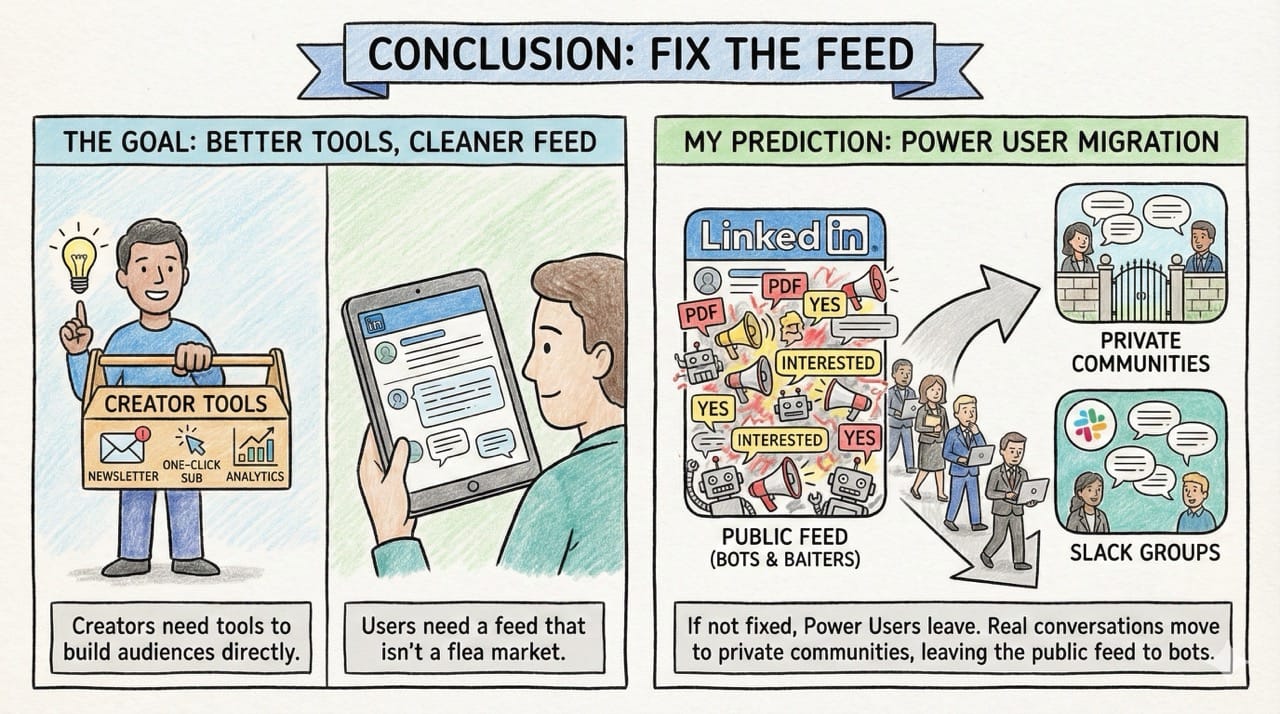
Conclusion: Fix the Feed
Creators need tools to build audiences. Users need a feed that isn't a flea market.
My Prediction: If LinkedIn doesn't fix this, they will lose the "Power Users." The real conversations will move to private communities and Slack groups, leaving the public feed to the bots and the baiters.