Effective Executive Series: Rory Sutherland: The Alchemist of Marketing
Engineers think humans are rational. We aren't. Rory Sutherland taught me that the spreadsheet can tell you the cost, but it can never tell you the value.

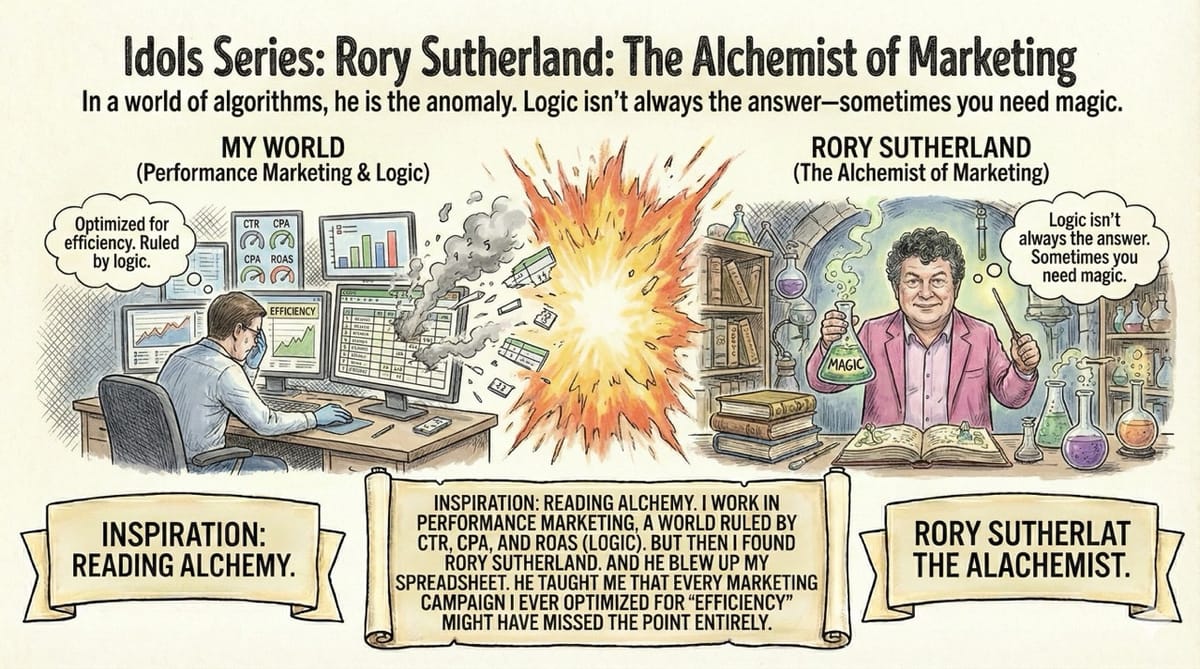
In a world of algorithms, he is the anomaly. He taught me that logic isn't always the answer—sometimes you need magic.
Inspiration: Reading Alchemy and realizing that every marketing campaign I ever optimized for "efficiency" might have missed the point entirely.
I work in performance marketing. My world is ruled by CTR, CPA, and ROAS. It is a world of logic.
But then I found Rory Sutherland. And he blew up my spreadsheet.
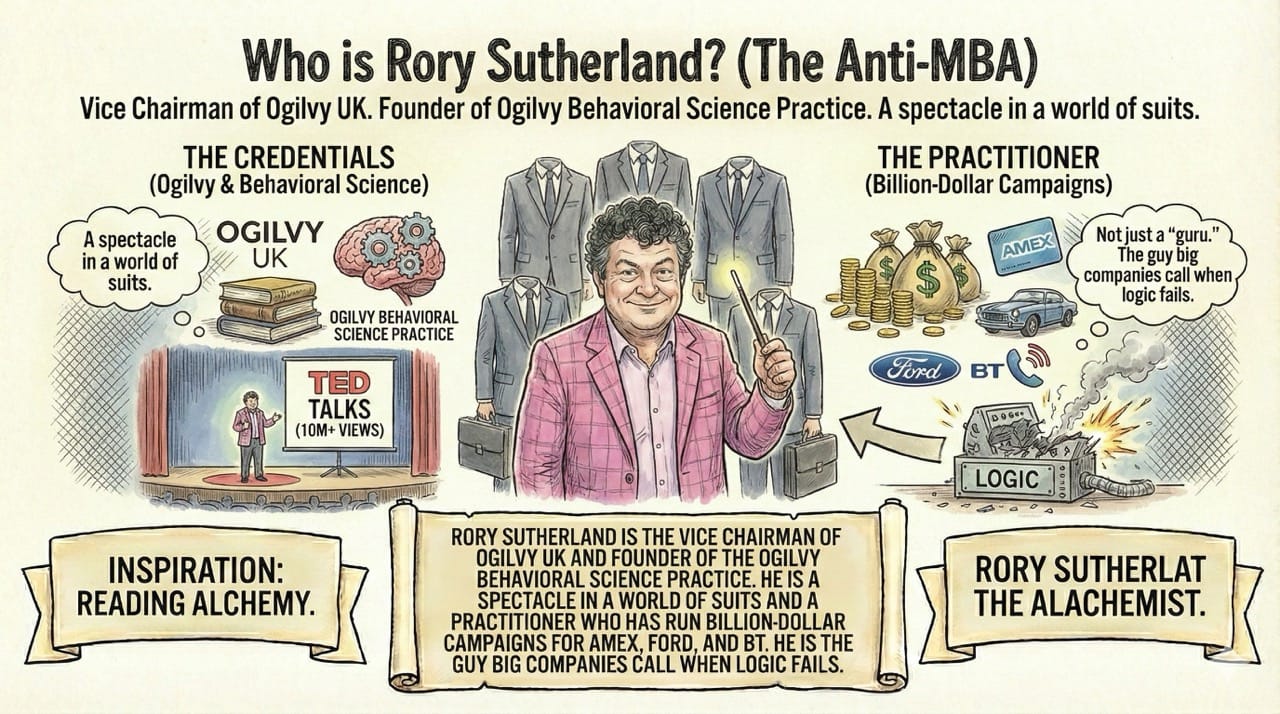
Who is Rory Sutherland? (The Anti-MBA)
He is the Vice Chairman of Ogilvy UK. He founded the Ogilvy Behavioral Science Practice. His TED Talks have over 10 million views. He is a spectacle in a world of suits.
He isn't just a "guru." He is a practitioner who has run billion-dollar campaigns for AMEX, Ford, and BT. He is the guy big companies call when logic fails.
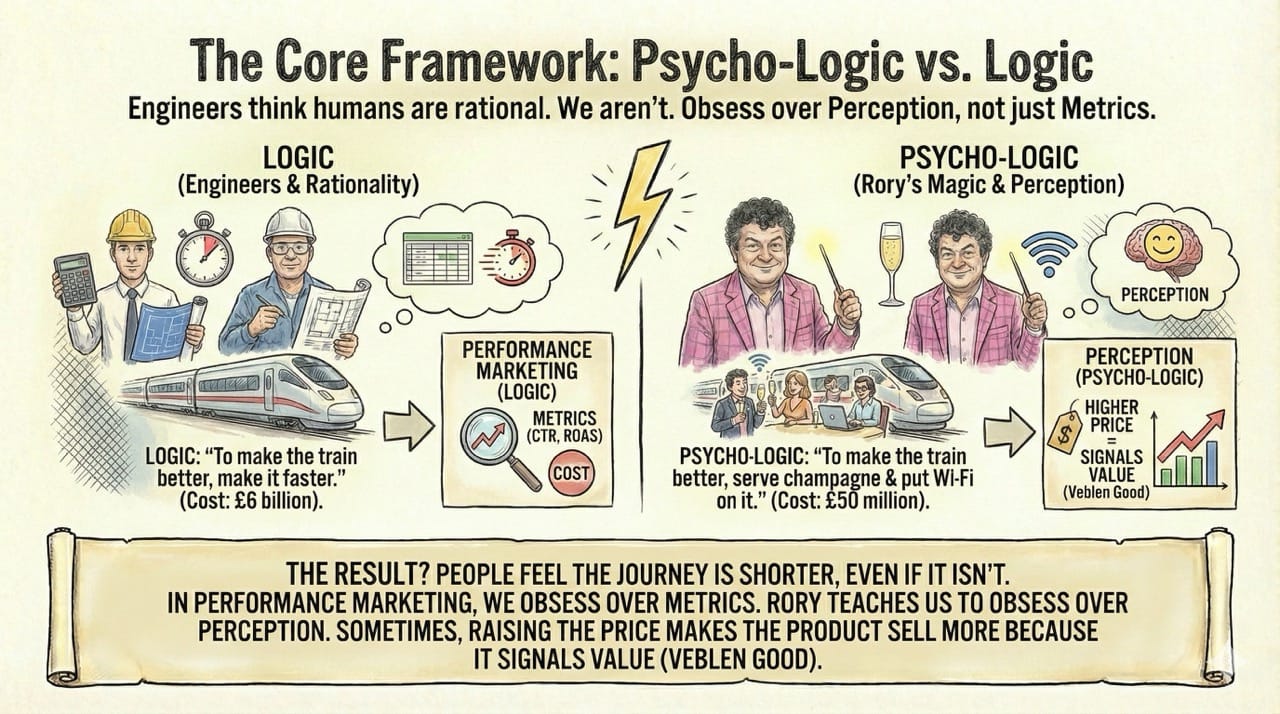
The Core Framework: Psycho-Logic vs. Logic
Engineers think humans are rational. We aren't.
Logic: "To make the train better, make it faster." (Cost: £6 billion). Psycho-Logic: "To make the train better, serve champagne and put Wi-Fi on it." (Cost: £50 million).
The result? People feel the journey is shorter, even if it isn't.
In performance marketing, we obsess over metrics. Rory teaches us to obsess over Perception. Sometimes, raising the price makes the product sell more because it signals value (Veblen Good).
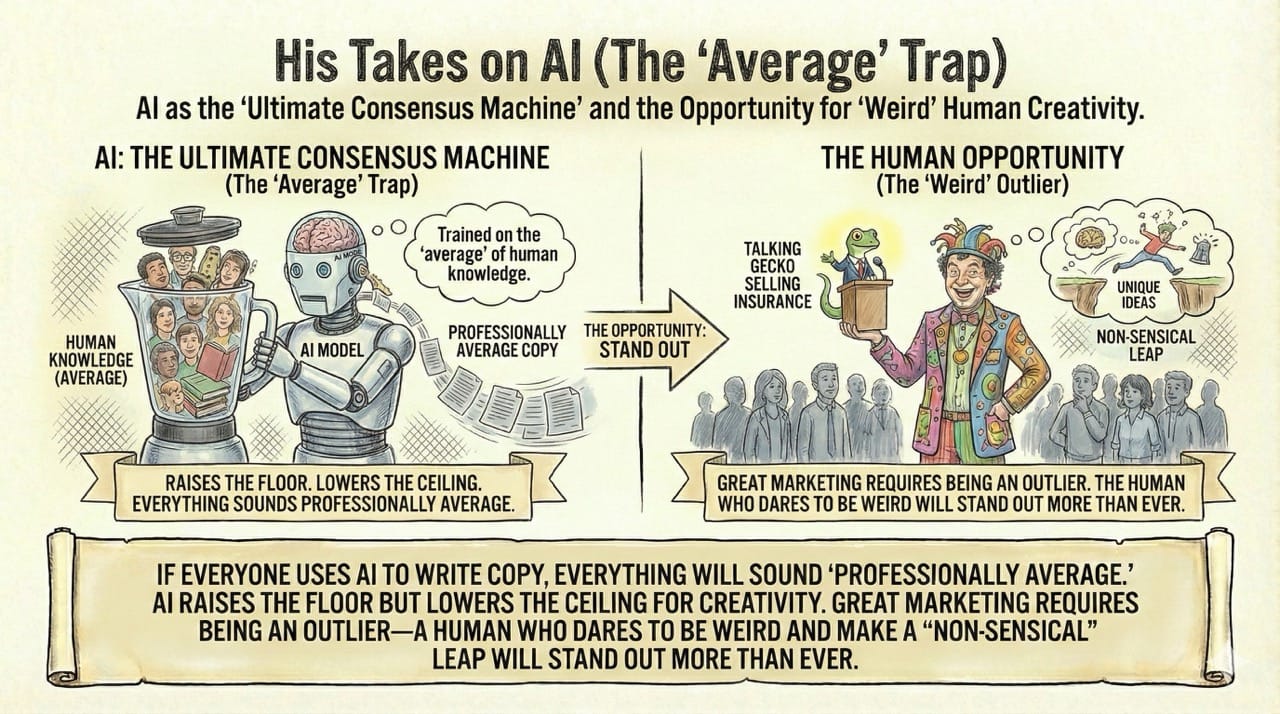
His Takes on AI (The "Average" Trap)
AI is trained on the "average" of human knowledge. It is the ultimate consensus machine.
If everyone uses AI to write copy, everything will sound "professionally average."
The Opportunity: The human who dares to be weird will stand out more than ever. AI raises the floor but lowers the ceiling for creativity. Great marketing requires being an outlier. It requires a "non-sensical" leap (like a talking gecko selling insurance).
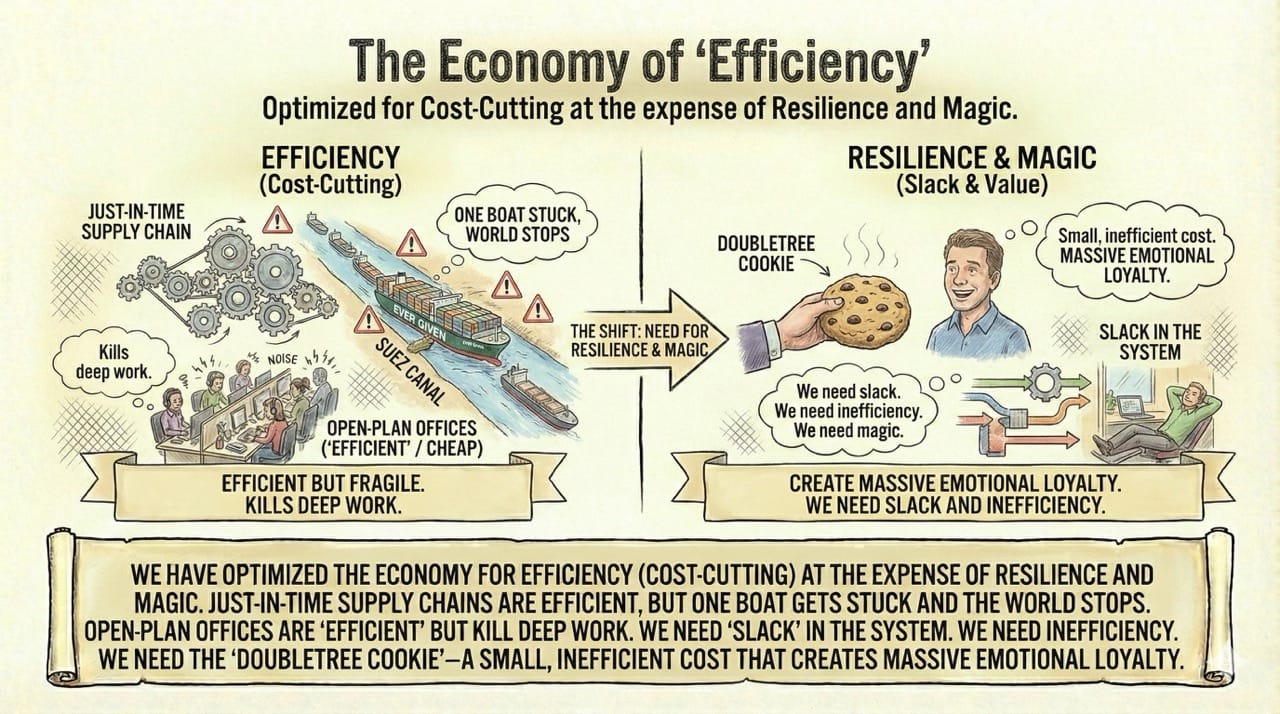
The Economy of "Efficiency"
We have optimized the economy for Efficiency (Cost-Cutting) at the expense of Resilience and Magic.
Just-in-Time supply chains are efficient, but one boat gets stuck in the Suez Canal and the world stops. Open-plan offices are "efficient" (cheap), but they kill deep work.
We need "slack" in the system. We need inefficiency. We need the "DoubleTree Cookie"—a small, inefficient cost that creates massive emotional loyalty.
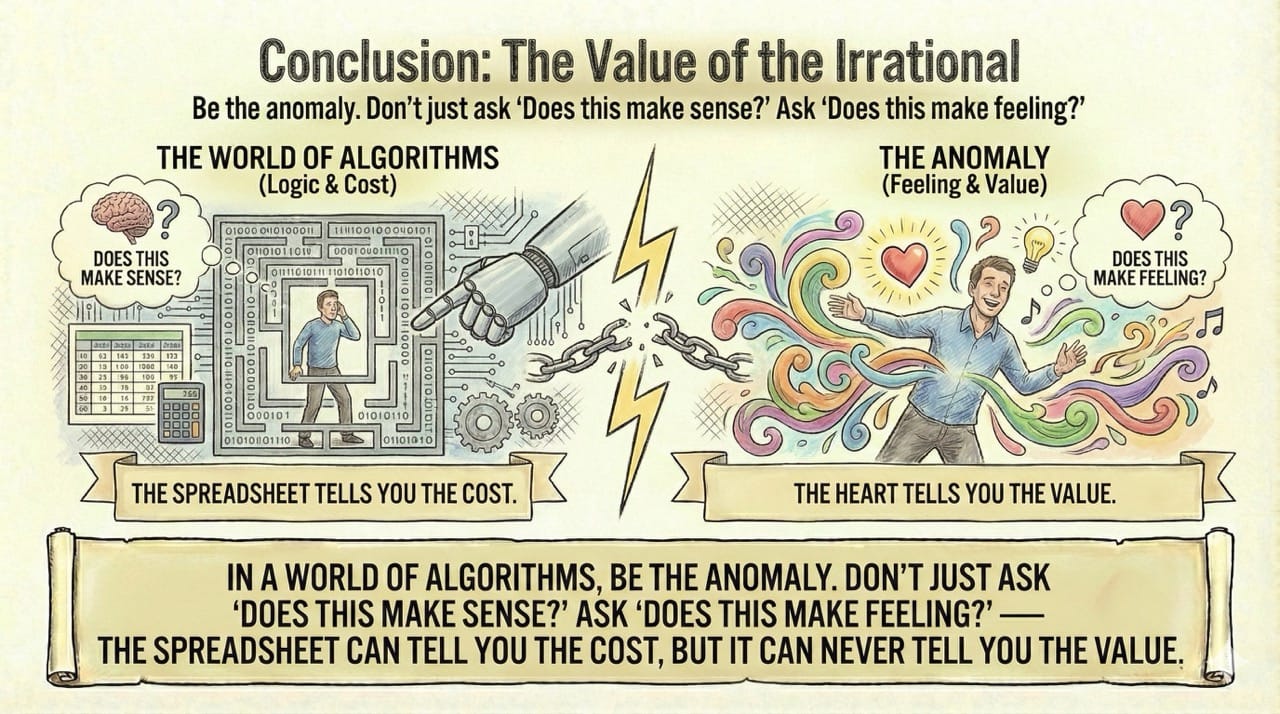
Conclusion: The Value of the Irrational
In a world of algorithms, be the anomaly.
My Lesson: Don't just ask "Does this make sense?" Ask "Does this make feeling?" The spreadsheet can tell you the cost, but it can never tell you the value.