Hyperoptimization in Marketing: Does It Increase or Hinder Growth?
We assume that relentlessly minimizing customer acquisition costs is the ultimate goal of modern business. In reality, hyperoptimization is a corporate disease that destroys long term growth by prioritizing cheap transactions over actual human relationships.

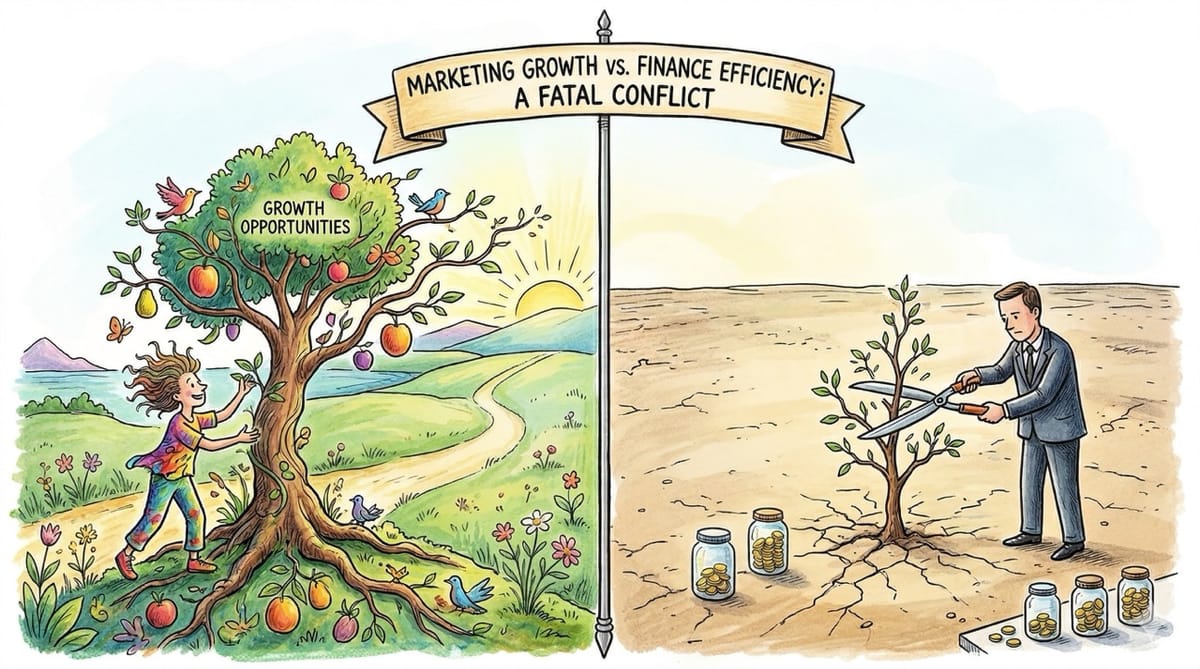
Corporate finance departments are actively suffocating brand expansion by treating every customer interaction as a cost to be minimized. True scale requires abandoning the obsession with immediate efficiency to pursue massive, unmeasurable opportunities.
Inspiration: Analyzing a fascinating discussion with Rory Sutherland regarding the fatal conflict between the opportunity mindset of marketing and the efficiency mindset of finance. Realizing that the relentless pursuit of cost reduction is quietly destroying the most valuable optionality in our businesses and personal lives.
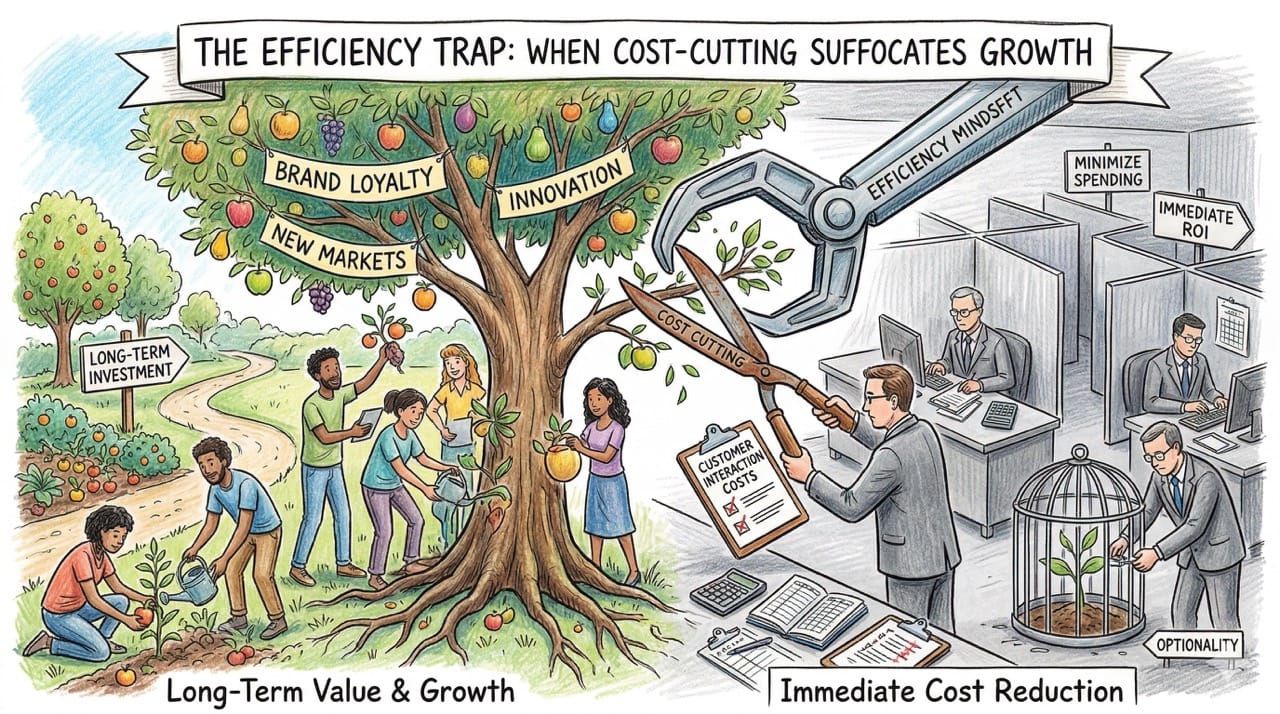
The Efficiency Trap
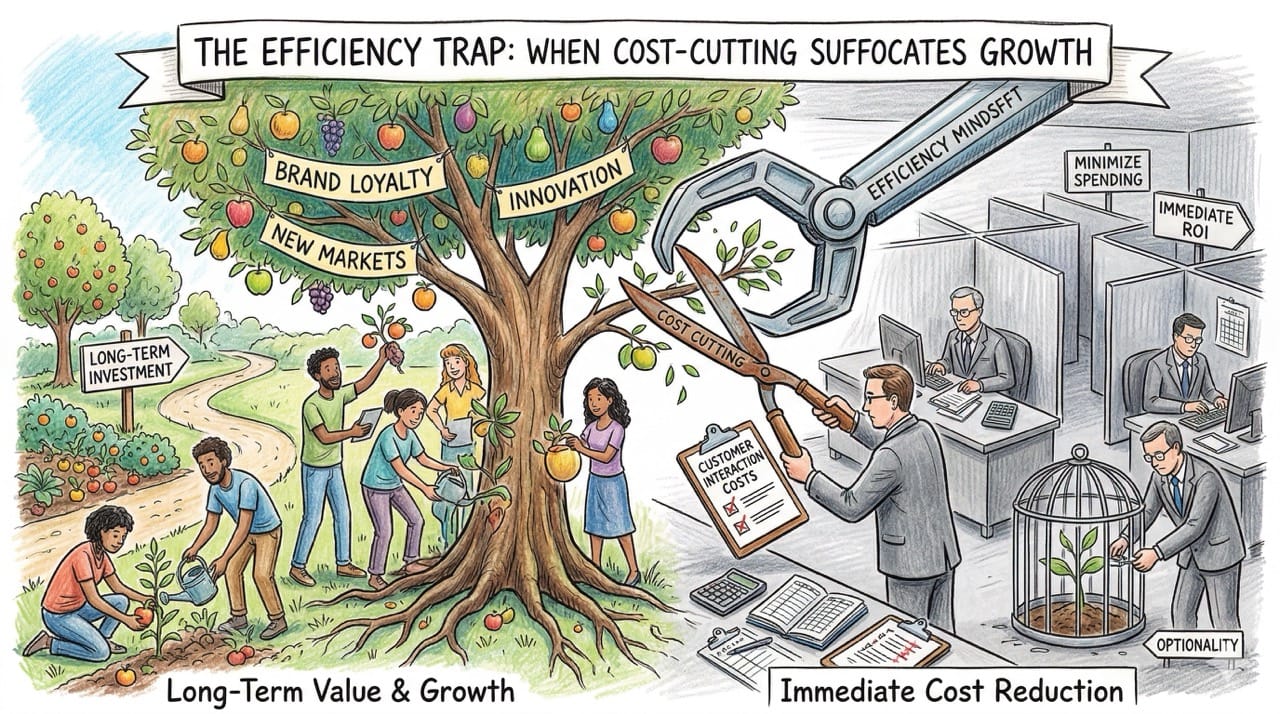
Modern corporations are completely infected by a toxic efficiency mindset.
Finance and procurement departments fetishize immediate cost reduction over long term value creation.
They view every single customer interaction strictly as a line item that must be minimized or eliminated entirely.
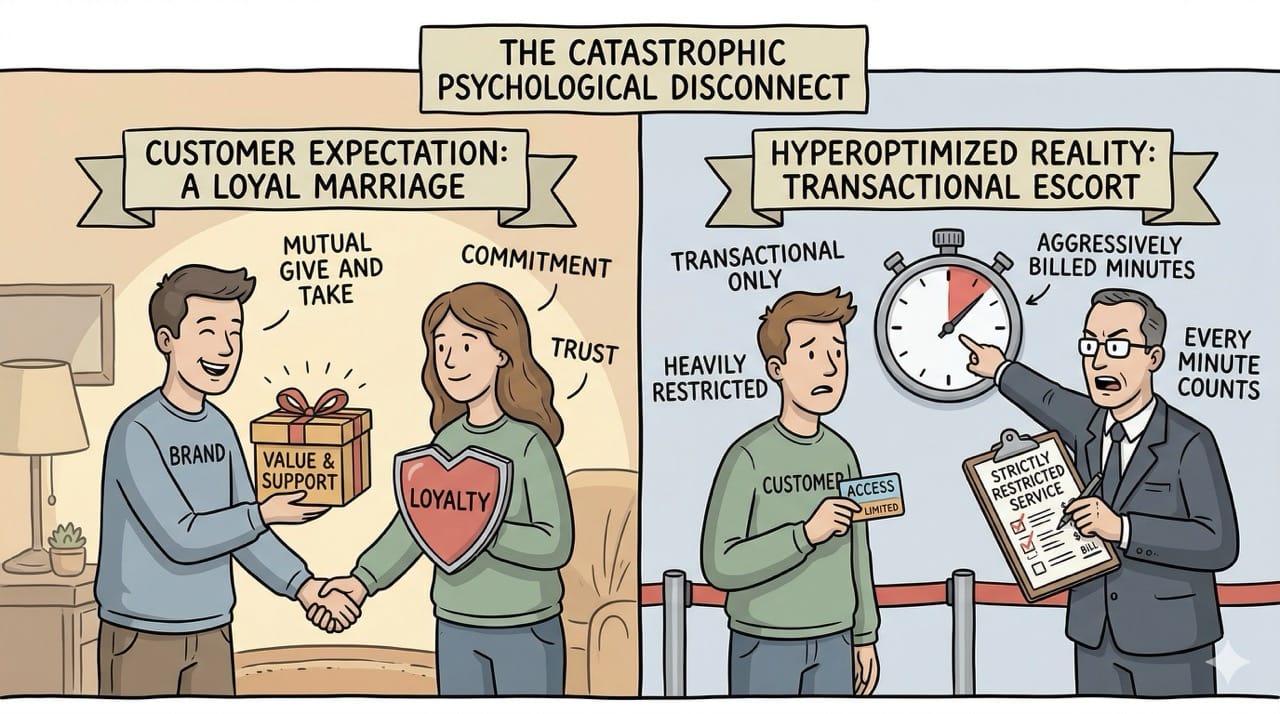
Escorts Versus Marriage
This creates a catastrophic psychological disconnect with the consumer.
Customers expect a brand relationship to function like a loyal marriage with mutual give and take.
Instead, hyperoptimized businesses treat their customers like transactional escorts where every single minute is aggressively billed and heavily restricted.
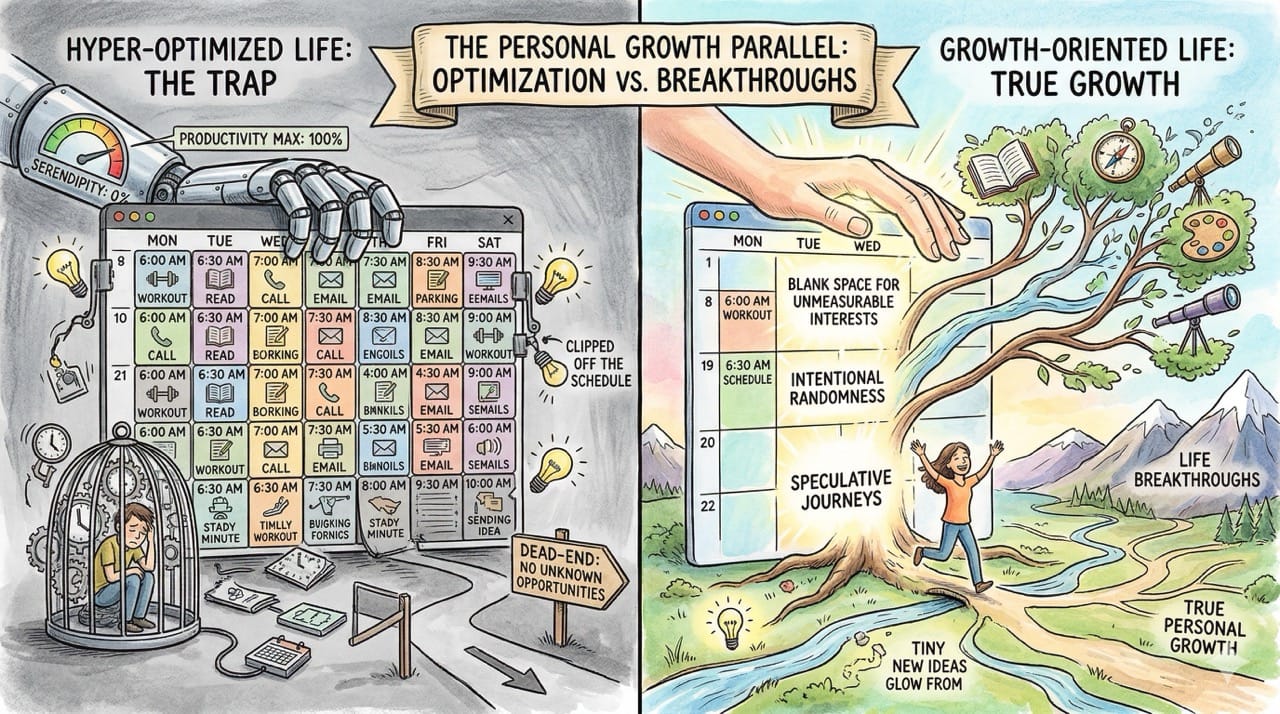
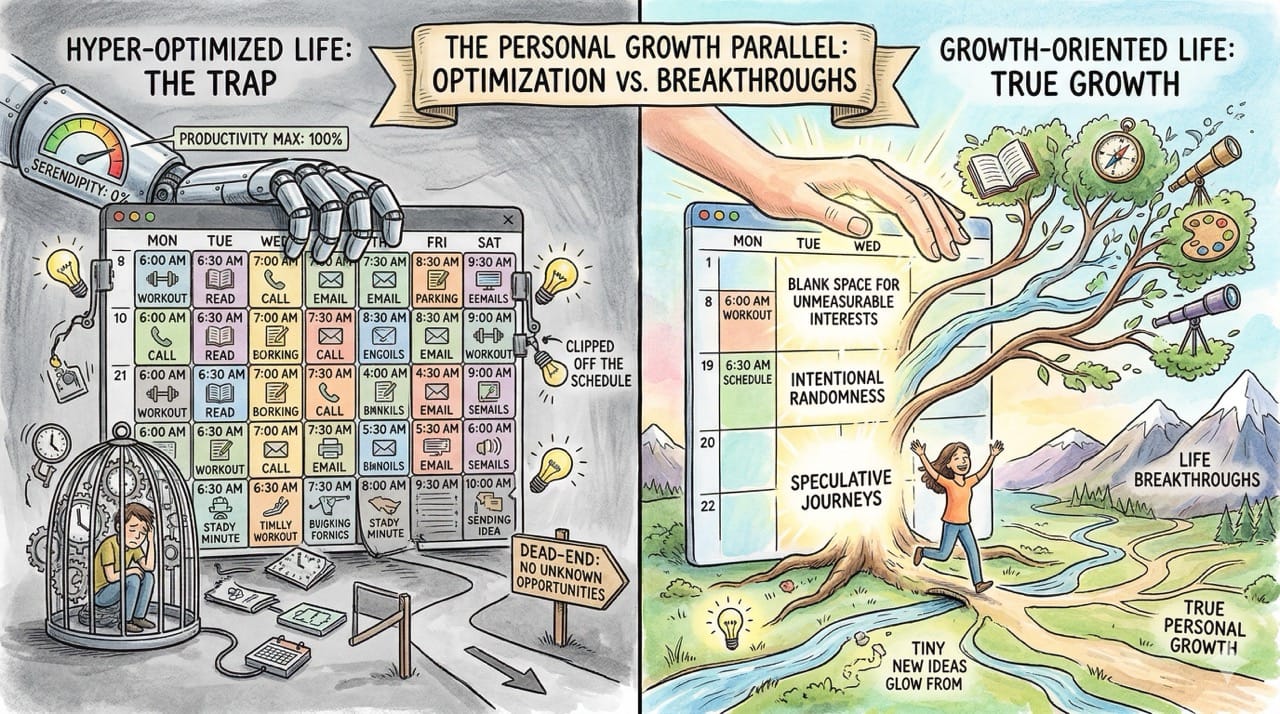
The Personal Growth Parallel
We see this exact same destructive optimization trap in our personal lives.
If you hyperoptimize your daily schedule for absolute productivity, you completely eliminate the random serendipity that leads to massive life breakthroughs.
True personal growth requires intentionally leaving blank space in your calendar to pursue completely unmeasurable, highly speculative interests.
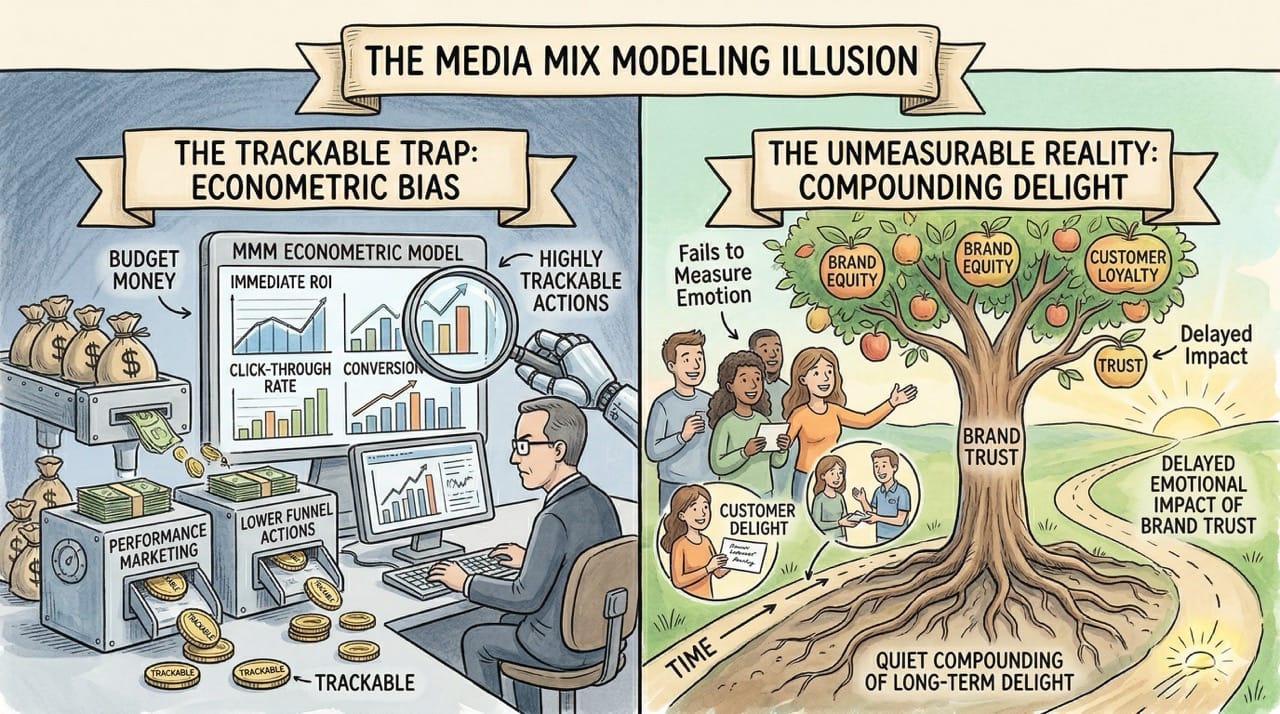
The Media Mix Modeling Illusion
Performance marketers often believe advanced tools like Media Mix Modeling will cure this algorithmic myopia.
Unfortunately, even the most sophisticated econometric models fundamentally fail to measure the delayed emotional impact of brand trust.
MMM still biases corporate budgets toward highly trackable, lower funnel actions while completely ignoring the quiet compounding of long term customer delight.
Optimality Versus Optionality
A business optimizing purely for immediate returns will always sacrifice future optionality.
You might increase your quarterly profit margins by outsourcing your entire customer service department to an automated chatbot.
However, you permanently lose the massive strategic opportunity to turn a frustrated buyer into a lifelong brand evangelist through a single empathetic human conversation.
The Cost of Ignoring the Unmeasurable
We must remember that the most valuable assets in the global economy are fundamentally impossible to track on a spreadsheet.
Trust, brand loyalty, and serendipitous innovation do not generate immediate return on ad spend.
If you refuse to invest capital into unmeasurable channels, you are actively capping your absolute market potential.
Conclusion: The Inefficient Moat
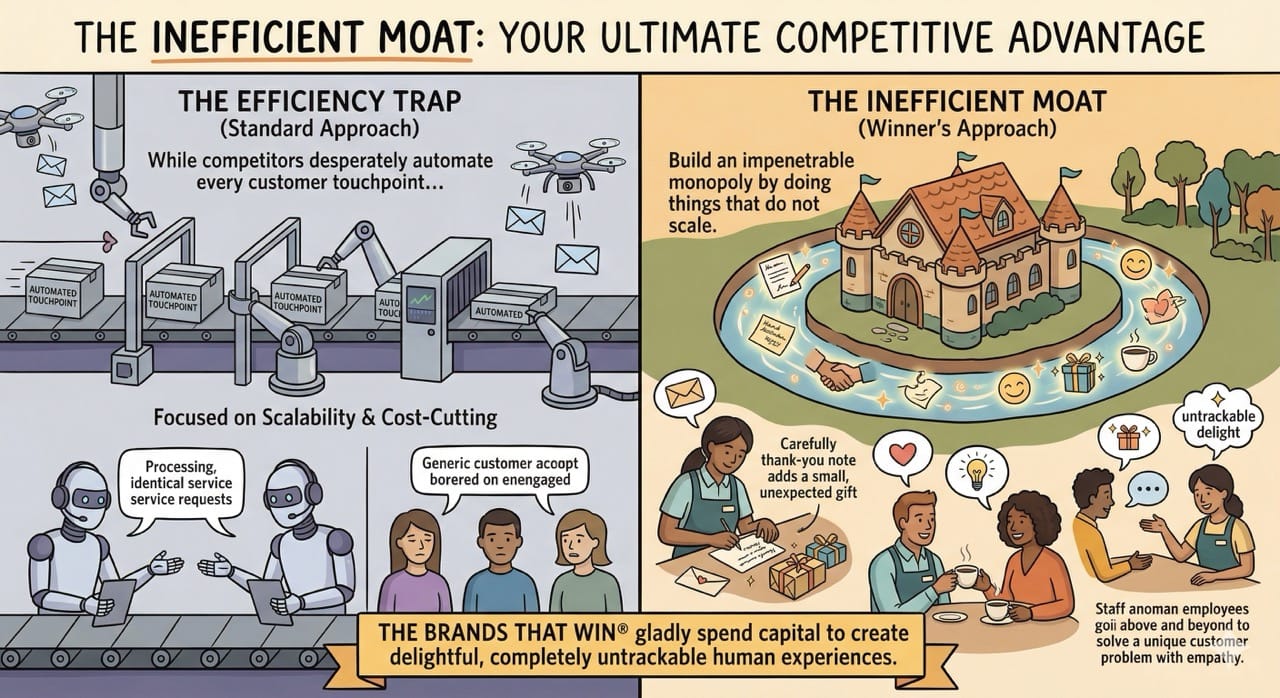
The ultimate competitive advantage of the next decade will be intentional inefficiency.
While your competitors desperately try to automate every single customer touchpoint, you will build an impenetrable monopoly by doing things that do not scale.
The brands that win will be the ones that gladly spend capital to create delightful, completely untrackable human experiences.
Here is the legendary chat which inspired this post: