How the US-Iran War Delays a China-Taiwan Conflict
The escalating conflict in the Middle East has completely derailed Beijing's military timeline in the Pacific. By cutting off cheap Iranian oil, the United States has inadvertently forced China to delay any immediate plans for Taiwan.

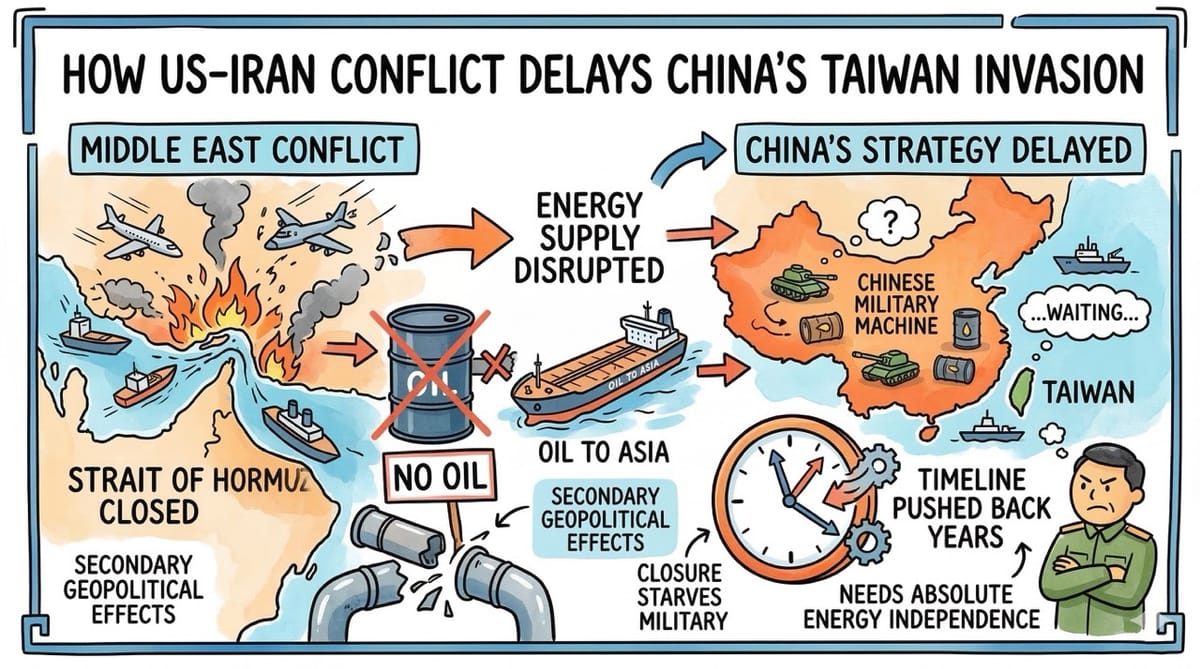
Beijing needs absolute energy independence before launching an invasion. The chaos in the Strait of Hormuz just pushed that timeline back by years.
Inspiration: Analyzing the secondary geopolitical effects of the US and Iran conflict. Realizing that the closure of the Strait of Hormuz directly starves the Chinese military machine of the cheap oil required for a Pacific war.
The Sanctioned Oil Pipeline
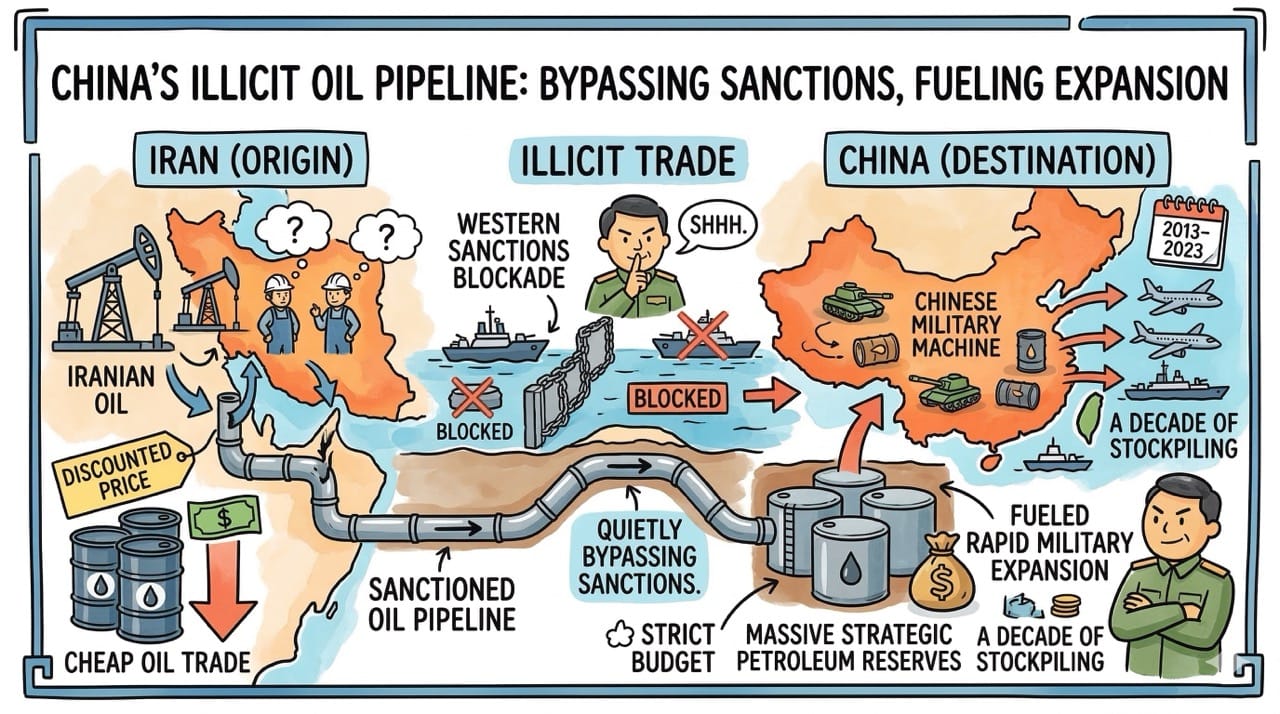
China has spent the last decade quietly stockpiling cheap, heavily discounted oil from Iran.
This illicit energy trade allowed Beijing to build massive strategic petroleum reserves on a strict budget.
It successfully bypassed Western sanctions and quietly fueled their rapid military expansion.
The Prerequisite for Invasion
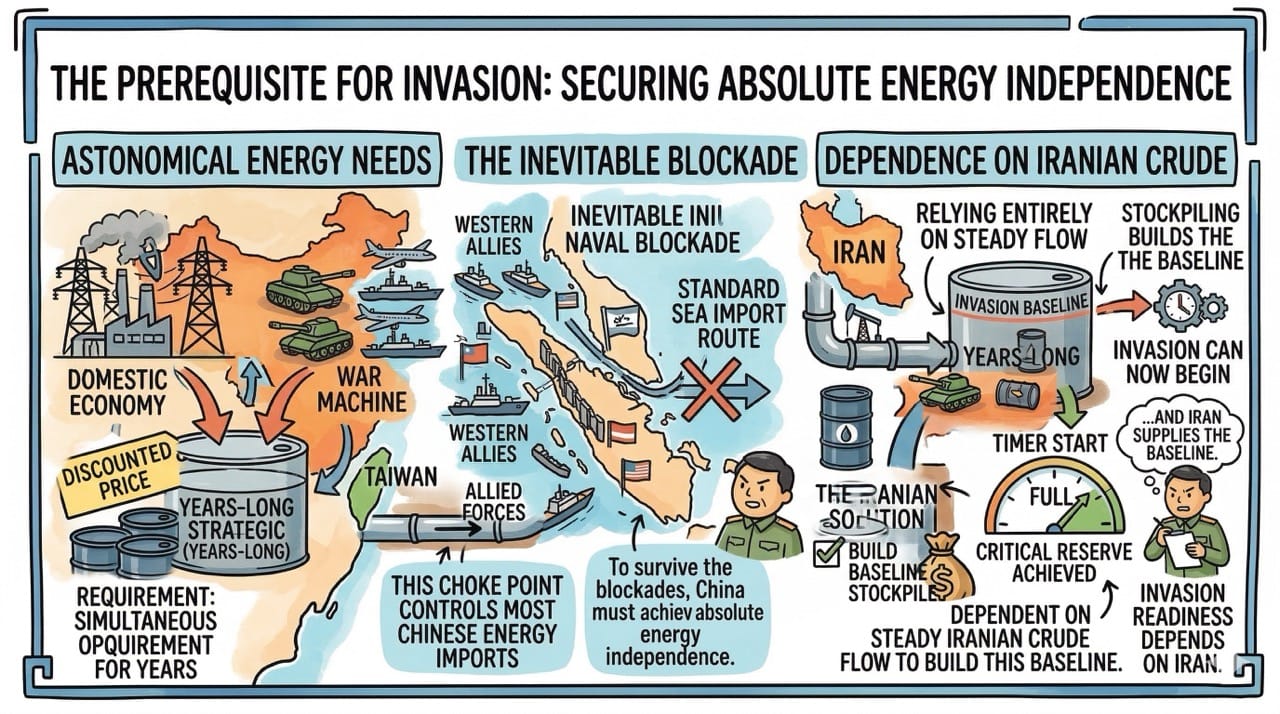
A military campaign against Taiwan requires an astronomical amount of energy. The Chinese Communist Party knows that the moment they invade, Western allies will instantly blockade the Strait of Malacca.
This naval choke point is where the vast majority of China's energy imports travel.
To survive this inevitable blockade, China needs absolute energy independence. They need enough stockpiled oil to run their domestic economy and their war machine simultaneously for years.
They were relying entirely on a steady flow of Iranian crude to reach this baseline requirement.
The Timeline Derailed
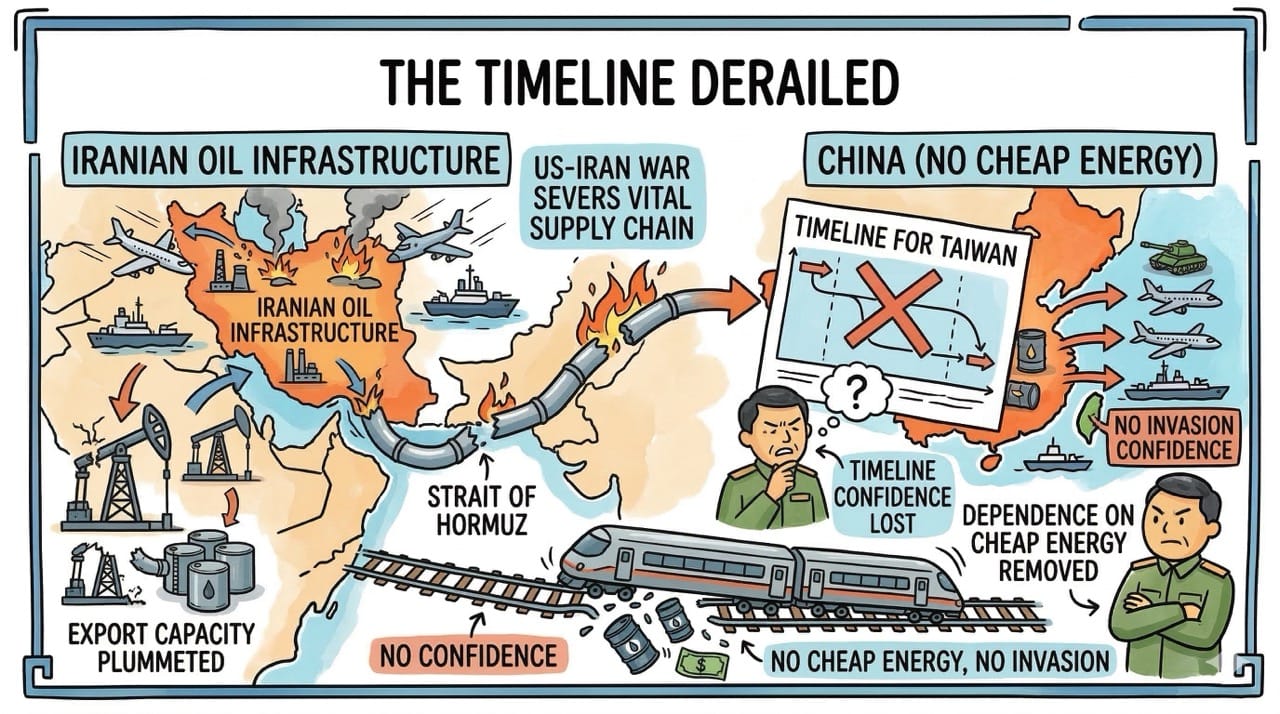
The current war between the United States and Iran has completely severed this vital supply chain.
Iranian oil infrastructure is under direct threat, and export capacities have plummeted. Without this continuous flow of cheap energy, the Chinese military cannot confidently lock in a timeline for Taiwan.
The Hormuz Retaliation Theory
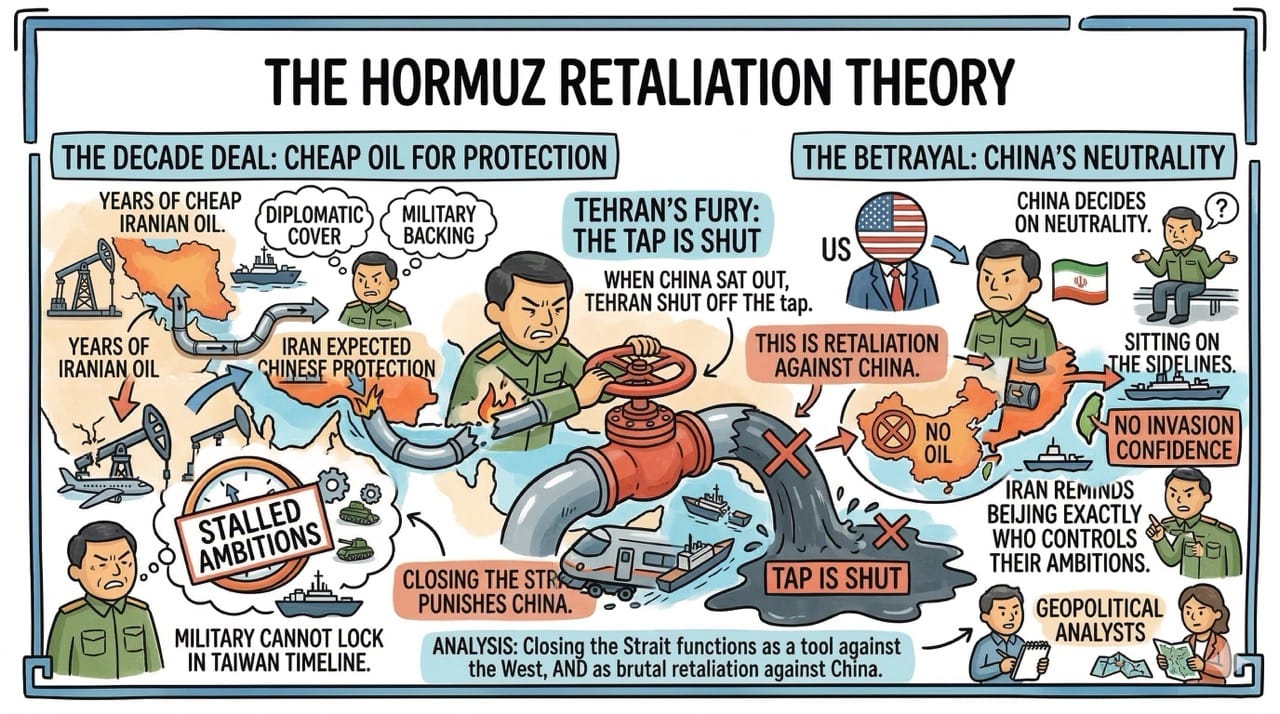
This dynamic adds a fascinating layer to Iran closing the Strait of Hormuz.
Most analysts view this closure strictly as a weapon against the West and global energy markets.
However, it functions just as effectively as a brutal retaliation against China.
Iran likely expected Beijing to provide diplomatic and military protection in exchange for years of cheap oil.
When China decided to sit on the sidelines, Tehran shut off the tap.
By closing the strait, Iran reminded Beijing exactly who controls their strategic ambitions.
Conclusion: Buying Time in the Pacific
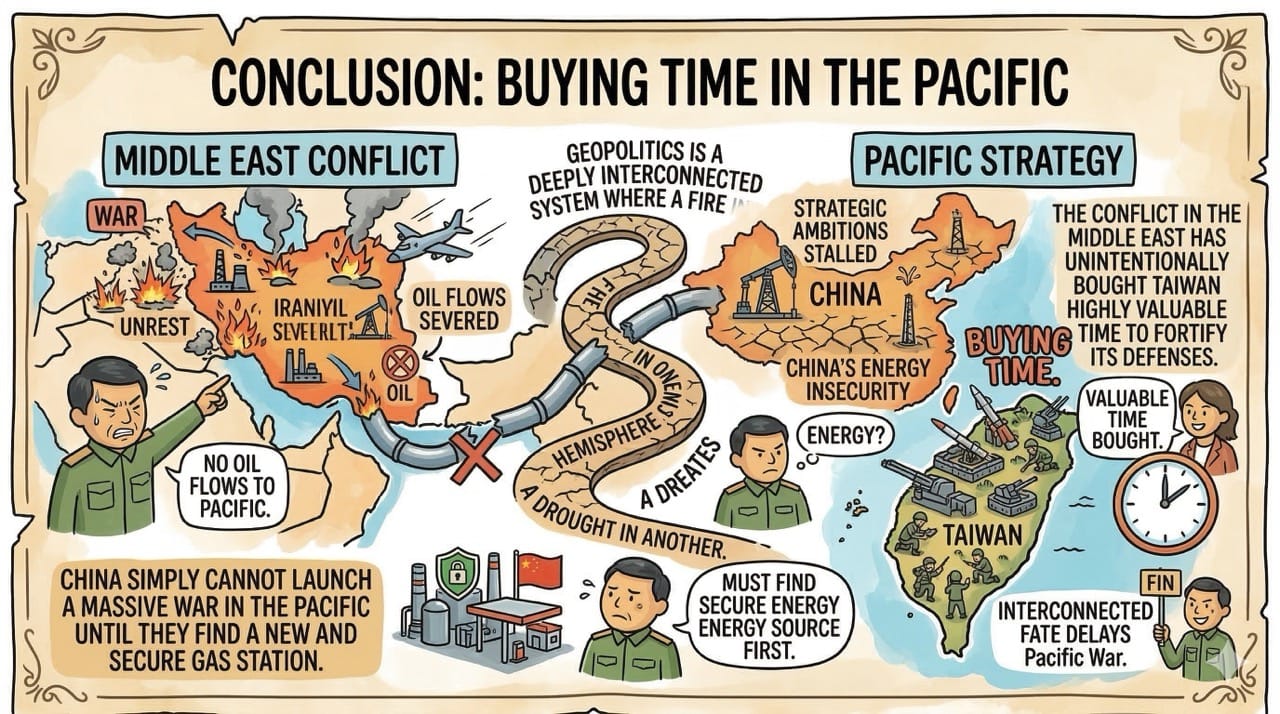
Geopolitics is a deeply interconnected system where a fire in one hemisphere creates a drought in another.
The conflict in the Middle East has unintentionally bought Taiwan highly valuable time to fortify its defenses.
China simply cannot launch a massive war in the Pacific until they find a new and secure gas station.