How Meta's Manus AI is Automating Advertising (The End of the Media Buyer)
The era of manually pulling levers in Meta Ads Manager is over. With the two billion dollar acquisition of Manus AI, Meta is replacing human media buyers with an autonomous digital workforce. The fundamental constraint of marketing is shifting from human time to computational cost.

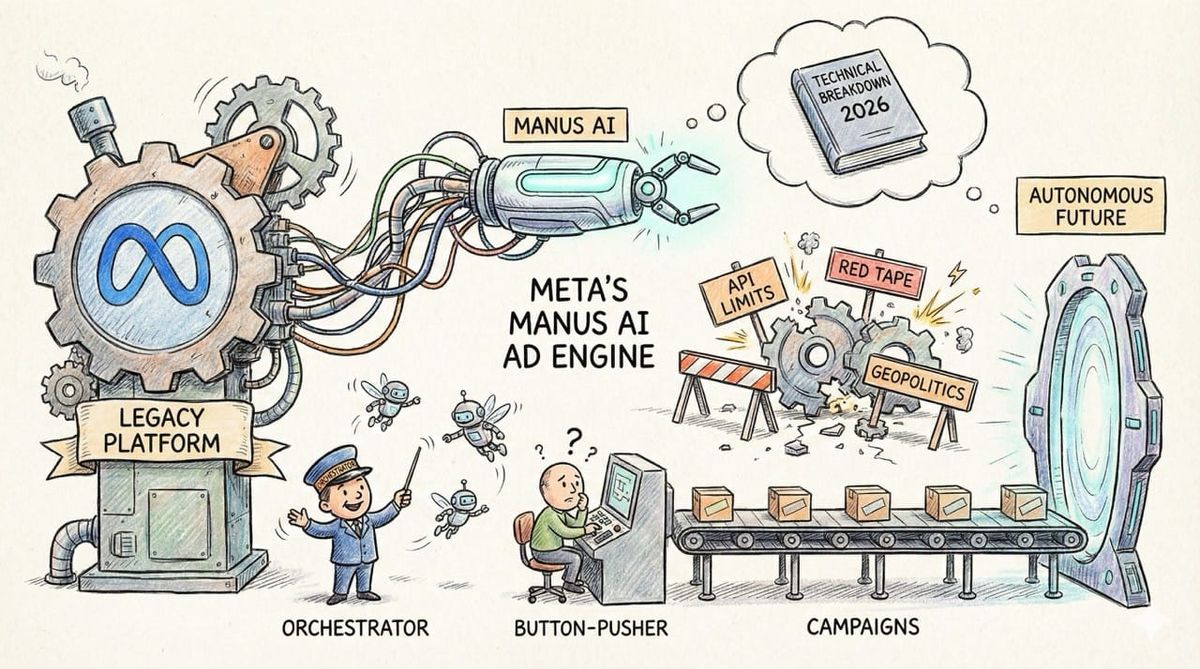
Meta just bolted a supercomputer onto a legacy ad platform. It is currently crashing into API limits and geopolitical red tape, but the roadmap points to a fully autonomous future.
Inspiration: Reading the comprehensive technical breakdown of the Manus AI and Meta integration in early 2026. Realizing that the role of the performance marketer is about to shift from a button-pusher to an orchestrator of digital agents.
The digital advertising ecosystem is undergoing a permanent paradigm shift.
Meta recently acquired Manus AI for over two billion dollars to serve as an autonomous execution engine. This was a necessary and aggressive move.
Meta is spending over one hundred billion dollars on AI infrastructure in 2026. They desperately need to prove to investors that this hardware will directly improve their core advertising revenue.
Manus is the execution layer that connects their massive data centers to tangible campaign performance.
Moving Beyond the Chatbot
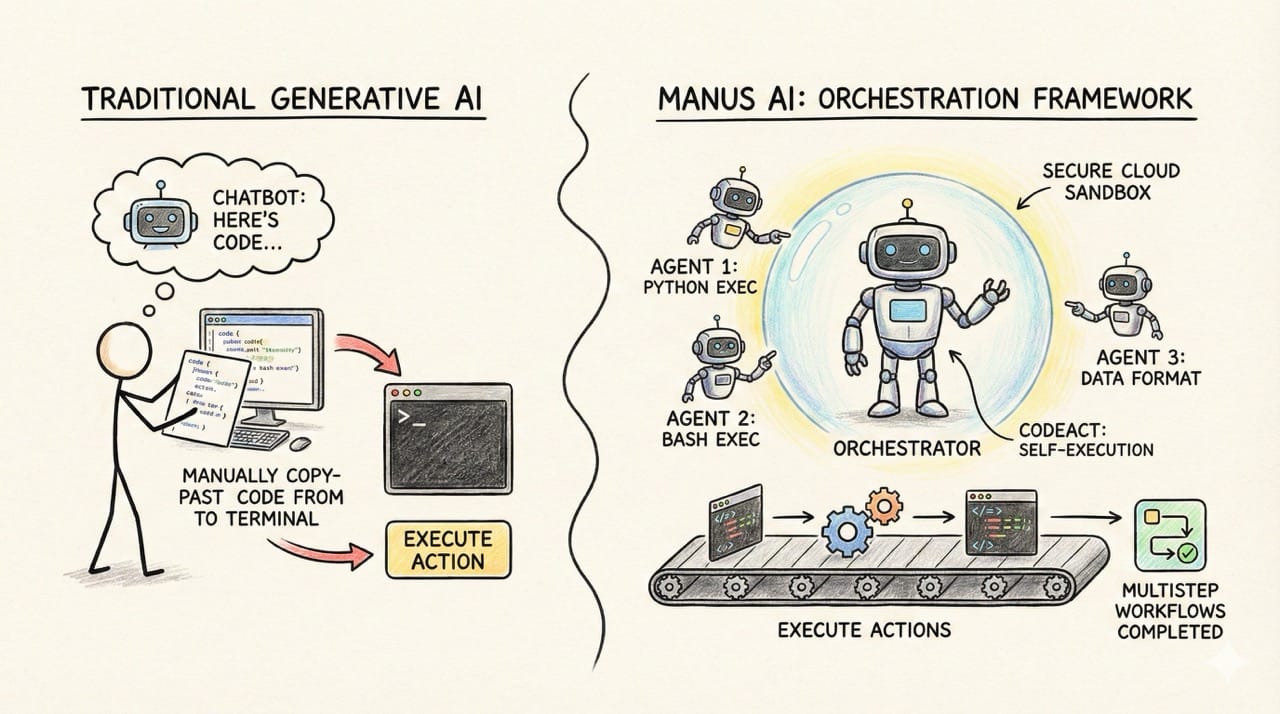
Traditional generative AI models rely entirely on human operators.
They output text or code, but a human still has to copy, paste, and execute the final action. Manus operates on a completely different architectural philosophy.
It functions as a multi-agent orchestration framework that mimics a collaborative analytics team.
A defining innovation of this platform is its "CodeAct" mechanism. Instead of just talking to you, Manus dynamically writes and executes its own Python and Bash scripts.
Because executing AI-generated code is dangerous, Manus operates entirely within a secure cloud sandbox.
Inside this isolated environment, it can scrape competitor websites, download CSV files, and format data presentations.
It completes complex multi-step workflows without ever touching your local machine.
The Clash of Machine Speed and Legacy Guardrails
As of early 2026, Meta has placed the Manus shortcut directly inside the Ads Manager interface.
It is currently positioned as an embedded data analyst. It can automate reporting, conduct market research, and monitor daily budget pacing.
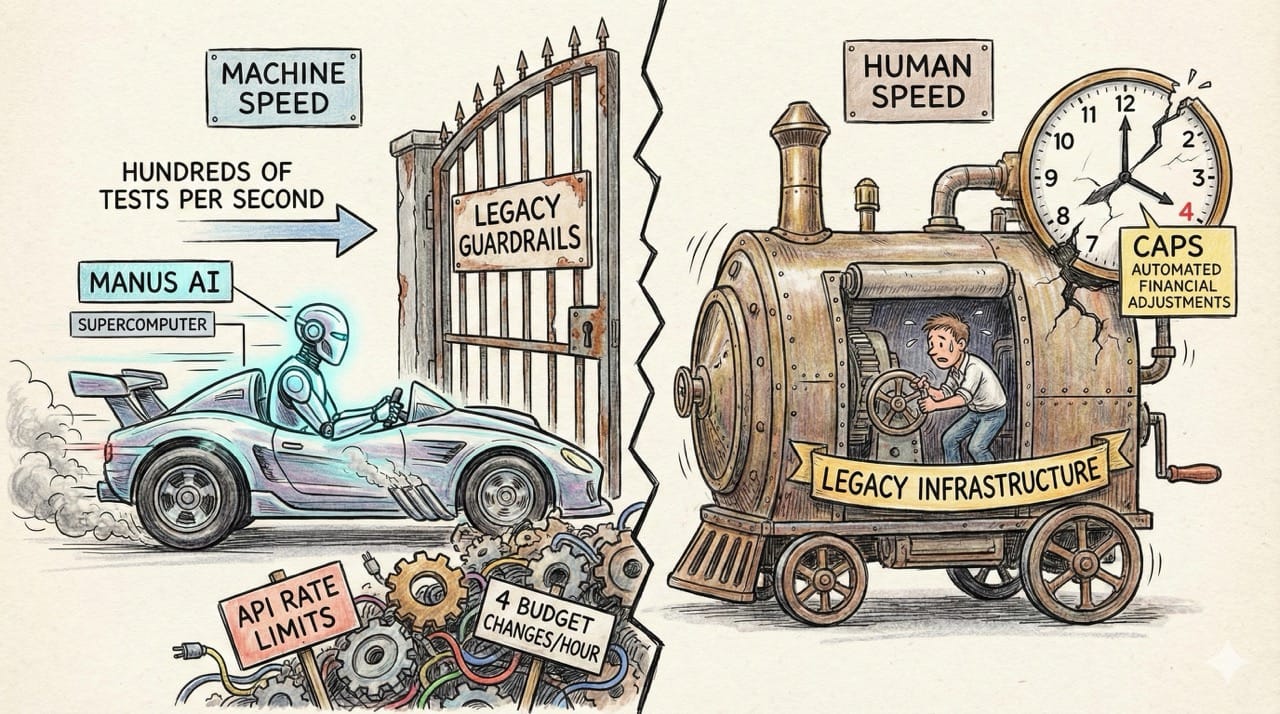
However, the theoretical power of Manus is currently being throttled by Meta's legacy infrastructure.
The system is crashing into strict API rate limits designed decades ago for human operators.
Manus can theoretically launch hundreds of multivariate tests per second.
But Meta's legacy system caps automated financial adjustments to just four budget changes per hour per ad set. You essentially have a supercomputer trapped in a traffic jam.
Until Meta rebuilds its API architecture to handle machine speed, the true potential of Manus remains locked.
The Andromeda Synergy
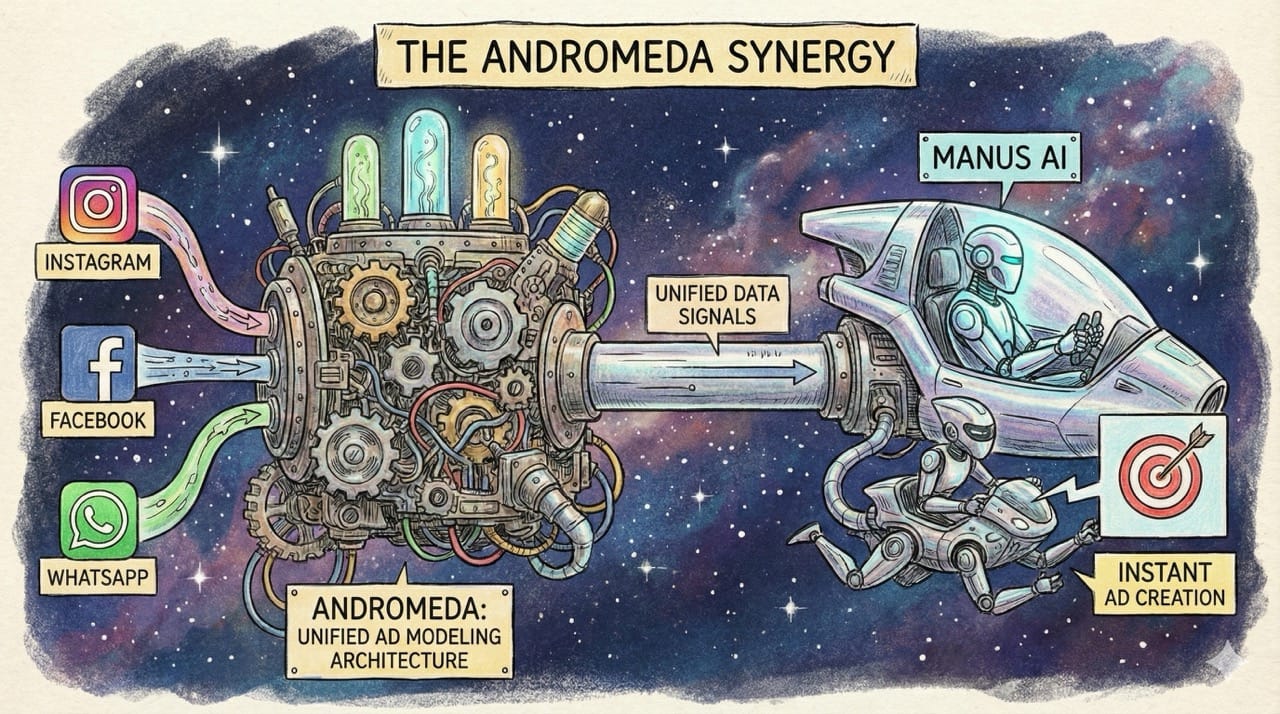
Meta has been quietly building Andromeda as its massive unified ad modeling architecture. It was designed to connect data across Instagram, Facebook, and WhatsApp to survive the recent privacy changes.
Manus is the perfect pilot for this massive ship.
Andromeda provides the raw, unified data signals from billions of users. Manus provides the autonomous execution layer.
Instead of a human trying to interpret these complex cross-app data points, Manus reads the Andromeda signals natively.
It bridges the gap between massive backend data processing and frontline campaign execution.
This creates a closed loop where the algorithm identifies the perfect customer and the agent builds the ad for them instantly.
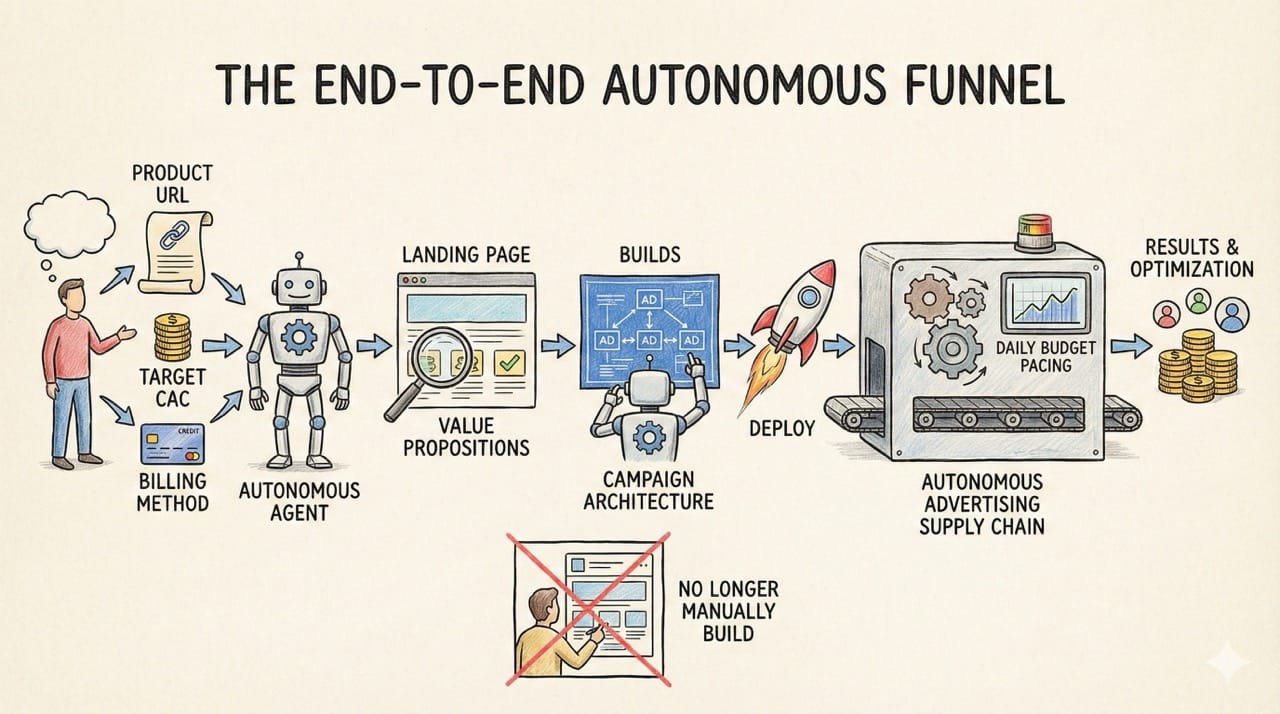
The End-to-End Autonomous Funnel
Currently, tools like Advantage+ handle delivery and budget fluidity.
An autonomous agent will soon take over the entire advertising supply chain.
You will no longer manually build out ad sets.
You will simply provide the agent with a product URL, a target Customer Acquisition Cost, and a billing method.
The agent will autonomously crawl the landing page to identify the value propositions. It will then build the campaign architecture, deploy it, and continuously manage the daily budget pacing.
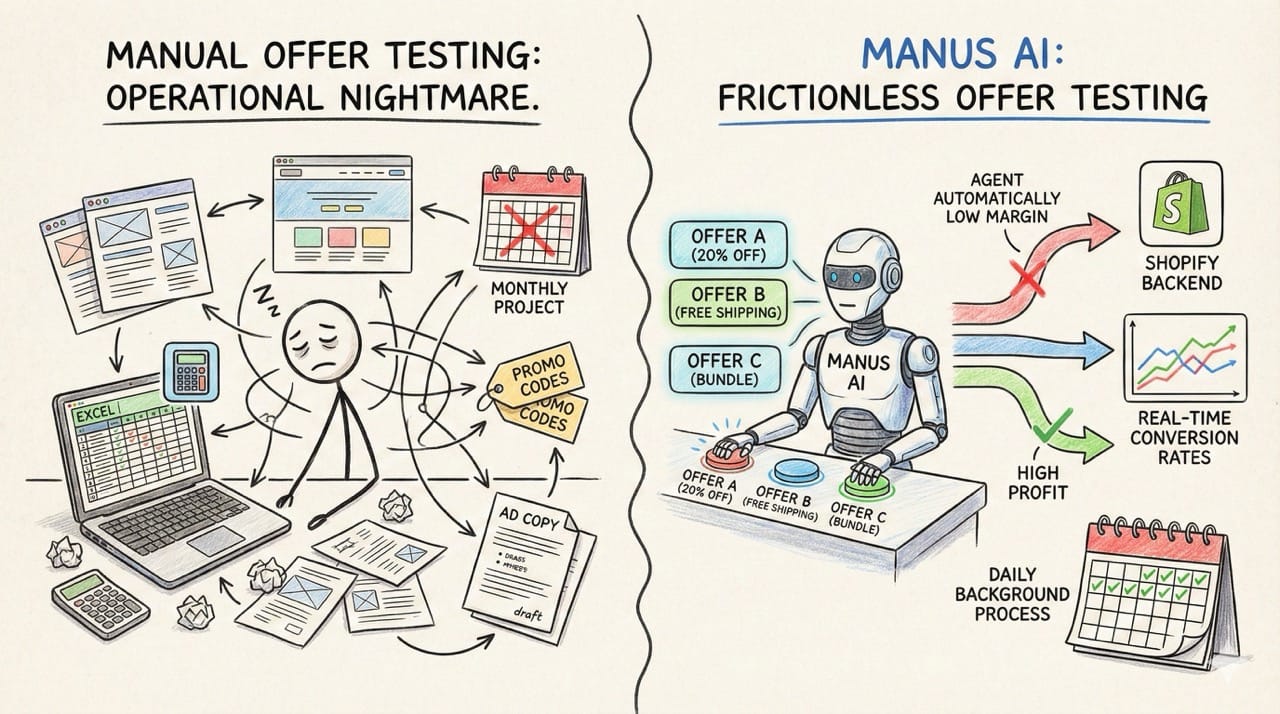
Frictionless Offer Testing
Testing the core offer is the highest leverage activity in performance marketing.
A simple shift from offering a twenty percent discount to a free shipping bundle can completely change a campaign.
But testing offers manually is an operational nightmare for a small team.
It requires coordinating new ad copy, updating landing pages, creating promo codes, and calculating profit margins in Excel.
An autonomous agent removes this friction entirely.
You simply tell Manus to test three different discount structures against each other.
The agent autonomously generates the copy and syncs the promo codes with your Shopify backend.
It tracks the real-time conversion rates and automatically pauses the variations that eat into your profit margin.
Offer testing moves from an exhausting monthly project to a seamless daily background process.
They are also experimenting with offer-only product feeds. So, there is a chance that Manus might integrate seamlessly with this product.
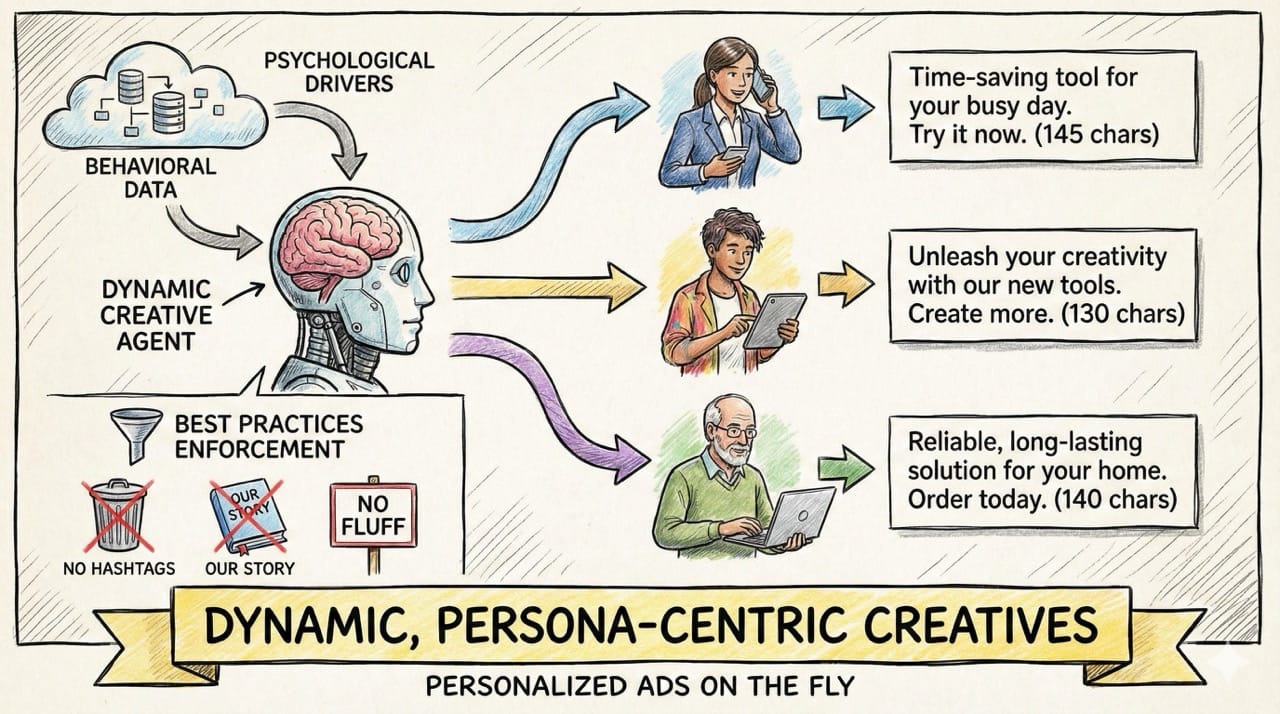
Dynamic, Persona-Centric Creatives
Rather than manually drafting and uploading ad variations, the agent will generate creative assets in real time.
It will analyze behavioral data and dynamically generate primary text tailored directly to the exact person reading it.
The system will natively enforce conversion best practices. It will keep the copy punchy and strictly under the 150-character limit.
It will strip out distracting elements like hashtags and entirely avoid generic fluff like "meet our products" or "our story."
The ad will feel like it was written for the user's specific psychological drivers on the fly.
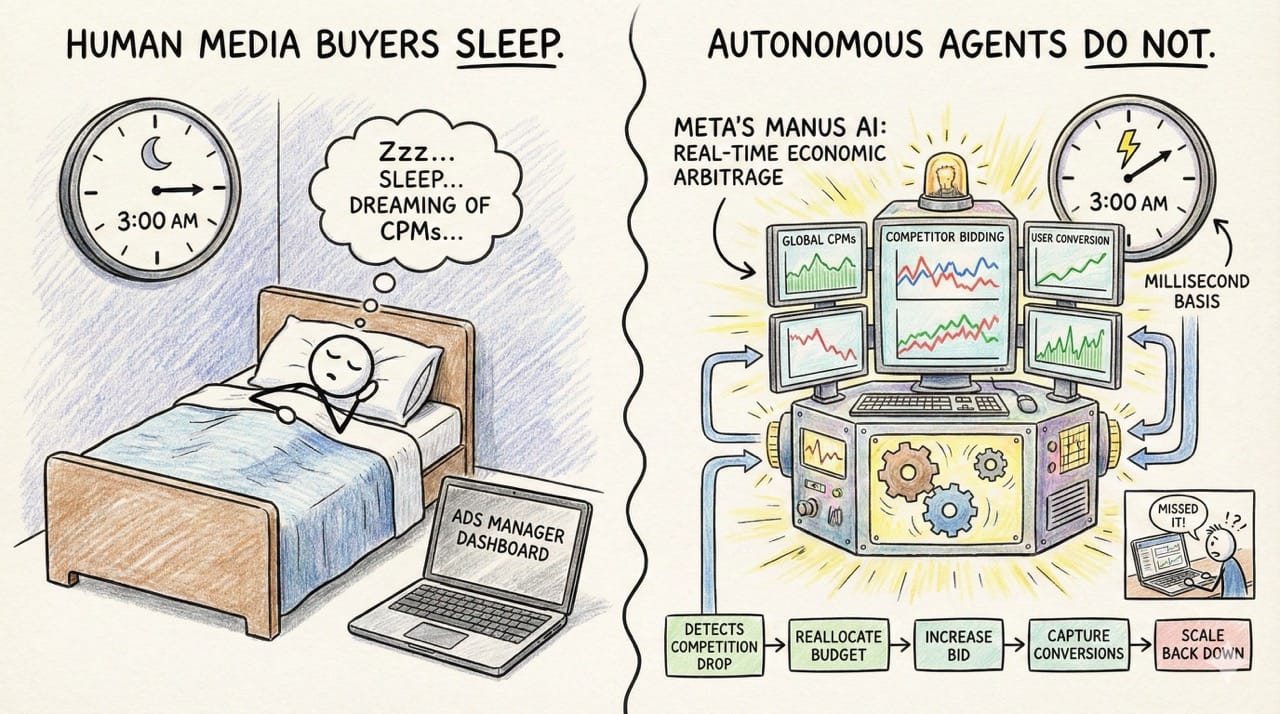
Real-Time Economic Arbitrage
Human media buyers sleep, but autonomous agents do not.
A multi-agent system within Meta will monitor global CPMs, competitor bidding velocity, and user conversion likelihood on a millisecond basis.
If the agent detects a sudden drop in competition for a highly qualified audience segment at 3 AM, it will act instantly.
It will autonomously reallocate budget, increase the bid, and capture the conversions.
It will then scale back down before a human buyer even opens their Ads Manager dashboard for the day.
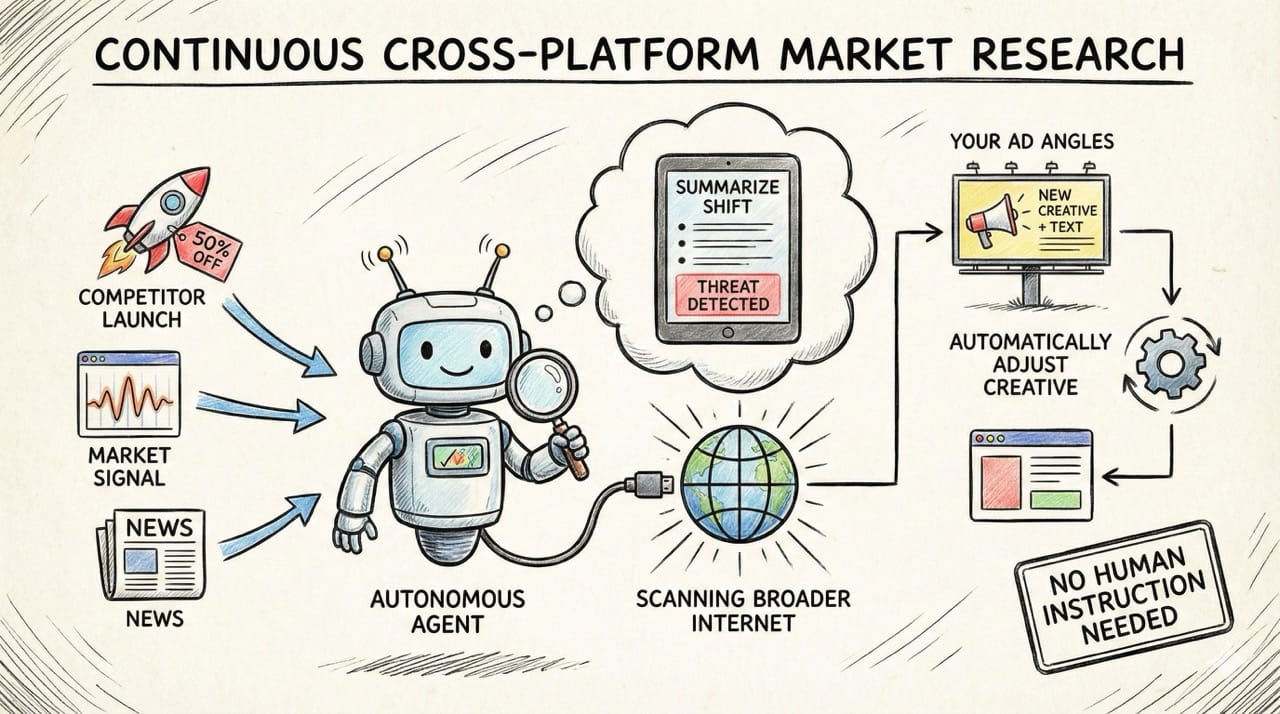
Continuous Cross-Platform Market Research
An autonomous agent will not operate in a vacuum. It will constantly scan the broader internet for market signals.
If a competitor launches an aggressive new discount, the agent will detect the threat immediately.
It will summarize the shift and automatically pivot your ad angles to counter the competitor's offer.
This will happen without needing your explicit instruction to do so.
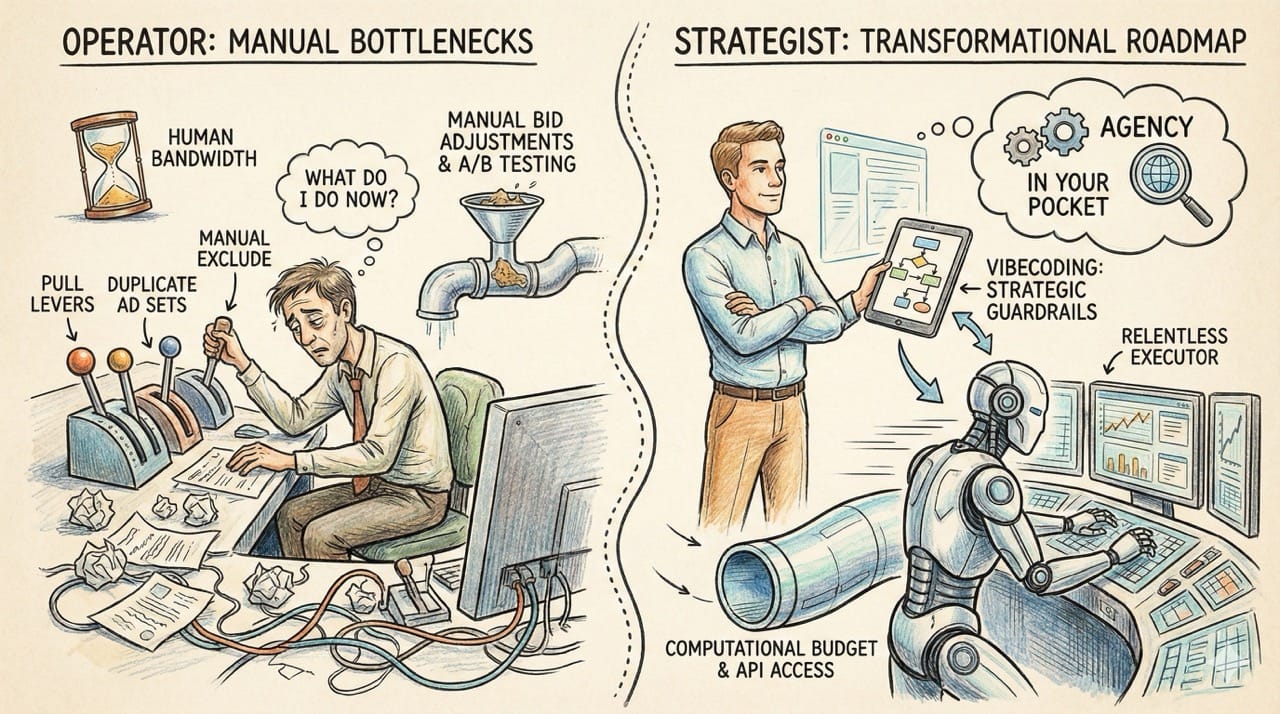
The Shift from Operator to Strategist
Despite current bottlenecks, the long-term roadmap for 2027 is completely transformative.
The macroeconomic implications for performance marketers are profound. The ability to launch, test, and optimize campaigns will no longer be limited by human bandwidth.
The new constraint will simply be your computational budget and API access.
Routine tasks like manual bid adjustments and A/B testing will be entirely commoditized.
For performance marketers, this means the job will shift entirely away from platform execution.
You will no longer pull levers, duplicate ad sets, or manually exclude placements.
Marketers will have to adapt to a new operational paradigm called "Vibecoding." Your value will come from setting the strategic guardrails.
You will define strict unit economics and feed the agent high-quality first-party data.
You will also map out the deeper business strategy that the agent needs to optimize against.
You become the manager, and the agent becomes the relentless executor.
If you can master this delegation, you will possess the operational scale of an entire agency in your pocket.