How Meta and Manus AI Are Turning WhatsApp Into a Digital Economy (The Everything App)
he era of downloading a dozen different apps to run your life is over. Meta is turning WhatsApp into a universal operating system powered by autonomous agents. Soon, you will not browse the internet; you will simply command it from your chat feed.

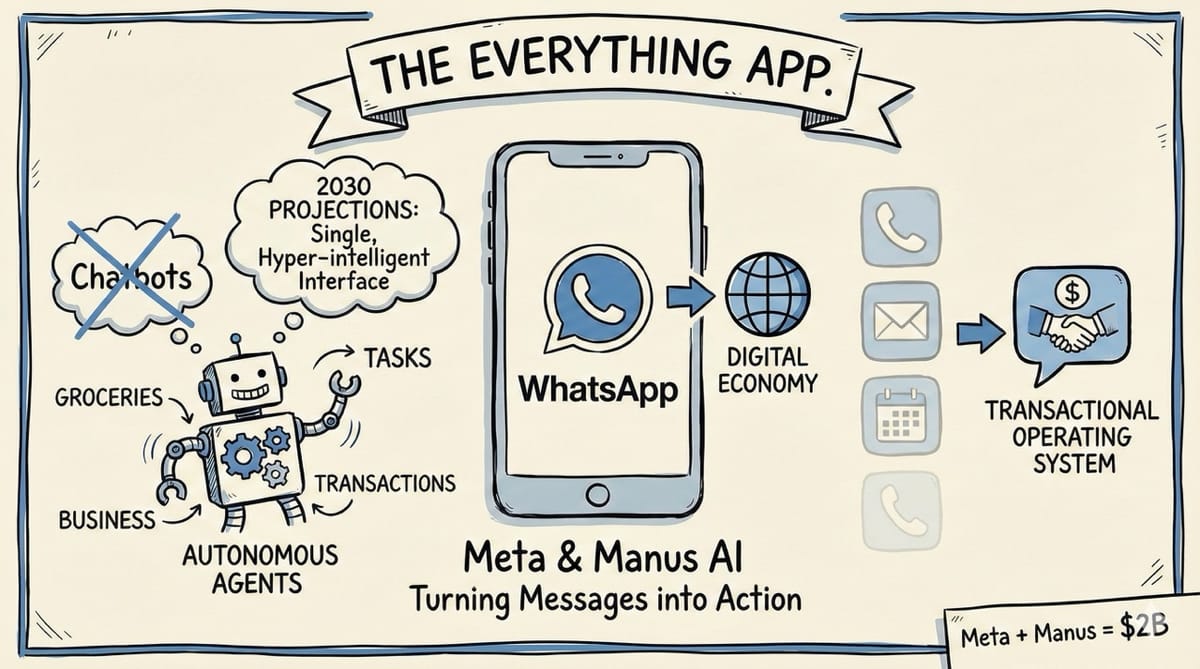
Chatbots are dead. The future belongs to autonomous agents that live in your messages, buy your groceries, and run your business while you sleep.
We are officially leaving the era of the chatbot.
For years, artificial intelligence was just a text generator that required a human to do the actual work.
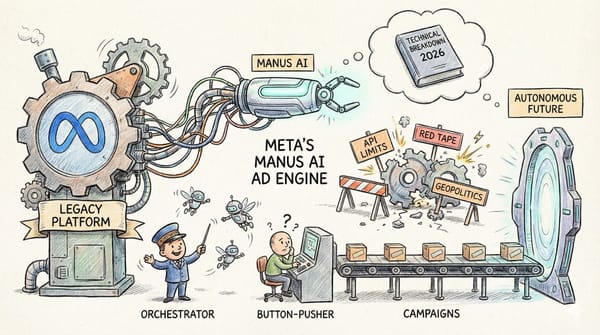
Meta just changed the rules by acquiring Manus AI for two billion dollars.
Manus is not a chatbot.
It is an autonomous execution engine.
Meta is integrating this technology directly into WhatsApp and Messenger to create a transactional operating system.
The Post-App Reality
Think about how you use your phone today.
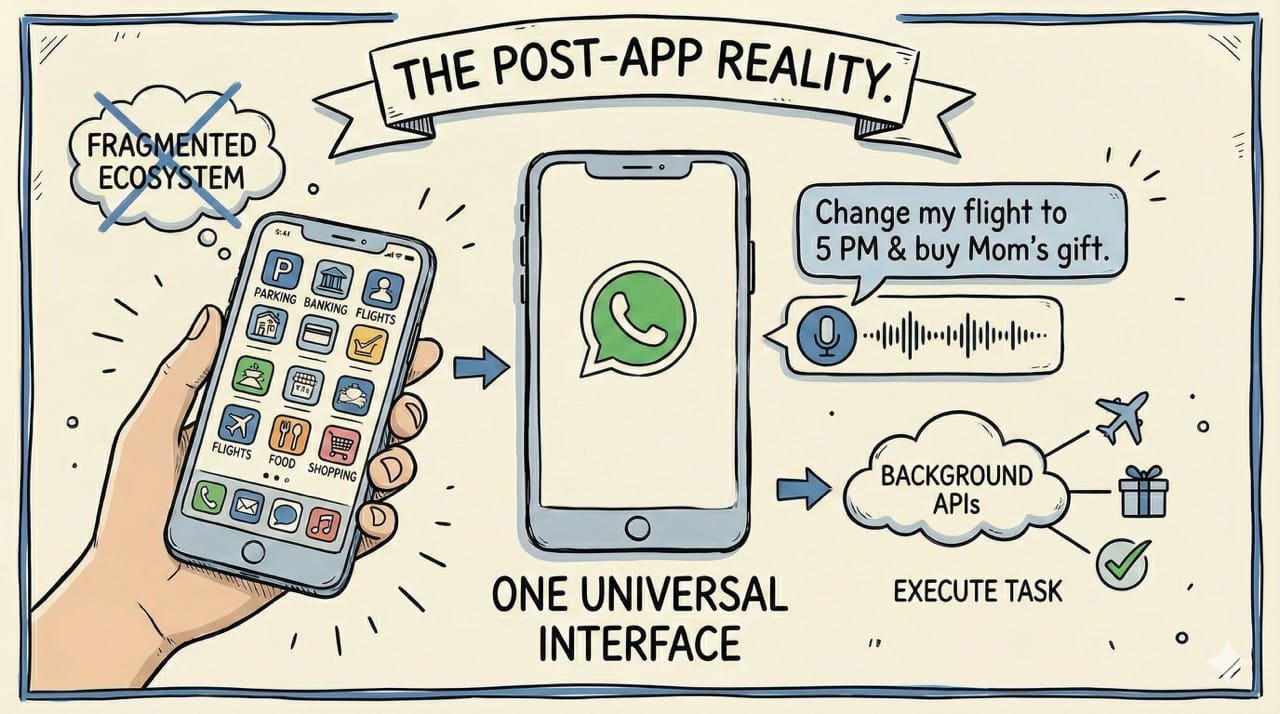
You have a specific app for parking, a different app for banking, and another for booking flights.
That fragmented ecosystem is about to disappear entirely.
In the near future, WhatsApp and Meta AI will become your universal interface.
You will not open a separate app to change a flight or buy a gift.
You will simply drop a voice note to your personal agent, and it will communicate with background APIs to execute the task.
The Death of the Search Engine
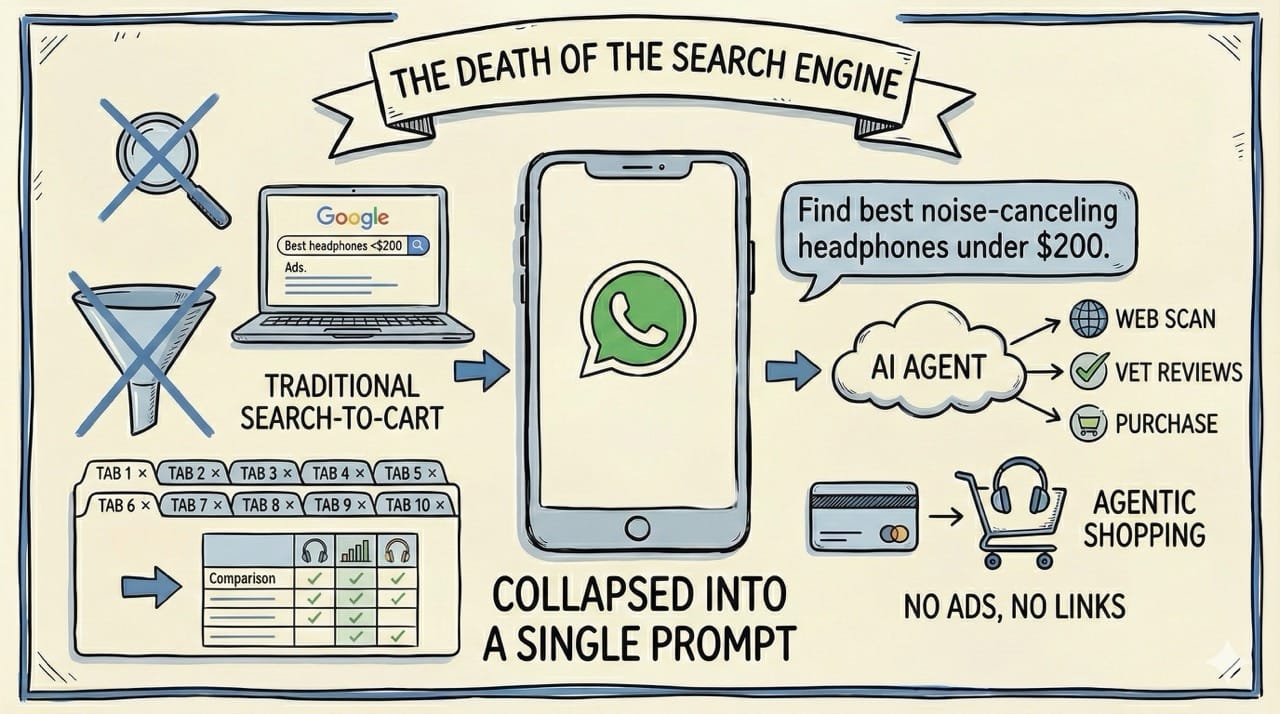
This shift destroys the traditional search-to-cart funnel.
Right now, buying a product requires searching on Google, opening ten tabs, and manually comparing reviews.
Agentic shopping collapses this entire process into a single text prompt.
You will ask your WhatsApp agent to find the best noise-canceling headphones under two hundred dollars.
The AI will autonomously scan the web, vet the reviews, and purchase the item.
You will see fewer Google search ads or an affiliate links.
Frictionless Commerce
For performance marketers, this completely rewrites the playbook.
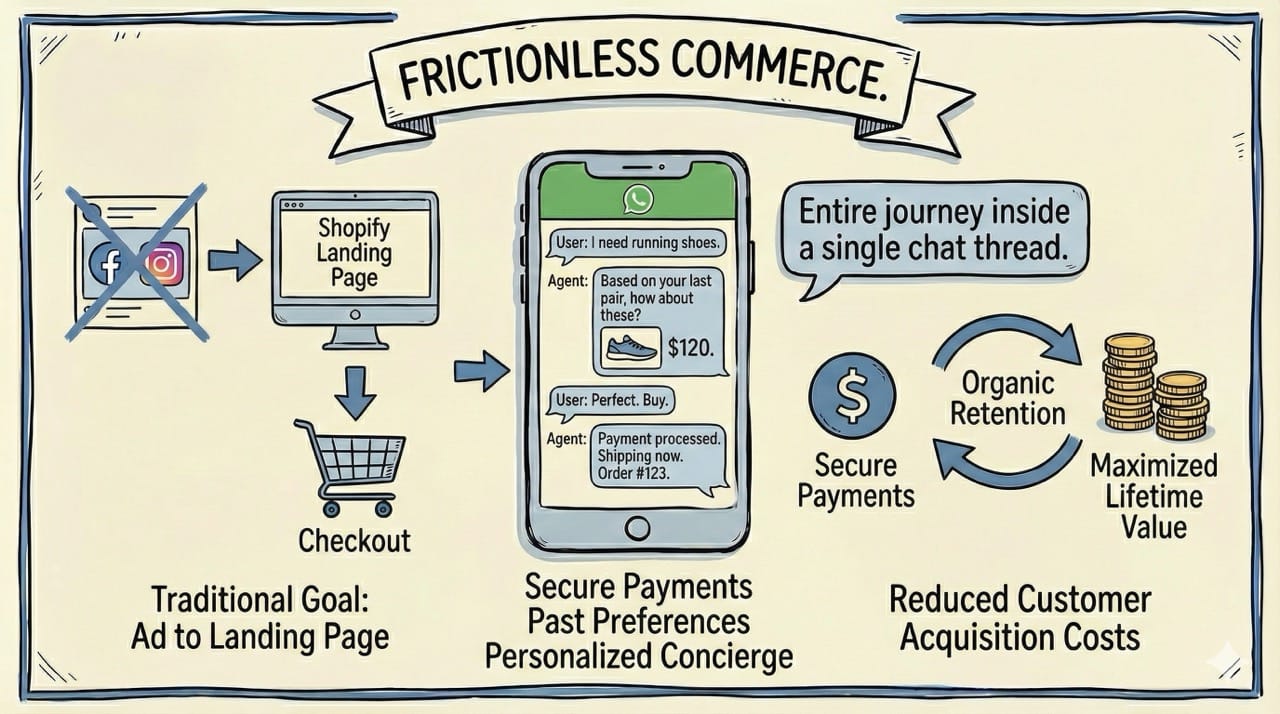
The traditional goal was to drive traffic from a Meta ad to a Shopify landing page.
Now, the entire customer journey happens inside a single chat thread.
Agents will sense user intent and process secure payments natively.
They will remember past preferences and act as a highly personalized concierge.
This organic retention will drastically reduce customer acquisition costs for brands by maximizing lifetime value.
Of course, this will be an addition to the current consumption patterns, and not a replacement of it.
The Solopreneur Cheat Code
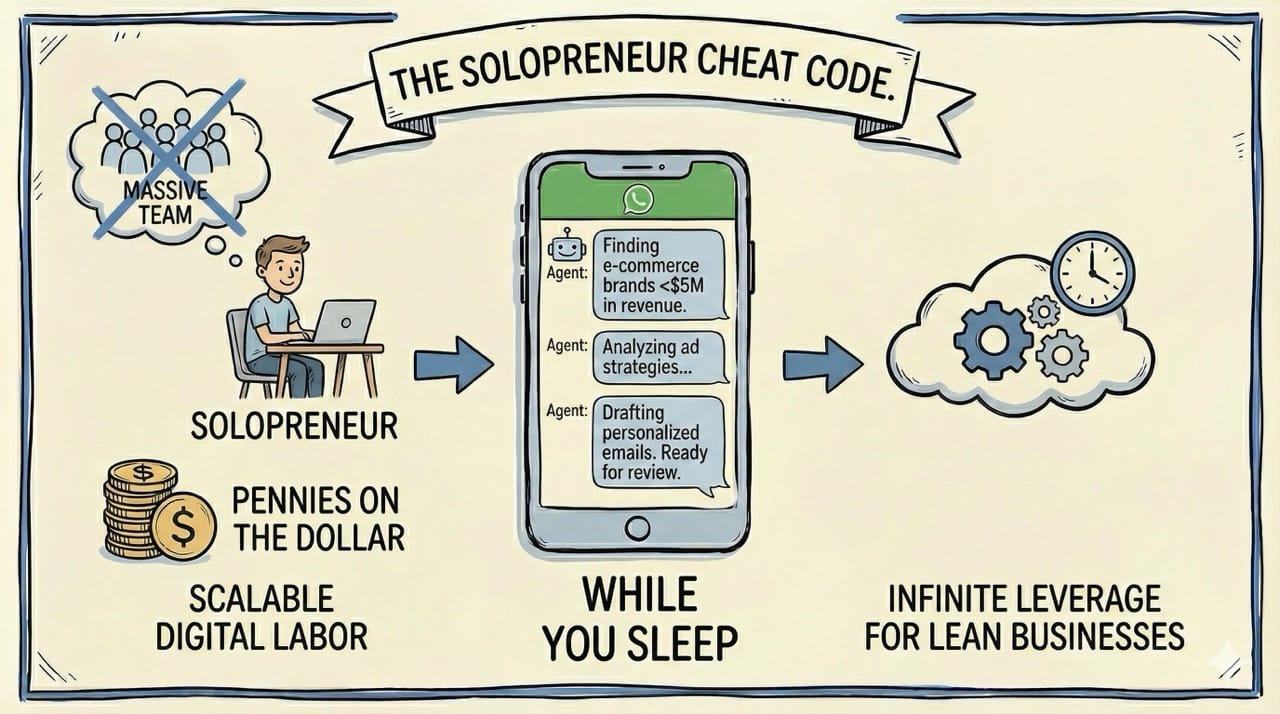
This technology also provides infinite leverage for lean businesses.
You no longer need to hire a massive team to scale your operations.
You are effectively purchasing scalable digital labor for pennies on the dollar.
Imagine running a B2B consultancy.
You can tell your WhatsApp agent to find local e-commerce brands making under five million dollars in revenue.
The agent will run in the background for hours, analyze their current ad strategies, and draft personalized cold outreach emails while you sleep.
The Invisible Plumbing
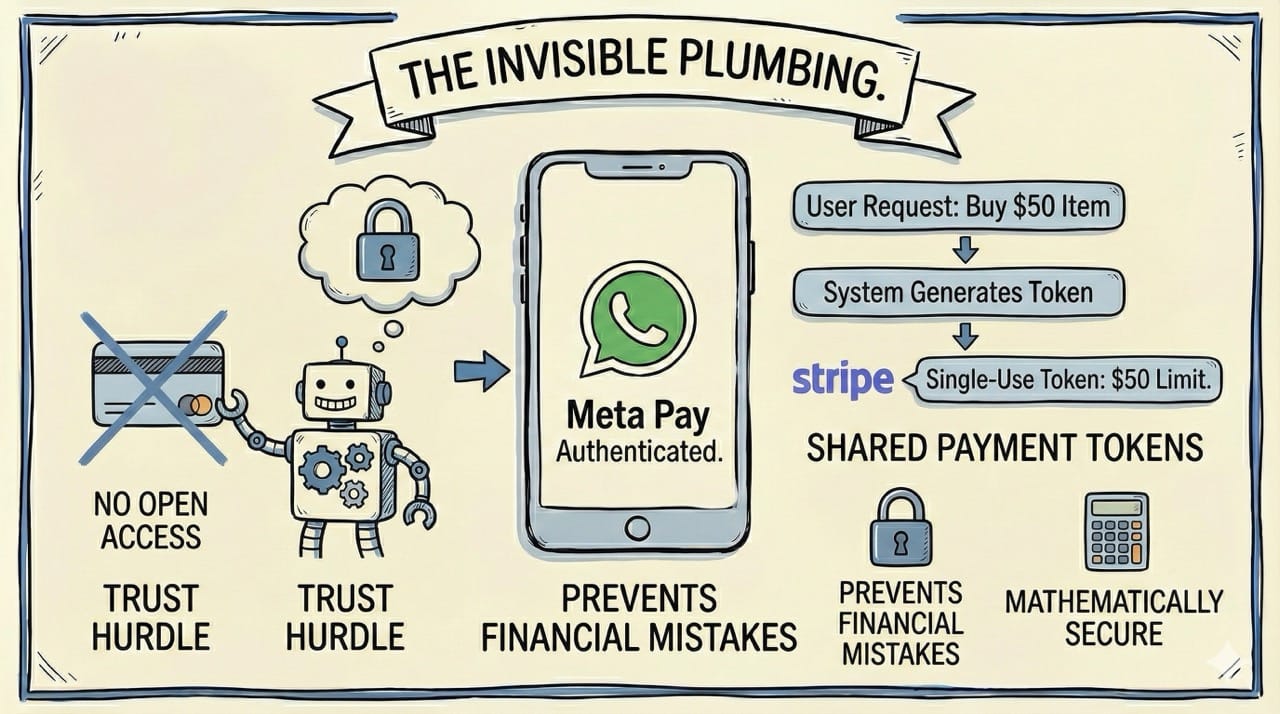
Trust is the biggest hurdle for autonomous transactions.
You cannot give an AI open access to your primary credit card.
The industry is solving this with Shared Payment Tokens engineered by companies like Stripe.
You authenticate your payment method once with Meta.
When you ask the agent to buy something, the system generates a unique, single-use token strictly limited to that exact purchase amount.
This mathematically prevents the AI from making catastrophic financial mistakes.
The Geopolitical Arms Race
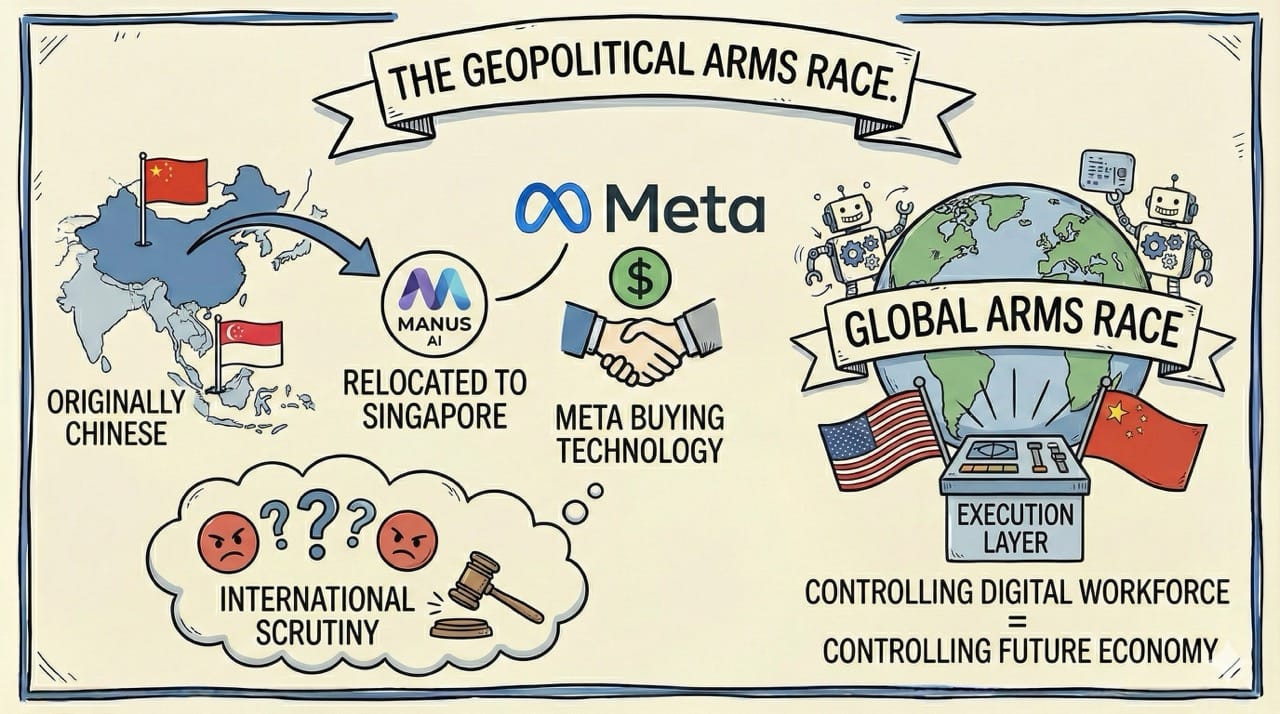
It is also impossible to ignore the geopolitical reality of this technology. Manus was originally founded by a Chinese startup before aggressively relocating to Singapore.
Meta buying this technology triggered massive international scrutiny.
Dominating the execution layer of the internet is the new global arms race.
The country that controls the digital workforce will ultimately control the future economy.
Conclusion: The Era of Delegation
The transition to agentic AI is not just a software update.
It is a fundamental rewiring of how humans interact with the digital world.
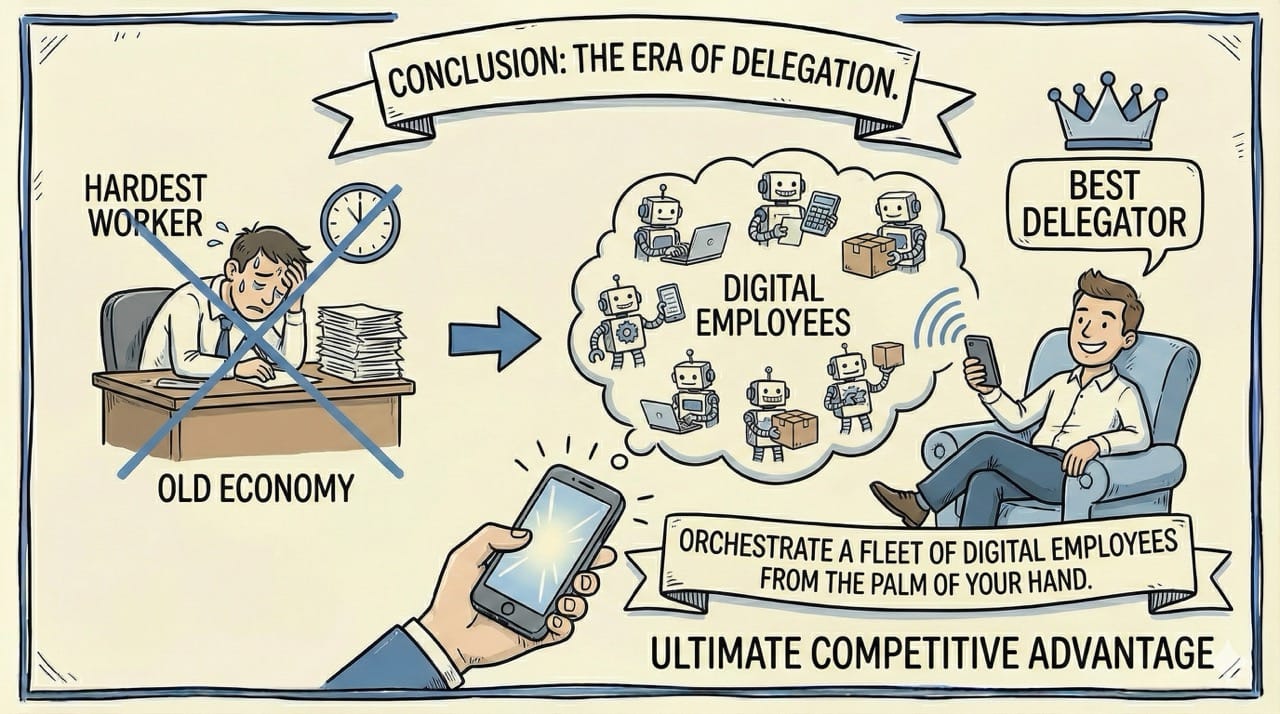
The most successful people in this new economy will not be the hardest workers.
They will be the best delegators.
The ultimate competitive advantage is learning how to orchestrate a fleet of digital employees from the palm of your hand.