Google Stitch: The Age of Generative UX and UI is Here
We spent the last decade treating software design and software engineering as two completely separate disciplines. Google Stitch just merged them into a single text prompt, effectively ending the era of the manual frontend developer.

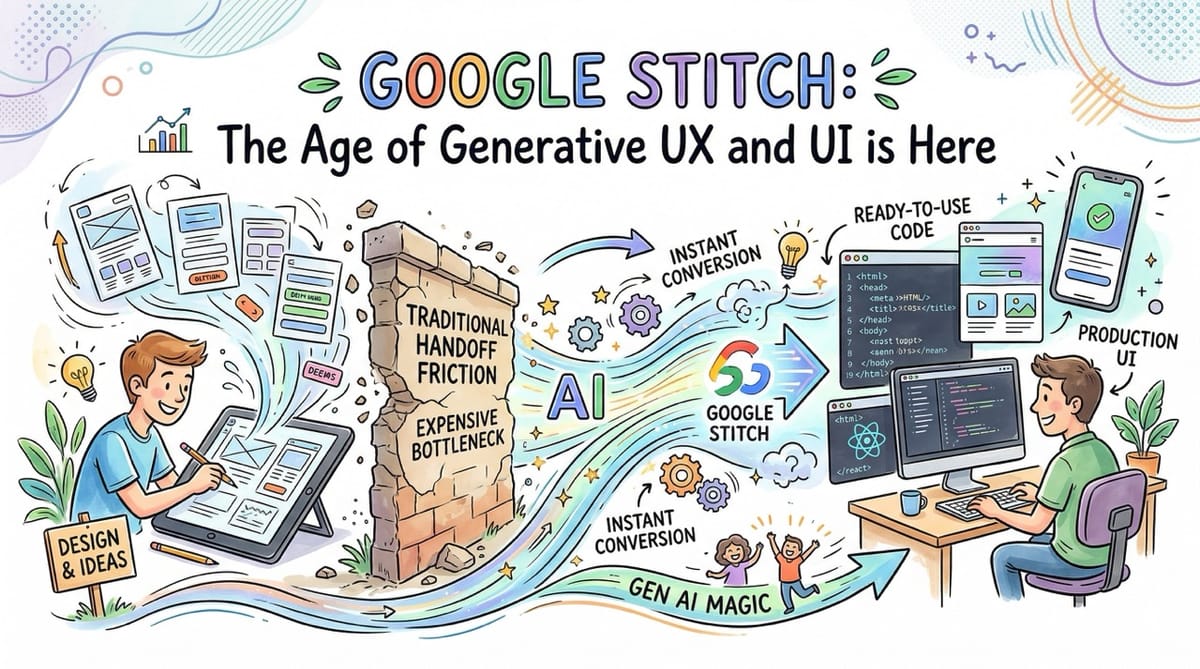
The expensive bottleneck between drawing a beautiful interface and actually coding it has officially collapsed to zero.
Inspiration: Analyzing the capabilities of Google Stitch and the broader market shift toward generative user interfaces. Realizing that the traditional friction of the developer handoff is being completely eliminated by artificial intelligence.
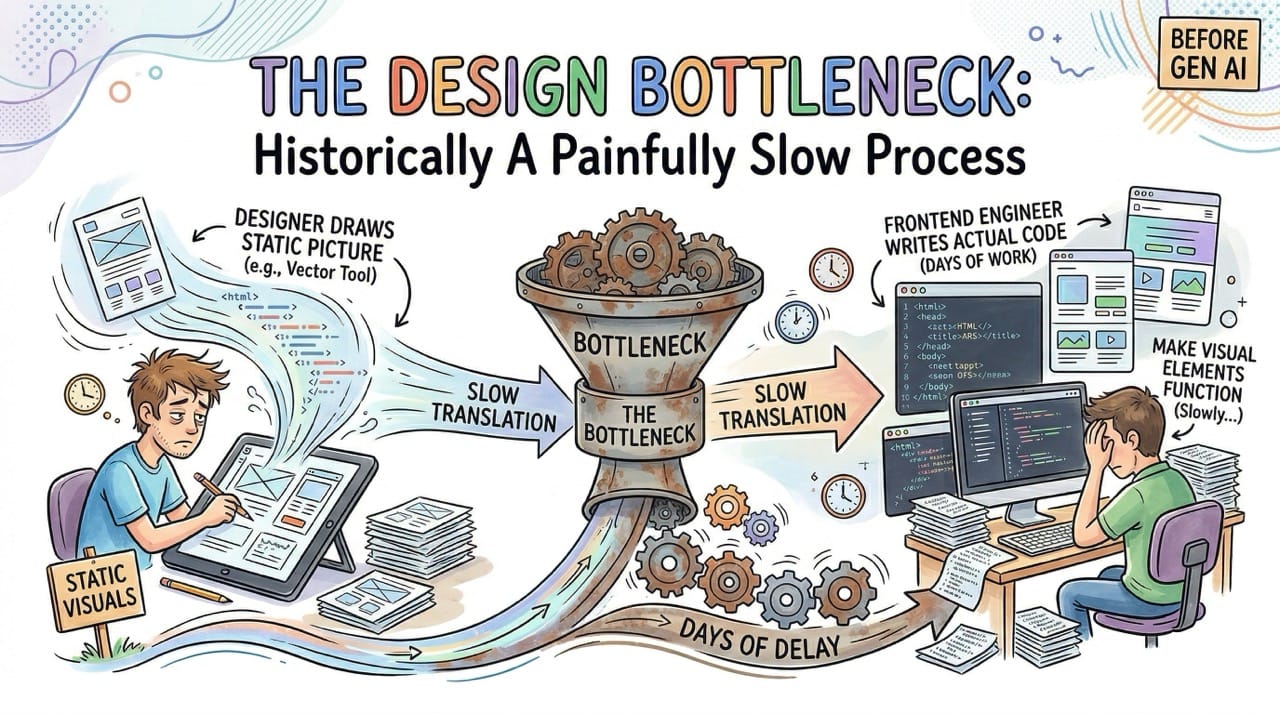
The Design Bottleneck
Historically, building an application required a painfully slow translation process.
A user experience designer would draw a static picture of a layout in a vector tool.
A frontend engineer would then spend days writing the actual code to make those visual elements function on a screen.
The Google Stitch Paradigm
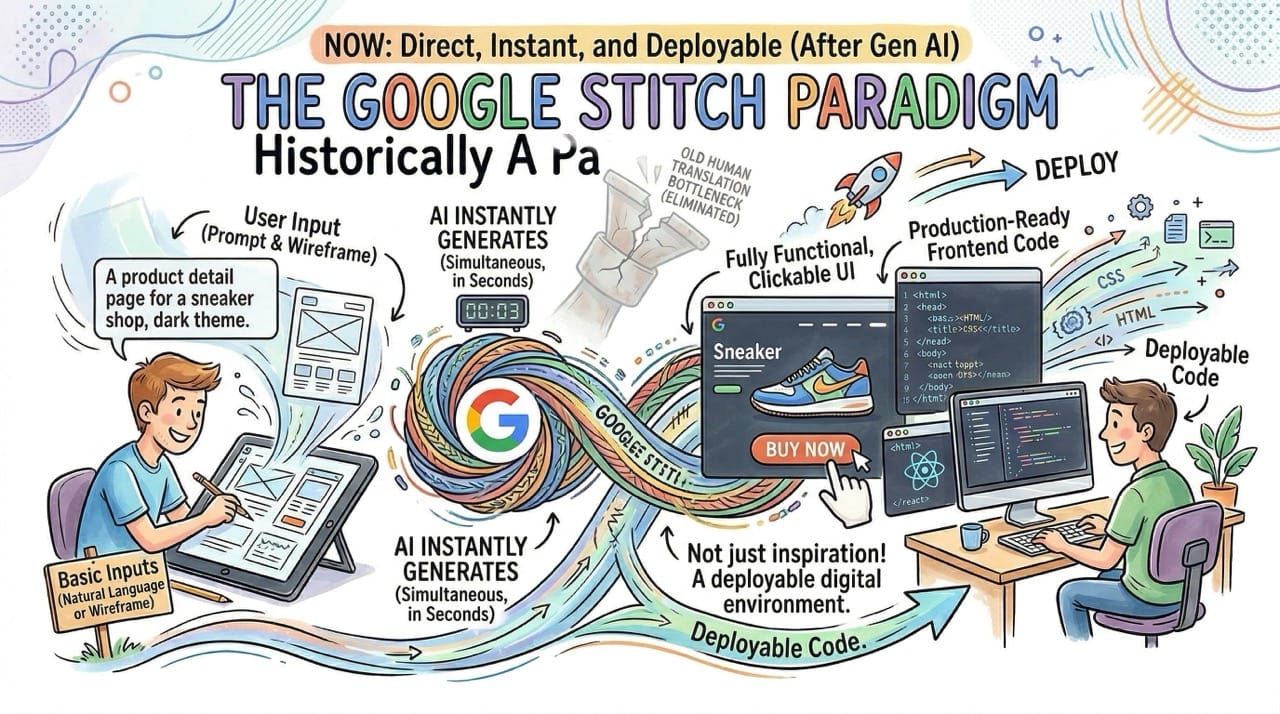
Google Stitch completely eliminates this human translation layer. It allows a user to provide a natural language prompt or a basic wireframe describing a desired interface.
The AI instantly generates both the polished visual design and the production-ready frontend code simultaneously.
This is fundamentally different from a tool that just generates inspiration. You are not getting a picture of an app.
You are getting a fully functional, clickable, and deployable digital environment in seconds.
The End of Wireframing
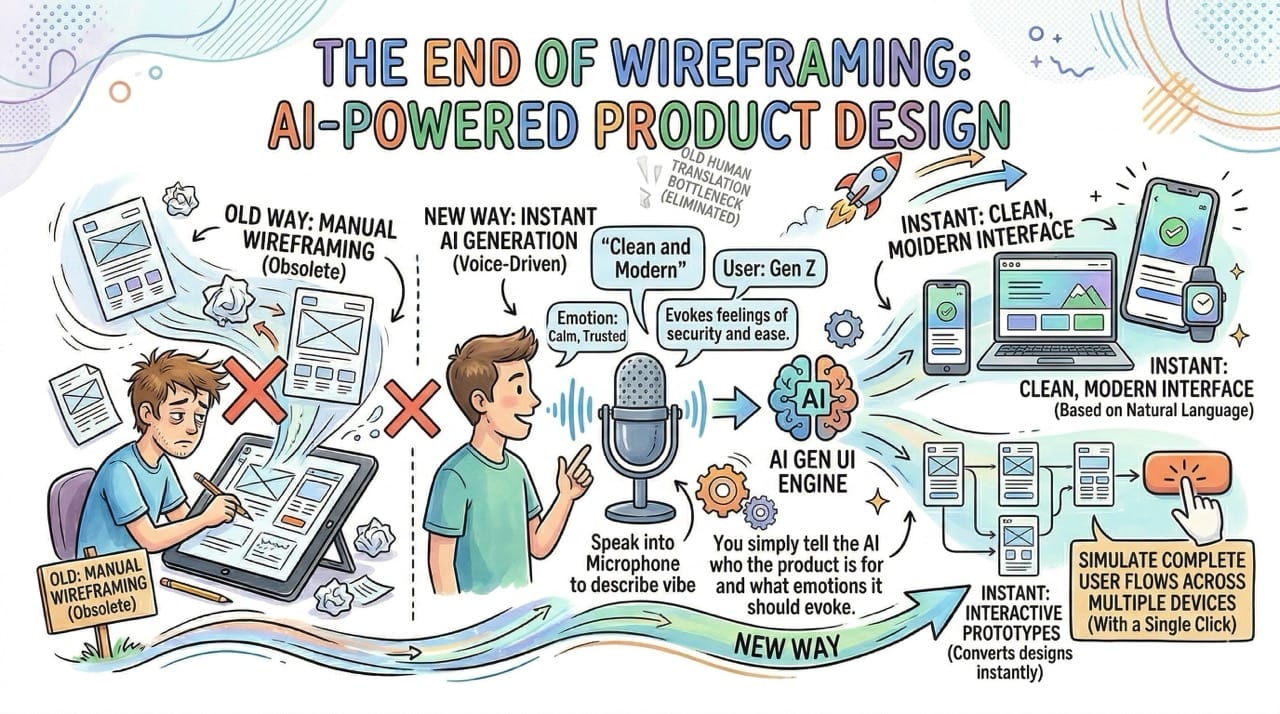
Designers no longer need to sketch out basic structural wireframes.
You can literally talk into your microphone and describe the exact vibe of your desired product.
You simply tell the AI who the product is for and what emotions it should evoke.
The system instantly generates a clean, modern interface based entirely on natural language.
It even takes those static designs and instantly converts them into interactive prototypes. You can simulate complete user flows across multiple devices with a single click.
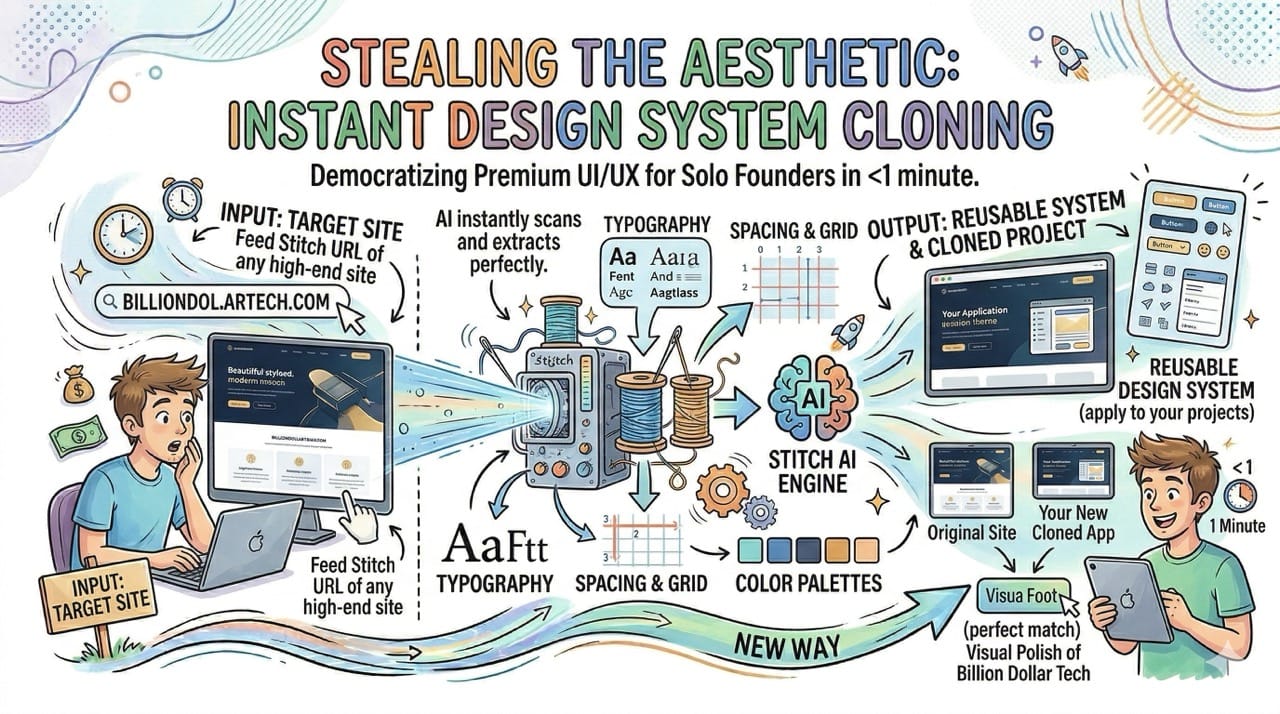
Stealing the Aesthetic
Perhaps the most aggressive use case is the ability to instantly clone existing design systems.
A user can feed Stitch the URL of any beautifully designed website on the internet.
The AI will scan the page and extract the typography, spacing, and color palettes perfectly.
It generates a reusable design system that you can immediately apply to your own projects.
This effectively democratizes premium aesthetics. A solo founder can now launch an application with the visual polish of a billion dollar tech company in under a minute.
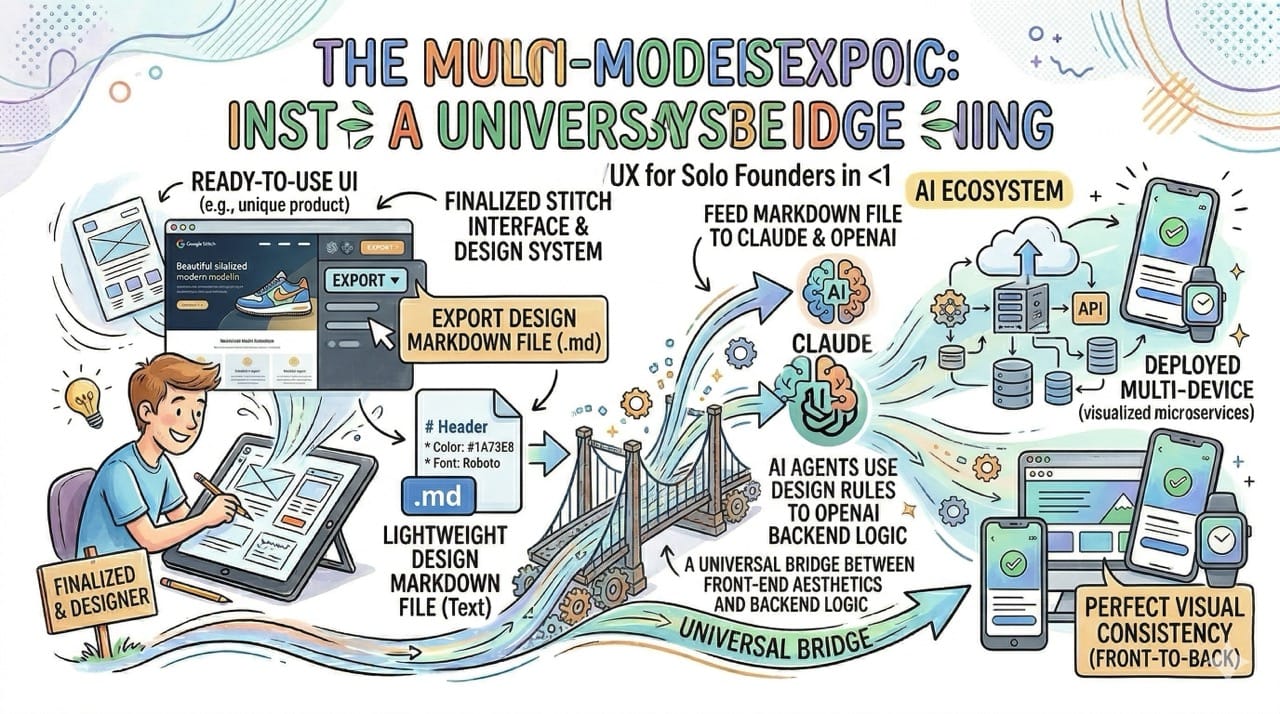
The Multi-Model Export
Google also introduced a highly strategic feature called the design markdown file.
Once you finalize your interface in Stitch, you can export the entire underlying design system as a lightweight text file.
This creates incredible interoperability across the artificial intelligence ecosystem.
You can feed this markdown file directly into other coding models like Claude or OpenAI.
Those agents can then use the design rules to build out complex backend architectures while maintaining perfect visual consistency.
It acts as a universal bridge between front-end aesthetics and heavy backend logic.
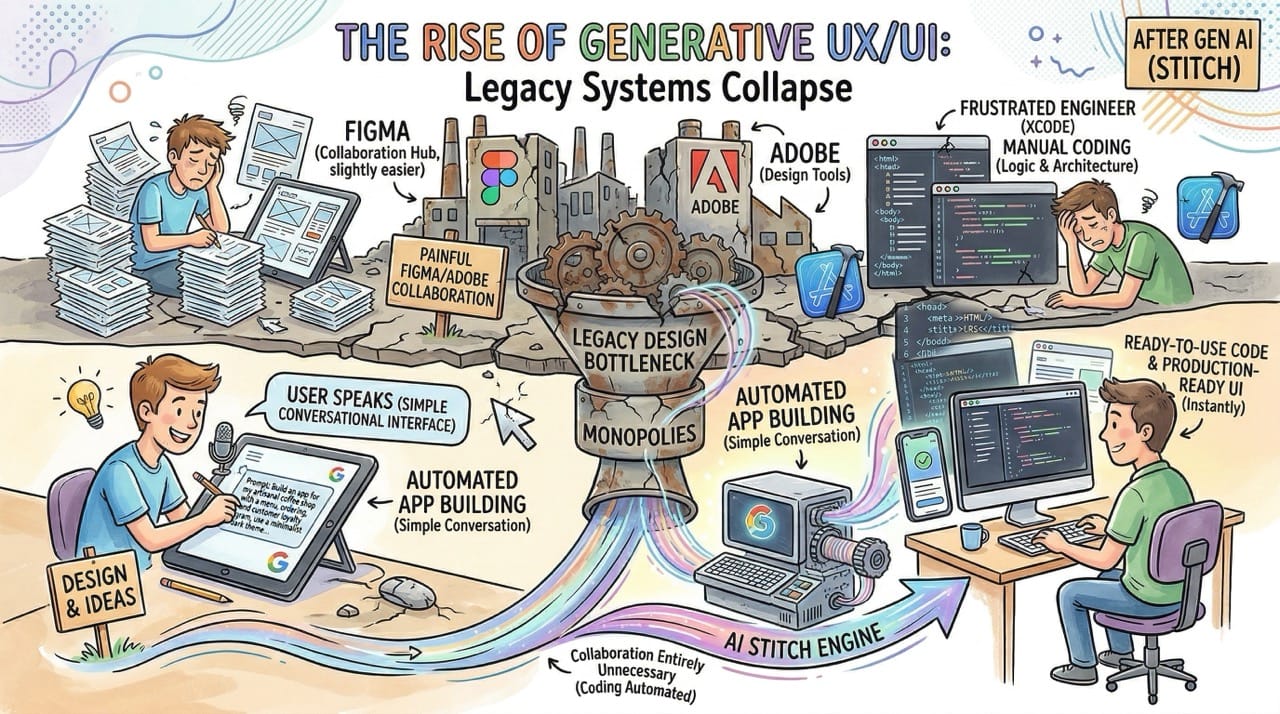
Destroying the Legacy Giants
This generative capability poses a massive existential threat to legacy design monopolies like Adobe and Figma.
Figma currently dominates the market by making it slightly easier for designers and developers to collaborate.
Stitch makes that collaboration entirely unnecessary by automating the coding phase out of the equation.
It also directly challenges Apple's proprietary app development ecosystem. Software like Xcode still requires a human engineer to manually construct the logic and architecture of the application.
Google is attempting to turn the entire complex app building process into a simple conversational interface.
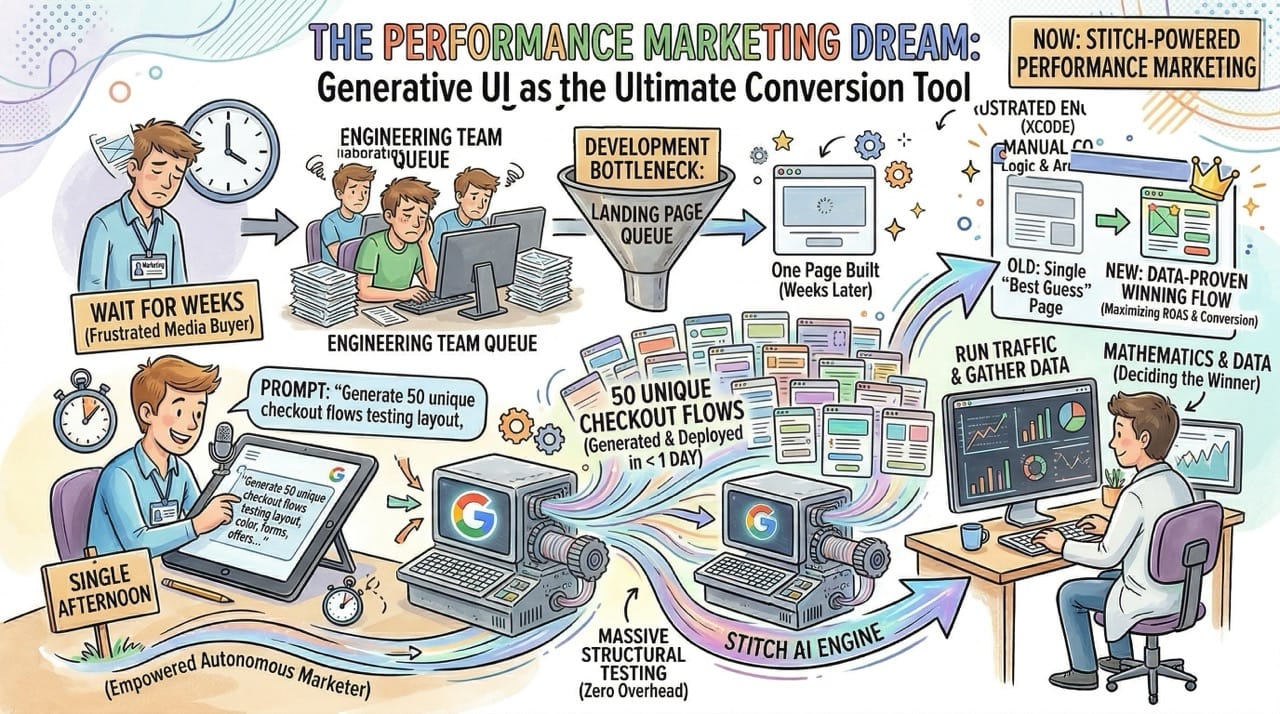
The Performance Marketing Dream
From a performance marketing perspective, generative UI is the ultimate conversion rate optimization tool.
Media buyers usually have to wait weeks for engineering teams to build new landing pages for specific ad campaigns.
Stitch allows a marketer to autonomously generate and deploy fifty completely unique checkout flows in a single afternoon.
This allows brands to test massive structural changes to their sales funnels with zero overhead.
You no longer have to guess if a radically different layout will convert better.
You can simply command the AI to build it, run the traffic, and let the mathematics decide.
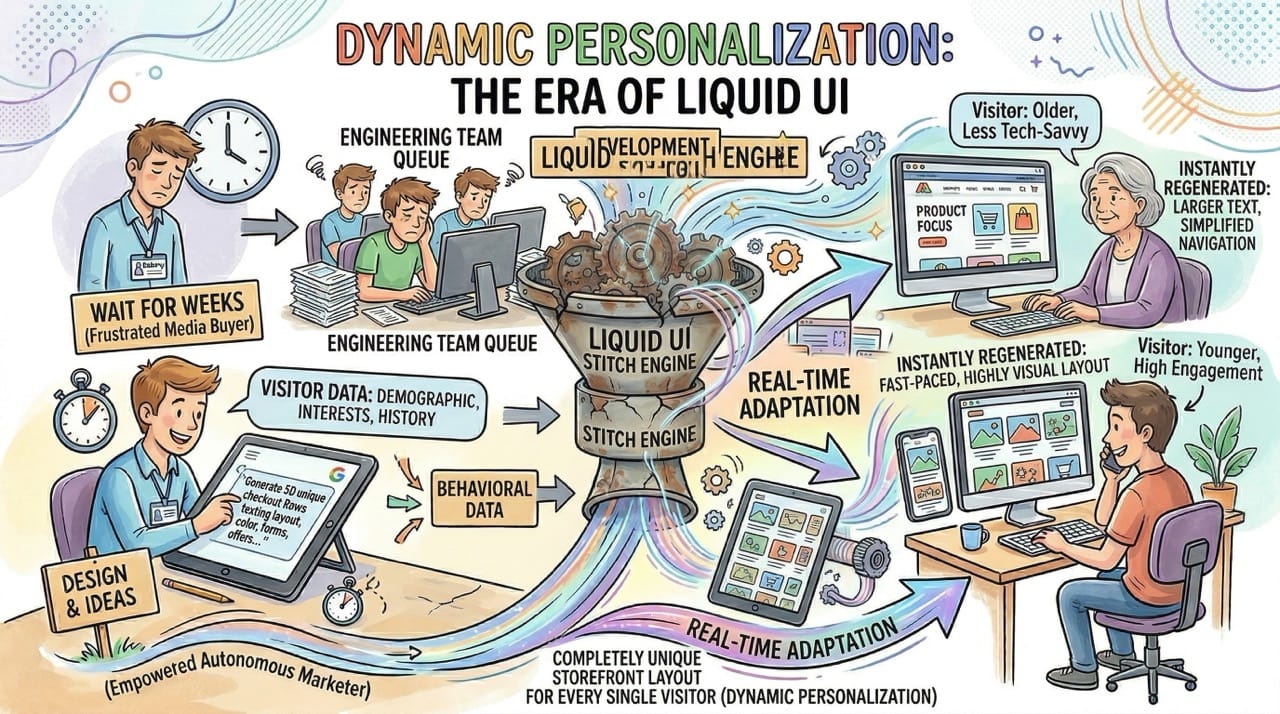
Dynamic Personalization
The future use cases for this technology extend far beyond rapid prototyping.
We are entering an era of truly dynamic and liquid user interfaces.
E-commerce brands will soon use this technology to generate a completely unique storefront layout for every single website visitor based on their specific demographic data.
If an older user logs in, the AI can instantly regenerate the interface with larger text and simplified navigation.
If a younger user logs in, the interface can dynamically shift into a fast-paced, highly visual layout.
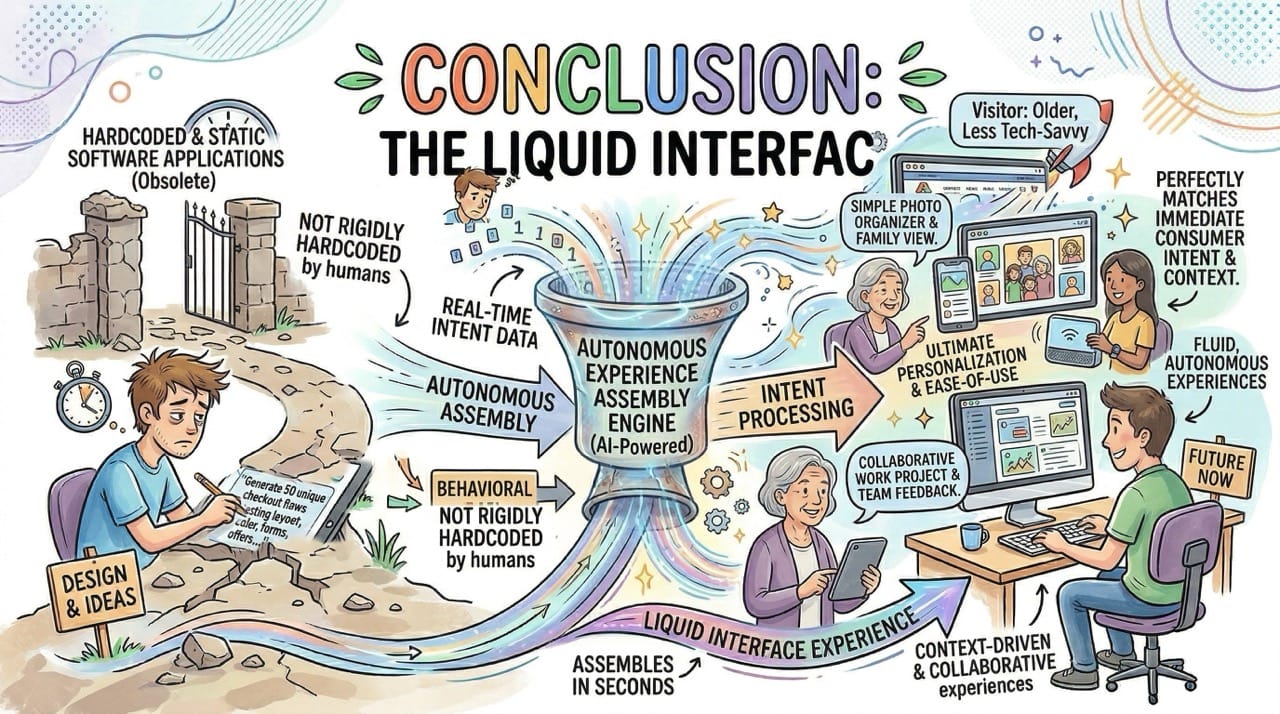
Conclusion: The Liquid Interface
The concept of a static software application is living on borrowed time.
Future digital interfaces will not be rigidly hardcoded by human engineers in a corporate office.
They will be fluid, autonomous experiences that assemble themselves in real time to perfectly match the immediate intent of the consumer.