
Google Qualcomm AI Chromebooks: The Future of Laptops
We thought premium tablets were going to replace the traditional portable computer. The rumored AI laptop collaboration between Google and Qualcomm is about to make those tablets entirely obsolete.

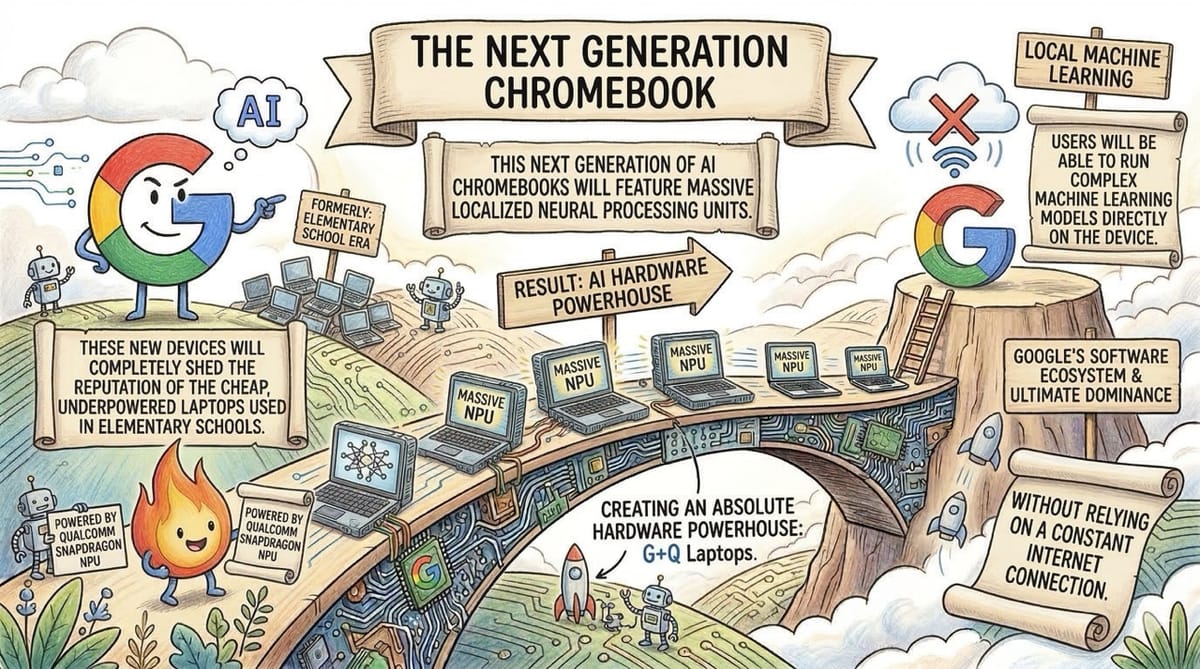
Google is using a competitor's silicon to build an unbeatable ecosystem. This strategic transition will completely rewrite the hierarchy of mobile hardware.
Inspiration: Analyzing the speculated partnership between Google and Qualcomm for the next generation of AI Chromebooks. Realizing this is a strategic bridge to dominate the hardware market until Google's own Tensor chips are fully optimized for laptops.
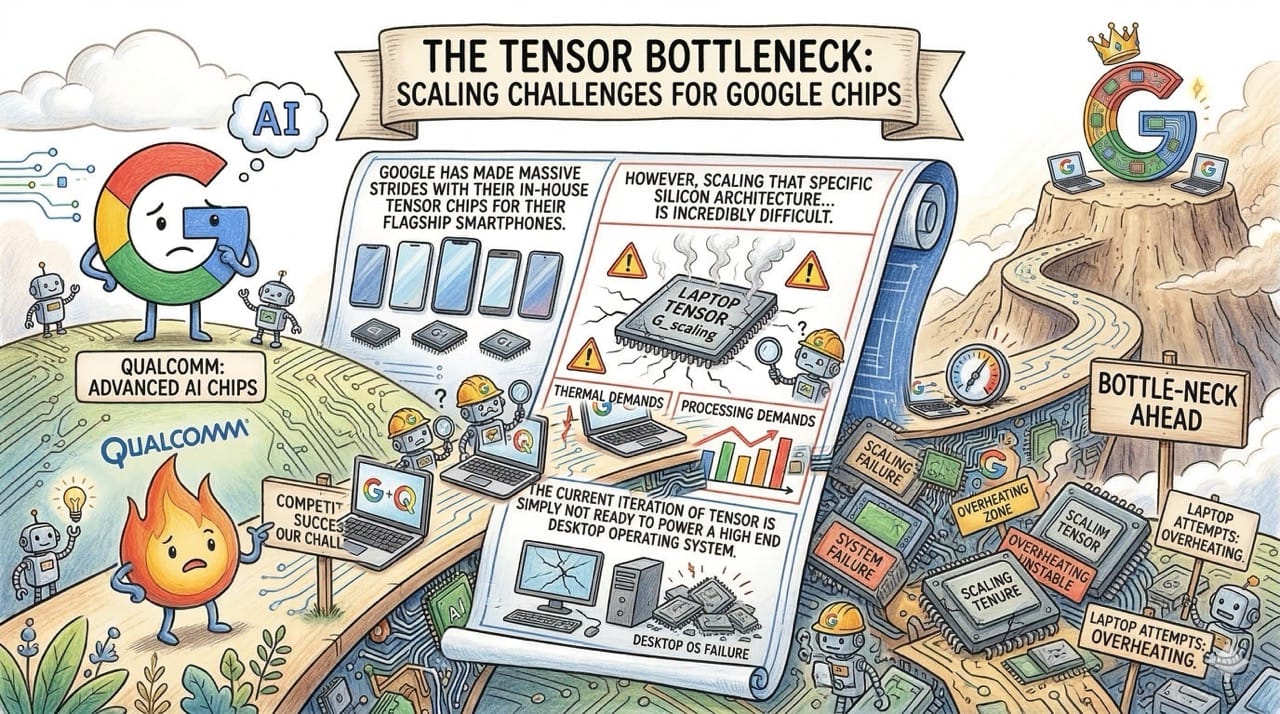
The Tensor Bottleneck
Google has made massive strides with their in-house Tensor chips for their flagship smartphones.
However, scaling that specific silicon architecture to handle the thermal and processing demands of a premium laptop is incredibly difficult.
The current iteration of Tensor is simply not ready to power a high end desktop operating system.
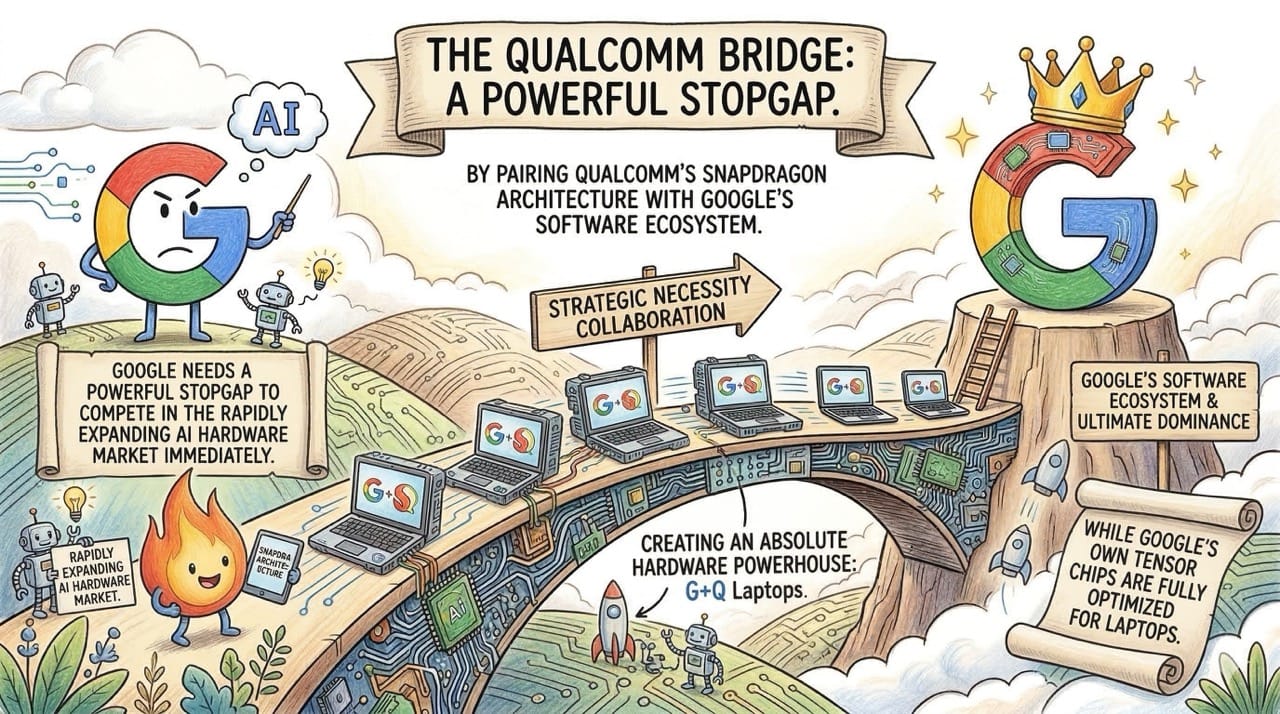
The Qualcomm Bridge
Google needs a powerful stopgap to compete in the rapidly expanding AI hardware market immediately.
This is exactly why the rumored collaboration with Qualcomm is a strategic necessity.
By pairing Qualcomm's highly efficient Snapdragon architecture with Google's software ecosystem, they create an absolute hardware powerhouse.
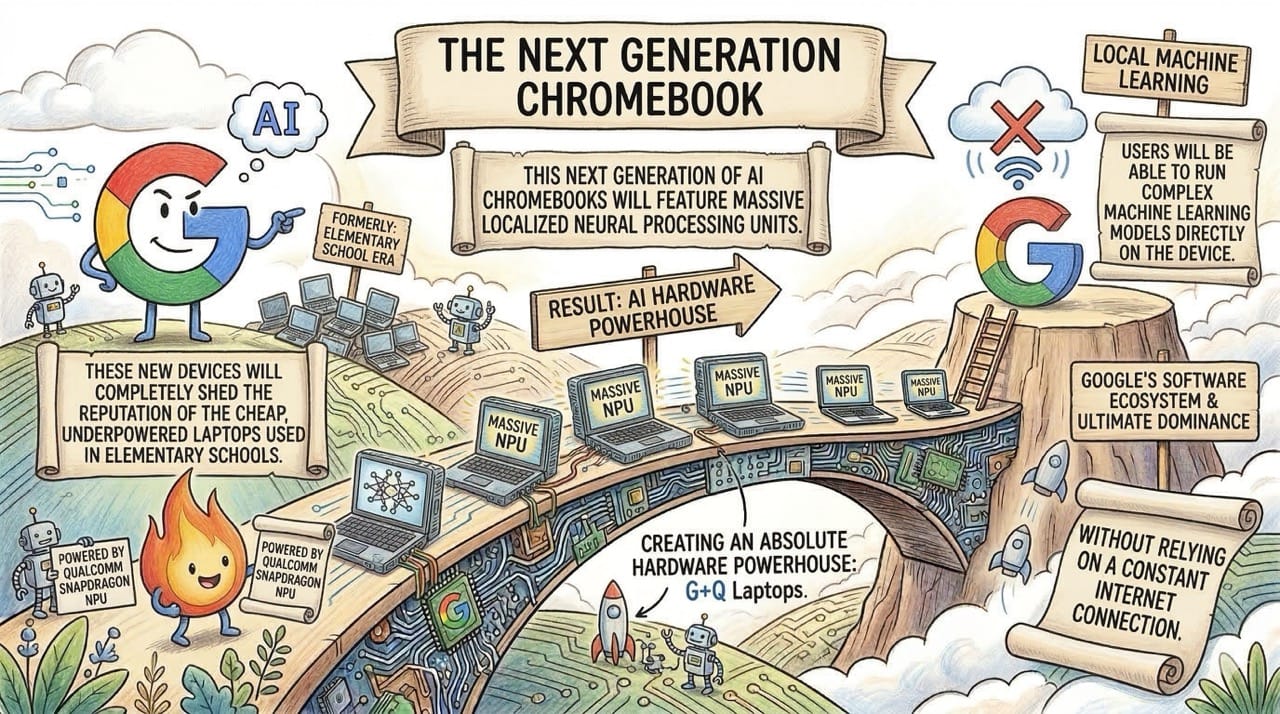
The Next Generation Chromebook
These new devices will completely shed the reputation of the cheap, underpowered laptops used in elementary schools.
This next generation of AI Chromebooks will feature massive localized neural processing units.
Users will be able to run complex machine learning models directly on the device without relying on a constant internet connection.

The Tablet Extinction Event
This specific hardware evolution poses a catastrophic threat to the premium tablet market.
A lightweight AI Chromebook with exceptional battery life and a built in keyboard offers vastly superior utility.
Consumers will soon struggle to justify spending premium prices on an iPad when a dedicated AI laptop provides significantly more leverage.

Conclusion: The In-House Endgame
This entire Qualcomm partnership is a brilliant and calculated transition play. Google is essentially buying the necessary time to perfect their own Tensor laptop chips safely behind closed doors.
They are using another company's hardware to build a massive user base before eventually bringing the entire silicon ecosystem entirely in-house.