
Google Pixel: Ironically Going to be the Privacy Choice
We assume Apple will forever remain the undisputed champion of consumer privacy. In reality, the integration of third-party artificial intelligence is destroying that moat and quietly crowning the Google Pixel as the ultimate privacy hardware.

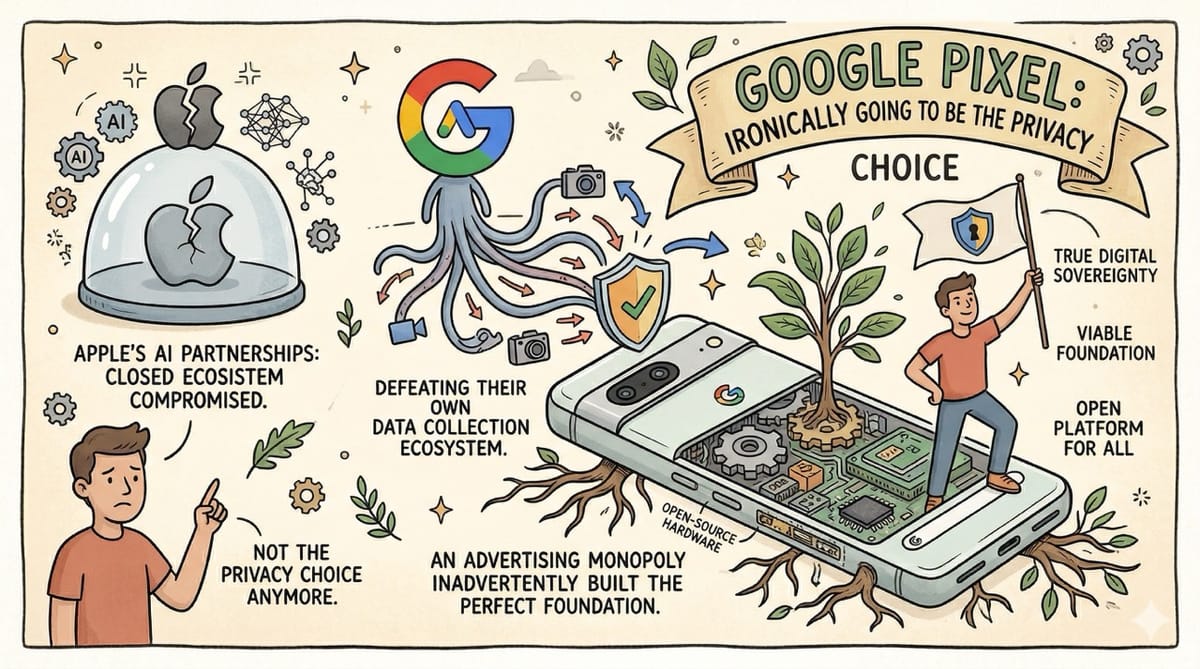
An advertising monopoly inadvertently built the exact open-source hardware required to defeat their own data collection ecosystem.
Inspiration: Analyzing the rapidly shifting landscape of consumer privacy and mobile hardware. Realizing that Apple's new artificial intelligence partnerships fundamentally compromise their closed ecosystem, making the Google Pixel the only viable foundation for true digital sovereignty.
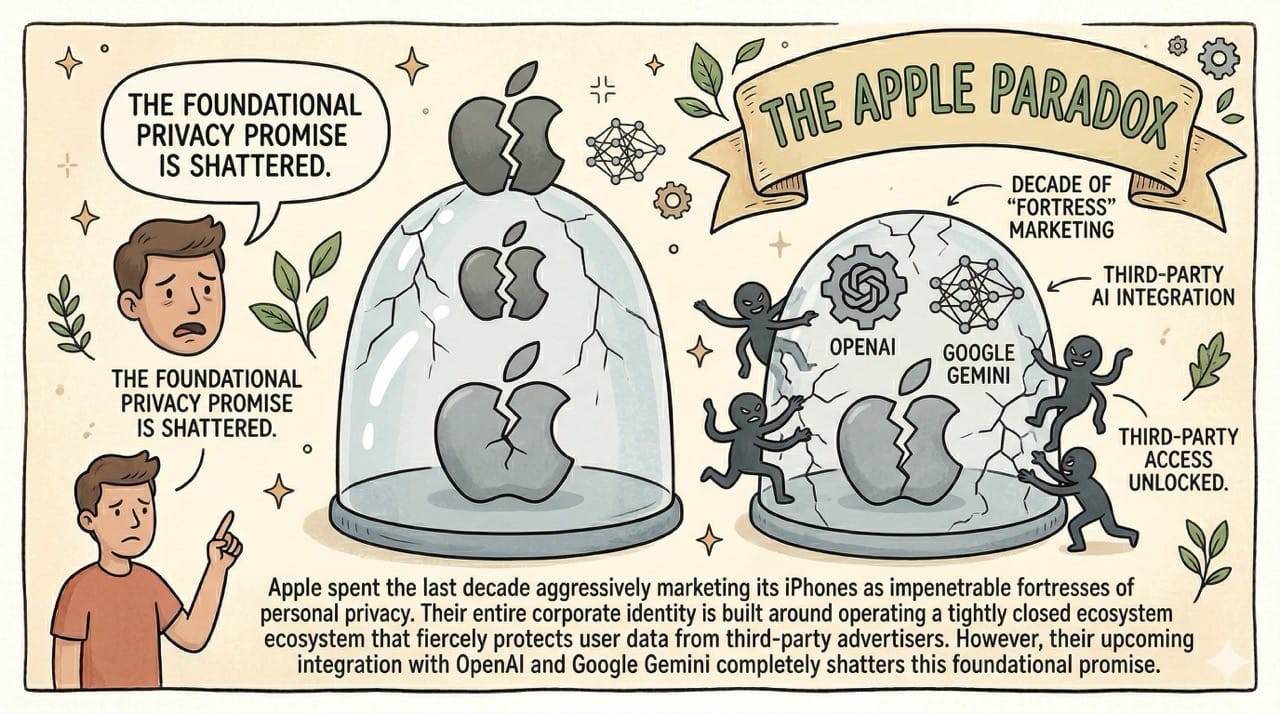
The Apple Paradox
Apple spent the last decade aggressively marketing its iPhones as impenetrable fortresses of personal privacy.
Their entire corporate identity is built around operating a tightly closed ecosystem that fiercely protects user data from third-party advertisers.
However, their upcoming integration with OpenAI and Google Gemini completely shatters this foundational promise.
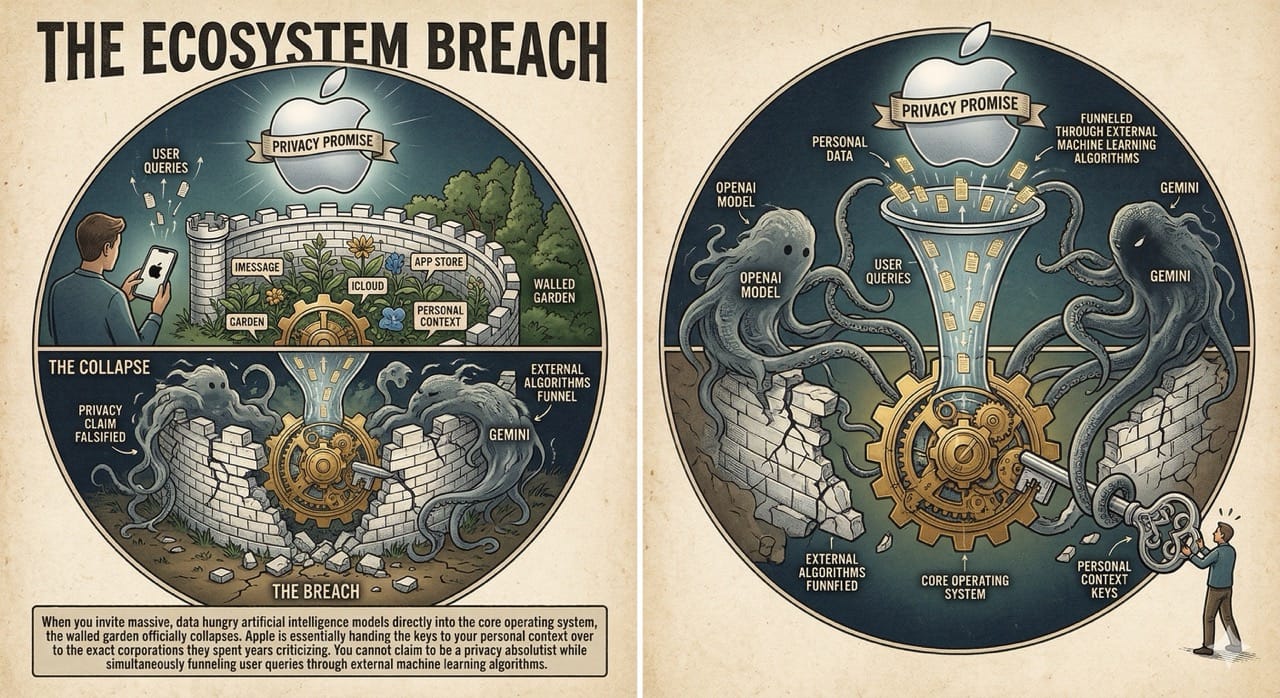
The Ecosystem Breach
When you invite massive, data hungry artificial intelligence models directly into the core operating system, the walled garden officially collapses.
Apple is essentially handing the keys to your personal context over to the exact corporations they spent years criticizing.
You cannot claim to be a privacy absolutist while simultaneously funneling user queries through external machine learning algorithms.
The Google Irony
Google currently operates the largest advertising network on earth by relentlessly tracking consumer behavior.
Ironically, their proprietary Pixel devices are rapidly becoming the absolute best hardware choice for extreme privacy advocates.
This is entirely due to the open-source nature of the Android operating system they developed.
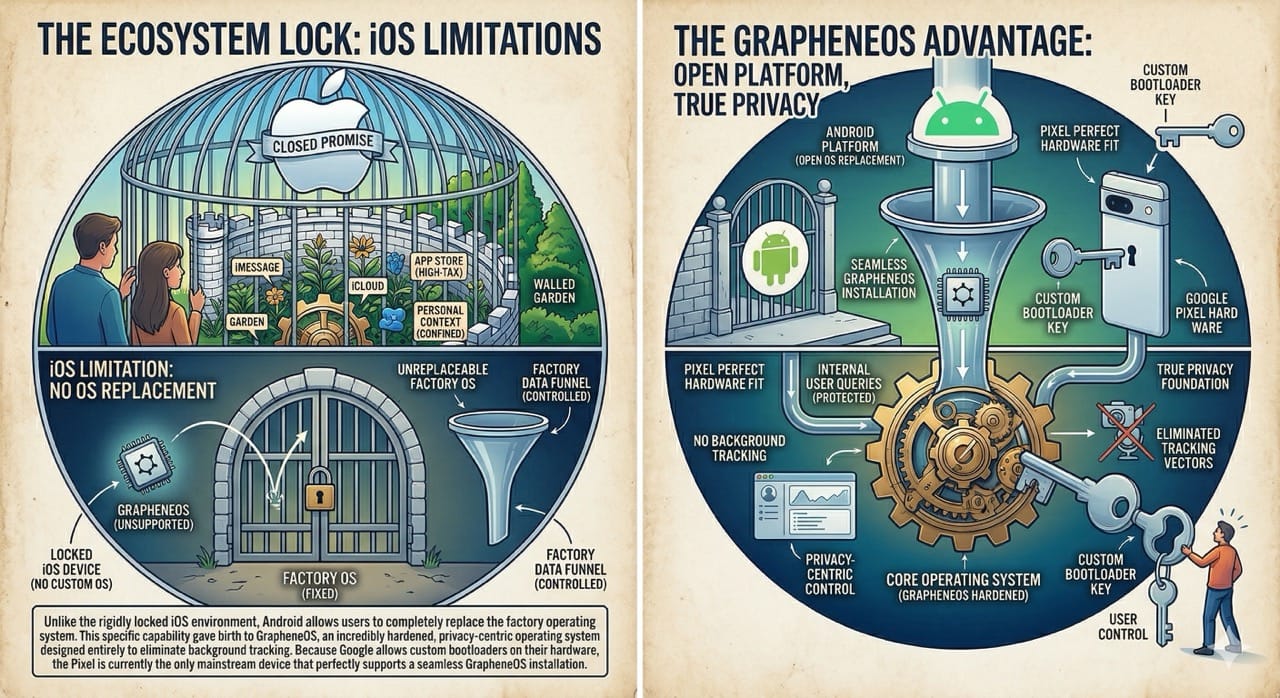
The GrapheneOS Advantage
Unlike the rigidly locked iOS environment, Android allows users to completely replace the factory operating system.
This specific capability gave birth to GrapheneOS, an incredibly hardened, privacy-centric operating system designed entirely to eliminate background tracking.
Because Google allows custom bootloaders on their hardware, the Pixel is currently the only mainstream device that perfectly supports a seamless GrapheneOS installation.
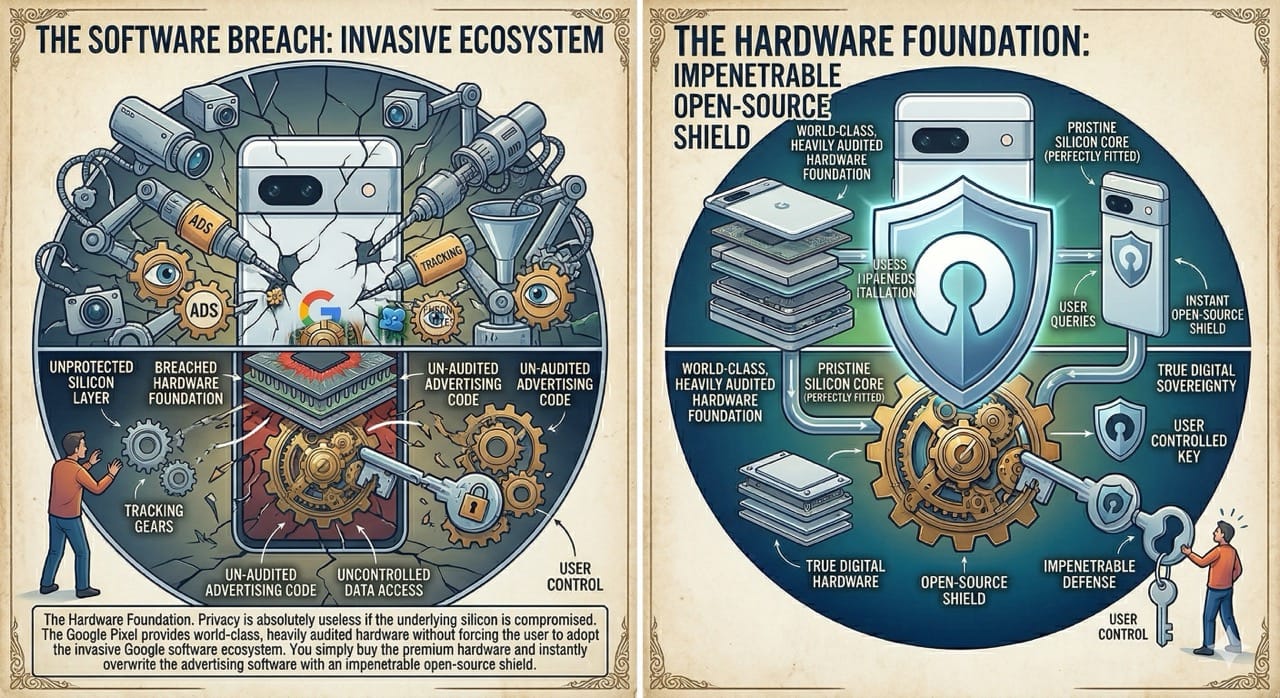
The Hardware Foundation
Privacy is absolutely useless if the underlying silicon is compromised.
The Google Pixel provides world-class, heavily audited hardware without forcing the user to adopt the invasive Google software ecosystem.
You simply buy the premium hardware and instantly overwrite the advertising software with an impenetrable open-source shield.
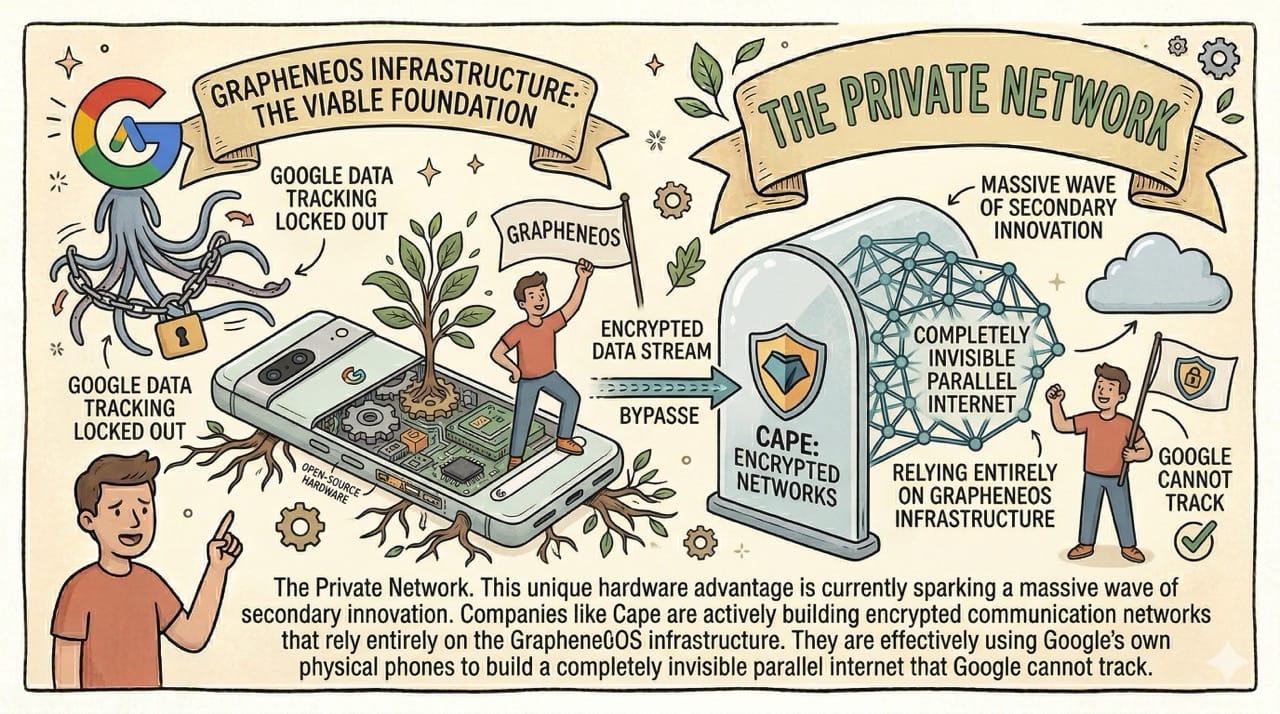
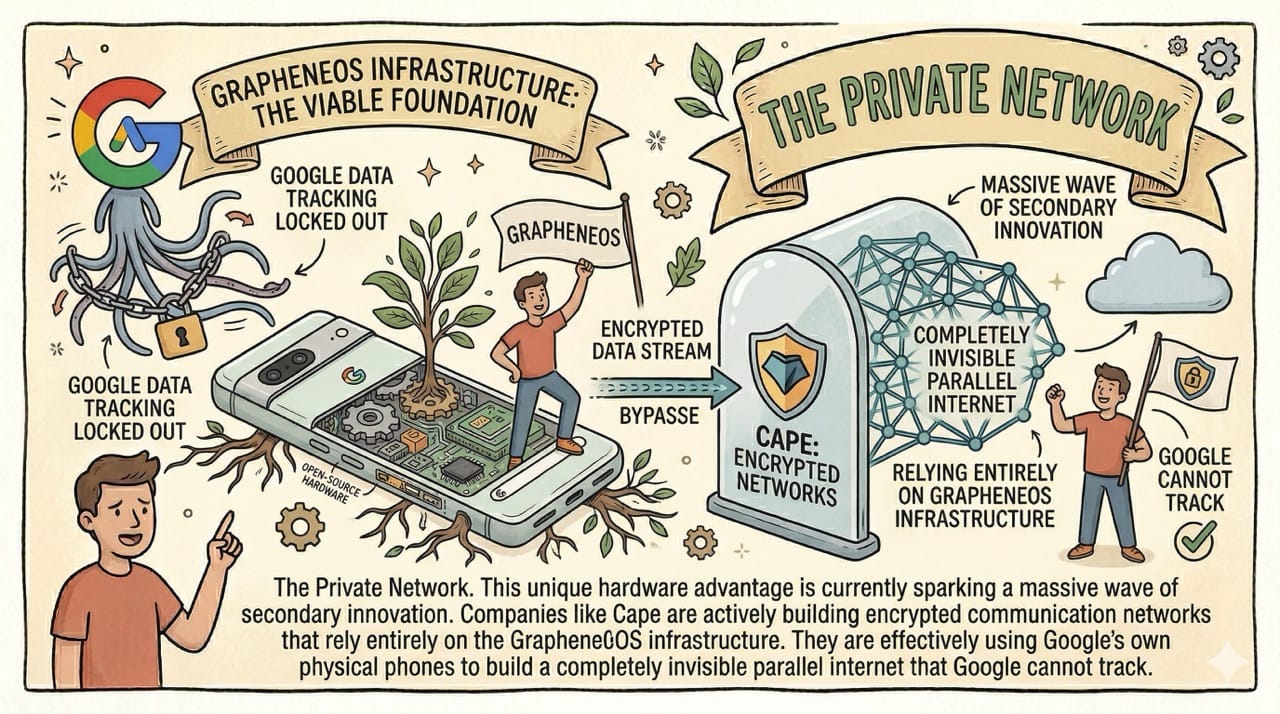
The Private Network
This unique hardware advantage is currently sparking a massive wave of secondary innovation.
Companies like Cape are actively building encrypted communication networks that rely entirely on the GrapheneOS infrastructure.
They are effectively using Google's own physical phones to build a completely invisible parallel internet that Google cannot track.
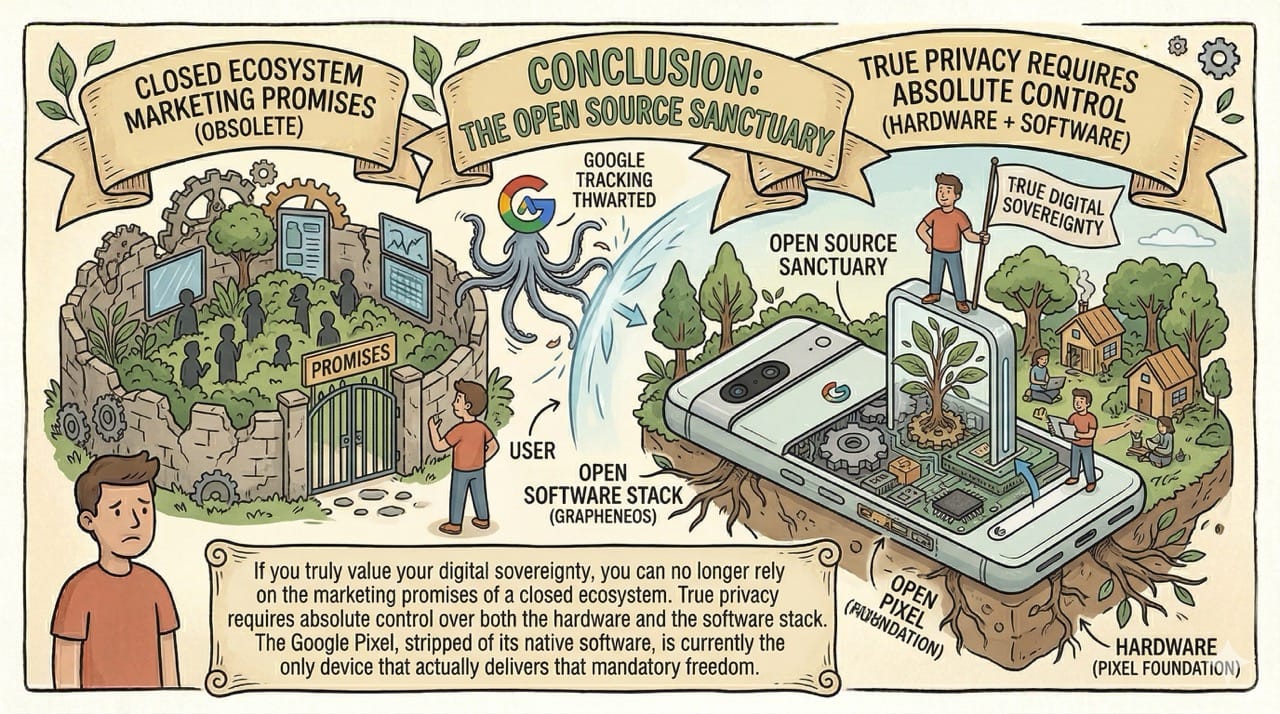
Conclusion: The Open Source Sanctuary
If you truly value your digital sovereignty, you can no longer rely on the marketing promises of a closed ecosystem.
True privacy requires absolute control over both the hardware and the software stack.
The Google Pixel, stripped of its native software, is currently the only device that actually delivers that mandatory freedom.